

Robin S Webber
This transcript was generated by AI and may contain errors. It is provided to assist those who may not be able to listen to the message.
Today I'd like to give you the title of my message right up front. I'm always nervous that somebody will walk away after I speak and wonder, well, what did Robin speak on today? And so I'm going to give it to you right up front. And the title of my message is simply this, feasting on God on a day of fasting. Feasting on God on a day of fasting. I like to draw your attention to I think a melody and a song. It's a tremendous song that we've heard over the years in churches, If My People.
If My People. And it goes on to talk about if my people will humble themselves. And here we are on a day of fasting, and I again would like to draw your attention as we begin to that, and to recognize specifically who that's talking to. I know at times when we've had evangelistic campaigns, or we've had open houses, or we've had members of the public coming in, or we've given sermons, and we've spoken to the world at large, or the United States as a whole, we say, only our people would humble themselves and come to Me.
And we use this verse. But today I'm going to first of all direct it to you, the covenant people of God, the body of Christ, and then to be able to build upon that later. And sometimes we just go to that one verse, and we don't understand the context. And it is the context that will tell us everything. So if you please open up your Bibles, that's why we're here. We're here to feast on the Word of God. That's how we feast on God, is by opening up His Word.
Join me, if you would, in 2 Chronicles 7. And join me, if you would, beginning in verse 8. 2 Chronicles 7 and verse 8. And we may not be aware of what this very famous verse comes from. Well, what are the verses talking about before? And it's actually the dedication and the consecration of the Solomonic Temple, the house for God, no longer in a tabernacle, but the very, very house of God.
And if you'll join with me and look at verse 8, 2 Chronicles 7 and verse 8, it says, And at that time Solomon kept the feast seven days, and all of Israel with him, a very great assembly from the entrance of Hamath to the brooks of Egypt. So actually, the house for God, the temple that we have heard so much of over the years, this house built for God in Jerusalem, which would become the center of his work at that time, was actually consecrated and dedicated right during the time of the Feast of Tabernacles and on a specific day.
Notice what it says here, And on the eighth day they held a sacred assembly, for they observed the dedication of the altar seven days. And on the twenty-third day of the seventh month he sent the people away to their tents, joyful and glad of heart, for the good that the Lord had done for David, for Solomon, for his people Israel. Thus Solomon finished the house of the Lord and the king's house, and Solomon successfully accomplished all that came into his heart, to make in the house of the Lord and in his own house.
Then notice verse 12, And then the Lord appeared to Solomon by night and said to him, I have heard your prayer, and have chosen this place for myself as a house of sacrifice. And when I shut up heaven, and there is no rain, or command the locust to devour the land, or send pestilence amongst my people, not just the world around us, but as he interrupts and disrupts the covenant people of God, he says this, If my people, who are called by my name, will humble themselves, and pray, and seek my face, and turn from their wicked ways, then I will hear from heaven, and will forgive their sin, and I will heal their land.
And please notice verse 15. Now my eyes will be open, and my ears attentive to prayer made in this place. For now I have chosen and sanctified this house, that my name might be there forever. And my eyes, know this please, and my eyes and my heart will be there perpetually. A couple of thoughts. Let's build upon this foundation. Fascinating as I was reading through this this morning, to recognize that the altar, the altar of where the sacrifice would be accomplished, was concentrated on the eighth day. I think more than ever over the years that God has revealed to us, the incredible purpose of the the eighth day festival.
It's a time that depicts holiness. It depicts a time that in one sense in its fullest escape, moves beyond time and space, to a time when we that are being offered salvation, being granted the opportunity to experience eternity, having that opportunity to being able to share eternity face to face with God and and with His Christ are going to be together.
And nothing that is unholy is going to be in God's presence. And to recognize then that it's holy time, the eighth day, and this altar at that in this temple was concentrated at this time. So what does that have to do with you and me if we say, if my people, if my people will humble themselves and call upon me? Let's talk about that for just a second. Join me if you would for a moment in 1 Corinthians 3 and 1 Corinthians 3 in the New Testament.
Let's keep the analogy and the reality—not just an analogy, but it is a reality of the temple. In 1 Corinthians 3—let's pick up a thought if we could.
In 1 Corinthians 3 and verse 9. We're going to do a little reading today because that way we get into context and we get the fullness of what God is doing and His purpose and His love towards us. And it says, for we are God's fellow workers and you are God's field. And you—notice you speaking of people who are people, those that God is calling now, those that God is working with, those that have the faith in Jesus, the faith of Jesus, those that are abiding in a way of life. It says this, according to the grace of God, which was given me as a wise master builder, I have laid the foundation and another builds on it, but let one take heed how He builds on it. That's what we're doing today. That's why we're fasting as we strive to come near and clear to our Father above through Jesus Christ. Notice verse 11, for no other foundation—stay with me, please—for no other foundation can anyone lay than that which is laid which is Jesus Christ. No other foundation. Nothing else will do. This is what our Father above has asked us to focus on and to build upon. It is literally the rock. Now, if anyone builds on this foundation with gold, silver, precious stones, wood, hay, straw, each one's work will become clear, for the day will declare it, because it will be revealed by fire, and the fire will test each one's work of what sort it is. None of us like fire. None of us like heat. Right now, the Bunsen burner outside is going up. It's summertime already here, and well, I'm in Sun City. What else would you expect? But heat is for a purpose. It's to purify us. It's to continue to move. It's to continue to mold and to shape us and to develop us. Because, let's remember, we're not just God's trinkets. God's preparing jewels for eternity, and we happen to be the focus of that effort, the focus of that work, as we'll be turning to later on. If anyone's work, which he has built on it, on that rock, on Jesus Christ, he will receive a reward. And if anyone's work is burned, he will suffer loss, but he himself will be saved, yet so as through fire. I didn't put those words in there. I'm only saying that right now because we're all going in a sense through fire. Everybody's fire that God is seasoning us with can be different in our lives. It could be a marriage, it could be a job, it could be a child that we love so much, but that love is not being returned to us right now. It could be this, it could be that only you can fill in the blank of where you're feeling the heat, where you're feeling the fire. I know we've had incredible fire during this time. The number of our own church members that have not been able to visit their loved ones in a hospital or a care facility and only be able to talk to them as a nurse puts a phone up to their ear. Some of those that are in those care facilities, some of those that are in those hospitals, some of those that are even in those ICUs, they can't answer back or maybe they can't answer right now. And so the loved one talks. The loved one shares their love and concern and their abiding tenderness towards that person, even though that person can't respond. And we're not alone in that, brethren. Thousands, if not hundreds of thousands of people, are enduring the fire of being cut off from loved ones when they always said that in that sense that they would be there. And they have had to literally commit them to God. Commit them to God because they can't hold hands. They can't rub their arm. They can't give a kiss on the cheek. They can't be up close and personal. They've got to commit them to God.
With an abiding faith. With an abiding faith of being built on that rock of that same rock that was alone on the cross on God the Father. Who understood that what loneliness was all about.
And when everybody that he did love wasn't necessarily there at that moment, except the one that was above his father. And with faith and with confidence, the rock, the one that we're to build upon, said it is finished. And I commit my spirit into your hands. Let's go a step further. Do you not know then that you are the temple of God and that the spirit of God dwells in you? Paul now brings it forward to the people of God in this covenant and in the new covenant. That God is no longer just dealing with brick and stone and mortar and cedars from Lebanon.
He's using flesh. He's using blood. He's using arms to reach for him. He's using a hand to hold for him. He's using legs to walk for him. He's using a tongue to speak his truths, to share his love, to share his faith, to share his hope, to talk about him. And not so much our story, which while we sat at baptism and again, when we took the symbols of Passover, that it wasn't about us. And it was all about him. And yet, how quickly can that creep back as we move away from an event?
Brethren, dear friends, one of the first lessons I learned when I first attended in this way of life and the church that preached it was we don't go to church.
We don't go to church. We don't go to church. We don't go to church. The Bible clearly shows that the church are people. It's the assembly of God, made of flesh and blood and heart, and with the Spirit, with the Spirit of the Father and the Spirit of the Son, and with the great hope, and with not only realizing that we are saved by grace, but we come to Him in faith, realizing that that gift has been given to us. And that our obedience is the evidence that we understand that grace that has come to us through Jesus Christ. We understand that faith must resonate with that obedience, that we are indeed that living, breathing, talking temple of God, that our hearts, as it says in the Scriptures, the temple, the words that are used, is literally the Holy Apollis, that God dwells in us as much as His Shekinah presence dwelled in the Solomonic Temple. It dwells in us. And I think that's where right now. I would wish that this had never occurred in one's sense, humanly speaking, what we've gone through, but this time of reordering, of rethinking, and of realigning ourselves, not the world alone, but we that are and have been elected in advance of all as first fruits to really understand and go deeper. I mean a lot deeper as to what it means in this time to be. members of the temple of God. And remember the echo that comes out of Leviticus, that comes out of 1 Peter, that is merely the echo in the New Testament. I am holy. Therefore, you be holy. The Solomonic Temple, the Solomonic Temple, was dedicated on the eighth day, underlined with holiness, underlined to that which lies beyond to those that continue on that trek of the greatest invitation ever given by the one that's spoken here, and that's to follow me.
We're going to talk about that a little bit more as we go along. As your pastor, it's one that's been amongst you in this area for 45 years, serving as an elder. I hope you'll hear about some of the things that I want to talk to you about this afternoon, because I hope it's from the heart. And please understand, I'm just talking to myself. Just talk to myself. I hope somebody will hear, this is what God has planted in my heart, planted in my mind, and hopefully it'll come out his way, and not like Frank Sinatra, my way. But here's what I want to remind you, and those that are listening here for the very first time, some of our new members that I have not even met yet, and I'm looking forward to, we are not just simply a church like any other church. We have not merely been called to be a fellowship group. Is there fellowship? Absolutely. Is fellowship important? Absolutely. But I'm going to talk about what kind of fellowship before the end of this message. We're not just a fellowship group. We're not just simply merely a lonely parks club for people that are lonely. We're not simply a corporate religious entity. Oh yes, there is the United Church of God. Oh yes, it is an instrument within the body of Christ. But God has called us much more than just simply be a part of some corporate body. Because the body of Christ itself, and we've got to believe this in our heart of hearts, is a spiritual organism that is known but to God. He knows who are His. I don't know everybody that has the faith of Jesus and is keeping the commandments today. Sometimes we can feel like, well, you know, we're all alone, just those people that we congregate with. We don't know. And sometimes we can look around and say, well, where is everybody?
And we have to be reminded what God spoke to Elijah when he withdrew and he was in the cave. He was in the cave there with the mushrooms and the bats. And God had to remind him, you're not alone. You're not alone. There are 7,000 that have not yet bent the knee to Baal. They get it. They get it. They understand. And they know that I haven't forsaken them. You know, Paul was rustling and tussling, wrestling with the work of the Gospel and Corinth, and got a little frustrated. Couldn't see anybody coming. And God just said, and God just had to remind him, did a kind of an Elijah, and said, Paul, I've got news for you. I have many, many people, many, many people in this city. Stay the course. Hold the ground. Stay on the rock. You are not alone. You do what you need to be doing, and I'll be doing what I'm going to be doing, and we're going to be doing this together.
Last thought. We're not just simply a truth factory. We're not just simply a rolodex of doctrine.
A lot of fellowships. A lot of denominations that are out there call themselves Christian.
But that does not make up what the body of Christ is of and by itself. Truth is wonderful. Scripture says thy word is truth. Absolutely. And we've been given marvelous revelations. I think Susan and I were just—Susan actually is upstairs right now, right above me, watching on her computer. But she does come down in case I go off the air or the staff can't hear me, but she's right above me today. Sometimes she's over that away. But to recognize when God says thy word is truth, yes. But it says that we worship God in spirit and in truth. And I think more than ever, this day of fasting is to center not just simply on the understandings that we have and what we know, but who we know and what are we to do with what we know and how will it be a light to our families? How will it be a light? How will it be a light to our community? How can we more effectively do, quote-unquote, the work of God when we understand what the work of God is and where it begins in this temple, that it can spread and be a light to the world that is around us? Because God's word says in John 4, 20 through 24, it says, you know, Jesus speaking to the Samaritan woman, there is going to come a day in which we will neither worship on this mountain or that mountain, but the true believers, those that really want to worship God with all of their heart and all of their mind and all of their soul and realize that Passover is not just an event, but it's an existence that we have rededicated ourselves to, that we will worship in spirit and in truth. And I'm going to come back to that at the end of this message, of what we can do to proclaim the gospel. And it stays right and it stands right in those words that we want to jot it down, the spirit of the matter. Tell me if you would in Colossians 3. Let's go to Colossians 3.
In Colossians, which kind of echoes the book of Ephesians, but in Colossians 3, in picking up the thought in verse 11, I want to share our calling and I want to share the wonderment with you of what God is doing and what he's elected here in Colossians 3. And picking up the thought in verse 11, it tells us this. He's called us to a body, a people, where there is neither Greek nor Jew, circumcised nor uncircumcised, barbarian or Scythian, slave nor free, but Christ is all in all. I know oftentimes, especially today, with genetic studies and DNA studies, you go to these companies and they'll kind of tell you in a sense of who and where you belong to and where you come from. And it seems that sometimes you go to these DNA studies, ancestry.com, this might be a commercial for them, ancestry.com, they find a Viking in everybody's background. And they're all subcontinent, including Antarctica. There's a Viking somewhere.
But there's supposed to be something residing much, much deeper in us than being a Viking. Notice what it says here, therefore, as here we are, the elect of God. Nobody else elected us, nobody else sought after us, but God in his grace and in his mercy and in his incredible love, in spite of who we are, gave us life and elected us. Holy, not only elected us, not only desires our holiness, but notice what it says here. And the word that you might want to circle and beloved. God's love knows no end, no end at all.
And he realizes that we're on a journey. And he realizes that sometimes our pride gets advantage of us, overshadows what he is doing.
And sometimes we've lived with it so long, we don't even recognize it. It's just like a comfortable pair of shoes and we walk in our pride. We talk in our pride. We think in our pride. And it's got to go. God cannot use pride. No matter the amount, no matter the measurement of pride, God can't use it. Humility, give just an inch and we'll go a mile. And that's why we're fasting today. And I'm speaking to us today about where we are at as those that are chosen, elected, and beloved by God, in spite of ourselves. I'm not talking about even before baptism, but even afterwards it's sustaining grace, it's ongoing grace, it's unbroken love that God has given you and me. That's what we've got to be sharing with people.
Not just a lonely hearts club, not just simply a truth factory, but a God that is so unique and so incredible and so different than us, that He's called us to fast, to get a hold of ourselves.
It's an interruption. It's an interruption. Thank God. It's an interruption. This whole time that we've been going through this virus situation is an interruption to bring us to our knees and to bring our hearts to their knees.
That we might be different going out of this, and not just simply like 9-11, back in 2001, where we had a three-week makeup period and everybody got serious, and then so many just went back to how they always were.
God wants us to feast on Him after this virus debacle exits. He wants us to feast on Him, and we learn to feast on Him by fasting. To recognize that at times, whether you've been in the church for five days, five months, five years, 50 years, like Susie and I, since we were young beings, we don't have all of the answers. And sometimes we just have to say, God, we don't have all of the answers. We need you. We need your direction. We call on you. You say, how do I know that, and how do I know that God will be there? Join me if you would here for a second. I want to take you over to another verse, 2 Chronicles 20. In 2 Chronicles 20, God revisits His people time and time again. You notice that a lot in 1 Kings and 2 Kings and Chronicles. But over in 2 Chronicles 20, I want to share the story, but fast with you. Are you with me? Ready to go? We already talked about Solomon and the dedication of the temple. Here's another time, a couple hundred years down the line. Are you with me? We're in verse 1 of 2 Chronicles 20. And it happened, excuse me, it happened after this, that the people of Moab with the people of Ammon, and others with them besides the Ammonites, came to battle against Jehoshaphat. Maybe that's why I call them Jump and Jehoshaphat. And then some came and told Jehoshaphat, saying, A great multitude is coming against you from beyond the sea from Syria. And they are in Hazazan-Kamar, which is in Mgiti. And Jehoshaphat feared and set himself to seek the Lord, and proclaimed a fast throughout all of Judea. Jerusalem was in Judea, in Judah. And so Judah gathered together to ask help from the Lord, and from all the cities of Judah, and they came to seek the Lord. And then Jehoshaphat stood in the assembly of Judah and Jerusalem, and in the house of the Lord before the new court, and said, O Lord God of our fathers, are you not God in heaven? And do you not rule over the kingdoms of the nations? And in your hand is there not power, and might, so that no one is able to withstand you? And are you not the God who drove out the inhabitants of this land before your people? Israel, and gave it to the descendants of Abraham. Notice, remember that word, beloved? Loved this, as I was reading it this morning, your friend forever. When God has friends, He keeps His friends.
Now, stay with me. Let's drop down for a moment.
All the nations in the local area are gathering against Judah. Notice verse 12, and that's what I want to center on. On this time of fasting, that Jehoshaphat proclaimed for Judah, O our God, will you not judge them? For we have no power, no power, against this great mold of two, that is coming against us. Now, notice this. Nor do we know what to do.
But our eyes are upon you. Our eyes are upon you.
Now, all of Judah, and with their little ones, their wives and their children stood before the Lord. And then the Spirit of the Lord came upon some of the prophets, and they spoke of what would happen. Notice verse 17, going down. Here is the bottom line. As the Jews were shaking in their boots, and Jehoshaphat was maybe jumping, as we say, jumping Jehoshaphat was jumping. As we say, jumping Jehoshaphat, this is where God came back. When Judah humbled themselves, and the king and the leader humbled themselves, and said, we don't have the answers, but we are claiming the promises, the promises that you gave to our forefather.
Verse 17, you will not need to fight in this battle. But position yourselves, stand still, and see the salvation of the Lord. Kind of sounds like Exodus 14, when Moses and Israel had their back up against the wall. So I have to read the Bible and recognize that that Exodus story moves down through the ages to us, and we're just on the current edge of it right now, as was the Solomon, as was the Jehoshaphat. Position yourselves. Well, how do you position yourself? Where do I go? What do I do?
That said, stand still. Best position for you right now.
Do not fear or be dismayed. Tomorrow go out against them, for the Lord is with you. And Jehoshaphat bowed his head with his face to the ground, and all of Judah, and everybody joined him.
During this time, brethren, I have, and Suzy and I, have had the, perhaps, the richest spiritual experience that we have had.
And really kind of come to recognize that God has asked us to stand still, not just be closeted in our house, but to stand still, to stand still, to be humbled, not just simply by what's going on the outside, but to understand the distance that yet remains for us as individuals. I'll speak for myself. How will my wife speak for herself?
To understand where I stand, and how I need to sit still within the temple of God, and allow His Spirit, and allow His love, and a major, major in humility, more than I have, as your pastor, as a Christian, as a member of the body of Christ, and to recognize that Robin Weber doesn't have all of the answers. Well, you already knew that, but sometimes it's we that are the last ones to understand that. But, like God told Elijah, I don't think I'm alone, because I know a lot of you. And I haven't met you. If I don't know you, if I don't know a lot about you, I know that God above does. I know the one thing that as we move forward as a people, in the body of Christ, we're going to have to think about the lessons that we're learning, and not just go back to how we were.
Several months ago, Dr. Ward, Chairman of the Council, Mr. Kubik, President, wrote a letter about reinventing ourselves. Reinventing ourselves? Well, how do we do that? You can't have a lot of meetings to learn how to reinvent yourself. No, because it's right in the Bible. Okay? It's in the Bible. If there's a rattlesnake, would it be death? That's what my dad used to say. And something was so close, and yet we didn't see it.
Christ said, I am the light of the world. The same one that made light said, I am the light. And he said, likewise, you be the light of the world. And that means that we're to reflect, we are to build upon that rock, and we are to reflect that rock in spirit, that there is a hunger, that there is a thirst. Now, I know some of you are getting kind of hungry and thirsty right now, but we don't know what—in America, we don't know what hunger and thirst is. We're going to go to our refrigerators this evening, and they're going to be full. Maybe not as full as a month ago, but they're going to be full. We can turn on a tap of water. We will survive until 715 or 730 this evening. Trust me. Trust me. But we cannot survive spiritually if we do not hunger and thirst after righteousness, and understand this, this rock that we are to build upon. And to be different than we were a month ago when we went at all of this. I'm speaking as individuals. I'm speaking as a congregation. I'm speaking as an organization, an instrument within the body of Christ. Because if we don't, God will use somebody else. God's purpose is going to be fulfilled. But, brethren, we've got to take a—we've got to go—I'm going to just lay it on the line with you. We've got to go deeper. We've got to go deeper. We've got to go into chapters and existences that we're not familiar with, as far as the Spirit, and having it coming out of us in our words and in our actions and in our thoughts and our deeds. I'm going to talk about that right now and share a few thoughts with you. Because right now we are all living differently than we did before. We have to have different items to confront this virus that's around us. So let me give you a few. Let me make a few right here, a few things that we can do. Number one, big phrase that's out there right now is, how do we flatten the curve? You might want to jot that down because we're going to build upon that. How do we flatten the curve?
As I use that phrase, let's, in a synonymous manner, ask ourselves, how do we build upon the rock of Christ that our Father above has given us? How do we exist within Him? How do we exist within Him to where our light is shining so brightly that there will be an attraction? There will be an attraction that is greater than on a summer night with the bugs on the light on your outside porch. People will say, well, what is this? Who is? Who are these people? Who is this individual at work? Who is this individual in my school, in my class? Who is this neighbor? Who is this person that I've been rubbing shoulders with, singing hymns with for the last 25 or 30 years? I never knew thee. But what you're talking about now and what you're sharing now is something I can get into because we're talking about the one thing that binds us together, and that's the light and the death and the resurrection and the ascension and the exaltation and the placement of Jesus Christ at the right hand of God. That then, with that position before our Father, allows our condition when we don't have the answers here down below bearable and to recognize it as God promised to His friend forever, a brom.
And gave Solomon answers, gave Jehoshaphat answers, gave his own son answers that we will have the answers. And not only that for ourselves, but to allow people to know that a great light has shown. Yes, it says in Isaiah, they saw a great light. And that light needs to be from us. How do we bend the curve? Number one. Number one. Recognize the enemy. Recognize the enemy. President Trump in his briefings has talked about this invisible enemy that's out there, this invisible enemy. And so we go out our doors, we go out our portals, and we recognize that there is something that is lurking out there. And I know there's all sorts of thoughts. How much is it working? How much is it lurking? Where is it? And I know everybody has an idea, especially when we're not the quarterback, like a like a president or like health officials. But let's just say it's out there. And it's not just taking out people in care facilities or in hospitals or in compromised positions. There are people that are in good condition. But for one reason or another, there are people that are football stars, baseball stars, people that look like sizzling hunks, as it were, of men that have died. Okay? There's something out there. It's invisible. But we have to visibly packle it. Let me use an example of this. If you join with me in Ephesians 2, come with me to Ephesians 2. In Ephesians 2, there is a similarity in the Bible. And again, my first point is this. We have to recognize the enemy and what we're moving into. In Ephesians 2, verse 1, and you, speaking of those in the body of Christ, and you he made alive, he granted us the ability to have spiritual health and vigor and immunity, as it were, who were dead in trespasses and sins, in which you once walked according to the course of this world, according to the prince of the power of the air, the spirit which now works in the sons of men, among whom we once were and we once lusted and we once conducted ourselves after the flesh. God called us out of that. I'm here today to tell you, dear friends, on the authority of the scripture, there is an enemy. And yes, we have incredible protection and in that sense, sanction, because we have accepted the blood of Jesus Christ, because the victory was won on Gogotha by his death on the cross. But you know what? There's still some details that are having to be worked out down here below, and he is still out there.
And his demons are out there, and his spirit is out there. It is a prince of the power of the air. There is an element that is above us and beyond us that we don't fully understand. That's why God tells us he's the prince of the power of the air. And the way that he broadcasts, like a television program, or how computers are connected by email, he doesn't just give us the action. He doesn't tell us, now you go do this, A-B-C. But he works in moods. He works in attitudes. He works in environments. He works in stirring our hearts. We begin to walk that way that we were called out of.
Oh, he's good at what he does. And I'm here to remind you more than ever that we have to know who the enemy is. And sometimes we want to make the enemy the people that are here below. We want to make the enemy our spouse. We want to make the enemy our child. We want to make the enemy the boss at work. There is a prince of the power of the air. There is a spiritual world. And the Bible shows us the way to cut through that. And that's why we fast. And that's why we humble ourselves, saying, you know, I just don't have those goggles on all the time. And I'm kind of living myself to that. Because of the amount of pride, the amount of self that has still stirred up in me. I've got some unconquered territory on this island of humanity that I need to yet give to God and go to work on. I want to share another verse with you. You'll stay with me for a second. Join me over in Matthew 17, 21. In Matthew, in the Gospel thereof, Matthew 17, verse 21.
Notice what it says here.
Verse 20. So Jesus said to them, because of your unbelief, or surely I say to you, oh, actually, let's go back. I'm so sorry. It's time that there is the process of the episode of casting out a demon out of somebody. And Jesus rebuked the demons, and it came out from them, Jesus, and the child was cured from this very hour. The disciples could not do it themselves. And then the disciples came to Jesus privately and said, why could we not cast it out? And so Jesus told them about the mustard seed and how it must grow. Then notice verse 21. However, this kind does not go out except by prayer, by prayer, and by fasting.
Just like in the time of Joseph, we don't have the answers by ourselves.
And sometimes we are confronting matters because they look like the bowling pins in front of us. And then when they don't all fall down, we wonder, well, why isn't this happening? I go to church every Sabbath. I know this, I know that, I know this, I know that. I've heard this verse read before, but it comes in and it goes out. It comes in, it goes out. So we haven't flattened the curve. The world that is out there, the prince of the power of the air, and he is also likened to a lion. You can jot that down in 1 Peter 5. He goes about roaring like a lion, but we don't hear his roar. He's smarter than that.
He'll come up to us like a pussycat. Meow! Oh, that's not too bad. No, he started petting the lion, thinking it's your friend. Satan is not our friend. This world, his world, is not our friend. This culture, this cosmos, this society, this way, this abnormality that began at Eden, and the curse came, is not God's way. You want to go back to normal? No, we're all talking about, I can't wait for this to all end. I can't wait to go back to normal.
Well, how excited are we about going back to normal?
Before Adam and Eve's bad choice, and the one that we've joined them in since then. Back to a time when the tree of life was right in the middle of the garden, and it's there for the picking. Hmm. Brother, and I'm alerting you that if we are going to build upon the rock, and I want to share a thought with you. I want you to be aware of what's out there, who the enemy is, but I'm going to make just a very important thought here, hopefully. Let's remember that victory was won on Golgotha. When Jesus went through that sacrifice and gave his all, he who made life was sacrificed for us. The victory was won.
The victory is won. The details have to be met out, and we're a part of those details. The one who was uncreated came and became a part of creation. Eternity wrapped up in human flesh gave himself, gave himself, and he allowed himself to be taken by us. Yeah, us.
That God might one day take us as we accept his son and become a part of eternity with him.
So there's some stuff that is yet ahead.
And Satan is a created being. He is not at the same level as God the Father and Jesus Christ, but we need to respect and understand that he is the enemy. Number two. Number two, social distancing. Anybody heard that? I see the clarks on screen. Can you raise your hand? Have you heard of social distancing up there, Valley Center? Social distancing. Let's talk about that for a moment. Social distancing. James 4, verse 6.
In James 4 and verse 6, but he gives more grace. Therefore he says, God resists the proud, but gives grace to the humble. Therefore submit to God, resist the devil, and he will flee from you. Draw near to God, and he will draw near to you. Cleanse your, oh, cleanse your hands. Who's heard about cleansing our hands of recent days?
I don't know if I have any hands left after using all the soap and all the lye. Cleanse your hands, you sinners, and purify your hearts, you devil-minded.
God says, you don't have to stand six feet away from me. I want you. You come as close as possible. You draw near to me, and you can because you come through the veil of Jesus' flesh and that sacrifice. And you can come to me anytime you can lay down in front of me. Here it is. Here it is. I can't go any further. I can't go any further. I don't know what to do.
Help me. God, help me. That's where Jehoshaphat was at. Man up another covenant. How about we as New Covenant Christians?
Do we have all the answers? Are we satisfied with where we're at?
Apostle Paul was never satisfied. He talked about himself stumbling, and yet he got himself up. He said, I have not yet apprehended, but that which I do. I'm headed for the kingdom of God.
Ephesians 4, verse 27. Ephesians 4, 27. Just a simple thought and a principle I'll pull out here. Kind of builds on number one. Notice what it says, nor give place to the devil. God says, draw near to me.
Draw near to me. Come as close as you want. I'm not holding... Remember, in Eden, the tree of life was not off limits.
The tree of good and evil was. You draw near to me. Then it says here, and don't give any room to the devil. We live in a world, brethren, that is given so much room to the devil. You know, sometimes we say, well, you know, we look in the Bible and say, oh boy, Sodom and Gomorrah. We talk about Corinth. We talk about terms like 2 Corinthians and other terms, etc. You know, how bad it was. Can I make a comment? Straight on. I think we passed Corinth. I think we passed Sodom and Gomorrah. And Sodom and Gomorrah was not only destroyed because of one sin. We'd like to make one sin more than another. The book tells us there were six or seven things that Sodom was doing. It was obnoxious to God, and he had to destroy those people. That's the world we live in. That's the world that God has called us out of. It's a world of pride. Nobody's going to tell me what to do. Nobody's going to tell me what to do. Nobody's going to tell me what to fill my mind with. Nobody's going to tell me what is going to fill my heart. Nobody's going to tell me who I'm going to associate with. Nobody's going to tell me this. Nobody's going to tell me that. And you know what? It's actually on steroids being Americans. The land of the free and the home of the brave don't tread on me. Sorry, but it takes one to know one, and most of us are Americans. So, in one sense, we even have more to overcome. How's that? To give it to God, to recognize that this society, which is crumbled in a month and a half from 3% unemployment to nearly 25% unemployment, and thinking that Yankee ingenuity is going to pull us out of it. The only reason America is because of God's blessing. Thank God we still have God we trust on our coins. But, how's that working? God doesn't want it on our coins. He wants it on our hearts. That's a good point. Number three, our spiritual mask. That's something for you. Susan has an identical twin copy of this. Our granddaughter made it for us. She's a Girl Scout, and she's making it for their community in an outreach effort. You know, it's kind of interesting with these masks. It's amazing how life changes things in a month and a half. Two months ago, if you went into a store wearing a mask, they would have thought the owners would think that you're there to take their money. Now they're glad that you go into a store and you have a mask on because you're going to give them money. So, it's kind of interesting that here's the same instrument, but it's changed its meaning. But our spiritual mask, brethren, is the armor of God. It's the armor of God. Remember Carl Malton years ago when it said, don't leave home without it? And right now, in California, we can't enter stores without doing this. You know, got your mask on like this.
But I'm going to expand on that. Carl Malton said and made a lot of money for MasterCard, don't leave home without it. Wear your spiritual mask. Wear the armor of God. Be vigilant. Be sober, as Paul told Timothy. Be sober. Be vigilant. And I'm going to share something else. You ready? We're going to take it a step deeper. Wear your mask, your spiritual mask, inside of your home.
Wear it inside of your home. Wear that spiritual mask at all times because we'll need it. Because Satan is not going to back off on trying to stir us up, trying to unlodge us off the rock of Jesus Christ, trying to allow us to think that somehow his ways work best and better. You don't have to give up your life. See, as a Christian, we said we're going to give up our life. Satan comes along with his music and says, I just want you to be. I'm not going to put anything on you. You just do your thing. You be your own God. You be little God. You make up your rules.
Like Santa 60s, you can do your own thing. Peace. How'd that work? How did that work in the 60s? Can you wear your mask at all times? We're not over, brother, and I want to share a thought with you. If you join me in Hebrews 12, 22. And what we're going through right now, friends, and what we're going through right now, I may be wrong. I do not feel like we're moving into the fifth seal. I very much would agree with what Dr. Ward wrote in recent, that we are in a time of sorrows. We are in that time of sorrows that leans between the fourth seal and the fifth seal, which is going to be the time of sorrows on steroids. But we're learning lessons as a Christian, as a follower of Jesus during this time. And it's for a purpose. Because, as it says in Jeremiah, if we can't run—Jeremiah 12, 25—if we cannot run with the footmen, how are we going to run with the horses? I hope to degree outside of a lot of pain, so I want to measure my words. I hope that each and every one of the members and the congregations that I pastor have been shaken up during this time. Shaken up! Shaken up to where we can be a better people. In Hebrews 12—notice what it says here—in Hebrews 12, and verse 22, But you have come to Mount Zion, to the city of the living God, the heavenly Jerusalem, to an innumerable company of angels, to the general assembly of the firstborn, who are registered in heaven, to the God, the judge of all, to the spirits of just men, made perfect, and to Jesus, the Mediator of the new covenant, and to the blood of sprinkling, that speaks better things than that of Abel. See that you do not refuse him who speaks. I believe that God is speaking, brethren, to me individually, individually right now, working with me, patient. And I think he's speaking to each and every one of us. If we'll only allow and let him in, and lower the walls of pride, and allow his spirit in us, in us, to give us a real peek of ourselves, of what we are to ourselves, and where we get need to go. See them that you don't refuse him who speaks, verse 25, for if they did not escape who refused him, then how about us upon whom the ends of the earth come? Now, notice verse 27. Now this, yet once more, indicates the removal of those things that are being shaken. We're being shaken like a fruit tree. We're being shaken like a nut tree. The world? Yes. But I think the people of God, even more so. And this person, this people, this man, is being shaken up. Is it fun? No. Is it needed? Absolutely. Because we are not yet what we are going to be, and God is so loving and merciful. And he always stands there waiting at the porch, waiting for us to get it. And if we get it, the further get it. See, well, Barbara, what do you mean by that? Remember, remember, remember Jesus' last conversation there with Peter? Do you love me? And he kept on drilling Peter down and down and down until he had no answers. He was, Lord, I don't have anything else. If you'd like to host that, I don't have anything else to put on the table. You know that I love you.
But he kept on asking the question. I think that's the message to the body of Christ today, that he wants us to dig deeper, experience his love more, speak of that love, speak of that faith, speak of that hope, speak of him more than ourselves. I'm going to talk about that in a moment and wrap up in a moment. But notice what it says here.
As of the things that are made that the things which cannot be shaken may remain. Therefore, since we are receiving a kingdom which cannot be shaken, let us have grace by which we may serve God acceptably with reverence, with godly fear, not with our pride, not with what we know, not with, well, can't you see us right here in the Bible? Right here, right here, right here, right here.
The Bible is of no value unless our hearts are open and our pride is dissipated, and we allow the living Christ, the living Christ, to rule on the altar and on the throne of our heart and hand it over to him. I want to share some thoughts as I conclude. I'm just going to turn them over and talk to you. Where do we go from here in our circuit? Where do I hope to guide you? I know Mr. Kubik mentioned the aspect of, you know, to pray for the efforts of, quote, unquote, the church. Let's talk about that problem. Is there a United Church of God? Absolutely. I know that. I've been the chairman of the board of this church, so I get organization, understand institutions, understand corporations. But I'm talking about something else. I want to go back to what I said, what first impressed me when I was 12 years old, coming in and hearing that the church is not building. If we want to witness, if we want to witness for God the Father and Jesus Christ, we've got to reorder ourselves. We need to reinvent ourselves as to how we come together as a people in our churches and in our congregations.
It's got to be of the Spirit, and close is not going to be good enough.
There are different peoples with different constructive theologies throughout the world, throughout the world, Christians, even Church of God, churches, institutions.
But if we are going to personally witness—and it can't begin with the other person, it's got to begin with us—that when we come to church, when we come and appear before God in that holy assembly time, we talk about the fellowship of the Spirit in Ephesians. We talk about the fellowship of the Gospel. Well, there's got to be more than just the fellowship of the Spirit showing up at 2.30 or 2 o'clock or noon over in Las Vegas. It's got to be more than what's coming across our pulpit and from a prepared planned speech. If we want people to come in amongst, quote unquote, the people of God, and we want them to stay, they're going to enter those doors, and they're going to see something different. Not just that we keep a day different from somebody else, not that we keep days different from another church group, but they see something in our hearts. What do you mean in our hearts? They'll see it in our speech. They'll see it in what we share.
They will not only see our spirituality, but they'll see our humanity tied up in one. They'll see a people that are glorifying God, but it's not just coming, quote unquote, canned across a pulpit, behind a microphone for a half an hour, an hour, an hour and a half. But as they're in the aisles, as they're in the hallways, as they're talking with coffee, that it's going to be about the fellowship of the gospel that God has entered their life. It's going to be about the fellowship of suffering. People are going to be talking about how they're wrestling with God and how they're looking for answers. And they're going to be sharing their lives. They're not going to joke. They're not going to... Is there a time for jokes? Sure. Are they going to be talking about what they're going to do that night? Are they going to be talking about the killed? Sure. That's part of humanity.
But that's not the fellowship that God wants you and me to have.
Because most of the time it's talking about ourselves and what we're doing, rather than what God is doing for us. But you show me a congregation. You show me a church that a person enters. And they come and they are seeking, yes, the commandments of God and the ways of God outlined in the Bible. But they see something deeper for the pulpit. They see ministers and speakers that are not looking at their notes that are filled with their subject. And it comes right across, heart to heart and person to person. They're like Peter. Peter, who on that day of Pentecost got up in Jerusalem before all of that crowd. And what made that sermon so effective is he had been humbled. He'd been asked the three questions. He knew that he had denied his Savior. And what made that sermon so effective is that he spoke as a dying man, the dying men. He knew he wasn't good. He knew he had failed his Savior. And yet, because of the love of the Father and the love of his friend Jesus of Nazareth, he was redeemed, he was restored, and Jesus' last words were, "'Tend my plot. Keep on following me.'" There was a relationship.
No pride. No pride. No Peter. He petered out. No Peter. What people saw through Peter on that day was Jesus Christ. Brethren, this is where we need to be on this day. We talk about, we would like to see our congregations grow. We'd like to see this fellowship grow. This fellowship cannot grow and will not grow until we embrace and we internalize in our hearts that you and I have been called to the fellowship of the gospel. And thank God that gospel tells us that there is a second coming in which with the sorrow that we have been through, that one day there will be no more tears, no more sorrow, no more pain, no more curse. Jesus the Christ is coming back.
And He's landed in our hearts now. And He wants to expand upon that and feast on God and feast on Him, if only we will. But it's also the fellowship of the Spirit. The fellowship of the Spirit will be talking much, much more about Jesus Christ than we do. Much, much more about our Heavenly Father than we do in our conversation with one another. I'm just telling you up close, personal and frank. That's the kind of con... I want to find that congregation. I want to find that congregation. I want to immerse myself in people that are not high on themselves or what they know.
Just like the people that chided Jesus and said, what are they doing here?
What are they doing here? And so Jesus said, and so. And then come the three great parables of Luke 15. Dear brethren and friends, we also need to embrace more the fellowship of suffering. We need to talk about our own personal wrestling with God. We need to be able and willing and able to say, like Jehoshaphat, I don't have any answers. And we need with God's Spirit come alongside those people.
That's the fellowship. That's the fellowship that God desires. And what he's called, I believe, this fast. I'm not just talking to you. I talked to somebody just the other day that you know very well. His name is Vic Cupid. And I know him exactly what I'm telling you right now. Because I know how hard our home office works. I know Vic. I know the presenters. You know, just know them all. Not saying that great being. I think just know them. I work with them.
Because we're all looking for answers. We're looking for what can we do here? What can we do here? If we do this or we change this little thing in our service. And if we have shorter services, if we have, how about three hour services, like when we were in the radio church of God. If we do this or if we do that or if we just kind of insert this word in here or if we just have this person in charge. Brethren, Jesus Christ is in charge.
And he's saying that you don't have all the answers after all these years, and I want more. I want you to go deeper. I want you to feast on me. I want you to feast on my Father. I want what is inside of you, if it is inside of you, because what is inside of you will come out.
I want you to be my temple. I want you to sing my praises, not your songs. I'm tired of your songs. I've given you so much, but you're still singing your own songs. You know when you come up to somebody that's singing their own song, you know, look at me, look at me, look at me, look at me, look at me, look at me, look at me, look at me. We're going to be looking at Jesus Christ.
Jesus said that we are to be the light of the world.
We lose that on this side of Mr. Edison's light bulb.
Until there's a blackout in our community, then we really recognize how precious light is. Grab our flashlight, we grab this candle, whatever.
In the olden days, in the olden days, out in the country, people would put a gas lamp, or they put a candle on a table by a farm window near the sill. And because it was so dark out in the country, so dark, that one little lamp, or that one little little light flickering, flickering, was like a lighthouse, was like a laser beam. As the the pilgrim, the sojourner, was going down the country road, he knew that he was not alone. Not alone! There was a light! There was something he could gravitate to! There was room at the end.
Mr. Kubik mentioned today, or in his letter, to ask God's people to pray for the help, for the work, and moving forward. We are the church, the people. The church is no stronger than the heart of its people, and what is saturating that heart.
I hope that on this day, as we have ours yet ahead, dear brethren, that you'll hear what I said, and I'm very sincere. I'm going to speak on it more and more. I'm sorry, but that's just how I am. Because I think if there is any, any moving forward as a body, we're going to have to dig deeper into our hearts. We're going to have to be a fellowship of the Spirit more. We're going to have to be humble enough, and human enough, and spiritual enough to talk about the fellowship of suffering. And not just to moan and just not to groan, but to point people to the Scripture. We are to listen. We are to lend our heart, to bend our ear, but there's also a time to point people to Scripture and say, here are the answers. No. Let's do it. Let's not allow this crisis that we're all in to go to waste. A crisis is a terrible thing to waste, as one politician once said. But we're not out for political gain. We're out for the kingdom of God's gain. That that mustard seed might grow in us as the kingdom of God is depicted, and then one day fill this entire earth. Dear brethren, dear my friends, we've rubbed shoulders. We've rubbed hearts. I hope that I've shared the heart of Jesus Christ today. I hope I've shared the love of our Father with you today. And whereas one pilgrim, one follower of Jesus, along with my wife, that you'll join us in where I want to take us as a circuit.
To who we know as we move ahead, recognizing that as we read the end of Matthew, that we're not alone. We're not alone in our rooms. We're not alone where we're quarantined. We're not alone where we're isolated. But as Jesus said, lo, I am with you always, even until the end of the age. Amen.
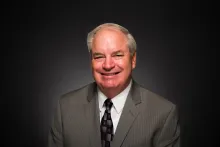
Robin Webber was born in Chicago, Illinois, in 1951, but has lived most of his life in California. He has been a part of the Church of God community since 1963. He attended Ambassador College in Pasadena from 1969-1973. He majored in theology and history.
Mr. Webber's interest remains in the study of history, socio-economics and literature. Over the years, he has offered his services to museums as a docent to share his enthusiasm and passions regarding these areas of expertise.
When time permits, he loves to go mountain biking on nearby ranch land and meet his wife as she hikes toward him.
