

Robin S Webber
This transcript was generated by AI and may contain errors. It is provided to assist those who may not be able to listen to the message.
Today we're going to explore a short but profound chapter of the Old Testament, but we're not just going to remain there. This chapter begins with the inquiry of two sincere questions about being in God's presence. How many of you in this room would like to be in God's presence one day forever? Then you're going to want to listen to this message.
It begins with these two sincere questions, and then after that it gives a road map of answers to guide us towards that ultimate presence before God. At the end of this chapter, we're going to find that there is a beautiful assurance about the author of the psalm and his knowing that one day he's going to be able to be in God's presence. In one sense, this chapter is given in what we might call Old Testament understandings because it is written probably about 900 to 950 BC.
But on this Sabbath day, what I would like us to do is to understand we're going to use both the Old Testament and the New Testament, and to remember the words of the Apostle Paul about the Israel of God in Galatians 6 and verse 16, and to recognize that, ultimately, the promises that are in the New Testament and the assurance that is given in the New Testament regarding that which is the spiritual Israel of God. These two questions arise from the man David. Later on, King David, a man that in Acts 13 and verse 22, it says that he was a man after God's own heart and who sought to do his will. And so these questions are directed towards God, and the questions that were asked almost 3,000 years ago are just as poignant today as when David scribed them.
Here are the two questions. Number one, who may abide in your tabernacle? Who may abide in your tabernacle? But then there's a second question that follows. Who may dwell on your holy hill?
Now, it almost sounds the same, but that's why we give messages like this to understand the movement from question one to question two. So the title of today's message is simply this, my friends, who may abide in your house forever? Who may abide in your house forever? Let's all turn over to Psalm 15, and I think some of you are already headed in that direction, looking at the audience. If you'll join me right in the middle of your Bible, the book of Psalms, and let's turn to Psalm 15.
Okay, so we're all there. So we're going to turn to Psalm 15, and I kind of want you to get this picture or this movement in your mind as we go through this together. And we're going to be walking with David. Remember I talked about a roadmap of answers. We're going to be walking with David towards God's answer as to who will abide in his house forever. This psalm is simply titled, probably in your Bible, as a psalm of David. Sometimes we don't recognize it until we start looking at the titles. Not all psalms were written by David, but this is according to David.
In it, David meditates over the character of a man, and do I say today, a woman.
He reflects over their character received in the presence of God. We have no precise occasion for this psalm. Sometimes we can actually tell most likely exactly when the psalm was written in the life of David. But there is a suggestion that it may have been written upon the bringing of the ark into Jerusalem. You can see that in second psalms because the temple had not yet been built.
So we look at this in Psalm 15. Notice what it says, Lord. So he's addressing God, Lord, who may abide in your tabernacle. Now let's understand at this point that the tabernacle spoken here is not the temple when this psalm was written. At this time, the tabernacle of God was most likely at the area called Gibeon. And it was a pilgrimage of coming and going. As we all know, Deuteronomy 16, that Israel would go up three seasons out of the year for the holy days.
Depending upon when David wrote this psalm, it may very well have been that the ark of the covenant itself, though, the temple had not been built. That would be during the time of Solomon.
But that the ark of the covenant had been brought in, and perhaps even placed on the holy hill of Moriah, where later on the temple would be built. Even so, he had a passion. Remember in Acts 1322, it said that he had a heart that sought after God. It was a heart patterned after God.
And in Acts 1322, it would go on to say that whatever God wanted, that was his desire. Now, when I say that, and I know you probably explored the life of David like I have sometimes, and you go, do I dare say, really? When you read the whole story of David and the different things that happened? But you know, people are complex.
People have lives, and things come to them. It's not how you enter a situation, it's how you enter a situation. And each time, David would draw closer and closer to God. He wanted to be in God's presence, and it can kind of be akin to... Join me if you would just for a moment. Let's go to Psalm 84.
In Psalm 84, and let's pick up the thought if we could in verse 1.
He had a kindred desire like the sons of Korah. We notice what it says here in Psalm 84, in verse 1, How lovely is your tabernacle, O Lord of Hosts! My soul longs, yes! And it even faints for the courts of the Lord, my heart, and my flesh cries out for the living God. And then we just go across the column to verse 10, For a day in your courts is better than a thousand. I would rather be a doorkeeper in the house of my God than dwell in the tents of wickedness. This psalm would be written by, guess who? The sons of Korah. Remember Korah, back in Numbers 14? The bad guy got swallowed up by the earth, who was of the Aaronic line. And yet here are his descendants, the sons of Korah, still serving in the priesthood. And they had this longing that, whatever it might be, they wanted to be in the presence of God, even if it were just merely being a gatekeeper. The longing was there.
The longing was there. Now David, in that sense, could not stay in that sense in the tabernacle, could not stay in that tabernacle, because he was not a Levite, and he was not of the priestly line. He was the line of Judah. But, and here's what I want to share with you this afternoon. But his heart was there. He ached. His desire was so great that he wanted to be in the presence of God. It's a little bit like the Apostle Peter, and you've heard me say this many a time, where, wherever Jesus was, that's where Peter wanted to be. He sometimes stumbled or sank, or did something wrong along the way. But what a heart! And the same with David. And perhaps, do I dare say, all of us. We all want to walk after God, and we trip, and we fall, and we stumble. But our desire is, wherever God is, that's where we want to be. Now let's take a look, then, back here in Psalm 15. It says, Lord, who may abide in your tabernacle, who may dwell in your holy hill.
We look at the word number one. Here, the word translated, abide, can actually be better understood as to sojourn. Now this is going to be very important in our discussion, so I hope that you'll stay with me. It's better translated as sojourn. It describes a visit. It describes receiving the hospitality of a tent dwelling host. Think of a moment of a brahm there in the plains of Mamre, by the Taboranth tree, and how he would receive people when the three men came to him.
It's receiving the hospitality of a tent dwelling host. This opening is then understood in the light of the customs of hospitality in the ancient Near East to strangers. And it says to abide in your tabernacle. Now, the tabernacle of God was the great meeting tent that God told Moses and Israel to build for him during the Exodus. And you can jot down Exodus 25.31. Since the tabernacle was the place where man met with God through the work of the priest and the practice of sacrifice, David's longing to abide in your tabernacle was actually a desire to abide in the presence of God. But that abiding is a sojourning. It's a visit given to strangers, those that are on the way. It wasn't permanent. There was hospitality, but you were not a citizen of that land. You were not a person of that area. You came, you stayed, you went. There was a temporary feeling to all of this. But now, notice verse 2, very interesting.
Who may dwell on your... notice, who may dwell in your holy hill? Now, we don't normally see this in a quick reading, but there's a transition here. There's a transition. David is simply using the Hebrew technique of repetition to ask the same question, but there's a slight slant to this.
But it's deeper. It's more intense. It's more intimate, as first asked in the first part of the verse. The difference between to abide and those that might dwell. Let's take a breath here for a moment. Then we're going to go a little bit deeper in our study this afternoon. Okay?
David has in mind the life that constantly lives in the presence of God, who walks in close fellowship with God, because the heart, the mind, and the life are all in step with God's heart and mind and goals and life. Now, let's consider before going any further, we hear David's desire to dwell in that holy hill. To literally not only abide, but to dwell. You can abide with somebody. We have our oldest daughter and our granddaughter coming in this evening. Oh, by the way, we'll be hospitable to them. Okay? We love them. And they're going to abide with this. We're going to put out our best for them. We're going to hopefully have a lot of fun along the way tonight and tomorrow. But they come, they go. Now, they've got a nice place to go back to. It's called Ventura, California. But they're going to come down and spend time with us.
But they're not going to dwell with us. Dwelling is something that is permanent.
Dwell mentions something that you are a part of that kingdom. You are a part of that group that stays in the presence of God. How does that affect all of us today when it comes to the presence of God before we go into the roadmap? Let's understand a few things. David himself, in his time, even a man after God's own heart, in that sense could not go into the different aspects or the different parts of that tabernacle that was in Gibeon. And this is the excitement. And this is God's glory in us to recognize that he is tabernacling in us today. Just think about that for a moment. As much as David wrote that has come down to us today to recognize that he himself could never come into the presence of God in the tabernacle. I'm not saying that God wasn't present in his life, but just think that one through for a moment. And while you're thinking through that, join me if you would in 1 Corinthians 3.16. Paul's writings, and Paul just expands this whole concept that God inspires him with in 1 Corinthians 3.16. And some of you, whether here or those that are online or maybe hearing this for the very first time, but where is the temple of God today? Notice what it says in 1 Corinthians 3.16. Do you not know that you are the temple of God and that the Spirit of God, notice there's that word, doesn't simply abide, but it dwells in you. And if anyone defiles the temple of God, God will destroy him. For the temple of God is holy, which temple you are. Now, the term that is used there for temple is the Greek word neos, in AOS, which literally speaks of the Holy of Holies. Remember how only the high priest on the day of atonement could go through the veil, go through the veil, and be in the literal presence of God where that shekinah presence had come down over the mercy seat. That was the role of the high priest.
Only one man. And yet it says that God's presence, that same presence, is in us today. Again, chapter 6, it's always good to see it twice in the Bible. Once is enough at 619. Or do you not know that your body is the temple of the Holy Spirit? Who is in you whom you have from God and you are not your own? Let's go one more structure verse. Would you join me, please? Let's go to Revelation 5 and verse 10 just to nail this down. In Revelation 5 and verse 10. Now again, remember the road that we're on. This initially was given what we might say in a sense in Old Testament terms. As much as David, a man of the Iron Age, would have understood around 900-950 BC.
Now it's given to us, and there's an extension. And notice in Revelation 5 and verse 10, and has made us kings and priests to our God. And we shall reign on the earth.
Some translations say a kingdom of priests. Now, to understand further, we are priests in training.
And what do priests do? They serve the temple. And some actually go further into the temple than others because they're the high priest. And there will always be one heavenly high priest, and that's Jesus Christ himself. But by the end of this message, we're going to go to another verse that's very exciting. That will tie this all in as to who will dwell in your holy city. What I like to do for a moment is, let's appreciate David's questions here. Now, one thing I want to share, because sometimes what we do, we come to God in despair. And our questions are not questions, they are doubts.
The difference between a question and a doubt is this, my friends. Questions are seeking answers.
Doubts are not seeking answers. The doubt is an answer in itself. It's not a good answer, especially when it comes to God. And so he's questioning God, not out of despair, but simply out of inquiry, out of wanting to know how, when. So what follows now as we go back to Psalms 15 is not, do I dare say, it is not high theology. It is a road map that shows steps as to the man that will dwell on the house or the holy place. Psalm 15. Let's take a look now here.
Because what we have here is, as we look at it, we're talking about a way of life.
We're talking about a way to walk, not before God, but with God. There's a lot of people at times that make the mistake because what happens sometimes is simply this. Well, I've gone to church. Now we can sometimes say that about other people, and we can point the finger at other people and say, well, you know, they did their bit, they went to church, they're out of church, on with life. But what we were called into by God's grace and by his revelation is not going to church. Now coming to assembly is a part of Scripture. Don't mistake me.
But you are the church. The church is flesh and blood and spirit on two legs.
Every day of the week, the ecclesia, the called out ones. So it's not enough to go to church.
It's not enough to say, well, I have God walking before me. What we're going to find here is the mind of God revealed in the rest of this roadmap of answers that God wants us to understand how he thinks. David wanted to be, are you with me? David wanted to be just like God, a man after God's own heart, to be continually present. Join me if you would in Psalms 139 before we dive deeper. One more verse I want to share with you. These verses keep on coming up. Psalm 139. Let's take a look here. Starting in verse 1. O Lord, you have searched me and know in me. You know my sitting down and you know my rising up. You understand my thought afar off.
You comprehend my path and my lying down. For not a word on my tongue, but behold, O Lord, you know it altogether. God is present wherever we go. Monday, Tuesday, Wednesday, Thursday, Friday, midnight, noon, eight in the morning. Verse 7. Where can I go from your spirit or where can I flee from your presence? I ascend into heaven and you are there. If I make my bed in the grave, behold, you are there. When David is saying this, he's not saying it like he spooked.
Okay, have you ever thought about that? Oh, you're here, you know, you're looking over your shoulder.
He's here again. No, he's overwhelmed. That God has that much care and that much desire for his well-being. So, going further now, here we come to discover the character of one who can come before God. I want you to stay with me a second. Here we come to discover the character, righteous character of one who can come before God is based on his character amongst his friends and his brethren. In other words, in simple low-angle of Saxon language, what you do to others, you're doing to God. And sometimes we just think, well, we can do this with God, but we can't do this with others. But that equation does not work in God's economy. One plus one equals two. Remember what Jesus said, if you have done it to the least of these, then you have done it to me.
So, let's break this down very quickly. Psalm 15. Here we go. The first thing that is centered upon is, he who walks uprightly and works righteousness and speaks the truth in his heart. So, number one, we're going to call it this. He who walks uprightly. Number one, walking upright is the roadmap to dwelling on that holy hill. In describing the character of the man who can live in God's presence, David began with two general descriptions. He walks uprightly and works of righteousness. The word uprightly and or perfectly, which is in the scriptural sense is equivalent to sincerely, with an absolute incorruptible aim at the glory of God.
Sincerely. In other words, simply this. When you've said that I'm going to be a child of the Father and I'm going to be a disciple of Jesus Christ, and I understand that I'm being placed in the body of Christ, this grand, beautiful spiritual organism, that I'm going to be the real deal. That's my goal. I won't always be there, but that's my goal. That's my desire. No cards underneath the table.
What you see is what you get. I'm not living a double life. I'm not doing a Dr. Jekyll and Mr. Hyde.
That's what David is talking about here, and it says here very interestingly that the word comes up that about can be translated or equivalent to sincere. I'd like to share a thought. I've probably shared this before over the years, but the sincere is a Latin word. I'd like to share it with you for a moment, which you'll add on to what I just told you about what you see is what you get. Sincere comes from the Roman days, the Roman Empire. The Romans did have roads, but they could get a little bumpy, right? Have you ever seen a Roman road? It looks like a pathway in your backyard with stones, but at least it was better than the mud, especially when the armies were marching.
But what you would do is sometimes you would have a statue. You'd have some kind of pottery ware that you wanted to send to market, and you wanted to sell it to somebody. But when it's on a wagon, you think your car has problems, but you have those statues that are bouncing on a cart, right?
Then all of a sudden, maybe the oxen or the mule in front of you takes a turn, and it spills over. So what they would often do is they would take that, which if they could, they would pack wax into it. It got broken a little bit and put it all back together as if nothing had happened.
So wax was in there, and then they would try to sell it at market as if nothing had happened.
But the pottery that came through that had not been broken was the real deal, inside and out. You know what sincere means? Without wax. God wants you and me as members of spiritual Israel today, who have the temple of God in us, to be without wax. As to what you see on the outside is on the inside. What you see at Sabbath services is what we do for others. Because remember, our relationship with God is in accordance with our relationship with the man. You cannot untangle that.
You cannot untangle that. One plus one equals two.
Now, David's principle can be understood under the New Covenant in this sense. The conduct of one's life is a reflection of his fellowship with God. If your fellowship, your true fellowship, your discipleship is maturing, it will be noted. Your fellowship with God will be noted by how you deal with your neighbor. And for we that are married, our closest neighbors are our spouse, woman to man, man to woman. How we deal with our family, how we deal with our co-workers, how we deal with our neighbors, how we deal with the people that we come onto the street, how we deal with one another here in this room. 1 John 1 verse 6.
This will simplify it and bring it into one thought. 1 John 1 verse 6.
If we say that we have fellowship with him and walk in darkness, we do not practice the truth.
But if we walk in the light as he is in the light, we have fellowship, notice, that we are at full darkness with one another. It starts with down here below, in a sense, and the blood of Jesus Christ his Son cleanses us from all sin. So we see this whole construction that how we glorify God, how we are able to ultimately abide The Shamaa is actually made up of three sections of scripture out of the Old Testament.
Notice what it says here in Matthew 12 and in verse 28. Then one of the scribes came and, having heard them reasoning together, perceiving that he had answered them well, asked him, which is the first commandment of all? And Jesus answered with the lines of the Shamaa. He says, the first of all commandments says, Hear, O Israel, the Lord our God, the Lord our God is one, and you shall love the Lord with all of your heart, with all of your soul, and with all of your mind, and with all your strength.
This is the first commandment. And the second is like an end to it. You shall love your neighbor as yourself. There is no other commandments greater than these. Now we recognize that those are further defined and outlined in the rest of scripture. There's a lot of roots that go underneath those two commandments as how to be able to perform that. But we notice something. To walk righteously is the first one that's mentioned. For Jesus, when he was here as a pilgrim, and now is in that heavenly tabernacle up above.
These commandments as one that was raised as a Jew, and one who had given the law to Israel back in the Old Testament, this was his guiding star. This was his anchor in life, relationships with his father, our father, and also with his fellow man. His heart was not divided. Join me if you would in Psalms 86. And neither should be ours. Psalms 86. And this is our need to cry out to God and ask for his strength and his guidance in this, because we just can't do it by ourselves.
Where it says in verse 11, Teach me your ways, O Lord, and I will walk in your truth. Unite my heart to fear, to revere, to be in all of your name. And I will praise you, O Lord, my God, with all of my heart. And I will glorify your name. Glorify your name forevermore. Point number two, as we go back to Psalms 15. In Psalms 15, but I want to focus on, notice what it says here, where it says, And speaks the truth in his heart.
Point number two, And speaks the truth in his heart. But it also goes on to say, But he does not backbite with his tongue. David here understood that an upright, watch this, this is the PowerPoint. See the gallicop? You miss it. Upright. Totally different, isn't it?
An upright light speaks the truth in his heart. He does not backbite with his tongue. David understood that an upright and righteous life is known by the way someone speaks out of the abundance of the heart. The mouth speaks. Our words either betray our human nature or portray godliness in us.
Think about that again. How we speak either betrays our human nature. You can't cover it up. Your sin shall find you out. Numbers 32-23. Simply this. It says, Don't backbite. The root of the word backbite there means to go about and conveys the idea of one going from house to house and spreading an evil report about a neighbor. How important is it when we look at this verse, he who speaks the truth in his heart and he who does not backbite with his tongue?
How important is that? I'm going to mention a thought here that I'd like to share with you. I want you to consider for a moment that more damage over the years has been done within the body of our assembly, the body of our church, by the work of gossip, the work of criticism, and of slander than by any other single sin.
There are some sins that are private. Those also need to be repented of. But when you think of gossip, when you think of slander, when you think of backbiting, at times we recognize the fissures, the cracks, the tumbling over of pillars that that does. God's spirit in us should motivate us to bite our tongue before we devour others. I'd like to share a story with you for a moment. It's a story of a man that really felt bad about what he had said. He'd come to find out that he had bit into somebody's gossip and shared it with everybody in the neighborhood.
He really, really felt bad. And so what he did, he went to his minister and he said, sir, I've really done a very, very bad thing. I've spread gossip. I've sullied somebody's reputation. And so he said, what can I do? And the minister told him, here's what I want you to do. I want you to go take some duck feathers and I want you to, excuse me, some goose feathers, and I want you to put them on the porch of everybody whose door you knocked on and told them that.
He said, I'll try it. There's a lot of people. He said, go, my son. So the man went, did exactly as his minister told him to, and then he came back. He was really excited. He thought it was all over that the lesson had been learned, because that's kind of hard work to get goose feathers and put them all on porches, especially with the number of people he had told this to. And he said, is that it? He said, no, my son, there's more. Now I want you to go back and I want you to pick up all of those goose feathers on every porch that you put them on. He said, oh, that's horrible!
That's terrible! By now, the wind has blown them all over the neighborhood, and there's just simply no way I could collect them.
And he said, my son, that's what I want you to learn. Go and sin no more.
So when you look at this, a person that is in control, a person that does not backbite with his tongue, nor does evil to his neighbor. Interesting. In all of these words of David, we also see the deeper works of Jesus Christ, who commanded us to not only love our neighbor and friend, but also to love our enemies. Because you notice what it says, nor does evil to his neighbor, nor does he take up a reproach against his friend, in whose eyes a vile person is despised. I'll get to that. Verse 4. One thing I'd like to share with you here, and this is the next big step. Join me if you would in Matthew 5.44. Matthew 5.44. Actually, I want to go to verse 43. You have heard that it was said, You shall love your neighbor and hate your enemy. But I say unto you, Love your enemies, bless those who curse you, and do good to those who hate you, and pray for those who spitefully use you and persecute you, that you may be sons of your father in heaven, for he makes his son to rise on the evil and the good, and sends rain on the just and on the unjust. For if you love those who love you, what reward have you? Do not even the tax collectors do the same. And if you greet your brethren only, what do you do more than others? Do not even the tax collectors do so? And therefore, you shall be perfect just as your father in heaven is perfect.
So we need to understand that. We need to control our tongues. If one day we are going to dwell on that hill, we've got to bring ourselves into control. So often, you know, and I know, we say, oh, I shouldn't have said that. I should have caught my words. I should have been thinking before I spoke. I'm sure we've taught that to our children. We've heard that from others. I should have been thinking before I spoke. The tongue is the dipstick to the heart. It tells you what kind of oil is down there. I'm sure even you ladies know how to change the oil in your cars, right?
The tongue is the dipstick to the heart. Out of the abundance of the heart, the mouth speaks.
So often, it's not just simply what we're thinking because our minds are connected to our hearts, to what our core is. And God willing, it's a godly core. We've got to check it down here because we are what we fill ourselves with. We are as to what we value.
So let's take this all as a thought of recognizing who will dwell on that holy hill.
I've already covered actually point three in whose eyes a vile person is. Oh, no, I do want to mention that. Let's go to chapter 15 where it says, in whose eyes a vile person is a stop eyes, but he honors those who fear the Lord. Let's talk about that for a moment.
David knew that we cannot love good unless we oppose evil. It doesn't work any other way. We cannot love the good of God if we don't oppose evil. As God says in Proverbs 8, 13, the fear of the Lord is to hate evil. And there is such a thing as evil. And we need to understand that. In Psalms 22, let's go to Proverbs 22. Pardon me, Proverbs 22. Proverbs 22. And let's pick up the thought if we could in verse 24. Make no friendship with an angry man, and with a furious man do not go, lest you learn his ways and set a snare for your soul. This is profound. This is how to live. I always remember talking to that one woman one time. She said, you know, my mom had taught me to read the Proverbs by day is how to live and to read the Psalms at night to comfort me. This is a life manual. Don't be around people that are going to corrupt you.
You know, in 1 Corinthians 15 and 33, you can just jot it down. It says, bad company corrupts good manners.
And Ephesians 5 and 11 says to stay away from those that have evil practices.
God's Word never changes. Notice, you become what is in your environment.
That's not the individual that does that that is going to be on God's holy hill.
Then notice what it says here again in Psalms 15. Going back again, you might just keep your bookmark there. But he honors those who fear the Lord. He honors them.
It's beautiful. And then notice what it says here. And with this is point number four. He's true to his promise. Point number four, he is true to his promise. He who swears to his own hurt and does not change. What you've said that you're going to do is what you do. Now this may kind of really sound simple, but notice the profoundness of this as we go to the New Testament. It says, he who swears to his own hurt and does not change. What did God say in the Garden of Eden to Adam and Eve as he spoke to them and said that out of your seed there is going to come one that is going to bite the ankle of the one that I send. Now there's good news after that. He says the one of your seed, the one of your seed, is going to stomp on the head of the serpent.
But from the very beginning, the first prophecy in the Bible, Genesis 3 15, that God would send a solution from above. But that solution was going to take incredible sacrifice. There was no going back. No way, no how. That when God said that he was going to send a Messiah and he was going to send a Savior and that there would be sacrifice, that God was good to his word. In the book of Titus, Titus 1 1 through 2, it says, God can't not lie. He does not change his mind. Jesus Christ, Hebrews 13 7, he is the same yesterday, today, and forever. And when you notice Psalm 15, it says, he swears to his own hurt and does not change.
To where in the book of John, on that altar of Golgotha, as he's about to die, before he says, into your hands I commit my spirit, he said, it is finished, done. He kept my word. The victory had been won. Now, the details have to be worked out until he comes back. God is true to his word. And when we look at this, even to his own hurt, because it hurt.
It was horrendous what Jesus Christ had to go through. And yet he did it for you and for me. He is our example. And there are times when we have to do the right, even to our own hurt.
And I know, looking at this audience and knowing some of your stories, I know you've done that.
That tells me that God dwells in you. But it does mean that we won't be tempted again.
And to recognize those who dwell on God's holy hill are those that will see it through to the end.
And it's not about us, but it's glorifying God and being Christlike in that manner.
Almost done.
Psalm 15. He who does not put money at usury, nor does he take a bribe against the innocent. And David described the man who desires to live a righteous life when it comes to money, when it comes to helping others. Scripture was not against usury in that sense. It was not against lending money or interest. In ancient Israel, you could not do that towards a member of Israel. You could do that towards others outside the camp. But even in that, it had to be in a manner of not getting, of not overbearing, of not hurting somebody. Join me if you would in Leviticus 25.
Leviticus 25.
Something that we're always brought back to. Leviticus 25 and verse 35.
If one of your brethren becomes poor and falls into poverty among you, then you shall help him, like a stranger or sojourner, to be hospitable that he might live with you. Take no usury or interest from him, but fear your God, that your brother may live with you. Take care of the person.
You shall not lend your money for usury nor lend him your food at a profit.
But now why? Why do we do what we do and why do Christians have a generous heart? Are you with me?
I am the Lord your God. Remember when God said, most have said, who's going to send me? Tefaro said, I am that I am. I am the Lord your God who brought you out from the land of Egypt. It always goes back to the Passover experience. And remember what we were before God began to deal with us and rescue us from the slavery, not of Egypt, but from the slavery of sin and how much God has given us. I, Susan and I, maybe tell you during the message chat just how blessed we have been of recent date and my own self with my physical health and with that recent accident that I had, I've got more into that story now. It's exciting. I told Jim and Bev, it's exciting. I love it when God knocks on my door and gives me more information.
And we need to remember where God picked us up and said, you're going to be my child. I want you to follow me as much as Israel followed me to the Promised Land. I want you to follow me to the kingdom of God. And because God has been so graceful and so generous to us, we need to have a heart of generosity towards others. And when somebody's down, not to poke them in the face or stamp them out like an ant, but remember how God picked us up. That's the individual that is going to dwell on that hill. Now let's go back to Psalm 15. And we'll conclude. Psalm 15, these very few verses, are divided this way again.
There are questions. There is a road map to that hill. And then there's an assurance.
Notice what it says here, and we'll conclude. Psalm 15, he who does these things shall never be moved.
Shall never be moved. What does that mean?
The idea behind all of this is that shall never be moved is that this righteous one will be more than a guest in the tent of God forever.
It's interesting when you see this verse, stay with me, because this was a thought that was often on David's mind, a man after God's own heart, and knowing what God had in a sense promised Israel and promised him. Notice what it says, he who does do these things shall never be moved.
Join me, if you would, please, for a second in Psalm 16. Keep your hand in Psalm 15, Psalm 61.
And let's pick up the thought if we could in verse 4. Notice, I abide in your tabernacle forever.
Forever.
Forever.
How does that register then with Psalm 23? Join me over in Psalm 23.
Psalm 23. And at the very end, verse 6, Surely goodness and mercy shall follow me all the days of my life. Now notice this. David ups at one, the second word. And I will dwell. I will dwell. I will not just be a guest.
I'm going to be a permanent resident with Almighty God and His Christ.
And I will dwell in the house of the Lord.
Oh, excuse me. Forever. Forever.
Let me encourage you a little bit more of taking that road map of life in John 2 in verse 17.
First John 2 in verse 17. I'll just read it.
And the world is passing away. And the lust of it. But he who does the will of God abides forever. Last. And we'll conclude. Revelation 3 in verse 11.
Revelation 3. A message to the churches then and the churches now.
Remember, David would not have been able to enter the tabernacle. He would not have been able to enter the temple. Right? But notice what it tells us that our first fruits of God Jesus is the first of the first fruits. But we are, by His grace, offered to be first fruits in this new creation. And you notice what it says in Revelation 3 and in verse 11.
It says here in Revelation 3 and verse 11, Behold, I come quickly.
Hold fast what you have that no one can take your crown. Now notice it says, He who overcomes.
And there is overcoming in all of this. This is not natural. We need God's help. I will make Him a pillar in the temple. In, not outside, but in the temple of my God. Of His Father, because this is Jesus speaking. And He, and or ladies, she. And He shall go out no more. And I will write the name of my God, the name of the city of my God, the New Jerusalem, which comes down out of heaven for my God. And I will write Him, ladies, and her, whoever paraphrased my name. I want you to simply look at this.
It says at the very beginning of this verse, and it says, And He shall go out no more.
It's not about abiding. It's not just a quick touchdown and on my way to Babylon. Abiding, dwelling, forever. But there's something that we have to do along the way, which David spoke to in Psalm 15. And here's the deal. To have everything that God wants to grant us. We, you, me, we have to give ourselves away.
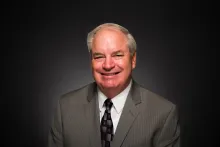
Robin Webber was born in Chicago, Illinois, in 1951, but has lived most of his life in California. He has been a part of the Church of God community since 1963. He attended Ambassador College in Pasadena from 1969-1973. He majored in theology and history.
Mr. Webber's interest remains in the study of history, socio-economics and literature. Over the years, he has offered his services to museums as a docent to share his enthusiasm and passions regarding these areas of expertise.
When time permits, he loves to go mountain biking on nearby ranch land and meet his wife as she hikes toward him.
