
John Elliott
This transcript was generated by AI and may contain errors. It is provided to assist those who may not be able to listen to the message.
Have you heard the latest world news? Have you been keeping up with the struggles, with the tragedies, and with the strategies that governments and politicians are coming up with to try to deal with some of the atrocities that are taking place in this world? You live in a very dynamic age. It's an age filled with greed and with people trying to come up with better ways to improve the personal state and status without much regard to others. This creates drama, and the drama goes further afield as God, in the minds of people, is displaced with personal ambitions, concepts of evolution, the general revoking of the laws and commands of God. We see constant surprises with how low humanity can go. These things can create in us fear, danger, and it certainly creates for humanity at large a growing instability. An instability of all governments, of all systems, of all things that are there to help and assist with our life. But even though you live in this dynamic age filled with drama, you keep the feasts of God. And these festivals of God are to create in you a different focus. A focus away from the craziness, away from Satan's rule, away from the sin, away from the atrocities. You are called as a special individual among a special people for a focus on special things. And those things are not of this world. As you observe God's festivals, in particular these fall festivals that we are now going through, what focus should they be creating in you and me as we observe them? What application should they be fulfilling in our mindset each day of our life? Not just in a feast day, but every day. How should the festivals of God be changing our minds to a unique focus that no one else on this planet has? Today I'd like to give a sermon entitled, The Festivals for God's Royal Family, and talk to you from the Scripture about a uniqueness that these feasts have and a unique concept that they should bring to our mind in preparing us to be in the very family of God. But something is missing in the festivals of God. What could that be? You ever think what's missing in the feasts? And all the feasts listed in Leviticus 23, and all the feasts we've been observing this year and every year, there's something missing. You know what that is?
This world. This world is missing from every feast. This world and the cares of this life and the events of this life are missing. Instead, there's a different focus. And the feast focuses us on joining the family of God. Every festival takes us through the steps of understanding how we can become part of the divine family of God. And ultimately, when that takes place, all the drama and all the physics and all the physical creation and everything a part of this world will be dissolved, burned up, and destroyed in the memory of it as well.
It's an interesting focus that God wants to develop into you and me. And it's not a combining and a carrying along this world and its events and our lives during the six days of the week, somehow commingling that, but rather to come out of this world. And these feasts tell us how to come out of this world. And they picture coming fully out of this world and fully into the family of God. So let's take a look at the festivals for God's royal family.
In Leviticus 23, let's notice the statement of God Himself regarding these festivals. These aren't the festivals of the church. These aren't the festivals of you and me. These are festivals of God for His royal family. Leviticus 23, verse 1 says, And the LORD spoke to Moses, saying, Speak to the children of Israel, and say to them, The feasts of the LORD. These are God's feasts. They're not made by God. They are God's feasts. He says, These are my feasts. He says to them, The feasts of the LORD, which you shall proclaim to be holy convocations, rehearsals, assemblies.
Notice He says, These are my feasts. We're going to see that God is fully involved in these feasts. You and I come today, and we come at other feast days to participate in the festival, but we come to Him. And He communes with us. And they are holy convocations, not just with each other, but with Him. They are His feasts. He says this twice in one sentence.
The feast days, then, are for the family of God. They are by the family of God. If we go to hold your finger here, if you will, because we'll come back in just a moment. But in 1 Peter 2 and verse 9, let's take a glimpse at how God looks at you in His church.
1 Peter 2 and verse 9 says, But you are a chosen generation. You didn't happen here by accident. It wasn't some fluke that you heard or read or somebody told you something. But if you are truly called of God and obeying that calling, you are a chosen generation. A royal priesthood. A holy nation. His own special people. This is who assembles on the feast days that we just read here in Leviticus 23. In verse 2, come to attend the feasts of the Lord that are holy assemblies, my feasts.
Then He begins to tell us here in Leviticus 23 what these feasts are. The first one, listed, is the Sabbath. Verse 3, He says, Six days shall work be done, but the seventh day is the Sabbath of solemn rest, a holy convocation. You shall do no work on it. It is the Sabbath of the Lord. It's not your Sabbath, not my Sabbath. It's the first feast listed, and it's His Sabbath.
Over in Matthew 12, He says, I am the Lord of the Sabbath. He tells us in Isaiah 58, take your foot off my Sabbath. They are holy. We are to keep them holy. The Ten Commandments says, remember to keep the Sabbath day holy. Now, I believe, and the Church has made this statement, things, nothing can be holy unless God is in it. So, if you are at the return of Jesus Christ, don't be surprised if you find out that every Sabbath, He has not been at the right hand of the Father, but He's been here. You look in Ezekiel 1 chapter, and you see that portable throne with the wheel within a wheel, and the great brightness of it, and it goes straight forward.
Nothing makes it go around. It comes in power, and on top is a throne, and He is seen sitting on it in the last verse of Ezekiel chapter 1, a rainbow over that throne. Where do you think He goes on that? What do you think He does with that? Don't be surprised if you find out that He comes here every Friday evening at sunset, and stays till Saturday evening at sunset for the 36 hours that His holy Sabbath is.
This is My Sabbath. That He makes holy by His presence. That He said, I am the Lord of. And this is His church which He has died for, and this is His body, and this is His bride. Where do you think He would be on the Sabbath? I can't tell you, but I would not be surprised if this Holy Day, which is a holy convocation in the middle of verse 3, is not a time when He is here looking for the sign that you and I give Him as to how we keep the Sabbath holy.
The Sabbath is a sign to God between Him and you. That's what the Bible says. It's a sign to Him of who His people really are, by how they keep the Sabbath. And when He says here, don't work, well, He's talking about a type of work.
Because in the Ten Commandments it said, God created for six days and He finished that work. That was preparation work for the seventh day work. God worked on the seventh day, but He did a redemptive work. He did a work of bringing humanity, beginning with Adam and Eve, into the family of God. He had to prepare for that for six days, or He wouldn't have had any family to begin working with. So you and I are to do our types of preparatory work for the Sabbath and during the week for six days. And then we are to do a different kind of work, Jesus says, on the Sabbath.
In Matthew 12, I believe it is, He says, it is lawful to do good on the Sabbath. We are to assemble on the Sabbath. We are to love each other. We are to honor God. You know, it's kind of interesting that in the Ten Commandments, when you come to the Sabbath Commandments, and He says, you know, you are really to take this time off, and here it's a holy convocation. The next commandment is honor your father and your mother. What are we to do on the Sabbath if we are not to honor our spiritual father and mother, for not to participate in the family as He commands here.
A holy assembly that on the Sabbath day this festival is about the people of God. You know, the Sabbath is one example, if we go to Isaiah 58, verse 13, of being separate from the world, from society, from the drama. On the Sabbath day, we are supposed to even mentally come out of that and be separate. Let's notice this in Isaiah 58, verse 13.
If you turn away your foot from the Sabbath, now why would you take your shoes off, your sandals off, or turn your feet away from the Sabbath if God wasn't in it? And I don't know the details because He doesn't tell us, but somehow He makes that Sabbath holy, and it's His Sabbath day. And we're to take our foot off of that. Notice, from doing your pleasure on my holy day, to call the Sabbath a delight, the holy day of the Lord. See, the Sabbath isn't a day for us to be lazy or sleep in, and somehow then feel we're righteous because we're not doing anything, but rather an honorable delight holy to the Lord and shall honor Him, honor our Father, and honor the family, and love the family, not doing your own ways, nor finding your own pleasure, nor speaking your own words.
So we're actually on this holy day of the weekly Sabbath to take the drama and cares of this life and even the thoughts about what's going on in our physical life aside and concentrate on what God is concentrating on. Developing family, honoring our Father, as it says here in verse 13. And then you shall delight yourself in the Lord.
Passover is the next festival. Passover brings with it a massive opportunity by a great gift and sacrifice that God put into this plan of salvation. We might fear for our own lives. We might worry about the dangers that exist. But the one who became Jesus the Christ, he stepped in and took the worst of the worst. And he did it gladly, in a sense, so that family could come to the Father, so that family could come into the Elohim family with their mindset and fill that family with unlimited numbers. That is a beautiful, beautiful opportunity. And it brings with us possibilities. As we go over to Romans 6, the possibilities that his sacrifice brings to you and me are things that, if we get engaged in the possibilities, then the opportunity that he has brought by his sacrifice is fulfilled. If we do not become engaged in that, then for you or for me, that opportunity would not be fulfilled. The possibilities are seen here, beginning in Romans 6, verse 3.
This is where an individual begins to have a relationship with the sacrifice of Christ. This is where sin, then, for the first time in an individual's life, is washed away through a covenant, through a contract. And he says here, this happens at baptism. Therefore, we were buried with him through baptism into death, just as Christ was raised from the dead by the glory of the Father, even so we also should walk in a newness of life.
His death provides us with the opportunity to walk in a newness of life, and that is possible through God, through His Holy Spirit, if we submit to it, if we allow ourselves to be led by it. Verse 5, if we have been united together in the likeness of His death, certainly we shall also be in the likeness of His resurrection.
So that's the great possibility. We have challenges. We must be involved in this process. We look in verse 11, Likewise, you also reckon yourselves to be dead indeed to sin, but alive to God in Christ our Lord. We have to put away this age, this mindset of Satan, and following those things, die to that, and instead come to life and live with God through our mind. We have to be alive to God in Christ Jesus.
Therefore, do not let sin reign in your mortal body that you should obey it in its lust. This is a rejection of things we see on TV. It's sighing and crying for the abominations that we once did, we still do, and we repent of daily, but also a disconnect from our physical country, a disconnect from our human race, as it were, that is going pell-mell under a different God and a different mindset.
So we, verse 17, God be thanked that though you were slaves of sin, you obeyed from the heart that form of doctrine to which you were delivered. This deliverance provides a new opportunity, and that's the next festival that comes along. The Feast of Unleavened Bread. You know, the Passover, the Passover, it wasn't for everybody, and it isn't for everybody. You know, when Passover night comes and we observe it, only those who are baptized, only those who are part of the covenant that they have made it, baptism, partake of it.
Similarly, we read in Exodus 12, 43, no foreigner shall eat of it. That was part of the Passover under the covenant with Israel. No foreigner. Only the bride of God and of Christ take the Passover. You know, ancient Israel was a type of a bride for God.
You see, that described in a couple of places. Eventually, that marriage with that bride, that betrothed bride, fell apart, and God said that he had to divorce them in Jeremiah 3, verse 8. It shows you how strong that connection is with God. And so it is with the Feast of Unleavened Bread. Christ has a betrothed bride now. It's not an engagement. It's not like two people say, Yeah, we want to get married. Oh, yeah, sure. We'll figure it out in six months.
We'll get married if... I still like you by then. If not, I'll hand you back the reign. That's not the way it works. In the old days, you actually had a covenant. You actually did the marriage vows first, and you were betrothed. The wedding supper came later. And so it was, at baptism, you didn't get engaged to Christ. You became part of the bride of Christ. You became betrothed. And waiting for the marriage supper of the Lamb when he returns, and at that wedding, then the reality takes place.
But in the meantime, there's work to do. Feast of Unleavened Bread is Christ and his bride moving toward the Elohim family. It's you and me on the difficult way with Him never leaving or forsaking us. It's us, through God the Father, the Holy Spirit, Jesus Christ, them using the Holy Spirit in changing our mind a little bit each day.
Each day we submit to them, becoming more like the family of God. Now, Feast of Unleavened Bread is seven days of eating Unleavened Bread, and that is to show us the type of what we need to become as we walk with our betrothed husband, as we move towards this kingdom of God, the Elohim family. In Ephesians 5, we just skim briefly verses 22 through 32. You see this depicted for us by the Apostle Paul. This relationship between the Church now and Jesus Christ symbolizes our being a bride. Ephesians 5, verse 22, Husbands submit to your own...
I'm sorry, wives... I got that wrong. Hold it, ladies. Wives submit to your own husbands as to the Lord. Why does he say that? Well, he's talking here about the bride, the wife, that you are to Jesus Christ and that I am to Jesus Christ through the marriage covenant that we already made.
You know, when we're resurrected, there's no more covenant, there's no more paperwork. It's just, welcome. Doors open. Come on in to the wedding supper with the Lamb. We have made the commitment. The only question is, like the ten virgin example, will we be getting a divorce like Israel got? Five of the virgins get a divorce, as it were. The door gets closed. He says, it's off. But five go forward. My goal is that every one of you and every one possible can be part of the bride that goes into the wedding supper.
Becomes part of the divine family of God in spirit form. Verse 23, For the husband is the head of the wife, as also Christ is the head of the church. And he goes all the way down here talking back and forth between the physical analogy, which we think of as the reality, and the spiritual reality that is you and Jesus Christ now, if you're baptized, as the bride, making herself ready. As we shall see, we've got work to do.
Down in verse 32, This is a great mystery, but I speak concerning Christ and the church. And yet we thought he was speaking concerning husbands and wives. That is the greater thing. Our relationships here on earth temporarily parallel what God has for those who he's calling now in the future as a permanent relationship. Let's go to Revelation chapter 19 and verse 7. Revelation 19 verse 7. Let us be glad and rejoice and give him glory. Here's this walk that's been going on for the seven days of our life, the six days of our life, and now the seventh day, that great holy day of unleavened bread that signifies our passing through and becoming the reality.
Something we can't do ourselves, just like Israel couldn't go through the Red Sea. But we get brought to God. Let us be glad and rejoice and give him glory, for the marriage of the Lamb has come and his wife has made herself ready. Yes, we who are betrothed to him need to be ready in order to be counted among that number. I'd like to read Exodus chapter 13 verses 6 through 9 in this regard, regarding the Feast of Unleavened Bread.
Exodus 13 and verse 6 through 9. So I'm going to see something here that you might not have noticed before about the Feast of Unleavened Bread, in particular the symbol that we are to eat each day.
Exodus 13 and verse 6. Seven days you shall eat unleavened bread. At one time, some people who were once with the church wrote a paper and said, you don't have to eat unleavened bread seven days of the Feast. Well, we pulled that paper, and that paper no longer exists.
We now have the Word. Let's just read what the Word here says. You can apply it as you wish. As it says here in verse 6. Seven days you shall eat unleavened bread. And on the seventh day there shall be a feast to the Lord. Unleavened bread shall be eaten seven days. Now, why would we eat unleavened bread for seven days? What is that about? Well, we get the answer in verse 8 and 9. You shall tell your son in that day, saying, this is done because of what the Lord did for me when I came up from Egypt.
What is done? Keeping the feast? No. Eating unleavened bread seven days. This is done because of something. Verse 9. It shall be a sign to you on your hand as a memorial, and as a memorial between your eyes that the Lord's law may be in your mouth. So you're doing something with your hand, and it's also in your mind.
Okay? Eating unleavened bread is a sign of something. Keep going. For with a strong hand the Lord brought you out of Egypt. This festival is about us coming out of a modern Egypt. Egypt was symbolic of the world, of Satan's society. Eating unleavened bread reminds us that we are to come out and be separate. It's a festival that gets away from the drama. All the things happening in Egypt then, all the things happening here. It puts us on a path with Jesus Christ and reminds us every day that the symbol of purity, of agape, righteousness is what we are bound for and that God has called us out of this world.
Pentecost, as we commonly call it by its New Testament Jewish name, or the Festival of Harvest, as the Bible named it first in Exodus 23, 16, this is the harvest of firstfruits, the firstfruits of harvest. The Pentecost is a unique day. It is not sometimes about what we want to picture it, some historical event or something taking place. The focus, even by its name, the Feast of Harvest, is something that is completed, something that grew up, as Jesus said, I want you to develop fruit for the harvest and that your fruit would remain.
And here is a harvest, the harvest of the firstfruits. Let's notice some things about Pentecost. In Exodus 34, verse 22, it's called the firstfruits of wheat harvest, the firstfruits of the wheat harvest. That's different than what Jesus Christ was. He was the first of the firstfruits, 50 days before.
He was the firstfruits of the barley harvest, the humble grain that was ready to harvest right after the Sabbath during the days of Unleavened Bread. Now you come later, and Exodus tells us that this, in chapter 34 and verse 22, are the firstfruits of a wheat harvest.
The wheat harvest then would go on throughout perhaps a range of the summer as part of a greater harvest that would take place at the Feast of In-Gathering, the third festival, which we are going to go picture as the eighth day, the great harvest of humanity when all the dead will rise and be taught God's way. And then a massive infusion into God's family will take place. And so, Pentecost, as we call it, the firstfruits of the wheat harvest has great significance for you and me because that celebrates the success of that part of the bride that is ready, that is ready, that's made herself ready.
It's a day that focuses on that group of individuals who were like, became like the one who was the firstfruits of the barley harvest. And now they are ready, and God is going to bring them into the family. You'll notice in the past, an event that took place on this festival of harvest occurred in Acts the second chapter. And we read there that the apostles overflowed with the Holy Spirit. They were still humans, but the Holy Spirit came and it just overflowed within them. The church, it says, was together in one accord. Notice what happened. God is there. It's his feast. He's there through the presence of the Holy Spirit.
It's overflowing and everyone is there in one accord, in a unity that comes from God. They were there as family, family of God. In the future, the saints will become spirit members of God's family. You know, the festival of harvest, this harvest where God is coming to harvest the first fruits. We look in 1 Thessalonians 4, verses 16 through 17. 1 Thessalonians 4, verses 16 through 17.
This actually pictures the Feast of Harvest, the Festival of Harvest, which we kept some time back. Pictures your salvation. You're being ready. You're being harvested by God as a first fruit, a small harvest, of those who will become the literal wife and bride of Christ in spirit form. And notice what we see here in 1 Thessalonians 4, verses 16 and 17. For the Lord himself will descend from heaven with a shout, with the voice of an archangel, and with a trumpet of God.
Now we learn the timing of this event. And the dead in Christ will rise first. There is a resurrection of those who have died who will rise first. And I sometimes wonder if the prophecy that says, blessed are those who wait a little longer, isn't referring to the 45 days, or those extra 45 days aren't referring to the time where those in Christ rise first to the seventh trumpet and you'll find that there is an innumerable multitude who must yet die, and many faithful who must yet give their lives for a short time.
And it might be another month and a half until they are resurrected. Don't know. Just look at these scriptures. It will all be clear when it happens. But the dead in Christ will rise first, and then others who are alive and remain shall be caught up together with them in the clouds to meet the Lord in the air. And thus we shall always be with the Lord. There are some huge events that are coming, and these are encapsulated in the feast that we are keeping today, the Feast of Trumpets. Trumpets aren't just a nice musical instrument.
They're a sounding of an alarm. They are really the sounding of the worst event that will ever happen in time. This event Jesus Christ warned about in Matthew 24 and Luke 18 about the end time and when it will come and how it will come. And as he began to describe it, he just peeled off the first six seals off the scroll that are mentioned in Revelation. And it got worse and worse and worse, and it does get worse and worse.
And it's a time for people to really be who they're going to be and not shirk back or shrink back or start following the mindset of this world to see how can I protect or feather my own bed during the crises that culminate in the collapse of human civilization. Trumpets begins with a sequence of Satan-led events. This one single scroll had a seal on it. And if you open that seal, Jesus Christ to John was worthy to open the seal, and he began to look. And he read the first seal and was opening the second seal, and he went through seal after seal after seal.
Those seals are about the drama that escalates and escalates and escalates. It's not about what the Feast of Trumpets is about. Those are the six seals, or the five seals, that are all about what this world and the chaos of Satan are about. But we come down to the seventh seal, and the seventh seal has in it seven trumpets. That's what we're here to celebrate. The seven trumpets is when Jesus Christ comes and when he gets directly involved as the new King of Kings and Lord of Lords.
We have this book called The Book of Revelation Unveiled. If you have not read this in a while, I would sincerely encourage you, I would push you to read this booklet. To get really serious about not just understanding prophecy, but to understand what the fifth and sixth seals are about and what takes place during that time, before the seventh trumpet sounds. After the seventh trumpet, what happens in the fifth seal keeps running underneath for the church, for those who keep the commandments of God and are not part of the very initial resurrection. Those are serious times, and I mention this because all of this comes down to whether you or I will be in the divine family of God, which all of this and the church and our lives and the creation have been for.
We must be doing what God wants us to do. How bad does it get? Matthew 24, verses 21 through 22, Jesus tells us, He tells us, I'm going to tell you everything I know, just so you know. You've been told. You need to understand this. This is in Matthew 24, verse 21, for then will be great tribulation. After the sixth seal, sixth seal is the dramatic heavenly signs that take place.
There will be great tribulation, such as not been since the beginning of the world to this time, nor ever shall be. And unless those days were shortened, no flesh would be saved alive. But for the elect's sake, those days will be shortened. Now, my thinking is that the elect that are going to be resurrected don't need the days to be shortened. It's the elect of Revelation, chapter 7, the small remnant of the twelve tribes of Israel that God will begin working with during the millennium.
They are the ones sealed so that they are not killed. And for the elect's sake, and for God's millennial period to work out, those days will be shortened. But barely. Barely. There's going to be a huge chunk of humanity that dies at one point. There's going to be another big, huge chunk of humanity that dies at another point. And when Christ comes to make war with the remnant and humans who resist His coming, He and the bride are going to kill them all. How many people are left by the end is unknown, but it will be small.
It will be small. This is a very, very difficult time. He speaks of the coming kingdom as like a woman in travail. It's beautiful to get the baby, but there's a lot of anguish that takes place in the process. The focal point of the Feast of Trumpets is then the seventh seal and the seven trumpet plagues. These involve now the reign of Christ the Messiah. You can go to Revelation chapter 8 and you can see the trumpet sounds. The seventh trumpet sounds. And the kingdoms of this world have become the kingdoms of our Lord and of His Christ, and He shall reign forever and ever. It's at that seventh trumpet that something unique happens.
Something very unique happens. If we look right here in Matthew 24 verse 23, if anyone says, look, here's the Christ or there, don't believe it. There's going to be a lot of horrible things that take place. But as we go down towards the end, verse 31, He will send His angels with the great sound of a trumpet, and they will gather together His elect from the four winds from one end of the sky or the earth to the other. That is encouraging. After all the destruction and all the chaos, the Feast of Trumpets also speaks to the family of God. The Feast of Trumpets isn't about the chaos of the seals.
It's not about the chaos of what Satan will do or the wars of humanity against Jesus Christ. It's about the establishment of the government of God on earth. It is a process. And in establishing that government, the first of the first fruits are harvested at the seventh trumpet.
It's an exciting time in that sense. We go to 1 Corinthians 15 and verse 20. 1 Corinthians chapter 15 and verse 20. So be.
Reflecting back on what we've talked about, but now, Christ has risen from the dead and has become the first fruits of those who have fallen asleep. He became the first fruits.
Verse 23, Each one in his own order cries the first fruits afterward those who are Christ at His coming. Revelation 14 says, The ones who stand with Him on Mount Zion, Mount Olaz, are first fruits. That's the ones who are resurrected at the seventh trumpet. Verse 24, Then comes the end when He delivers the kingdom to God the Father, when He puts an end to all rule and all authority and power. It's a process there at the end that the bride participates in, as we read in Revelation chapter 2 and also at the end of Revelation, or the middle of Revelation chapter 19. Powerful times, big events. What is the timing of the resurrection, the first resurrection? In verse 51, Behold, I tell you a mystery. We shall not all sleep, but we shall all be changed in a moment in the twinkling of an eye, just like that, at the last trump, the seventh trump. Yes, this Feast of Trumpets is about the family of God, about the family of God being brought in, the first fruits of the wheat harvest, the family of God taking ownership, commanding rulership as directed by the Father, and going on, if we look in verse 49, As we have borne the image of the man of dust, we shall bear the image of the heavenly man. This is a fantastic change in our lives.
Verse 53, This corruptible must put on incorruption, and this mortal must put on immortality.
The Feast of Trumpets is also a prelude to the next phase, the millennial oneness with God and mankind. Let's go to Revelation 11, verses 15-18. We'll get a sequence of events here that must take place. Revelation 11, verse 15.
The seventh angel sounded, I said this was in chapter 11, and there were loud voices in heaven saying, The kingdoms of this world have become the kingdoms of our Lord and of His Christ, and He shall reign forever and ever. The twenty-four elders around the throne, these individuals then had something very important to say. We give you thanks, O Lord God Almighty, the one who is and who was and who is to come, because you have taken your great power and reigned.
The nations were angry, and your wrath has come, and the time of the dead, the bride of Christ, that they should be judged, and that you should reward your servants, the prophets and the saints, and those who fear your name small and great, and you should destroy those who destroy the earth. Right there in the seventh trumpet, which we celebrate today, is our resurrection, our judgment. It is so important that you and I are focused on becoming the possibility that the opportunity of His sacrifice offers us to walk that difficult path through unleavened bread, to be that harvest of the first fruits of the wheat harvest, to stand with Him.
This is an individual thing that you and I have. It is not based on the corporate name of your church, on who your leadership is, what style of governance you have, or whether you say you keep the commandments in the Holy Days or not. This is about being judged, as we just read. The time of the dead has come that they should be judged, and that you should reward them. We look for a reward. We want the right reward. If we have the right goal, which is given to us by God, to be like He is.
Be you, therefore, like your Father in Heaveness. Grow up into Christ. Become Christlike. Be washed and cleaned as His bride. If that's our goal, is to become godly, then we will receive the reward of eternal life. Now, you can interchange those words, but the way I'm using them, like we used to have a booklet, I think Mr. Herbert Armstrong wrote it, called, What is the Reward of the Saved? If you use it in that term, in that sense, we are looking, in a sense, to receive something that we have put our whole effort into.
It's not that we earn it, it's a gift. We can't even do it ourselves. We're stuck at the edge of the Red Sea on day six. You can't go across there. You can't get into Heaven. You can't do anything. But Jesus said, pray, be a person of prayer, that you may be counted worthy. That's what we want to be. We want to be people of prayer, counted worthy. If we don't want to go through this destruction, we should also pray like He said, God, please don't let our escape, don't let our travel to the place of safety come on a Sabbath day or in a winter.
Not mine, but our. Don't let this time of escape come on a Sabbath, because that's a time when we're to be focused on a relationship with God, or in a winter time when it would be harmful or difficult on others. We should be developing this mindset of God, and then God will judge some to be worthy, to escape all these things that come upon the earth, as Jesus said in Matthew 24. If we look in chapter 14 and verse 1 now, I looked and behold a lamb standing on Mount Zion, and with him 144,000.
They have His Father's name written on their foreheads. Wow. These are individuals who don't have the mark of the beast on their foreheads. They have the Father's name written on their foreheads. We find that back in Revelation chapters 2 and 3 that these were the church who overcame the ones who put sin out of their lives.
They overcame this society and mindset of the devil. Looking in verse 4, chapter 14, these are the ones who were not defiled with false religions, for they are virgins. These are the ones who follow the lamb wherever he goes. We are walking the walk of unleavened bread. These were redeemed from among men, being first fruits to God and to the lamb.
This festival is about the timing of God's rule coming to earth and God's family beginning to be filled. It's an exciting time. In chapter 15, verse 2, I saw something like a sea of glass mingled with fire, and those who have the victory over the beast, over the image, and over his mark, and over the number of his name, are standing on a sea of glass, having the harps of God. Now, notice what they're singing. These individuals who are now in the God family, they sing the song of Moses, the song of the lamb, and they sing, The feast of tabernacles is a time when the drama and Satan and the mindset, the whole mindset of Egypt, that type of a society, of this world, will not be there.
Humanity will cease, under what's pictured by and through atonement, humanity will cease to eat off the tree of the knowledge of good and evil. There will be an atoning for their sins, and through that atonement, a relationship with God can be forged. It is through that redemption and that work of redemption, through atonement, through the sacrifice of Jesus Christ, and through the removal of a different mindset, as the two Azazel goats showed, that atonement with God can be realized.
Essentially, mankind will cease eating from the tree of the knowledge of good and evil, and will begin to be influenced by the tree of life. They won't be the current mindset anywhere in existence. Rather, it will shift to, your will be done on earth as it is in heaven. That's what happens with the removal of Satan. You know, it says in Amos 3.1, can two walk together unless they be agreed?
Right now, humanity can't walk with God. So Satan does have to be removed. But atonement isn't just about the removal of Satan. It's about being at one. And Jesus' desire in John 17 is that we all be one, as he is one with the Father, that we be one together and one with them. The English name at-one-ment follows well with the meaning of atonement, which is redemption. It is that atoning for and the redeeming of is the bringing back.
It says, for you, like sheep, had gone astray, but now you are brought back and healed, stitched back together by the blood of Jesus Christ. That atoning is very much about God developing family again. In Isaiah chapter 26 and verse 20, it's important to notice what is actually going on and what will need to take place in this regard. Isaiah chapter 56, we'll just notice here verse 5.
You know what? I should be in Isaiah 26. Sorry. Isaiah 26 and verse 20. A little ahead. Isaiah 26 and verse 20. Come, my people, enter your chambers and shut your doors behind you. Hide yourself, as it were, for a little moment until the indignation is passed, until the great tribulation is passed, but this is actually referring to Christ's day of the Lord, the things that take place in the seventh trumpet.
Verse 21. For behold, the Lord comes out of his place to punish the inhabitants of the earth for their iniquity. The earth will disclose her blood and will no more cover her slain. We would like to be in that place of safety, wouldn't we? What is this is depicting? We're to be hidden, hopefully. Many will be. Some won't. They will have to give their lives for whatever reason. But in verse 27, In that day the Lord with his severe sword great and strong will punish Leviathan, the fleeing serpent. He's going to have to go and take Satan, as we see in Revelation 21. Revelation 20, verses 1-3.
And bind him for a thousand years, so that that mindset cannot influence humanity any longer. And that opens the way, then, for what we celebrate in the Feast of Tabernacles. Let's go to Revelation 19, verses 5-8. First of all, let's see the mindset of the royal family. You know, the feasts that we are celebrating are God's festivals for his royal family. Do you ever stop to think about what that family is about? Do you ever thank God in your prayers for being the God that he is? To really think about, wow, it is perfect love.
Isn't it great that he's not like some of these other concepts that sci-fi films and outer space films project? We're not linking up with one of them. We're linking up with pure agape love. How wonderful that is. Let's just look here as the feast begins about the royal family of the millennium in Revelation, chapter 19, verses 5-8. A voice came from the throne, saying, Praise God, all you his servants, and those who fear him, both small and great.
And I heard, as it were, the voice of a great multitude as the sound of many waters, as the sound of mighty thundering, saying, Alleluia, for the Lord God omnipotent reigns. So he's going to reign. Now we find, let us be glad and rejoice, for the marriage of the Lamb has come and his wife has made herself ready.
But what are they about? What are we to be about? Verse 8 tells us, And to her it was granted to be arrayed in fine linen, clean and bright, for the fine linen is the righteous act of the saints. Righteousness is obeying and performing the agape mindset of loving God with our heart, soul, and might, and loving our neighbor as ourself.
These festivities begin with perfection in Jesus Christ, and they grow other individuals who then are righteous like Jesus Christ. The feasts are about a family of righteous individuals that now are ready to reign on the earth and usher in a millennial reign of a royal family. Notice in Isaiah 56 now, verses 5-7, Isaiah 56 and verse 5. He says here, Isaiah 56 and verse 5, Even to them I will give in my house and within my walls a place and a name, better than that of sons and daughters.
He's going to begin to elevate, first of all, the children of the twelve tribes of Israel, that remnant that came out. And He will make them a banner and an example to other nations who will then come and learn through them. I will give them an everlasting name that should not be cut off. Also, the sons of the foreigner. This begins to spread out, you see. The sons of the foreigner.
Just as God always wanted Israel to do in the past, but Satan intervened and they went away into captivity and that marriage was temporarily ended. The sons of the foreigner who joined themselves to the Lord to serve Him and to love the name of the Lord and to be servants of Him, everyone who keeps from defiling the Sabbath and hold fast my covenant.
This now begins to spread the same covenant of love, agape, the mindset of God. Even them I will bring to my holy mountain and I will make them joyful in my house of prayer. Their burnt offerings and their sacrifices will be accepted on my altar. For my house shall be called a house of prayer for all nations. This is a time in which another festival talks about people coming to God.
It's a royal family that is growing. It's a New World Order called a theocracy. There's no more democracy or any isms or munisms or anything. It's a theocracy that humanity has never lived under in their memory since Adam and Eve. That brings us to an eighth day.
The eighth day is small, it's tacked on the end, it's just one day. Everybody's thinking, oh, pack up and go home tomorrow. The eighth day is the event, folks. It's what God is looking for. It's what all of this has been rolled into. It's why Christ needs a bride. It is the big. It's the festival of in-gathering. The festival of in-gathering may have applied to this whole end time, but the eighth day is when all the dead rise.
And the earth better be ready to receive perhaps a hundred billion people standing there ready to eat and live for a hundred years. We look in Revelation 20, verses 11 through 12. Only a glimpse is seen of this great day. Revelation chapter 20 and verse 11. Then I saw a great white throne, and him who sat on it, from whose face the earth and heaven fled away. Verse 12. And I saw the dead. In verse 5.
The rest of the dead did not live again until the thousand years were finished. So this is the rest of the dead who did not participate in the first resurrection, which was the small first fruits harvest. And I saw now the rest of the dead, as we saw in verse 5, small and great, standing before God, and the books were opened. We come right back to the mind of God, the mind of the family of God, the biblos, the books, and they're opened.
And another book was opened, the Book of Life, which is the first time it's mentioned that people will be able to have a covenant with God, and their names written in the Book of Life, since you and I have had that opportunity. And the dead, well, they had been dead, but now they're living, they are judged according to their works by the things which are written in the Book. Just like you and me, we will encourage them to also follow and be led by the family of God, and ultimately come into the family of God.
It's a wonderful plan that God has. We celebrate it during these feast days, but our feast days are to get our minds on to God's family. And as we roll into the reindeer of this day and learn more about what happens, these are all beginning with the Sabbath and the Passover, and right through the festival season. These are to get the minds of the future members of the divine family of God focused where they need to be. We need to be busy by them about being redeemed and growing and developing and being ready for the return of Jesus Christ. You know, the goal of these Holy Days lies beyond even what the Holy Days picture. The Holy Days are there for a reason that's even greater, if you want to say that. It says in 1 Corinthians 13 verses 8 through 10 that there are some things that are temporary, like prophecies. There are other things that are temporary, like the earth, human life. The festivals of God all point to human life becoming something else. And in conclusion, I'd like to look forward a little bit about what God's will is for our lives. Jesus described it in John 17 verses 21 through 24. Here's what the Holy Days are about. Here's what this plan of salvation is ultimately about. It's when Jesus revealed to us in his prayer to the Father that we come to learn it. John 17 and verse 21. That they all may be one, as you, Father, are in me, and I in you, that they also may be one in us. That's what they're about. They're about us actually being one in the Alleluia family of God for eternity in the spirit sense.
In verse 22, the glory which you gave me I have given them, that they may be one just as we are one. I in them, you in me, that they may be made perfect in one. Verse 24, Father, I desire that they also whom you gave me may be with me where I am, and that they may behold my glory, my brightness, my power, which you have given me, for you love me before the foundation of the world. Let's go to Revelation 21 verses 1 through 3. This is going to be fulfilled in the culmination of what these festivals point towards. We celebrate them. They describe for us a process that God is using, and they point to a final culmination in Revelation 21, where He says, I saw a new heaven and a new earth, for the first heaven and the first earth had passed away, and there was no more seed. And I, John, saw the holy city, New Jerusalem. How could it be holy? The only reason it's holy is because God is in it. God the Father is right in there. Jesus Christ is right in there. And the divine family is right in there. This isn't about the city. It's about the inhabitants, the citizens of that city. And it came down out of heaven from God, prepared as a bride adorned for her husband. As Jameson, Fawcett, and Brown brings out, it's not the city that's the bride of Christ. It's the citizens of the city that are the bride of Christ. This is where these feasts take us, you see. This is what God ultimately has in mind. As we look here a little bit further, in verse 9, it says, Then one of the seven angels, he said, come and I will show you the bride, the Lamb's wife.
There it is, the real bride. Come, I'll show you the bride, the Lamb's wife. And he carried me away in spirit to a great high mountain and showed me the great city, holy Jerusalem, descending out of heaven from God. That's not the bride, by the way. That's the city. He showed me the city. But I'm going to show you the bride. Having the glory of God, that's why it was holy. God was in it. If we come on down, verse 11, it says it has the glory of God.
In verse 22, I saw no temple in this city, for the Lord God Almighty and the Lamb are its temple. This is what's in the city, you see. And the city had no need of the sun or the moon to shine in it, for the glory of God illuminated it. The Lamb is its light. And here are the citizens. The nations of those who are saved, the bride, shall walk in its light. And the kings of the earth bring their glory and honor into it. Its gates shall not be shut at all by day. In verse 27, But there shall be by no means enter it anything that defiles, nor causes an abomination or a lie, but only those who are written in the Lamb's Book of Life. We enjoy these festivals. They're for a purpose. They're to focus us on this event that is the ultimate event when God and what we're humans finally come together in oneness as a Father, a Lamb, His bride, the family of God forever.
In chapter 22 and verse 3, There shall be no more curse. What is the curse? The curse is sin. The curse is actually not just sin, but the result of sin, death. There'll be no more death. As it says back in chapter 21 verse 4, No death, nor sorrow, nor crying. That won't exist there anymore. No curse, but the throne of God and of the Lamb shall be in it, and His servants shall serve Him. Jesus Christ is a great servant. God the Father is a greater servant. You and I are to become servants, and we shall serve. That is the future of the family of God. What a beautiful future it is. The only question is, Do you and I, are you and I being molded by these feast days to focus on the family of God and the kingdom of God? In the next festival, the Feast of Atonement, I want to cover what's ahead for Western civilization. We'll examine its roots, its 500-year development, and what lies just ahead for the West. Today, let's be celebrating our eventual resurrection and involvement in the next phase of the family of God.
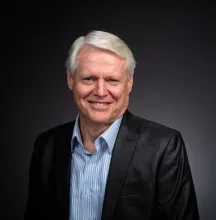
John Elliott serves in the role of President of the United Church of God, an International Association.
