
John Elliott
This sermon was given at the Victoria, British Columbia 2016 Feast site.
This transcript was generated by AI and may contain errors. It is provided to assist those who may not be able to listen to the message.
I'd like to welcome all 386 attendees that are in the room here today. We appreciate you being here. And also to welcome those of you who are watching by webcasts. We're webcasting live, and people are watching as far away as down in the southern part of the United States. And if anyone needs to have the webcast link information, simply send an email to victoriofiest at ucg.ca, and we will reply with that login information. You know, society today is fairly benign. I know there are issues around the world, but here we are, living in an environment that is fairly peaceful, coexisting, many different ideologies, different religions, actually different countries. Our congregation in Victoria has attendees who come from about 15 different countries, is where they were born. And we all get along pretty well, don't we? You know, throughout the country that you came here from, or you are from, things are fairly peaceful. When you travel around the world, traveling to China, where you hear things, but when you go there, it's fairly copacetic.
If you go to Asia, go to Russia, down through the Middle East, even though you hear a lot of things going on, most of it is fairly benign, fairly safe. If you go to Egypt, or Istanbul, or over into the Eastern Mediterranean, if you go to Africa, sure, there are struggles. There is strife. There are wars, there are atrocities, but there are also patches.
As you can see, in almost any election, there are promises of patches. We'll fix that. We'll negotiate that. Some countries are at the brink of war, but, you know, there are some fixes. Some band-aids get put on at the last minute.
So society looks like it's a fairly benign, a fairly calm, a fairly copacetic entity. Let's look over in Luke 17 and verse 26.
We can be thankful that this world that is led by a God who likes chaos and tumult, and ultimately wants everybody dead, we can be thankful that we can live, and we can do the work of God, and we can live our lives in relative peace.
In Luke 17 and verse 26, Jesus said, He's just talking about life back at that time.
We read in Genesis that the world was filled with violence, and all imaginable evil was going on. But then he goes on, under that sort of reality, or on top of that, was a veneer. They ate. There was food. They drank. They bought. They sold. They planted. They built. They had worked out this arrangement where the fixes were sort of mostly in place. But on the day that Noah entered the ark, God sealed him in for seven days, and it was still peaceful. We're all weak. I don't know if that was a test for Noah and his family. Nothing's happening out there. Are we in the right place? It doesn't smell like the right place. But then, the flood came and destroyed them all. And so it says, likewise, it was also in the days of Lot that they ate. They drank. Nothing. This is Sodom and Gomorrah. And we read it. We have a little glimpse in Scripture about the atrocities and the evil that was going on there. But they planted. They sold. They built. But on the day that Lot went out of Sodom, it rained fire and brimstone from heaven and destroyed them all. And so Jesus said, so it will be in the day when the Son of Man is revealed. We are looking forward to praying for the Kingdom of God to come, for the Son of Man to be revealed, for a new government to take over. And life will be going on in a fairly copacetic manner, as far as humanity is concerned, until He is revealed. You and I can look at this and say, well, the Lord delays His coming, or, you know, life's pretty good. Maybe I'll mix up with the world. Maybe I'll be impacted by them a little bit. But this actually is a very dynamic age in which we live. And a great transition is about to occur. And you and I need to be part of that transition. We need to be preparing and ready to be participants of the great transformation into what will become the Day of the Lord and the Age of the reign of Jesus Christ on Earth. We have growing instability everywhere, and it's concerning. We see political elections, and we wonder what's going to happen. We see those who are now obtaining nuclear weapons and testing out long-range missiles. We see the lack of the superpowers to contain some forces that now actually want to start an engagement that would essentially erase human life.
But at the same time, life seems to be going on all over. And we are now here at the feast. You know what's interesting about God's festivals? They don't contain any of that. They don't speak to that. God's festivals are about something else. You and I didn't come here to get prepped on the news or figure out what the latest event might be. We're actually here to come out like God brought Israel out of Egypt to a place where they could worship Him alone in the wilderness.
Like where God brought Adam after He created Him and brought Him into a special garden away from everything where He could be alone. Where God brought Israel into a Promised Land. Where He brought the church into a place in Acts 2. Into a place where they were all with one accord. You know, God is calling us to be separate. He wants us to come out and be with Him. And so this festival, the Festival of Tabernacles, is an important time when in the past Israel came together at a special place with God.
They journeyed to attend there. And then they dwelt in booths. They were not part of the country they were around. They weren't even part of their own home life and the issues.
No. They went and they dwelt in a temporary dwelling. They were with God for seven days in their booths. You and I are here observing God's festivals. But what do they add to your life and mind? Do we just come here to say, oh yeah, there's something happening in the future? And that's nice. And they'll have a lot of food, so let's have food. And they'll have some wine on the leaves, so let's drink some wine. Is there more to it than that?
Today the title of the sermon is, Festivals for God's Royal Family. We're going to see today as we examine the personal importance of God's festivals to us now and to us in the future and to others in the future. Because these are festivals not just for somebody else. These are festivals for you and me. People who are developing a mindset of the God family now in preparation to be part of the future.
The events of this world aren't the events of our Lord and of His Christ. The events of this world are something that you and I have to live within but not be part of. God's focus is bringing mankind to Him. And that's what all the Holy Days, all the festivals of God speak to. Is man coming into a oneness with God as family?
In Leviticus chapter 23 in the first four verses, we find that we are not here observing just some activities, something for humans alone. But God said in verse 2 of Leviticus 23, Speak to the children of Israel and say to them, the feasts of the Lord of Yahweh, the feasts of God the Father in Jesus Christ, which you shall proclaim to be holy assemblies, holy gatherings. In other words, come and be close with God and with each other in a holy environment that God has appointed, God has directed, God is there inspiring, and God is there not only with us but in us.
And that's what makes it holy. These are my feasts, says the Lord. So this isn't just an event on a calendar. This is actually you and me now, communing with God and with the family, and focused on the events that God is working out. He mentions in verse 3, Six days shall work be done, but the seventh day is a Sabbath of solemn rest, a holy convocation. Once a week, God has us do the very same thing and come together to be with Him, to celebrate what we are doing and what He is doing and what we will be doing.
In verse 4, these are the feasts of the Lord, holy convocations which you shall proclaim at their appointed times. So we do our very best to know when God wants these, right down to the day.
We have had many, many ministers going back nearly a hundred years that have looked very carefully and continue to look very carefully. Those of us on the Doctrine Committee, Mr. Robert Dick is here as well. We examine. We really want to do and we look for God's will at the times appointed. These things are taken very, very seriously. They are for a people. Let's go to 1 Peter chapter 2 and verse 9. These aren't just for days for anyone.
1 Peter chapter 2 and verse 9 shows how God views those whom He has called from the foundation of the world, whom He has assigned to be first-fruits, ultimately, with His Son. And this is how He views those. In verse 9, you are a chosen generation. You didn't get to choose to be here, neither did I. I often have asked myself, throughout my lifetime, why me? Why am I here? Why? Because God did it. I can take no credit. I'm not smart enough. I don't even know how to live this way of life apart from God.
This is about a chosen generation, a royal priesthood, royalty. See? This is something God has developed for you and is now mentoring you with His Holy Spirit, mentoring you for the position of royalty of kings and priests in His family. A holy nation. Why is it holy? Because God is in us. Notice, His own special people. Now, don't get the big hit, but in another sense, don't throw that out and say, Oh, that's nothing. That's unfair. I'll tell you, there's a lot of unfair things in life. If you ever want to say, Well, that's not fair, then just say, Jesus shouldn't have died for your sins.
There's one of the biggest unfairnesses ever. God shouldn't have taken the time to create a physical universe and spend millions of years focused on people who have a short lifespan that don't like Him and won't obey Him.
So let's just realize that this is what God is developing, and with His power, with His Spirit, these things don't come back to Him void. He develops people who are special, that you may proclaim the praises of Him who called you out of darkness into His marvelous life. Jesus said, Their ears don't hear, their eyes don't see, but your eyes and your ears are blessed for you see. What are we doing with that blessing? You young people, what are you children, you young teens, adolescents, young adults, what are you doing with that opportunity? Are you sensing with God's inspiration that you have a special calling? Have you identified with God, not with some corporate organization, but with God to live and follow His way of life? To have the conviction internally that this is right, and I have the opportunity of a lifetime that only a few will have. What a privilege and honor it is to be part of a group who, verse 10, were once not a people, we were just part of society, but are now the people of God, who had not obtained mercy at this time, but now have obtained mercy, or are part of His called, part of those that He is choosing. You are being groomed if you are allowing God to mold and shape you like clay in His hands, into His image, His likeness, His mindset, through daily repentance, through humility, through trust, deep faith.
As we develop, as we are converted from what we were from darkness to light, we become the light of the world. And as Jesus mentored twelve disciples, and He left, He said, now you are the light of the world.
And we have been called down through time, through them and through their words. God has called us and used us to develop us as lights. I don't know how bright our lights are, but it depends on if we really are transforming from darkness to light, as it says here in verse 9. God has called you out of darkness into His light. These feasts are exciting times, celebrations for the royal family, as we see right here. They are feasts for us. The future is not here. The past is gone. We are the ones that God has called and told to observe these feasts.
And when we look at the first feast that we saw in Leviticus 23, we see the weekly Sabbath. That's a very unique holy time. It's a time that God said, look, I spent six days preparing for the first Sabbath, and then I showed up and made it holy. You spend six days and get it done. And then we'll step into this every week as holy time. Unfettered, uncluttered, mentally focused. Let's look in Isaiah 58, verse 13. The Sabbath isn't just something we're to keep. The Bible tells us to remember to keep it holy. There are many people that keep the Sabbath around the world. I once tabulated, tried to tabulate. How many people keep the Sabbath versus how many people will be in the first resurrection? And if you just look at the beliefs of the vast majority of people who keep the Sabbath, they don't even believe in the resurrection. They don't even expect Jesus Christ to return and resurrect them. They don't understand God's plan of salvation. So, keeping the Sabbath isn't really a sign, but rather how we keep the Sabbath. In Isaiah 58, verse 13, if you turn away your foot from the Sabbath, your foot, God wants us to take our shoes off when we come in His presence, in a mental sense, in a spiritual sense. We don't bring in the world, we don't bring in carnality when we come before God. We essentially take our shoes off. We don't trample over this time. It's a holy time.
From doing your pleasure on My holy day, and call the Sabbath a delight, the holy day of the Lord, honorable, and shall honor Him. This is a celebration of the royal family of God. It's a family day with our Father. It's a time for us to be with one another, to be thinking, to be doing, not our own ways, or finding our own pleasure, it says in the universe 13, or even speaking your own words.
What a privilege and an honor it is to aspire to try to keep the Sabbath holy. I don't know that I've ever kept it truly holy. Every Sabbath is a new challenge. This time I really want to get the week away, get the mind off, get focused, speak the right things.
That's a time picturing a future oneness with God, where we will be spirit beings with God in Christ, and we will be one in the family of God.
The sign of how one keeps it again is important to God. It's a sign between Him and His people. We look at Exodus 20, verses 8-12, just maybe with a little focus here on the Ten Commandments. Notice something about this particular festival. Exodus 20, beginning in verse 8. Remember the Sabbath day to keep it holy. Again, six days you'll do your work, etc. But the seventh day is the Sabbath of the Lord your God, dropping down. For in six days the Lord made heaven, the earth, the sea, all that's in them, He rested the Sabbath and hallowed it. Now we can say, well, we're done there. Let's go on to verse 12. Honor your father and your mother. Who's our father? Father in heaven. Who's our mother? New Jerusalem. Heavily Jerusalem. God. You know, God is someone that we honor. We've just been told to honor Him with the Sabbath. This would be a mindset that we now, as the family of God, have great honor for our Father. And the words that we speak, and how we think, and the deeds that we do, we should really begin to reflect the mind of Jesus Christ that He showed us in person when He was here. The Passover is the next festival mentioned. Passover speaks of opportunity. Many people think it speaks of completion.
Oh, Jesus died, therefore I'm saved. Well, in a sense, you could say, if you're paddling around in the ocean and your boat sank, and the coast guard vessel shows up, and they haul you out of the water, I'm saved. Yes. But that doesn't really speak to the rest of your life, does it? It doesn't really say anything about the future.
If you look at the word saved throughout Scripture, there are many things that people were saved from. Israel, when they were in Egypt, they were saved, they were released from bondage through that first Passover. And where were they? Still in Egypt, still in their houses overnight. So, yes, Jesus Christ has died for us, and our past sins are forgiven.
But what does that speak to? It speaks to opportunity. Opportunity now to be going with Jesus Christ, going with God the Father, leaving our Egypt. And so that speaks to the next festival, the Days of Unleavened Bread. When we think of having life, we have the opportunity to live in God through the Holy Spirit. We have the opportunity to participate, to develop the mindset, to actually have life. Jesus came that we would have life and have it more abundantly. He came as the way, the truth, and the life. Those are opportunities for us, but they require participation. When we think of being released, we have to ask a question, okay? Released for what? Yes, at baptism, the blood of Christ washes us from our sins, and we are released from slavery to sin. Paul speaks of that in Romans 6. But released for what?
What are we supposed to do? Well, the goal is to be converted into something different, to ultimately be mentored into first fruits, so that when the return of Jesus Christ takes place, we are there with Him, and we go forward in making what the rest of these feast days portray a reality.
You know, Jesus Christ was the first fruit. We read that back in 1 Corinthians. He was the first fruit. We are to be first fruits also. He was the wave-sheaf, the first fruit harvest of the barley festival. We are to be the first fruits of the wheat festival. If you think about this, the goal here is to be converted into first fruits with Jesus Christ, the first of the first fruits, and we come with Him to do a certain work.
The goal is to join the begotten Son, the only begotten Son who is the Son of God at His right hand, as resurrected sons and daughters. We're joining the Son as sons. We're joining what God has elevated first to put on His throne. We are joining Him on that throne. Jesus said in Revelation, Just as I said on my Father's throne, you'll come sit with me on my throne. You will be royalty. You think about being with Jesus Christ, we are to join Him in His inheritance. Does He inherit all things with Him?
See how this begins to line up? He's a first fruit, we're a first fruit. He is a son, we're a son. He inherits everything, we inherit everything. He has a throne, we sit with Him on His throne. But there's more. The Feast of Unleavened Bread also speaks about being one with Christ and God the Father. That is our direction so that we can be one with them. How does that take place?
Through marriage. Through the marriage covenant of being the bride with the son. That is an analogy that the Bible used. And if you're baptized, you're already betrothed. You and I actually have entered a covenant of marriage that is far beyond just engagement. It is betrothal. And we will marry Him and He will marry us and He will never leave that covenant, He will never leave that promise or forsake it. This is a very important thing with us. Betrothed through covenant. And the Feast of Unleavened Bread is something we portray each year.
We take that unleavened bread and say, this is what I want to become. I just entered a Passover. This is what I want to become. I want to be harvest with the first harvest, Jesus the Christ. We want to be family here. Jesus Christ is preparing us for that, washing the bride. Let's go to Ephesians 5 and verse 22. Ephesians 5 and verse 22. There's so much more that is going on in our life and through these festivals than just sort of waiting and hoping someday for the time when there will be conditions that are better when God the Father, Jesus Christ, and the bride reign.
Ephesians 5 and verse 22. Wives submit to your own husbands as to the Lord. For the husband is head of the wife as Christ is head of the church and he's the savior of the body. See, this relationship was way down the road towards marriage. This expectation of the God family for royalty to actually be with the Son is way, way down as far as development goes. And so, therefore, just as the church is subject to Christ, so let the wives be their own husbands and everything. Husbands love your wives as Christ also loved the church and gave himself for her, that he might sanctify and cleanse her with the washing of water by the Word, that he might present her.
That's you! Present her to himself, a glorious church, not having spot or wrinkle or any such thing, that she should be holy and without blemish. Verse 32. This is a great mystery, but I speak concerning Christ and the church. Let's go to Revelation 19. This event is not far off. When you look at the annals of time, you go back to whenever God created the stars, whenever God created the earth, whenever God created man, then down through time, down through time. We're right at the point. Very, very close. We don't know exactly when. We're so close to this event taking place. Revelation 19, verse 7. Let us be glad and rejoice and give Him glory, for the marriage of the Lamb has come and His wife has made herself ready.
We're in that process that Jesus is washing. He is scrubbing. He is readying us, readying our minds. If we are doing something, we can't just sit and do nothing, God has given us gifts. He has given us favor. The word grace refers back to the Greek word charis, which speaks of a favor. And that favor was the gift of a calling, repentance, baptism, forgiveness of sin, receiving the Holy Spirit, so that we could produce the fruit of righteousness that God could harvest.
That's what our lives are to be about. A process of developing from those heavenly gifts, those favors of God, what He is wanting in return, which is Holy Righteous Character, a godly mindset. And He's happy to partner with you and me in building that, but we have to do our part. We can't be like the person who says, oh, thanks for all these gifts, put them in a silver napkin, but no thanks. I'll just keep them right there. They're real special, but I don't really want to participate. I just want to keep my old nature.
We can't do that. We can't do that, because we have betrothed through covenant to become Christ-like, and ultimately to become His bride with the mindset of the God family. So here we see in Revelation chapter 9, it's very, very exciting, she has made herself ready. And to her it was granted to be a raid in fine linen, clean and bright. Notice, for the fine linen is the righteous act of the saints. The entire Bible speaks to you and me as those who need to change from darkness to light. That's a process. That's a lifetime process. You and I have an opportunity, if we accept it, by Jesus' sacrifice, an opportunity to move, to grow, to develop.
Feast of Unleavened Bread is fabulous. Eating unleavened bread is a special sign. If you go back to Exodus and read about it, oh, eating that unleavened bread is once again something very, very special. It's showing God that, yes, I want to be like Jesus Christ.
I want to be like you. Jesus said, become you, therefore, perfect, like your Father in Heaven is perfect. That's what we need to be growing in every day. So we can then come to Pentecost. Pentecost is a Greek word that was used at the time of Christ, but going back, God named the feast several names.
One is in Exodus chapter 23, verse 16. It was the first fruits of the wheat harvest, once again. It's a big harvest that we're celebrating now, but there's a first fruits of that harvest. People training, people being mentored, people developing that which God wants and needs for His Son to reign. Pentecost was a time in the New Testament when the apostles overflowed with the Holy Spirit. The Holy Spirit filled them, just overflowed in them. The first thing that happened, again, they were all with one accord, and they were all together with one mind.
They began to sell things and stay together. It was a compacting of oneness, which is so much an attribute of the family of God. 1 Thessalonians 4, verse 16.
It says, For the Lord Himself will descend from heaven with a shout, with the voice of an archangel, with the trumpet of God, and the dead in Christ will rise first. The dead in Christ, He is waiting. Individuals have been working through their lifetimes, and God has been shaping them, and they will rise first. Notice, we also, who are alive and remain, verse 17, will be caught up together with them in the clouds to meet the Lord in the air. Here comes the Lord, and all of a sudden, people are coming to Him. The resurrections come to Him. See the oneness, see what happens? It's always that way with God. And then, thus we shall always be with the Lord. Always will be with the Lord. We are not to just sort of be around. We are to be a type of bride with the Lord, to do a work, an important work. In John 17, verse 21, that work is expressed with great passion by Jesus Himself. As He prayed to God, in John 17, let's read verses 21-24, He says that they all may be one, as you, Father, are in Me, and I in you, that they also may be one in us. Once again, do we perceive that the ultimate goal of God is a oneness so tight that Jesus Christ doesn't give a second thought to inviting at least 144,000 to sit on His throne with Him? That's more people you get in a VW. I don't know how big the throne is, but He thinks, just come on, all of you. And we're going to be with Him. He says, we want them to be one mentally. And the glory which you gave Me I have given them, or I will have given them, that they may be one just as we are one. So, in our resurrected state, we now receive the glory that Jesus Christ has, the literal brightness glory, as John says, we do not know what we shall be, but we know we will be like Him. This is quite a calling we have, and for some reason God the Father wants to bless Him with us and the other faithful, wants us to be with Him, to reign and rule on the earth. You know, we're not just examples. We're actually not just trying to teach Him and pass Him a booklet. We're supposed to be mentors ourselves, teachers ourselves. The best way to teach a mentor is actually for someone to watch, to observe. There are many times in my young ministry when I would say the words and talk to the kids and the teens. Years later those kids tend to grow up, and through the years I've gotten letters through the mail, married adults. Dear Mr. Elliott, I just want to tell you how much your example meant to me growing up. I forgot about the example. I was doing all the talking. I was telling you what to do. Another example. My example? What did I do? See, sometimes we think the words are the thing. It's the deeds that are the thing. We're actually judged by what we become, who we are.
And that is what's very important. God wants us to be one with them. In verse 23, I and them, you and me, that they may be me perfect in one. Verse 24, Father, I desire that they also whom you give me may be with me where I am. I want them close. I want them near. Like a husband wants a bride. Like a bride wants a husband. We want to be near. We want to be close.
You know, God has you and I in training, you might say training, mentoring us, but not as sort of this bunch of R2D2 robots or lesser beings. He and Jesus Christ want us there, one with them as a real family. Notice in Revelation 19, in verse 5, pray lude to the Feast of Tabernacles, meaning, Then a voice came from heaven from the throne, saying, Praise our God and all you his servants, and those who fear him, both small and great. It's not about being big or important or anything else. And I heard, as it were, the voice of a great multitude, as the sound of many waters, as the sound of mighty thundering, saying, Alleluia for the Lord God, omnipotent reigns. This is the big event. And here, God is writing it out. It's a revelation. Here's the big event. And it's then, when we read the next verse, Let us be glad and rejoice, for the marriage has come. It's an important part of the return of Jesus Christ, of the reign of Jesus Christ. It's something that you and I mean so much to God in preparing and wanting to be part of that. Now, that sounds wonderful, doesn't it? It is. It is truly an honor and a privilege. But let me ask a question that I ask myself, regularly. Am I associated with it, or am I committed? It reminds me of the breakfast buffet here, the hotel. You have a couple of choices, you know, a few choices. You get the eggs, and then there's turkey bacon and turkey sausage. Now, if you think about the animals involved, some are associated and some are committed. The chickens, they send eggs over here, you know. The turkey, turkey's right there on the plate. He's committed. You know, we can kind of be like that as well. We can say, oh yeah, the church, I like the church, I like the kingdom, I like all this stuff. Are we associated with it, or are we committed? Are we giving our lives for it, like Jesus? Are we laying down our personal, self-centered lives to serve others and to give others and to help others in their journey to this family? That is part of laying down our lives for the brethren, just like our elder brother, Jesus Christ, is laying down his life on a daily basis, continually, for us.
Let's look at the reality of our calling in Malachi chapter 3, verses 1 through 3. Malachi chapter 3, and verse 1, Behold, I send my messenger, and he will prepare the way before me, and the Lord whom you seek will suddenly come to his temple, even the messenger of the covenant, in whom you delight. Behold, his coming says the Lord. We close the Bible and say, yes, wonderful. Bring it on. Verse 2 says, But who can endure the day of his coming?
That's where it gets personal. The associated ones won't endure it.
It's only the committed ones. Who can stand when he appears? For he is like a refiner's fire and like a launderer's soap. He will sit as a refiner and purifier of silver. He will purify the sons of Levi and purge them as gold and silver, that they may offer to the Lord an offering of righteousness. That is what we have been doing. That's what the Days of Unleavened Bread picture.
That righteousness, that purging, that buying of God, Jesus Christ, pure gold, real gold, trite in the fire. You get rid of the impurities. My wife gave me an anniversary ring a few years ago. It's very nice. Let's see if I can get it off. I can't really read the writing in there, but somewhere I think it says, 14k. Well, that's nice. 14k. 14k is not 24k. There's 10k of other stuff in there. Now, it looks good, but it's not good. That's just the way it is. No, he says, look, I'm going to be a purifier of silver and gold.
So what God would do to this looking good individual, symbolic of my ring, he'd say, well, I'm pretty good. I'm in the church. Oh, yeah. No, no. He wants to melt that down. The gold will sink to the bottom, and guess what comes up? Silver and brass. What's brass doing in there? Well, it gives it a little hardness, which is good. But at the same time, we have to be in this process of being refined. And if we are refined, and if we have bought from him real gold, we'll be fine at his coming.
We'll be just fine. But then he says of other individuals, look, when the wedding feast comes, or we look over here, and as a person, doesn't have a wedding garment on, how did you get in here? Well, I'm associated. I like it. I like all the blessings. I like the ideas, the promises. Somebody has to take him out, he says. You know, the Day of the Lord is coming with some serious events we know of in Matthew 24 and in Revelation. Those events will shake and rock the world, but they shouldn't shake and rock us.
We should be close with God. We should be protected by God. We should, all things should be working out in our lives, if God is directing those lives. It's going to be a time of transition, a time of really tough, big transition, like when a high-pressure system is replaced by a low-pressure system, and vice versa. When those winds and rains and storms and tornadoes and lightnings rip and roar. Not for us. In Isaiah chapter 26 and verse 20, God has a plan for his people. God has a purpose in every life of those precious ones that he's calling. And that purpose is for us to be developing into his children.
And yes, there might be times in our lives that are like what Job went through, because Satan doesn't want us. And we can be refined by some of those to a better state. And that's within God's purview, and it certainly works out. But at the same time, there are times when the events of this world and the chaos of this world do not apply to us. Isaiah chapter 26 and verse 20. Here's what God says. God says, Come, my people, enter into your chambers and shut your doors behind you. Hide yourself, as it were, for a little moment, until the indignation is passed. For behold, the Lord comes out of his place to punish the inhabitants of the earth for their iniquity.
Do we have the iniquity? Remember the Passover? The Days of Unleavened Bread? Pentecost? We've spoken of those. Now we come to Trumpets, and God comes in. The dead in Christ are ready to rise. This involves those who are iniquitous, and the earth will also disclose her blood, and will no more cover her slain. In that day, the Lord, chapter 27, verse 1, in that day, the Lord with his severe sword, great and strong, will punish Leviathan, the fleeing serpent.
This is a time of transition from one government to another government, from one mindset, from another mindset, from one darkness of environment to a lightness of environment, a brightness of environment. This transition is big, and Leviathan, that twisted serpent, he will slay. So Jesus Christ has business to do there. We speak of that in the Day of Atonement, a transition that takes place.
But that transition should already have taken place in us. Jesus Christ already rules in our life. He is already our Lord and Master. God has already sent him. We are already part of his government, if we are submissive to him and obedient to him. Satan has already been removed from you and me. He is not there. And we are to daily pray as part of our prayers, that we are not deceived, and that his grip on us will be let loose.
He is an individual that wants to do us in. But with God's power and with the armor of God, we are able to withstand him and to stand. What happens after that, then, is a new world order, a new theocracy, one that you know very well.
One that already has God the Father in charge, and Jesus Christ his Son. One that already has the holiness, the Holy Spirit, the mindset, the conversion, in process. And this transition then takes place on the world scene. Not in us, but on the world scene. And we are there to assist and enable Jesus Christ. Not that he probably needs us, but he wants us. And God the Father wants to give him us as a type of bride.
The Peace of Tabernacles is a time looking to where a husband and a bride will bring children into the family. Just as God the Father has brought you and I as children into the family, Jesus Christ will have a bride and they will have a thousand year reign to work at bringing God.
And Godliness, at teaching, mentoring, working with future children of the family of God.
Let's go to 2 Corinthians 6, verse 14.
2 Corinthians 6, verse 14. Do not be unequally yoked together with unbelievers. For what has fellowship with righteousness? We, right now, aren't part of this world. And he goes through this whole passage. And he comes down to, in the middle of verse 16, as God has said, I will dwell in them. He's dwelling in us through his Spirit. I will walk among them. I will be their God and they shall be my people. Therefore, come out from among them and be separate, says the Lord. Don't touch what's unclean, and I will receive you. And I will be a father to you, and you shall be my sons and daughters, says the Lord God Almighty. That's our special privilege to be the sons and daughters of God at this time.
To be looking forward to a time where we can participate within the God family as God beings. I know it's difficult to even understand that, but we see, as through a glass darkly, as it were, a future that is fantastic.
One that is worth wrestling for, Paul says, running for, running the race, laying hold of, fighting the good fight.
That is not only important to you and me, it's important to God, the Father, and as we've seen, to Jesus Christ as well.
God's goal for these Holy Days lies in what's beyond the procession of events.
I know we tend to think, oh, this is going to happen, that's going to happen, but, you know, God really has something out there even further. Let's go to 1 Corinthians chapter 13 as we wrap this up. 1 Corinthians 13 and verse 8.
It's good to have the here and now, and also what's ahead of us in the near future. But what's all this about? What has God created this complex plan of salvation for? What's it to achieve?
1 Corinthians 13 verse 8.
Love never fails.
If there's one word in the Bible that we can attribute to the mindset of God, it's the word agape.
You know, agape is just a Greek word from the ancient Greek, and it doesn't necessarily mean the love of God, but it's applied in the Scripture in that way, in many, many, many cases.
And this agape never fails, and it's to endure forever, and the mindset of the God family is to go on for eternity.
But whether there are prophecies, they will fail. Or in other words, they will end.
We're keeping festivals that are prophetic, some of them, and they ultimately will be completed.
Where there are tongues, they will cease.
We don't really even know the divine name of God. We don't know the heavenly language.
There is a time in the future, you can read in Revelation, when Christ's new name, His heavenly name, will be written on us.
And the name of New Jerusalem, whatever that is, will be written on us.
And we'll have our Father's name written on us.
God is mostly referred to in common enough terms.
There's Lord of Lords, and God's capital G, small g, etc., etc.
There are tongues that ultimately will cease, and there will be a divine tongue, a divine way of communicating as God communicates.
There is knowledge, it will vanish away, certain types.
For we know in part, and we prophesy in part.
And this is where it becomes difficult. Everybody wants to know everything. But we know in part. We know the future in part, and we know ancient history in part.
But what we know a lot is the right now. We know what we're here to do.
We're here to be developing as the children of God.
In verse 10, But when that which is complete has come, then that which is in part will be done away. All of this ultimately will go into a new heavens and new earth.
It will go into a perfection that God seeks with many, many individuals in family.
In conclusion, God's will for your life and mind is defined clearly.
He wants oneness with us.
Oneness with Him, His kingdom, His mindset, His way. It's in the model prayer outline.
Our Father in heaven, holy is your name. Your kingdom come, your will be done on earth as it is in heaven.
That's what we seek in our lives every day. That's our goal, our ultimate goal.
In Revelation 21, the first two verses, we look back out into the future through a glass darkly.
Revelation 21, verse 1.
Now I saw, here John is seeing in a vision, a new heaven and a new earth.
For the first earth and the first heaven had passed away, there was no more sea.
And I saw the holy city, New Jerusalem, coming down out of heaven from God, prepared as a bride adorned for her husband.
And I heard a loud voice from heaven saying, Behold, the dwelling or the tabernacle of God is with men, and He will dwell with them, and they shall be His people.
God Himself will be with them and be their God.
That's the oneness. That's what God is looking for, ultimately. Notice in chapter, verse 9.
And one of the seven angels dropping down said, Come, and I will show you the bride, the Lamb's wife.
He carried me away in the spirit to a great and high mountain, and showed me the great city, the Holy Jerusalem, descending out of heaven from God.
You and I are called to something with eternal ramifications, not just for life, but for royal life.
For a place with God the Father alongside His Son, Jesus Christ.
You and I are called now to develop into light like He was light.
And to be preparing through His Holy Spirit, His help, His direction, His inspiration, to be preparing to reign and rule in the wonderful Kingdom that His Son will bring. Let's be diligent, brethren, to be about our Father's business of becoming like Him and His Son.
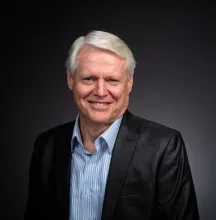
John Elliott serves in the role of President of the United Church of God, an International Association.
