
Ben Light
This transcript was generated by AI and may contain errors. It is provided to assist those who may not be able to listen to the message.
My brother in this time of year is one of my favorite times of year in our local neighborhood. The temperature has started to shift. It's starting to dry out a little bit. The days are getting longer and sunnier. The bees have started flying. The flowers have begun to bloom. And as many of you have probably already seen, the season has shifted noticeably. Now, of course, it rained this morning, but it has been beautiful the last week or two. Spring in Oregon has the ability to be quite pleasant. And those of you who have lived here for a time also know it can be miserable at times as well. We all know all too well that there are times in which Oregon feels a whole lot like December and March. A lot of rain, a lot of cold weather. But this year in particular, it has been a pleasant spring. This year has been a pleasant spring in spite of, again, the current situation and the quarantine that we're all experiencing. Now, once we reach this point of year, kind of right around the spring holidays, a little bit before, a little bit after, there is an event that occurs in my neighborhood that I have begun to look forward to yearly. And it is the blooming of the camas. There are some fields near my home that are filled, and I mean just filled, with camas lilies. So many of them that it's like a sea of just these vibrant purple flowers among this green field that it's just beautiful. It's just absolutely beautiful. And for those that are not familiar with camas, camas lilies are a plant. They're native to Oregon. They typically grow in moist soil. So these particular ones, this is not kind of a boggy or swampy kind of area, these have been seeded. These have been planted over the years and have spread and have grown and whatever else. But these particular flowers were used by Native Americans for a number of centuries prior to the Western expansion in Oregon. They used them as a food staple.
The bulbs are rich in nutrients. They've actually been described as having a taste a lot like a sweet potato, but I've been told they're actually sweeter than a sweet potato. The Kalapuya Indians, the local tribe here that was around this particular area, they roasted them. They also dried and they ground them into flour. And so admittedly, I've never eaten one, but I've gained a pretty healthy appreciation for the beauty of them in the fields near my home. The purple color of all those blooms just waving in the wind in that field is incredible this time of year.
Now many of you realize there is a great deal of beauty that is inherent in a field that has been sown. Whether the plants have come up out of the field yet or not, there is just something about taking that field and putting it under the plow and and tilling up that soil and getting it ready to prep and getting it planted and having the little nubs of green kind of pop out, having the plants grow. There's just a potential there. There's possibility. There's a certain degree of sustainability and continuity that's present in that field.
Let's go ahead and start today by turning over to John 4. Start today by turning over to John 4. My goal today is to hopefully in a very brief-ish manner update you a little bit on the trip that we just return back from West Africa, as well as some different thoughts regarding the situation that we're experiencing at this time and how these things ultimately relate.
If you want to start today by turning over to John 4. John 4, we see an account that is Jesus Christ and His disciples that are ultimately traveling through Samaria. I want to provide a little bit of backdrop here and I want to provide a little bit of history because we can read this account and we can kind of look at it and say, well, I mean, I can understand generally that the Jews and the Samaritans didn't like each other.
You know, I get that. I can academically appear. I can understand that, but I want to get into a little bit of the reasoning why. And I want to spend just a little bit of time here geographically to help us to connect with what we're dealing with here and where we are in the story and what's happening. So in John 4, we see this account of Jesus Christ and His disciples as they ultimately travel through Samaria.
Now, Samaria was a region that was north of the nation of Israel, you know, kind of in the north, I should say, of the nation of Israel, and it was between, at the time of Christ, the regions of Judea and the region of Galilee. Now, the city that's mentioned in this particular account, as we kind of look through John 4, is the city of Sakhar, and it's S-Y-C-H-A-R that is near Mount Ebal, and it's actually better known by a different name as throughout Israelite history. It's known by the name of Shechem. Now, some of you might recognize that name, hopefully recognize that name.
A whole lot of biblical events occurred in Shechem. Shechem's a city that was nestled in the valley between Mount Gerizim and Mount Ebal, and it's an area that, again, is just chocked full of biblical history. Abraham built an altar here and was promised the land in this area. Jacob lived here and built an altar. Simeon Levi killed the men of Shechem in retaliation for Dinah's rape here in this area. Joseph came here to look for his brothers and was ultimately buried here. Israel shouted the blessings and the cursings from the mountains of this area and the valley of this area. Joshua gave his last words to Israel here, and it became the first capital of Jeroboam after the northern ten tribes split after when the nation ultimately split in two following Solomon's reign.
You know, there's a whole lot of history that's occurred in this just little tiny valley. Now, during Christ's time, it's part of Samaria, and it's a home to a number of people that the Jews essentially refused to associate with. The name of the town, Sakhar, actually comes from the Hebrew word for drunkard, so it kind of gives you an idea about how they felt about this particular city and its inhabitants.
You know, the rifts between the Jews and the Samaritans, they go back centuries. It's difficult to pinpoint the exact beginning, but you could almost argue that it goes back to the times of some of the historical events that we mentioned a moment ago. But really, the events of Jeroboam and the resulting captivity of Israel that came from those events, from that idolatry that was set up by Jeroboam all over the land, really had a lot to do with it. When the Assyrians conquered the northern tribes, they took Israelite captives from those areas, from that area of Samaria, and sent them into Assyria in modern-day Iraq. And what the Assyrians did so unbelievably well, in order to quell uprisings, was they removed anything, anything that would potentially cause a sense of ownership from the people in that area. And so they were less likely to rebel if they had no reason to rebel. So they would uproot people from various places, and they would just swap them. They'd take the Samarians from Samaria, and they'd put them in Assyria. They'd take people out of the Assyrian areas when they would conquer just outside of there, and they'd move them into Samaria.
And so they moved the... the Samarians out, or the Samaritans out at that point in time, which at that time were northern Israelites, and they moved in pagans who worship pagan gods, goddesses, etc. And so those individuals that came in, they brought their pagan worship, they brought that mix, and they started to take and mix these things in with the worship of the one true God. And there are stories in Scripture that we can see at one point. The area was plagued with lions, and they had to send some priests to show them, hey, you're doing some things wrong here. I mean, there's a lot of story in this process. But as time went on, and that captivity and that diaspora ended, Jews started coming back to these areas. And that mixture of religion was an absolute abomination, that you would have these pagan things being intermingled with the worship of the one true God was an abomination to the Jews, very religious Jews at that time, who had come out of the diaspora. You know, during this intertestamental period, so in between the time period we see recorded by the Old and the New Testaments, that tension between them actually came to such a peak that the Samaritan temple that was on Mount Gerizim was destroyed. The Jews raised it. And by the time of Christ, that animosity had reached a point where they would essentially have nothing to do with one another. So in John 4, we reach a point where Christ encounters this Samaritan woman at the well. And as the account progresses, He engages her in conversation. He asks her to bring him something to drink from the well that she's pulling water from. They go back and forth a few times, and He reveals to her that He is the Messiah. Verse 27 of John 4, this is ultimately the point where His disciples come back into the story. At that point, it was just John and the woman at the well. Or John, sorry, it was just Jesus and the woman at the well. And so in verse 27, we see the disciples return. It says, at this point, His disciples came and they marveled that He talked with a woman. Yet no one said, What do you seek? Or why are you talking with her? So we see the disciples are surprised, actually, that He's speaking with the woman. And it wasn't just because she was a Samaritan. The word translated, marveled here, can be translated as astonished or filled with wonder that He's talking with the woman.
In those days, culturally, women were viewed in a much different way. There's actually a prayer that's preserved in the Siddur, which is the Jewish prayer book as part of the dawn blessings that you would pray when you awoke. That reads, Blessed are you, O God, King of the universe, who has not made me...and it lists kind of a number of things included within those things, is a Gentile, a slave, or a woman. Now, it's not intended necessarily to be disparaging. I know we can hear that, and we can kind of become offended by it. But men were tasked with the religious duties. So the prayer is really intended to thank God for His making them a Jew, being their God, that He's made them a free people, that they are no longer slaves, and thankful that they were a male so they could participate more fully in the aspects of their faith. But it does go to illustrate a cultural norm at that time and throughout history. The Jewish men really were not to have dealings with women and enter into discourse with them, particularly in public and particularly if they were Samaritan. In fact, it's interesting you go back and look at some of the histories of the time. It was actually culturally looked down upon to speak with your own female family members in public. It could bring great shame to a prominent man at that time to be having public conversations with the women of his household. Very different culture, very different time. And we recognize these aren't God's instructions. You know, these aren't things where God said, thou shalt not speak to women. These are cultural things. They're firmly in the realm of commandments of men and culture. But these things were prevalent enough that Christ's disciples asked Him, Rabbi, what are you doing? Why are you talking to this woman? Verse 28, we carry on with the account. It said, the woman then left her water pot, went her way into the city and said to the men, Come, see a man who told me all things that I ever did. Could this be the Christ? He basically had said that to her prior to her leaving. Then she went out to the city and came to him. In the meantime, his disciples urged him saying, Rabbi, eat. But he said to them, I have food to eat, of which you don't know. And they're looking around like, you got snacks in his pockets? Like, what's he talking about? They didn't understand what he meant. He said, they said to one another, Has anyone brought him food? Has anyone brought him anything to eat? Jesus said to them, My food is to do the will of him who sent me and to finish his work. So we see the disciples, they really urged Christ to eat. It had been a long journey. And perhaps they thought his discussion with the woman was because he was so hungry, he wasn't thinking straight. But they urged him to eat. And he informs them that he has food to eat that they're not even aware of.
He tells his disciples that he is nourished. He is energized. He is strengthened by doing the will of the Father. Verse 35, he says, Do you not say, there are still four months and then comes the harvest. Behold, I say to you, lift up your eyes and look at the fields, for they are already white for harvest. And he who reaps receives wages and gathers fruit for eternal life, that both he who sows and he who reaps may rejoice together. For in this the saying is true, one sows and another reaps. I sent you to reap that for which you have not labored. Others have labored and you have entered into their labors. And Christ makes the point to his disciples, like you guys have a saying that there are still four months and then comes the harvest. But he says, look, look up, look up and look at the fields. They're already white for the harvest. Now we recognize he wasn't talking about the physical fields, the crops that the Samaritans were growing. He was asking his disciples to look up and see the Samaritans. To look up and see this people that by and large they had looked at for so long as being less than. And he wanted them to look up and to see how they had responded to the woman telling them the Messiah had come. They'd responded to those words. They were coming to see and to listen to Christ. The fields were truly white for the harvest. Now these were believers that once again the disciples had not sown. These were individuals that they had not sown.
But ultimately that they would reap. And they weren't the only ones that the disciples would reap that they had not sown. Others labored, others sowed, nurtured, and watered that field. But the disciples would ultimately reap it. Interestingly enough, I'll write just jot it down as reference. You go into Acts 2 and take a look at the day of Pentecost in 31 A.D. There are Samaritans among that group of people that are gathered. Were they the Samaritans that were among this meeting?
It's hard to know for sure. It stands to logic. But Christ made a very powerful point to His disciples that the fields are white for harvest. That there is potential here. There is beauty here. The fields are ready. For those that appreciate message titles, the title of the message today is The Fields Are White for Harvest. I'm in a full disclosure. I'm not a farmer. I've never been a farmer on TV. I've gardened before. But it's not the same thing. I know how pleased I am when garden plants are growing. I know how pleased I am when I can look outside and see that they're growing well. And I can only imagine the satisfaction and the thankfulness that comes from looking out over acres and acres and acres of healthy crops. Crops that are disease-free. Crops that are maturing appropriately and on time. And that are nearing the point of the harvest. There is such a beauty that is present in acre upon acre of crops such as these. Imagine that is what God the Father sees when He looks out on His people. And when He looks out upon the people of this world that are interested and that are learning and that are beginning to come to Him that He is calling.
I grew up in the Spokane area. And just south of Spokane, there's an area, a little region, of southeastern Washington that's known as the Palouse. And some of you may have been there. I didn't spend a ton of time there. Mostly traveled through it. But in that particular area of southeastern Washington, it is made up of just miles and miles and miles and miles of these rolling green hills just covered in various crops. It's great soil. It's a really good climate, really good growing conditions. And one of the things that's really good at growing is wheat.
Tons and tons and tons of wheat. In fact, they grow, the primary is a soft white wheat. It's a very low gluten wheat that they primarily ship to Asia for use in like noodles and dumplings and things like that. But it's like a billion dollar industry in Washington. And that soil can yield bushels, 100 bushels of wheat an acre, which is like double the national average. I mean, it's incredible. It's an incredible industry there. But if you've ever driven through that area, it doesn't seem to matter when you travel through. The fields are beautiful when they're green with new growth, and they're beautiful when they're golden, and that wheat is mature and ready to harvest. Again, I can only imagine the satisfaction that comes from looking out over those crops, and knowing that the time is near. That it is almost time to harvest these crops, and just the joy and the beauty that comes from being able to look out over the acreage and to see that those crops are almost ready. Now, harvesting itself, again, full disclosure, not a farmer. I can read about it academically and understand. It's a lot of work. Now, we've automated a lot of it today. We've got combines that do a lot of the work for us. But at that point in time, it would have taken workers a lot of time and a lot of hard work to harvest. Not only that, let alone thresh, window the grain from the harvest. It was a very labor-intensive endeavor. And what's interesting is when you consider, even today, when it's time to harvest, it's time to harvest. You have a very narrow window to work in. With wheat in particular, you wait too long, you miss it. You get a sudden, unexpected rain. You can cause the quality to drop. You can cause kernels that'll ultimately sprout with time, which reduces the quality overall. There's a whole lot of factors, and your timing has to be nearly perfect because the window is only open for so long. That timing is just essential.
As I mentioned at the beginning, Mr. Moody and I just completed a trip to West Africa a little over a month ago. We were flying into Nigeria on the tail end of what is called the Harmaton season.
And in this year, in particular, the Harmaton was one of the worst in recent memory, which actually doesn't necessarily bode well for us here in the United States because the Harmaton and the Atlantic hurricane season are connected. The worst the Harmaton, the worst the hurricane season on the Atlantic. So we could be in for a doozy this year with such a bad Harmaton in Nigeria. But the Harmaton is this weather phenomenon that involves incredibly fine particulate and dust that are carried on the winds from the Sahara. And they are blown down from the Sahara into sub-Saharan Africa. And it ends up coating the vast majority of sub-Saharan Africa in a layer of just fine red dust. It can cause damage to equipment. You know, those that do have solar have a really hard time because they have to run back out and dust off the solar panels because it ends up covering the solar panels and then they don't work. It causes health issues. It gums up equipment. It can get in your lungs and cause all kinds of issues in your lungs. And on some bad years, especially bad years, it's been known to completely and totally ground air travel into and out of West Africa. In fact, the weeks prior to our trip, we had been really watching the weather closely because a couple of weeks before we left, a passenger jet that was coming into Lagos had to be diverted to a crop because of conditions on the ground in Lagos. And there had been some discussion at that point among the Nigerian government of grounding flights completely.
So on this trip, it was very important that we had the ability to fly because we had planned to get to all of the congregations in Nigeria and Ghana to either meet with the members or at least meet with the leadership of those congregations on this trip. And what that would require is a number of flights back and forth within the country of Ghana as well as, or the country of Nigeria, as well as into Ghana. Brethren, the hamaton cleared the week we were getting ready to fly out. It had been terrible, terrible, terrible, terrible, terrible, suddenly gone. And I say gone, I should say lifted enough that travel was perfect. Got opened a window. We flew out February 26th. We landed in Lagos on February 27th. What we didn't notice when we, or what we didn't know when we boarded our flight to Lagos was on the other side of the U.S. in the state of California. The first community spread case of COVID-19 with no connection to any of the outbreaks had been diagnosed. We heard about that case the following morning on CNN and watched over the following days as cases multiplied in the nursing home in Kirkland and then within a week cases were popping up in all of the states in the U.S. We're going to tell you it's very surreal to be watching discussions about a disease outbreak in your own backyard when you're half a world away.
At that point, it hadn't hardly affected Nigeria or Ghana at all. There was one case in Nigeria, an Italian, that had come in and got picked up by the screens in Lagos and immediately isolated, actually prevented any additional outbreak at that point, but they have since had more outbreaks and are dealing with lockdowns in Nigeria and Ghana as well right now. We went about our business while we were in Nigeria and Ghana. I mean, there was no point in, you know, postponing the trip. They didn't have issues really in Nigeria at that time, and we were able to fly between Lagos and Benin City in Owari, visiting with the brethren, visiting the congregations there. We had Bible studies and Sabbath services within the week and a half that we were in Nigeria. We flew to Ghana. We held a series of leadership workshops for the brethren in the village congregations in Ghana. We have village congregations in Winnebagh, Quinyako, and Agona, as well as we have leadership in the northern congregations of the country in Kumasi and Yedji, and also a congregation in Accra.
Now, a couple of days before we flew home, we received notification that services would be canceled worldwide for the next two Sabbaths to prevent transmission. We actually received special permission from MMS. We got a hold of Mr. Welch and said, hey, there's no cases confirmed in Ghana. We're here. This was the reason for our trip. Can we meet? And they said, yes, you can. So that first Sabbath that we were canceled in the around the world, we were able to meet in Accra with the brethren there. And it was a wonderful Sabbath. It was, again, very surreal, knowing that we were one of the very few congregations in the world that were able to meet in person at that point on that Sabbath. That was Thursday before we flew home. We flew home late Saturday night. By the time I landed in Portland, Sunday night after my connection, the virus had effectively begun to shut down states, nations, and the world itself. The window closed. On the front end of our trip, God opened a window. On the back end of our trip, God closed it. There was a passage contained in Acts 16 in which Paul describes being prevented by the Spirit from being able to preach the Gospel in Asia. I've always wondered what that looked like. It's in Acts 16, if you'd like to take a look at it. I've always wondered what that looked like.
But when Mr. Moody and I returned home and we reflected upon what happened, we both realized God opened the window for us to go and work the fields. And then He closed the window when it was time to come home. There is absolutely no question in my mind that time frame, the conditions around the start and the stop are and were divinely ordained. As a result of all of this, you know, we look around the world around us at this time, we have no idea when the next trip can or will happen. We actually had originally planned on going back for camp this summer, but again, that all remains to be seen. God gave us a window. He inspired the timing and ensured we were able to get in and get out to water that field and work it. Any earlier, we couldn't have made it. Any later, we couldn't have made it. It was God's timing. We had four baptisms in Nigeria on this trip, people that I had a pleasure of meeting four years ago for the first time and starting to work with and build those relationships through subsequent trips. One of those baptisms was Ruth, the young lady that our congregation in Salem has supported with scholarships from her studies for her studies at university from the Good Works program. As a result of the work that is being done in this country in Nigeria and in Ghana, four more people took their first pass over this year.
Let's turn over to 1 Corinthians 3. Turn over to 1 Corinthians 3, if you would, please.
It's incredible to see growth. It's wonderful to see growth. Obviously, now we are seeing a slower growth pattern than we were seeing many, many years ago, but we are seeing a growth pattern nonetheless. 1 Corinthians 3, we'll go ahead and pick up the account beginning in verse 5. And Paul is admonishing the people of Corinth as to their quarreling and their carnality, because what they're doing is they're dividing themselves into factions. They're dividing themselves into these factions of followers of Paul or followers of Apollos. I follow Paul. I follow Apollos.
Well, Paul makes the point to them beginning in verse 5, and it's a great point, and it's an important point for us to consider, because in this is an aspect of how God does His work.
Verse 5 of 1 Corinthians 3 says, Who then is Paul? Who is Apollos? But ministers through whom you believed, as the Lord gave to each one. Paul says in verse 6, I planted, Apollos watered, but notice what he says, God gave the increase. God gave the increase. So then neither he who plants is anything, nor he who waters, but God who gives the increase. Now he who plants and he who waters are one, and each one will receive his own reward according to his own labor. Verse 9, for we are God's fellow workers. You are God's field. You are God's building. So rather than the field, his God's. He provides the increase of that field. He grows that field. And I think sometimes we get ourselves wrapped up in this metric of whether or not the gospel is being preached successfully, because we equate numbers of people in the seats with whether or not that gospel is being preached successfully. And brethren, that's not the metric. The instructions that we've received is we're told to go out and to preach the gospel of the kingdom of God as a witness to the world.
We're told for those that hear and believe and repent, they're to be baptized. That's the instruction.
So the metric when we consider preaching of the gospel successfully or not is, are we doing it?
Are we preaching the gospel as a witness to the world? Are we baptizing those who come to the point of belief, who mature to that point where they come to a knowledge of God and desire to commit themselves to his way of life? Along that process, we work, we labor in the field, we sow seed, we water, we care for the field itself, but ultimately, God provides the increase. We as workers plant water and care for that field until it is mature enough for God to harvest.
So perhaps as we consider the effort that we put forth and as we consider the work that we do in the field, maybe the greater and the more important metric for us to consider is, are the crops maturing as they should? Are those people in the seats becoming more like our Lord and Savior Jesus Christ? The question we should ask is, how is the quality of the crop and its yield? Of its yield of fruit? In Nigeria and in Ghana, there are a number of men over the years that have watered and cared for those fields. Mr. Jackson, Mr. Rhodes, Mr. Clark, Mr. Kellers in recent years, Mr. Mickelson, Mr. Kinbow, Mr. Moody. You know, we're all watering and caring for fields that were planted back in the late 60s in Nigeria and Ghana, and some of the members go that far back. There's not as many as in the United States that go that far back, but they go that far back. And as we continue to sow and we continue to water, we see crops bearing fruit even today as God provides the increase. Right here in the Willamette Valley, there have been scores of faithful men over the years who have worked these fields, and we're seeing the fruit. We're seeing the fruit from that.
We spent an afternoon with a woman named Mrs. Elilaboe, who went back to worldwide in 1973. When everything changed in 1995, she ended up out on her own.
She recently found United as a result of being able to finally search out answers on the internet.
From 1995 until now, 25 years wondering, are there people out there who are still doing what I know to be true? And now, as the developing world is receiving internet and mobile technologies, they're starting to find some of these things. They're starting to ask these questions and making contact. We have contact all over West Africa, Senegal, Liberia, some of these different English-speaking countries, Benin, Togo, and France. We have a number of contacts that are coming because people now have the technology to be able to do so that they didn't have before.
And that's incredible. We had a lovely visit with Miss Elie Labeau. She is now connected with the brethren in Lego since she's been attending regularly, and they've just welcomed her right into the fold. She's a very, very wonderful, wonderful woman. You know, this isn't unique to Nigeria. It's not unique to Ghana. This happens in the United States as well. I get contact calls now and again from individuals who have had connection to the Worldwide Church of God. Sometimes those contacts end up moving forward to the point of attending services. Sometimes they don't.
But brethren, that seed that was planted in the early days of the Worldwide Church of God is still germinating. It's still growing. And what has been fascinating to me personally in the past few months are the number of individuals with no connection to the Church who have begun to see this pandemic around us and started to ask questions. Started to wonder, what's going on here? This is something more than normal. What exactly is going on here? Started to ask these kind of questions.
Now, why have they started to ask these kind of questions? Well, their lives have been disrupted.
We were driving through Lagos and passed a goat pen at one point in time. And around the city of Lagos, there's locations where people can purchase goats and chickens and whatever to butcher for food. And they're literally just big stockyards right in the right in the main main drag of town. You're driving along and all of a sudden look over. Here's this big stockyard and you only got cattle over here and goats over here and chickens and whatever. Goats, chickens, and beef are your primary protein sources in Nigeria. You go to Ghana, they have some other protein sources. They've got snails and grass cutters and pangolins and other things. Nigeria, it's mostly goats, chickens, and beef. But one of the pens that we drove by had the most adorable little baby Nigerian goats. Just adorable little baby Nigerian goats. And you know, sitting in the front seat and talking with D'Amigi, who was our driver. And I told D'Amigi about the little baby goats that people in the United States keep as pets. Because you know, those little tiny little baby goats, man, over here in the States, somebody would dress them in pajamas and do yoga with them. Which is legitimate. And that led to a conversation about goats wearing pajamas and living in people's homes. And finally, goat yoga, complete with a video for D'Amigi as proof that goat yoga actually exists.
D'Amigi laughed at that point in time, and he said something incredibly profound. He said, you Americans just are not hungry enough. And he's right, we're not.
We have been in a position here in the United States to have plenty. We've been in a position to be so blessed and so exceedingly blessed, thanks to the blessings of Abraham, thanks to prophecy and what God promised to Abraham. But we have been so exceedingly blessed that we can literally spend money on yoga classes with baby goats in pajamas.
We can literally spend money on it. As a result of those blessings as a nation, by and large, we have convinced ourselves that we don't need God. After all, we have everything we need. We're fed. We have reliable power. We have reliable internet and phone. We have homes to be able to shelter in. The government pays out a stimulus check when things go wrong economically.
I recognize that's not the case in all circumstances. It's not. You know, there are situations of disparity here in the United States as well, but comparatively. To our brethren in West Africa who are now on lockdown as well, there is no stimulus check. There may or may not be a job waiting for them when this is over. The markets are closed because they're locked down. They're in public markets. They're closed. They're living off of what they've stored. Some locales are a massive uptick in armed robbery and crime. People become desperate when they get hungry. And for the first time in a whole lot of years, America has seen that she is perhaps not as insulated from crisis as she thinks she is. And brethren, this is only the beginning.
When we read through Revelation and when we see what is to come as the bowls and the seals and the plagues are poured out before Christ's return, this is only the beginning. But did this event, this coronavirus event that we're experiencing, has disrupted normal life enough to get people to start asking the question why? I don't know if you've seen this. I certainly have. It has a number of people that are reevaluating priorities, examining what they think is really important, and asking out loud the questions, is this part of some bigger plan? People that I would not have expected to hear these things from. I'm hearing these things from.
Let's turn to Matthew 9. Matthew 9, because this coronavirus outbreak puts us in a very unique opportunity and provides us a very unique opportunity. Matthew 9, and we'll go ahead and pick it up in verse 35. Matthew 9 and verse 35. You know, throughout Christ's travels, we know as Christ traveled through Judea, he came across multitudes of people who came and who gathered to listen to him speak, folks who were interested in what he had to say and who were desirous to learn what he had to teach them. Verse 35 of Matthew 9 gives us a very clear picture of what Christ's attitude and thought process was toward these multitudes of individuals, those who gathered and those who were around him. This kind of gives us a image of through Christ's eyes, so to speak. So as we take a look at this, be considering what it is that Christ saw in these multitudes and how that can connect to us. Verse 35 of Matthew 9 says, Then Jesus went about all the cities and the villages, teaching in their synagogues, preaching the gospel of the kingdom and healing every sickness and every disease among the people.
Verse 36, when he saw the multitudes, he was moved with compassion for them, because they were weary and scattered, like sheep having no shepherd. Then he said to his disciples, The harvest truly is plentiful, but the laborers are few. Verse 38, Therefore, pray the Lord of the harvest to send out laborers into his harvest. So how did Christ view these multitudes? Did he view them with annoyance? Did he view them as being pathetic because they were weary and they were scattered? They had no direction? They were listless? No. He was moved with compassion, and he was moved with compassion for them because they were weary, because they were scattered, because they didn't have direction. They didn't have a shepherd to lead. And he tells his disciples that the harvest is plentiful, that these multitudes are ready, he said, but the laborers are few. And he tells him, pray that God the Father, the Lord of the harvest, says, God the Father, who's the Lord of the harvest, sends out laborers into his harvest. Those that have seen the effects that this COVID-19 pandemic has had on society are asking the question why.
And they're not just asking why, they're really asking what's next. They've begun to consider that this may be more than just a virus. This may be the beginning of something completely different. In fact, news commentators and things have said that we will have a new normal when this is all said and done, that it will not be the same as it was before. We had the pre-9-11 world and the post-9-11 world. We will have a pre-COVID world and a post-COVID world. Things will certainly change.
But many people have begun to consider, what's going on here? Is God trying to get our attention? You know, this has been pointed out before. This virus has closed essentially everything that America worshipped. You know, rock stars, sports figures, entertainment venues, and people have noticed. People have noticed.
And most everyone, I think I saw a statistic today that said a half of the world is under lockdown.
Like three and a half or four billion people under lockdown at this point across the world.
The people that are on that lockdown are like these multitudes. They're weary. They're scattered.
They're isolated to their homes. They're tired of the quarantine. They just want to get out and they want to do something. And so they're pushing. They're trying desperately to understand what's going on and why. Do we have compassion on them? Will we be sense makers and help them to understand what's happening? Because brethren, we've been given an incredible opportunity here.
You have been given the truth of God. You have been given a chance to know what is true and to know what is coming. And we have an opportunity for those that are truly sincerely asking those questions to be able to provide and make some sense out of the events of the world today. You know, as we see, you know, continued shutdown and continued lockdown, you know, going on potentially for months, we don't know. We just don't. Being able to stay connected, being able to stay encouraged, being able to do these things is going to really make a difference on people who are experiencing similar things. When they look at you and they see the joy and they see the encouragement and they see the happiness, they'll wonder why? They'll wonder what's different? Will we be able to be sense makers and help them to understand? Will we be able to help them to find hope in the despair of their current circumstances? When we take a look at the world around us and the people that are considering and looking and asking these questions, brethren, the fields are white for harvest. Please pray that God help each of us be effective laborers.
All right.
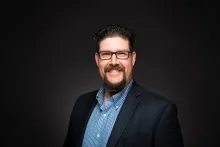
Ben is an elder serving as Pastor for the Salem, Eugene, Roseburg, Oregon congregations of the United Church of God. He is an avid outdoorsman, and loves hunting, fishing and being in God's creation.
