
Paul Moody
This transcript was generated by AI and may contain errors. It is provided to assist those who may not be able to listen to the message.
Good afternoon, everyone! Wonderful to see you all. Very wonderful to be back together again. It seems like it's been a while. Some ways time seems to go slow, and other times it seems to go quickly. The same yet different, I guess, as Mr.
Oliver would say. Appreciate that. I had to share my parking space with an iceberg out in the parking lot. I came in and thought, well, there's probably going to be a space here, and come to find out there wasn't, but I just kind of nosed into the snow berm. Over in West Africa, Nigeria, and Ghana, it's been somewhat hot, kind of in the mid to upper 90s, and when I kind of expressed the fact that the temperature was six degrees Fahrenheit the night I left home, people's eyes kind of roll back in their head, and they try to imagine exactly what that might mean. And they get on my phone and make the conversion to Celsius, and I say, well, that's minus 15 degrees Celsius, then they really can hardly process it. So, as one pastor said, aren't people freezing to death everywhere?
You know, sometimes we're over here, and we hear stories about Africa, and we have a mental conception. In some ways, it's a little hard to imagine, unless you're there. And I had to assure him the same in reverse, that no, people aren't just dropping dead like popsicles in the street. We do have a plan and generally compensate for the temperature. I'd like to say hello to our congregations joining us, Kennewick and Kettle Falls, as well as Eureka. Happy Sabbath to you. When you call up our technical sound man, Mr. Iams, and you say, I think I'm gonna do a PowerPoint tomorrow, you may not realize what a scramble that means. It means it has to go up here, means Mr. Hirsch has to know as well, and there's another computer, and it has to go out over the webcast and try to coordinate it. So I appreciate all the effort that goes into putting this together, so hopefully we'll be able to pull off a seamless production for you today. Title of my message is the assembly. The assembly, and I'm going to provide for you a PowerPoint today of different slides of where I went and people that I saw when I was in West Africa, begin the title of the assembly.
The Greek word in Scripture that's translated church in the Bible is ekklesia. Sometimes that's pronounced ekklesia, depending on your pronunciation of it, but ekklesia. And it essentially means called out ones. Called out ones.
It's also a reference to a called out assembly. And as it pertains to the Church of God, the ecclesia is a group of people who have been called out of this world, called in assembly in God's service. And so today what I'd like to do is give special attention in the message to the term assembly, as we go through the sermon today. The concept of assembly actually popped up a number of times on my trip. Because, you see, not only is the Church of God an assembly by nature and by construct, literally that's what we are. We are an assembly. But as an assembly, what do we do? Well, as God's people, we assemble because that is who and what we are. We are an assembly which has been called out by God. Now in Scripture is the term ecclesia, or church, or assembly can refer to a group of believers in a specific location, or it can refer to the entire body of the church. For example, in a number of the Apostle Paul's letters, he would say, you know, to the church in Corinth, or to the church in Ephesus. And the word is ecclesia, but it was a reference to the called-out ones in that region.
But also, again, it's a reference to the entire body as well. The point is the assembly, the ecclesia, the church, is not a reference to a building or a structure, or even a corporate structure. It is a reference to people. It's a reference to a called-out assembly, called out by God, called together in an assembly. Today I like to start the sermon with a greeting to you. Every time I go to West Africa, the congregations here and specific individuals say, please take a greeting from us, greet the brethren, greet Dari, greet, you know, specific people by name, and the congregations from us. And it's very warm and very heartfelt. So I would like to return greetings to you as well, and I would want to do it according to a style that the Apostle Paul used to greet a portion of the assembly in his day. Let's start by going to 1 Corinthians, chapter 16, in verse 19.
1 Corinthians 16, verse 19. Paul is writing here to the church in Corinth, and he says, The churches of Asia greet you. Aquila and Priscilla greet you heartily in the Lord, with the church that is in their house. All the brethren greet you, greet one another with a holy kiss. Show that brotherly affection as well to one another. The term here, churches, as in churches of Asia, or the church that is in their house, the word is a reference as achlesia. And again, it's the assembly sending greetings to another portion of the assembly. So in like manner, I'd like to say the churches in West Africa greet you. The church which is in Dari's house, literally, greets you. Dari and Tone greet you heartily in the Lord. The brethren in Nigeria, the brethren in Ghana, the churches greet you, and sincerely so. President, a portion of the assembly sends greetings back to you, a portion of the assembly. Throughout the message today, I want us to remember that not only are we called to be an assembly, but that our ability to assemble together as the people of God is important and essential as well. Because you can't say, well, I'll be a part of the assembly and just kind of do my own thing. I'll hang out here, never assemble.
If you never assemble with the assembly, how can you call yourself the assembly?
It is those who are called out and assembled spiritually, assembly by God.
So I want us to keep that concept in mind as we walk through the message today.
This is a map of the congregations in Nigeria. I want to just give you a little bit of an overview as a reminder of where it is that I go and who is there.
We have three congregations in Nigeria. As you can see in the map in the bottom corner, it's in the crook of West Africa there. But Lagos, which is the red star to the far left-hand side there, Lagos is where I fly into when I come into Nigeria, is where Dari lives and our largest congregation in Nigeria resides.
And then come over to the right, we have Benin City, and then a little farther to the right is the congregation of Wary. We have a total of 130 members with the United Church of God in Nigeria across those three congregations, plus actually quite a number of Beyond Today subscribers who have been a part of our network of communication over there for a number of years. My travels over there went very well. The flight over, I got off the plane and I thought, wow, that was the quickest flight I think I've ever taken, although it was still, I think, about 23 hours. I must be filming somewhat accustomed. I arrived feeling good, feeling fresh, a little different than the return. You fly out of Spokane in the morning, you arrive a day later in the evening, and you can go to bed after a few hours, but on the flip side, on the return, flights leave out of West Africa at night. So you've been up all day, you fly out about 1030 at night, 24 hours or so home, and then you arrive around noon here in Spokane, and then family wants to say hello, and you're trying to stay up and stay awake, and then it's two days before you've gotten any sleep. So the return is a little rougher than the send-off, but I think by design that actually works well. Landing in Lagos, coming through customs, was kind of the typical games that you play as you're trying to at least exit through the airport. Certain things you have to... I was hauling luggage in, tents for the camp program, had four tents, and so you know, you come up to customs, and one official's trying to tell me that I have to pay $200 to be able to bring these tents through, and I said, no, I don't think so. We've been hauling these things through for years, and he says, well, you know, that you've purchased this, there's value to this, and if you give me $200, I'll go over here to my supervisor, we'll take care of it, and you can just pass on through. And I said, I think I'll take my chances with your supervisor, and he says, you're gonna be here hung up all day, and I said, for $200, I can spend all day with you. And I said, this is the church's money, this has been donated, and you know, honestly, it's you pay, you pay taxes to whom taxes are due, right? Render unto Caesar, but there's a game which is played, and these people meet you at the conveyor belt as you're pulling your luggage off if you see things, if they see things of value that might could be extorted for. But that's, unfortunately, it's an element of the culture, certainly not an element of the church, but it's just something you have to walk through as as you arrive. I think sometimes we're on a slight delay, I don't want to push this thing too many times. There we go. This is Dari's new house in Nigeria. This has been under construction in some form or another for about three years now, and in person it's big. It looks big on the picture, but actually it serves quite a big purpose. I said the church that is in Dari's house greets you, and that is literally the case. Dari's house is a multi-purpose building there in Lagos to serve both the church, his family, and his business.
There's a ground floor level, which you can't really see, and then the second and third level. And then up here on top, this point with the pointer, up here on top, that wasn't quite finished out yet, but this will get to be in my bedroom up here when I go for visits. But literally out of the front, you see over the city of Lagos, and if you look out the back, it borders just off the back wall of the university, and there's sprawling grounds. In one sense, it's almost like a plot of country right in the middle of this massive city.
And I slept well. There weren't three churches firing up at two in the morning, one on each side of the wall with their loudspeakers facing out, as in their other location. And this will serve them well. Plus, you'll notice, once again, now there's air conditioning. Life's good. It was very nice to be with Dari and Tone.
Another angle, again, the bottom level here has been designed for the church in Lagos. There's an open meeting room facility in there, as well as a couple other smaller rooms for Sabbath school rooms, as well as restrooms. The second level is off Dari's office. He has rented a flat for the last number of years. So this gets the church hall out of a rented facility under one roof. It gets his office and his employees out of a rented facility under one roof.
And then the third level is his family's personal residence. So it's been kind of a long time in coming. They were scrambling to finish some painting on the residence level just before I arrived. The elections in Nigeria, you may have heard a few things about that in the news, it impacted our ability to travel. Dari and I had plans to go to Benin City, as well as to possibly a wary if time allowed, but the elections were to take place the Saturday before I arrived.
But in the a.m. hours of Saturday morning, the presidential elections were postponed for a week. If you can imagine, just, you know, the president issues a decree to postpone the elections. And obviously, many assumed that it was politically motivated. But that bumped it then to the next Saturday, that week that I was there. And Dari's concern was we might head out on a trip and they'd not be able to get back from my travel then to Ghana.
So what that did was essentially rearranged our travel. We stayed local to Lagos, and we spent a number of days there visiting with members in their homes and on individual levels. So this is, farthest on the left is Dari's daughter, Bobby. You would know Bobby, she's featured in many of my pictures over the years. And in the center is Ruth. You might remember Coleman from times past in the O'Wary congregation area. Ruth is Coleman's daughter. She's lived in Nigeria for a number of years, gone to school, and she now works for Dari and his business. And then to the far right there is Fumi, one of one of Dari's sisters.
So throughout the course of a few days we were able to visit with a number of people. This map looks similar to the last one, except now we have this blue triangle here. This is Ibadan, which is just a little bit north of Lagos, and perhaps it doesn't look like a great distance, but we have a handful of members there, about a half a dozen, who gather in one another's home on the Sabbath.
Their desire would be to come into Lagos for Sabbath services, but you have to understand you have a city of 23 plus million people. Lagos is the most populous city in Africa, and when everybody is on the street, it is literally gridlock. And Saturday is the day where everyone's off work, they're doing their shopping, they're doing their errands, because Sunday's Big Church Day in Nigeria, and you know that trip could take you an hour and a half, or it could take you six or eight hours.
And you just you just don't really know. There's times brethren have tried to come into church in Lagos, they don't own cars, they have to hire transport, and you come in, and it's just literally gridlock. They sit for hours, don't even make it, and have to turn around and then go home. So if you've ever been at a football game or a concert, something that's packed into a stadium, and then everybody dismisses, and they're trying to funnel out through these doorways, and you're kind of all merging together and jockeying for a position, that's pretty much how the streets of Lagos are, and the challenges that it presents.
So we made a trip up to Ibadan to visit the brethren up there who haven't been able to come down to Lagos in a while, and to actually discuss the possibility of starting a congregation up there, because there are a number of good news Beyond Today subscribers who have been communicating with Dari for years and said we would really like a congregation of United Church of God that we could meet with.
So these are a few of the people that we visited along the way on the way up. The young lady sitting next to me on the right-hand side is Toyosi, and to me it's exciting. I've been traveling there often enough now that you get to meet people and see families develop, and in generations now start to take place in the church. Toyosi didn't grow up in the church. She was called and came into the church. I baptized her about two years ago, and her husband, Illumide, same circumstance, came into the church through contact through our literature. I baptized him about five years ago. They were married, and now here's their first child. And as you can see from the expression there, even the youngest of babies in Africa are fascinated by this white face. You know, the advantage here, this one, I come back probably, I see him in six months. It'll be a pucker lip and then tears, but at least this point he's just staring in wonderment. To the far left, farthest to the left, that's Ronke. She is another one of Dari's sisters. Her husband, Paul, is to the far right, and they live in Lagos, and Paul's a deacon there, serving in Lagos. And then the other lady on the left-hand side of me is Toyosi's mother. Again, it's just nice to have opportunity to visit people in their homes. Sometimes the trips I go over there, and it's congregation to congregation. And again, in this case, when we couldn't travel as we would, it actually provided opportunity for a little more intimate settings. So this is this is a group, at least a handful of them up in Ibadan, and individuals that have been members for the Church of a very, very long time. And again, our discussion centered around the ability of hopefully starting a congregation in that area, that Dari would be able to visit about once a month. Here we have Dari and Tone on the left, and another family we were visiting. This is actually still closer into Lagos than Ibadan, but even in the city itself. The problem is travel, and even individuals such as this family, if they want to attend services, there's times they would have to travel in and stay the night in somebody's home on Friday in order to even be close enough to to assemble on the Sabbath, given the the challenge and the congestion. And then let's go back one.
Bobby, again, she's featured a number of my pictures. If you look out the front of Dari's house, it looks like Lagos, Nigeria, except there's two big signs that stand up tall. It's Domino's Pizza, and it's Coldstone Creamery, and they share the same building. So there's a taste of home over in Africa, except a couple years ago when we first went to Coldstone, I ordered three flavors. I said I'll take a scoop of that, a scoop of that, and a scoop of that, and I watched them dish it up and put it on a platter and then mix it all together before they served it. I said we don't quite do it that way at home, but pizza is a treat, and the kids have come to expect the fact that when I come we had pizza night, at least one night while I'm visiting. So this was out of the top floor of Dari's. Looking out to the back, the university behind, it was actually a central hub for the election.
Transports were coming in and out all day, bringing ballot boxes in that were coming in from other precincts and organizing them and sending them out.
That black SUV there, I was watching that for a while. It came in with police escorts and a couple of white individuals stepped out with clipboards, walked through and looked at a number of things and got back in and drove away. And my assumption is there's probably some sort of international observers observing the election process, but it was a pretty good vantage point from up there. And as I said, it created challenges because you see in Nigeria on the election day, all assemblies were banned. All non-essential travel on the streets were banned except for if you're going to go in and vote. And so what it created was the fact that we could not assemble for the Sabbath service. Again, by law of the state, no assemblies were allowed or permitted, and so the brethren had to gather just in small little pockets in one another's homes for the Sabbath. The challenge was that was the decree the Sabbath before as well because that was the original date for the election. And so Daria heard from a number of the members that were just really getting antsy to get together. Because you think about it, here we have the option in some respect where we say, you know, church will be there, the assembly will be there, but maybe I'm tired today, maybe I'll catch the webcast. But, you know, when you have the option to assemble and then suddenly one day they say, you cannot assemble by decree, that suddenly raises the stakes in terms of how badly you would like to be together. So Daria heard from a number of people that were just, you know, it was actually they were distressed that we can't come together and they wanted to be together. And the fact that I was there and we couldn't assemble for the Sabbath was a little challenging. But it got me to thinking a little bit more along the lines of assemblies because in some ways it's a stark reminder of the effects of the way of man and sometimes it can be of the way of the governments of man as well versus the government of God. Because in this case the establishment of the government of man, at least in this country, called for a dispersal of assemblies, a ban on assemblies, a dispersion of the people because the fear was riots and other things that could break out in the process. And, you know, I thought about the fact that God's way leads to assembly. You know, he's called out of people, were called an assembly. But think about it. What will take place at the establishment of the kingdom of God? Well, right at first in the return of Jesus Christ there will be a dispersion, obviously, of the ways of man, of the governments of man, of the armies that have gathered against him. But what then will happen as the kingdom of God becomes established? It'll be assembly. At the seventh trumpet the saints will be resurrected. They will be assembled. They will meet Christ in the air. And as the scripture says, thus they shall always be with the Lord. What will happen as well, the physical nation of Israel? Consider, what will God do with them? He will reassemble the nation of Israel, his covenant people that have been scattered among the nations. God will regather them, settle them in their land, and there'll be that model nation to the world that they should have been.
Again, an assembly which will take place. Jerusalem as well at that time will be a focal point. It will be a place of worship, a place where the representatives of all nations will assemble together. They'll go up year after year at the Feast of Tabernacles to worship the King. Knowledge of the Lord will cover the earth as the waters cover the sea. Again, it's an understanding that will not disperse people, it will bring them together, bring them together in unity of the Spirit and will not divide. What are the instructions today for you and I? Let's turn quickly to Hebrews chapter 10 verse 24. Hebrews chapter 10 verse 24. Here are the words of the Apostle Paul. He says, let us consider one another, all right? Look out for each other, see one another, consider one another in order to stir up love and good works, not forsaking the assembling of ourselves together as is the manner of some, but exhorting one another in so much the more as you see the day approaching. You know, the the assembly, the ability to come together and to function as an assembly should not become less and less as we draw near to the time of the end, but the edification, the strengthening of each other, the building up in the consideration of one another, the assembly should increase all that much the more as we see the time approaching. Again, when it's done, it's done. When it's restricted, it's restricted, and suddenly you're crying out for the ability to assemble. And yet, when we have the opportunity as the assembly to be an assembly, what a blessing that indeed is. God's way leads to unity and an assembly of His people by His Spirit, the ways a man often leads to dispersion and division.
This was the Sabbath there in Dari's home. Again, without being able to travel and gather together, we kept the Sabbath here with His family. To the far left is Ton's sister Lola, and then of course we have the whole family gathered together and we had a very pleasant Sabbath. We sang hymns, we had an interactive Bible study all while that election was going on just just on the outside of those windows.
Sorry, I'm turning. Okay. Sunday, I flew to Ghana. I was somewhat of a short stay in Nigeria, but Sunday the 24th departed from Nigeria. It was a one-hour flight from Lagos to Accra. It's literally if you've flown from, say, Spokane to Portland. That's about how it is in terms of that transportation, and there's an hour time difference. So I left at 7 p.m. and I arrived at 7 p.m. Not quite like going through a time warp. This is a map of Ghana and the congregations in Ghana.
You'll notice there's a bit of a distinction here. I have the red here marking out four congregations. Those are congregations that have been traditionally on our rolls there over recent times. Three in the blue are three new congregations which were added on this trip. We gained approximately 80 members on this trip, and I'll explain that here shortly. Ghana currently has 330 members scattered across our seven congregations there. On Monday, Henry Aikens and I traveled over to Kuan Yaco, which is this congregation here.
You have Accra on the coast and then a little northeast of Accra. You have Kuan Yaco there. Kuan Yaco is a village congregation, and to me it's one of my favorite places to go visit, not in terms of maybe that specific place, but in terms of village areas. Get out of the city, see the villages, see how they live, how they farm, how they've structured their lives. There's a lot of interesting things that I've seen traveling through the villages, and it's one of my favorite outings. To me, it's greater scenery than the city.
So this is in Kuan Yaco. This is Samuel, and he is perhaps what you would call they refer to him as an elder in the congregation. He is not an ordained elder in the United Church of God, but I would say in terms of culturally, tribally, maybe we would call him the elder at the gate. Someone who's a little older, who has some years, and who the brethren look up to, and he is our leader there. He's not the pastor, but he is our leader. Benjamin Agia Pong pastors this congregation, and two others. Samuel here is the leader on the ground there of Kuan Yaco. This is at his structure, his compound there in the village, and it's actually quite a nice place. A number of these he has set up as apartments that he rents to people who travel through or spend an extended period of time out there in the village.
We just took a little time. We were there walking around the grounds. Like I said, I just enjoy kind of seeing some of the different farming techniques, some of the different ways in which they earn a living out in the village. Samuel doesn't have a huge piece of property, but he has this water, this little creek that runs through it. So he's developed a couple of ponds here that he raises fish to sell. He's planted a number of fruit-producing trees, coconuts, and mango, and papaya, and plantain, sugar cane, and a number of other things just on a small piece of ground. Here he's giving us a sample of coconut. I always marvel at the fact that they picked these things up, hold them in their hand, and go to work with a machete, and yet they still have all their fingers. I choose to leave that to the professionals. I wouldn't be able to click this pointer otherwise. This is Henry Aikens. Henry is our office manager. He's the one that I travel all over the place with when I'm in Ghana. He drives me safely, place to place, make sure my accommodations are covered and that I have a schedule when I get there.
Henry and I get along very well. I tell jokes and he laughs at them, and so it's a very good working relationship. Here I was commenting on the fact that Samuel had cut the sugar cane to send along, and I made some comment referring to the fact that only in Africa could you get an edible walking stick. Henry here was having to demonstrate to me how that might be.
This is the road heading up to the church hall in Kuan Yaco. If you can imagine, you leave the pavement to now enter a road that is half pavement, half dirt because it's more potholes and pavement, and then you end up on all dirt, and then you end up on this track. If you imagine heading to church and you're heading down here through the jungle for your destination for church services, I was teasing Gladys Morden down in Lewiston. I said, this is where she starts. At least when she arrives at church, it's a little more in the civilized location, but here it is very remote, so if this will play, I'll just give you a quick glimpse of driving to church.
It's kind of in a wet region, a lot of moisture, a lot of vegetation. It's literally like we're assembling in the middle of the jungle. Kuan Yaco, you'll recall, I've told you before, the congregation there had a church structure that they assembled at, and then the government came through and put high-tension power lines overhead, and then just basically said, you're in the right-of-way, get out. There's no compensation for that. There's no alternative for that other than, look out, the bulldozer will show up one day.
Probably about almost four years now ago, we purchased this piece of property just a short distance from the current hall where they could begin to construct a hall. They've gone through, they've cleared all the vegetation out with machetes, and just within about the last four months or so, I was able to secure a $5,000 grant from Good Works for the construction of a hall here in Quonocco. So $5,000 isn't a lot of money. Certainly we could not build a church hall here for $5,000, but they can make it work. And how they make it work is through a lot of sweat labor and sweat equity as well. So, you know, you don't just go out and buy brick and block, which you could, but you know, this is partly their investment as well. So you get a pile of sand, a pile of gravel, and some concrete, and you mix it up by hand, and you form your bricks in your block, and you dry it. So here we're out there on that day. They're working. It's a little bit of a slow process. Basically one day a week they come out and work on a Sunday. They have jobs the other days of the week, but a number of them have dedicated to coming out now when they've got the land cleared. They're putting foundation and some of the basic supports in. Again, very difficult manual work. Let's give you a couple different angles. This front area in the center will be where the stage is. These two sections to the top and bottom there will be rooms on the side, and then out here to the left is where the congregation seating will be.
Honestly, it was a little bigger than I was expecting. Henry asked about the footprint, and they said, well, we're planning for growth. We're looking to have growth here. I said, well, growth is good. I'm all for growth, except for the budget on this thing. Just remember where we're sitting. They said, well, once we get the perimeter put in here, they'll put up supports, which will then support the roof of the structure. Then they'll bring that as far as they can, but will at least have the supports, the roof, the floor. What they meet in right now is an open structure. As time moves along, they continue making block, and they can close the structure in and give walls as well.
I'll give you a little video scope here. Again, it's hard work. It's manual labor, but they'll have personal ownership in this all along the way. My next video here is solely for your entertainment, because this was my entertainment as well. Like I said, going out to the village, you see some unique things and how people make their living. As we're surveying the church hall construction out there, we are watching this man who is a professional at harvesting coconut. That's his business. He goes up in the trees, gets coconuts, sells them. So at least had to give you a little idea how this works.
So you can watch this. Here's the man coming up, a far tree.
Machete in his mouth. Makes it look easy, doesn't he? Once he's made his way up there in the next video. So once he's made his way up there, he's just hacking along with the machete and down come the coconuts. He's like a machine, really. You just hear that machete going away and his coconuts thudding to the ground. He has a circuit of region that he covers, and once about every three months, he comes through and they can get a harvest off of these trees. Now, ultimately, what goes up must come down. I think I would be coming down much quicker even than that. Again, the village is one of my favorite places to go and visit the brethren and just sort of see the happenings, see the crops, see how people live and the things that they do in that region. This is back in Accra. This is some of our leadership in the region. Here next to me to the right is David Maselebi. David is the pastor in Accra. Next to him is his wife, Betty. Up here in the back, Henry Aikens, in the blue here to the right, is Kossi Fiyabue. Kossi is the pastor of Togo, Togo neighbors Ghana. Togo is actually in Timpeborce area because that is a French-speaking region. A couple months ago, you'll recall we had a prayer request for Kossi. Kossi is dealing with prostate cancer, and so he's come over into Accra for treatment. Kossi has been there for about two months now. Frankly, to me, it was a blessing to be able to connect with him while I was there. It's been a couple years since I've been over to Togo, and I've been trying to figure out how I could get back over there to see Kossi, and to be able to have him and his wife over in Accra to visit with them was really a treat for me. Others that we visited around in that area as well, I'll ask you to pray about one circumstance. Pray for Mrs. Lele, if you would. Mrs. Lele and her family. She was widowed about a year and a half ago. We went to visit Mrs. Lele because she is recovering from surgery, but there's a circumstance in terms of their house which has become rather dire. A number of years ago, there was a military coup in Ghana. The government was overthrown, and the government that then came into place allowed a number of the military and political leaders to just kind of go out and choose whatever land they wanted, and it was taken from the original owners and just given to these particular leaders who had risen up in this coup. A number of years later, then, there's a change in the administration, the government, and the next administration restored to the original owners their property. So, along that time comes the Lele family, looking for property to buy.
They buy a piece of property from a legal owner. They take and they build a house upon it, and they live there for years and years. Fast forward now to our time. Mr. Lele has died. He was quite elderly, and through a change in administration, once again, it's been determined that the property is going to be given back to those political and military leaders to whom it was given years ago in the coup. So now, they're living on property that they don't have legal ownership for. It went into a court case, and they lost, and basically now you have this man who owns the property says, you can either buy it from me at full value or you can leave. They've been, in this circumstance, for a bit of time, but now they and their neighbors have been warned that the bulldozer will be coming through shortly, and their houses will be leveled. Get out of the way. So I would just ask if you would keep the Lele's. Mrs. Lele, their daughter lives at home, and their son Samuel, as well. Keep them in your prayers and their circumstance. You know, things could turn around, and even there could be a change in hands of the government authority that would restore that property once again. But it is some of the things that they struggle with in Africa that are quite different than what we face here at home. I also want to draw your attention to, once again, back to David Mosela be here next to me. As I said, David's the pastor of Accra. On this trip, I took some time and began laying some administrative structure, I guess if I could use that term, and some measures of accounting in place in Ghana, because we are growing, we are expanding, and so I've made David Mosela be the regional pastor for Ghana, so that he can have direct oversight over all the congregations there, so that the left hand can know what the right hand is doing, so we can have financial oversight of the congregations, and spiritual and, frankly, doctrinal oversight, as well. And I'll explain a little bit of this history here. Prior to 2011, you recall in 2011, there was a separation within the United Church of God. Prior to that time, there were 1,100 members with the United Church of God in Ghana. After the 2011 separation, there were 50, and that 50 largely dwelled in the area of Accra. It was the Accra congregation, plus a few scattered members, and David here has been the pastor in Accra. He is a very dedicated, very faithful man. In 2014, Pastor Benjamin Agiapong returned with three congregations. That would be Agona, Kuan Yaco, and Winnebuh. And that brought about 200 more of the members back into the United Church of God there in Ghana. So my purpose this time around now for appointing David as regional pastor was because, again, as I said, we picked up three new congregation regions here on this trip. So I'll take us, again, back to the map here. If you look at the blue, the blue markers here from the bottom up. The first one is Obasi, and it's a small region, a small group of about 10. If you go up a little farther up to Kumasi, we have numbers in the low 20s for congregation in Kumasi. And if you go up here in the north, up in the upper central region of Ghana, you have the congregation in Yedji, and there are approximately 50 in Yedji. And these these three are congregations which were established on this trip. I spent some time looking at this map. I need to make it up to Yedji soon, and you know you could start out down here in Accra and make your way up through the highways. It's about a eight-hour trip up there, and I'm sure we'll take that route when I travel up to Yedji next time. But I've been eyeing this water course through this lake, and Yedji is right on the edge.
I'm thinking there's got to be a way to drive from Accra to here, and then it's all boat all the way up the water course to Yedji. So I'm then looking at that thinking, I need to talk to Henry. Water isn't his favorite thing, but neither are highway robbers, and there's been issues and problems on that highway up to Yedji. But I think at some point we may have to have a little adventure and get out on the water. So I want to give you, again, maybe a little bit of history.
This is Ophori here sitting on the far right, and Ophori is the former pastor of three congregations, the three regions that are now affiliated with us up in Kumasi, Yedji, and Abwasi. This didn't happen just overnight. One year ago I was in Ghana for my spring Holy Day trips, and Henry let me know that Ophori had contacted them and wanted to meet with me to discuss the matter. And so I brought Ophori down from Yedji, which is where he lives, brought him to Accra, and we sat down and we had a meeting. And for reasons I won't go into, Ophori and approximately 10 others up in Yedji had separated from the Church of God organization that they were assembled with, and they were requesting that we start a United Church of God congregation in that area, and that they could be the congregation up there for the United Church of God. Again, that was a year ago, April, and at that time my answer, frankly, was no. My answer was no.
My answer was go back and try to resolve this. There was a separation that had taken place. There was an issue that had occurred. I said go back and tell your members to seek reconciliation if at all possible. This wasn't a doctrinal issue.
This was an issue that had arisen. I said go back and see if you can repair this. I said because I don't desire to see separation in any Church of God congregation. These were congregations that were with United, and in 2011 when they departed, they departed as a whole, and they stayed together.
And now there's a situation arising where the congregation is coming apart, and I said go back and seek reconciliation. Seek to keep the congregation together. And so I said no, we will not at this time start a congregation up in that region. My answer was also no because at that time there was instability, and I did not want the United Church of God coming in and becoming now a magnet to draw away members from another Church of God organization. They are a part of the assembly as well, and I did not feel setting up a circumstance that could create division and separation and separate families and separate friends would be something that would be healthy for the assembly. I said go see if this can be fixed. That was last spring Holy Days. Fast forward to the Feast of Tabernacles.
Ophori came for a visit. He and his wife and another leader from up north came for a visit, and the request had not changed. Again, they were requesting to be part of the United Church of God in a congregation in Yedji, but they had also expanded to Kumasi as well, and the numbers in Yedji had increased. So I'll just say there was a matter that arose that was not able to be resolved, and now a separation had taken place, and yet there is a group of members of the Church of God who are requesting to not be independent, not be alone, not be separated, but to be a part of the greater body and part of the assembly.
So, frankly, after the Feast, it was at that time that Benjamin and David and Henry and I sat down, and we did not feel comfortable with denying them access to the United Church of God for much longer. We said, lest they become discouraged, lest they scatter, lest they separate.
I've talked to the leadership of a couple of Church of God groups over the last year, and my opinion and instruction has been, keep your people together. Do not let them scatter to the wind. So it is our intent to keep the assembly assembled as much as possible. So after the Feast last year, I sent instructions to begin sending literature, Church Magazine, the United News, as well as other types of literature support up there. I left funds behind for Benjamin and Agupong to make visits to that region to be able to meet with the congregations up there, and we made preparation for the fact that when I would return in this trip that I just now came back from, that Henry and I would go up there and I would meet them personally as well. So it was last Sabbath. A week ago from today, I was up in Kumasi for services, and I did extend the welcome back to the United Church of God for 80 members between those three congregations. Again, this wasn't ideal, all right?
The separation to begin with wasn't ideal, but this is the assembly, and the assembly needs to stay together. So this is O'Fory on the right, and the senator is Benjamin Agupong. He's the pastor who returned in 2014, and Henry Aikens. I have asked David, again, the Accra pastor, the regional pastor, to be the pastor of those three congregations. David has health issues, his travel, the ability to travel is not good, so his trips will be occasional. Benjamin, will be his assistant pastor to that region at this time, and regular trips will be made to service the brethren in Kumasi, Yedji, and Owasi. This is Sabbath service in Kumasi.
They meet in a very small room in a rented schoolhouse. There were 31 there that day.
A few had traveled down from Yedji in the northern region, a picture of the group that assembled there on the Sabbath. Finances. There's currently no finances to fund these three additional congregations.
I've instructed them to use their tithes locally to support their expenses locally, which is what all the congregations in Ghana and Nigeria do. They provide for their own local, hall rental, their own local expenses through tithes which are collected locally. But there are increased national costs because from the United States we subsidize Feast of Tabernacles and we subsidize United Youth Camp over there. And the fact is there will be increased costs to those over the course of the next year that haven't been budgeted for because the next fiscal year has been set already. So it's my intent to cover the additional costs associated with that out of donations that have come into Spokane over time for assistance into West Africa. Usually each year around the Feast of Tabernacles as well, assistance comes in to help with the feast overseas, Nigeria and Ghana.
And so we will be able to support the additional needs through that vehicle and then once the next year resets and we reset our budget, I'll be able to wrap in the expenses of the additional congregations there. I also left a little bit of money behind, some seed money for them to purchase some things to just... they start with nothing. They had to borrow enough chairs to even sit in for the SABAS service. So, you know, they can maintain but there's a need to establish with a few things and left a few funds for transportation as well for the expense of David and Benjamin Onofori as they make their travels across the circuit through the congregations.
The young man on the right there is Billy and honestly on the way over there on the plane and as I was on the ground, I was beginning to think how exactly is this going to be organized? We have three congregations likely to rejoin us and yet there's a need for oversight, there's a need for communication on a number of things and Onofori is up in Yeji and yet Kumasi basically beyond their own in between visits and I thought how can we kind of get some sort of leadership structure there in Kumasi? Well, Billy is one of our young adults. He's lived in Accra for a number of years.
He's educated, has a schooling university degree. Billy was looking for a job last time I saw him around the feast time and Billy has been hired and where do you think his company placed him?
Kumasi. So the Sabbath before I arrived, Billy walked in the door to church services to that group.
There's the only church of God group there in the area. He walked into the door of church services there and they said, welcome, can you give the sermon? And he did. So Billy, Billy, I would say is God's gift to Kumasi. Billy gives sermonettes and sermons and Bible studies and is instrumental in many things and he will be a great asset in Kumasi to help communicate with David and to help, again, just the structure and the flow of things as they progress.
This is my final day now before actually the day I left Ghana. Henry Aikens and his wife, Hannah, every time I come in in the plane and land, Hannah has a hot meal ready and waiting. And I told Henry, I said, I can't escape out of here without laying eyes on Hannah there and treating her in return because she has treated us so well as visitors have come in over the years. So this is Henry Aikens' wife, Hannah. I'm scheduled to return to Ghana and Nigeria for the spring holy days, Passover, unleavened bread, and since my return from this trip, my travel dates have actually changed. Yesterday, I rebooked my flight. I needed to add another week into my travel, and I do apologize for I'll be leaving one month from today. I do apologize, brethren, for having to leave again so soon, but I would just say my original travel plans that were built in place didn't include the ability to travel up to Yedji. I need to get there. I need to see the brethren.
There's 50 of them up there. I need to connect with them, and I'm here and I'll be gone again, but I will be back. And I'll just say thank you because it is your support, it is your prayers, that allows me to be able to go and travel as well, because you are cared for. There's faithful people who care for you here. You care for each other. You consider one another in order to stir one another up to love and good works, and for that reason, I can have the ability to travel and to serve these brethren as well, and I thank you.
So that is the last picture that I have. I would like to conclude by, again, reminding us that there is only one assembly, and it is a spiritual body. As a body is bound together by God's Holy Spirit, there is only one flock, and we must work together to support one another wherever possible in God's service. As we wrap this up, let's go to John chapter 10.
John chapter 10 verse 14. Hear the words of Jesus Christ.
John chapter 10 in verse 14, Christ said, I am the good shepherd, and I know my sheep, and I am known by my own. Christ said, I am the good shepherd. As the Father knows me, even so, I know the Father, and I lay down my life for the sheep. He says, and other sheep I have which are not of this fold, and them also I must bring, and they will hear my voice, and there will be one flock and one shepherd.
Question came up on this trip. What did Jesus Christ mean when he said that he has sheep not of this fold? You know, the question was, who are sheep not of this fold who will be added to the fold? And I said, well, you have to look at the context here, who Jesus Christ was speaking to.
Verse 19 shows he was speaking to the Jews. And so the sheep of this fold were the Israelite people.
They were those whom Jesus Christ came to, the Israelite people which include the Jews, those who were called out at that time. That is who Christ came to in his ministry. It was the people of Israel. We won't turn there, but Matthew 15, 24, Christ said that he was not sent except to the lost sheep of the house of Israel. That was the focus of his ministry. That was this fold. And yet he says there are other sheep who are not of this fold. He would hear his voice and become part of the flock. Who is he referring to? That was ultimately a reference to the Gentiles, to those of other nations outside of Israel who would hear the gospel message, who would repent, come under the sacrifice of Jesus Christ, now become part of that one flock by the Spirit of God.
Ephesians chapter 2 and verse 11.
Ephesians chapter 2 verse 11. Paul says, Therefore, remember that you once Gentiles in the flesh, who are called uncircumcision, by what is called the circumcision, made in the flesh by hands. He's writing to Ephesus, here, a Gentile region, that at that time you were without Christ, being aliens from the commonwealth of Israel and strangers from the covenants of promise, having no hope and without God in the world. The Gentile nations weren't under the covenants of circumcision, and yet the principle and the point is now the ability to be in a covenant relationship with God has expanded beyond just that physical group of people. Verse 13. But now in Christ Jesus, you who are once so far off have been brought near by the blood of Christ. For he himself is our peace, who is made both one, and has broken down the middle wall of separation, having abolished in his flesh the enmity, that is, the law of commandments contained in the ordinances, so as to create in himself one new man from the two, thus making peace. Verse 16. That he might reconcile to them both to God in one body through the cross, therefore putting to death the enmity. And he came and preached peace to you who were far off. The Gentiles, in that sense, were far off from God, all right, and to those who were near, those of the house of Israel. For through him we both have access by one spirit to the Father. So you have Israelites and Gentiles, all the other nations alike, brought together, assembled as one, by God's Spirit. Comments and questions came up as well on this trip regarding other Church of God organizations, and my response was simply that those with God's Holy Spirit are the assembly. God's assembly is identified by his Spirit as those he has called out, given his Spirit to. We are the assembly. We must remember, organizational borders don't define the Church. God's Spirit defines the Church.
There's God's Spirit. It is that Spirit that brings the flock. There's one flock. There is one shepherd.
And if I can use the term, let us not forget that there are sheep not of this corporate fold, all right? There's sheep not of this corporate fold. And that was part of my mindset as I visited with Ophori a year ago. I said, you are brethren. The organization you belong to are brethren.
They are the assembly. They are sheep. Seek reconciliation once again. And it is also the mindset I had on this trip as I welcomed them back into the United Church of God, because again, we do not desire for them to be alone, to become discouraged, to become scattered.
There are so few brethren in this world in the assembly we must seek to be assembled.
There is only one flock. There is only one shepherd. And we serve him.
God's way leads to unity and the assembly of his people. The ways of man often lead to disruption, to relationships, and division, and separation. Hebrews 12, verse 23 tells us that we have come to the general assembly and the church of the firstborn. Brethren, what a special calling that is.
What a unique calling to be of the firstborn of the firstfruits, the general assembly, the church of the firstborn today, of which we in the United Church of God are a portion. What a special calling that is. Brethren, let us never take the special assembly that God has called us to for granted.
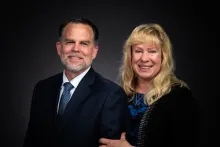
Paul serves as Pastor for the United Church of God congregations in Spokane, Kennewick and Kettle Falls, Washington, and Lewiston, Idaho.
Paul grew up in the Church of God from a young age. He attended Ambassador College in Big Sandy, Texas from 1991-93. He and his wife, Darla, were married in 1994 and have two children, all residing in Spokane.
After college, Paul started a landscape maintenance business, which he and Darla ran for 22 years. He served as the Assistant Pastor of his current congregations for six years before becoming the Pastor in January of 2018.
Paul’s hobbies include backpacking, camping and social events with his family and friends. He assists Darla in her business of raising and training Icelandic horses at their ranch. Mowing the field on his tractor is a favorite pastime.
Paul also serves as Senior Pastor for the English-speaking congregations in West Africa, making 3-4 trips a year to visit brethren in Nigeria and Ghana.

