

Don Ward
This transcript was generated by AI and may contain errors. It is provided to assist those who may not be able to listen to the message.
How have you been doing on the 50-day journey from the waving of the wave sheath within the days of Unleavened Bread to Pentecost? We have been on a 50-day journey from that of waving the wave sheath to the day of Pentecost's inclusive reckoning. If you would look at Leviticus 23, Leviticus 23 gives you a bit of insight into counting Pentecost. Pentecost literally means penta 5 cost. Count the cause, count the days. It's not count the cause, but it's to count the days. Leviticus 23, verse 10, Speaking to the children of Israel and saying to them, when you come into the land which is given unto you and shall reap the harvest thereof, then you shall bring a sheath of the first fruits of your harvest unto the priest.
I'm not going to go into this now, but they did not actually wave the sheath of the grain.
What they did was they took the grain, they ground it up, they baked it, and they waved the loaves.
Anyhow, they still called it, well, I needed that water anyhow.
I got on a lapel mic, so I guess I can move over.
Sorry for that.
Verse 11, And shall wave the sheath before the Lord to be accepted for you on the moral after the Sabbath, the priest shall wave it.
And notice verse 15, And you shall count unto you from the moral after the Sabbath, that is the weekly Sabbath within the Feast of Unleavened Bread, when the wave sheath was offered.
Of course, we know that Jesus Christ is the ultimate wave sheath.
He is the fulfillment of that in the spiritual sense, the first of the firstfruits.
From the day that you brought the sheath of the wave offering, seven Sabbaths shall be complete.
So at sundown this afternoon, seven Sabbaths shall be complete.
And then on the 50th day, the day of Pentecost.
Even unto the moral after the Sabbath, Sabbath shall you number 50 days, and you shall offer a new meat offering unto the eternal.
So have you prepared during the last 49 days since the weekly Sabbath within the days of Unleavened Bread that habitation for God, that dwelling place for the Holy Spirit.
Tomorrow is the 50th day.
Tomorrow is the Feast of Pentecost.
Tomorrow is the anniversary of the day that the Holy Spirit was sent to the New Covenant Church.
Tomorrow is the birthday of the Holy Nation, the Israel of God.
Let's notice in 1 Peter 2, 1 Peter 2, where this is the only place that I know of in the Bible where the Church is called a Holy Nation.
In 1 Peter 2, and we'll read verse 9, But you are a chosen generation, a royal priesthood, and holy nation, a purchased people that you should show forth the praises of him, who have called you out of darkness into his marvelous life.
God wanted the nation of Israel to be a special people and to bring the other nations into relationship with him, but they failed miserably under the terms of the Old Covenant.
Now that responsibility, that mission, that charge has been placed in the hands of the Holy Nation, the Israel of God. Now look at Galatians 6, verse 16. We'll also read Galatians 6, verse 15. This is the only place in the Bible where the term Israel of God is used. So in Galatians 6, verse 15, For in Christ Jesus neither circumcision avails anything, and of course the Galatians were Gentiles, but there were Judaizers who had made inroads into Galatia, saying that a person had to be circumcised in order to be justified.
And Paul says neither circumcision avails anything nor uncircumcision but a new creation.
For as many as walk according to this rule, peace be on them in mercy and upon the Israel of God.
A period of time from waving of the wave-sheaf offering to Pentecost is historically a period of preparation. It's oftentimes filled with trials and tribulation.
I would venture to say that most of you, sometime during the last 50 days, have been severely tried. Maybe financial problems, health problems, maybe family problems, any number of problems that you might want to name.
The Feast of Unleavened Bread should prepare you and I to receive the Holy Spirit.
Let's note the historical example of physical Israel from the Red Sea to Sinai that came to Sinai in the third month of the Sacred Calendar.
And of course, according to Jewish tradition, that Israel was given the law at Pentecost in the third month.
The historical example of God leading them through the Red Sea on the last day of the Feast of Unleavened Bread, it was a type of baptism for them. Let's go to 1 Corinthians 10. 1 Corinthians 10, verse 1.
1 Corinthians 10 and verse 1.
We'll be reading from Exodus 14, 15 in just a moment. In 1 Corinthians 10 and verse 1. More over, brethren, I would not that you should be ignorant how that our fathers were under the cloud and all passed through the sea, the Red Sea. And once again, according to tradition, on the last day of the Feast of Unleavened Bread, and were all baptized unto Moses in the cloud and in the sea. And did eat the same spiritual meat, did all drink the same spiritual drink for the drink that they drank of was that spiritual rock that followed them. And that rock was Christ.
Now quickly to Exodus 14. In Exodus 14, we have here the account of Israel being hemmed in, Pharaoh's army behind them, the mountains to either side, the Red Sea in front of them.
The people cried out, oh, what are we going to do? And Moses went to God and said, gird up your loins. I'm paraphrasing Moses, and you'll see the deliverance of God.
In Exodus 14, verse 30, Thus the Lord save Israel that day out of the hand of the Egyptians.
And Israel saw the Egyptians dead upon the seashore. And as we've read from Corinthians, this going through the Red Sea under the cloud and the water on either side, they were immersed, was their baptism as a nation. Israel saw the great works which the Lord did upon the Egyptians and the people feared the Lord and believed the Lord and His servant Moses. But for how long?
Then, saying Moses and the children of Israel, this song, this is known as the victory song of Moses, it's also part of this is recorded in Revelation 15. They sang this song, saying, I will sing unto the Lord, for he had triumphed oriously the horse and the rider, hath he overthrown in the sea. The Lord is my strength and song, he has become my salvation, he is my God, and I will prepare him and habitation. What would be that habitation?
What was the purpose? That would be the place where God would dwell. I will prepare him and habitation. My Father is God and I will exalt him. So note it carefully. One of the things that Israel was to do was to prepare and habitation for God to dwell in.
And we shall see that they did build a tabernacle in the wilderness, and later they built a temple on Mount Moriah called Solomon's Temple. And God's presence filled that tabernacle when it was reared up and also filled Solomon's Temple when it was dedicated. So let's note further this victory song here in Exodus 15. Pick it up again in verse 13. Very interesting here. It turns into a prophecy. You and your mercy have led forth the people which you have redeemed. He redeemed them out of Egypt, symbolic of sin and death. You've guided them in your strength unto your holy habitation.
Now they were to prepare and habitation, but it says here, but you're going to bring them to your holy habitation. Where is God's habitation today?
The people shall hear and be afraid. Sorrow shall take hold of the inhabitants of Palestinian. Then the dukes of Edom shall be amazed. The mighty men of Moab, trembling, shall take hold upon them. All the inhabitants of Canaan shall melt away. God's going to take care of all of the enemies. Fear and dread shall fall upon them by the greatness of your arm, and they shall be as still as a stone. Till your people pass over, O Lord, till your people pass over which you have purchased. You shall bring them in and plant them in the mountain of your inheritance, in the place of God which you have made for you to dwell in. Notice, for you to dwell in, in the sanctuary, O eternal, which your hands have established.
Now that tabernacle in the wilderness was built by Moses and the Israelites. Solomon's temple was built by Solomon and the Israelites. The Restoration Temple, under the leadership of the Rubblebell, Joshua, Haggines, the Rubblebell was built by men. Of course, God's Spirit was, in all cases, inspiring them. But here's the sanctuary that God's hands have established, and the eternal shall reign forever and ever. Now, we're coming back to Exodus 15 and 16, but now let's go to, if you should want to mark it, let's go to Hebrews 8, verse 1.
Hebrews 8, verse 1. So here it even talks about a tabernacle or a dwelling place, a sanctuary, that God had established, and he was going to reign forever and ever. In Hebrews 8, verse 1, Now the things which we have spoken, this is the sum. We have such a high priest who sat on the right hand of the throne of the majesty in the heavens, a minister of the sanctuary, and of the true tabernacle, which the Lord pitched and not man. Though the Church of God, the Israel of God, is a spiritual organism. It is God's doings. It is through him that this tabernacle, this sanctuary, is established. Now, in chapter 9, verse 11, Hebrews 9 and 11.
But Christ, being come and high priest of good things to come by greater and more perfect tabernacle, not made with hands. That is to say, not of this building.
And further, in verse 24, verse 24, For Christ is not entered into the holy places, made with hands, which are the figures of the true. In other words, the tabernacle of the temple was made after the pattern of the heavenlies. Christ is entered into heaven itself, now to appear in the presence of God for us. So Israel came to Sinai in the third month, the month in which Pentecost is observed. Now I want to go to Exodus 19. Exodus 19. We will be coming back to 1516. In Exodus 19, maybe it's just 16, I'm not sure. In Exodus 19 and verse 1, So they have left Egypt, crossed the Red Sea, they're out into the wilderness, and in the third month they come to Sinai. And the third month, when the children of Israel were gone forth out of the land of Egypt, the same day came they into the wilderness of Sinai, for they departed from Rephidim, and were come to the desert of Sinai, and had pitched in the wilderness, and there Israel camped before the mount. And Moses went up to God, and the Lord called unto him out of the mountain, saying, Thus shall you say to the house of Jacob, and tell the children of Israel. And according to Jewish tradition, Israel received the Ten Commandments on the day of Pentecost. Of course, Israel had not observed the Pentecost prior to this. They had observed Passover, the first holy day of the Feast of Unleavened Bread, and the last holy day of the Feast of Unleavened Bread. And God is revealing Himself and His plan through the holy days. So this is the first Pentecost that they had observed. God had to basically drag Israel to Sinai. God had to basically drag Israel to Pentecost. By the time that Israel had come to Pentecost, they had murmured against Moses. And as it says in the Bible, actually they were not murmuring against Moses, but God. They had murmured against God three times by the time they came to Pentecost. And by the time that they had come to the Feast of Tabernacles in the fall, as it says in Numbers 15, they had murmured against God ten times. So Israel was very slow on the take. Now let's go back to Exodus 15. We'll briefly notice these murmurings in Exodus 15 verse 22. Miracles, the ten plagues that came upon Egypt crossing the Red Sea, singing the victory song of Moses. Verse 22, so Moses brought Israel from the Red Sea. They went out into the wilderness of Shear. They went three days in the wilderness and found no water. And when they came to Marah, they could not drink of the waters of Marah, for they were bitter. Therefore, the name of it was called Marah. And the people murmured against Moses, saying, What shall we drink? And he cried in the Lord. The Lord showed him a tree, which when he had cast into the waters, the waters were made sweet. There he made for them a statue and an ordinance, and there he tested them. And he said, If you will diligently hearken unto my voice and keep my commandments, I will put none of the diseases. All those plagues that you saw in Egypt, they won't come upon you if you will give ear to me and keep my commandments. And furthermore, I will heal you of all your diseases. And they came to Elam, where were twelve wells of water, and three score, and ten palm trees, and they camped there. But how long is this going to last?
Not very long. Now we come to Exodus 16, and this is the chapter in which God revealed the Sabbath of Israel. In Exodus 16 verse 1, they took their journey from Elam and all the congregation of the children of Israel came in the wilderness of sin, which is between Elam and Sinai on the fifteenth day of the second month, and they're departing out of the land of Egypt. The whole congregation of the children of Israel murmured against Moses and Aaron in the wilderness. The children of Israel said unto them, would God, that we had died by the hand of the Lord in Egypt, when we sat by the flesh pot, so we did eat bread to the full.
For you have brought us into the wilderness to kill this whole congregation with hunger.
Then said the Lord unto Moses, Behold, I will reign bread from heaven for you, that the people shall go out and gather at a certain rate every day, that I may test them whether they will walk in my law or not. So here's the second murmuring, and the answer that God gives here is, I'm going to reign bread from heaven.
Of course, this was symbolic of that which was to come, as we'll note in just a moment, the true bread of Jesus Christ. Notice in Exodus 16, verse 10, which you could easily overread, or read over, and it came to pass as Aaron spoke unto the whole congregation of the children of Israel, that they looked toward the wilderness, and behold, the glory of the Eternal appeared in the cloud. And so Israel was able to behold the glory of the Eternal in a cloud, as they looked out there. And the glory of God means the presence of God. So I don't know exactly how it was manifested. We know that the Bible says in John that no man has seen God at any time, but the Son has come to reveal Him. But time after time after time, Israel is given this powerful testimony. We're going to come to Exodus 17 back in just a moment. Now let's go to John 6. John 6 and verse 30. John 6 is known as the Bread of Life chapter.
And John 6, verse 30. They said therefore unto him, What signs show you then that we may see and believe you, and what work do you do? Our fathers did eat manna in the desert, as it is written, he gave them bread from heaven to eat. Then Jesus said unto them, Verily I say unto you, Moses gave you not that bread from heaven, but my Father gives you the true bread from heaven. For the bread of God is he which comes down from heaven and gives life unto the world. Of course, Jesus Christ then in this chapter identifies Himself as the bread of life. And he who would have life must eat and drink of Jesus Christ. Now back to Exodus chapter 17.
We see once again a murmuring before they come to Pentecost, Exodus 17.
Verse 1. All the congregation of the children of Israel journeyed from the wilderness of sin after their journeys according to the commandment of the Lord and pitched in Rephidim, and there was no water for the people to drink. Wherefore the people did chide with Moses and said, Give us water that we may drink. And Moses said unto them, Why chide you with me?
Why do you tempt the Lord? And the people thirsted there for water, and the people murmured against Moses and said, Wherefore is this that you brought us out of Egypt to kill us and our children in cattle with thirst? And Moses cried out to God as usual. And in verse 7, And he called the name of the place Masah and Meribah because of the chiding of the children of Israel, because they tempted the Lord, saying, Is the Lord among us or not? But you notice in verse 5, The Lord said unto Moses, Go before the people and take with you of the elders of Israel in your rod, wherewith you smoke the river, take it into your hand, and I will stand before you upon the rock in Horeb, and you shall smite the rock, and there shall come water out of it, that the people may drink. And Moses did so in the sight of the elders of Israel. Now, that is parallel, pointing toward the water symbolizing the Holy Spirit. Go to John 7, now the Gospel of John, chapter 7.
John 7, verse 37. In the last day, that great day of the feast, Jesus stood and cried, saying, If any man thirsts, let him come unto me and drink. He that believes on me, as the Scripture has said, out of his belly shall flow rivers of living water. But this, folk he, of the Spirit, which they that believe on him should receive, for the Holy Spirit was not yet given, because Jesus was not yet glorified.
At Sinai, God issues a distinct call and mission to Israel. Now we go back to Exodus 19, in verse 4, where we left off last time we were there in Exodus 19. Exodus 19, verse 4. They've come to Sinai now in the third month after murmuring three times, after even seeing the glory of God and the cloud from a distance off in the wilderness. Now, here's their charge and mission, verse 4.
You have seen what I did unto the Egyptians, how I bear you on eagle's wings, brought you unto myself. Now therefore, if you will obey my voice indeed and keep my covenant, then you shall be a people for all, I'm sorry, you shall be a purchase or a peculiar treasure unto me, above all people for all the earth is mine. Very similar to 1 Peter 2.9.
You are a purchase people, a holy nation, that you should show forth the praises of him who called you out of darkness in his marvelous light. So now verse 6. And you shall be unto me a kingdom of priests and a holy nation, which is now, as we read from 1 Peter 2.9, passed on to the church.
These are the words which you shall speak and the children of this room.
So in the rest of chapter 19, God tells Moses how to prepare the people for the day that was to come when he was going to thunder from Mount Sinai, the Ten Commandments.
Now notice chapter 20, the first several verses.
Notice verse 1. God spoke all these words, saying, I am the eternal dear God, which have brought you out of the land of Egypt, out of the hand of bondage. You shall have no other gods before me. And he continued thundering the Ten Commandments.
Now, it seems maybe that you would think, well, boy, the people would be thrilled that God is speaking to them. But notice verse 18.
And all the people saw the thunderings, the lightnings, the noise of the trumpet, the mountain smoking. When the people saw it, they removed and stood afar off, and they said unto Moses, Speak, you with us, we will hear. But not God speak with us, lest we die. And Moses said unto the people, Fear not, for God has come to prove you, once again that word to prove meaning to test you, and that his fear may be before your faces, that you sin not. And the people stood afar off, and Moses drew near unto the thick darkness where God was. And chapters 21, 22, 23, Moses goes up and receives the statues and the judgments.
And he brings these back, and we come to chapter 24, where they officially enter into the Old Covenant. We'll read Exodus 24, 1, Set unto Moses, come up unto the eternal you and Aaron, Nadab, Abihu, and the seventy elders.
And Moses went alone, and came near the Lord. You can come near, but they shall not come nigh, neither shall the people go up with him. Then Moses came and told the people all the words of the eternal and all the judgments, that which he had received the statues and the judgments.
And of course, they had heard the Ten Commandments. So Moses stands before them.
He says, All the words which the Lord has said we will do. And Moses wrote all the words of the Lord and rose up early in the morning and built an altar. So here's the formal wedding ceremony of God marrying Israel into the terms of the Old Covenant. They cut the parts of animals, and they walked between the sacrifices, and the covenant was ratified, as we shall see, by blood. So, verse 4, that rose up early in the morning, they had an altar and twelve pillars according to twelve tribes. Verse 5, He sent young men of the children of Israel, which offered burnt offers, sacrificed peace offerings of oxen unto the Lord. And Moses took half the blood and put it in basins.
Half of the blood is sprinkled on the altar. And he took the book of the covenant and read in the audience of the people. And they said, all that the Lord has said we will do and be obedient.
And Moses took the blood and sprinkled it on the sanctuary and said, Moses sprinkled it on the people and said, Behold the blood of the covenant, which the eternal have made with you concerning all these words. So that's the official ceremony of Israel entering into the Old Covenant. Now what about this sanctuary? What about this habitation? Now in chapter 25, chapter 25, verse 1, The Lord spoke unto Moses, saying, speaking to the children of Israel, that they may bring me an offering of every man that gives it willingly from his heart.
And you'll take the offering and describe the various elements of the offering. And then in verse 8, And let them make me a sanctuary that I may dwell among them. So remember when they sung that victory song of Moses, one of the things they were doing, we will build him an habitation.
And in spite of their murmuring, complaining, and God having to sort of drag them along, they come to this point. They gave willingly. In fact, they gave more than they needed.
So most of the rest of the book of Exodus is taken up with building this tabernacle.
Now we go to Exodus 40. What is the relationship here? Well, Pentecost, have you prepared an habitation for the Lord? How have you done on your 50-day journey from that day that the wave sheaf was offered during the Feast of Unleavened Bread to the present time?
In Exodus 40, in verse 16, "...Thus did Moses, according to all that the Lord commanded him." Verse 33, "...and he reared up the court round about the tabernacle in the altar, and set it up on the hanging of the court gate. And Moses finished the work.
Then a cloud covered the tent of the congregation, and the glory of the Lord filled the tabernacle." The glory of the Lord. His presence, he came to dwell among men.
Not in men, but among men. Moses was not able to enter in the tent of the congregation because the cloud abode thereupon, and the glory, God's presence, filled the tabernacle.
And when the cloud was taken up from over the tabernacle, remember we read from 1 Corinthians 10, 4, and the rock they followed was Christ.
They all drank of that same spiritual drink, and the rock they followed was Christ.
And when the cloud was taken up from over the tabernacle, that is, when His presence moved, the children of Israel went forward in their journeys.
If the cloud were not taken up, they didn't leave until it was taken up.
Verse 38, for the cloud of the Lord was upon them, tabernacle by day His presence, fire was on it by night His presence, in sight of all the house of Israel, throughout all their journeys. So they're not without excuse.
So God did instruct them, and they did build Him a sanctuary and a habitation, a dwelling place.
Now, after Israel comes into the land, they pitched that tabernacle at Shiloh, and eventually that tabernacle was destroyed when the Assyrians came in.
Well, it was destroyed even before Assyria made the main attack upon them.
But as David reached the end of his days, he wanted to build a temple for God.
He never got to build a temple, but he was able to build what was called David's tabernacle.
If you go to 2 Chronicles chapter 5, 2 Chronicles chapter 5, David was able to gather the material to build the temple, and the things that were in this tabernacle that David had pitched on Mount Moriah was brought into the tabernacle. 2 Chronicles 5 verse 1, Thus all the work that Solomon made for the house of the Lord was finished, and Solomon brought in all the things that David his father had dedicated. The silver, the gold, all the instruments, put he among the treasures of the house of God.
Then Solomon assembled the elders of Israel and all the heads of the tribes, the chief of the fathers of Israel, and they brought the ark of the covenant out of the city of David, which is Zion, and they brought it into what we call Solomon's temple.
2 It was a great dedication ceremony. In verse 13, It came to pass as the trumpeters and singers were as one to make one sound to be heard in praising and thanking the Lord. When they lifted up their voices with the trumpets and cymbals and instruments of music and praised the eternal saying, for he is good, his mercy endures forever, that the house was filled with a cloud, even the house of the Lord, so that the priest could not stand to minister by reason of the cloud, for the glory and the presence of God filled the house of the Lord. So once again, God is dwelling among his people in a temple now. 3 Israel eventually went into captivity, the northern kingdom, under the hands of the Assyrians, but Judah continued, and they continued in that temple with several kings and high priests through the years until the time that God allowed the nation of Babylon under Nebuchadnezzar to begin to bring waves of attack against Jerusalem. And Nebuchadnezzar began to besiege Jerusalem in about 604 BC, and somewhere, circa 587, that temple, Solomon's Temple, was destroyed.
In Ezra 1, after about 70 years in captivity, that is the Jews, remember Israel, the ten tribes had already gone into captivity.
After 70 years or so in captivity, God had raised up a king, a Persian king, that he inspired, and perhaps the Jews were there persuading as well, to let them return and build a temple back in Jerusalem.
Ezra 1-1. In the first year of Cyrus, King of Persia, the word of the Eternal by the mouth of Jeremiah might be fulfilled. The Lord stirred up the spirit of Cyrus, King of Persia, that he made a proclamation throughout all his kingdom and put it up in writing, saying, Thus says Cyrus, King of Persia, the Lord God of heaven has given me all the kingdoms of the earth, and he has charged me to build him a house at Jerusalem which is in Judah.
So God allowed this Gentile king to make a decree. Now, Cyrus wasn't going to literally build it himself. There were two men, Zerubbabel, the civil governor, and Joshua, the high priest, who were given the charge of leading a contingent of Jews back into what we call the land of Israel and to specifically the area of Jerusalem and for the purpose of building a temple.
In chapter 2 of Ezra, they quickly lay the foundation and keep the feast.
But some 18 or 19 years go by and nothing much has been done. There had been internal strife among the Jews. There had been warfare in the Persian Empire, and the Samaritans were resisting the building of the temple. There were just a lot of problems to overcome.
God raises up two prophets. Look at Ezra 5 verse 1.
God raises up two prophets, Haggai and Zechariah, to inspire them to get on with building of the temple. Then the prophets, Haggai and Zechariah, they came under the Jews in Judah and Jerusalem in the name of God and set unto them. They rose up and began to do the work. I'm paraphrasing in verse 2. Now, Haggai, if you turn to the prophet book Haggai, Haggai and Zechariah has to do to a large degree with building this restoration temple.
Haggai 1 and verse 1. In the second year of Darius, the king in the sixth month and the first day of the month, came the word of the Lord by Haggai to prophet unto the rubbabel and to Joshua.
Verse 2, Haggai 1-2, Thus speak the Lord of hosts, saying to the people, the time has not yet come that the Lord's house should be built. That's what they were saying.
But then God said in verse 3, through Haggai, it is time for you to build a temple. Paraphrasing once again. And they got serious. It's one of the few times in history that God's people really responded to prophets that God sent them. You'll notice in verse 14 that God's spirit was among them. And the spirit of all the remnant of the people was stirred up, and they did work in the house of God. Now we come to chapter 2. So once again, what are we tracing? We're tracing God's habitation. God has always desired to dwell with man, not just with man, but in man. So the tabernacle in the wilderness, he dwelt among them.
Solomon's temple, he dwelt among them. The holy of holies, the glory of the Lord filled the house.
Now when this temple, as we shall see, is dedicated, there is no record of the glory of God filling that temple. But as it says in verse 14, that God's spirit was among them.
This restoration temple pointed toward the greater work that was to come, and that temple not made with hands, that is the Church of God.
And Haggai and Zechariah taken up with this to a large degree. So chapter 2, verse 1, Speak now unto the rebel bell, the son of Sheol Tiel, and to Joshua, and the residue of the people, saying, verse 3, Who was left among you that saw this house in her first glory?
That is Solomon's temple. How do you see it now? By comparison. By comparison, it's nothing.
It doesn't really compare to Solomon's temple. Yet now be strong, O rebel bell, says the Lord. Be strong, O Joshua. For I am with you, says the eternal of host. According to the word which I covenanted with you when you came out of Egypt, so my spirit remains among you. But there was no outward display of the glory of God filling this temple. For thus, says the Lord of hosts, Yes, once in a little while I will shake the heavens and the earth and the sea and the dry land, and I will shake all nations, and the desire of all nations shall come, Jesus Christ, and I will fill this house with glory, says the eternal of hosts. Well, it wasn't that house. It wasn't that restoration temple. There were five things missing in the restoration temple. The Ark of the Covenant was missing.
Today, the law of God is written on our inward parts by the Holy Spirit. Hebrews 8 and also Hebrews 10. I will write their laws in their hearts and in their minds. The sacred fire, that is the fire that burned continually.
Today, we are to be living sacrifices. The Urim and the Thummim was missing. Today, we have a more sure word of prophecy that we can look into the Word of God for direction. We also have the ministry that we can consult. We want to make sure that we consult the Word of God and making our decisions. The Shekin of glory, or the Shekin of glory, the presence of God was not in this restoration temple. Today, God's presence is in us.
We are the temple of God. And there was no continuing spirit of prophecy. And today, once again, we have a more sure word of prophecy, the Word of God, that we can consult. So we see, verse 8, the gold is mine, the gold is mine, says the Lord, the glory of this latter house shall be greater than of the former, says the Lord of hosts. And in this place will I give peace, says the Lord of hosts. This temple was pointing toward the spiritual temple. Now we go to Zechariah 6. You know, through the years, people speculated, well, who in the church today fills the role of Zerubbabel?
Who in the church today fills the role of Joshua? Chapter 4 of Zechariah talks about the two witnesses on either side of the bowl that pour the oil out of themselves into the bowl. God is the source, of course, of the Holy Spirit that proceeds from the Father. Some speculate, well, this man or that man or these two, they'll be the two witnesses. But who is the person who really builds the temple of God? Now God has used laborers through the centuries.
He used the twelve apostles. Paul says in 1 Corinthians 3 that he laid the foundation. Another person builds their own. We have seen in our lifetimes, or many of our lifetimes, that a man came on the scene and laid a foundation for a church. That man was Herbert Armstrong. Some thought he had to live until Christ came for the Bible to be true. Well, I don't think many believe that, but some said it. But if he'd only looked at Zechariah 6, he would have known.
And the Bible, as its replete was saying, it is a temple not made with hands, even though men labor in it. And hopefully we're all laborers together, as Paul talks about in 1 Corinthians 3. He says, I'm nothing, Apollos is nothing. You know, I laid the foundation. Apollos watered. God gives the increase. We are members of that temple. We're a spiritual house built up together. Zechariah 6, verse 12. Speak unto him, saying, Thus speaks the Lord of hosts, saying, Behold, the man whose name is the branch. And the branch is identified in Scripture as Jesus Christ.
Behold, the man whose name is the branch. He shall grow up out of his place. He shall build the temple of the eternal. He shall build the temple of the eternal. He shall bear the glory and shall sit and rule upon his throne. He shall be a priest upon his throne. Church and state combined.
Jesus Christ, King and Priest. We will be made kings and priests. Revelation 5, 10. The rule and reign with God and Christ forever and ever in the kingdom of God. And thrones were set. And they sat upon them. And they reigned for a thousand years. That's Revelation 20, verse 14. And he shall be a priest upon his throne. And the counsel of peace shall be between them both, King and Priest. Now, when that temple was dedicated, Ezra 6, verse 16, just so you'll have a scriptural reference, when that restoration temple was dedicated, there's no record of the glory of God filling the house. Ezra 6, verse 15.
Haggai and Zechariah showed up on the scene somewhere around 520 BC. House was dedicated around 515 BC. And of course, it lasted until the Romans came and destroyed it in 6970 AD. And there is no, quote, earthly dwelling place for God. And his glory didn't even fill this temple. So there was something much greater that was coming. And Ezra 6, 15. The house was finished on the third day of the month of Aedar, which is in the sixth year of the reign of Darius.
The children of Israel, the priests, the Levites, the rest of the children, the captivity, kept the dedication of this house of God with joy. It was a great joyous occasion. No record of the glory of God filling the house. Today, let's go now to Hebrews 8. Hebrews 8. You know, Jesus had to practically drag the apostles to the day of Pentecost. He appeared to them three times. He tried to get them ready to receive the Holy Spirit.
But even not all that long before He ascended, Peter and the apostles said, I go fishing. And He appeared to them. You read this in John 21. And He finally gets their attention. You know, where He asked Peter three times, Levisthau, me, Simon Peter, Son of Barzionah. And Peter got disgusted, but with Him asking so often, the three times, He finally got through to them. But really, it was probably in this 10 days after the ascension up to Pentecost that they really got ready. But in Hebrews 8, we see, I've already quoted this briefly, that now, Hebrews 8 and 9, Not according to the covenant that I made with the fathers, and the day when I took them by the hand to lead them out of the land of Egypt, because they continued not in my covenant, and I regarded them not.
For this is a covenant that I will make with the house of Israel after those days, says the Lord, I will put my laws into their mind and write them in their hearts, and I will be to them a God, and they shall be to me a people. Has the law of God been done away with?
Oh no! The law of God written on our inward parts. We are now the people of God. We are now the Holy Nation. Are we ready to have that Holy Spirit renewed within us? It says that the inward man is to be renewed daily. Now go to Acts, please, Chapter 1. Acts 1, the ascension here, that is Jesus Christ, has sent it back to heaven not to be seen again by the sons of men, until that time in which He comes in the clouds of glory, as kings of kings and lords of lords.
In Acts 1, verse 5, John truly baptized with water, but you shall be baptized with the Holy Spirit, not many days hereafter. When they therefore will come together, they ask of Him, saying, Lord, will You at this time restore the kingdom to Israel? See, they still didn't really get it.
And He said unto them, It is not for you to know the times and the seasons which the Father has put in His own power, but you shall receive power after that the Holy Spirit has come upon you. And you shall be witnesses unto Me both in Jerusalem and in Judea, in Samaria, and to the uttermost parts of the earth. And when He had spoken these things, while they beheld, He was taken up in a cloud, and it received Him out of their sight.
While they steadfastly looked toward heaven, as He went up, behold, two men said by a white apparel, which also said, You men of Galilee, why stand you gazing up into heaven? This same Jesus, which, taken up from you into heaven, shall come in like manner, as you have seen Him go into heaven. Then they returned to Jerusalem. And during that ten days, they appointed someone to take Judas' place, and we have that account, and then we come to that time, Acts 2.1, and when the day of Pentecost was fully come, they were all of one accord in one place.
They were ready to receive the Spirit of God. They had prepared their hearts as an habitation for God. So tomorrow is the anniversary of that great event. Now you know the rest of the story, how that God had always wanted to dwell with men. He dwelt among them and under the Old Covenant, and today He dwells in them, in that building not made with hands.
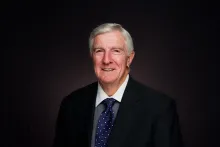
Before his retirement in 2021, Dr. Donald Ward pastored churches in Texas and Louisiana, and taught at Ambassador Bible College in Cincinnati, Ohio. He has also served as chairman of the Council of Elders of the United Church of God. He holds a BS degree; a BA in theology; a MS degree; a doctor’s degree in education from East Texas State University; and has completed 18 hours of graduate theology from SMU.
