
Don Ward
This transcript was generated by AI and may contain errors. It is provided to assist those who may not be able to listen to the message.
The Feast of the Eternal that were revealed to Israel centered on the harvest seasons, three main harvest seasons. Passover was observed during the barley harvest, Pentecost was observed during the feast harvest, the wheat harvest, and then tabernacle season was the major harvest in the fall of the end gathering. Who would notice Ruth, Chapter 1? Joshua judges Ruth right after Judges.
In Ruth, Chapter 1, the Jews read the book of Ruth on the day of Pentecost.
Exactly why they do, I don't think anyone really knows. There's one of the things that we have come to see, and a lot of people have come to see, that one of the things about the book of Ruth is that it shows that the Gentiles are to be grafted in and have been grafted in to the Israel of God. And in fact, the Gentiles are part of the genealogy of Jesus Christ and King David. Of course, Jesus was, according to the flesh, a descendant of David. In Ruth, Chapter 1, and verse 22, here we see about the harvest seasons, and both the barley and the wheat season are mentioned in the book of Ruth. Ruth 1-22, so Naomi returned, and Ruth the Moabites. Obviously, the Moabites are not Israelites, they're Gentiles. Her daughter-in-law with her, which returned out of the country of Moab, and they came to Bethlehem. Bethlehem literally means house of bread. They came to Bethlehem in the beginning of the barley harvest. So that would be in the Passover season.
Now in Ruth 2 and verse 23, so she kept fast by the maidens of Boaz to glean unto the end of the barley harvest and of the wheat harvest, which would be Pentecost, and dwelt with her mother-in-law.
Now, the last couple of verses of Ruth just to show what it was talking about, that the Gentiles are in the genealogy of David and of Jesus Christ.
In Ruth chapter 4, verse 17, and the women, her neighbors gave it a name, saying, This is a son born in Naomi, and they call his name Obed, the son in the sense that grandson. He is the father of Jesse, the father of David. Now these are the generations of Phyras. Phyras has run. Has run. Beget Rem and Rem beget Abinadab and Abinadab beget Naishon and Naishon beget Solomon and Solomon beget Boaz and Boaz beget Oded.
Oded beget Jesse and Jesse beget David. In fact, even Rahab is listed in the genealogy in the first few verses of Matthew, but we're not going to turn there. So one of the things about the book of Ruth shows that the Gentiles are in the genealogy of David, also in the genealogy of Jesus Christ, and that the Holy Spirit in this day represents a time in which all are made one by one Spirit.
Are we all baptized into one body? Now, the major harvest, as we've already mentioned, was in the fall. Let's go back to Exodus 23. Exodus 23 verse 15, once again, we're focusing now on showing that the feast days centered on these three major harvest seasons.
The barley harvest during the time of Passover, the weed harvest, the teddy costs, then the feast of in-gathering, the feast of tabernacles, which was more having to do with the fruit harvest. In Exodus 23 verse 15, you shall keep the feast of unleavened bread, the barley harvest, you shall eat unleavened bread seven days as I commanded you in the time appointed of the month of Abib.
For in it, you came from Egypt and none shall appear before me empty. And the feast of harvest, the first fruits of your labors, which you have shown in the field, that's Pentecost, a wheat harvest, and the feast of in-gathering, the feast of tabernacles season, which is in the end of the year, which you have gathered your labors out of the field. And now to Exodus 34 and verse 21. Exodus 34 and verse 21, once again showing that the feast season centered on the three great harvest seasons.
In Exodus 34 and verse 21, six days shall you work, but on the seventh day you shall rest in the earring time, and in harvest you shall rest. And you shall observe the feast of weeks of the first fruits of wheat harvest, Pentecost. We're here today, the feast of in-gathering, the feast of tabernacles at the end of the year.
Three times in the year shall all your children appear before the eternal God, the God of Israel. So we see very clearly that the feast season centered on the harvest seasons. So the Israelites were commanded to make three pilgrimages to Jerusalem to keep the feast in their season, and the ability to present tithes and offerings centered around these three seasons of the year so that they would be able to sell their produce and come with their tithes and offerings. But more importantly, these three seasons present vital steps in God's plan for bringing every person who has ever lived or ever will live into a relationship with God and Christ and each member of the body of Christ.
The feast of Unleavened Bread centered on the fruits of the barley harvest, and the focus is on Christ leading Israel out of Egypt. Christ is our Passover, 1 Corinthians 5, verses 7 and 8, that we're familiar with. Also, let's turn to 1 Corinthians 15 and verse 17, 1 Corinthians 15. The book of 1 Corinthians centers on the great rhetorical question, is Christ divided, which is 1 Corinthians 1.13. And then throughout the Apostle Paul, throughout this epistle, he answers the question of whether or not Christ is divided.
The Corinthians were even divided on the question of the resurrection. Some of them even said there was no resurrection from the dead. That's verse 12. Now, Christ be preached that he wrote from the dead. How say some among you that there is no resurrection of the dead. Now in verse 17, and if Christ be not raised, your faith is in vain, you are yet in your sins, that also they which are fallen asleep in Christ are perished. If in this life only we have hope in Christ, we are of all men most miserable.
But now as Christ risen from the dead become the first fruit of them that slept. So this is a barley harvest and the barley harvest and the wave sheath. And the wave sheath for that came from the barley harvest. For since by man came death, by man came also the resurrection of the dead. For as in Adam all die, even so in Christ shall all be made alive. But every man in his own order, Christ the first fruit.
So he's the first of the first fruit in the barley harvest. He was crucified. He was buried, resurrected, during that season of the year. Afterwards they that are Christ at His coming.
So Passover freed God's people physically from bondage. But the giving of the Torah, the law on Pentecost, on Shavuot, provided them with a knowledge of how to be free from idolatry and immorality, the Ten Commandments, the statutes and the judgments.
Pentecost is called the Feast of Weeks, the Feast of Harvest, the Feast of the First Fruits, the Feast of Pentecost centers on the first fruits of the wheat harvest.
So during the first Pentecost season that Israel observed, God gave him his law and they entered into the marriage covenant, the Old Covenant. Let's go to Exodus 19 now.
Israel left Egypt on the first day of the Feast of Unleavened Bread with a high hand, and they journeyed out into the wilderness, hemmed up against the Red Sea. And on the last day of the Feast of Unleavened Bread, they crossed the Red Sea and they made their journey toward Mount Sinai. God was practically having to drag them all the way as they murmured three times, twice about water and once about food. And finally, they come to Sinai in the third month, the month in which Pentecost is observed. Exodus 19.1, in the third month when the children of Israel were gone forth out of the land of Egypt, the same day came they unto the wilderness of Sinai. Verse 3, As we know, Israel did not fulfill the terms of that covenant. We notice in Exodus 24 where they entered into that covenant. Here's the official marriage ceremony where the nation of Israel said, I do. In Exodus 20, God thundered the Ten Commandments from Mount Sinai. In Exodus 21, 22, 23, he gives the statutes and the judgments. In Exodus 24, Moses comes down and he officiates the marriage ceremony between God and the nation. Verse 3, Exodus 24, 3, And Moses came and told the people all the words of the Lord, and all the judgments, and all the people answered, with one voice, saying, All the words which the Eternal said, we will do. And Moses wrote all the words of the Lord, and rose up early in the morning, and built an altar. Here we have the formal ceremony in which the elements of the offerings were cut up and the people walked in between. The covenant was ratified with blood, and the people said, I do. So Moses wrote all the words of the law, rose up early in the morning, built an altar under the hill, and twelve pillars, according to twelve tribes of Israel, sent young men of the children of Israel, which offered burnt offerings, sacrificed peace offerings of oxen under the Lord.
And Moses took half the blood, put it in basins, half the blood he sprinkled on the altar, and he took the book of the covenant and read it in the audience of the people.
The Pentateuch, as they call it, the five books, the law. And they said, all that the Eternal said, we will do and be obedient. Of course, at that time, I'm sure all of the books of the law had not been written, but the basic parts had been written, apparently here, the Ten Commandments, the judgments, and the statues. And Moses took the blood and sprinkled it on the people and said, Behold, the blood of the covenant which the Lord hath made with you concerning all these words.
So, Israel officially entered into what is called the Old Covenant.
And according to Jewish tradition, this was during the season of Pentecost.
Pentecost also centers on God's dwelling place. Where is God going to dwell? One of the things that Israel was to do after they left Egypt was to build a sanctuary for God to dwell in. You notice Exodus 25 verse 8 across the page there.
And let them make me a sanctuary that I may dwell among them. And so they did, and God placed His presence in that tabernacle. Solomon also built a temple on Mount Moriah. God placed His presence there. David pitched a tabernacle on Mount Zion.
And then Solomon built the temple, and God placed His presence in that.
Then there was the Restoration Temple, which pictured the true dwelling place of God that was to come, the Church of God composed of converted men and women from every nation, kindred, and race upon the face of the earth. So under the terms of the Old Covenant, God had an earthly sanctuary, as it were, where He manifested His presence to His people.
But now, after the day of Pentecost became, he'll turn now to Hebrews chapter 8, God began building a building not made by hands. One of the things that Stephen says in his inspired sermon in Acts 8 is God does not dwell in buildings made by hands.
Today, of course, God dwells in His Spiritual Temple, the Church of God. He dwells in each one of us. So in that sense, we are His sanctuary where He dwells.
Hebrews 8.1, Now these are the things which we have spoken. Here's the sum. 1 We have such a high priest who has set on the right hand of the throne of the majesty in the heavens, and ministered the sanctuary, and of the true tabernacle, not the tabernacle in the wilderness, not the tabernacle that David pitched on Mount Zion, not the temple that Solomon built, not the Restoration Temple, but the true tabernacle not made with hands, which the Lord pitched.
As we've already noted, the Feast of In-Gathering in the Fall, the fruit harvest, centers on the great ingathering which all nations are to be gathered into a relationship with God and Christ during the millennium. From Pentecost to the Fall, there is approximately four months.
Christ says, don't wait till the Fall harvest. The fields are already white to harvest. So look at John 4, verse 34. John 4, verse 34.
In the literal fulfillment, as far as physical events, the Holy Spirit has come and fulfilled Pentecost in the ultimate sense. We're looking for trumpets in which Jesus Christ, with the voice of the shout of the archangel at the seventh trump, is going to ascend and the resurrection takes place and will be caught up in the air. No, I don't believe that Christ is coming on Pentecost, as some believe and talk about in the church. I believe the Bible is clear that He's coming in the Fall, the day of trumpets. In John 4, verse 34, then Jesus said unto them, My meat is to do the will of Him that sent me and to finish His work. Say not that there are four months and then comes harvest.
So we're in that period of time between Pentecost and trumpets, as far as literal events being fulfilled. Behold, I say unto you, lift up your eyes and look into the fields, for they are already white to harvest. So we are, to be partakers and active participants in a harvest season right now, from Pentecost to trumpets, where God is calling out a people from all nations, all kindred races and tongues for His name's sake. In a sense, the nation of Israel was a type or became a type of the first fruits of the spring harvest. They were the first nation to enter into a covenant relationship with God, as we've already seen from Exodus 24 verses 7 and 8. Now, we are entering into a covenant relationship and have entered into a covenant relationship. If we have repented, exercised faith in Christ, been baptized, received the laying on of hands, we have entered into the terms of the new covenant. And we are part of that building not made by hands, that spiritual temple that the Lord pitched and not man. In Jeremiah 2 verse 1, More over the word of the Eternal came to me, saying, Go and cry in the ears of Jerusalem, saying, Thus says the Lord, I remember you, the kindness of your youth, the love of your espousals, when you went after me in the wilderness in a land that was not sown. And what God is inspiring Jeremiah here to do is to say, Look, I'm the same God that you entered into a covenant relationship with. I'm the same God that left you, that brought you out of Egypt. I'm the same God that nourished you and took care of you. Why have you forsaken me? In fact, verse 3, Israel was holiness unto the Lord, and the first fruits of his increase. All that devour him shall offend, and evil shall come upon them, says the Lord. Hear you the word of the Lord, O house of Israel, and all the families of the house of Israel. Thus says the Lord, What iniquity have your fathers found in me, that they are gone far from me, and have walked after vanity, and are become vain? So God presents his case of, He has been faithful. Why haven't you been faithful? But we know that they were not faithful. Let's go to 1 Peter 2 now. They were not faithful. They did not fulfill the charge of Exodus 19.5-6, where they would become a purchased people. They would become a holy nation.
That they would bring the other nations into relationship with God and with Christ.
1 Peter 2.9. Now, the church has that charge. The church of God, the Israel of God, has the charge of bringing all nations into relationship with God and Christ, so that they might be partakers of that one spirit, and all be baptized into one body.
1 Peter 2.9.
But you are a chosen generation, a royal priesthood, a holy nation. Remember it said in Exodus 19 verses 6 and 7 that you would be a holy nation.
You'd be a holy nation, and you are a holy nation, a purchased people, that you should show forth the praises of Him who has called you out of darkness into His marvelous light.
So the church has taken the place of Israel in that sense, but we do not teach replacement theology in the sense that Israel has been forever forsaken because there are many prophecies that talk about Israel being restored during the millennium. But the great condition for restoration is for them to look upon Him whom they have pierced.
That is, Jesus Christ. No, they're not two tracks to salvation, as John Hagey in Cornerstone Church teaches over in San Antonio. There is only one name given under heaven whereby men must be saved, and that name is Jesus Christ. No, the Jews don't have a separate path to salvation.
They don't have a path somehow through the law covenant or any other means. There's only one name given. There's only one way. Salvation is inclusive, but the way to salvation is exclusive. That is, there's only one name given under heaven whereby men must be saved.
Israel and the law covenant didn't have the Holy Spirit.
God was not their spiritual father in the sense that they had been begotten to a new life through the Holy Spirit. If they had been, why would we have Pentecost and make all that to do about Pentecost, the birthday of the church, when the Holy Spirit was sent?
Both the spring and the fall harvest were dependent upon the rains coming at the right time.
The fall rains are called the early rain. Now, you might think, well, why would the fall rain be called the early rain? Well, it fall according to our calendar today. You remember that actually Israel had two beginnings of the year, the sacred calendar beginning with a Nissan on the first month in the spring, but the civil calendar began the seventh month on the day of Trumpet's tishre.
So, the civil calendar was what you might call the economic calendar. So, the early rains were the rains that fell in October, November, maybe into early December that made it possible for the harvest in the spring. Let's note now in Deuteronomy 11 verse 13, the early rain, the latter rain, of course rain symbolizes or water symbolizes God's Spirit. Jesus said, He cried on that last great day of the feast, out of my belly shall flow rivers of living waters. And this He spoke of the Holy Spirit. Then it says that the Holy Spirit had not yet been given. That's John 5, 37 through 40.
Now we hear Deuteronomy 11 and verse 13, shall come to pass if you shall hearken diligently into my commandments, which I command you this day to love the Lord your God and serve Him with all your heart, with all your soul, that I will give unto you the reign of your land in his due season.
In season so that you would have a bountiful harvest. The first reign and the latter reign. The first reign coming in what we would call the fall, October, November, December, probably not all the way through December. The first reign and the latter reign that you may gather in your corn, your wine, and your oil. Then further in Joel chapter 2, Joel chapter 2, Jose Joel, Joel chapter 2.
Joel 2, 21. Now we're talking about the first reign and the latter reign. And that water symbolizes the Holy Spirit as Christ said, out of my belly shall flow rivers of living water. This he spoke of the Holy Spirit, which had not yet been given. In Joel 2 and verse 21.
Fear not, O land, be glad and rejoice, for the Lord will do great things. Be not afraid, you beast of the field, for the pastures of the wilderness do spring, for the tree bears fruit, the fig tree, the vine do yield their strength. Be glad, then, you children of Zion, and rejoice in the Lord your God. Now Paul says in Hebrews 12.22 that you have come to Mount Zion to the city of the living God.
So Mount Zion symbolizes the church for it's given you the former reign moderately, and he will cause to come down for you the former reign and the latter reign in the first month. So you see very clearly here that the latter reign in the first month is that first month of the sacred calendar, the Passover season, the barley harvest. Now verse 28.
Shumbit shall come to pass afterward that I will pour out my spirit upon all flesh, and your sons and your daughters shall prophesy.
Your old men shall dream dreams, your young men shall see visions. And in a moment we'll read from Acts 2 where Peter quotes this on that day of Pentecost, 31 A.D., when the Holy Spirit was sent to the church.
And also upon the servants, upon the handmaids in those days, will I pour out my spirit.
And I will show wonders in the heavens and in the earth, blood and fire and pillars of smoke.
Then it goes into the day of the Lord. The sun shall be turned into darkness and moon into blood before the great and the terrible day of the Lord come. So partial fulfillment of that has begun, that is, of pouring out God's Spirit, as we'll note in the book of Acts.
The rain is prophetic of the outpouring of the Holy Spirit, the Holy Spirit in people's lives individually as they accept Christ into their lives and allow the Spirit to teach them and instruct them concerning the ways of God.
Now we go to Acts 2. Acts 2, verse 1.
When the day of Pentecost was fully come, they were with one accord in one place.
One of the things we talked about yesterday in the sermon at the South Church is a 50-day journey from the waving of the wave sheath after the weekly Sabbath during Unleavened Bread to Pentecost. 50 days you will count.
During that time, that 50-day journey is the time to prepare for the reception of the Holy Spirit.
Feast of Unleavened Bread should prepare people for the reception of the Holy Spirit if we parallel, for example, repentance, faith, baptism, laying on of hands, laying on of hands being, of course, Pentecost and building that sanctuary for God to dwell in.
God had to drag Israel to Sinai, as we've already read and talked about in the third month. They received the law. God had to drag the the apostles to Pentecost. They remember very late on, after He had appeared to them several times, Peter said, I go a-fishing. Many others went with Him. Finally, they began to get the message.
They assembled together, 120 of them, in the upper room after Christ's ascension.
And during that 10 days, apparently, they got it together. So in Acts 2.1, they were all of one accord. And, verse 2, suddenly there came a sound from heaven as of a rushing, mighty wind, and it filled all the house where they were sitting, and there appeared unto them cloven tongues like as fire, and it set upon each of them. And they were all filled with the Holy Spirit. These are those in that house, where the 120 were.
They were filled with the Holy Spirit and began to speak with other languages as the Spirit gave them utterance. And then this created eventually quite a commotion. It was noised abroad, and people began to come out and wonder what's going on. Some said, well, they're drunk. Some said, no, it's only the ninth hour, and so on. Verse 12, they were all amazed, were in doubt, saying one to another, what does this mean?
Others mocking said, these men are full of new wine.
But Peter, standing up with the 11, lifted up his voice and said unto them, You men of Judea and all you that dwell at Jerusalem, be this known unto you, and hearken unto my words.
These are not drunken, as you suppose, seeing that it is but the third hour, nine o'clock in the morning.
But this is that which was spoken of by the prophet Joel, which we've read from Joel 2, 28, and 29. It shall come to pass in the last days, says God, I will pour out my Spirit upon all flesh.
There's a difference and a distinction. At the present time, no man can come to the Father except Jesus Christ, draw him. You have to be called, and you have to be chosen. So the Holy Spirit still is not being made available to just everybody. And by God's grace, you have been called, and you sit here today.
It fails any of us with our feeble ability to use the language to express how blessed we are and how important this is in the course of human events and world history and some of all things.
And one of the great challenges that lies before us would be for our parents in the Church of God to somehow convey this to our children so that they understand how important this is and how blessed they are and what a wonderful opportunity this is so that they don't get caught up in the spirit of the times. And somehow we reach them and they come to understand what this is all about.
This is about the hope of the ages. In fact, this is the only hope that humankind has. And without God's Spirit, we're just going to live our 70 or 80 years and some maybe even up to 100 or more, but not much more than that. Then that'll be it. Is that what we want? No God in His great love, mercy, through His tremendous desire to share who He is and what He is with us. His desire to have family, His desire to have sons and daughters in that family, has given us of His Spirit. And it began on a basis for a people on this day.
Now, the people that were gathered there on the day of Pentecost were from all over the Mediterranean world. They were of Israel and there were proselytes who were Gentile, but they were Jewish proselytes. And when the Holy Spirit was initially given here, they thought it was for Israel only. They still thought that. And we'll see that.
Verse 17, it shall come to pass in the last days, says God, I will pour out My Spirit upon all flesh, not just Israel, on all flesh. Your sons and your daughters shall prophesy, your young men shall see visions, your old men shall dream dreams. And on My servants and on My handmaids, I will pour out in those days of My Spirit and they shall prophesy. And then it goes into those signs that introduce the day of the Lord. Now, further, let's pick it up in Peter's sermon in verse 29.
So Peter makes it clear that what they're witnessing is the outpouring of the Holy Spirit. This is the beginning of the fulfillment of Joel's prophecy.
This would be equated with the early reign.
Men and brethren, let Me freely speak unto you of the patriarch David that he's both dead, buried, his sepulchre is with us to this day. Verse 30, Therefore, being a prophet and knowing that God had sworn with an oath to him that out of the fruit of His loins, according to the flesh, he would raise up Christ to sit on His throne.
He seen, therefore, beforehand spoke of the resurrection of Christ that His that His sukai, His life essence, was not left in Hades. Neither His flesh did see corruption.
This Jesus, as God raised up, were of your all-witnesses. Therefore, being by the right hand of God exalted and having received of the Father the promise of the Holy Spirit, He has shed forth this which you now see and hear. The Father is the source of the Holy Spirit. The Holy Spirit proceeds from the Father, John 15, verse 26. Then, somehow, Christ plays a role in it, and it's shed abroad on us through Christ. That's Titus 3, verses 5 and 6.
This Jesus, as God raised up, and He has sent the promise of the Holy Spirit. Verse 34, For David is not ascended into the heavens, but says himself, The Lord said unto my Lord, Sit you in my right hand, till I make your foes your footstool. Therefore, let all the house of Israel know assuredly that God had made that same Jesus, whom you crucified both Lord and Christ.
Now, when they heard this, they were pricked in their heart and said unto Peter, and to the rest of the apostles, Men and brethren, what shall we do? And we had to say, what is the one great summary verse of the new covenant observance of Pentecost?
Here it is. Of course, it embraces the elements of Passover as well.
Peter said of them, Repent. Accept Jesus Christ as your personal Savior, your Passover. And be baptized. Put to death the old man, vary him in the watery grave of baptism. Be baptized, every one of you, in the name of Jesus Christ for the remission of sins, and you shall receive the gift of the Holy Spirit.
Now, I wrote the paper. Of course, there were some editing and other contributions that we have on the nature of God posted on the church's website.
And finally, I think we have made the progress in understanding what is the Holy Spirit.
The Holy Spirit is the essence of God. God is Spirit. John 4, 24. John, John, Susie, Mary, their flesh. That's their essence. That's their composition.
God is Spirit. He is invisible. We talk about being Spirit beings. What will be our essence? Spirit. The Holy Spirit is God's essence. That's how God and Christ dwell in us.
Now, a lot of times in the church, we'll say, Holy Spirit is the power of God. Holy Spirit is the power of God.
Well, here's how the power part works. God is Spirit, and through His Spirit, He does works of power. Through my flesh, I can do works of not very powerful, but I can do some work. How do I do it? Through my flesh. Hold your place there. Look at Zechariah 4, 6.
People use this. They misquote it somehow, but I've been thinking when you just read it for what it is, it would be so clear. Haggai, Zechariah 4, verse 6.
Thus, he answered and spoke to me, saying, This is the word of the eternal ended rubabel, saying, Not by might nor by power, not by might nor by power, but by my Spirit, says the eternal post. God is Spirit. God is Spirit, and He works of power through His Spirit.
And the Spirit of God moved upon the face of the deep.
You read that in Genesis chapter 1. The gift of the Holy Spirit, the very life essence of God, can come into us. And we receive the earnest of the Spirit, down payment on eternal life. For the promise is unto you, and notice this, they didn't get that at this time, for the promise is unto you and to your children, and to all that are afar off, and the Gentiles are the ones that are afar off, as many as the Lord our God shall call. And with many other words did He testify and exhort, saying, save yourselves from this untoward generation. Now in Acts chapter 10.
In Acts chapter 10, of course, the next several chapters of Acts, Peter, James, and John were in the temple area quite often. They were preaching, teaching, people were being healed, people were being added to the church.
And then this guy, Cornelius, sent one of his servants to Peter, and implores Peter to come visit. Of course, Peter has a vision of the clean and unclean, and protested. He's never eaten anything unclean. And Christ tells him that he's not talking about animals, he's talking about men. In Acts 10 verse 28. He said unto them, you know how that it is unlawful thing for a man that is a Jew to keep company or coming to one another nation, one of another nation. I mean, the Jews didn't even go eat with the Gentiles. You remember how that Paul rebuked Peter even way after this, when he came to a certain place.
He separated himself and didn't eat with the Gentiles. Even after this, even though he was used as the instrument to preach the sermon on the day of Pentecost, when the Holy Spirit was initially sent to those gathered there in Jerusalem on that day, Jews and proselytes.
And now he's used to go to the house of Cornelius.
So not to keep company or come unto one of another nation, but God has showed me that I should not call any man common or unclean. Then Peter gets to the house of Cornelius, as we see there, and he begins to preach to them. Let's pick it up again in verse 39. And you are witnesses of all these things which he did both in the land of the Jews and in Jerusalem, whom they slew and hanged on a tree. Him God hath raised up the third day and showed him openly. This is a modified, greatly condensed version of Acts 2 in the sermon that he gave on the day of Pentecost. Not to all the people, but unto witnesses chosen before God, even to us, who did eat and drink with him after he rose from the dead. And he commanded me to preach unto the people and to testify that it is he which was ordained of God to be the judge of the quick that is the living and the dead. To him give all the prophets witness that through his name, whosoever believes on him shall receive remission of sins. While Peter yet spoke these words, the Holy Spirit fell on them which heard the word, Cornelius' household. And they of the circumcision which believed the Jews were astonished as many as came with Peter because that on the Gentiles was also poured out the gift of the Holy Spirit. For they heard them speak with tongues and magnify God. Then answered Peter, can any man forbid water that these should be baptized, which have received the Holy Spirit as well as wheat? And he commanded them to be baptized in the name of the Lord. Then prayed they him to stay there several days, of course, to teach and fellowship with them. So God reveals that the Israel of God would be composed of all nations. These events mark the beginning of the calling out of the harvest of the first fruits. The early reign and the latter reign also teach us about the pouring out of God's spirit in due season upon all flesh. The early reign refers to the outpouring of the Holy Spirit during the church age, and that church age began on Pentecost. Now we go to Ephesians chapter 3.
Ephesians chapter 3 introduces a bit of...
some people criticize us saying that we are dispensationalists. The word dispensation in the Greek is oekonomia.
Oekonomia, from which we get the word economic. But in this sense, it means an administration or a period of time of testing. There are various administrations and periods of time and testing in the Bible in which God has dealt with people in specific ways.
And these seven basic dispensations... I'm going to read from the Bible in a minute and show you this in the Bible. Of course, you don't believe me yet. But anyhow, in the Garden of Eden, Adam and Eve were created in a state of innocence. So there was a period of testing or a dispensation in the Garden of Eden in which God dwelt with man in a state of innocence.
Then man sinned and chose for himself what is good and what is evil. And that began a dispensation of human contents which continues unto this day except for those who are called into his marvelous light. And even those who are called into his marvelous light have a knowing, of course, within themselves. But you don't let your conscience be your guide altogether. You let the Word of God be your guide. Your conscience may say this, but the Word of God may say something else.
Make sure that your conscience is in harmony with the Word of God.
So there was a period of time basically from the casting out of Adam and Eve in the Garden of Eden to the Flood that a period of testing was sort of a human conscience and people did basically that which was right in their own eyes. The evil became so great that God destroyed everyone but Noah and his family. Then after the Flood in Genesis 9, God invested in Noah and I for an eye or tooth for a tooth and you had a human government invested in man. And then shortly after that, God called out the patriarchs, Abraham, Isaac, and Jacob. And so the Bible then is taken up with several chapters of Abraham, Isaac, and Jacob. Then after that is the period of testing and administration under the Old Covenant which lasted from circa 1400s BC to Pentecost, the administration of law.
And then after the patriarchal age and the administration of law, we now have the church age. Ephesians 3 verse 1.
For this cause I, Paul, the prisoner of Jesus Christ, for you Gentiles, you Gentiles, if you have heard of the dispensation, the oil-economia of the grace of God, which has given me to youward, how that by revelation he may known unto me the mystery, as I wrote before, in a few words. Whereby when you read, you may have understanding or understand my knowledge in the mystery of Christ, which in other ages was not made known unto the sons of men. It is now revealed unto his holy apostles and prophets by the spirits, and what is that mystery? That the Gentiles should be fellow heirs and of the same body and partakers of the promise in Christ by the gospel.
And we're going to go back to Acts 2. I mean, Ephesians 2, and be a little more specific with this, a lot more specific. But that's a great mystery. It says in other ages it wasn't known.
And even on Pentecost, when the Holy Spirit was sent, they didn't know that the Holy Spirit is going to be sent to the Gentiles, as we've read from Acts 10. Now there is coming yet another time in Ephesians 1 and verse 10, that in the dispensation of the fullness of times, and that's when the latter rain will be poured out, poured out upon all flesh, and whosoever will may come and drink of the water of life freely. That in the dispensation of the fullness of times, he might gather together in one, in one all things in Christ, both which are in heaven and which are in earth, even in him. So there is the age or dispensation to come, in which the Spirit will be poured out on all flesh. The knowledge of God is going to fill the earth as his sands fill the seashore. So what about the two eleven wave lobes that were waved on Pentecost? Let's address that now, and that will bring us back into Ephesians 2. So let's go back to Leviticus 23.15. Leviticus 23.15.
You shall count unto you from the morrow after the Sabbath, from the day that you brought forth the sheaf of the wave offering. Of course, that sheaf of the wave offering was offered on the day after the Sabbath, that weekly Sabbath, hearing unleavened bread. You shall count unto you from the morrow after the Sabbath, from the day that you brought forth the sheaf of the wave offering. Seven Sabbaths shall be complete. Yesterday completed seven Sabbaths. Today is the fiftieth day.
Even unto the morrow after the Sabbath shall you number fifty days, and you shall offer a new, King James says, meat offering here, but really this is a gift offering. It's a meal offering, M-E-A-L. It's from the grain. Meal offering under the eternal. You shall bring out of your habitation two wave loads of two tenths deals. They shall be a fine flower. They shall be taken with leaven. They are the first fruits unto the eternal.
The wave loads were prepared from wheat grown in the best district of the country, the very best wheat they could find. Three sias, or about three pecs, and three pipes of wheat were cut down and brought to the temple.
Now, actually, it was enough of the stock with the grain on it to make three pecs and three pints. They brought it to the temple and they threshed it like other grain offerings. Then they ground it and they passed it through twelve sieves. You used to have these old sieves that you'd sift your cornmeal or flour in before modern days, the days in which we live.
And from this flower, two omers were used for the two loaves, and the rest could be redeemed for other purposes.
Care was taken that the flour for each loave should be taken separately from one and a half sieve sia, and it should be separately kneaded with lukewarm water, like all thank offerings, and separately baked. And it was baked in the temple itself.
The loaves were made in the evening preceding the festival. In shape, they were long and flat and turned up on the edges and also all the way around. On the edges, the loaves were made the evening before, and according to the Mishnah, each loaf was about four hand-breaths wide and about seven hand-breaths long and about four fingers high. So it was a big loaf of bread, and it weighed about four pounds. This was to be a new meal or a great offering to the Eternal.
And the two loaves, as we see here in verse 17, were to be baked with leaven. Now at Passover, leaven was absolutely forbidden.
And in the regular grain offering, no leaven was permitted. And we know that leaven represents sin.
Yet on Pentecost, God commanded just the opposite. Why? They were to be baked with leaven.
Pentecost marks the beginning, as we have seen, of the Church of God.
The Holy Spirit was sin as the Church's birthday. It marks the beginning of Christ's betrothal to the Israel of God through the Holy Spirit. Paul says in 2 Corinthians 11 and verses 1 and 2, I betrothed you to Christ.
The two loaves represent believers from Israel and the other nations, those who are an eye and those who are far away. We have seen very clearly from the Scriptures that Jew and Gentile are included in this mystery. The mystery which was hidden in other ages is now made known unto you.
And even though both Israel and the Gentiles, the whole body of believers from the nations, they're in Christ and they are holy to Him.
The sin is still found in them. Even after we receive the Holy Spirit, we sin. Let's go to 1 John 1.
1 John 1.
1 John 1.
Verse 8.
If we say that we have no sin, we deceive ourselves, the truth is not in us.
If we confess our sins, He is faithful and just to forgive us our sins, to cleanse us from all unrighteousness.
If we say that we've not sinned, we make Him a liar and His Word is not in us. My little children, these things write unto you that you sin not.
But if any man sinned, we have an Advocate with the Father, Jesus Christ, the righteous. And He is a propituation for our sins and not for ours only, but also for the sins of the whole world.
So as noted earlier, Passover and Unleavened Bread speak primarily of Christ. He is without sin.
But Pentecost speaks of members of the Body of Christ where sin still exists. And as mentioned earlier, the two loaves speak of believers from Israel and the nations.
Now I know that there's probably not unanimity among the people of God, the churches of God, with regard to this. You know, I've heard some ministers get up on Pentecost and say that the two loaves represent Old Testament Christians, which seems to be oxymoron within itself, Old Testament Christians and New Testament Christians. And I believe the Scriptures, the weight of the prepondence of the evidence shows that it's Jew and Gentile made into one. The number two in the Bible is the number of witness and testimony. We know about the two great commandments. We know about the two witnesses. We know that the law was written on two tables of stone. So the number two is used as the number to verify a witness. Now let's look at Exodus 23 verse 18. Exodus 23 and verse 18.
I meant to say Leviticus. Sorry about that. Leviticus 23 verse 18.
So we've seen in verse 17 that it is with leaven. We've seen from 1 John chapter 1 verses 8 through John 2 that we can sin after we receive the Holy Spirit.
Leviticus 23, 18. You shall offer with the bread seven lambs without blemish of the first year and one young bullet two rams. They shall be for a burnt offering under the eternal with their meal offering and the drink offering, even an offering made by fire of sweet savor unto the eternal.
The fine flower speaks of the refining process that our faith goes through as we are being conformed to the image of Christ. And God allows us to go through the fiery trials of life to burn out the dross out of our lives. The followers of Christ are charged with living a life of righteousness. And if any man sin, we have an advocate with Jesus Christ, the righteous. And it is through God's Spirit—now we go to Ephesians 2—it is through God's Spirit that the twain shall be or can be made one. Remember that we read from Acts 2 and verse 40 that the promise is to you, your children, and to those that are afar off. In Ephesians 2, verse 11, Wherefore, remember that you being in time pass Gentiles in the flesh, who are called uncircumcision by that which is called circumcision in the flesh made by hands, who are called a far off, who are called a far off. That at that time you were without Christ bringing aliens from the commonwealth of Israel and strangers from the covenants of promise. You were, and they were, a far off, having no hope without God in the world. But now in Christ Jesus, you who sometimes were a far off, remember that the promise to you, your children, those who are far off, Acts 2.40, are made nigh by the blood of Christ. For He is our peace who has made both one and have broken down the middle wall of partition between us, having abolished in His flesh the enmity, even the law of commandments contained in ordinances, for to make in Himself of twain one new man, so making peace. By one Spirit we're all baptized into one body, and that He might reconcile both Jew and Gentile. He might reconcile both under God in one body by the stake, having slain the enmity thereby and came and preached peace to you, which were a far off. We had quite a discussion one day in a council meeting in which I was basically the only one who took this position initially. He said, look, this is far off. He's referring to the Gentiles. And some said, oh, it's just talking about those who live way off from Jerusalem. I said, I don't think so.
And let's notice Ephesians 2, where it's used, and here we're reading it. And they came and preached peace unto you, which were a far off, and to them that were nigh.
For through him we both have access by one Spirit, that Spirit, given on the day of Pentecost, unto the Father. Now therefore you are no more stranger than foreigners, but fellow citizens with the saints and of the household of God, and are built upon the foundation of the apostles of prophets, Jesus Christ Himself, being the chief cornerstone, in whom all the building fitly framed together, rose into the holy temple in the Lord, in whom you are also builded together for inhabitation. This is where God lives through the Spirit. The essence of God is His Spirit, and He lives in us. God in Christ lives in us through the Holy Spirit. So, brethren, let us rejoice in this wonderful day of Pentecost.
Through the Holy Spirit, all the nations of the world can become the Israel of God. God is not a respecter of persons, and if God were a respecter of persons, I don't see how you could be God, because He is the great Creator. He is the one that somehow created within humankind the ability for human offspring to be of at least three major races. And the Bible speaks very clearly that Paul says in Romans 3, is He the God of the Jews only? No, not of the Jews only, but also of the nations. Brother, in this day, eventually, this day of Pentecost eventually is going to come to this whole world. This opportunity for every person who's ever lived or ever will live will have the opportunity to have His day of Pentecost, and for God's Spirit to come into Him, for God's law, that law that was given on the day of Pentecost, according to Jewish tradition that's recorded in Exodus 20, that law that is now can be written on our inward parts through God's Holy Spirit. So God wants us to become active participants in this new creation, this new creation that He is doing a spiritual work within us.
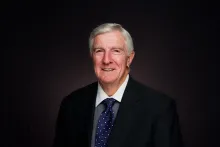
Before his retirement in 2021, Dr. Donald Ward pastored churches in Texas and Louisiana, and taught at Ambassador Bible College in Cincinnati, Ohio. He has also served as chairman of the Council of Elders of the United Church of God. He holds a BS degree; a BA in theology; a MS degree; a doctor’s degree in education from East Texas State University; and has completed 18 hours of graduate theology from SMU.
