


John Elliott
This transcript was generated by AI and may contain errors. It is provided to assist those who may not be able to listen to the message.
The End of All Things It seems like the end is near. It seems like the end of all things, end of God's plan of salvation, end of an age, the end, we say. Yet in God's plan of salvation, we are actually at the beginning. It doesn't always feel like the beginning, does it? It feels like the end. It's because the preparation phase has taken so long. You know, when you stop and think about God and the creation of the universe, that's been around for billions of years.
God has created a universe that is so complex, from the largest to the smallest elements and everything in between, with systems that govern life, with laws, with the interchange between plants and animals, between air and so many other things. God has placed humans here, and all of this has taken time. We find that it's been a mere 6,000 years since Adam to the beast powers at the end time. That's a relatively short period of time.
The writing of this Bible that we appreciate and that we use, it spans 6,000 years of human history. When you think, for instance, of all of the co-workers of God in this plan of salvation, when you think of the work that has been done, you think of the saints preparing the way, the prophets, you think of the Israelites, you think of the lineage of Abraham through Christ.
You think of the many things that have gone into this. In fact, a Messiah, the need of a Messiah, and not just any Messiah, not just anybody, some famous person, but the Creator Himself to come down and live and die with us and die because of us. This is followed by God and Jesus Christ doing a special project. The Messiah's life and death and resurrection then had a 2,000-year project that followed it.
It requires 2,000 years to complete that project. It involves prophecies. Biblical prophecies were laid down that were fulfilled. But here's 2,000 years of additional prophecies. And just like the completed prophecies were completed with the detail they were prophesied in, the complexities all worked out in fine detail, long in advance. So the prophecies in our 2,000-year time of the Church are being fulfilled exactly and precisely, all the way down to the end time, where you have a description that was written by Daniel, five hundred and some years before Christ, about which little countries in the Near East, the beast powers army, would overthrow and which ones He won't overthrow.
That's the detail that God puts into His plan. God and Jesus Christ are in charge, and they have been busily rolling out this initial phase of the plan of salvation. And believe me, this is the initial phase. God's plan of salvation was actually planned before all of those components, including creation, ever even began. And so the plan of salvation, actually, the way it rolls out to humans, is a very short timeframe from beginning to end. It kind of seems like we must be at an end point because there's been so much preparation for it.
Today, let's let God show us a very important task that He is involved in right now, a very important work that He and Jesus Christ have been laboring over. It's been a great effort on their part, and their job is becoming increasingly more difficult all the time as this age winds down and Satan's opposition ramps up. God needs your help. Jesus Christ needs your help in mind. If you give God a hand with this project, God will be so very, very thankful and will literally shout for joy.
So let's look today at a message called, First Fruits for God, and see how you and I can help God and Jesus Christ. And they will just appreciate it so much if we do that. So again, if it feels like we're near the end of God's plan of salvation, we need to reorient our thinking because the plan of salvation is in an initial phase right now. And so far, only one human being has ever completed this process of salvation.
As it states in the booklet, God's Holy Day plan, the promise of hope for mankind, it says, Pentecost is also known in Scripture as the Feast of Harvest. It represents the first fruit gathered as the result of the labor of those who had completed the spring grain harvest in ancient Israel. Now let's consider that statement.
I quoted that because it has elements that are important to our understanding of how we can help God. It represents the first fruits, the very first, you see. This is at the beginning, the start, gathered as the result of the labor of those who completed the harvests. So this harvest is being completed at God's labor. He is working very hard, but He's not the only one that needs to work hard. We need to help Him by working hard for this harvest. Before it all began is where you and I actually fit in.
Before the creation even began, before all of this time and God's work and effort began, you and I were factored in. Can you comprehend that? Let's go to Ephesians chapter 1. Ephesians chapter 1, and we'll start in verse 3. Ephesians 1 and verse 3. This is so encouraging that you're an integral part of God's plan of salvation for all humanity. Such an integral part that He's factored you into this important phase long ago. We'll begin here in verse 3 of Ephesians 1. Blessed be the God and Father of our Lord Jesus Christ, who has blessed us with every spiritual blessing.
Today isn't a day to beat ourselves up, feel inferior. It's a day to feel blessed because God has blessed us with every spiritual blessing in the heavenly places. Not just look around in my life or your life, no, in the heavenly places. In Christ. Just as He chose us in Him before the foundation of the world. You and I are part of a meticulous, carefully orchestrated plan in fine detail. And God wants us, chose us, to be part of a harvest that is fundamental to His plan of salvation for humanity.
That we should be holy and without blame before Him in love. So just as a farmer, as we'll see, works at a crop, the crop has to work as well. And so we need to be holy and without blame before Him in agape love. Which means to develop that fruit of the harvest, the fruit of the mindset of the God family. That love is speaking of an agape mindset. And holy means filled with His Spirit, His nature.
That's what we can do for God. And that's what He needs us to do. Because in verse 5, having predestined us, in other words, He pre-selected us to sonship as sons by Jesus Christ to Himself according to the good pleasure of His will. That's a real positive thing. You know, when you and I plant a garden, we think, ooh, fruit. And then that's going to be our pleasure.
And that's what we look forward to. And mentally, every farmer, everyone in agriculture thinks of, wow, I want something that's plump and ripe and full and juicy and tasty. And that's what we anticipate. And that's the good pleasure of our will, just as God wants us to do these things for the good pleasure of His will. To the praise of the glory of His divine gifts, of the favors by which He has made us accepted in the Beloved. So these favors of a calling, of faith, of repentance, of forgiveness, of giving us the Holy Spirit and then developing that love and that nature, these gifts of favor have made us accepted in the Beloved.
And that's exciting to Him, to see more individuals of His mind growing. In Him we have redemption through His blood, the forgiveness of sins according to the riches of His gifts, His favors. So He has really invested Himself, Jesus Christ, really fully vested Himself in your success, in your developing fruit for the harvest that this day represents.
Verse 9, having made known to us the mystery of His will, humanity doesn't understand God's will. It's a mystery to them. Jesus said, their eyes don't see, their ears don't hear, but your eyes see and their ears and your eyes hear. Sometime in the future, everyone's eyes will be open. But for right now, in this phase, it's up to you and me to be developing. In verse 10, that in the dispensation of the fullness of the times, He might gather together in one all things in Christ, both which are in heaven and which are on earth in Him.
Verse 11, in Him we also have obtained an inheritance, being predestined according to the purpose of Him who works all things according to the counsel of His will. This is a great inheritance, and we know from other scriptures that we'll inherit all things with Jesus Christ, to whom He has been given all things since His ascension back to heaven in the resurrection that He went through.
Verse 12, that we who first trusted, again, where are we in this plan of salvation? We're at the first. We are the ones who first trusted in Christ, should be to the praise of His glory, in whom you also trusted after you heard the word of truth, the gospel of your salvation, in whom also having believed you were sealed with the Holy Spirit of promise. It was on this day that the Holy Spirit flowed out, and it just came flowing out, and it moves men and women, and it moves their minds in godly thoughts, in godly directives. So the Holy Spirit is God and Jesus Christ living in us and working through us.
Verse 14, which is the guarantee of our inheritance, or it's the first element that we receive of our inheritance. There are many things we'll receive, including divine bodies and powers and co-rulership with Christ, etc., but the first element that we receive of our inheritance is the mind of God, that essence of God's Holy Spirit.
Until the redemption of the purchased possession, until we are resurrected to the praise of His glory. So we really have a wonderful position here within God's plan of salvation that has been established since before it all began. What a wonderful opportunity we have. And just remember again that so far no human other than Jesus Christ has been harvested.
The first fruits harvest, and the name of this festival, one of the names is the Feast of Harvest of the First Fruits. And this harvest is still a future event. We're celebrating something in advance. It hasn't happened yet. That's how early in the God's plan of salvation we are at this point. We celebrate then today a festival, and you think about the festival. It was so exciting to God, and He wants us to share the excitement, so He created a feast day for us. The Feast of our resurrection, the Feast of our joining Jesus Christ as first fruits in the family of God.
Notice how God calls this an early phase. Again, sometimes we think of it as end or concluding. The dictionary definition of the word early is near the beginning. So if God calls something early, it's near the beginning. We need to appreciate that. Let's go to James 5 and verse 7. We'll break into the middle of the verse here. The second sentence of James chapter 5 and verse 7. See how the farmer waits for the precious fruit of the earth, waiting patiently for it until it receives the early and the latter rain. There are two rainy seasons in the Near East. One was the early rain that came early. You and I are receiving the early spiritual rain.
We're the first to receive God's Holy Spirit. That is the early rain. So it's near the beginning. This is what God calls it. And then there will be those who receive the latter rain. That refers to God pouring out His Spirit on all flesh at the second resurrection. Now, before the creation of the heavens and earth, God planned for that area in Israel to have two harvest seasons.
This didn't just sort of come out of nowhere. God created this earth and its systems, and He chose where Jerusalem would be. He chose where the Israelites would be now and in the future. And there are two harvest seasons in that land. And the early rains come in late October. After the feast ends, you start a new cycle for a new harvest later on in the next year. And so in late October, through winter, those rains begin.
But those rains, think of it, are during the cold winter, when the sun is low or obscured by clouds on the horizon, when there's snow and freezing temperatures. And yes, a crop is growing. It's a difficult crop. It is barley and winter wheat. Barley and winter wheat are interesting when you think about them.
When was the last time when it was cold and the winter was there and you're wishing that spring would come? How did you ever think about, I wonder how the barley, I wonder how the winter wheat is doing out there in the fields? Now, nobody thinks about that. It's out of sight, out of mind. But out there, those crops are having a very difficult time.
Very little sunlight, light is hitting the earth. It's the dark time of the year. It's the cold. It's the difficult time. They're the unappreciated, the unnoticed crop. And they have troubles. We'll get to the troubles in a little bit. And you and I, we are this crop growing in a present evil age, the Bible calls it. And we have Satan, who is our adversary. And we have a world that ultimately will hate God's people. And we're lonely in that sense, because we're scattered like salt.
And we're not bunched together. And Satan hates what we stand for. Now, it's interesting here that in James 5 and verse 7, let's read this phrase again in the second half of the verse and see something else here. See how the farmer waits for the precious fruit of the earth. You know, waiting patiently for it, it says. This word, waiting patiently, is a single word in the Greek. And it's the same word that is used throughout the New Testament for patience or perseverance.
It's macrothumeo. And macrothumeo means to persevere patiently and bravely in enduring troubles. That's what the word means. So whenever you see patience of the saints, or patience or perseverance, it comes from macrothumeo, which again, according to Thayer's, says, means to persevere patiently and bravely in enduring trouble. It really fits what you and I are to be doing. And what we find here, that is what God is doing, because He is the farmer. See how the farmer waits for the precious fruit of the earth, persevering patiently and bravely, enduring trouble, until it receives the early and latter rain.
Both of us are in that. Jesus Christ is being buffeted by Satan and resisted, you and I are, but we're in this together with God who never leaves or forsakes us. And this rain, referring to God's Holy Spirit, that is being poured out on us.
And right now, in this early season, it is a difficult crop, but it is also going to have the better resurrection. It's tougher now than it will be on any people who are in God's plan of salvation, because future epochs will not have Satan there. Satan won't be there during the millennium. Satan won't be there during the second resurrection. So we are in the early rains timeframe. What does that mean for you? Well, it means things are going to be difficult. Let's notice verse 1 again. See how the farmer waits for the precious fruit. Don't race over that. Precious fruit of the earth. You know, the word precious in the Bible is used 77 times.
77 times the word precious is used in the New King James Version. 66 of those times it refers to gold. Gold and precious stones. So when he says precious fruit of the earth, you and I are something that are far above rubies and gold and silver and diamonds to God. We are really, really precious. You know the Scripture in Psalm 116, verse 15, precious in the sight of the Lord is the death of his saints. We are precious to God when we live. We're precious to God when we struggle. We're precious to God as we grow up out of the ground and as we're buffeted by dark and wind and cold and stomped on or whatever.
We are precious, and we are, with God's Spirit and help, going to persevere in our trouble and will do well. This feast celebrates this precious harvest, the feast of the harvest of first fruits to God and to Christ. Now in verse 7 and a half, let's continue again. See how the farmer waits for... Wait a minute. When you think of... See how the farmer waits, you think, ah, God's just sitting up there in heaven in an easy chair kicking back. He's waiting for the early and latter range to bring in a harvest. Until you look up this word, waits for. The two words waits for, the farmer waits for, are the Greek word, ektakomii.
That's a Greek word. Ektakomii. And it means to await, to look for, or to expect. See? That's what a farmer does. He awaits, he looks for, and he expects. And he does that while he tilts, while he sows, while he fertilizes waters, while he goes out and does all the things that farmers do. Farmers don't wait. They await, like the Greek word said. And they work while they expect a bountiful crop.
You know, I've been around many farms. We've lived in farming communities. And one thing the farmers have in the springtime, or in the fall as they're planting wheat, is an expectation for a big crop. That's what they talk about. Oh, I hope the crop will turn out well. I hope this year it'll be a great harvest. I hope it'll be better than it was before. There's a lot of anticipation and expectation. And they go to work, and they work hard.
Jesus Christ said, My Father has been working until now, and I have been working. He said that in John 5, verse 17. You see, the Father and Jesus Christ are awaiting a harvest. And as they said, My Father has been working until now, and I have been working. Now, that's very good. Agriculture is what these feasts are patterned after. And the harvest that follow, again, are what these feasts celebrate. Agriculture involves consistent work. First of all, you have to purchase a field.
You may lease it, rent it, purchase it, but then you have to prepare it before a crop. You have to prepare that field. You usually plow it, turn it over a few times. You often will put in some nutrients to it, fertilizing it. Then you'll choose your crop.
You'll choose your seed or the plants that go in it. Then there's the planting of the seed. And then the watering that takes place. And then there's the weeding, because you don't want roots in there robbing nutrients and reducing the outcome of that crop. Finally, you come to the harvesting phase. And harvesting is a lot of work in itself. But then you have to process the harvest.
And then you have to transport the harvest. And then the harvest has to be packaged. And then it has to be stored. So there's a lot of work that goes into it. Now, you and I could bring this down to our level in gardening. Gardening is very much the same thing on a smaller scale. Your garden and its produce are much like the festival that we are observing today. If you put yourself into God's position as the farmer, and you have a desire for a harvest, well, then you know what goes into it.
And the more you put into it, the more potential the harvest has. And so the research, the design, the selection, the planting depth, the amount of sunlight, the preparing the plants for their perfect spot based on where the sunlight's coming from. The shorter ones in the front, the taller ones in the back. I mean, it goes on and on and on as to what goes into a garden.
And if we stop and ponder this at the harvest, we can see what God is looking for.
I'll give you one example, because it came to mind this week. One of the things that we anticipate each year and work towards, Mary in particular, is harvesting a full year's supply of strawberries. There's three different things that we try to get a year's supply out of, but when you think of strawberries, you first of all have to get the ground in the right place, and you have to get that ground ready and prepared. And then you have to choose the right plants, because you want a certain product at the end, and you either want single-bearing or ever-bearing, and you begin to think this through in your mind, and then you begin to plant these things. If you have a good friend with a lot of manure, you get some compost, and you mix that in, and you get going, and you move along, but then there's other things as well. You have to go in and weed, and then you have to go in there and cover. You have to protect those strawberries, because every bird, every critter, every insect, every slug wants a bite or two, or the whole thing. And so it is that the other day, Mary had picked a great amount of strawberries, and her back was aching, and she took them inside to process them. And then I came along after doing something else, and I picked a couple more containers of them. And while I was picking them, here's the thing I'm getting to. When I was picking them, the strawberries were exciting, and I was so thankful that they had produced strawberries. For a few months, they were just green, and then they had some flowers, and then they had some little green, nerdy things. But now there's big red strawberries, some, and then there were some medium strawberries, and then there were some tiny red strawberries. And I was picking these. I was so thankful for the big ones. I was okay with the medium ones. But after taking all sizes inside and going through processing them and slicing them for freezing, initial flash freezing, I found out that the big ones took the same number of strokes to cut the head off and slice them than the medium ones did. And when you came to the small ones, the same thing happened. You had to do the same thing, the same slices, and it really came home how Jesus talked about some developed ten times, five times, and one only produced nothing. You and I and God are interested in having things that produce, and we're so excited about that. The one thing that we with our gardens cannot control is what those plants produce. Now we can encourage them to produce. We can send the fertilizer and we can send the water, but it's up to each individual plant. What strawberries or what fruit that plant is going to provide. We can't control that. And so it is with God. He can water us with His Holy Spirit. He can choose the right plants with potential. He can fertilize us. He can encourage us. He can protect us. But He can't control the amount of fruit that you and I produce for His harvest.
Did the plants in your garden put themselves there? Obviously not. Was it their idea to bear you a crop? Let's go to James chapter 1 and verse 18, where it says, Of His own will He brought us forth by the word of truth, that we might be a kind of first fruits of His kind, of the God-family kind.
So we see here that this was God's idea. He, like a farmer, had the will, and He brought us forth, and He planted us, that we might be a kind of first fruits of His kind. So the question for me is, am I becoming of God's kind, or am I sort of attracted to being a different kind, more of a self-centered kind, more of a worldly kind? Well, God and Christ have developed their plan of salvation for us now, and for us to help Jesus Christ administer this plan of salvation to all humanity in the future.
This is a crucial phase for them. Imagine doing this in Revelation 22 and verse 17. Revelation 22 and verse 17. Imagine you and me fulfilling this role that is prophesied. And the Spirit and the bride say, Come, inviting people, come, and let Him who hears say, Come, and let Him who thirsts, come, whoever desires, let Him take of the water of life freely. Who's saying this? The Spirit and the bride. Right now, we as human beings are spreading the gospel message saying, Come, but we will work with Jesus Christ, and we will encourage all humanity to come.
You and I are called to be part of a new beginning on this earth, of God's kingdom, helping the kingdom begin here on earth. In Isaiah chapter 35, we find a prophecy about the work that God has called us to do. This is why He wants this harvest. He's looking forward to us helping them with the plan of salvation in its next big phase, assisting Jesus Christ as a bride.
Isaiah chapter 35. Let's begin in verse 1. The wilderness and the wasteland shall be glad. Remember that time where we're growing in the winter with it's a wilderness, it's a wasteland. There's not much in Satan's world of any life or really living people with God's Holy Spirit. But then, that will be glad for Christ and the bride. And the desert, no Holy Spirit, no water, synonymously, shall rejoice and blossom as the rose.
There's going to be God's Spirit in the minds of all the twelve tribes of Israel. God's going to put a new covenant with a new spirit and a new heart in His commandments. And they're going to love God's way of life. It shall blossom abundantly and rejoice, even with joy and singing. Can you imagine civilization, society, being joyful and singing? The glory of Lebanon shall be given to it, the excellence of Carmel and Sharon.
They shall see the glory of the Lord, the excellency of our God. So strengthen the weak hands and make the feeble knees strong. Say to those who are fearful-hearted, Be strong and do not fear. Behold, the Lord your God will come with vengeance. Who comes with God? The saints.
Stand on the Mount of Olives together. With the recompense of God, He will come and save you. And then, the eyes of the blind shall be opened. Yes. No longer will they be deceived by Satan, because he will be shut up. The ears of the deaf shall be unstopped, like Jesus said. Then the lame will leap like a deer. Those who cannot walk with God will be able to leap around with God and follow Christ.
And the tongue of the dumb shall sing. Those who can't say anything godly, because they don't have the right spirit, the right mind, will be able to sing as it were. Why? For water shall burst forth in the wilderness and streams in the desert. Now, what does water in the wilderness and streams in the desert have with people being not blind and deaf and dumb? And able to walk? Well, because it's spiritually. The waters of God's spirit will burst forth. The knowledge of God will cover the earth, like the waters cover the sea.
In the wilderness, where there are no individuals who are godly at this time. The parched ground, that without God's spirit, shall become a pool, a pool, in the thirsty land, springs of water. In verse 8, a highway shall be there, and a road, and it shall be called the highway of holiness. Dropping on down. In verse 10, the ransom to the Lord shall return and come to Zion with singing. So we know that the remnant of the twelve tribes of Israel will be brought back and established in their homeland.
And will come to Zion with singing, with everlasting joy on their heads. And they shall obtain joy and gladness, and sorrow and sighing shall flee away. We get to be part of a wonderful world tomorrow. And that's why we are being called. Now, if we go back to James and James chapter 5, and look at our calling again here a little more carefully, let's notice what it's saying. Let's read all of James chapter 5 and verse 7 now. It begins with, Therefore, because we have all of these wonderful things, and because we are called to be firstfruits, therefore be patient, brethren.
Of course, that's not what it says, is it? Nope. The Greek word there, patient, is the same Greek word that applies to the patients of the farmer, who patiently waits, etc., etc. It is macrophobia, steadfastness. So therefore be steadfast, constant, enduring in troubles. That's what the word means. Therefore, brethren, be steadfast, constant, enduring in troubles, until the coming of the Lord. Now, just to show you here how this word is used, down in verse 10, it talks about the patience of Job. Now, when you think of Job, do you think of a patient man?
Was he patient with all of his boils? Job was anything but patient. But Job, that word macrophobia applies to him, Job was steadfast. He was constant. He endured in his trouble. And that's what you and I are to do. We are to endure in troubles until the coming of the Lord. See how the farmer awaits? He anticipates the precious fruit of the earth? Not waiting patiently, but macrophomia again. He perseveres patiently and bravely in enduring troubles. So God and us, at this time, we all have to be steadfast. And we have to endure. And we have to patiently and bravely endure trouble until it receives the early and latter rain. So now we see that we and God and Christ are actually in this growing season together.
And we anticipate a harvest together. But God is the farmer, and we are the crop. So how can we help God? What can you and I do to help God with his harvest that we celebrate today? Well, verse 8, You also be patient. There's the same Greek word, macrothomia. You also be steadfast and confident and enduring in trouble. Establish your hearts, for the coming of the Lord is at hand.
So the harvest is at hand, the coming of the Lord, the harvest of the first fruits. That is at hand. So establish yourself and endure. And get through this last bit of winter, and it's going to be a tough winter.
There's a big, big winter storm coming. It's the 6,000 year event. Nothing like it's ever happened before. But we have God with us. And so you also be steadfast, constant, enduring in your troubles, and establish your hearts in godliness, where God's law is written. For the coming of the Lord is at hand. That's what you and I can do. You can go through the Bible every day, pick up the Bible and read a little bit. Put it in your heart every day and then do it. Don't just be a hearer of the Word, but a doer of the Word. Then you'll be building fruit for the harvest.
It's that simple. Start your day praying to God. Start your day putting some of God's Word in your mind. And be dedicated, as it says in verse 8, established for the coming of the Lord. Jesus said how excited God gets when you and I bear fruit. Let's go to John 15, verse 1. John 15 will begin in verse 1. Sometimes we think of salvation from our own personal viewpoint. Oh, I hope I get to be in the kingdom and I hope I have a nice life. Well, that's kind of a self-centered view.
Let's look at this from the family view. In John 15, verse 1, Jesus said, I am the true vine, and my Father is the vine dresser. We are farmers. That's what he's saying. Every branch in me that does not bear fruit, he takes away. Every branch that bears fruit, he prunes that it may bear more fruit. If you have fruit trees, you know exactly what we're talking about.
You also, you are already clean, but because of the Word that I've spoken to you, now dwell in me and I in you, as the branch itself cannot bear fruit unless it abides or dwells in the vine. Neither can you unless you abide in me. So if you have a vine, a grapevine, or a fruit tree, or a berry vine, or anything else, if you don't have that branch attached, sometimes it'll get bent and kind of snap and hang on, but if there's no nutrients flowing through it, then it's going to die.
So it says here in verse 6, If anyone does not dwell in me, he is cast out as a branch and is withered, and they gathered them and throw them into the fire, and they're burned. We have a big heap of branches, and about once a year we torch it, and wow, the flames of that thing shoot up 20 feet in the air.
It's kind of scary. But if you abide in me, verse 7, and my words abide in you, you will ask what you desire, and it shall be done for you. And our constant desire should be that God directs our steps. God inspires us what to think, what to do, how to act. God directs our life to His glory, and that we can develop that fruit. By this my Father is glorified that you bear much fruit. So God is glorified if you bear much fruit, if you're the big strawberry, if you're the plant that has a lot of fruit on it.
I could show you fruit trees right now, and you could show me some of your plants. Some are doing great in producing, others not so much. And so it is with us in God. You and I sigh and cry for the state of this present evil age and the unfortunate citizens of society who are blinded and can't see. We don't identify with it. Let's notice in Hebrews 11 and verse 8. Go back to Hebrews 11 and verse 8. We'll read through verse 16. By faith Abraham obeyed when he was called to go to the place which he would receive as an inheritance, and he went out not knowing where he was going.
You and I are called, and you and I need to go where God encourages us to go, as far as that walk of life, and thus we need his direction. By faith he dwelt in the land of promises in a foreign country. That's what you and I are.
We should feel like we're in a foreign country because of the promise that we have. Dwelling in tents with Isaac and Jacob, heirs with him in the same promise. For he waited for the city which has foundations whose builder and maker is God. See, this is where we are now aligned with Jerusalem in heaven, with New Jerusalem that will be with God in heaven, with the family that's in heaven, where our names are registered in heaven, the mother of us all, the church of God in Christ.
By faith, verse 11, Sarah herself also received strength to conceive seed, and she bore a child when she was past the age, because she judged him faithful who had promised. Therefore, from one man and him as good as dead, he was an old man, and she was an old woman, were born as many as the stars of the sky and multitude, innumerable as the sand which is by the seashore. This is God's plan. His plan of salvation has elements that you and I would never suspect, so we need him to lead us. Now, verse 13, these all died in faith, not having received the promises, but having seen them far off, were assured of them, embraced them, and confessed that they were strangers and pilgrims on earth.
How many of our forefathers in the faith and members among us have died, and yet resolute to the end and looking forward to the resurrection. And when we do a funeral for one, it's always an honor to say, this individual lived their life with full assurance and full expectation, and devoted themselves to godliness and to developing godly character. And God looks at those deaths as precious in his sight as we read.
Verse 14, for those who say such things declare plainly that they seek a homeland. Just like Abram sought a homeland, the Israelites sought a homeland. So you and I seek a homeland, and truly if they had been called to mind that country from which they had come out, they would have had opportunity to return. We could always do a 180 and say, I don't like the spiritual homeland. I don't really like the mindset of God.
And then we could sin against the Holy Spirit by saying, I don't want that mindset. And then there would be nothing left for us. Verse 16, but now they desire a better that is a heavenly country. Therefore God is not ashamed to be called their God, for he has prepared a city for them. So these are some of the blessings that come along as we too groan for another country, another kingdom that's not of this world, or as the Greek says, the cosmos or society that's around us. If we go to Romans chapter 8 and verse 18, we see a statement here that reflects on us.
Romans chapter 8 and verse 18. As we pursue being first fruits in the kingdom with Jesus Christ, notice here in verse 18, the necessity of constancy and steadfastness and enduring in trouble that you and I need to have. Verse 18, for I consider that the sufferings of this present time are not worthy to be compared with the glory which shall be revealed in us. The glory, the brightness, shining like the sun, the elements that a God being has in his body, that is wonderful. So don't consider the sufferings of this present time with the future, because they're not at all the same.
Dropping down to verse 21, because of the creature itself, that's you, will also be delivered from the bondage of corruption, once you die, once I die, will be delivered from the bondage of, going back to dirt, into the glorious liberty of the children of God. What a great time that will be. Dropping to verse 23, not only that, but we also who have the first fruits of the Spirit, again, at the beginning of this plan of salvation, the first fruits of the Spirit, even we ourselves, grown within ourselves, eagerly waiting for the sonship, the redemption of our body.
Let's go to verse 25 through 29. But if we hope for what we do not see, we eagerly wait for it with perseverance. Just like God hopes for something He's seeing elements of, but He hasn't seen it fulfilled yet in your life, He's eagerly hoping, waiting for it with perseverance, that commitment, that enduring perseverance through trials. We give Him trials and troubles sometimes. But we are to have the same. We are to eagerly hope and wait for it with perseverance. Likewise, the Spirit also helps us in our weaknesses, for we do not know what we ought to pray for as we ought to at times.
But the Spirit itself makes intercession for us with groanings that cannot be uttered. I don't know about you, but I know sometimes I'll be praying, and sometimes the thoughts aren't right, or some event will have overwhelmed me in life, something that someone's going through, and you just can't get your thoughts straight, and you just pray to God, God, you know me, and you know what I'm trying to do, and you just reflect on this very passage right here, that you know it's okay for that particular situation, because God has His Spirit in you, and God knows you, and He knows your thoughts and your intents. Now, he who searches the hearts knows what the mind of the Spirit is, because it makes intercession for the saints according to the will of God.
So we have that intercession, intercessory Jesus Christ, and we look out for one another. You and I have intercessory prayer for each other. Jesus Christ has intercessory actions between God the Father for us, and we know, verse 28, that all things work together for the good, for those who love God, and to those who are the called according to His purpose, to be first fruits with Christ and aid Christ. So all things are going to work for good. All we have to do is get up each day, pray, study, overcome our sins, keep growing in fruit, the fruit of righteousness. Now, verse 29, for whom He foreknew, and He's foreknown you because He chose you, He also predestined to be conformed to the image of His Son, so that He might be the firstborn among many brethren.
Moreover, whom He predestined, these He has called, whom He called, these He has justified, and whom He justified, these He also shall glorify. With that resurrection, we will shine like the sun. Daniel said, we'll shine like the stars in heaven.
Why did God create a feast with a 50-day count to this festival? It's because it is 50 days from the counting of Jesus Christ's ascension to God's throne, of His resurrection and ascension to God's throne. He has us count 50 days to the festival that represents our ascension. Think about that for a minute. This feast isn't just sort of randomly a nice feast that's 50 days later. It's 50 days from the wave sheaf offering, or 50 days from that morning when Jesus Christ went to heaven and was accepted by God the Father before He came back down and met the disciples.
There's a connection. Let's go to 1 Corinthians chapter 15 and verse 20. 1 Corinthians chapter 15 and verse 20. What a wonderful thing to be connected to the first of the firstfruits' resurrection as saints, as future firstfruits.
1 Corinthians chapter 15 and verse 20. But now Christ has risen from the dead and has become the firstfruits of those who have fallen asleep. For since by man came death, by man also came the resurrection of the dead. So through Adam, men die, but through Jesus Christ, we have a resurrection of the dead. In verse 23, but each one in his own order, Christ the firstfruits, and afterward those who are Christ at his coming.
So we know the Feast of Trumpets talks about the seventh trump, the return of Jesus Christ, and we find that we are involved at that point in time with him. But this speaks to a special time of a harvest and all that goes into that harvest. You can't just say harvest.
The law was given probably on this day at Sinai. The Holy Spirit was given in abundance on this day. The church began on this day. There's so many elements that go into a harvest, but ultimately the goal is the harvest that we celebrate today. And what happens at the end? This is the firstfruits.
We can be the firstfruits of those fallen asleep. But notice what we find in verse 24. He had to mention it, but then comes the end. This isn't the end. Then comes the end. When he delivers the kingdom to God the Father. That happens at the creation of new heavens and new earth. That's really at the end. That's well after the second resurrection. That's after the lake of fire and everything else. That's the end. We are the firstfruits. We are back at the beginning.
So you and I have this wonderful blessing. Just as Jesus Christ was presented to God the Father before seeing the disciples, let's notice something in Revelation chapter 14 and verse 4. I'm just going to read what it says here. These are the ones who are not defiled with false religions, for they are virgins. These are the ones who follow the Lamb wherever He goes. These were redeemed from among men, being firstfruits to God and the Lamb. Who are they? Verse 1. I look, behold, a Lamb standing on Mount Zion, and with Him 144,000, having His Father's name written in their foreheads. We have here people standing before God.
Verse 5. And in their mouth was found no deceit, for they are without fault before the throne of God. So, once again, here we have Jesus Christ being accepted before the throne of God. And then we are told to count 50 days and celebrate firstfruits harvest, which we just read are without fault before the throne of God. God can do whatever He wants at that time, but we get glimpses here that we can look forward to.
Now, Jesus Christ died, and likewise human saints die. But then we await the first resurrection. Again, first resurrection is near the start of things. In Hebrews 9 and verse 27, And it is appointed for men to die once. You and I have an appointment to die. Yes, everybody dies. Jesus Christ Himself died.
But after this, the judgment. Verse 28. So Christ was offered once to bear the sins of many. Now notice, To those who eagerly wait for Him, He will appear a second time, apart from sin, for salvation.
So we are going to die, but the good news is Jesus Christ is coming back for our salvation. And the first resurrection is exciting to God. It's exciting to Jesus Christ. Do you remember Jesus said, with fervent desire, I desire to drink this cup with you before I suffer, before I die. He was going to die, but He desired to make possible the way for you and I to be part of the first resurrection. That was the new covenant in His blood. He says in Matthew 18 and verse 18, a statement about the church and about the church dying.
Matthew 18 and verse 18. Breaking into the verse, He says, On this rock I will build my church, and the gates of the grave shall not prevail against it. Now, let's look at this for a moment. On this rock, on Jesus Christ, I will build my church, and the gates of the grave shall not prevail against it. They won't prevail. Now let's understand what function gates have. City gates have very powerful function. They keep people out, and they also keep people in.
Looking at this photo, you can see that when this gate closes, nobody is getting in. It is protected in many different ways. No one is going to get into that city. No one is also going to get out of that city. That gate is secure, and it will prevail from anyone getting in, and anyone getting out. Now, Jesus's good news is this. The gates of the graves of church members will not prevail. It will not prevail against them. Now, that's in either direction. Consider that the gates of your grave, if you die, will not prevail. It means they're not going to keep you out, but they're not going to keep you in.
Like I said, everybody dies, as we read in the Scripture. Jesus Christ Himself died. But church members' graves will not prevail against them. Now, why is that important? Why is it important for Jesus to say that? Well, currently, every dead person's grave is prevailing. The gates of their graves, all graves, are currently prevailing. Nobody's getting out. No one has gotten out, except Jesus Christ so far. Let's go to John 5 now. In John 5, verse 24, Jesus has some really good news for us.
John 5, verse 24, Most assuredly I say to you, he who hears my word and believes in him who sent me has everlasting life and shall not come into judgment, but has passed from death to life. Moreover, most assuredly I say to you, the hour is coming and now is when the dead will hear the voice of the Son of God, and those who hear will live. Jesus Christ is going to open the graves of the saints, and they will not prevail against the church. And that first resurrection is a joyous time for those who will miraculously have their gates' graves not prevail. Let's go to 1 Corinthians 15 and 48 and see this take place.
1 Corinthians 15 and 48 As was the man of dust, so also are those who are made of dust. We go back to dust, and our graves, gates, as it were, lock us in, and we stay dust. And as is the heavenly man, so also are those who are heavenly. They are eternal. They are spirit beings. And as we have borne the image of the man of dust, we shall also bear the image of the heavenly man. We will be released from our graves, and we will be spirit beings as he is.
Now, going on. This I say, brethren, that flesh and blood cannot inherit the kingdom of God, nor does corruption inherit incorruption. Behold, I tell you a mystery. We shall not all sleep, but we shall all be changed in a moment, in the twinkling of an eye at the last trumpet.
Who's the we? It's the church. The church whose gates will not prevail against them. For the trumpet will sound, and the dead will be raised incorruptible, and we shall be changed. For this corruptible must put on incorruption, this mortal must put on immortality. So when this corruptible has put on incorruption, and this mortal has put on immortality, then shall be brought to pass the saying that is written, death is swallowed up in victory, just as it was with Jesus Christ.
His death and the shame of it, and all was swallowed up in a great victory for God's plan of salvation. And here we are participating in it ourselves. O death, where is your sting? O grave, where is your victory? The sting of death is sin, and the strength of sin is the law, but thanks be to God, who gives us the victory through our Lord Jesus Christ.
Therefore, my beloved brethren, be steadfast and movable. There's those words again. You and I need to be enduring. We need to be persevering. We need to be steadfast in our trouble. Be immovable, always abounding in the work of the Lord. See, now we've talked about God and Jesus Christ working, and they've been working, and they're working very hard on the farmer side.
But now we are told that you and I need to be abounding in the work of the Lord on the plant side, on the production of fruit side, knowing that your labor is not in vain in the Lord. So in conclusion, brethren, Jesus Christ was harvested 50 days ago in the first century AD. Just before he died, he expressed exactly why he came and why he died. Let's read of that in John 17. John 17, just before he died, he prayed to the Father very passionately, and he spoke of you and me. He said, in verse 20, Jesus Christ is one with God the Father, and he desires that we join them in oneness, at the resurrection, as spirit beings.
And the glory which you gave me I have given them, or I will give them, that they may be one just as we are one. That is a great expectation from God. And we are celebrating the harvest that this day will picture, and that Jesus Christ so strongly desired for you and me. Verse 23, Father, I desire that they also whom you gave me be with me where I am. You know, Jesus Christ and God the Father desire you to be there, to be with them, that they may behold my glory which you have given me, for you loved me before the foundation of the world, just as God loved you before the foundation of the world, and chose you before the foundation of the world.
O righteous Father, the world has not known you, but I have known you, and these have known you, have known that you have sent me. And I have declared to them your name, and will declare it, that the love with which you love me may be in them, and I in them. So, brethren, this is our Holy Day booklet. It says, Pentecost serves as an annual reminder that our Creator works miracles, granting His Spirit to those called to be the first fruits of His spiritual harvest, empowering them to carry out His work in this world.
Let's be busy helping God do the work of bringing first fruits of His plan of salvation to mankind.
Thank you.
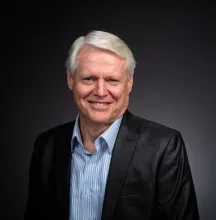
John Elliott serves in the role of President of the United Church of God, an International Association.
