
Steve Shafer
This transcript was generated by AI and may contain errors. It is provided to assist those who may not be able to listen to the message.
Again, we're now about to conclude as we know the Feast of Unleavened Bread, this being the seventh and last day of Unleavened Bread.
Of course, as we've heard in the Serbident and other times during this feast, that Unleavened Bread portrays putting sin out of our lives. And also, we could say then it portrays putting Christ into our lives as well as we eat that Unleavened Bread. So I guess the question I could ask is, I ask myself and all of us, is how much spiritual progress have we all made in striving for that? Striving to put sin out of our lives and striving to put Christ into our lives.
So is there any way we can measure that, measure the progress we made? There is in our life we can examine to see how much progress we have made toward that goal these days' picture.
What did Paul say to the church in Ephesus? Let's turn to Ephesians chapter 4 here in my introduction. Ephesians 4.
I'll begin in verse 1.
Here's what Paul said to the church in Ephesus. He said, I therefore, the Prisoner of the Lord, beseech you to walk worthy of the calling with which you were called.
Now, how can we know we are doing that?
How can we know we are doing that? And what is the ultimate goal of the calling with which we were called?
Let's go to verse 11. And he himself, Christ himself, gave some to be apostles, some prophets, some evangelists, and some pastors and teachers.
Pastors and teachers for what purpose?
Verse 12.
For the equipping of the saints, for the work of ministry, for the edifying of the body of Christ. So as to edify and build up the body of Christ, but to what end?
And for how long?
Verse 13.
Till we all come to the unity of the faith, and to the knowledge of the Son of God, to a perfect, auteur, mature man as it should be, to the measure of the stature of the fullness of Christ.
So as we approach that end, as we approach coming to the unity of faith and to the fullness of the stature of Christ, and to the measure of the stature of Christ, as we approach that end, what should we then no longer be?
Verse 14. That we should no longer be children, tossed to and fro, and carried about by everyone to doctrine, by the trick of men, and the cunning craftiness and deceitful plotting.
What should we then become instead, and what should we do instead? Verse 15. We should speak the truth in love, that when they grow up in all things unto him who is the head Christ, from whom the whole body joined in it together by what every joint supplies, by what every member supplies, according to the effective working by which every part, every individual, the body of Christ, does its share, and then causes growth of the body for the edifying, for the building up of itself in love. What level of goal are we striving for? We're all striving to reach the full spiritual maturity of Christ. We can sum it up that way. That's the goal we have, to become like Christ and to reach His level of spiritual maturity.
So that's the spiritual goal behind the meaning of the Days of Unleavened Bread.
So as we now observe the seventh and last Day of Unleavened Bread, let us all ask ourselves this question. How far down the road are we in achieving that ultimate goal? And is there any way to measure how far down the road we are in striving to achieve that goal that we're all striving to achieve? That's what I would like to look at today on the seventh and last Day of Unleavened Bread. As a true Christian begins to approach the spiritual maturity of Christ, what characteristics should we see being displayed in our lives?
So today I want to look at five characteristics we should all see being displayed in our lives or in the life of any true Christian who is striving for the maturity of Christ. My title for my sermon here then this afternoon is Five Characteristics of a Mature Christian. Five characteristics of a mature Christian.
And I want to strive to give these in a progressive order from where we need to begin to where we need to end. Then after that I want to show us what's it going to take to get there.
So where should we begin? What is the first most basic characteristic we all need to be displaying in our lives toward achieving the maturity of Christ?
I'm going to give each of these five characteristics in the form of a question.
First, do we have and are we displaying the humility of Christ? Do we have the humility of Christ? So let's ask this question. What kind of humility did Christ display? Let's go to Philippians chapter 2.
previous chapter 2 beginning verse 5 we'll reverse 5 and 6 to start with. Pope James 2 verse 5, Let this mind be in you, which is also in Christ Jesus, who beat in the form of God. He did not consider it robbery to be equal with God. Of course, because we know He was God. He was the Son of God. He was God in the flesh. To what degree, then, did He humble himself and how was his humility manifested? Verse 7, But he made himself of no reputation, and even though he was God in the flesh, he made himself of no reputation.
Instead, he took on the form of a bondservant, and he came in the likeness of men. And being found in appearance as a man, he humbled himself and became obedient to the point of death, even the death of the cross. I want to just read this as this paraphrase in the Living Bible, verses 5 and 8. Living Bible paraphrases in verse 5 and 8 this way, Your attitude should be the kind that was shown to us by Jesus Christ, who though he was God, did not demand and cling to his rights as God.
But he laid aside his mighty power and glory, and he took the skies of a slave and became like men. And he humbled himself even further, going so far as actually to die a criminal's death on the cross.
See, no one ever humbled himself or herself to the degree Christ did.
But we must all strive to incorporate that characteristic of humility into our lives as best we can. How can we do that? And how might that be manifested? Again, Philippians 2, verse 3, going to verse 3, Let nothing be done through selfish ambition or conceit, but in lowliness or immutability of mind, let each esteem others better than himself. Now, think about that. Wow, that's quite an order. Do we all realize how difficult that is to esteem others better than ourselves? That goes contrary to our nature.
But that is where it must begin when it comes to going down the road to becoming a mature Christian.
It doesn't mean that we don't look also after our own interests, as it tells us here in verse 4. Philippians 2, verse 4, Let each of you look not only for his own interests, but also for the interests of others. So we still have to look out for our own interests, but at the same time, we must also look out for the interests of others. The times consider the interests of others better or more important than our own interests. That is the kind of humility Christ has played for all of us and for all mankind. Do we have the humility of Christ? How important is that? I think you all received the latest copy of the E-News from Minister and Member Services and personal from the President, President Kubik. I just want to read several pages, but I just want to read a couple lines from it. Because it says, The best cure for spiritual cancer. That's his lead article there from Mr. Kubik. He said, This week I'd like to talk about a subject relevant to the meaning of these days of unleavened bread which are coming to a close. Do you ever wonder how cancer starts? It begins with a tiny cell. But sometimes the cell sneaks past the body's defenses and quietly the deformed cell splits. And then suddenly that's what keeps spoiling again until finally one tiny group of cells reaches a tipping point. A tumor emerges. Left unchecked, the tumor can go into metastasizing cancer and the result can be painful death. Then he says, Mr. Kubik says, What's my point? He says, Pride, which is the opposite of humility, Pride is a cancer of the spirit. There is, of course, nothing wrong with a quietly satisfied pride from a job well done, but there's a different kind of pride, at least in a dangerous and even lethal direction. Unchecked, both for pride in human beings destroys relationships, both between humans and with God. That's all I want to quote from his letter. There's much more to it. But I would just say the way to check Pride is by putting on humility, by putting on the humility of Christ. So again, I ask, do we have the humility of Christ? Now, striving for the maturity of Christ, as the sermon is focused on, what might the next characteristic be of these five characteristics? In this new humility, what should we put on next? I'll ask it by asking again in the form of a question, do we have the wisdom of Christ? Do we have the wisdom of Christ? You know, Christ was 12 years old. He went to the temple with his parents in Jerusalem to keep the Passover in Days of Unleavened Bread, as it tells us in Luke 2, verses 41 and 42. Let's turn to Luke 2.
Luke 2, verse 43. Start there. When he had finished the days of Unleavened Bread, as they returned, the boy Jesus, he was 12 years old, he lingered behind in Jerusalem, and Joseph and his mother did not know it. Verse 46. So it was that after three days, they found him in the temple, sitting in the midst of the teachers, both listening to them and asking them questions. And now, all who heard him, verse 47, were astonished at his understanding and at his answers. Why were they astonished? Because he displayed tremendous wisdom, by the way in which he was able to answer their questions. Did he continue to grow in wisdom? Verse 52. And Jesus increased in wisdom and stature and in favor with God and with men. What characteristics should be displayed by someone who is increasing in wisdom?
The person who is increasing in wisdom is a good listener. That's what it says here. He has a good listener. They found him in the temple, sitting in the midst of the teachers, listening to them. Verse 46. What else? This is in asking him questions. Same verse. What else? And he increased in favor with God and men. So what characteristics should be displayed by someone who is increasing wisdom? Or should we see manifested in their life? Well, they should be good listeners.
They should be asked good questions to help increase their wisdom and understand from people who have wisdom. They should ask good questions from the right people.
And they should be increasing in favor with both men and with God.
How important is that? How important is it for us to strive to have the wisdom of Christ? Let's go back just for a moment and just read a few scriptures in Proverbs 1.
Proverbs 1. Beginning in verse 1, the Proverbs of Solomon, the son of David, the king of Israel, to know wisdom and instruction, to perceive or understand the words of understanding, to receive the instruction of wisdom. You have to receive instruction if you're going to gain wisdom from the right people. Wise counsel. To receive the instruction of wisdom, justice, judgment, and equity. To give prudence to the simple. To give the young man knowledge and discretion. First, a wise man will hear and increase in learning.
He'll hear and increase in learning. In other words, he'll be a good listener.
A wise man will hear and increase in learning. Any man of understanding will attain wise counsel. You seek out wise counsel. People will have wisdom and ask them the proper question so he can gain wisdom from them. Is wisdom available for anyone who really seeks it?
Drop yourself down to chapter 1 of Proverbs, verse 20. Wisdom calls aloud outside. My margin says, my wisdom calls aloud in the street. She raises her voice in the open square, so wisdom is being personified here. Verse 21, she cries out in the chief concourses at the openings of the gates and the cities. She speaks her words, so wisdom is there. It's all and honestly, we observe and listen and take it in. Well, wisdom is available to all those who seek it. Why don't some find it? Verse 22. How long, you simple or naive ones, will you love simplicity or love for scorners delight in their scorning and fools hate knowledge? So how long will be unaware or indifferent to the effect we may be having on others if we don't use wisdom? In verse 23, they turn to my rebuke and she'll report my spirit on you. I'll make my words known to you. So why can't some find wisdom? Because they don't listen and they don't respond. They don't seek after it from the right people, and they're not really observing and trying to take it in. What could happen as a result of that? Verse 24. Because I've called and you refuse, and I've stretched out my hand and no one regarded, because you disdained all my counsel, didn't really listen to the wise counsel, and would have none of my rebuke, then I will also laugh at your calamity. What about those who listen and who respond in a proper way, who do listen and respond in a proper way? Proverbs 1 verse 33. But whoever listens to me will dwell safely and will be secure without fear of anything evil happening to them.
But I've been going really wrong in their life to turn their life upside down. So, do we have and are we striving for the wisdom of Christ? Because to present the maturity of Christ, we need wisdom. What's another character that we should all strive for in seeking the maturity of Christ? Do we have the discernment of Christ? We need humility, we need wisdom, and we also need proper discernment. The word discern has to do with properly separating something from something else. It has to do with proper perception and with recognizing something for what it really is.
It has to do, for example, with recognizing the times we're not living in. Let's go to Luke 12 again. Luke 12. Luke 12 verse 42. Christ asks this. Luke 12 verse 42. And the Lord said, Who then is the faithful and wise steward, whom his master will make ruler over all his household, to give them their portion of food in due season? Christ then asked him this question. Verse 43. I'll start down in verse 51. He's then asking this question in verse 51. Verse 51 of Luke 12. Do you suppose that I came to give peace on earth?
I tell you, not at all, but rather division. For from now on, five in one house will be divided.
Three against two and two against three. Father will be divided against son, and son against father, and mother against daughter, and daughter against mother, and mother-in-law against her daughter-in-law, and daughter-in-law against her mother-in-law. Why? Why would members of the same family be divided against one another? Could it be because they don't see or discern things the same way? Is that one of the reasons? Could it be because they discern things differently? Verse 54. Then he also said to the multitude, whenever you see a cloud rising out of the west, immediately you say a shower is coming, and so it is. In verse 55, when you see the south wind below, you say there will be hot weather, and there is. Verse 56 says, you can discern the face of the sky and of the earth, but how is it you do not discern this time? How is it you don't discern? We could say the times we're now living in. How is it you do not discern this particular situation that's taking place at this time? And it goes even much deeper, much more personal than that when it comes to discernment. Verse 57. Yes, and why even of yourselves do you not judge what is right? Why do you not discern? What's right and what's wrong in this situation?
And it even implies here, why do you not discern yourselves? Why can't some discern what is right and wrong in their own lives and themselves, the way they're seeing things or thinking about things?
Why can't some even see or discern a wrong attitude in themselves? Well, first it takes humility and wisdom before we can go to having proper discernment. But then there's something else. It also takes a spiritual component. See, to have proper spiritual discernment, it takes the Holy Spirit of God. That does not mean that a person who may not always have good discernment doesn't have God's Holy Spirit. Some may just naturally have more discernment than others. It may just natural quality a person has, just by the way they are and the way they observe things.
And discernment is something we can acquire over time and it can be a part of our growth process as human beings. But it is a work of the Holy Spirit as well. And spiritual discernment requires having and using God's Holy Spirit. Let's go to 1 Corinthians chapter 2. 1 Corinthians chapter 2. Now, let's look at one verse here. 1 Corinthians 2.
1 Corinthians 2 verse 14. Where Paul wrote, But the natural man does not receive the things of the Spirit of God, For they are foolishness to him. Nor can we know them, because they are spiritually discerned. You might wonder, what does Paul mean by that? They are spiritually discerned. William Barkley in his New Testament study Bible translates verses 13 and 14 this way. I think it's a very good sense of what he's saying. 1 Corinthians 2. The things we speak of, we do not speak in words taught by human wisdom, but in words taught by the Spirit, interpreting spiritual things to spiritual people, because it takes the Spirit to discern them. It takes God's Spirit to discern them.
So, the sermon has to do with properly separating something from something else, and spiritual discernment requires using God's Holy Spirit, which can then result in what? Let's go to 2 Timothy chapter 2. It shows what using right five spiritual terms can lead to.
2 Timothy 2 verse 15. Be diligent, present yourself approved to God, a work who does not need to be ashamed, who can rightly divide.
The sermon has to do with dividing or separating. Who can rightly divide? Rightly dividing the Word of Truth. So, properly using God's Holy Spirit can then result in rightly dividing or rightly separating the Word of Truth. God's Word. Have we know how to use it properly? So, to obtain the maturity of Christ, we all need to ask God to give us spiritual discernment so we can rightly divide the Word of Truth. And so, we can discern the times we are now living in, and so we can also, most importantly, come to even discern ourselves, discerning ourselves when our thinking might be going a little bit astray, we might be having the wrong attitude. So, do we have the discernment of Christ? That then leads to our fourth characteristic we need in striving for the maturity of Christ. Do we have the forgiveness of Christ? And by that, I mean do we have the same capacity to forgive others that Christ had for forgiving us? That's what I'm talking about here. What did Christ say soon after they nailed into the cross as they divide His garments and cast lots? Then Jesus said, Father, forgive them, for they do not know what they do. Luke 23 verse 34. So, one of Christ's greatest characteristics was His oneness to forgive and His oneness to extend mercy, which goes right along with forgiveness. To what manner, therefore, did Christ tell us we should pray?
And how important is it for all of us to extend mercy and forgiveness toward others as Christ extended mercy and forgiveness toward all of us? What did Christ tell us to pray in that regard? Let's go to Matthew chapter 6, the Sermon on the Mount. Matthew chapter 6.
Matthew chapter 6, beginning in verse 9. Just read a few verses here, verses 9 through 12. In this manner, therefore, He said to pray, Our Father in heaven, hallowed be Your name. Your kingdom come, Your will be done, on earth as it is in heaven. Give us this day our daily bread. And then verse 12, And forgive us our debts as we forgive our debtors. Or He could say, Forgive us our sins and trespasses, as we forgive those who have sinned and trespassed against us.
As we forgive those who are indebted to us for hurting us or for hurting someone we love. We need to forgive that. How important is it for us to do that, to have that kind of forgiveness?
Matthew 6, verse 14. For if you forgive men their trespasses against you or against someone you love, your heavenly Father will also forgive you, which we all want and need.
Verse 15, But if you do not forgive men their trespasses, if you can't learn to extend the same kind of forgiveness toward others that I extended towards you, neither will your Father forgive your trespasses.
So if we want to be forgiven by God, then we need to stand off forgiveness toward others as well.
Now, how far do we do that? I mean, it goes to the extreme because it says here we even need to forgive our enemies. Let's go back to one chapter of Matthew 5. Matthew 5, verse 43. You have heard that it was said, You shall love your neighbor and hate your enemy. But I say to you, love your enemies. Bless those who curse you. Do good to those who hate you and pray for those who spitefully use you and persecute you.
Why? Verse 46. For if you love those who love you, what reward have you? Doesn't everybody do that?
Do not even the task collectors do the same? And if you beat your brethren only, what do you do more than others? Don't even the task collectors do that? Doesn't everybody do that?
Therefore, verse 48, if you shall be perfect, the word should be mature. You shall be mature just as your Father in heaven is mature or perfect.
We need all acting to mature our men toward others. That's what he's saying. Why? Because we're striving for the maturity of Christ, and Christ loved His enemies. And He extended mercy and forgiveness even to those who took His life and who hated Him.
He did that. Why did He do that? Because He hopes that at some point in the future, when they come to realize who He really was, they will have the opportunity to come to repentance. Because He wants all to come to the knowledge, the truth, and to be saved, if at all possible.
How often should we be willing to forgive others?
Matthew 18. I think we all know the answer, but let's turn and read it. Matthew chapter 18.
What did Christ tell Peter when it came to how often we need to forgive others? What did He tell Peter? Matthew 18 verse 21. Then Peter came to Him and said, Well, Lord, how often should my brother sit against me and I forgive him? Should I do it up to seven times? That seems awfully merciful to me. Should I really go that far? Verse 22. And Jesus said to Him, He said to Peter, I do not say to you up to seven times, but up to seventy times seven. In other words, there should be no limit to the number of times we should be willing to forgive others.
Mustn't just ask this question. Would we want to put a limit on how many times we would want God to forgive us? I don't think so. I don't want to put a limit on it. I'm thinking it's due. Christ then gave the parable of the unforgiving servant, verses 23 to 35. I just want to read the conclusion of that parable. Matthew 18, let's go down to verse 32 to the end of that parable. Then His master, after He had called him, He said to him, You wicked servant, I forgive you all that debt because you beg me to forgive you. Should you not also have had compassion on your fellow servant, just as I had pity on you? And His master was angry and delivered him to the torturers until he should pay all that was due to him. So my heavenly Father will also do to each of you from His heart if you from your heart does not forgive his brother, his trespasses.
Do we have the forgiveness of Christ? Are we willing to forgive others as Christ has forgiven all of us? So now, it's striving for the maturity of Christ in addition to humility and wisdom and discernment and forgiveness. What additional characteristic must we have? Maybe this most important one of all. Again, this is progressive. Do we have the love of Christ?
We're all familiar with John 3, verse 16 and 17. For God so loved the world that He gave His only begotten Son, that whoever believes in Him should not perish but have everlasting life.
For God did not send His Son into the world to condemn the world, but that the world through Him might be saved. Now, when we think of that passage, do we also think of the love of Christ?
Do we think of how Christ was willing to give up His power and glory so He could become flesh and draw among us as a human being subject to everything a human being is subject to?
What did that take on Christ's part to do that? What kind of love did that take in order for Christ to do that, to become flesh and draw among us and be subject to everything a human being is subject to?
Which leads to this question then. See, what is love? How should we define it?
Is it an emotion? Is it a sentiment? Is it a feeling we have toward something or toward someone?
Is it a passion? Well, that can be all those things, but in reality, it is much more than that.
Christ was the one who led Israel out of Egypt to the land of Canaan. You can read that in the New Testament, 1 Corinthians 10, verses 1 to 4.
As it says in 1 Corinthians 10, 4, Christ was that rock that followed them and sustained them.
And as that rock who led Israel to the land of Canaan, what did Christ have Moses convey to Joshua and Caleb and to all the nation of Israel? Let's go back to Deuteronomy, chapter 31. We're getting out to the real, the degree of what love really is.
Deuteronomy 31, verses 6, 7, and 8.
Be strong and of good courage, do not fear, nor be afraid of them. God is telling Moses here, be strong and of good courage, do not fear and be afraid of them when you go into the land of Canaan. For the Lord your God, He is the one who goes with you.
He will not leave you nor forsake you.
Then Moses called Joshua and said to him in the sight of all of Israel, be strong and of good courage, for you must go with this people to the land which the Lord has sworn to their fathers to give them, and you shall cause them to inherit. So Moses is now repeating this to the people of Israel. Verse 8, and the Lord, He is the one who goes before you, and He will be with you. He will not leave you nor forsake you, so do not fear nor be dismayed.
Now both verses 6 and 8 here are quoted even more emphatically, especially verse 8 here, is quoted more emphatically in Hebrews 13. Let's turn to Hebrews 13.
I want to read that because it's being quoted here in Hebrews chapter 13 by the writer of Hebrews. Hebrews chapter 13 beginning in verse 1. We're talking about love, the love of God, the love of Christ. Let brotherly love continue, and do not forget to entertain strangers, verse 2 of Hebrews 13, for by so doing some have unwillingly entertained angels.
Remember the prisoners as if changed with them.
And I want to stop there just for a second. I just want to mention something.
Remember the prisoners as if changed with them. They have a movie that's out now.
It's called Paul, an apostle of Christ. I went and saw it a while back with Jim Lindelapp.
It's really a very interesting movie. It might be 100% accurate exactly the way they portray everything, but I mean it gives you a picture of, wow, what it might be like to be in a Roman prison. But it's about the relationship between Paul and Luke. And when Luke, he goes to this prison on a regular basis, he gets the Roman guard to let him into visit with Paul in prison. And then he's basically the way they portray the movie is he's asking Paul questions. He knows that this time he's not going to escape. He's going to be put to death after this is third imprisonment, and he's not going to be let loose again. But he's trying to get whatever information he can to try to what Paul is important in Paul's life so he can write this letter of the Gospel of Luke and give the life of the Apostle Paul in the Book of Acts, because Luke wrote the Book of Acts, I should say, Book of Acts. So he's always a lot concerned about the Book of Acts and Luke's interviewing Paul to get information for writing for the Book of Acts. Very, very interesting movie, but he's visiting him in prison. That's the point. Remember the prisoners as if changed with them, as Luke did in this movie.
Those who are mistreated, since you yourselves are in the body also. Marriage is honorable among all and the bed undefiled, but fornicators and delters, God will judge.
Now, marriage may begin with strong emotional feelings, but what does it take for marriage to endure until death do us part? A lot of marriages don't last that long, do they?
They start out good, but then something happens. Well, it takes what we read in the next verse. It takes what we read in verse 5. Let your conduct be without covenants, be content with such things as you have. For he himself has said, now, according to Deuteronomy, which is read a little while ago, I will never leave you nor forsake you. That's the kind of commitment it takes for a marriage. Both parties, I will never leave you, no matter what happens, no matter what our failures are, no matter how times we make mistakes and fall short, I will never leave you nor forsake you. So in its most basic and strongest terms, what is love? Love is a decision, a decision and an unconditional commitment, which we all made at baptism, marriage and at baptism, which a decision I should say that Christ made for all of us, where he said, I will never leave you nor forsake you. That's the kind of love Christ has for us. It was a decision he made. No matter what happens, I'm going to be there. If you seek me, you will find me. I will never leave you nor forsake you. That is the love of Christ toward all of us. Do we have that kind of love for others? Do we have the love of Christ? To always be there for them, to always stay together, support one another. So, it rules then, our five characteristics we all need in striving for the maturity of Christ. But that leads to my final question, which I want to take a little time on. We want to take in order for us to make progress toward striving to reach the maturity of Christ. And what means will God use to help us to develop the humility, wisdom, discernment, forgiveness, and the love of Christ? What means will Christ use to help us to get there, to make progress towards that end? Now, Tom uses a difficult Scripture, and even Brian uses a little bit of a difficult Scripture that he explained in his offeratory message. I want to use the old, intriguing Scripture, as intriguing Scripture in Matthew and Luke's Gospels that is seldom quoted. It is even somewhat difficult to give a clear translation of this in Scripture. But it pertains directly to all of us as members of the spiritual body of Christ, as members of spiritual Israel, if you will, or the spiritual nation of Israel. Let's turn to Matthew's account. We're going to look at this Scripture. It's a difficult Scripture. You read it and say, what does this mean? What's he saying? Let's go to Matthew's account. It's found in Matthew 21. Let's begin in Matthew 21, verse 42. That's not the Scripture, but begin there. Matthew 21, verse 42. Jesus said to them, said to the chief priests and the elders of the people, and verse 23 into the Pharisees, verse 45. Jesus said to them, Have you never read in the Scriptures the stone which the builders rejected has become the chief cornerstone. This was the Lord's doing and is marvelous in our eyes. Christ is here, obviously, referring to himself. He was the chief cornerstone that the builders rejected.
Verse 43. Therefore I say to you, the kingdom of God will be taken from you, to these Pharisees, the scribes, and so on, and be given to a nation bearing the fruits of it, that nation being the spiritual nation of Israel, those who have been called to bear the fruits of God's Holy Spirit, all of us, who are part of God's church today, part of spiritual Israel, and who have been called to develop the characteristics and maturity of Christ.
Then we come to verse 44, which is seldom quoted or spounded on, but which is speaking directly to all of us. Verse 44, And whoever falls on this stone, the stone being Christ, and whoever falls on this stone will be broken. But on whoever it falls, it will grind him to powder.
What in the world is that talking about?
The stone is Jesus Christ, the chief cornerstone. But what is the scripture telling us?
And what does it mean whoever falls on this stone will be broken?
And what does it mean on whoever the stone falls, it will grind him to powder? What does that mean? What's that telling us?
Or as the new century version has it, on whoever that stone falls, that person will be crushed.
So what is verse 44 really telling us? First of all, what is it? It's a warning. Verse 43, The Kingdom of God should be taken from you.
So it's a warning. The Kingdom of God will be taken from who?
It will be taken from those who are not bearing the fruits of it.
And then in turn, given to who? To those who do bear the fruits of it.
Verse 44 then is talking about Christ's judgment on those who are bearing fruit, on those who are not bearing fruit. The best explanation I found, and I've searched for everybody's explanation. Nobody can give a good explanation. You get the commentary, it's interesting, because they don't really understand what it means, and they say this and they say that, and none of them really agree.
But the best explanation I found is from the King James Study Bible, which we have. We have a King James Study Bible, which says this about this verse. The warning, the Kingdom of God shall be taken from you, verse 43, was fulfilled at Pentecost when the Kingdom was meatorily transferred to the church, transferred from Pharisees and all of them. Those are part of the Old Testament, without their part of the Church at that time, to spirituals, or to the Church of Pentecost when the gospel of the Holy Spirit was poured out.
Yet within this warning of judgment, Jesus offers mercy to those falling on this stone, meaning falling upon Him in repentance and faith. But this falling upon man, but his falling upon man in judgment will grind him to powder, or will crush him, as the New Century Version has it. So what is the first thing that happened? I try to think about that, and I'll give you what that means. What does the first thing that happened, or the first thing that should have happened, when God called us to repentance?
Well, our will and our desire to do what was right in our own eyes, that had to be crushed. It had to be broken, if you will. I should say, I was going to use the word broken, not crushed. It had to be broken. Our will had to be broken. Our will and our desire to do what was right in our own eyes had to be broken. And for some, the life they had with their family was broken.
We all had to break away from our past, and in many cases, some of us had to break from our present as well, which is sometimes difficult, depending on what kind of habits we had or we had to break away from. So when our lives fell on that stone, when our lives fell upon Jesus Christ, like the Apostle Paul, our lives were then broken. Especially as we came to realize that I am carnal, sold under sin, and that in me, as in my flesh, nothing good dwells.
As Paul came to understand, as recorded in Romans 7, verses 14 and 18, whoever falls on this stone is going to be broken. Our lives were broken. Our spirit was broken. Our attitude, our attitude, what was right in our own eyes had to be broken. When we committed our lives to Christ, when we fell on that stone, became broken, what did Christ do?
He then extended to us His mercy and His forgiveness and His love, so we would then not have to be ground to powder or crushed. What did Christ mean? On whoever it falls, it will grind Him to powder. You think about it. Conversion and coming to the maturity of Christ is a painful process. And those of us who are even striving in that direction, we've had to go through a lot of things that were not very painful, which included many painful trials and tests, which in turn were meant to produce fruit, and it's through our trials and tests that the fruits of God's Holy Spirit are produced. What if those fruits are not produced?
What if we're not producing, and it gives us the fruits of God's Holy Spirit there in Galatians 6. What if we're not producing love, joy, peace, long suffering, kindness, goodness, faithfulness, gentleness, self-control? Well, if we're not producing the proper fruits, then the stone will fall on us, that is, Christ's judgment will then fall on those people. So they can then do what?
So they can somehow come to produce the right kind of fruits. His judgment will come on us to grind us down and crush us until we begin to produce the fruits Christ wants us to produce, which will mean what? It will mean then that our produce and fruits are going to have to go through more difficult and more fiery trials until they come to be able to produce those right kind of fruits. What then should our attitude be when it comes to painful trials and tests?
Let's conclude by turning to James chapter 1 and asking what should our attitude be when it comes to painful trials and tests. They should be looked in a positive way because they're meant to help us to come to the maturity of Christ and reduce the kind of fruits that God wants to see produced in our lives, as James tells us. James chapter 1 verse 2, my brother encountered all joy when you fall into various trials.
Why? Verse 3, knowing that the testing of your faith produces fruits and produces patience, and then patience. Let it have its perfect work that you may be perfect, or as my margin says, that you may be mature and complete and lack nothing. See, it's only through our trials and tests that we can then be brought to the maturity of Christ. It could take a lot of trials and tests that takes pain. It's difficult. It's only through painful trials and tests that we can develop the humility, the wisdom, the discernment, the forgiveness, and the love of Christ.
But count on all joy when you fall into various trials, because it's only through our trials and tests we can come to have five characteristics, I should say, of a mature Christian.
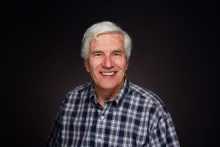
Steve Shafer was born and raised in Seattle. He graduated from Queen Anne High School in 1959 and later graduated from Ambassador College, Big Sandy, Texas in 1967, receiving a degree in Theology. He has been an ordained Elder of the Church of God for 34 years and has pastored congregations in Michigan and Washington State. He and his wife Evelyn have been married for over 48 years and have three children and ten grandchildren.
