
Mark Welch
This transcript was generated by AI and may contain errors. It is provided to assist those who may not be able to listen to the message.
Well, thank you, Catherine, for that beautiful, beautiful rendition of a beautiful song. Very moving. And thank you, Bob, for the accompaniment as well. Also, I want to be sure I thank Steve St. Charles for that very, very fine sermon. I really appreciate that. I mean, it isn't awesome to think about, you know, God looking down of all these people and then choosing... I like choosing me. Why would he choose me? Especially when he knows everything about me. Knowing everything about me. That's one person you don't want to choose.
So that is very, very moving to think about that. And I really appreciate that message. It was an excellent message. And as we now realize, we're only one week away from observing the Passover. And preparing for that, God, through the Apostle Paul, tells us this. And let's just turn there and read it, what it says.
And we're all familiar with it, 1 Corinthians 11. But let's read what it says in regards to the Passover and preparing for the Passover. 1 Corinthians 11, his Apostle Paul writing to the church in Corinth. And beginning in verse 23. Paul says, I received from the Lord that which I also delivered to you, that the Lord Jesus, on the same night in which he was betrayed, He took bread, and when He given thanks, He broke it and said, Take, eat, this represents my body which is broken for you.
Do this in remembrance of me. Then the same manner, He also took the cup after supper, saying, This cup is the new covenant in my blood. This do, and as often as you drink it, we do it once a year, of course, when Christ did. Do this in remembrance of me. And then He says, As often as you eat this bread and drink this cup, as we do on the Passover, you proclaim the Lord's death until He comes. And we do that on the very anniversary of that. Therefore, whoever eats his bread or drinks this cup of the Lord in an unworthy manner, as it says here in the New King James, was the correct way of rendering it.
We'll be guilty of the body and blood of the Lord. Then verse 25, But let a man examine himself, and then so let him eat of the bread and drink of that cup. But let a man examine himself. So we're admonished to examine ourselves prior to partaking the Passover.
Now, I think about it. Most of us have been in God's Church. I think a lot of you here have been for many years. Some for over 20 years, some 30, some 40, some 50 or more. My first Passover was back in 1965 at Ambassador College in Pasadena, California as a freshman.
I think that was 52 years ago. Where does time go? So this will be my 53rd Passover coming up, as I believe it will also be for Evelyn. She was called about the same time I was, a different area, but about the same time. Actually started a little bit earlier than me, actually. But I've now examined myself before the Passover, 52 or no 53 times. This will be my 53rd time to examine myself before the Passover. So I have to ask myself this.
How much progress have I made? I'm asking myself this. How much progress have I made in 52 years? Well, I hope I made some progress, but here's my problem. I'm still a long way from reaching the maturity of Christ or reaching perfection a long way. I still have a long way to go before that, to reach the maturity and the perfection of Christ. So I have to ask this question then.
How many years and how many more Passovers will that take? How many more years and how many more Passovers do I have left? I'm 76. And the answer is not nearly enough. There's not knowing the Passover is left to reach perfection. Which means what? It means that I'm going to die without reaching the full maturity and perfection of Christ. So then I have to ask this question. How then will I be judged when my time comes to stand before the judgment seat of Christ? Which I'll have to do when I'm resurrected. How's that going to play out? And Paul clearly tells us that we will all stand before the judgment seat of Christ.
He tells us that twice. Romans 14 10 and 1 Corinthians 5 10. That is very important to understand the context in which Paul made those two statements standing before the judgment seat of Christ. Because it will show us what we need to examine in preparation for that day when we stand before Christ's judgment seat. So today, then, what we look at as we now prepare to once again take the Passover here in 2017. What do we all need to examine as we prepare for this upcoming Passover?
And as a preparer to some day stand before the judgment seat of Christ? The title for my sermon here this morning is, What Must We Examine in Preparing for the Passover? What must we examine in preparing for the Passover?
Now, in determining the main thing we should examine about ourselves prior to Passover, I first want to look at what we can learn from the context where Paul made those statements. We all must stand before or appear before the judgment seat of Christ.
As I said, Paul made that statement in two of his letters. First in his letter to the Church of Corinth, and second in his letter to all who are in Rome.
So first, let's look at this part of the sermon. Let's look at standing before the judgment seat of Christ.
Again, Paul's first mention of that is recorded in 2 Corinthians 5 verse 10, where Paul said we must all appear before the judgment seat of Christ. Now, before getting into 2 Corinthians 5, let's first put the Book of 2 Corinthians in its proper historical setting.
So a lot of you know, the ancient city of Corinth was one of the greatest trading commercial centers and trading and commercial centers of the ancient world. Probably due to its locations, about all traffic from north to south traveled through Corinth, and all from east to west, most of it from east to west traveled through Corinth. A lot of it by sea, because of its location.
An English historian and clergyman by the name of Frederick Farrar, F-A-R-R-A-R, he wrote this of ancient Corinth.
Objects of luxury soon found their way to the markets, which were visited by every nation in the civilized world. Arabian balsam, Phoenician dates, Olimbian ivory, Babylonian carpets, Phoenician goats hair, Lyconian wool, Phrygian slaves.
Corinth was a very rich and a very populous city 2,000 years ago.
But there was another side to Corinth.
Corinth had commercial prosperity, but she also had a great deal of immorality. It was an extremely immoral city.
Above the city on Acropolis stood the temple of Aphrodite, a pagan goddess of love, with hundreds of temple prostitutes who come down at night into the city and apply their trade.
But in a seemingly unlikely place, Paul did some of his greatest work as an apostle of Jesus Christ in the city of Corinth. He was there in the city of Corinth for 18 months. You can read that. I'm not going to go through there. Acts 18 verses 1 to 17 gives a little bit of an account of that. It says he was there 18 months. He was probably in Corinth around 52 to 53 A.D.
About two years after he left, he left Corinth and he wrote his letter of 1 Corinthians around 55 A.D. And by that time, there were problems in the Church of Corinth, as indicated in the first four chapters of 1 Corinthians. Let's turn to 1 Corinthians. Just read a couple of situations here about what happened to Corinth about two years or so after Paul left, after he found the Church, and then this is the letter that he wrote to the Church of Corinth a couple years after he left. 1 Corinthians 1 verse 10. He said, I plead with you, brethren, by the name of our Lord Jesus Christ, that you all speak the same thing, that there be no divisions among you, but that you be perfectly joined together in the same mind, the same judgment. Things were happening. They were not good. They were divisions. They weren't all speaking the same mind. Chapter 3 verse 1. And I, brethren, could not speak to you as to spiritual people, but as to carnal, as if now you're only babes in Christ. I fed you with milk and not with solid food, for until now you were not able to receive it. And even now, you're still not really able to receive solid food, because you still cast carnal inclinations. For where are there envy and strife and divisions among you? Are you not yet carnal and behaving like men? There shouldn't be any of that. For one says, I am a Paul, another I am a Paul. What are you doing? Why are you following individuals? Why are you following people? Why aren't you following Jesus Christ? What are you saying? So there were divisions with some following human leaders instead of following Christ. Paul was not able to be there to try to influence them in the right way, or couldn't into them a whole lot, because he wasn't there. He was lost traveling other places. And they had attached themselves to various human leaders and teachers, and they're somewhat spiritually immature. They won't return the way they should.
And they were obviously widened to their spiritual state, which is why, by chapter 4 of this first letter, Paul had much of them to examine themselves prior to protecting the Passover.
Now, with that background in mind, let's now go to 2 Corinthians chapter 5, which was written around 57 to 58 A.D. This is where we're going to get to the lead-up. We're just going to look at the 2 Corinthians chapter 5. We're going to look basically at the first 10 verses of 2 Corinthians chapter 5 and see the progressive Paul's sinking here, leading up to we appear before the judgment seat of Christ in verse 10. 2 Corinthians 5 verse 1, For we know that if our earthly house, this tent, is destroyed, we will have a future building from God, a house not made with hands, but eternal in the heavens.
And this we grow, an earthly desire to be clothed with our habitation, which is from heaven. And again, I say, as we go through these first 10 verses here of chapter 5, we can note a progression of Paul's sinking, leading up to verse 10. And it begins here by saying, in essence, that it will be a joy to not have this human body anymore and all the different problems we can have and experience in being in the flesh. It's going to be a great joy to have a spiritual body that will not decay and can't get sick and can't have all the problems that we can have here in our physical bodies as they were down. It would be nice to get rid of this earthly tent or tabernacle and have a spiritual body given to us by Jesus Christ and God. Verse 2, in this we grow an earthly desire to be clothed with our habitation, which is from heaven, the spiritual body that God will give us in our resurrection. But then he qualifies this in the next verse in verse 3, if, if indeed, having been clothed with that spiritual body, to have to be clothed with that spiritual body, we shall not be found naked. He's obviously speaking spiritually. We must not be clothed with our own righteousness. We have to be clothed with the righteousness of Christ. We only have our righteousness, we're basically spiritually naked. So that then is an area we can always examine ourselves. Are we clothed with the righteousness of Jesus Christ? Are we clothed with our own righteousness? And I have to look at myself all the time and ask myself that question. For in this we groan earthly, verse 2, we, we clothed with, with habitation, which is from heaven. If indeed having been clothed, we shall not be found naked. And going on verse 4, for if we are, if for we who are in this tent groan, being burdened not because we want to be unclothed, but further clothed, that mortality may be swallowed up by life. In other words, if we are clothed with the righteousness of Christ, then mortality will be swallowed up by life. If we have Christ's righteousness, we're clothed with His righteousness. We'll be given the gift of eternal life when our time comes to appear before the judgment seat of Christ. Same time here in verse 4, he says, we groan not because we want to be unclothed. That is, you know, we really don't, we like the physical life we have. We don't want to have to get rid of this tenor body necessarily. We look forward to the future, but at the same time, we are sick of this life we can really enjoy.
We don't really want to give up our physical tenor or physical body either. There's a lot of things we enjoy and appreciate in life. So it's not that Paul despises his present physical life, especially because of what he says in the very next verse in verse 6. Again, he's progressing here in his thought. Verse 5, I should say, excuse me, verse 5. Now he who has prepared for us this very thing to have a spiritual body someday, to have a gift of eternal life, is God, who also has given us the Spirit as a guarantee.
So we're going to have God's Holy Spirit as a guarantee, as a down payment. And as long as we have God's Holy Spirit dwelling in us, there's a guarantee that when this end of this life comes, we're going to be given a glorious body that will never decay or die down or ever be sick or ever suffer pain again. And then that guarantee will ensure that our mortality may be swallowed up by life, as he says here. And that guarantee should give us confidence. Verse 6, So we are always confident then, knowing that while we are at home in this body, we enjoy it, we enjoy it while we have it, we enjoy the things in this life that we can enjoy, even though we are absent from Christ, we're absent from the Lord, but there are things we can enjoy.
We're only absent from being with Christ, we're absent from being in his realm for a short period of time, as long as we have God's Holy Spirit in us.
We know that's a guarantee that we will be given eternal life in the future.
But that then gives us another area to examine as we think about examining ourselves. Are we displaying the fruits in his right out in the sermonette by Mr. St. Charles? Are we displaying the fruits of God's Holy Spirit? Because we have God's Spirit in us, if he's got a guarantee for eternal life in the future, then we should be displaying the fruits of God's Spirit in us. We should be showing that. So are we displaying the fruits of God's Holy Spirit? Especially not only in relationship with God, but in our relationships with one another, because that's what it's all about. Do we display it towards one another? Do we display love, joy, peace, long-suffering, kindness, goodness, faithfulness, gentleness, self-control? W. 5, 22, 23, as Mr. St. Charles mentioned.
But knowing that, knowing we should be displaying those truths towards one another, how then should we walk? How then should we live our life? W. 5, 22, 23, as Mr. St. Charles mentioned, by what we see and perceive, or by faith in God, and by faith in God's Holy Spirit. 2nd Corinthians 5, going on to verse 7. Here's what we should be displaying. He says, we walk by faith, not by sight.
Who we are confident in, yes, well-pleased, rather to be absent from the body and be present with the Lord spiritually, but therefore we make it our aim, whether present, whether in this physical body or absent. Our aim is to, right now, everywhere we can, to be well pleasing to Him. We're seeking to please Christ. We must always strive to be well pleasing to Christ. Why? Why must we always be striving to be well pleasing to Christ? Why is that so important? Because we examine ourselves for Passover. Verse 10, because we must all appear before the judgment seat of Christ, that each one may receive the things done in this life, according to what we've done, whether good or bad. Now, to think about that, it's going to be kind of scary on the surface when you first read it. And don't think about it, don't go deeper, but it can be scary. They go, I fall short in so many ways. I think of myself, I struggle with prayer.
You know, prayer become rote. I've tried to pray every day, but I have certain things that I pray about because I know certain people need our prayer, and I pray about that. And then I, then it can be, come just to be a pathician of things, praying for God's kingdom, different things in general. After five minutes, they go, what have I really said that really has got God's attention here? Is this really of keeping God alert or might boring Him? That's a struggle. We struggle with many things in this life. Well, let me just end this section with this. As we examine ourselves before Passover, knowing that we will someday appear before the judgment seat of Christ, how in our life, how is, I should say, how is our life and our attitude affecting others? How do we affect others as in this life right now? How are we affecting others? We all fall short of perfection, but how is our life affecting others? Is our life, as our example, the best of our ability we can? Is it having a positive and good effect or is it having a negative bad effect? This is whether good or bad. Is it having a good effect or not so good effect? Are we helping the work of God's Holy Spirit or are we hindering the work of God's Holy Spirit? Are we having a positive impact on others and helping them, encouraging them? Are we having a negative impact? Does our attitude toward all others display the love of God? That's the bottom line, isn't it? Does our attitude towards others display the love of God?
Why is that so important? Again, verse 10, because we must all appear before the judgment seat of Christ that each one will receive the things done in this life, whether good or bad. So we want to make sure that our life and every way possible is having a positive effect on others, not just in a church but in the world as well. Maybe somebody in the world can say, well, you know, there's something special about this person. Look at how they're handling their problems or difficulties. Look at all these trials they're having, but look at the faith they display.
That can have an impact on others. Our example probably has more of an impact than anything we could say. Now let's go to Romans 14. This time we're just going to look at three verses.
We'll just look at Romans 14 verses 10, 11, and 12. But there's a lot here. Romans 14 verse 10.
Why do you judge your brother? Why do you show contempt for your brother? For we shall all stand before the judgment seat of Christ. Here again, that's the place where he mentions that. Then he goes on in verse 11, For it is written, as I live, says the Lord, every knee shall bow to me, and every tongue shall confess to God. So then, each one of us shall give account of himself to God. We're all going to give accounts for somebody else. We all have to give account for ourselves. That's all I have to worry about. I have to worry about how I'm going to give an account to God when I stand before the judgment seat of Christ.
Now, there has been one thing involved. It's one struggle I could call, I can say, problem, but it's a struggle that every human being has. There's always been a part of the churches of God. Not only the church of God, but in society as a whole. We especially see it in society today, and the world we live in. That is judging others and being judgmental toward others. And in this one verse, the Apostle Paul gives us the bottom line when it comes to being judgmental towards others. He gives us a primary area where we all need to examine ourselves. Paul begins this verse by asking, why do you judge your brother? Good question. And every human being tends to do that at times. We all do. I've done that a lot of times. Still do. Still struggle with that. It's almost a universal proclivity. But let me now ask it in another way, and then Paul does here. Why should we not judge our brother? The answer? Because we shall all stand before the judgment seat of Christ. In other words, because we are not the judges, we are the ones who are under judgment. We are the ones who are under judgment.
We are those who will be judged. I'm going to be judged. So I should not be a judge. I'm going to be judged.
Now in verse 11 here, in Romans 14, Paul is quoted from Isaiah 45 verse 23.
What does Isaiah 45, 23 tell us in the context in which it was written by Isaiah?
Let's just hold your place here, and let's turn to Isaiah 45.
Isaiah 45, we'll just look at two verses.
Verses 22 and 23. Isaiah 45 verse 22, Christ says, Look to me and be saved. This is really prophecy of Christ. He's saying to all of us, he says, Look to me and be saved. All you ends of the earth. For I am God, and there is no other.
And I have sworn by myself, the word has gone out of my mouth in righteousness, and shall not return, that to me every knee shall bow, and every tongue shall take an oath. In other words, we almost give an account individually to God.
The only one who has the right to judge anyone is God.
Let's go back to Romans 14. I have to look at another couple verses here as well, actually. Because in the verses preceding verse 10 in Romans 14, Paul mentions things that show us that none of us live in total isolation from others. Our lives are going to affect other people. We don't live in isolation from other people. Basically saying that in Romans 14, I'm not going to go through all of Romans 14. Some of that can be explanations, but I'm just going to read it as you understand it. Romans 14, just go back to the first few verses, Romans 14 verse 1. It says, This is to show that we don't live in isolation from others. What we do and how we example to others can affect others. Receive one who is weak in the faith, but not to disputes over doubtful things. For one believes he may eat all things, but some people are weak. Say, well, I only have vegetables, God. I don't want to eat a meat sacrifice to an idol. Also, the idol is nothing, but anyway, that's okay. It's okay if they feel that way.
But the thing is, that not him who eats, despise him who doesn't eat. As long as they're doing according to God's laws and God's health laws.
And let no man and let not him who does not eat judge him who eats. So basically, don't judge one another over things that are lawful according to God.
Then, verse 4, who are you to judge another's servant?
So in other words, what we believe, what we say, what we esteem, how we judge, what we observe, how we live our lives, all those things can have an effect on others. We don't live in isolation from other people.
Except in one instance, there's one area where we live in isolation, but on the other hand, we also don't. It goes both ways, so we'll see.
There's one area we do kind of live in isolations.
In Romans 14, Paul is leading up to the one area where we all stand in isolation, in a sense. We will all individually stand in isolation when we stand before the judgment seat of Christ. We're just going to be standing there. Nobody else can be standing beside us saying, I don't think you're right there, I know this about it, whatever. Christ knows everything about us.
We'll all individually stand in isolation when we stand before the judgment seat of Christ. Now, you go to the court of law today, if we have to appear before a judge, one can sometimes bring a witness to testify on his or her behalf.
But there will be no need of witnesses when we stand before the judgment seat of Christ.
Why not?
Because Christ knows every hair on our head, doesn't he? He knows every thought we've ever thought. He knows everything we've ever done. Regardless of how private it might have seemed.
He knows everything. Don't need witnesses. This judge knows everything about us. So today would be before we were born, as brought out in the sermon at. So if we don't need for witnesses, when we stand before the judgment seat of Christ, in one sense, we all stand alone.
But don't let that reality be a part of the judgment seat. That reality discourage you.
It could actually be encouraging.
You think about it, we'd get discouraged by that. But we shouldn't. Why not? Because what is Christ called? He's called the Son of God, but what else is He called? He's called the Son of Man.
He understands what it's like to be in the flesh. He gave up all his privileges as God. And he came down and dwells in the flesh. He knows exactly what it likes. He knows the pain. He suffered more pain in his flesh than any man has ever suffered. He struggled with everything we struggle with. And he had to struggle far more than any of us, because he could never sin, not even once, not even in his thinking. He knows what a struggle it is to be flesh, to be human.
The writer of Hebrews points all this, it gives us this perspective, I should say, in Hebrews 4. Let's just turn there quickly. Hebrews 4. We've got a few verses there. Because the writer of Hebrews understood that perspective about Christ understands this because of being in the flesh. Hebrews 4, beginning in verse 12.
The word of God is living and powerful and sharper than any two-edged sword, piercing even to the division of the soul and spirit and of joints and morrow, and is a discerner of the thoughts and intents of the hearts. He knows even every thought, our every motive. He knows everything in our hearts, what our motives have been, how we feel inside towards others, where we feel love or hatred.
And there is no creature hidden from his side or nothing about us that's hidden from his side. He knows everything that you could possibly know and more.
But all things are naked and open to the eyes of him, to whom we must give an account. We're going to have to stand before the judgment of Christ, but everything is open to him. He knows everything about us.
See, then, that we have a great high priest, but then this is the positive side of the coin, verse 14, because Christ experienced everything we experience and struggle with, only he didn't fail like we do. That's why he's our Savior.
See, then, that we have a great high priest who has passed through the heavens, Jesus, the Son of God. Don't get discouraged. Hold fast your calling to be a Christian, to be in God's kingdom. Hold fast your profession as a Christian, as a calling to be a Christian, the Father of Christ. For we do not have a high priest who cannot sympathize with our weaknesses.
He understands the feeling of our infirmities, I think it says in the Old King James. It was in all points, tempted as we are, had to have the same struggles we have.
And yet, without sin. So let us therefore come boldly to have thrown to grace, that we may obtain mercy and find grace in favor to help in the time of need.
We may be weak. We may be continually fall short.
And all things may be naked and open to the eyes of him who whom we must give an account. But we do not really stand alone when we come before the judgment seat of Christ. I said we do stand alone, but in the other sense, we don't stand alone. Why not?
Because we're standing before the judgment seat of Christ, and we stand before the judgment seat of Christ, we have an advocate who wants to clear us of all guilt.
He doesn't want to judge our mistakes.
He doesn't want to judge where we fall short.
He wants to be our advocate. He wants to clear us of all guilt. And we stand before him. He's going on a say of each and every one of us, not guilty. I don't care, Satan, what you say, they are not guilty. What is it that will make us not guilty?
See, that being the case, standing before the judgment seat of Christ and for Christ as our advocate, what must we then examine first and foremost in our lives in order to be not guilty?
Let's go to Matthew 22.
Just put it in a nutshell. Matthew 22, beginning in verse 35.
Then one of them, a lawyer, asked him, asked Christ a question, testing him and saying, teacher, which is a great commandment in the law. What's the one thing I need to focus on more than anything else? And Jesus said to him, you shall love the Lord your God with all your heart, with all your soul, with all your mind. This is the first and great commandment. And the second is like it, you shall love your neighbor as yourself. Which tells us, what is it that we need to examine more than anything else? We need to examine our hearts.
We must examine our love for God, and we must examine our love for one another. Those are two great commandments. And love, of course, is a matter of the heart, isn't it?
Therefore, we must examine our hearts, because first and foremost, God's going to judge our hearts. What's in their hearts? What's in their minds? Their love for others, and others in the Lord for God.
All this is within the framework of obeying God, obeying God's laws and the best of our ability.
And within that framework, I should have been having a humble and contrite heart and mind and attitude. But those are areas we can examine ourselves when it comes to standing before the judgment seat of Christ, and within the context of 2 Corinthians 5 and 10, and Romans 14. And I'll just summarize them here quickly before we move on to one final section of the sermon. Are we divided? All these things are covered in those two verses we covered there in 2 Corinthians 5 and Romans 14. Are we following human leaders? Are we blind to our own spiritual status?
Are we clothed with our righteousness, with the righteousness of Christ?
Are we displaying the fruits of God's Holy Spirit?
In our allegiance with one another? Are we living by faith or living by sight?
Does our attitude toward others display the love of God? Are we judgmental towards others?
Do we love God with all our heart, with all our soul, and with all our mind?
Do we love our neighbor as ourselves?
Do we have humble repentant hearts that truly display the love of God? So we can ask ourselves all those questions when it comes to standing before the judgment seat of Christ, when it comes to examining ourselves prior to the Passover. Well, let's highlight. I want to highlight one book. I'm not going to go through the whole book, but it's a short book. I want to highlight one book and what it tells us in regards to examining ourselves and preparing for the Passover. It kind of hits the nail on the head, the bottom line.
I want to look at the first epistle of John, or the book of First John, as we often call it. Before we want to highlight a few scriptures, I want to first give a brief background. To kind of give the historical setting and purpose of why John wrote this letter.
Then I'll read and highlight a few scriptures, which will need little or no comment. They all speak for themselves. But first, let's look at the historical setting.
John probably wrote this letter, probably in the 90s AD, toward the very end of his life.
He's getting to be a very elderly man by this time.
Many outside teachings were negatively impacting God's two followers at this time, two believers. By this time, a lot of two believers were scattered by the 90s AD. This is like 60 years now after the crucifixion of Christ, after his death and resurrection. A lot of people, a lot of members were scattered. A lot of trials, a lot of difficulties. In I John, it's interesting. I John does not address any particular church or any particular individual or any particular group of people.
Only in I John 2.1, he says, to my little children.
What's the time when spiritual darkness, if you look at the letter, it's the time when spiritual darkness and spiritual confusion was penetrating the two believers, who are also now being negatively affected by outside teachers, by outside influences. It appears the church was becoming fractured and split up into various factions because of that. So what would it take to restore unity?
What would it take to bring everyone back together to restore true fellowship? So everybody's fellowship with one another not divided up in different groups and factions. What would that take?
That's the situation John is striving to address in this letter. With that background then, and with that historical setting, let's now just read portions of this letter with little or no commentary because the scriptures, as we read a few of these scriptures, they speak for themselves. They need no comment from me, very little.
So let's go to 1 John 1.
1 John 1.
He says, That which was from the beginning, which we have heard, which have seen with our eyes, which we have looked upon, and our hands have handled concerning the word of life.
Verse 3, That which we have seen and heard we declare to you, that you also may have fellowship with us, and truly our fellowship is with the Father and with His Son Jesus Christ. 1 John 4. Verse 4, And these things we write to you, that your joy may be full.
And this is the message which we have heard from Him, and declare to you that God is light, and in Him is no darkness at all. No darkness, no confusion, no division, nobody turning against one another, everybody eating for one another.
Verse 6, If we say that we have fellowship with Him, and walk in darkness, we lie and do not practice the truth.
Verse 8, If we say that we have no sin, we deceive ourselves. The truth is not in us, because we all have sinned. We struggle with that right up to the last day of our physical life. But if we confess our sins, we realize how weak we are and how much we need forgiveness, how much we need the sacrifice of Christ to cover our sins. If we confess our sins, He is faithful and just to forgive us our sins and to cleanse us from all unrighteousness. What a positive statement. What an encouraging statement. 1 John 2, Verse 7, 2 And then, 3 Brethren, I write no new commandment to you, but an old commandment, which you have had from the beginning.
The old commandment is the word which you heard from the beginning. This has always been part of God's commandments, going all the way back to Adam and Eve.
And then, Verse 8, 4 And again, a new commandment I also write to you, which thing is true in Him, in Christ, and in you, because the darkness is passing away and the true light is already shining if you have God's Holy Spirit in you, that light comes from God's Holy Spirit. But what is this old but new commandment?
Calls it old, but also at the same time He says it's new.
1 John 2, 9 He who says he's in the light and hates his brother has something against the brother.
He's in darkness until now.
But he who loves his brother abides in the light, and there is no cause for stumbling in him.
In Verse 11, But he who hates his brother is in darkness and walks in darkness, and does not know that he is where he's going, because the darkness has blinded his eyes. He can't even see it.
Because it takes the love of God to see it. That's where the light comes from. It only comes from God's Holy Spirit.
1 John 3, verse 10 And this the children of God and the children of the devil are manifest. Whoever does not practice righteousness is not of God, nor is he who does not love his brother. But this is the message that you heard from the beginning, that we should love one another.
Verse 14 And we know that we have passed from death to life because we love the brethren.
Who does not love his brother still abides in death? 1 John 15 Verse 15 Whoever hates his brother is a murderer, and you know that no murderer has eternal life abiding in him. See, John's writing is because this was happening, and then not he's A.D. People and God's command called by God were turning against one another. They're being influenced in wrong ways.
And John sees this in his heart. 1 John 4 Verse 7 Beloved, let us love one another, for love is of God, and everyone who loves is born of God and knows God.
Who does not love does not know God. Why? Because God is love. He sums up love, and we're striving to become like God. We have. That has to be us. We have to be the summation of God's love. In our life. In our relationship to God and with one another. Verse 10 And this is love. Not that we have loved God.
But that he loved us. He's brought out the sermon. He chose us. We didn't choose him.
He loved us knowing all of our faults and shortcomings.
And he sent his son to be the propitiation for our sins. Beloved, verse 11, if God so loved us, we also ought to love one another. A guy could love us in all our shortcomings and faults. Why can't we love one another regardless of other shortcomings and faults? We have to be like God. We have to display the same love towards one another. God displays towards us. That's what John is saying.
John 4, verse 19. We love him because he first loved us. Just to point out in the sermon, that's just so awesome. Why did God choose us? Why did he choose me? Why did he show love towards us over so many other people, all the other billions of people? I don't know.
But we love him because we realize he extended that love towards us, and Mom just overwhelms us. We think about it. We think about it.
Verse 20, if someone says, I love God and hates his brother, he's a liar.
Peter does not love his brother whom he has seen. How can he love God who he has not seen?
And this commandment we have from him, that he who loves God must love his brother also.
Is John giving us a pattern here?
Is he emphasizing something that's vitally important? If we get closer to the time of the end, we're going to face some very severe trials and tests to see if we can all stay together. I think we've been going through that for some time. Now, those trials and tests, can we stay together? Can we continually love one another, regardless of any problems and difficulties?
Think about it. What is the number one thing that Satan wants to destroy in order to prevent us from staying together? He wants to destroy our love for one another.
He wants to turn us against one another by destroying our love for one another. Two final verses. 1 John 5, verses 2 and 3. 1 John 5, 2, by this we know that we love the children of God. When we love God and keep his commandments. And then verse 3, for this is the love of God, that we keep his commandments and his commandments are not burdensome.
What are his two greatest commandments?
You shall love the Lord your God with all your heart, with all your soul, with all your mind. This is the first and great commandment. And the second is like it, you shall love your neighbor as yourself. Now, let me ask this one last question. Why is the second commandment? Why is the second commandment like the first commandment? What is it that is sharing common?
Because we just read in 1 John 4, 21, he who loves God must love his brother also. They tie together, you can't have one without the other. You can't love God and not love your brother.
In conclusion, and what must we examine in prayer for the Passover? We can examine many things, but none more important than this.
What is in our hearts?
What is our attitude toward one another? And what is our attitude and what is our love toward God?
Do we love God and do we love our brother?
Because he loves God, must love his brother also. Regardless of who that brother is, those are the two great commandments. We need to examine and think about it in prayer for the Passover.
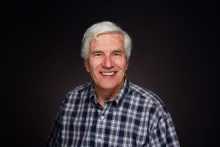
Steve Shafer was born and raised in Seattle. He graduated from Queen Anne High School in 1959 and later graduated from Ambassador College, Big Sandy, Texas in 1967, receiving a degree in Theology. He has been an ordained Elder of the Church of God for 34 years and has pastored congregations in Michigan and Washington State. He and his wife Evelyn have been married for over 48 years and have three children and ten grandchildren.

