

Robin S Webber
This transcript was generated by AI and may contain errors. It is provided to assist those who may not be able to listen to the message.
Okay, well thank you very much. We're going to remove this for a moment. Just put this over here. If something happens with this other microphone, we'll bring it back. I'd like you to all join me if you would, and let's open up the Word of God today for admonition and encouragement.
It's a very special Sabbath that we gather together. Many of us come every week. Others are with us today as guests. We come from many walks and at times different understandings of God, but on this one I think that we'll all be able to agree and understand the wisdom of God that He would have to us to understand on this day. Some of you that were in Redlands last week will recognize some of what I'm going to share with you because I'm going to share it again.
That means you're going to have an opportunity to see if you put into practice what I shared with you last week. You've heard of the Second Coming of Jesus Christ? Well, this is the Second Coming of this sermon for some of you. That is good because some of the points that I actually brought out last week are points that I've had to face in my life this week. It's one thing to be in lecture.
It's another thing to be in the laboratory of life. Let's go to Ecclesiastes 7 and let's understand what God would have us to understand. It says that a good name is better than precious ointment in the day of death rather than the day of one's birth. Better to go to the house of mourning than to go to the house of feasting. For that is the end of all men.
So often, we remember that proverbial phrase about death and taxes seemingly happening to everybody but us. But that's not the reality of life. The reality of life is stated here that that is the end of all men. Now, that sounds a little dour to begin with other than the comment about the name. But then let's understand what is mentioned here that God would have us to understand as we gather together as a people and may never see one another the rest of our lives, but for this moment we're gathered together to hear the word of God.
And it says, for that is the end of all men and the living that you and me will take it to heart. Sorrow is better than laughter. And for a sad countenance, the heart is made better. It says that the heart of the wise is in the house of mourning, but the heart of fools is in the house of mirth.
So let's understand something that we are gathered here together and paying respects to God and paying respects to a loved one. And, frankly, we would rather be doing something else today, each and every one of us, and maybe hearing about something else. But God says that there's a reason when we come together in situations like this that wisdom can incur and happen.
And so with that, I would like to give you some wisdom, a GPS, and a rudder for all of us as we move away from this gathering and we go back out and meet our Mondays and Tuesdays and Wednesdays and Thursdays and meet things that we didn't plan for, which I'll talk about a little bit later.
Because, after all, most of life, if you're like on the same tour I am in life, most of life is not what you have planned for. So we must be prepared. Sometimes all of us, at one time or another, have gone through situations and maybe a parent, maybe a minister, maybe a good friend, maybe an employer, maybe a brother or sister, recognizes the path that you're going down and recognizes that you're going down, going down, falling, falling, further and further, and there doesn't seem to be any answer in you and they come back with this phrase, get a grip!
Get a grip! And so that's what we're going to be talking about today. And we're going to be using principles that are out of the Bible about getting a grip. Because all of us, at one time or another, and please understand none of us are born with a silver spoon. And if we were in life's forces and what comes our way, it too will rust. And so we have to understand some things about this concept of getting a grip. There was an individual who, his life could have melted down in the sands of Sinai, but it didn't.
And I'd like to center on him for just a second. Join me if you would to Numbers 14 as we continue with the introduction of this message. But in Numbers 14, let's take a look at this. Somebody that you will know. And actually the name of this individual is one of the most used names for boys in America today.
Because it stands for strength. It's a very masculine name. It's a name that shows forth determination. And we notice here in Numbers 14, verse 24, and allow me to set up the stage for just a moment. This is Israel. God has promised them a land of milk and honey.
They're about to cross over. The twelve spies go into the land. They are really excited. They bring back the facts. And you know what? It's not quite what they thought it was going to be. And Israel was melting down with the news about these giants that were in the land. And they were the idols that seemed to impede them from what they had desired for these forty years. And we notice in verse 24, but my servant, Caleb, because he has a different spirit in him, and has followed me fully, I will bring into the land where he went, and his descendants shall inherit it.
This is an incredible verse. It talks about this man. It's upon the Marquis for a moment, and it says, Caleb! And what it says about Caleb is that he had a different spirit. It didn't say that he had different obstacles. It didn't say that his giants were shorter than the other giants that the other people were looking at.
But it was not that which was without, but that which was within that allowed him to have a different spirit. You and I every day do more than cross the river. We cross time. We cross the day. We cross the week. We cross a month. And each and every one of us face obstacles. Even as people of faith, people of the book, people that look to God for answers, but sometimes we ask, what is going on down here below as we face things? And it isn't that we won't face things.
We will face things. And I want to show something to you for a moment, because when we face things, we either reach for our values or we reach for our feelings. And there is a difference between feelings and values as to whether or not you are going to have a grip to be able to have the different spirit that Caleb had. Let me just show you here for a moment. I've got more than coins in my mind. Yeah, I've got the right one. There are two things that we are going to reach for when we face the giants in life. And that is simply we are going to reach for something like this.
Gene, would you come up here a second, please? I'm not going to hang you. Don't worry. It's not the obstacle we are talking about. I want you to hold onto this for a second. Would you hold onto that for a second? Just in case you slip here, hold on up here, too. This is called mentoring how to hold a rope.
Okay, here we go. Gene, hold up here. Now, would you like to hold onto this? Now, if you don't have anything else, you'd like to hold onto this, wouldn't you, if you were in a well under feet deep? Oh, yes. Sounds pretty good. Okay. Now, so far, so good. That's what the guy said when he jumped off the building. He kept on asking how it was going. So far, so good. Okay, here we go. But sooner or later, kind of get a rope burn, wouldn't you?
At least I would. Okay, now, my question is this. Hold onto this one. Oh, yeah. Oh, yeah. He said, okay. I love the testimony. Thank you very much. Oh, yeah. Okay, here we go. Now, what is the difference between this rope? You didn't know you're going to get into this when you came over to Yuma, did you? Okay, now, okay, fine. Well, when you're around Robin Weber, you never know what you're going to get into.
Okay, so anyway, you're here. Okay. Which would you rather have if you were hanging in a well? No, why is that? Stronger. Stronger well-elsted to have to it. You depend upon it because why? Because you can get a grip. You can get a grip. Oh, I can get a grip.
Yeah. Okay, feel that a moment. So you'd rather have that, right? Okay, good. Thank you very much. Had to work for that one. Okay, here's your souvenir. Okay, there you go. Well, that's what we're talking about because what happens in life—this is more fun than last week in Redlands, isn't it? For those of you that were there, this is so often what we do. We can either reach for this thin line of feelings, and woe is me, as you get the rope burn of life going down and down and down, knowing that sooner or later, the piranha down below are going to get you.
And, or you can get a grip of something that's going to hold you. And even as you get a grip of something that's going to hold you, it doesn't mean that life is going to be an escalator. You're still going to have to do your part. Please understand to hold on. The kingdom of God does not come easily, but God does give us a rope to hold on to. And that's why for the rest of this message, what I'd like to give you is simply this—five keys, five spiritual keys of getting a grip in your life.
I will share something with you. I am not up here to waste your time, and I am not up here to fill time. I am up here as a Christian communicator to encourage you and to give you information that can turn and change your life around. And so that's what I want to do as we talk and give you five points of getting a grip, just like the five fingers that are on your hand that when you get a grip, it's going to be easy.
You're going to remember this. And also, I want to mention this, I'm not going to apologize for the simplicity of these thoughts. This is not going to be high theology today. There's going to be no Greek, no Hebrew, and not even any Aramaic. It's going to be very simple. So I'm not going to apologize for the simplicity because these grips that I'm going to offer you are the power of God and the wisdom of Scripture.
So number one, here we go. Number one, simply put, whatever your problem, start dealing with it today. Start dealing with it today. It could be a spiritual issue. It could be an emotional issue. It could be a health issue. It could be any issue. You fill in the blank. You know what's happening in your life. You start today. It's very interesting when you use the word tomorrow.
Tomorrow is kind of like a double-edged word. Just like any instrument, it can have two uses. Tomorrow can be a beautiful word because something may not quite be happening today. Say, I can go to sleep on it. I can wake up tomorrow. And we can all be a little bit like Scarlett O'Hara in Gone with the Wind.
Oh, I'm too tired to read. I just can't think about it because after all, there's always tomorrow. And then, of course, the skies open up and the sun rays come through. But tomorrow is not always like that. We also recognize that tomorrow in Spanish is manana. And we talk about sometimes doing things like, okay, I'll just do it manana. I'll do it tomorrow. In other words, we are putting off life.
Tomorrow can be a beautiful word. Please understand. But we also need to recognize it can be a weapon. A weapon against God's best in you and the perfection and the completion that he is wanting to have in Christ in you.
Join me if you would in Judges 4. In the book of Judges, I want to share a story with you for a moment. In Judges 4, and let's pick up the thought in verse 1. And this is kind of the story of humanity. It's the story of the time of the Judges. We can also move the story to the time of the kings of Israel and Judah. We can also move it to the times of our own personal lives. And we recognize when we read those chapters, whether it be the Judges or the kings or our own lives, sometimes it revolves between the good, the bad, the ugly.
Depending upon the king, depending upon the judge, and depending upon us as to how we are exercising God's spirit. In Judges 4, verse 1, when Ehud was dead, the children of Israel again did evil in the sight of the Lord. And so the Lord sold them into the hand of Jabin, king of Canaan, who reigned in Hazor. The commander of his army was Cezarah, who dwelled in Heros Ha'ashaf, Hukohim.
And the children of Israel cried out to the Lord. For Jabin had nine hundred chariots of iron, and for twenty years he had harshly oppressed the children of Israel. And then it goes on to speak of the story of Deborah. Here, Israel, a covenant people, a people of the book, those that God had rescued in their time and in their collective life, for twenty years struggled.
For twenty years we're somewhat in a vacuum and not moving. And finally, after twenty years, something came about. Here they were languishing for twenty years until something got to going in their life. I guess the question I want to ask for all of you is simply this. How many years do we have left to get a grip on some of the situations that face you and me? I look around this audience.
I see people that are in the springtime of their life. I look around this audience and I see some of the people that are in the summer of their life. I see some people here that are in the autumn of their life. I see some of you that are in the winter of your life. I see myself somewhere as a recycled teenager.
No, just teasing. I see myself somewhere between autumn and winter. I just simply don't know how long I have in my life to become complete in Christ. Monyana is not an attractive word. When you look at the book of Hebrews, it continues to emphasize like the hammer of a blacksmith on an anvil again and again and again. Now is the time. Allow me to quote a gentleman named W. Buran Wolf. One important source of unhappiness is the habit of putting off living to some fictional future date. Men and women are constantly making themselves unhappy because in deferring their lives to the future, they lose sight of the present and it's golden opportunities for rich living.
So my simple question to you as one Christian to another, a friend to all, is what are we putting off? And when you're going to get to do something about it tomorrow, next week, as we come up to the next New Testament Passover where, yeah, I'll be able to take the time of March to think about it. There are approximately 230 people that are dead today that were alive yesterday, if you've read the news this morning. 230 citizens of Russia and Ukraine that had gone down to below the Sinai to one of the resorts down there in Egypt.
They boarded a plane. They were going back to St. Petersburg. The plane lifted 23 minutes into the flight, 37,000 feet up. Mechanical problems. They're dead. The question that I have for you is, do you think, however you say it in Russian, actually, where's Al? How do you say tomorrow in Russian? She speaks Czech Russian. He's Russian-Russian. Anyway, however they said it, you know, if we're part and parcel to human condition, all of us say tomorrow rather than today.
They don't have tomorrow. Doesn't the Word of God, the wisdom of God, say something about that in the book of James? Join me if you would in James 4. In James 4, and let's pick up a thought from what is oftentimes called the Proverbs of the New Testament. In James 4, and picking up the thought in verse 13, come now you who say today or tomorrow we will go to such and such a city and spend a year there, buy and sell and make a profit. Whereas you do not know what will happen tomorrow, for what is your life? It is even a vapor that appears for a little time and then vanquishes away.
Instead, you ought to say, if the Lord wills and we shall live and do this or that, but now you boast in your arrogance for all such boasting. That's why we're sharing this message with you today, and the wisdom and the power of the Scriptures. Because then we are without excuse. We have to act. We have to do something starting today, not tomorrow. You and I don't know if we're going to have tomorrow. I had a gentleman that was having another set of circumstances, went into a hospital and found out he's in stage four cancer.
Never knew it. I wonder what he's doing today and that he's going to put off two-till tomorrow. Kind of reminds me of the story of the guy that went in to visit the doctor for his checkup and results from an exam. The man came in and said, Doctor, how was it? The doctor says, I've got some bad news and I've got some worse news. He says, what do you want to have first?
He said, I'll take the bad news. Okay, that's what you want. I'll give you the bad news first. The bad news is that you have 24 hours to live. Well, the man just came completely unglued. I mean, this is horrible. He got up, ran it, and raved, beating the walls. Couldn't believe it. 24 hours to live. He says, what could be worse than that, Doc?
And the doc looked down kind of sheepishly and says, I forgot. I was supposed to tell you yesterday. I have a question for you simply put. I'm not trying to scare you. I'm just trying to be leveling with you that life is like a vapor. And none of us know, none of us know other than God, whose palms and hands that we are in. And we have to take both. Both the good, the bad, and the ugly. Join me if you would in the book of Job.
In the book of Job, let's come with me there, please, and let's pick up the thought here. Looking forward to hearing my notes. If I can find it for a second. Pardon me. I thought I had it. One second. Hmm. Guess that wasn't part of the blessing. We'll skip it. Point number two. Here we go. Simply put, whatever your problem, stop blaming other people.
It's a loser. It just simply is. Whatever your problem, stop blaming other people. A classic example of fault finding is found in 1 Samuel 30. Join me if you would there again in 1 Samuel 30. And picking up the thought in verse 1. Now it happened when David and his men came to Zieglag on the third day that the Amalekites had invaded the south in Zieglag and attacked Zieglag and burned it with fire and had taken captive the women and all those who were there from small to great.
And they didn't kill anyone but carried them away and went their way. So David and his men came to the city and there it was burned with fire and their wives, their sons, and their daughters had been taken captive. Horrible situation, absolutely. And David's two wives, Ahinolom, the Jezralite, and Abigail, the widow of Nabal, the Carmelite, had been taken captive. So, to put it quite bluntly, David had skin in this game.
His family members, his wives, had also been taken. So he was already under duress. Now David was greatly distressed for the people who spoke of stoning him. Now it's one thing to lose two wives. Now they want to stone them.
Notice what it says here. Because the soul of all the people was grieved every man for his sons and his daughters. But David strengthened himself in the Lord his God. Here's a classic case of fault finding. Instead of planning a rescue, these men were looking for someone to blame, not recognizing that they were all in it together. Here it says, And David strengthened himself in the Lord his God. He was not about to enter his own stoning party, his own pity party. But it says that he strengthened himself in the Lord.
Some things don't change. Now this was over what? 3,100 years ago. But I'm sure all of us at one time or another have had our own private pity party. And we're in a room of our own making. And there's just mirrors all the way around the room. So the only thing that you see as yourself is that you see it. And you see it, and you hear the echo, and you see the images in all those mirrors around you. Oh, poor me. Whoa. Whoa. Here I am. Everywhere I look, all I do is see myself.
How comforting. David didn't look to himself. Please understand, we've all been there. I've been in that room. I know the pity room. I know the stoning parties. I know sometimes people will put up a poster and they get out their darts. It just makes them feel good, the therapy of that.
And somehow you're getting rid of some aggression of something. Other than recognizing that the only good fight is when you start to fight with yourself and strengthen yourself in the Lord.
That's the very important part of it. Let me share something, friends. There are many reasons why things happen in our life. Absolutely. Absolutely. But there are no excuses for strengthening ourselves in the Lord. God the Father and Jesus Christ by the power of their spirit.
And start working and acting on things today. When you're blaming everybody else, when you're dealing with everybody else other than dealing with yourself, you will have no success.
Where's that rope again? Give me the yellow one. If you're blaming everybody else, you're just going to get a good rope burn. And nobody else even knows that maybe you're blaming them. Some people just go on in life. They don't even know that you're mad at them or upset at them. They don't even know you exist. But somehow you've begged yourself that they are all your problem and you're just getting the best life rope burn. And you're not getting anything done because you're not dealing with yourself. You're dealing with somebody else. Now you've heard me say many times over the years that, you know, we spend the last 60 years of our life getting over the first 20. And some of us still, some of us still, in a sense, want to strangle somebody that is dead because of some thought in our mind that our lives would have been better. And maybe there is every excuse or reason, excuse me, of why it might be better other than recognizing some of those parents that we had or some of the parents that we had were just kids having kids and they were young. And no matter how much and how many classes you take at school on parenthood or how many courses you might have, seven courses in a church on being a parenthood, it's all theory until you're in the living room, the bedroom, and in the nursery room and dealing with life circumstances every day. And that a lot of those parents just did the very best that they could, being kids themselves. And yet we want to blame parents or uncles or grandparents or bosses or teachers or, do I even dare say, pastors for something that maybe they don't even know. So, brethren, the biggest point here is simply this, is that we have to stop blaming others and take responsibility for the rest of our lives.
The past is over, the present is here, tomorrow has not yet arrived.
We have got to begin dealing with these things today. Absolutely.
Let me take you to point number three. Whatever our problem, whatever our problem, stop blaming God. Whatever our problem, stop blaming God. Let's understand that blaming others is outlined in the second point about taking responsibility for your life rather than blaming others. When we blame others as Christians and have not tackled it ourselves and begun to take a grip like that other rope, begun to deal with ourselves because that's all we can deal with, it's really a smokescreen. Let's be honest, it's a smokescreen. Somewhere in this we're blaming God.
Somehow we feel left out of the loop of opportunity and once again it removes us from personal responsibility. Let's just think about the story for a moment, and that is in Genesis, the story of Adam and Eve. God's love is so abounding and so grand and so fantastic. He created paradise for these two people. Our father Adam and mother Eve, and he just made paradise. That's what it was. Eden is paradise. They had it. You thought it was San Diego? No, it was the Garden of Eden. The finest garden, not the finest city. I believe that's the nickname down here, isn't it? It's the finest garden. They had everything.
And then we know what happened there. They made choices and choices have consequences.
And then we recognize what finally happened is that God came and walked in the garden.
And he said, Adam? He said, what are you doing? He said, well, and you know the rest of the story there. And then what did Adam do after that? Now, ladies will like this. They liked it last week in Redlands. Some things don't change over the years. Adam said, it's the woman that you gave me.
It's the woman. In other words, let's take it a second. If you hadn't created the woman, and if I had just been by myself, just minding my own business, not talking to snakes, like her, that you made, things would be so much better. Hmm. Some things don't change. Two things that you see. Adam, number one, did not take personal responsibility. Are you with me? Number two, Adam blamed God by blaming his creation that God had gave him to become complete. Interesting.
So, taking personal responsibility is so important, and that's what God wants us to do.
I shared the story last week in Redlands. I'll share it again. It was a wake-up call to me.
I'm sure all of us at one time or another, you know, after a long work week, and maybe myself being involved in the Sabbath and, you know, the activity that I do as a minister on the Sabbath, that I really look forward to Sunday mornings. Now, this was many, many, many years ago.
I told Susan that I was going to tell this story. She's heard it before. She's actually in it.
And it was a Sunday morning, and, you know, you just you wake up in the morning, you know, it's sun shining, you know, you just really kind of get to relax and, you know, hopefully no pressures, hopefully no emergency phone calls. Going to relax. She's going to take it easy. Don't have to think any big thoughts. Don't have to start preparing a sermon. Don't have to do this. Don't have to do that. Don't have to do this. And what I get to do is just kind of relax, you know. As the man, I don't have a throne, but I have a couch and I have a newspaper.
You know how that goes, ladies. Especially back then, now it's your computer. But, you know, I'm back there and I'm nestled down. You know, I'm reading like this. This is my wall. It's my wall from the rest of the world and everybody that's in the house, including my wife. I am now in the zone. I am in the man cave that has this wallpaper between me and everything else.
All of a sudden, something came up. I'm not quite sure what it was. Maybe Susan does remember it. And let's just say that the temperature in the room began to go up on this very happy day that I was thinking was going to be happy. And Susan woke up thinking it was going to be happy, but something came up. And so the temperature keeps on going up. And do we dare say the volume began to go up a little bit with focus and a little agitation? I thought, oh no, this is just not going anywhere. This is supposed to be the perfect Sunday morning and we're all supposed to be happy. This is happy day! We deal with that tomorrow. And finally, it kind of goes on. And then I finally say, in thinking I'm doing something really good and noble, chivalrous as the man, I just put down my newspaper and I said, I'll take the blame. Thinking that was going to work.
That was going to settle everything down and we could go on our on our happy Sunday. Honey, and honey, honey came before I'll take the honey. I'll take the blame. And thinking that was really going to work. It didn't work, folks. Okay, you got the. And Susan says, that's the problem.
My papers started going back up. That's the problem. You are to blame. In other words, I am wrong.
This is one of the great life lessons on a Sunday morning on the couch many years ago at 247 West El Sur. And to be blunt, folks, I'm still learning that lesson. That there's a difference between saying, I'm sorry and I am wrong and owning the situation. Because until we own the situations and stop blaming others and or stop blaming God and recognizing that it is an instrument of God to tool and die us to become complete in Christ, we're not going to grow. We'll still be looking at tomorrow. We'll still be looking at others rather than looking at today and looking at ourselves. Job 42 and verse 5. Job 42 and verse 5. That's actually what I was looking for earlier, so I'm glad we got this verse. Job 42. And for those of you that are just becoming acquainted with the word Job is some of the the oldest literature that's in the Scripture even before the writings of Moses. And we come to the book of Job here, which is right before Psalms. And let's pick up the thought in Job 2 and verse 9. In Job 2. And picking up the thought in verse 9.
Here we have the story of Job. And in the story of Job, we recognize that here was a good man, a faithful man, a covenant man with God, a man that God was, do we say, pleased with? He was a beautiful servant. But even Job had to become complete. And God allowed some things to happen to him. Things that he had not planned for. Because after all, he'd been doing quote unquote everything right. And if you do write, write, write, one plus one equals two, doesn't it? Most of the time. But there's somewhere where we have to put a blank in there for God to do some work. And we find here in Job and chapter 2, and things are going down. The kids die, the houses are blown away. He's going to have boils on him. And notice what it says here in verse 2. Then his wife, otherwise known as Mrs. Job, then his wife said him, do you still hold fast to your integrity?
Do you still hold fast? Come on, Job, just give it up. Don't be a religious goodie. Two shoes.
Say it! Just say it! Life sucks right now. That's the Weber translation of verse 9. Curse God! Curse God! What good has it done? And die.
Now please understand, all of us have sat in the same seat or on the same bench as Mrs. Job, because we ask God questions and we don't always understand what God is doing in our moments. But he said to her, you speak as one of the foolish speak.
Notice what it says there. Shall we indeed accept good from God? And shall we not accept adversity?
And in all of this, Job did not sin with his lips.
Indeed, Job had problems. Life is what's happening that he hadn't planned for. And let me share a thought here with you as Christians.
Things are going to come at us because of our making and because of our doing.
And we have to own that. Are you with me?
And also, things are going to come at us that we didn't start.
Maybe the wife started it. Maybe the adult kid started it. Maybe the employer started it.
Maybe some of you in this room started something with somebody else in this room.
And what do we do? They started it. They started it. So we expect them to do it.
Let's understand a spiritual lesson in life, friends here in San Diego, that there are things at times that we have not started, but God expects us to finish.
There are things that are going to come our way, like a snowball coming our way.
And we weren't even at the top of the ridge or the ledge to get it going.
But when that snowball comes our way, God expects us.
And here's the hard part because we didn't start it.
But God expects us to finish it the same way that Jesus Christ would. The same way that Jesus Christ did. And that's our job.
That's the completeness. That's the whole story.
There are some things that you and I have to repent of.
And there are some things that we have to deal with, with the way that Jesus Christ would.
Point number four. Whatever the problem, whatever the problem, take it to God.
With that said, nearly 100 years ago, the American philosopher, the gentleman's name was Albert Hubbard, offered this gem of wisdom.
It says this, it does not take much strength to do things, but it does require great strength to decide what to do.
This coming year, my encouragement to all of you is never feel that you cannot reach up and touch God and know that He is available to each and every one of us.
There's nothing in our lives that can separate us from God.
Susan and I had a talk this morning.
It's always good talks on Sabbath, but it's always good to have a talk on Sabbath. It's always good to have a talk with Susan, but it's good to have a good Susan talk on the Sabbath. We got exploring the mind and the heart of God.
Really, the mind and the heart of the Bible, because so often we write off others and we write off ourselves when God never writes us off.
To recognize that, yes, in the Bible, the story of the Bible is covenants, whether it be the old covenant and the new covenant. We can say yes, and you've heard the many, many sermons that have been given about covenants and how they are sealed with blood, and they are conditional.
There are conditions in the covenants.
Sometimes, sometimes, all Christians, not only in the Church of God, but all Christians, miss the mark of the power and the weight of the Bible, that God's love towards us is never conditional. Promises are conditional, but His love, His love for us, is not conditional.
Suzy and I have three beautiful daughters. They're all American girls. They're tall, all American girls. And there are times when those girls have, well, I don't have three hours.
But you know what? There is nothing that will ever shake our love from our girls.
They can make us mad as tax. I changed my words. Mad as tax. They can upset us.
And indeed, we can become disappointed. We are also very, very proud of our girls and how they've turned out. But there's one thing that never changes. Our love will always be there.
Those girls know that in their heart of hearts. And they know that their mother will always have her hearts reached out to them. And they know that their father, me, would jump over any cliff for them if they were in trouble. Now, that's why God gives us children to understand a little bit about Him. And children don't really understand that until they grow up and have children of their own that, yes, well, you might be at ease with this child in a different way than this child. And this child draws this out of you, or you draw this out of the child. It has nothing to do with love.
Oh, you might like that child here or there, a little bit different in different stages of life or different aspects of daily life. But the love thing, we have three daughters.
And that love is not divided up three ways. It's just a whole pie for each and every one of them.
That's like God the Father's love for us. It's not divided up. It's whole. It never changes. It always is. That's what makes God God. God is not only all-present. He's not only all-powerful. He's not just simply all-wise. He is all-loving. And God is love, and that love is generated and stems from Him. And it is always there. Always there. He will never turn His back on us. He will wait for us to return. He will wait for us to acknowledge Him. And He will wait for us to knock on the door and take our problems to Him. Luke 19. Join me if you would there for a moment. Luke 19. Let's take a look at why God the Father sent Jesus Christ unto this earth. And notice what it says here. This is actually the specific scriptural verse for all of the Book of Luke. For the Son of Man has come to seek and to save that which was lost. And some of us friends have been lost because we're lost in looking for love in all the wrong directions. We're looking at tomorrow rather than today. We're looking at others rather than ourselves. And we are blaming God rather than taking responsibility for our own actions. The most incredible thing that I can share with you, depending upon the situation that you are in right now, is simply to give you this really good news. And that is that you say, but I don't know if I even want to deal with this with God. I don't know if I want to share this one with God because, well, because after all, I'm the one that started it. I'm not even finishing it. I started it and I really blew it. I think we make a mistake, friends. I'm just speaking personally. I think we make a mistake sometimes in thinking that we have to work our way up to perfection or back to God. There used to be a song when I was young, and for those that are young, I was young at one time. Listen to all the good rock and roll stations.
And there were the Four Seasons, which you now know as the Jersey Boys.
And the Four Seasons had a really good song. It was called, Working My Way Back to You.
Jackie, don't start singing, okay? Okay. Working my way back to you. Babe. But that's what we do sometimes. We tend to think that we have to somehow work our way back. Heavy emphasis on work rather than experiencing God's grace. Yes, we have to believe. Yes, we have to repent.
Yes, we have to acknowledge our wrongdoing. God's big enough to handle our wrongdoing.
And we need to handle our wrongdoing rather than worrying about everybody else's wrongdoing.
Because if you do that, that's a lot of wrongdoing. Because God's not asking you to worry about everybody else. So what do we do? Even as Christians, we worry about everybody else.
And their Christianity rather than working out the life of Christ in us towards God the Father.
You know how I can say that without turning to all the Scriptures? Because you know, just think of Samson. Samson, who unfortunately was given so much by God but turned out to be a clown. He was called to be a judge amongst his people and to be an example. And yet he clowned around with the gifts of God. He made his strength a folly. And yet, at the end of his life, because the today had come and he knew it was today that he had to act, it is in that moment and between those pillars that he called out, even in his spiritual and in aptitude and everything that he did, and he prayed to God above and said, God, if you but will once honor me, now that I understand that I clowned around with your gifts, I was a fool. But you're no fool, God. Use me.
God used him. Think of the story of the thief on the cross. The thief, what we commonly call colloquially the good thief, the man that had that conversation, the man that justly deserved to be on that piece of wood, nailed like a pig to a piece of wood. And yet it is in that one conversation, the last conversation that Christ really had of any length, other than the ones that were down below, John and Mary, and we know that story, but who was he talking to at the end? He was talking to somebody that had issues, had problems, had been caught with his hand in more than the cookie jar, and was deserving of probably everything that he was getting. And yet the most wonderful, one of the most wonderful conversations, how would you like Jesus in his last moments to be looking at you and saying, assuredly I say unto you. I'm not dealing with the theological overtones of this, that's what we do too often, let's just put it over to the side for a moment. Assuredly I say unto you, this day, that's a solemn Hebraic note. It's called a showstopper. Everybody listen.
That man had gained favor, and Jesus is saying there's going to be coming a time and a way that we're going to do business together. What is holding us back, friends, from going to the source of all power, all love, and all knowing, and all wisdom, to partner with us in life, and to begin with us the strength to meet the challenges, to get that grip that you and I need.
Let's go to point number five, please include.
Whatever our problem, whatever our problem, remember that God will make everything right.
Whatever our problem, God will make everything right. Let's just simply claim a very biblical principle. It's very simple. There's no Hebrew, there's no Greek, there's no Aramaic in this, but there is relationship. God honors those who honor Him. I believe that with all of my heart and all of my being, and I love telling people that because I believe in it with all of my heart and all my being from the top of my head to the bottom of my toenails. It is a living, loving, divine principle. No matter what we've done, when we come back to God, He will honor us.
You know, even when we read the Bible, and as we understand it in the Church of God, that God has unfinished business with the house of Israel in His day and in His way. He has not forgotten.
And He will honor that whether now or in the millennium, that God does not forget the promises that He makes. God is always a God of return. That's the story of the Bible. Remember the story of Jesus in those last hours of His life? Peter was the one that didn't think he had a problem, and everybody else did. And Jesus just looked at Him. And man, it must have been like an x-ray machine. And he says, Peter, you're going down. You who boast and you look at everybody else, and you worry about everybody else, you're going down. Buddy, Pete, you're going down.
Just face it, because Satan has asked for you, and he wants to just go through you like so much wheat.
But when you return, feed me sheep. When you go through this cycle of life to become complete in me before our Father above, it is only then when you recognize what you are apart from God, and come back and knock on that door, and then understand that God will honor those who honor Him.
That then I can use you.
We have a gentleman that we're going to be paying respects to in a few minutes. And I'd like to dedicate this to Mel Helmut, and the memorial service hasn't even begun, because it just really speaks to me about Mel. Jeremy, if you would, in Psalm 23.
I'll probably speak to this a little bit in the memorial service, too.
But again, what is the point that we're on? Whatever our problem, remember God will make everything all right. In Psalm 23.
Psalm 23 is about life. It's about green meadows, green pastures, still waters, all the different chapters of life, things that come and go. It's even about valleys of death, scary places, high ledges.
And notice what it says in verse 6, Surely goodness and mercy shall follow me. With all of that said, surely goodness and mercy shall follow me all the days of my life. And I will dwell on the house of the Lord forever.
When we take things to God, understand He's going to make everything all right. I'm going to conclude by going to Psalm 18. Psalm 18, just a few pages over.
How does God make everything all right? Psalm 18, verse 32.
It is God who arms me with strength and makes my way perfect. He makes my feet like the feet of a deer and He sets me on high places. The word deer here is probably a mistranslation. It's really talking about the different animals that were in the desert there, animals whose names don't come to mind right now. We're not talking about Bambi and we're not talking about mule deer.
We're talking about the different kind of wildlife that was in the Judean wilderness.
Much like our desert bighorn sheep that we have up in Riverside or San Bernardino County, much like the rocky mountain goats that we have when we see them up on those ledges high up in the Rockies.
And He sets me on high places. He teaches my hand to make war so that my arm can bend a bow of bronze. He gives us strength that we don't have on our own because this isn't an even with these five points of how to get a grip doesn't mean it's an escalator into the kingdom. We have to do our part. You have also given me the shield of your salvation. Your right hand has held me up. Your gentleness has made me great. You enlarged my path. Thinking of those sheep again. You have enlarged my path under me so my feet don't slip. That's our God.
You know, wherever Susie and I go, we always ask God to be our partner. I say that quite sincerely.
Coming down here today, we ask God to be our partner. We just believe it. It's like He has a seatbelt and He buckles up with us. He's in the car with us. He's in us with us as we come into a room. He's with us when we're alone together. He'll be with us tomorrow. We're having a big family event and we ask God to be our partner when we deal with all the different multiple generations of our family and hopefully setting a good Christian example for them. I really believe in that. Wherever you are right now in your life, whatever your challenge, maybe you're slipping, I really hope some of the things that I have said today are going to encourage you.
These are words of life. These are values that you can take to the bank in your heart that are eternal and that I certainly believe that God wanted me to share with you today. Because I love you as your pastor. And if I do as a human being, then how much more God and Jesus Christ and the Christ who gave his life for us. It's a good day. It's a start.
Perhaps we have to deal with things that we never thought of. Things that we didn't start.
But now God has asked us to finish the way Jesus Christ would. I have a suggestion. Let's go to work. It's a good work. And let's do it with God.
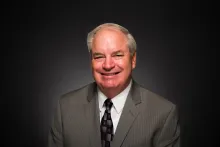
Robin Webber was born in Chicago, Illinois, in 1951, but has lived most of his life in California. He has been a part of the Church of God community since 1963. He attended Ambassador College in Pasadena from 1969-1973. He majored in theology and history.
Mr. Webber's interest remains in the study of history, socio-economics and literature. Over the years, he has offered his services to museums as a docent to share his enthusiasm and passions regarding these areas of expertise.
When time permits, he loves to go mountain biking on nearby ranch land and meet his wife as she hikes toward him.
