
Robin S Webber
This transcript was generated by AI and may contain errors. It is provided to assist those who may not be able to listen to the message.
When we are gathered in such a situation as this, I think it is important to speak to the heart of matters, to the heart of life, and that hopefully all of us can go away as better people. We're here to honor, again, God. We're here to honor, indeed, the living legacy of Gordon Barr, but we're also here to honor what God has designed and in store for each and every one of us.
Join me if you would. Let's open up our Bibles and come with me if we could. Let's go to a book of wisdom, which I think all of us need on this day in Ecclesiastes 7. Join me there if you would. Let's go to chapter 7 and verse 1 as we plumb the wisdom out of the Scriptures. It says that a good name is better than precious ointment and the day of death and the day of one's birth, better to go to the house of mourning than to go to the house of feasting, for all that is in the end of all men.
And it says, and that the living will take it to heart. Sorrow is better than laughter, for by a sad countenance the heart is made better. The heart of the wise is in the house of mourning, but the heart of fools is in the house of mirth. It is better to hear the rebuke of the wise than for a man to hear the songs of the fool.
We're here today, in one sense, yes, because of the separation to mourn. There is indeed a separation. But we're also not only here to celebrate the great and true living God and the living legacy of Mr. Gordon Barr, but to contemplate what God has in store for each and every one of us.
So the question I have for all of you on this Sabbath afternoon is simply this. What wisdom might we gain today that perhaps we didn't have when we walked into the doors this afternoon? And what wisdom might we gain that we didn't expect coming our way today? As we go out and visit our Mondays and Tuesdays and Wednesdays and Thursdays upcoming, we will have challenges that are before us that are no longer laid at the feet of the one that we're here to honor today. That individual's time has come and it has gone.
But what about for you and for me as we face life with all of its challenges, whether it is just traversing the freeways of Los Angeles, or traversing the complications of our marriage, or traversing the challenges and the opportunities that come with child rearing, or the challenges that come with on the job, the boss that will not go away, or the employee that is not listening to you, or the member that is even in the church that does not speak to you, that ignores you, that there is something between you and them? What do we do about that? How do we deal with it?
How do we cope? And that's basically what this message is about today, is offering you coping skills for life. How often have we, when challenges come our way, and indeed they do because life is basically what's happening that we haven't expected or planned for, how often do we come to that point of not being able to cope, and what is the expression that normally comes our way from a dear friend, a parent, or a minister?
Whoever that person might be, they'll say, you need to get a grip. Get a grip! And perhaps that's the best advice that one can give you. You just kind of snap you out of it and begin to say, there's something that you can do about this.
And that's what I want to talk about today, is how to cope with the life that you have not necessarily planned for or expected. Because that's life. Life on this earth and in this existence and time and space itself, of and by itself, apart from God, seemingly can seem unfair.
So how do we deal with that? How can we gain the wisdom to be able to do that? I'd like to share a story about a man that had coping skills and a man that had a grip when everybody else was coming, do I dare say, unhinged. Join me, if you would, for a moment in Numbers 14. In Numbers 14, we pick up the story of where Israel is rebelling against God.
God had promised Israel a promised land. And once they ventured into promised land, they found out that there were obstacles there. There were challenges. And as the report came back from the spies, it said, don't you know that there are giants that are in the land? And the people were basically melting, not just simply before Moses and before Aaron, but before God. They were going down quicker than an M&M on the 99 by Bakersfield in July with 115 degree heat.
There's about nothing left of them, except there was one man in Numbers 14, verse 24. And let's notice what happens here in Numbers 14, in verse 24. It says, but my servant Caleb, because he has a different spirit in him and has followed me fully, I will bring into this land where he went and his descendants shall inherit it. It's interesting God's commentary in the book of Numbers. It didn't say that Caleb was on a different planet. It didn't say that Caleb had a different set of problems.
It didn't say that Caleb hadn't seen the giants. They were all there before him. The comment that God brings down in Reader's Digest version is simply this. Caleb had a different spirit. In his mind, God had already granted the victory, and only the details had to be worked out. And I'd like to build upon that spirit that God denotes in the life of Caleb and build upon that.
And help you and help me on this day in which we gather together as family that has known one another for 34, 45, 50 years. We, the living, that still have giants, that sometimes we halt, sometimes we stop, sometimes we become paralyzed. You know who I'm talking about, and you know who I'm talking to you here, and we're all going through the same existence. And to recognize that God has something wonderful in store for us, and that is for Him to work in us past that which we fear. Past that which seems as uncopable. That creates panic. And that's what I want to speak about today.
We, on the Mondays and Tuesdays and Wednesdays, the Thursdays and Fridays, and, yes, sometimes on the Sabbath day, we're going to have to be challenged with how to cope. We're going to have to get a grip. The question is not whether or not it will come or not. And for you that have lived basically a gilded life, a silver spoon, a life of blessings without many challenges at this point, please understand, life will not ignore you. Life will come at you. And it's for an important reason, because God is going to want to see what you will be put first, and what you will reach for.
If you see my pocket bulging here, it's not because I have a frog in it, but I have a couple ropes. And the situation here, and I certainly appreciate following Brandon on his subject on prayer, is to recognize that basically all of us, when we have a need to cope, when we have a need of reaching, the question is, what are we going to reach for?
Now, I have two ropes up here, and I want you to look at this for a moment. And I realize that some people don't reach for anything. They just are paralyzed. They're like a deer in the headlights, and they go nowhere. But I have a question for you. Here's one rope. Looks like a petrified string, doesn't it? Now, if you're 60 feet down in a whale, or if you're Jonah in a whale, just teasing, would you like to reach for this, and how long would you last?
I can tell you that you have the best rope burn you've ever had in your life, and you would drown in the pool down below. So, we have an opportunity to reach for this. Or, would you reach for something like this? Something that is sturdy? Something that has a grip? Remember what the expression says? Get a grip! Get a grip! Joe? Has that got a pretty good grip? Hold on to it. Life's coming at you. Okay. And all of us. That's what I talk about.
Sometimes, that was the PowerPoint. You just missed it. You know how I'm with PowerPoints, and I'm an old teacher. I just bring up the props. And so, that's what I want to talk about today. Today, the title of this message is simply this. Five points on how to get a grip. Five points on how to get a grip as a Christian. Because Christianity is not just an escalator into the kingdom.
It is not just always walking on water. There are certain life preservers that God puts out there for us to get a grip on, to hold on to, to move towards that kingdom of God. Let me move right into them for sake of time.
I will not apologize for the simplicity of the points that I'm going to give you. For they are the majesty of Scripture, and they are the power of God. And they are very simple. They're not overcomplicated. This is majoring in the majors, not majoring in the minors.
Point number one. Whatever your problem as you leave this room today, whatever your problem, start dealing with it today. Whatever your problem, start dealing with it today. It's interesting that the word tomorrow is one of the most optimistic words, and yet it can be one of the most detrimental words, depending upon how you approach it. Tomorrow can be extremely optimistic, just like Scarlett O'Hara in Gone with the Wind. Well, there's always tomorrow. I'm just too tired. I don't want to think about it right now.
But life is not about manana. Life is what you're doing today, and when you simply move towards tomorrow, you're postponing something. And that's what I want to talk about. Join me, if you would, in the book of Judges as a scriptural example of people that were paralyzed. In the book of Judges, the story of Israel. And let's pick up the thought if we could in Judges 4 and verse 1. In Judges 4 and verse 1, it says, When Ehud was dead, the children of Israel again did evil in the sight of the Lord. That kind of flip-flop, teeter-totter, back and forth, so often in Israel's history between the judges and between the kings. There'd be a good king, there'd be a bad king, there'd be a good king, there'd be a bad king. And so often the people would follow their example rather than follow God other than a few individuals. When Ehud was dead, the children of Israel again did evil in the sight of the Lord. So the Lord sold them into the hand of Jabin, king of Canaan, who reigned in Hazor. And the commander of his army was Cesarah, who dwelled in Heroshith, Yagohim. Now, notice verse 3, because that's what I'd like to center on for a moment. And the children of Israel cried out to the Lord, for Jabin had nine hundred chariots of iron, and for twenty years, twenty years, he had harshly oppressed the children of Israel. Now things were about to change, but it took twenty years to get them going, to cope, to get a grip, and to move back towards God. To move back and to seek the answers that only God can provide. You see, the Israelites had chosen, and so often life is a choice, isn't it? And they'd made a mess of things.
And we just like the Israelites do that at times ourselves. We make choices, we can make a mess of things. There are some things that we make choices about, righteous choices, and yet also we recognize that life comes at us. Things that were not in our realm of responsibility, things that we were not praying for, but things that God has allowed. And yet the same story happens whether, are you with me? Whether you start it, or somebody else brings it into your life, God holds us as Christians to do something about it. For a Christian always rises above that which comes his way with God's help. Allow me to make a quote here. It's a quote from W. Buran Wolf. One important source of unhappiness is the habit of putting off living to some fictional future date. Men and women are constantly making themselves unhappy because in deterring their lives to the future, they lose sight of the present and its opportunities for rich living. It's very interesting that I made a comment here about Israel being paralyzed for 20 years. Let's just take that framework of 20 years for a moment, friends. Okay? I have a question for you. Do you or do I have 20 years to get to going?
Do we have 20 months? Do we have 20 days? Two of the memorial services that I'll be a part of in the next two weeks, I was speaking to those individuals over the last 20 days, individuals that I admired and respected so deeply as faithful senior citizens in the community of God. So my question just simply is, when do we start and when do we get to going? We don't know how long we have. Some of you have heard this story before, but I'll just share it with you for those that haven't, so the rest will just have to put on their seatbelt and bear it. The story about the man that went to his doctor, and the doctor received the patient, said, please come in the room, we've got to sit down, we've got to talk. And the doctor said to the patient, I've got news for you, I've got bad news and I've got worse news for you. He said, which would you like first? He says, well, Doc, why don't you just give me the bad news first? The doctor said, are you sitting down? He said, you've got just 24 hours to live. Well, the man came unhinged. He talked about the word unhinged. He got up, walked around, slammed the doors, slammed the wall, just upset, said, oh, this is just horrible, this is just horrible, I can't believe this is happening. This is horrible news. This is the bad news? Can there be anything worse? What is the worst news? He said, I forgot to tell you yesterday. Life comes at us that way. Things that we're not prepared for, things that we put off. Join me if you would. Let's go to Scripture rather than just a riddle or just a joke. In James 4, join me if you would. In James 4, in verse 13, again, James has very much the feel of Proverbs or Ecclesiastes. It's a book of wisdom that is set in the New Testament. And this is the wisdom that I would like to share with you this afternoon so that we can cope, and so that we can get a grip, and so that we can start now towards preparing God's best and perfection in us. In James 4, and let's pick up the thought in verse 13, it says, It says, Come now, you who say, Today or tomorrow, manana, we will go to such and such a city, spend a year there, buy and sell, and make a profit. Whereas you do not know what will happen tomorrow, for what is your life? It is even a vapor that appears for a little time and then vanishes away. A vapor, it's elusive. You go like this. Have you ever tried to catch air? You have a full-time job doing that. You have job security. How do you catch air? How do you catch that vapor? I know the other night, walked out, it was kind of fallish. There was kind of fog. The backlight was still on, and you could kind of see the moisture in there. And, you know, I could kind of try to grab it. But I couldn't. But I couldn't.
Instead, you ought to say, if the Lord wills, we shall live and do this or that. But now you boast in your arrogance, all such boasting is evil. Therefore, to him who knows to do good, and does it not, to him it is sin. Dear friends, the one thing that I have found in my 64 years of life is a very simple truth. Time goes on. Time goes on. We don't. And life is like a vapor. I was teasing the Los Angeles congregation last week when I was there, just how life changes your perspective on things. I had a penny, and I was telling them I had a penny drop out of my pocket on stage, and I think I was showing them about the Festival Fund, and I said, look at that penny down there. Life has something that it changes your perspective about things. When I was 14 years old, 50 years ago, I'd see that penny, and what I'd do as a teenage boy, I'd try to see how far I could kick it, just to sue it, just to kick it and see how far it would go. Usually I was in competition with somebody else that many of you would know. We were always doing those kind of things. Today, when I see a penny, guess what? I'm 64. I'm thinking of retirement one day. Not tomorrow. Don't start rumors. And I see that penny. I'm no longer kicking that penny. I'm picking it up and putting it in my pocket, all within 50 years, because life is a vapor. Life changes. And the power and the thought of the Scripture is, now is the day. Now is the time. Now is the time to develop and create that relationship with God tighter. With your mate, with your children, with your adult children, with those that something odd has come between you. Not tomorrow. Not when it's humanly convenient. But now. Now is the time. Let's go to point number two. Point number two. Whatever your problem is, you think about this, I dropped it here somewhere and I gave it to Joe. Joe, get me my rope back. We're working this out. Thank you. We have fun in Redlands. It's like this. Something you can hold on to, to help you cope, to help you move closer to God, to be more like Jesus Christ. Whatever your problem, stop blaming other people.
Stop blaming other people. Take a look at religion. Take a look at politics. Everybody pointing and pointing and pointing and blaming and blaming and blaming.
If only the other side would see it our way. If everybody was just like me, and or just leave me alone, give me some peace. The key to life is to stop blaming other people. It doesn't mean not to deal with challenges and not to deal with issues, but to stop blaming other people. A classic example of fault planning is found in 1 Samuel 30. Join me if you would there, please. 1 Samuel 30. It's a story surrounding David. Beginning verse 1, how it happened when David and his men came to Ziglag on the third day that the Amalekites, the nemesis of Israel, had invaded the south and Ziglag, attacked Ziglag and burned it with fire, and had taken captive the women and those who were there from small to great. They did not kill anyone, but carried them away and went their way. So David and his men came to the city, and there it was, burned with fire, and their wives and their sons, and their daughters had been taken captive. And then David and the people who were with them lifted up their voice and wept. You just know the emotion that comes out of the Middle East, whether it be Jew or Arab. They just were wailing until they had no more power to weep. And David's two wives, Ahhenom, the Jezreelite, and Abigail, the wife of Nabal, the Carmelite, had been taken captive. So David had skin in this game. His wives had also been taken. Now, David was greatly distressed, just in his own right, mourning for the loss of his own family. For this people spoke then of stoning him. That will even create greater mourning and anticipation. Because the soul of all the people was grieved, every man for his sons and daughters.
When in doubt, blame the other person. When in doubt, stone somebody. But what did David do? It says that David strengthened himself in the Lord his God.
David, in this moment, at this time, this Monday or Tuesday or Wednesday of his life, whenever it occurred, did not turn around on the men. Instead of looking around, he looked up. And he sought solutions from God to strengthen himself in the Lord his God.
Now, can I make a comment here? Can we talk? We realize that our friends, the Israelites, are not the only ones that have stoning parties. There are times when all of us have wanted to throw... Am I talking to the right audience? No. We have all wanted to, if not stone, turn the gatling gun on everybody else other than turn God's instrument on us. Always like the old westerns, you know, with the gatling gun. If you ever notice what a gatling gun does, you kind of go around in circles. And the only thing that does not affect us is the person that's behind the gatling gun. The person that perhaps God is having to deal with and saying that the problem starts here with you, buddy, with you, lady, with you, person. God has some unfinished business with you to complete you in Christ.
But we're never going to get there while we have our eyes on everybody else. At times, this has been a challenge in our own culture. We look at the world. We say the world. It's never just the world. It's the world. And so we look at the world where we look at people with other religions, other denominations, other folks, rather than recognizing that God has a special work in us, that He wants us to go to work on ourselves rather than everybody else. And as was once said, when a man's fight begins with himself, that's a fight worth having. It's very important. Very important. We need to stop blaming other people. I realize that in this room, we have people that at times still have issues with their grandparents that have not been dead for many years. We have people that have issues with their parents. There's a very easy thought when it comes to life and dealing with people, especially as a pastor. I've often recognized that many people spend the last 60 years of their life getting over the first 20.
And I see many of you nodding out there. And I realize that some of us at times, even as our deceased family members are now below the ground, it's almost as if we're still trying to reach them. Not necessarily in a loving effect, but in a stranglehold effect. Recognizing that when we ourselves were children, they were just slightly removed from being children themselves. And when you really go back and you think so often we that had children in our 20s, we were just a few years away from being children ourselves, dealing with our first 20 years, dealing with our issues.
And we must ask ourselves, and where does forgiveness come into this? Forgiveness is not just simply a word in the Bible. Are you with me? Forgiveness is just not a word in the Bible. It's a way of life. And it's tough sledding to give that over to God and say, Father, forgive those people, whether it be a grandparent, whether it be a parent, whether it be an employer.
And I'm not saying in that sense to be like an ostrich with your head in the ground because you recognize what is exposed at the other end. No, there are issues that you have to deal with. There are things that have to be said, but you do it recognizing that this too, as hard as it is, as hard as it is, is becoming complete in Christ. Sometimes we panic over these things, but a very basic lesson of life is that recovery lies on the other side of that which we are afraid of. It will not be on this side. It will be on the other side. Today we have the Parr family, Nakashima family, in-laws, gathering, and here. It's wonderful to see them all. Dear friends, but what about us? What will we do as we leave Redlands today, as we go back and face the homework that God has in store for each and every one of us? We have to stop blaming people. Third point I'd like to share with you is simply this. Whatever our problem, whatever our challenge, whatever our opportunity, but let's say humanly whatever our problem, stop blaming God. Some of you are going to be in a baptism class in a couple of weeks, and how exciting is that going to be? Along with personal counseling. And sometimes what happens is people, as they come into this way of life, or they are about to repent of their sins, or about to accept Jesus Christ as their Lord and Savior, they think they've gotten up to the mountaintop and there's nothing left to do. No, it's just the beginning. It's just the start. Remember when you were in high school, how they used to call it commencement? Commencement doesn't mean end, it means beginning. And sometimes what happens when people come out of the world or come out of their sins, they think, I've finally arrived. I'm on the oasis. Just me and God. God says, do this, he'll do that. And there is a great truth to that. But there's also some homework along the way. We need to recognize that oftentimes, and I'm going to speak boldly here, and personally, but I think correctly, so often when we blame other people, we don't really recognize that we're also blaming God. It's just a different way of getting around it. We get to God by going through people. You say, how can you say that, Mr. Weber? Well, we can just go back to the beginning. That's where it all started. I don't even think I need to turn that in Genesis 3, Genesis 4. After Adam and Eve had rejected what God had to offer. Oh, and ladies will know this. I always like to be on the ladies' side because 60% of the church is women. The percentages work out. What did the man say to God? You're nodding now. Yeah. It's the woman. If only you hadn't given me the woman. No wonder he was escorted out of the Garden of Eden. I've been kicked out by Eve before he was escorted out by the caribim. How often in this smile that's now on your face, especially the women, the men are going down, is that how often do we use people to get at God? And we blame people when really we're saying, God, what are you doing up there? And why did you put them into my life?
Simply put, friends, simply put, that's not going to allow us to climb the rope towards God's kingdom. And we need to understand that very much. And what's important is to recognize that that kind of attitude of blaming God doesn't just stay still, but it's passed down to other generations. Join me if you would for a moment in Genesis 4.13. In Genesis 4.13, it's almost like the flu. It's contagious. And sometimes it goes down to the next generation in Genesis 4 and verse 13. This is after Cain had murdered his twin brother Abel. Was he sorry? Was he broken up? Was he repentant? Not at all. Notice what he said. He just was more direct. And Cain said to the Lord, my punishment is greater than I can bear.
Well, who put the punishment on him? He was pointing to God. But when you point to God, oftentimes you know the old equation. There's three fingers. Yeah, they're still there. They're pointing back at you. God did not kill Abel. Cain did. Out of rage. Out of coveting the relationship that Abel had with God. And all he was looking at was the effect and not the cause. He missed the whole homework assignment of why God put people into his life. That Cain himself may put God first. But he had learned a lesson. He had learned a lesson from his parents. And it was a bad lesson because it was based on a mistake. Join me if you would in Job 2, verse 9. In Job 2. Again, an incredible saga of life. Not life of a bad person, but a covenant individual. A man that had a relationship with God. It's a story of Job reaching back as the oldest piece of literature that's in the Scriptures. And let's notice Job 2. Come with me if you could, please. In Job 2, verse 9. And this is things were beginning to beset him. It would have been so easy to turn the bazooka on God. To in some human way nuke God because he himself felt nuked with all those boils that were on him. And all of his children and all of their houses taken away are destroyed. And notice what it says in Job. And here's what happens in verse 9. Then his wife said to him, that's Mrs. Job, then his wife said to him, do you still hold fast to your integrity?
Now let's not be too hard on Mrs. Job. They've been stripped of everything. And the human reaction would be, what in the world is going on and where is God? That question that comes up when tragedy strikes.
She asked her question. Do you maintain your integrity? Just curse God. Just get it over with. Stop this foolishness. It ain't working out. And then die. Because sometimes when everything is taken away, you just don't have any reason for living. But Job said to her, you speak as one of the foolish women speaks. Shall we indeed accept good from God? Shall we indeed accept good from God? And shall we not accept adversity? And in all of this, Job did not sin with his lips. The bottom line is that God is the master potter. And you and I, in our life somewhere, in our life in some decade, gave our life over in faith and confidence to that potter. And sometimes he works with us with smooth hands and loving hands. And sometimes, seemingly, there's the thumbs that he allows to come into our life. Thumbs that we were not expected. Challenges that come our way. If you're a little bit like me, I know that all of us would like to say, well, after Mr. Weber's sermon today, I will be ready on Tuesday, about 3-10. And God, you can come at me. I will be studied up, fasted up, Bible studied up, gotten some counseling from 10 ministers. I'm going to be ready, God. It's not how life happens. Life is what's happening that you haven't planned for. Life is hearing about the grandchild that's been hit. That's always on my mind having seven grandchildren who are very precious to Susie and me. Life is about a parent that's there one day, gone the next. Life is about a challenge that comes on a day when you want to have a rest. I remember one time, a lesson, we're going to walk into the Weber household for a moment. Get ready. I remember many years ago, I must have been about 26 or 27, it was a Sunday. I wanted it to be a perfect Sunday. I wanted to enjoy my wife and enjoy our home, and it was a free day. We were just going to have a wonderful, wonderful Sunday morning. Robin stepped into it somehow. If you've ever been by a dairy, you understand what it means to step into it. I see Jackie. You know what it means to step into it. For those of you later, I'll have another message next week about stepping into it. So I thought, and Susan was a little, do we dare say, myth on steroids. Me! Me! Who wanted to just have a nice day with her? And so I put up the wall that every man put up back in the 1970s before Internet. I had my newspaper.
And I wasn't accomplishing my articles at all. I'm a real news junkie, so I'm reading and I'm reading, and Susan is sharing things with me. I'll call it sharing. She's sharing things with me. And finally, so that I continue my articles, I thought, I'm going to do something very noble. It's time to be chivalrous. And I just simply said, Susie, I'll take the blame. Thinking that fairy dust was going to come down on that. No, it didn't work, guys. All of a sudden, I said, that's the problem! You're taking the blame. You are the blame!
The newspaper came down and dropped on my knees.
Coming to terms with life is more than just simply saying that you're sorry, or to take the blame. It's about repentance. It's about a change of life before God the Father and Jesus Christ. It's about a new walk. It's about a new talk. It's about a new heart. It's about a new spirit. And it's about recognizing that change indeed begins with you. Allow me to take you to point number four. Point number four is simply this. Whatever the problem, whatever the issue, take it to God. Over a hundred years ago, the American philosopher Albert Hubbard offered this gem of wisdom. It does not take much strength to do things, but it does require great strength to decide what to do. And the decision that is upon us, that is incumbent, that we cannot pass on to anybody else, is simply this. What rope will we use? What grip will we hold? And whom will we reach to? We will either reach into ourselves or we'll reach to God. And we need to understand we need to make that decision. We need to understand, friends, that no matter where we are, and some of you have maybe been back to church for the very first time today, because of your love and esteem for the Barr family and for Gordon. And that's good and that's well, but that's just a starting point. Some of us have been away. Some of us try to do our own thing. Some of us may feel distant right now from God, from family. Somehow we feel like somehow we have to work ourselves up into some state of righteousness, into some state of being, so that we will be acceptable to God.
Your perfectness, which is a misnomer and a folly to begin with, because nobody's perfect, is a hindrance.
Wherever we've been, and maybe we've just been holding on to our own human nature rather than holding on to the promises of God, is to recognize that perfect moral character is not a prerequisite to approaching God. He gets it. He understands where you're at. That's why it says in Luke 19 to verse 10 that Jesus came to this earth on behalf of His Father to seek and to save the lost. It's not your condition down here, but it's your position before the throne of God when you pray, as Mr. Milleder mentioned, that openings happen. When you say, I've done my thing and look what it's gotten me. When you think of everybody that approached Christ, and they were not perfect. In fact, a lot of people tried to keep them away from Christ. You think of the woman that had the issue of blood back in that day and that time, that here she was a woman in that society. She had a disease. She had an issue of blood. And ceremonially, she was in that culture, in quote-unquote, that church, she was unclean. The last place that she needed to be was close to God. But that's where she wanted to be. She was beginning to get a grip on her life. We know that so often that Jesus, rather than marching in front of an army, would walk into lepers. Lepers were people that had to be 150 feet away downwind from any other person in the community. And yet, that is exactly who Christ reached out to as they approached Him and said, Heal us. Be with us. Help us to get a grip. Help us to move out of the life that has come our way.
Think of Samson. What a goofus. That's Hebrew for goofus. But I think you get the point. Squandered everything that God granted him to be the instrument of God. He was a clown. And then he was a clown to the Philistines. But in his last moment of life, he gave himself. He reached up. He couldn't look around because he was blind, wasn't he? Perfect moral character here and now is not what God is looking for. That's where he enters. Otherwise, it's by our works. It's by our design rather than His grace and rather than His involvement. But it is the very beginning of God beginning to work in us. Think of the thief on the cross. Not the bad one, but the good one. His last moments of life. The last really full conversation that Jesus had was with somebody that had been a criminal. Yet he said, in the future, we're going to do business. We're going to have something going.
In the last moment of his life, that thief got a grip, made a connection, became different. Whatever the problem is, take it to God. Point number five.
Whatever our problem, remember God will make everything all right. Whatever our problem, He'd say, I have dug myself so far down into a well, I don't know how to get out of it. Well, that's why God sent His Son, Jesus Christ. He was in more than a well, He was in a grave. For three days and three nights, and was resurrected to show the power of God. There's no place that you or I have dug so deep in our relationships with God, or with our mate, or with our family, or with our employer, or with our pastor, with our fellow members. That God does not have a purpose and a plan for each and every one of us. Let's simply claim the promise that God honors those who honor Him. And fully appreciating, fully appreciating that before we bear a crown, we've got to bear a cross. That's how it works. And that's what Jesus said in the book of Luke, that if any man or any woman is going to follow Me, let Him pick up His cross. Not the cross of Christ, which is the cross of salvation, because He hung on it and died for you and for Me. But we are to bear a burden. Sometimes it's a burden that we have stepped in all of and by ourselves. We create it by our wrongdoing. And sometimes it's something that somebody else has brought into our life. We didn't start it, but God expects us as a person of faith, a covenant individual, to finish it like Jesus Christ would. Have you been in one of those? You didn't start it, but you've got to finish it? This isn't fair, God. I wasn't ready for this. I was ready on Thursday, but it's Tuesday.
No, God wants us to finish it and to do it. Join me if you would in Psalm 18, verse 32. In Psalm 18, verse 32, no matter what path we are, head it down. Let's make sure that we have God as a partner. Let's understand that He has called us to the good. He's called us to the perfection that is in Jesus Christ. In Psalm 18, and notice verse 32.
It is God who arms me with strength and makes my way perfect. He makes my feet like the feet of deer and sets me on high places.
This deer can be translated into desert range animals that were up in the Rocky Mountains of Israel. We can also think of our own Rocky Mountains. We can think of our Rocky Mountain goats, or we can think of the desert bighorn sheep here in the San Bernardino's, or the Santa Sinto's, or the Santa Rosa's. You say, God, I don't have any room. I'm on the ledge and I'm about to fall.
Is this where you really want me? No, He's going to take us places, but that's where it starts, because He's developing a work of faith in us. And so we notice this where it says, it is He who arms me with strength makes my way perfect. He makes my feet like the feet of deer. He creates a plank and a foundation and sets me on high places. And He teaches my hands to make war, spiritual warfare, for the victory of Christ in us, so that my arms can bend above a bronze. He'll give us the strength that we don't have on our own. You have also given me the shield of your salvation. Your right hand has held me up. Your gentleness has made me great. Notice verse 36, you enlarged my path under me. You've widened that path. You're allowing me to follow Jesus Christ. So my feet do not slip. But as Mr. Milner said, as we conclude, you've got a knock on His door. You have to ask. You have to seek. You have to knock. What have we learned today, friends? As we're here to not only honor our departed brother in Christ, Gordon Barr, but most of all to honor the living God, the one true living God and His Christ. What do we hold on to? God never said that it would be easy, but He did say that it would be worth it. Just remember, number one, whatever the problem, start today. Number two, whatever the problem, stop blaming others. Number three, whatever the situation, stop blaming God. He is the only source to be able to help us. Number four, whatever the problem, don't move away from God. Move towards Him and allow Him to embrace you. And number five, remember, whatever our problem, God will make it right. How do I know that? How do I have that confidence to share with you today? Because I know the Father that I worship is the same one that gave His Son, Jesus Christ. Love personified on this earth. And whenever we wonder, God, do you really love us? Do you love me? Let's just bring it down to the singular. Remember, remember, remember, I gave you my Son for a moment so that you, in turn, could dwell with me forever.
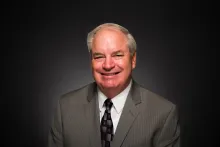
Robin Webber was born in Chicago, Illinois, in 1951, but has lived most of his life in California. He has been a part of the Church of God community since 1963. He attended Ambassador College in Pasadena from 1969-1973. He majored in theology and history.
Mr. Webber's interest remains in the study of history, socio-economics and literature. Over the years, he has offered his services to museums as a docent to share his enthusiasm and passions regarding these areas of expertise.
When time permits, he loves to go mountain biking on nearby ranch land and meet his wife as she hikes toward him.
