
Robin S Webber
This transcript was generated by AI and may contain errors. It is provided to assist those who may not be able to listen to the message.
Thank you, gentlemen, for the beautiful special music. We're going to be setting up a few things here. And then we'll get to going here for the second presentation. I want to welcome those that have just come in during the course of the first presentation. And we want to welcome you as well. Thank you for coming to the United Church of God, San Diego. I'm glad to have you. One thing I'd like to mention while they're setting up here, and that is that we are having our invitational open house today. There are many people out there that are studying the Bible, many people that are looking for the return of Jesus Christ, and having that longing and looking forward to that time when that millennial reign will be set up.
Some of you may not be aware that the United Church of God does celebrate the Feast of Tabernacles in that light and in that direction. And if you're interested about that, we're going to be having a festival site up here in Escondido next month. And for seven days plus one, we gather together about 900 or 1,000 strong.
We have many, many sites throughout the United States where people come together to simply explore the Scriptures like we are doing today, and coming to the understanding how Christ is coming back to this earth, how there is going to be a kingdom of priests, as was brought out, but a kingdom of peace as well. And you might be interested in that. And we have those maps there on the back table if you'd like to pick one up afterwards. And also in just a couple of weeks, we're going to be celebrating the Feast of Trumpets.
You say, the Feast of Trumpets? What is that about? Well, that's found in the Bible. And that is a time which we celebrate every year rehearsing the literal return of Jesus Christ. We do not simply look at Jesus Christ being a figure up in a window painted out by some Renaissance figure that stays up on the window. We literally look at Him returning to this earth as King of Kings and Lord of Lords.
And so once a year, we also do that with the Feast of Trumpets. You might be interested in that. And we also have a map as well. Well, we do appreciate the fine message by Mr. Coe well, the beautiful special music. And now we're going to be entering our second presentation as was on your sheet that was passed out to you. And it's called Five Keys to Effective Bible Study.
Everybody loves a story. So I thought I'd start out with one at least tell you about a man that was hired. And that's really good news these days when you're hired, recognizing what the unemployment situation is. But a man was hired as a clerk at a department store. And the owner came to him and he said, here's what you need to do. As I ask all of my employees to do that, whatever we do in this department store, it's got to be tied to the Bible. It's got to be tied to Scripture.
You think you can do that, young man? Young man said, oh, yes, sir, I can do that. Well, just a little while later, a lady came into the store, a preferred customer, and she came over to the counter and says, I'm looking for some fabric, something really, really special. And the young man said, I'll go and get it. And he brought it out and he laid it all out and took out all the wrinkles.
And she looked at it and said, well, how much? And the young man said, $2.50 for the fabric. The lady said, well, you know, I'm looking for something just a little bit extra special, something above what is there. The young man said, I've got it for you. Don't worry about it. You stay right here. I'll be right back. So he went behind the curtains and you saw all this motion. You heard a little noise. And what he'd done, he'd gone back there and just straightened out the fabric. He kept from behind the curtains, came back to the counter, and he laid it out.
And the woman said, it had been the same fabric that she'd seen before. The woman looked at it and said, I love it! That's wonderful! How much is that going to be? He said, $5.50. She said, I'll take it! Well, the owner of the store was looking at all of this going on. He couldn't believe it. He'd hired this guy. After the lady left, he went over to the young man. He said, sir, don't you remember what I told you?
That whatever we do here, it's based on the Bible and that everything has got to be related to Scripture. She said, well, yes, sir. You know what it says in the Bible? I saw a stranger and I took her in. Long story short, maybe you've had some of those people behind the counter talk to you. As cute as the story might be, there is a point to it. The reminder here is simply that how we internalize and how we understand and how we express the Scriptures not only has a consequence on us, but it also affects those that come into our life.
We just heard a beautiful hymn sung by the two gentlemen comes out of the Psalms, talking about how the Word of God is a lamp unto our feet and a light unto our path. Beautiful song, beautiful melody, nice words. But if we don't know how to hold the lamp and if we don't know where to shine the light, it neither serves God, serves us, and or serves our fellow man. We have a choice as to how we hold that lamp.
I'd like to talk about the matter of choices for just a second to each and every one of us, because it is very important in coming to understand the Bible and coming to understand our God, that the greatest gift that He gives us is also our greatest challenge. Mr. Coel in the first message mentioned how God had created man in His image and after His likeness, a thinking being. The one thing to understand about the Bible is that God did not create robots. He just simply didn't. And what He did and what He gave humanity that He did not give any other living creature simply this, the ability of choice.
It is called, biblically, if you want to put it down, please, it's called free will. Free will, choice, the Bible, and you. They all come together on this Sabbath day, because you have a choice as to whether or not you study the Word of God, as was mentioned.
You have a choice as to whether or not you open up the Bible or not. You have a choice as to whether or not you look at the Bible in a sense as a survey and or you are able to excavate it. And we can choose to use the Bible or not. And that's what we're here to talk about today. But in opening up the Bible on this day that is dedicated to rightfully dividing the Word of Truth, the one thing that I want to continue to implore you, which was mentioned in the first message, is an open Bible is of no value unless we are willing to open up our hearts.
And that's going to be the important thing that we're going to be needing to look at. You know, you can be given a beautiful, beautiful card. Maybe you've won a car in a sweepstakes. I have won nothing in my lifetime, even a cake in a cakewalk. Nothing! But some of you might have won a car at one time or another and you get the beautiful car and it's red and it's shiny and it's glimmering.
But if you can sit in there and you can kind of mold into that leather seating and, oh, it can feel so good. And you can think of all the places that you want to go. But if you don't have a key to start the ignition and to make that car go, you're not going anywhere. And that's exactly the power that lies behind the Bible. That we have an open Bible. I've got a Bible right here and it is open. But if our hearts aren't open, we are going to go nowhere.
One of the reasons why I want to give this message today, it's called Five Keys to Effective Bible Study. And we're going to get right into it. And what I'd like to do, I'm going to draw on this board for just a second just to raise your curiosity. I'm going to write five R's if I have the room. One, two, three, four. I'm going to have to stoop later. Okay. And five R's. Because today what we're going to do is we're going to look at five keys. And it's very interesting that each of these keys actually begins with an R. Now, sometimes what can happen is we can be out in the wilderness, as was mentioned earlier, and we might get lost.
And so, like good boy scouts or good girl scouts, they always taught you if you're lost in the wilderness, we'll look for the... You'll know where north is by looking at a pine tree, because it's on the north side of the pine tree that the moss grows. There's only one problem. Wonder if there's no pine trees. Then there's no moss growing on the north side. So what do you do? Well, as a boy scout, you're always prepared. So then you get out your compass. And it has four directions.
Well, we're going to do the compass today plus one, because we're going to have five R's. And we're going to get right into it for time's sake and move right into it. And I'm excited about bringing you these R's. As was mentioned earlier, some of us have been students of the Bible for 40, 50 years.
Some of us in this room need an awakening. Some of us need to understand how precious the Word of God is that is codified and put before us. And the words of life that are mentioned. That was brought out in the first presentation about long ago in the time of Moses, when God said, the words of life. Life! These are words of life. When you think about it, that you think about how we are as human beings, we can go so many days without water, so many days without food, so many days without this or that, some of you, so many days without Starbucks.
But that whatever it might be, there's one thing that we cannot go without. We cannot go without hope. Every human being designed by the Creator was designed with a capacity and a need and a desire to have hope fulfilled. The Bible is about hope. Words of life, as Mr. Coel brought out, and they are words of life. How many of you happen to see the movie Schindler's List? Oh, it's nice to see what the audience is watching. Okay, good. We all saw that. And there's that very famous line in Schindler's List.
And it's during World War II. It's about an industrialist that is hiring members of the Jewish community, keeping them going, keeping them out of the grips of the Third Reich. And the man that's the accountant is taking down the names. And he comes to this point where he says, The list is life. It is the difference between life and death. That's what the Bible is about. Words of life. And if we want to learn about that, then let's do that in the next few minutes here. The first hour that I'd like to give you is a direction.
Because what can happen is, I don't know if you're a little bit like me, but I'm just one of you. I can get into this book, and sometimes it can be like all Greek. And you know what Homer said about the Greeks. Beware the Greeks, bearing gifts. And so we're looking at Greek, we're looking at Hebrew, we're looking at things that are written 3,500 years ago. We see the Old Testament, we hear the Old Covenant, the New Covenant. We hear this, we hear that, the letter of the law, the spirit of the law.
And you know what? We can get lost. Well, I want to give you these five keys to help you stay on target, and to stay on the path, to know how to use the lamp, to know how to use the light, and to, whenever you get lost, you come back to these very cardinal principles. The first key is simply this. The first key that I want to give you is that the Bible is about revelation.
It is a revelation from Almighty God, the Creator of all things. It is not just simply the writings of humanity, be it in Greek, Hebrew, Aramaic, etc. This is indeed the revelation of God. Join me if you would in 1 Corinthians 2. In 1 Corinthians 2, Paul was what we might call a Renaissance individual, a man who was a Roman citizen, grew up in the Hellenic culture of Tarsus, and also was a Jew of Jews, Hebrew of Hebrews, a man that understood the law. A man that was able to, frankly, assimilate a lot of what we might just call information.
But the Bible moves beyond simply information. We live in an age of information. We live in the age that Daniel talked about, where they shall go to and fro and knowledge shall increase. But knowledge only takes us so far, friends. Knowledge that is within humanity takes us 7 feet, 1 foot forward and 6 feet down. Rack them up, count at 1 plus 6 equals 7. That's as far as human beings will go of and by themselves with information and using their gray matter.
But there's something else that's happening down here below. There is a purpose, and we find that in 1 Corinthians 2. Here's Paul having experienced every facet of intelligentsia in the first century AD. And he comes to 1 Corinthians 2 and in verse 6, However, we speak wisdom among those who are mature, yet not the wisdom of this age, and rulers of this age who have come to nothing.
Rulers like Alexander, who had been trained by Aristotle, who had been trained by Plato, who had been trained by Socrates going back. That a ruler like Alexander had his best, died a miserable death after having conquered the world, but he could not conquer himself.
Paul is aware of this. But he says, but we speak the wisdom of God in a mystery, the hidden wisdom which God ordained before the ages for our glory, which none of the rulers of this age knew, for had they known they would not have crucified the Lord of glory. Notice verse 9 now. Powerful. I has not seen nor ear heard, nor has entered the heart of man the things which God has prepared for all those who love him.
Verse 10 now. But God has revealed them to us through his Spirit, for the Spirit searches all things, yes, the deep things of God. Understanding the Word of God first and foremost, friends, does not depend upon your abilities. Now, those will come along, and we're going to be talking about that in a very factual, informational manner in the classes this afternoon. But let's always remember, a study of the Bible comes by first appreciating it is the revelation of the Almighty.
The revelation of the Almighty. Have you ever gotten excited with some of your family members or a neighbor? Maybe you're in school. I see some students down here, and you get together to have a Bible study, and you open that Bible and say, do you see that right there? And you say, look at that!
And it's just like it's blazing, you know, it's just like, whoosh, just glowing! You say, look at that! It is so obvious! The other person, uh-huh, really? Let's go to Starbucks. Study's over. Why is that? Because sometimes, friends, we just don't take the words of life and the life that they're given, that God chooses to reveal Himself to individuals, and that's something that we need to understand. Join me, if you would, in 2 Timothy 3 and verse 15. We pick up another verse that's very important to recognize about revelation.
And revelation is a Latin word that comes off the Greek word apocalypse, which means an unveiling, an unwinding, a releasing of information. When the Bible talks about mysteries, it doesn't mean cloak and dagger, like a cloak and dagger mystery, or something that will never be understood. The mystery or the mysterion, as it's mentioned in the Greek, moves us to the thought of an unveiling, an opening, moving to a conclusion that God is revealing something to people.
We notice in 2 Timothy 3 and verse 15, you're there, I am not. Good Bible students. We notice a very powerful Scripture. Actually, verse 16, pardon me. All Scripture is given by inspiration of God and is profitable for doctrine, for reproof, for correction, for instruction and righteousness. Now, the way that it's put here in the New King James Version of the Bible is given by inspiration. That's exciting. But when you go to the Greek base of the word, it's even more exciting.
It says that all Scripture is God-breathed. God-breathed. Can you picture God breathing on you, feeling that essence pouring out on you? My wife and I, we live up in the Inland Empire. There are times when you move into air conditioning, especially this time of year, you're being breathed upon.
It feels so good when it's been 110, 112, 114, for a week. And you feel those currents beginning to move on you. You just take an air bath as you move into the super-target store. You just stay there. You just feel this current just coming on you.
Well, imagine God breathing on you. Breathing not only air conditioning, but life.
Knowledge of eternity about eternity. Knowledge about relationships. All Scripture is God-breathed. Join me, if you would, for a moment when we begin to understand the magnitude that the Bible is God's revelation. We find something over here in the book of Ezra that's very important. Ezra.
And let's take a peek at verse 7.
Ezra 7, verse 10.
Here are people that had had a knowledge of the law. People that had now returned to Jerusalem. They had been in 70 years of captivity. These were people of the Covenant, people of what we call the Book. We might say God's people. But there needed to be a reawakening now because most of the people that were in Babylon did not go back to the land. Only by the tithe of the people went back. And so they needed encouragement. And we find in verse 10, For Ezra had prepared his heart to seek the law of the Lord and to do it and to teach statues and ordinances in Israel. Very interesting. Key words are simply this. He prepared his heart. As we heard about the kings of Israel earlier, the preparing is so important. And it's important for us, some of us that are hearing these words for the very first time today and have had heard it before, but maybe not prepared our hearts. Why is it so important that we prepare our hearts to receive the revelation of God? Let's talk about that for a moment. Many of us bring many preconceived notions to the table of learning. It can be our family ways. It can be our personality. Our personality may be very black and white. Otherwise, on the other side, conversely, our personality might be very, very abstract. And we are all over the place. It may be the part of the country that we're from. It may have been what we were taught in Sunday school. It may have been what we were taught on the knee of our grandmother and our great-grandmother and how they viewed God, how they experienced God. And so we have to look at that and think about it. Some of us may approach the Bible with just one set of lenses. I'm glad I have two lenses and not just one. It gives me a fuller view. These are bifocals, so I can see all of you and I can also look down at the same time. Sometimes people just approach the Bible with just one set of lenses, though. They look at it as, A, just a book of love. God is love. And so they just look at it simply as a book of love. Other people, by the way that they are conditioned, they look at the Bible in a very literal black and white manner. They just simply look at the Bible as a book of law, a book of do's and don'ts, and heavy on the don'ts. Some people just look at it through the lens of apocalyptic literature. They just simply look at it through the lens of prophecy. Now, I have a question for you, may I? Is the Bible a book about love? Absolutely. We heard about that in the first message. Is it a book about do's and don'ts? Yes, it is.
Is it a book about prophecy? Yes, it is. But if we only look at it with one lens, the revelation of the Almighty with one lens, we are basically going to be dealing with it in a hit and miss fashion. And when you deal with things in a hit and miss fashion, have you ever noticed? You normally miss more than you hit. Let's come to understand something very emphatic about this.
The Bible is a book about revelation. It is not just simply the words of man and a scribe. Very important. When we come to understand that cardinal point, God promises you something. Join me if you would in Matthew 5, last verse on this specific point. In Matthew 5, in what is commonly called the attitudes or the beautiful attitudes, let's notice what it says here.
Actually, I'm going to go up to verse 6. It says, blessed. Oh, who does not want a blessing? That's a whole study in the Bible itself about blessings and how much God wants to bless us. Blessed are those who hunger and thirst for righteousness. And notice what it says, for they shall be filled. Now, there's just something in Bible study that you look at. God gives a blessing. He sets a provision. He says, they shall be filled. That's a provision that He is going to carry out. If we take God at His word, He will fill us. Let's go to the second point here. The second point I'd like to cover with you this morning is simply this. Relationships. You're going to hear a lot about relationships. It was brought out in the first presentation, and I'd like to bring that out for a moment. Probably going to bring it out even a little bit more emphatically, even though I think Mr. Koaw was fairly emphatic. We're going to even be more emphatic about this. In training with the compass, for us, for we that have been Boy Scouts, Cub Scouts, We Blows, or anything in between, Indian Guides, in training with the compass, the key direction is north. Likewise, when we get lost or wandering in Scripture, look for relationships. That's very important. I can get lost in Scriptures. I can get lost in the book of Numbers. I can get lost in the book of Chronicles. I can get lost in different books of the Bible. In your studying, when it all begins to blur, or it's not making sense to you, stay with this key Bible study item. Just as you look for north on a compass, always look for relationships in the Bible. Look for them. Now, please understand something, if I may. They may not be necessarily in that verse, but they may be in the verse next to it. They may be in that chapter. Look for the relationship. Everything moves off the relationship. The relationship is from whence the energy comes. Very important in study. The relationship that God desires with us, which was brought out in the first presentation. Everything stems from the revelation and the relationship, not vice versa. When you do the vice versa thing, you will not have a relationship. And or you will not have the fullness of the relationship or the power of the study that God desires us to have. Especially when you recognize that God has called us to relationships, as was mentioned. But why did God develop relationships in the Bible? May I answer that? So that we can experience His love.
And when you understand what the love of God is about and what it is like, and how it flows towards us and overtakes us and envelopes us and secures us.
It's something that we all want to experience. Let me show you how this works for a moment in looking for relationships. Let's just go to Exodus 20.
In Exodus 20.
Who can tell me for a moment what you think you're going to find in Exodus 20?
We'll go interactive here. What is in Exodus 20?
The Ten Commandments.
How long have you all been in? No. That's good. It's the Ten Commandments. That means what? It's the rules! There they are! The do's and the don'ts.
The rules. And nothing but the rules.
If you're just looking for rules, rules are all you're going to find.
And I feel very sorry for you.
Are rules bad? No, because that's going to be point three. We're going to get to that in a moment. But let's show how it works. Exodus 20. We have a problem sometimes in churches where they just teach us the short form of the commandments. Short form of the commandments. First commandment is, you shall have no other gods before me. That's a rule and you better not break it. Or it's all over.
Now, let's use the second key of Bible study. Relationships. What did I tell you? True North Principle. Always look for the relationship. Don't stop until you find it. In this case, it's just one verse in front. Notice. Exodus 20, verse 2.
I am the Lord your God. That is an introduction of relationship.
What God? I'm the one who brought you out of the land of Egypt and out of the house of bondage. It wasn't Moses. It was me. Because I have a purpose for you. I want to have a relationship with you. See how quickly this can go? We've gone from rule to relationship. We bring it together.
When you do that, there's going to be more power in your study. Let's go to Leviticus 26, verse 12. Again, the power of relationships throughout the Scriptures. Leviticus 12, verse 12. Leviticus 26. Let's pick up the thought in verse 11.
I will set my tabernacle among you and my soul shall not abhor you. I will set my tabernacle among you. I mentioned that. Verse 12. And I will walk among you and be your God, and you shall be my people. I am the Lord your God who brought you out of the land of Egypt, that you should not be their slaves. Notice this theme here. I will walk among you and be your God, and you shall be my people.
I have a question for the audience here. How far does that harken back to where God wanted to walk amongst humanity? Where does that begin in the Bible? It begins in the book of Genesis. God was where? He was in the garden.
And it says that what? He was walking. He was looking for his two would-be disciples, Adam and Eve. He wanted relationship. But that relationship was jettisoned and rejected by humanity. What happens at the end of the book? Book of Revelation. Once again, you find God in Revelation 21 and 22 coming down amongst the people, being in the middle of the people. Why? Because he wants relationship. A fundamental key of understanding and exploring the Scriptures, staying anchored, staying to the trunk of the tree and not getting out of the branches and the little limbs, is look for the relationship.
When Jesus introduced the model prayer to his disciples, which was a very Jewish rabbinical thing to do, the Jewish rabbis of old all had a teaching or they all had a prayer. So the disciples came to Jesus, the rabbi, and said, well, how ought we to pray? And he said, when you pray, say this. And where does it begin? Our Father, which art in heaven. That's very important for some of us to recognize when we study the Bible because let's be frank, especially in 21st century America, where there is more and more breakdown of the moral fabric, which breaks down the family, to recognize sometimes the dysfunctionality that has occurred in families and our ability at the human level not to have relationship.
For some of us, it comes very, very hard because of a father, because of a mother, because of a husband, because maybe of just wrestling with ourselves of thinking, how could anybody love me? How could anybody possibly want me? How could I be included in God's plan? Look, friends, for the relationship and prepare your heart. It doesn't say to prepare your past, but prepare your heart to receive the love of God that comes to you through revelation and relationships.
A cardinal principle of my own congregation has heard this many times here. I'll simply put it this way. Rules without a relationship is like a postcard without a stamp. It's not going to go anywhere. It's just simply not going to go anywhere. If we just simply look at the Bible for rules' sake, we're not going to go anywhere. We will be rulekeepers. We will be law-obeyers, of which we ought to be. But we will not have the richness of the relationship that God desires for us, which takes us to the third key.
The third key now goes to rules. When looking at the Bible, we do want to look at rules, and rules do have a part of it. You can have the shiniest new car to drive on the road, but if you don't have the instruction manual, good luck.
All of us at one time or another have gotten a car, new car, used car, whatever car, and we open up that glove compartment. It's one thing to have something on four wheels, but you have to know how to best run it. God has given us a gift, and it is a gift. It's called eternal life. It doesn't come by good rulekeeping, because it is the gift of God.
There's nothing that we can do of and by ourselves to obtain that by what we do. It's by the grace of God and His goodness. But nonetheless, we have a responsibility to yield to Him and to do what He says in the book. Join me for a moment to show you a few verses here, Genesis 12 and verse 1. Abram, or Abraham, is often called the father of the faithful, but he also did what God asked him to do. In Genesis 12 and verse 1 is one of the great stretches of Scripture. Now the Lord had said to Abram, Get out of your country from your family and from your father's house to a land that I will show you.
God gave Abram a job. He gave him a rule. Let's put it that way. You are to go. One of the great stories in the Bible, because at that time, all of humanity was coming into the river valley. The river valleys of the Middle East. People were collecting along the banks of the Tigris and Euphrates in the Nile. The highways were plenty full coming in.
But God told this man, You turn your vehicle around and you go out. Now some of you that are out here that drive up and down the 15 at times during rush hour, you know what it's like with all the traffic either going out in the afternoon or all the traffic going in in the morning. But could you imagine all the traffic going into downtown San Diego with all of its business, with all of its hubbub, and there's only one vehicle going the other way out of town away from civilization?
Abraham, the man of faith. And it says that in the book of Romans, it says that Abraham was counted, approved of God, not by what he did, though, but because he believed. It says that in the book of Romans. But I want to show you something else that's interesting. Genesis 26 and verse 5. In Genesis 26 and verse 5. Yes, Abraham was the father of the faithful. A revelation had come to him. He began to understand that God wanted to have a relationship with him.
The relationship was based on believing in God and having faith. And because Abraham made God his sovereign, he therefore adhered to what the government told him to do. And it's very interesting in Genesis 26 and verse 5. It says, Because Abraham obeyed my voice, kept my charge, my commandments, my statutes, and my laws. The man of faith, the man that had the revelation, the man that had the relationship, was also a man that followed the rules. Some people today make the mistake of looking at the Bible simply as a love story. And so all you need to do is love God because God loves you and everything else will work out.
Well, that's a little bit like in a marriage when you see two young kids and they get married. And you know they have not really thought it through, and they think that they're going to just simply what? Live on love. Now, I have some people out here that have been married for many, many years. And you have to realize that as you are married, you cannot just simply live on love. There are rules of engagement. And Jesus Christ is our suitor. He's our fiancé. He's preparing to marry us, and there are also rules of engagement. Join me if you would for a moment in Psalms, and we'll go to the next point.
Psalms 119 to show you how this works. Psalms 119, and let's begin in verse 169. Psalm 119, 169. Let my cry come before you, O Lord, and give me understanding according to your word. We're talking about the revelation. Let my supplication come before you and deliver me according to your word. My lips shall utter praise for you. Teach me your statutes. My tongue shall speak your word, for all of your commandments are righteousness.
Now, notice verse 173. Let your hand help me, because I have chosen your precepts. In that set of verses, there is revelation. There is a relationship. David makes a choice to keep the commandments of God, and as he does, God's hand helps him. One thing that we want to understand through all of this is to recognize that with revelation, relationship, and rules, it begins to anchor.
Let's go to point number four. The fourth key is to focus on rewards that are in the Bible.
The fourth key is on rewards. The end result of godly revelation, of relationships, and yielding to God's rules is a reward. From the beginning, God speaks about rewards in the Bible. Some of the oldest literature in the Bible, going back 3,500 years, is found in the book of Job. In chapter 14, where Job says, I will be in the grave, and I will await my change. It is the first thought of resurrection in the Bible. That a reward was there. It goes all that far back. Deuteronomy 30, verse 19, let's turn there for just a second. Again, the aspect of reward to a covenant people. I call heaven and earth as a witness to you this day, that I have set before you life and death, blessings and cursings. Therefore, choose life that you and your descendants may live. A key to understanding the Scriptures is that of reward. Reward is very important in the Bible. In Numbers 6, verse 23, join me there for a moment. In Numbers 6, verse 23, here's the children of Israel. They come out of Egypt. They come out of slavery. And notice the kind of God that they were worshipping. And the Lord spoke to Moses, saying, speak to Aaron and his son, saying, this is the way that you shall bless the children of Israel. Say to them, the Lord bless you and keep you. The Lord bless you and keep you. The Lord make his face shine upon you and be gracious to you. The Lord lift up his countenance upon you and give you peace. And so they shall put my name to it, and I will bless them. Now, you think about this for a moment, that when you look in today's age of moral relativism, where I'm okay, you're okay, what you want to believe is like what I want to believe, and we all wind up in one place, totally false. We worship a God that wants to bless us. Doesn't want our children and child sacrifice. Does not want us worrying about lightnings and thunderbolts. We worship a God that wants to bless us. And when you read this, you recognize that it's not just a one-time event, but it's an existence. When you bless them with the thought that this is going to continue and continue. Now, this is very important because some people read the Bible, and what happens is they get stuck in what I call a health and wealth gospel. You name it, I'll take it. And that's not what the Bible is about. Romans 8, 16, that's not what we preach in the United Church of God, San Diego. Join me if you would in Romans 8, verse 16, to understand what the ultimate reward is. Romans 8, verse 16. Because this brings together, again, relationship and reward.
The Spirit Himself bears witness with our spirit that we are the children of God. Relationship. And the Spirit bears witness. There's the revelation. And if children then heirs, heirs of God, and joint heirs with Christ, if indeed we suffer with Him, that we might also be glorified together. For I consider the suffering of this present time not worthy to be compared with the glory, which shall be revealed in us. For the earnest expectation of the creation eagerly waits for the revealing of the sons of God.
This is a mistake, friends, that some people make. They get hooked into a health and wealth gospel, that they worship a God that has all of the goodies. If I do this, then God has got to do that. If I punch the button here, then God's going to punch the button there. You hear that on television. You read that in articles. As if the kingdom of God is now here in all of its fullness. That's not true. We're passing through. This life is but temporary. The kingdom of God and its fullness is yet in the future. The Bible and its ultimate reward is not about physical goodies or physical deliverance alone in this lifetime.
Can there be physical blessings? Absolutely. Absolutely. There can be physical blessings. There can be healings. I am a product of divine healing. I didn't say divine birth. I said divine healing. I know that I was healed by God. Miraculously. Absolutely. I believe in divine healing. But, barring Jesus Christ coming back in my lifetime, I will die at one time or another. Does that mean that God is down on me because He's going to let me die?
No. If you study the Scriptures, it says it's appointed unto all men once to die. We read that. Romans 3, 23 says it's appointed unto all men once to die except me. No. Paul, who had had incredible interventions by God, came to a point where he had that thorn in the flesh. And he went to God three times, in 2 Corinthians 12, three times to ask God for that blessing and that removal of whatever was plaguing him. And he finally had to come to the point that God's grace was sufficient. It was enough. Just experiencing God, His love, and God had come into His life was enough, and He had to accept that.
We need to come to understand that rewards is an anchor of Bible study, but we have to understand what the great reward is. Point number five. I'm going to go down way low here, and that is responsibility. Responsibility. That's the fifth key. We can talk about revelation, relationship, rules, reward, but we have to get into the book.
A lot of people think they know what's in the book. A lot of people sincerely believe in the rapture. Absolutely. Books have been written about it. But find me the word rapture in the Bible. Many people believe that Christmas is found in the Bible. I will give you one million dollars if you can find the word Christmas in the original text in the Bible.
I didn't say the story of Christ, the birth story. I said Christmas. But everybody says, it's right in there. Grandma knows it's right in there. Great-grandma really knew it was in there, and we just know it's in there. Jesus, time and again, in his earthly ministry, setting us an example, said, It is written. Or have you not read? He did this with spirit beings. He did it with human beings. He did it with Lucifer, who tried to tempt him. And he went back again and again and again in that temptation. He said, It is written. It is written.
It is written. When the religious folk, you know, sometimes religious folk are the most fuddy duddies. They get real serious about what they think is in the Bible, but they haven't read it. But they want to impose all of their rules on other people. Everybody was becoming today what we might call hyper. Look what your disciples are doing. They're picking grain on the Sabbath. What did Jesus say?
Have you not read? And he took that religious community back to the time of David and what David and his men had done. There are many things that we think that are in the Bible, but we haven't explored it. We haven't understood it.
We have not applied it correctly. We have not rightly divided the word of truth. We have not been diligent. Well, that's what we're going to pick up this afternoon. We've had a wonderful morning of presentations anchored on to realize that each and every one of us can study like a king. Not just simply to look at olden times and fossilized kings of old and what they did, but to recognize when you read the Bible, to recognize that you and I are being groomed and prepared, not because of what we look like or our innate ability, but because of God's grace, that He is calling us to be kings and priests.
And this is the manifesto that He wants us to study by. And as we do then, we need to anchor all of our Bible study in these areas to recognize that it's a revelation, to recognize that it's about relationships, to bring in those rules. They are important for the engagement of a loving relationship with God and with one another, for the rewards that God wants to give us, and to recognize that all of it has to come in that sense by our own personal responsibility.
So we're going to break right now. We're going to have Mr. Star Wars come forward. Now, this afternoon I want to prepare you. We're going to have a nice lunch. We're going to be right back in our seats at 1.30 because we have to keep this going. When you have these all-day presentations, that verse kind of comes to my book of Revelation. He that endures to the end, the same shall be saved. So we want to keep everything moving, but what we're going to do when we're going to come back, we are going to go into very technical keys.
I want to share something with you. I guarantee you that you will never look at the Bible the same when you take the two presentations this afternoon. We are going to go into the nuts and the bolts of how to study the Bible class.
I taught this at college. We're going to be dealing with this. It's something I really enjoy sharing with people. We're going to be able to take off our coats. Gentlemen, you can relax that way. Ladies, you come back and take off your earrings. It's going to be class time. I want everybody to relax. It's going to be study. It's going to be interactive, but I can guarantee you this. I'm going to give you eight points over the course of those two presentations that will change the way that you look at the Bible and hopefully for the better.
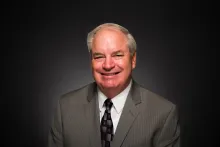
Robin Webber was born in Chicago, Illinois, in 1951, but has lived most of his life in California. He has been a part of the Church of God community since 1963. He attended Ambassador College in Pasadena from 1969-1973. He majored in theology and history.
Mr. Webber's interest remains in the study of history, socio-economics and literature. Over the years, he has offered his services to museums as a docent to share his enthusiasm and passions regarding these areas of expertise.
When time permits, he loves to go mountain biking on nearby ranch land and meet his wife as she hikes toward him.
