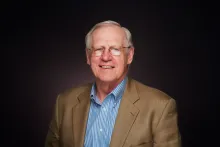


Robin S Webber
This sermon was given at the Branson, Missouri 2008 Feast site.
This transcript was generated by AI and may contain errors. It is provided to assist those who may not be able to listen to the message.
Good morning to all of you. Well, they've turned the lights on and you all disappeared. My wife and I have certainly enjoyed working with the youth this year. We've been privileged to coordinate with an excellent staff the Festival Youth Instruction. And so right about now it looks like, okay, I think I see some of them coming back. We just got about 90 young disciples of Jesus Christ crossing the highway coming from Sadie's and Quality Inn.
So it's been a delight to work with these young people. They really are cute little kids and it's such an enjoyable opportunity. We've also had fun working with the teenagers. We went to the Family Fun Factory a few days ago and I played laser tag for the very first time in my life. It's a pretty neat little game.
They give you a phaser and then you go laser other people with your phaser. And my name was Crush. It was a Crusher Crusher. It was Crush, which is a verb. But when I looked at my score, it was more, a verb can be active voice, passive voice. Certainly it was in the passive voice. I was the one that was being crushed. But they print out this little souvenir for you. I was remarking to some of them, I'm glad I'm working for the forces of good rather than trying to be on the other side.
It wouldn't do very well. We certainly had a lot of fun with all of that. I do want to thank you, teenagers. You really set a tremendous example there at Family Fun Town. I think the staff was bracing themselves for 75 terrifying people to show up. But they were just so amazed at your attitudes, the respect that you showed. I kept hearing the words from the staff and from the owner, your kids are different. They're so respectful. And so I appreciate the wonderful example that you teenagers set for all of us. God is the one that gets all the glory because He's the one that makes it all happen.
But you teenagers were cooperating with God. You were cooperating with Jesus the Christ. And your light did shine there. You were very respectful, and they made a lot of comments about that. I'll start with my title, first of all.
And the title of my sermon is, How the First Coming of Jesus Christ Foreshadows the Kingdom of God. How the First Coming of Jesus Christ Foreshadows the Kingdom of God. Now, I'll start my sermon with a quote from William E.
Gladstone. And he is considered to be one of Britain's greatest Prime Minister, certainly of the 19th century. And he served with an under Queen Victoria. William E. Gladstone said this. He said, We look forward to the day when the power of love will replace the love of power. Then will our world know the blessings of peace.
Wow! Pretty profound statement. And the day is coming, and the power of love will replace the love of power. Now, when we're in an election year, I'm going to try to behave myself and not get real political. But I think we could say that during the election year, every two years we're treated to this, four years for the presidency and the two years for some of them in Congress, that people love power.
I think we would have to agree with that. They love power. But the day is coming when the love of power will be replaced by the power of love. And that's what the kingdom of God is all about. That's what the kingdom of God is all about. So let's take a look at some of the key events that were surrounding the birth of Jesus Christ, the very early days of Jesus Christ as He first came to this earth.
And how do these events relate to and symbolize and even prophesy some of the things that will be happening at the Second Coming of Jesus Christ? Let's start with the angel Gabriel, first of all, Luke chapter 1. These are some really amazing stories when you look at them. It's just incredible what's going on here.
Gabriel is sent, Luke 1 and verse 26, in the sixth month of Elizabeth's pregnancy, she's sent to this virgin, verse 27, a young teenage girl. And historians and commentators think that young Mary was somewhere between, what, 14, 15 years of age, maybe 16, and just a very, very young girl.
And Gabriel said this in verse 31, Behold, you will conceive in your womb and bring forth the Son and shall call His name Jesus. He will be great. There's more to the story than just his first earthly ministry of Psalm 33. He lived for 33 and a half years. He will be great. And he will be called the Son of the Highest. And the Lord God will give him the throne of His Father David. Now those are big words, big words. You know, He's going to sit on the throne of King David. That's an awesome statement. And He will reign over the house of Jacob forever, this little child of yours, born to a teenager.
He will reign over the house of Jacob forever. And of His kingdom, there will be no end. Well, Mary was puzzled about that and she asked some questions, quite puzzling. And she really didn't really... she was going to make a commitment. She didn't really know all about that commitment. But she summarized it by saying in verse 38, Behold the maidservant of the Lord. I'm just God's servant.
Let it be done to me according to your word. Of and by itself. That's an amazing statement for anybody, let alone a teenager. He says, you know, it sounds incredible. I'm God's servant. I'm committed to serving God. Let it be done according to me according to the very word of God. So that's an incredible statement as well. But let's just stay with the story of Jesus Christ and the fact that He would be sitting upon the throne of His Father David. And let's turn to the Old Testament, Isaiah chapter 9, and take a look at the similar statement.
Where it came from, where it came. In Isaiah chapter 9 and verse 6. For unto us a child is born, unto us a son is given. Now if you happen to have the new King James, you'll see that child is capitalized, son is capitalized, because they recognize they're talking about Jesus Christ. And the government will be upon His shoulder.
The government of the world will be upon the shoulders of Jesus Christ. And His name will be called Wonderful, Counselor, Mighty God. Isaiah 9 and verse 6. Everlasting Father, or the one who is the author of our salvation, the Prince of Peace.
Christ is coming as the Prince of Peace. Of the increase of His government and peace, there will be no end. No end to the government of Jesus Christ. No end to world peace.
Upon the throne of David and over His kingdom. And we'll go again, the throne of David. To order it, to establish it with judgment and justice from that time forward, even forever.
The zeal of the Lord of Hosts will perform this. God says that it was going to happen, and indeed it will happen. Now those are wonderful names of Jesus Christ. And we should ponder those names. We should think about those names. Because that's how Christ is going to be recognized. Eventually, maybe not right away, but as the kingdom begins to unfold, that's how He will be recognized. Let's turn to Matthew chapter 1. I'll look at the story in brief in the book of Matthew.
Matthew was written, I've heard various reports, maybe in the 70s or 80s AD.
The epistles were actually written before the Gospels. But the point I'm trying to make is, if you were a Jew and you were picking up the book of Matthew for the first time, this first verse would just astonish you. The book of the genealogy of Jesus Christ.
Now Jesus means God saves. That's what the name Jesus means. God saves, or God is salvation.
Christ means anointed one. Messiah anointed one. So therefore we have God our anointed Savior. That's what Jesus Christ means. That's what that name means. God, our anointed Savior.
Wow, what a powerful statement. The son of David. There we go again. The son of David.
The son of Abraham. Now to a Jew living in an oppressed land, and Judea at that time was just being beaten down by the Romans, and beaten again, and beaten down again. And we read the stories of what have happened to the Jews under the Roman boot, under Roman occupation.
You might just say the the the streets of Jerusalem and other cities in Judea just ran with the blood of Jewish people who defended their faith and their belief, whether it be the Sabbath, Holy Days, they wouldn't eat pork. They would die for those things. They would die for their beliefs.
And it was a nation that really suffered under the Roman boot. Now we don't have any idea what it was like to live in an oppressed land, in a beaten down. We're Americans. We're free. We don't have a clue of what it was like to live in oppression. Well, maybe my wife and I had just a tiny little clue because we were privileged in 1985 to keep the Feast of Tabernacles in Poland.
And that was in the days of the Iron Curtain. That was in the days of Russian oppression of Poland.
And it was kind of creepy. I mean, hey, we're Americans. We're free. We go where we want. We do what we want. Not in the Iron Curtain. You land in Warsaw. Everything is gray. The airplanes are gray. The buildings are gray. The concrete is gray. Everything's gray. The uniforms are... Well, maybe they were olive drab green. Even they look gray. Everybody had... Well, everybody. All the Russians had guns. It's strange. I mean, like guns, guns, you know, AK-47s.
And they never smiled. They'd watch you. They never smiled. They'd escort you to the hotel.
And the whole idea was, you know, you're an occupied country, you know. And you had to be very careful. I like to tell jokes. You know, I like to tell wisecracks. I left all my wisecracks somewhere else. They had ways of letting you know you were in occupied land. There would be times we would be taking bus tours of various castles in Poland and that type of thing. And you'd come down from your room. You know, I mean, the clerk and all that, they were friendly. But they'd say, all right, give us your passports. Now, most of us have had passports. They're beautiful. They're blue. Just royal blue. There's a little note in them that says something like this. Maybe they changed the note, but you know, you used to say the secretary, you know, this is the United States citizen. And the secretary of state requests safe passage through your country. And this is being backed up by the United States government. And they told us, give us your passports.
We'd lay them down on the table. We'd go take our little bus tour and come back. And they'd give them back. They were telling us something. They're in control. Because you'd be in trouble overseas. First thing you got, you got to pull out is your passport. If you don't have it, then you're in more trouble. So, Carol and I and our kids, we got to visit Auschwitz, which is another horrible story of occupation. But Carol and I learned, my wife and I learned just in that one little nine-day tour, whatever it was, Feaster Tabernacle, between nine and ten days, a little bit of what it's like to be in occupied land. Oppressed land. So, all I'm trying to say is, when it's you was to read this, this is the story about Jesus Christ. You know, this is the story of the son of David, the free king, not a vassal king, but the free king, who goes way back to Abraham. I mean, he'd be excited in just in verse one. He'd really be excited about that. Now, let's go over to Matthew. We'll still be in Matthew 1, but down here to verse 18. Matthew 1, verse 18. The birth of Jesus Christ was as follows, and I think we pretty much know the story. She was found to be with child, Joseph, her husband, being a just man. Not wanting to make her a public example was minded just to, you know, divorce her, put her away secretly. But he prayed about it, I'm sure he thought about it, and this angel said, Joseph, you son of David, do not be afraid to take to you marry your wife.
For that which is conceived in her is of the Holy Spirit, and she will bring forth a son, capitalized again, and you shall call his name Jesus, for he will save his people from their sins.
And this was all fulfilled, that it might be, you know, that what Isaiah was talking about, behold, a virgin shall be with child, verse 23, and shall bear a son, and they shall call his name Immanuel, which is translated, God with us. Now, Immanuel is a very prophetic name. It means in the Hebrew, God with us. That's simply what it means. God, you know, with us God, God with us.
And in Isaiah, it's there, Isaiah 12, it's mentioned, I think Isaiah 8, it's also mentioned. Isaiah 12 talks about God being with us, but I think it's that chapters 7 and 8 talk about, or use the word Immanuel, you know, several, in several locations, God with us. And that's very prophetic because in God's kingdom, Jesus Christ will be amongst his people. He will be amongst us.
He will not be a king far away somewhere, you know, isolated from humanity. He will be right there with us. Now, Jesus ended the book of Matthew, Matthew 26, verse 20, said, going to all the world, you know, preach the gospel, he says, and behold, or lo, I am with you always, even to the end of the age. Pretty exciting to think about that our God and our Christ, who we will serve in the millennium and the world tomorrow, will be with us. He'll not be isolated far away, you know, hiding from his people. He will be mingling in and amongst his people.
I'd like to turn to Revelation, and I certainly enjoyed hearing the sermons from Mr. Meeker and all the ministers, Mr. Meeker, Mr. McCullough, having been around for so long, and they have such a perspective on the work and upon the history of the church. And I'm just a young fellow, so I don't go back that far. But I do remember Mr. Armstrong, and I was in the church for 20 years before he died. And I remember one time at a minister's conference, he referred to this verse here in Revelation 1 and verse 13. And he'd been thinking a lot about the church, and God's always thinking about the church. And in the midst of the seven lampstands, and of course the lampstands, check verse 20, they are the seven churches of the book of Revelation. So you've got that Hebrew menorah with the seven lampstands or candlesticks. And so each one of these represents one of the churches of the book of Revelation. And he said, though, he was recording this verse, Mr. Armstrong was Revelation 1 and verse 13. And in the middle of the seven lampstands, right in the middle of them, one like the Son of Man, clothed with the garment down to the feet, and girded about the chest with a golden band. And he said, men, he said, men and women, he said, remember, Jesus Christ is in the middle of the churches. He's right in the middle of them.
I think it was a time when the church was going through some kind of a difficulty, some kind of trial. And he was very comforting to hear from Mr. Armstrong that, as he was quoting the Word of God, quoting the Bible, you know, right in the middle of us is Jesus Christ. Emmanuel, God with us, right in the middle of us. And of course, that's going to continue on into the kingdom, on into the millennium.
Let's turn, in fact, while we're on that subject, let's turn to Ezekiel. I mean, there are so many scriptures that talk about Jesus Christ that I'll never leave you. I'll never forsake you. Hebrews 13, verse 5, I'll never leave. I'll never forsake you. And then, in the book of Ezekiel, the very last chapter, you know, the very last verse, talking again, this is all about the restoration of Jerusalem and the building of this great temple. Matter of fact, we even have a minister. I won't mention his name, but has written a, I mean, has drawn a detailed description of Ezekiel's temple, put it in a book. That's why I'm not telling you his name, you'd all want to have a copy of it. Detailed schematic drawings of Ezekiel's temple.
But the point that I wanted to make here is that the very last statement that Ezekiel leaves us with, that God inspired Ezekiel to say, Ezekiel 48, verse 35, last book, last verse, and the way around shall be 18,000 cubits, and the name of the city from that day shall be, the Lord is there. The Lord is there, right there in the middle of us, right there in Jerusalem, Emmanuel, God with us. Now, you know, I find that so extremely comforting.
Jesus Christ will not be a God afar off. He will reign from Jerusalem.
Peoples of the earth will have access to the King of Kings, the Lord of Lords. Jesus will always be with us. Let's go to another happening at the birth of Christ, and this is in Matthew, chapter 2.
These wise men from the east. I'm going to say these are mysterious wise men from the east.
Why does the Bible tease us with just enough information to say, oh, I wish I had more information about these magi? Who were they? Well, we know a little bit.
Now, after Jesus was born in Bethlehem, okay, we're moving on to another event. We're moving on to another example, another event in the first coming of Christ, which foreshadows the second coming. See, that's where we are. Okay, this story about the magi here is it foreshadows the second coming. After Jesus was born in Bethlehem of Judea, in the days of Herod the king, behold, wise men from the east came to Jerusalem. They were very wise men. They were magi. What else were they? Boy, I wish I knew. They were, I've told, probably Zoroastrians, a pagan religion, stargazer studying the stars, were the astronomers, were the astrologers, were the Israelites. It has been speculated that they were Israelites because we know that Israel had been scattered into the four corners of the earth practically, and certainly there was a contingency of Israelites in Persia at that time. Were they Jews? I don't know. But they come roaring up to King Herod, that paragon of virtue, right? Well, where's the king of the Jews? And that just makes me wonder, and I don't know this, but were they Jews? Because why would you, if you were just an average everyday gentile, why would you leave Persia and travel hundreds of miles to visit this little baby who's the king of the Jews, but the Jews are occupied?
They're ruled by the Romans. Why would you make all that trouble? Why travel all that far?
We've seen this star in the east, we've been following it, and we've come to worship him.
Now that particular Greek word to worship, I will not try to pronounce it, but it's quite a word. It's a powerful word. It means, I want to lay down flat on my face in front of this little king. I want to just lay down, I want to get horizontal and just lay down flat on my face. That's what that word worship. It doesn't mean, well, we'll just wave at him and kiss him on his cheek and run off, or we'll bow on one knee, or all right, maybe two knees. Now, we're just going to lay down flat on our face in front of this king. That's what that Greek word really means. It means to prostrate oneself before this person, you know, kiss his feet, kiss the hem of his garment, hey, you're worshiping, you know, God. That's what that word means.
Well, now, the king was upset. Well, what about me? I'm the king. Why aren't you doing this to me?
He was troubled. So he gathered all his chief priests and the scribes, and they said, well, what is this? What's going on? Well, they said it's written in the scriptures.
But you, Bethlehem, in the land of Judah, verse 6, are not the least among the rulers of Judah, for out of you shall come a ruler who will shepherd my people Israel. So, brother, when we think about Jesus Christ, let's remember that he's the shepherd ruler, right? The ruler who will shepherd my people Israel. The ruler shepherd, the shepherd ruler. That's what Jesus Christ is.
So these wise men, whoever they were, said, we want to lay down flat on our face, and we want to worship Jesus Christ. So Herod, being the politician that he was, said, well, yeah, me too. Hey, I'm right behind you guys. I'll go, you know, go find this young child, and when you have found him, bring him back to me. Verse 8 here, hell, I'll come worship him too. I'll come worship him with a sword, and we'll take care of that.
Upstart. So when they heard the king, and they were extremely, extremely naive to believe that king Herod, one of the worship them, so they came. They came to the house, verse 11, and oh, and by the way, we need to tell, you know, I appreciated Mr. Diaz's message about our children. We need to remind our children, you know, the truth about the story. The wise men, you know, that picture of the manger and all that, no, it's a house. Matthew chapter 2, verse 11, it's a house. By this time, it's a young child. It took them time to travel over from Persia.
You see, that's the real story of the birth of Jesus Christ. By this time, it was a house, verse 11. It was a young child, and they worshiped him. We'll talk a little bit more about that later, about the gifts, I should say. But then they had been, you know, warned in a dream, don't go back and tell Herod. Don't go back and tell Herod, because he's going to kill him. But to get back just to the Magi here, the Magi were only the first in a long line of kings and prominent people who will be falling before the very throne of Jesus Christ, you know, when Christ returns to this earth. Not everybody, and we'll talk about that in a minute too, not everybody will want to fall down and worship Jesus Christ, but as the message gets out, there's going to be a lot of people worshiping him. Let's go to Psalm. We'll be back in Matthew in a little bit, but Psalm 72. And we see various prophecies of this, of this long line of prominent people. And when I say long line, I'm extending it not only to the, you know, the return of Jesus Christ, but the millennium, the kingdom, you know, the great white throne judgment, when all these kings will be resurrected and the great white throne judgment, all the kings of the world someday will stand before, maybe I should say Neil before, Jesus Christ, or at least they'll be given that opportunity.
If not at the beginning of the millennium, the majority certainly at the great white throne judgment time. Psalm 72.10, the kings of Tarshish and of the Isles will bring presence. The kings of Sheba and Seba will offer gifts. Yes, all kings, Psalm 72.11, all kings shall fall down before him. All nations shall serve him. Let's go to Isaiah chapter 49 and verse 11. And I'll read this from the Living Bible, which, you know, admittedly the Living Bible is a paraphrase, and you can be reading it in your own text that you have there. Isaiah 49 and verse 7, and you can read it to yourselves there. But I want to catch it from the Living Bible, which says, Kings shall stand at attention when you pass by, princes shall bow low, because the Lord, God the Father, has chosen you. Yes, you know, when Christ goes by, kings will stand at attention. And they will certainly bow before Jesus Christ.
Isaiah chapter 60 and verse 6. Again, the Magi, it was prophetic what they did. It was prophetic. They worship Jesus Christ, and they're simply the beginning of a long line of important people who won't be so important, or won't feel so important, when Christ comes back and reveals Himself as King of kings and Lord of lords. And they will worship Jesus Christ. Isaiah chapter 60 and verse 6. The multitude of camels shall cover your land.
The dramataries of Midian and Ephah, those from Sheba shall come. They shall bring gold and incense. Let's remember those two terms, gold and incense. We'll be back on that. And they shall proclaim the praises of the Lord. The flocks of Kedar shall be gathered together to you. The rams of Neboeth shall minister to you. They shall ascend with acceptance on my altar. I will glorify the house of my glory. I mean, reading this scripture, I just get the picture that kings, leaders, people from around the world will be coming to Jerusalem, bringing gold, presents, precious things, animals, tithes, offerings, bringing them all to Jesus Christ and laying them before His throne.
That's the millennium. That's the beginning of the millennium. It'll be all the way through the kingdom and on into the great right throne as well. Just one more scripture on this, and that's Revelation chapter 15. Revelation the 15th chapter and verse 3. And they sing the song of Moses, the servant of God, and the song of the Lamb, saying, Great and marvelous are your works, great and marvelous are your works, Lord God Almighty. Revelation 15.3. Just and true are your ways, O King of the saints. Who shall not fear you, O Lord, and glorify your name?
I mentioned Mr. Diaz after the sermon. I said, Mr. Diaz, you know, it's just a perfect...what I'm going to be saying, you know, he talked, Mr. Diaz was talking about glorifying, you know, the name of God. Did we glorify His name this feast? Did we bring glory to Jesus Christ this feast? Maybe use a kind of a...well, it's term been around for a while or phrase has been around for a while. Is the feast about us? You know, is the feast about us? Is it about me? Is it about God?
Well, it says right here, Who shall not glorify you, O Lord, or who shall not fear you, O Lord, and glorify your name? For you alone are holy, for all nations shall come and worship before you.
For your judgments have been manifested. So these are just a few scriptures that illustrate to me that as the Magi came to Christ to worship Him, so the nations will come to Jesus Christ at the Millennium and worship Jesus Christ. Now, let's go back to our friend Herod, not really our friend, but anyway, Matthew chapter 2. It's found in secular history. I can't remember which one it is, but you know, I mean, you know, Herod was a nominal Jew. Did you know that? He was an Edomite, but he was a nominal Jew. That would be his religion, Jewish religion. So he was troubled at what the Magi said, and this man would kill his own sons if they began to usurp, or even think about usurping his throne. I think he had one of his wives killed, at least one of his wives killed as well. And this historian said, you know what, it'd be safer to be his pig than his son, because as a Jew, he's not going to kill a pig and eat it, but if his son gets in his way, he's out of there. He's gone. And so we see, though, contrasted together here, the very positive action of the Magi and the very negative reaction of Herod. This is very symbolic, because, you know, when kings face the presence of Messiah, they're going to have that same choice. They have that choice to make when Messiah returns, when Christ returns. Do I worship Him, or do I kill Him? Now, you know, you may think I'm overstating this, but I'm not. When people face Christ, and God begins to work with their mind, and this is the real Christ, they're either going to fall down and worship Him, or they're going to get mad at Him and try to put Him away. And I'm really not exaggerating.
Let's turn, for example, to Revelation 18. See, I had said earlier, not all kings, not all people, are going to get in line right away. It probably will be the minority at first that will, you know, the smaller portion at first that will get, that will try to worship Jesus Christ, but the majority, and here's Revelation 11, verse 18.
The nations were angry, and your wrath has come from the time of the dead that they should be judged, and that you should reward your servants, the prophets, and the saints. This is talking about us. We're going to be rewarded. And those who fear your name, give reverence to your name, small and great, and should destroy those who destroy the earth.
So Herod was very unhappy at the coming of Christ. It says here, at the second coming, the nations are angry at His coming. They're mad about it. And, you know, again, they will plot, I mean, for centuries, Satan has been trying to get rid of Jesus Christ.
You know, he used the Egyptians to try to kill all the boy babies, and finally, you know, the idea was just drive all of the Israelites into death and destroy them all.
Then he tried to use the Persians, you know, to get rid of the Jews to commit genocide so that Christ would not come from Judah and the prophecies would be thwarted.
I mean, it goes back even to Lucifer. He tried to kill God.
That's how much he hated God. He tried to kill him. So on and on again, you have people, whether it be the Persians, whether it be the Egyptians, whether it be now Herod, trying to figure out a way to kill Jesus Christ. And that's what the Gentiles are going to try here.
They're going to try this as well. The nations were angry. Now, again, I'm just not overstating this that people don't like Jesus Christ. There's this incredible article that maybe you've read this in The Good News here, the September-October 2008 issue. And the article is, Could Jesus Christ be elected president? Let's bring this down to modern-day times. Could he be elected president?
Now, you know, for some reason, I've been following this election very closely.
I've been following it very closely. I want to hear what these people are saying. You know, I don't want to hear what they say what they're saying. I want to hear what these candidates are saying. I've been following it quite closely. And I think it's going to have a lot to do with what's going to happen in America. Because America, brethren, is in a state of decline.
We're in a state of decline, and it's going to take some getting used to that we're going down, not a pleasant thought. But anyway, I just want to read one paragraph here. For example, anyway, the article said, Could Jesus be elected president? Of course, the answer is no.
And so, for example, Jesus advocated that the Ten Commandments be universally taught and be kept as a standard for human behavior. Do not think that I came to destroy the law or the prophets, he said. I did not come to destroy, but to fulfill. Whoever does and teaches them, he shall be called the Great in the kingdom of heaven. The article goes on. There goes the atheist vote. There goes the agnostic vote. And oddly enough, much of the Christian vote, at least from those who believe the Ten Commandments, are too invasive when it comes to their personal freedom.
Now, if Christ were running for office, he would be on a debate. I know this is really far-fetched, but somebody along the line would say, well, do you love and do you support homosexuality?
And Christ would say, it's a sin. It needs to be repented up. Well, there goes the gay vote. You see? And so, on and on. He wouldn't have a chance of being elected.
So, it's so pathetic, isn't it? I mean, we need Christ as president. We need Jesus Christ as King of Kings and Lord of Lords today. He wouldn't even be elected president. So, it would be worth your while to read this article. It's kind of sad, kind of pathetic, but it is true. But getting back to the return of Jesus Christ, the leaders will indeed get together, the leaders of the world, and indeed they will try to kill them. See? Let's turn to Revelation 17. Revelation 17 in verse 12. And the ten horns which you saw are ten kings who have received no kingdom as yet, but they receive authority for one hour as kings with the beast. And these are of one mind, and they will give their power and their authority to the beast. And verse 14. These will make war with the Lamb, and the Lamb will overcome them. For He is Lord of Lords and King of Kings. And those who are with Him are called and chosen and faithful. That's us. The called, the chosen, and we must, brethren, remain faithful. So we're going to be on the winning team. We're going to be on the winning team. And the forces of evil are going to make war with the Lamb. Bad idea. The Lamb is going to overcome them. Let's turn over to Revelation the 19th chapter in verse 19. And I saw the beast, the great military leader, the kings of the earth and their armies gathered together. You see, not everybody is going to accept Christ at His return, but not by a long shot. And their armies gathered together to make war against Him who sat on the horse and against His army. And the beast was captured, and with Him the false prophet who worked signs in His presence, by which He deceived those who had received the mark of the beast, and those who had worshipped His image. And these two were cast alive into the lake of fire, burning with brimstone. And the rest were killed with the sword which proceeded from the mouth of Him who sat on the horse, and all the birds were filled with their flesh. There will be a lot of kings, a lot of generals, a lot of army captains, a lot of big shots, you know, a lot of uppity people. They're going to fight Jesus Christ, and that's going to be a very bad idea. They're going to lose. They're going to lose big time. Jesus Christ came as a humble carpenter and pleaded with them, pleaded with the people of His day to listen to Him, to follow Him, and what did He get for it all? He was crucified. That was part of God's plan to save the rest of us, save all of us from our sins. Next time He's coming is King of Kings and Lord of Lords.
Those who worship Him will join Him in His family. Those who fight Him, well, we've just read what's going to happen. Let's turn to Isaiah chapter 2. Isaiah chapter 2. Yeah, His Second Coming is going to be different than His First Coming. Isaiah 2, and we'll be going back to this a couple of times, probably, but let me just get to verse 17. No, we'll go to verse 11.
The lofty looks of man shall be humbled. Isaiah 2, 11. The haughtiness of men shall be bowed down, and the Lord alone shall be exalted in that day. God's name will be praised. The name of Jesus Christ will be exalted in that day. Now, verses 12, 13, 14, talk about the same theme.
You know, the high towers are all coming down. And then He concludes this section in verse 17 by saying, The loftiness of man shall be bowed down. The haughtiness of men shall be brought low.
The Lord alone will be exalted in that day. But the idols He shall utterly abolish, and they shall go into the holes of the rocks and the caves of the earth.
I'll try to come back to this particular verse as well. From the terror of the Lord and the glory of His majesty, when He arises to shake the earth mightily, when Jesus returns, He's going to shake this earth. He's going to have the attention of humanity. So again, the smart thing to do will be to be worshipping Christ at His return. The Magi got it right the first time. Herod and a whole bunch of others got it wrong, and we'll get it wrong. Now, back to Matthew 2 again. These gifts, gold, frankincense, and myrrh. Let's take a look at them. So with the Magi, they were rushing into town. Oh, by the way, we're visiting the king, King of the Jews. Let's run the Walmart by a couple of gifts, and we'll take them over to them. No, I don't think so. I think they had really planned this. These Magi must have been people of wealth. I'd speculate that they were of the priestly class in the Persian realm. They came to the house, verse 11, they saw the young child with Mary his mother. They fell down and laid flat on their face. I mean, they just worshiped him. And again, that Greek word means to fall flat on your face. And when they had opened their treasures, they presented gifts to him, gold, frankincense, and myrrh. Yeah, these were not just last-of-the-minute Walmart gifts. They had thought these through. I truly believe God had a hand in all of this and inspired them to choose these gifts. There certainly seems to be great prophetic significance of these three gifts. The gold, the frankincense, the myrrh. Seems to be that these gifts are prophetic as to the great roles of Jesus Christ. Now myrrh is very aromatic. I don't know that I've ever really smelled it myself. Maybe I have, but I've sort of forgotten that. It was used in the holy anointing oil. You can find that in Exodus chapter 30, verses 23, following. I won't go back there. A hundred pounds of it was mixed with other spices, and it was used to unbound the body of Jesus Christ. John the 19th chapter, verse 39, I won't turn there, but it was a hurried-up thing. They didn't finish it. They had to buy more spices later, and you know that story. But a hundred pounds of it. They mixed it, and they put it in between the linen, and they wrapped the body of Jesus Christ in this mirror. It's an interesting Greek word, smirna. That's what it is. Smirna.
That's one of the cities of the book of Revelation. Smirna, right? Ephesus. How's it go? Ephesus, smirna, Pergamos, Tyre, Tyre, and so on. So smirna, but that was a place where everybody suffered. That was the martyrdom, right? Of Antipas. He was the guy that died and was martyred. I shouldn't say guy, I should say, you know, righteous man who died for the faith. But smirna, myrrh. That's symbolic of suffering. Symbolic of martyrdom. Symbolic or prophetic of this tiny child who was born to die for the sins of the world, for my sins, for your sins. So this gift of myrrh seems to be very prophetic of the future suffering of Jesus Christ.
Frankincense. It was also used in the holy anointing oil that was used to anoint the priests.
The high priest was anointed with this special oil. Frankincense was a part of that. It was also mixed with stockte and galbanum and a couple of other ingredients to become a special incense that was burned upon the golden altar. Beautiful, apparently special, and a special aromatic beautiful smell to it. But the idea was that frankincense was used by the priests.
And God said, look, when you put this incense together, you take the frankincense and these other materials. Don't use it for anything else. This belongs for the use of the priests only.
Don't use it for anything else. Frank, this was a special ingredient, a special product which they made. Well, it seems then that this would be prophetic of the priestly role of Jesus Christ.
We heard a wonderful sermon yesterday about the high priesthood of Jesus Christ. We will be lesser priests under him. But he's the high priest. Jesus Christ was constantly in prayer. He prayed all night on occasion. He taught all of us how to pray in the outline prayer, Matthew 6.
Incense is connected to prayer in the book of Revelation. Let's turn back to that.
Seems to be a connection between incense, prayer, and the role of the high priest.
Revelation 5 and verse 8. Revelation 5 and verse 8.
Now when he had taken the scroll, the four living creatures and the twenty-four elders fell down before the Lamb, each having a harp and golden bowls full of incense, which are the prayers of the saints. Jesus taught you and me how to pray. We get on our knees and we pray, and therefore our prayers become like sweet-smelling incense up to the throne of God.
These bowls full of incense are your prayers and my prayers. Sweet-smelling in God's throne, up to God's throne. Revelation chapter 8 and verse 4. Just a few chapters ahead. Revelation 8 and verse 4.
Ascended before God from the angel's hand.
See, there we have that again. Our prayers must be beautiful to God. They smell good.
They're aromatic. They're beautiful before God. What a privilege it is to pray, knowing that our prayers are lifted way up to the third heaven, right up to the very throne of God.
Romans chapter 8 and verse 26. I don't need to turn to all the scriptures. You just recall Mr. Blackwell's sermon of yesterday when he talked about Jesus and his role as our high priest.
And he will be the high priest in the kingdom of God. But over here in Romans 8 and verse 26, we see the same thought here. What does a high priest do? What does a high priest do? He intercedes between the Father and us. He intercedes. He's the mediator between God and us. Romans chapter 8 and verse 26. I'll get there eventually. Likewise, the Spirit also helps in our weaknesses. For we do not know what we should pray for as we ought. We kind of, sometimes we run out of words. We run out of ideas. We're trying to get to God, but it just doesn't quite seem to be making it or making sense of something we don't even make sense of our own prayers, it seems. But not to worry.
The Spirit Himself makes intercession for us with groanings which cannot be uttered. Jesus Christ is at the right hand of the Father. And in fact, he says, Father, look, I used to be a human being. I know what it's like to be a human being. This is what that Christian is trying to say.
She or he is trying to say such and such. Jesus Christ makes intercession for us with groanings that cannot be uttered. So God understands us, therefore, because first of all, He's God, but also because the high priest is sitting right next to God interceding and intervening for us. So to summarize, it seems that frankincense appears to be prophetic of the priestly role of Jesus Christ. Now let's look at gold. Okay, you know, it's gold, frankincense, and myrrh. I mixed them up a little bit, but gold! Well, that should be pretty easy to figure that one out. Gold is the metal of royalty. And if you're a king, you're going to make sure you got plenty of gold. Gold should be given. I wear a gold ring, and gold is a beautiful metal, a very precious metal. Jesus Christ is going to have gold, and plenty of it.
Revelation chapter 1 and verse 13. Revelation chapter 1 and verse 13.
I think we were there a little bit ago, and on a little different subject, but I want to come back to this particular verse. We talked about Jesus being in the middle of the seven candlesticks, or lampstands, but let's read the rest of Revelation 1 and verse 13.
One like the son of man clothed with the garment down to the feet, and girded about the chest with a golden band, a golden band or a golden sash.
No, Christ was appearing here with this golden sash, this golden band, because He's king.
He should wear that much gold upon Himself. Revelation 14 and verse 14.
Revelation 14 and verse 14. The poor people of the day probably didn't have a lot of gold.
Probably Joseph and Mary probably didn't have a lot of gold.
But the kings from the Orient made sure that the king of the Jews was going to have some gold.
That's what you give to kings. Revelation 14 and verse 14. And I looked, and behold, a white cloud, and on the cloud sat one like the son of man, having on his head a golden crown, and on his head a golden crown, and on his hand a sharp sickle. Another passage in Revelation says that this crown, it says many crowns, but it's actually many diadems, or many lesser crowns, or smaller crowns, apparently sparkling all over cities, you know, on top of this main crown. It's a golden crown. It is befitting of the king.
Gold also signifies something else, and it signifies virtuous character.
It signifies righteousness. God tells us, and Peter, I won't turn to that, but it tells us in the book of Peter, that the trial of our faith is more precious than gold. So when you go through a trial, just say, well hey, I'm just adding more gold in my, you know, my stash.
More trials you have, and as long as we come through them all right, in a Christian way, the more gold we'll have. The trial of our faith, more precious than gold. Because gold signifies virtuous character, signifies righteousness, signifies the righteousness of Jesus Christ. I'll just read a couple of these scriptures to you here. Revelation 16, 5, you don't need to turn to them, but I'll just read them.
And I heard the angel of the water saying, you are righteous, the one being, and the one who was, the holy one, because you have judged these things. The angel proclaiming to Jesus Christ that he is righteous. Revelation 16, 7, and I heard the altar saying, yes, Lord God, the Almighty true and righteous are your judgments. Revelation 19, 2, because his judgments are true and righteous, because he has judged the great prostitute who was utterly righteous, the great prostitute who was utterly destroying the earth with her sexual sin, and he avenged the blood of his slaves shed by her hand. In Revelation 19, 11, and I saw heaven being opened, and look, a white horse, and the one sitting on it is called faithful and true, and he judges and wages war in righteousness. So, Jesus Christ and righteousness, same. Christ is coming back in righteousness. This gift of gold is symbolic, then, of the righteous kingship of Jesus Christ. Let's turn to another passage regarding the first coming of Christ. That's Luke chapter 2. Luke chapter 2. How did the common man deal with Jesus Christ?
Luke chapter 2 and verse 8. Now there were in the same country shepherds living out in the field, keeping watch over their flock by night. And again, brethren, as we tell our young children, the true story of the first coming of Christ, point this verse out to them. And it wasn't the dead of winter. You're not going to sit out there in the end of December on a snowy night, keep watching your flocks, you're going to catch the Monions, so will your sheep.
So, kind of a big clue here, wasn't it, at the end of the year?
We need to tell our children the true story of the coming of Jesus Christ. And look at these Kingdom words that are being mentioned here.
That's the Kingdom message. That's what Jesus Christ is all about, bringing peace, bringing goodness and goodwill towards everybody.
So the shepherds were hearing the Gospel of the Kingdom of God preached to them.
And so they got all excited about it. And they went and saw Jesus Christ. And then went back to their fields, verse 20, the shepherds returned glorifying and praising God for all the things that they had heard and seen as it was told them. They just saw a glimpse of the Kingdom of God.
They were really excited about it. Well, let's go back to Isaiah, chapter 2 again, and look at the prophecies. Isaiah, chapter 2, and I think we've had this redbeat. I know the parallel verse of this is also in Micah 4. But let's read this here in Isaiah, chapter 2, verse 2. It shall come to pass that in the latter days that the mountain of the Lord's house shall be established on the top of the mountains and shall be exalted above the hills, and all nations shall flow to it. Not just a group of shepherds, not just the magi. We don't even know if there were three. We can't really say that for sure. But it won't just be shepherds and a few magi. But all nations shall be flowing to the capital city where Jesus Christ is.
They will say, Come and let us go to the mountain of the Lord, to the house of the God Jacob. He will teach us His ways, and we shall walk in His paths. For out of Zion shall go forth the law, and the word of the Lord from Jerusalem. The Ten Commandments will be taught from Jerusalem, taught from Zion. The Ten Commandments will flow around the world, and people will be able to observe those commandments. You won't need libraries of law books to tell you how to keep the law. You've got Ten Commandments to tell you how to keep God's law. Jesus Christ will come to enforce the Ten Commandments, and there won't be voting. I just have to say something here.
This bailout we've got. The government is going to bail us out. Where are they going to get the money from? Taxpayer. It started out as a three and a half page bill. Henry Paulson. Here's three and a half pages. Now please give me seven hundred billion dollars. Congress said, oh no, no, no, we can't do that. Let's vote it down. They voted it down. Came back next week 450 pages.
And a lot of pork in there, too. Pork barrel legislation. I won't go into all that. But I mean, that is the solution that man has. Take something that is, I can't say simple, but at least it's three and a half pages. Turn it into a monster. 450 pages. How much better the Ten Commandments? And they're based on the two great commandments. Love God with all your heart, your soul, your mind, your might, your strength. Love your neighbor as yourself. Ten are based on those two. Everything else people are going to get in line. You won't have to crank these things out.
These papers of men out. Let's go to Isaiah 66 because there's going to be brethren, not just shepherds, not just a few people here and there, but there's going to be a steady procession of people from all over the world coming to worship Jesus Christ. Isaiah 66 and verse 18.
Isaiah 66 and verse 18.
For I know their works and their thoughts, and it shall be that I will gather all nations and tongues, and they shall come and see my glory. See the glory of God, the glory of Jesus Christ.
I will set a sign among them, and those among them who escape I will send to the nations to Tarshish and Poole and Love, who draw the bow, tubal and Javan, to the coastlands, far off, who have not heard my fame nor seen my glory. His glory, his fame, was going to reach out to the coastlands way out there, and they shall declare my glory among the Gentiles.
They shall bring all your brethren for an offering to the Lord out of all the nations, on the horses and in chariots and in litters, on mules and camels, to my holy mountain Jerusalem, says the Lord, as the children of Israel bring an offering and a clean vessel to the house of the Lord. Not only will the Israelites be bringing all this vast wealth to Jerusalem, but the Word of God says the Gentiles will be right behind them, worshiping God and bringing this huge vast wealth to Jesus Christ. Verse 23, it shall come to pass that from one new moon to another and from one Sabbath to another all flesh shall come to worship before me, says the Lord. It started kind of small in Jerusalem, but look how huge it's going to be. Zechariah the 14th chapter. Zechariah chapter 14.
And we'll look at verse 9, first of all. Zechariah 14.9, and the Lord shall be king over all the earth.
And that day it shall be the Lord is one and his name one. Oh, how simple government is going to be in the world tomorrow in the kingdom of God when Jesus Christ reigns from Jerusalem. How simple it will be. Verse 16 of Zechariah 14. It shall come to pass that everyone who is left of all the nations you know that have come through the tribulation and the day of God's wrath that which came against Jerusalem shall go up from year to year to worship the king. They finally got the point.
They're going to worship the king, the Lord of hosts. They're going to keep the feast of tabernacles.
It shall be that whatever the families of the earth that do not come up to Jerusalem to worship the king, the Lord of hosts, on them there will be no rain. So next year they'll be there. Next year they will come as well. Let's turn to Ezekiel. And the point I want to make, I've talked a little bit about the first coming of Christ and how it foreshadows the second coming of Christ. And then the second coming of Christ, and because of his coming, people will be worshiping him. Obviously we will always worship God first because God is over all. And even it says in Corinthians there, chapter 15, that when it's all said and done, Christ will deliver the kingdom to the Father.
And he will place the kingdom and himself under the Father. So it all goes back to God the Father, but at his right hand is Jesus Christ, our high priest, the King of kings, the Lord of lords.
Ezekiel chapter 36 and verse 22. And what a privilege it is, brethren, for us to be on the front lines of all this, to be part of the first resurrection.
Therefore say to the house of Israel, Ezekiel 36, 22, I do not do this for your sake, O house of Israel, but for my holy name's sake, which you have profaned among the nations wherever you went. And I will sanctify my great name, verse 23, which has been profaned among the nations.
You know, just a thought I'm kind of ashamed of, I want to say it. I was kind of raised with, oh, a nice family and good family and all that. But I heard curse words in both English and Polish. I'm not proud of that. I'm not proud of that. But I heard God's name cursed, not only in English, but in Polish, too. Well, there's a big change coming. I'm sure every single language in the world has figured out a way to curse the name of Jesus Christ.
Even if they don't believe in Jesus Christ, they have curse words for it. That's all going to come to a stop. Big stop. I will sanctify my great name, verse 23, which has been profaned among the nations, which you have profaned in their midst. And the nations shall know that I am the Lord, says the Lord God, when I am hallowed in you before their eyes. That's our job, isn't it? To be setting the example right now of worshiping and honoring and glorifying His name, so that other people, so that God will be hallowed, that our light will shine, and they will end up giving glory to the great God.
One final scripture, and we're going to call it a day here.
I sure hope this clock is accurate. 11.54. Hope it's accurate.
I get extra credit from my congregations back home if I quit early. And I get told, never mind, anyway, and as we turn to Philippians 2 to wind this down, again, the quote from William Gladstone, we look forward to the day when the power of love will replace the love of power. Philippians 2. 12.34. Therefore God has also highly exalted him, and given him the name which is above every name, that at the name of Jesus every knee should bow of those in heaven, and of those on earth, and of those under the earth, and that every tongue should confess that Jesus Christ is Lord to the glory of God the Father. May Godspeed that day.
