


Darris McNeely
This transcript was generated by AI and may contain errors. It is provided to assist those who may not be able to listen to the message.
There was a great interruption in human history approximately 2100 years ago.
In that interruption, there were men of the East country who were gazing up into the heavens and were drawn to a star. They were compelled by something beyond themselves, greater than themselves, to follow its light. I'd like to build upon that story about following something greater than yourself and following a light. You may already know what I'm going to speak to, but I'm going to bring it up to our date and where we're at and what we're following, recognizing it takes us to ultimately that same personality. I'd like to give you a little bit of the backstory of what we call the Wise Men that are mentioned in Matthew 2. The backstory is very important, and why is it that they would be attracted to looking at a star or following that star wherever it led them?
Perhaps even from their distant realms, which many people kind of look at probably being in what was then the Parthian Empire. The Parthian Empire would have been that which spreads across Mesopotamia into what is modern-day Iran. It was a later empire based upon what had in that since been Persia of old, which we're more familiar with. But in who they were, we are not sure. They are called different names. They are called Wise Men.
They are called Magi. The Magi were learned scholars, people in a religious caste. They would have had access to literature of the of the ancient world. That is the thought. We don't know for sure. That's why books are written and commentaries are written. They might have even been Jews of the Diaspora that were there. That might have been in the court of Parthia. Oftentimes, the Jews of the Diaspora were a part of the bureaucracy or the court of Eastern kingdoms, just like Daniel and Meshach and Shadrach and Abednego. We simply don't know. I would suggest that two thoughts. They might have been followers of the living God and or minimally had access to literature.
Literature that came from Judea. Literature that had previously come out of Babylon from the Jews. They might have been familiar with verses that go all the way back to the book of Numbers where it said, a star shall come out of Jacob and a scepter shall rise out of Israel. Interesting. A star out of Jacob and a scepter, rulership, that would come out of Israel.
That's all the way back in Numbers 24-17, a port of Torah. Again, they may have pondered and acted upon the colorful depiction that's found in Isaiah 60 verses 1-3 when it declares, arise and shine for your light has come. The king shall come to your light and kings to the brightness of your rising. And so, perhaps the literature, perhaps that awakening, perhaps putting two and two together, perhaps by the draw of God by this star, these men began to proceed from the west and to go westward and to go westward. No matter how long it took, no matter how many sand dunes they went up, no matter how many rivers they crossed, they were drawn to something that was greater and bigger.
And they became a part of that story, that you and I have so many similarities to that I'll be drawing upon in the course of this message. Their account is given in Matthew 2 as a story. And here's the part I'd like to share with you, dear friends, as a story of practical step-by-step faith for all times, for all people, and for you and me that are listening today in this moment in time. It was set in motion, and it was given to us as to how we personally encounter God's revelation and stay sustained with that revelation to the ends of what God wants us to come to understand, and wherever he directs us, wherever he directs us, to meet him there.
Their story, in other words, what we call the wise men of Matthew 2, is our story. And their unwavering purpose, as recorded for future generations, is summed up in their own words. Here are their own words that allow my voice to use their words and allow it to fall on you to begin to create a bridge to the rest of the message. And it is simply this, for we have seen his star in the east and have come to worship him.
We find that in Matthew 2, in verse 2. Now, a question mark, and I'll try to answer that question. What do the wise men of old have in common with us? And I brought that up. And why consider their story today? And why even consider their story here in the month of September?
There's an old saying, and you'll know the saying. I'm sure our parents told it to us, and sometimes our bosses will tell it to us. And it's common sense, but unfortunately so often common sense is the most uncommon thing of all. And it is simply this. Put first things first. Now, I realize that right now we are preparing for the Feast of Tabernacles.
We're also, before that, preparing for the Feast of Trumpets. We're preparing for the Day of Atonement. We're preparing in a sense for what we have constructed and understand by theology of how we take God's scriptures, that that portrays a time in the future.
And that portrays what we call the Second Coming of Jesus Christ and the establishment of that ultimate revolution that Mr. Mark Spanks talked about in his message. But there are specific lessons from his First Coming to learn and to implement now, now, in Matthew 2. Now, and what I'm going to be able to share with you today, I am so excited about just the lessons that we draw out of Matthew 2 from the wise men that came to the Christ child in Bethlehem at that First Coming that we can now implement in our daily lives to prepare for that Second Coming that is going to one day be upon us and to understand that.
That's yet ahead. That's yet ahead. I don't know how far ahead. I wish it had come as of yesterday. As Mr. Mark Spanks was alluding to, we're ready for the next turn of the revolution and the revelation of God to come upon this earth for you and for me. But we don't know when. But we follow a star. And we're going to define who that star is by the end of this message. It's interesting that right now we're approaching what we call sukkot or sukkot. You say, well, what's that? Well, we commonly call it, out of the Greek translation, we call it the beast of tabernacles. Let's think about this for a moment.
Are you with me? Let's think about this for a moment. When you use the word sukkot or sukkot or even tabernacles, one is Hebrew and one is the translation that comes out of the original Greek of skenu, which is used in the New Testament. But that speaks to dwellings. It speaks to tinting.
It speaks to the ongoing story throughout the scriptures from the Old Testament to the New Testament. This terminology is used of dwelling, of tint. We even think of Peter talking about he needs to put off this tent or this temporary dwelling for now. We recognize other verses that we'll be using later on about this. What's essential to understand is simply this.
When we think of the word dwelling, whether it's sukkot, old, tint, or whether it is the aspect of dwelling, skenu, today, a dwelling, it's not what's on the outside of the structure.
It's not what the tent is made of, but it's what's going on inside of the dwelling. It's what's going on inside of the tent. It's not merely going to keep the feast of booths, the feast of tents, the feast of dwellings, the sukkot. It's not the condo. It's not the hotel room. I don't think a lot of us are staying in tents. Our people used to 60 years ago, down in tent city, down in Tyler, or down in Big Sandy. Not a lot of our people are tinting anymore. But it's not the tent. It's not the outside that God is concerned about, even as we're preparing for the Feast of Tabernacles.
You can go to the Feast of Tabernacles, and you can be in a temporary dwelling and not observe the Feast of Tabernacles and learn one thing. We're going to be talking about that as we go along. What's important is not the exterior, but it's the interior. That's what God wants us to focus on. That's what I'm looking forward to sharing with you today. We too have been summoned to appear before and worship the same king that the wise men were summoned and beckoned to meet. How can we tap into their wise example of not only searching for an infant of old, but following now the exalted, the heavenly Jesus Christ at the right hand of God?
He's no longer a baby. He's no longer crucified to a cross. He was resurrected.
He ascended. He is exalted. And how do we follow what He lays out in front of us to meet Him head on? Today, I'd like to give you my message, simply this. The title of the message is, Wise Men Still Seek His Star. And to be gender inclusive in this day and age, ladies, that's talking about all of us, but using the terminology of Matthew 2.
To again understand fully where I'm going to bring you, we don't want to start in the middle of the movie. We want to begin right at the beginning of what was happening before the wise men saw that star in the sky and began to follow it. Let's understand the timing of when Jesus Christ came to this earth and what was going on and why and how and when that God Almighty intervened and sent His Son to this earth. At this juncture of timing, around what we call around, let's just say zero, BC AD right in between, it had been 400 years since what the Jews called the voice of God had been heard. For those 400 years, they spoke of, in Hebrew, the voice of an angel, but they had not received direct voice, direct communication. What they would consider to be written down for the ages, they had not received that voice of God, that which could be placed in holy red. Singling, there had been no sure word from the Lord since Malachi the prophet. So you have that inter-testament period between Malachi and Matthew. The people of Judea had been under the yoke of Rome for three human generations since the time of Pompeii, when Pompeii came in and later Octavian, Augustus, and then the puppet ruler Herod had come on board as a proxy king. Let's put it this way. It was a time of darkness in which there was a bubbling to the surface of anticipation. Something had to happen. It could not go on. There had to be a break. There was, in a sense, a desperation. We need to hear from God. We need a sure sign to break this darkness, to bring light into the lives that God might send Messiah, that he might send the anointed and a deliverer. And yet, seemingly, God himself appeared quiet in the arena of current events.
In one sense, there was no secret regarding what was about to transpire. God had shared a verse or two—more than two, many—about the coming of Messiah. It was laid out there to give the covenant people an opportunity to, if they didn't totally comprehend it, consider what to be looking for. God in his own Word, a word that was read every Sabbath day in the synagogue as the Jews would first read the law, and then they would read the prophets, and after hundreds of years, they knew how to join them to create a singular message. But they rotated through this year in and year out, Sabbath in and Sabbath out. These words were written, like in Isaiah 7.14, where it says, Behold, the virgin shall conceive, and bear a son, and shall be called Emmanuel, and or God with us. And another verse that would have said, you know, X marks the spot, it says in Matthew 5 and verse 2, that it would be echoed through the various chambers of the different synagogues, but you Bethlehem, Ephertot, though you are little amongst the thousands of Judah, yet out of you shall come forth to me, the one to be ruler in Israel, whose goings forth are from old, from everlasting. God gave the people a lot to consider, kind of had the different jigsaw puzzle pieces out there on the table of life for hundreds of years to consider, but to comprehend, to have that vision, and to know, and to be prepared, not only that God might, are you with me? to interrupt, but to understand how he would interrupt, and understand that God's ways are not our ways, his thoughts are not our thoughts. So we have to keep on focused on God.
And that's what happened. All the different pieces of the puzzle began to come together, began to come together. God intervened in human history and sent his son, known as the Word, to this earth. Now, I want to share something with you. You can say, well, Mr. Weber, you're going to continue talking about the wise men, and they were reading literature of old, they were reading the Babylonians, the Assyrians, the Jews, the Egyptians. I don't have the schmarts.
I'm not a wise man. What I'm about to share with you about the wise men, and you can write this down. You've heard me mention these before over the years. But God knew that he would call the week of the road, he called us simple people, and he makes it kind of simple. But the simple can be profound. What made the wise men even wiser than they were? What made them wise that their example comes down to us today? Allow me to share one thing, and that's it. The wisest thing that they did that you and I can put into our lives. Number one, when they saw that start, and they were beckoned to that call and responded to it, how did that happen? Why do we even know about them? Number one, thank you for asking. Number one, they were open and remained open to God's lead.
The first step of being at a cycle, they were open. Sometimes we can be like a closed shoebox, and we can be all locked up. I think that we have it all figured out, and or even boxed up, that God deals with everybody else other than me. Number one, they were open to God's call.
Number two was simply this. They were not only open, but they made themselves available.
They made themselves available. That was the next step. You might just say they were open. Number two, they were available. They stepped forward. Just like it says in Isaiah, whom then shall I send before me? Isaiah said, here I am. Send me.
Number three, they were willing to go the distance. They were willing to go the distance wherever it led them, no matter how far, how long it took them to get there. Those three steps.
I want you to think about them in whatever you're going through right now, where it seems very, very, very quiet. It may even seem very, very, very dark. We are in a challenging year. More than every year is challenging, but 2020 right now takes the cake, doesn't it?
But beyond pandemics, beyond unemployment, beyond cultural strife, our own world, personal world, might be very dark. We're beseeching God, and it seems quiet. Or we look at the scriptures, and they seem mute.
Well, this message is for you. These points are to you to encourage you to remain open, remain available with the the pieces that God has given to you, and then be ready for that interruption when it comes into your life. I want to draw seven lessons out of the experience of the wise men in Matthew 2. Let's go to Matthew 2 for just a second and get right into the scripture itself. Notice some things that we can gain from it. In Matthew 2, and it says, And after Jesus was born in Bethlehem of Judea, in the days of Herod the king, behold, wise men from the east came to Jerusalem, saying, Where is he who has been born king of the Jews?
We have seen his star in the east, and have come to worship him. And when Herod the king heard, and when Herod the king heard, excuse me, that he was troubled, and all Jews come with him, and when he had gathered all the chief priests and scribes to the people together, he inquired them where the Christ was to be born. And so they said to him in Bethlehem of Judea, for thus it is written by the prophet, but you Bethlehem in the land of Judah, and not the least among the rulers of Judah. For out of you shall come a ruler who will shepherd my people Israel. And then Herod, when he had secretly called the wise men, determined from them what time the star appeared. And he went, and he sent them to Bethlehem and said, Go and search carefully for the young child.
And when you have found him, bring him back, a back word to me, that I may come and worship him also. And when they had heard the king, they departed, and behold the star which they had seen in the east went before them, till it came and stood over where the young child was. And when they saw the star, they rejoiced with exceeding great joy. And when they had come into the house, they saw the young child with Mary, his mother, fell down, worshiped him. And when they had opened their treasures, they presented gifts to them, gold and frankincense and myrrh. And then being divinely warned in a dream that they should not return to Herod, they departed for their own country another way. Now when they departed, behold, an angel of the Lord appeared to Joseph in a dream, told him to get out of there, to flee to Egypt, and to stay there until word was brought to him, for Herod will seek the young child to destroy him. When he arose, he took the child and his mother by night and departed for Egypt, and was there until the death of Herod, that it might be fulfilled which was spoken by the Lord through the prophet, saying, Out of Egypt I called my son. And then Herod, when he saw that he was deceived by the wise men, was exceedingly angry. And he sent forth and put to death all the male children who were in depth with him, and in all districts, some two years old and according to the time which he determined from the wise men. Then was fulfilled what was spoken by Jeremiah the prophet, saying, A voice was heard in Ramah, Lamb and patient weeping in great mourning, and Rachel weeping for her children, refusing to be comforted because they are no more.
Herod went back on his word. Now I've given you the full story. Now I'm just going to break it down into points for all of us to understand. Very, very basic point that we're going to try to go rather rapidly because of our interruptions today, but I'd like to share this with you. And something that I was encouraged about in my own life going over these this morning, and I hope they'll be encouraging to you. Number one is what I want to share something. These wise men sought after a star. They saw a star and they followed it no matter where it took them.
It was a time of darkness. It was a time of quiet in the land. And yet they sought after that star. So one basic encouragement, dear friends, that I'd like to share with you today, no matter who you are, Las Vegas, Redlands, San Diego, somewhere in between, is simply this. To recognize that God's Word gives us a promise that those that seek after Him will find Him. I'd like you to look at Proverbs 817 for a moment. Would you join me, please, in Proverbs 817?
Let's take a look at this. It says simply this, I love those who love me and those who seek me diligently will find me. Riches and honor are with me. Enduring riches and righteousness. And it goes on to talk about what God has to offer. But the key here is verse 17. I love those who love me and those who seek me and those who seek me diligently.
Don't give up. Follow that star. We'll find Him. You know, you think of the words of Jesus in Matthew 7 and verse 7 where it says, ask and seek and knock and the door will be open. Here's the bottom line I'd like to share with you today that I believe is a sure promise from God. It's simply this. No matter how dark it is, no matter how quiet it is in your life right now, is to recognize that if you are seeking after God, if you stay open, if you stay available, if you stay willing, God will reveal Himself to you in His time and will once again interrupt your life. One plus one equals two. Ask, seek and knock is more real and more true than one plus one equals two because God cannot lie. Let me give you some quick points then. Are you with me? We're going to go these rather rapidly. Number one, learning the lesson from the wise men. Prepare to listen to God even in times of what humanly appears to be dead quiet.
Prepare yourself to listen to God even in times of what humanly appears to be dead quiet, whether on the world scene or in your personal life. The quiet can seem, and please understand, can seem deafening, but realize this. This is when God often is at His busiest in preparing our future.
Just think of the 400 years between Malachi and the writing of Matthew. It was dark. It seemed quiet. Hello? Hello? Is anybody up there? God was busy. He knew exactly as Paul said that when the time was fulfilled that He would send His Son. Let's face it, being still is not our favorite human pastime, and yet God says, be still and know that I am God. To be still. But it's not human to be still. I know sometimes when Susan and I was in hard with our grandsons and to be gender inclusive, the girls were this way too when they were younger, but you tell a child to sit still. And still means still. But all of a sudden you might look down and there's their right leg wiggling. Their foot going back and forth. There's just something about human nature that says, oh, He's talking to everybody else but me. Still means still. Because it's only when we are absolutely still that we've given ourselves over to God. So my question to you, what part of us is twitching right now? What part of us is moving back and forth? And then we're trying to show that, oh, we're still. But there's still a part of us that we have not gotten the kind of still that God wants us to be so that He can work His pleasure in us and take us to the next step.
Still means still. And sometimes it means that we have none of the answers inside of us.
And we have nowhere to go up to look up and see that star and to recognize that God is now prepared to receive us and begin to do His work in us. Point number two. Look for God's light where you find it. Look for God's light where you find it and follow its lead. Like the wise men, we don't travel alone. Oh, yes, we would all like to, today in 2020, well, excuse me, Robin, where's the star and or where where's the laser beam?
I'll even settle for a cloud by day and a pillar by night. Then I'll follow. I want a star like the wise men. But let's understand something. We do have a guiding light that we can rest upon and know that it is a light. And it's probably not too far for many of us right now in this message. It might be on your lap. It might be on the table.
And recognize that, you know, we need to remember what God says in Psalm 119.105, where it says, you know, that He says that your word is a lamp to my feet and a light to my path.
It's right there. The light is like a star and it directs us and guides us to God.
And what He's doing. Not what we're doing, but what He's doing in beckons us and says, I invite you to follow this lead. But if we don't open up our Bible, it might as well be lost.
If we don't open our Bible, our eyes are shut to any light that God might shed and wants to direct our lives by. I remember when I was growing up that, you know, if I couldn't find something, then I finally found it. It was within arm's reach. I always remember what my dad would say. Say, you know, if it was a rattlesnake, you'd be dead. It was that close. It was that close.
But I'd missed it. And, you know, the Bible is a book of life. It's not a book about death. It's a book about life and the life that God wants you and I to have through Jesus Christ. So look for that light. Be aware of it. And never underestimate the power of the Scripture to guide us ever closer, not just to an infant in Bethlehem, but to the living Jesus Christ that no longer is just a baby but stands glorified at the right hand of God. The light is right here in my hand right now. And it is open. And it is a light to understanding the purpose of God. Play number three. Don't let anything or anyone come between you or distract you from the personal calling set before you by our Heavenly Father. Don't let anyone come in between you and that calling. But what He's accomplishing through His Son, the jealous, sneaky, and murderous King Herod tried to trick the wise men into betraying the location of Jesus.
We just read about that in Matthew 2. Herod the Great was a great liar. He was a great sneak.
He was the destroyer of little babies later on in Bethlehem. Not a good hombre.
Not a good person to hang around with at all.
The wise men would have nothing to do with Him. They entertained Him. They understood what kind of a man He was, and they did not go back. God has given us a mission. Howard spoke to that. I'm building upon that. God's given us a mission. Stay focused. Don't allow anything on the shelf of your life to distract you or disturb you or to draw you away from the star that God has put before you towards the Kingdom of God. Ask Him to grant you that wisdom to be a discerner, not only of the times, but of people. Sometimes even the most intelligent, smartest people don't understand character of those that are around them. Want to use them or pull them away from the ways of God.
As it says in the New Testament, bad company corrupts good manners. Ask God, and I say this quite sincerely, ask God to bring you into contact with righteous people, people that will allow you to flourish on the pilgrimage, on the journey, on the trail, through seeing Jesus not only as a baby, but as King of kings and Lord of lords when He descends from the heaven. Absolutely.
Ask God to help you to be as wise as a serpent, but as harmless as a dove. The wise men of old were wise. They were wised up of what Herod actually wanted to do.
So, number one, prepare to listen to God, even in times of what humanly appears to be dead quiet. That's sometimes when you will begin to speak loudest, but you gotta be listening. Number two, look for that light. Find it. Follow it. Stay with it. Number three, don't let anybody distract, disturb, or draw you away from that mission that God has given us. Point number four, grow in the spiritual habit of giving your best to the King of our lives. After all, God has given us His Son. These men from the east weren't foreign to the protocol worthy of a ruler, and thus offered precious gifts of gold, frankincense, and myrrh to the Christ Child. I think we're familiar with that. Gold, frankincense, and myrrh, these were all precious, valuable, expensive items. You say, well, I can't offer frankincense or gold or myrrh. I don't have that, and we may not have that to offer Jesus.
But I remember what the Bible says. The Bible says that the widow's might is just as precious as a rich man's riches. The bottom line is simply this, rather, and as we learn the lesson of the wise men, as we learn the lesson of the birth story, as we learn the lesson from the first coming of Jesus, so that we're preparing for that second coming, so that we can, as disciples of Christ, and one time in the future working with and teaching others, is to simply recognize this, that God doesn't want more things. He doesn't want things. He wants us, and all of us. That's the gift that He wants. When God makes His wish list for precious gifts, the words of the apostle Paul are right at the top. Romans 12 and verse 1, I beseech you therefore, brethren, by the mercies of God of gold, that you present your bodies a living sacrifice, holy, acceptable to God, which is your reasonable service.
When the wise men came to Jesus, they gave gold, they gave frankincense, they gave myrrh.
Gold because Jesus was to be a king, so they offered the best and the most precious and valuable of minerals. They gave frankincense, which was very expensive and very precious, and used as a fragrance. They also used myrrh, which again is an incense, which is a fragrance. But all of these also depict us, not only just gifts for gifts' sake. Have you ever gone someplace and you need to get a gift for somebody? It's a wedding, or it's a birth, or something like that. And you say, well, what should I get for the person to think about it? Well, there was an inspiration behind all of this that the wise men of old gave Jesus as they came and they knelt down and they worshiped the infant. Number one, they offered up gold. Gold is given to kings and Jesus was called for no other reason but to be a king and ultimately be the ruler of the entire universe under God the Father.
They offered frankincense because his life was a sweet aroma, a sweet aroma in a world that stunk.
His was a life of fragrance everywhere and everything that he touched became better, was an upward, was loving, and drifted up in fragrance up to God. That God was able to say, this is my son, in whom I will please. And also the mer was given. Mer was not only a fragrance that was given in the temple but it was also used and poured it in because it came from the par but was also used for embalming. It signaled death. So what Jesus received at the very beginning of his life is that which he lived for. He came to be a king. He came to set a standard of fragrance of human existence of God and man. That was a sweet-smelling aroma, the savor, the follower, to emulate. And of course the mer would depict that he would die. He that was eternal, emptied himself into a tent of humanity, would one day die. Dear brother, these are the gifts that we need to give our God. We need to consider that when we think about it that every day when we wake up, we acknowledge Jesus, the risen Jesus, the exalted Jesus. Do we give him the gold of our heart? Do we give him the the treasure of our life? Do we recognize that yes indeed as the early Christian creed was that the Lord Jesus Christ, Lord, being curios, being sovereign, being ruler, here we are looking towards the Feast of Tabernacles. That's in the future, its ultimate fulfillment is in the future with the millennium. But the kingdom of God has come to us now. We look at a time in the future of greater revolution when the entire world has been to turn over one more time and be under the auspices of Jesus coming out of Jerusalem.
But right now we as Christians are giving God the gold of our life, our kingdom, the empire of self cost away and allowing God through Christ to be our ruler, to be our king, to be our sovereign, and allow his peace to rule in our hearts. Can you take a frankincense that we're able to give God the frankincense of a holy and righteous life? Not our righteousness, but the righteousness of Christ in us, that we might be able to offer up the fragrance of a holy life, that we are a priesthood in the training. We're holy. We're a righteous people unto God. We're saints.
Saint comes from the word haggios, which means holy. And to recognize that we give God gifts.
He's got everything. He doesn't need one more thing. He doesn't need an ounce of gold, but he'll settle for an ounce of your heart. He doesn't need another jug of frankincense, but he'll take the vessel of your heart. He doesn't need nerve, but he will take your life, a living sacrifice. And that, as we said in our baptismal ceremony, that we have died unto Christ, and that it is no longer we that live, but that he lives in us. Brethren, as we're moving forward, even in this time of darkness, and sometimes this time of quiet in our lives, God is prepared to receive our living offering. He says, come to me. I love you. And if we worship him, and we give him the gold of our heart, we give him the frankincense of a changed life, a new creation.
And we have that myrrh rubbed on our existence, recognizing we're no longer our own man, but have been resurrected from death to life, and live not for ourselves, but for him.
Let's go to point number five. Worship God, no matter how small. Worship God no matter how small his goodness is manifested to you at the time. No matter how small. Be thankful and worship.
When the wise man visited Jesus in the house later on, he was no longer just a little newborn baby, probably even a couple years might have gone by. We're not sure. But they visited him in a house, and they found a lad of one or two years of age. They weren't looking upon a concrete king or a glowing celestial messenger. They're looking at an infant and looking at a little baby, what we call a cobbler. Now, let's think about this. It's one thing to acknowledge and worship God when his acts are larger than life, but it's quite another matter when we understand that he's often discovered in the snowflake, size, patterns of life. Now, there's a God that I can worship, king, overall. But they came. They fell down. That's what worship literally means out of Greek. It means to prostrate yourself, to fall down before the king. They worship an infant.
They worship an infant. Do we only worship God when things are going well and swell and big and grand?
Or in objects that we think, well, that's godly. Or are we looking every day of our life, the Mondays, Tuesdays, and Wednesdays, looking for items that, well, thank you, Lord. And I worship you, and I love you. Thank you for being my father. Jesus, thank you for being my older brother.
Thank you for living inside of me. That's what God invites us, that kind of worship. It's interesting that you look at the book of Zechariah, where the Jews were mourning because when Zerubbabel was building the temple, they think that's it. Because they were thinking about the the Solomonic Temple of old, the grand wonder of the world. And it's right there where it says in Zechariah, don't despise the day of the fall. Our great God is pressured when we worship Him in the small things of life that we find beautiful, because our eyes are fixed on that star, rather than what the world has in place for us. Point number six, learn to express joy in the journey that God has prepared for you. Learn to express joy. That is so important. You know, it says in Matthew 2 that when they saw the star, this is the second time, they saw the star in the East Country, but after they visited Herod, it says again, and when they saw the star, they rejoiced with exceedingly great joy. Not just joy, but joy on steroids. Overflowing joy.
We need to express that same kind of joy in the journey, even with its disruptions, even with its detours, like they had the disruption with Herod. They had the detour.
They were put on hold for a little bit, but God had not changed his mind. He opened up that star again, and they saw it, and they were so happy, even when Herod was planted in their path.
Here's the point I'd like to share with you. Dear friends, are you listening to me in Las Vegas? Do you hear me in Redlands, down there in San Diego? Please remember this. Don't let anyone steal God's joy in you. That's God's inner gift. It's a fruit of the Spirit, and it's planted in your heart so deep down inside of you that neither man or event can touch it. Only you can allow it to rob itself of you and the place where God is good at. Don't let any man, any woman, any event, any circumstance, any darkness for the moment rob you of that enduring, assuring anchor of joy.
Joy is not happiness. Joy is not dependence upon external events. Joy is knowing that as God revealed that star, as those wise men looked up, that He revealed in your life—are you with me?—He revealed in your life a vision, a guide, a revelation. When everybody was looking down and around, He opened your eyes and took away that veil, and He showed you a journey of life that followed. To seek Him and not merely meet Him and Bethlehem as an infant, but to meet Him on the Mount of Olives when Jesus Christ returns in glory and to rule under Him and with Him and teach His way from Jerusalem. That thousand-year period that's coming up. Oh yeah, wise men still seek Him, but only we will understand that. It's God's gift. Don't let it go.
Let me share this in conclusion, then. Are you with me? We're almost done. Point number seven. No and no. That the ultimate star remains before us to show us way. There remains a beckoning star for the wise men and the wise women of the 21st century to seek after in today's world and this world. Let's open up our Bibles and join me all the way to the end. Not in Matthew, but at the end of the book. You know, when you read the book of Revelation with understanding and wisdom, sometimes different people depict it different ways, but we all know that in the middle of the story, tough times. There's a beast. There's the false prophet. There's a tribulation. There are the woes. There's the tribulation, which is the time of Satan's wrath. And then there's the day of the Lord, which is God's judgment upon the inhabitants of the earth that are refusing him.
But when you go to the end of the book, join me if you would, and let's look at, uh, excuse me a second, let's look at Revelation 22 and verse 17.
Oh, here we go. Verse 16. Pardon me. Here we go. Let's read it together. I hope you're looking at it too, and we'll take great heart. I, Jesus, have sent my angel to testify to you these things in the churches. I in the root and the offspring of David. Now, don't necessary with me. This just sends chills down me. I hope it does to you. The bright and the morning star.
Remember how Jesus said in his earthly ministry, I am the light.
I am the light. I am the way. Remember that star of old that the wise and followed that led up the sky. That was the GPS of antiquity for them and showed them the way to Bethlehem.
And there was the revelation that showed them the way around Herod the Great.
Well, that baby grew up and lived a perfect life, and he died in ignominious death and was raised in glory. Then ascended.
And then exalted. And he is the ultimate star. He is that ultimate light. The bright and the morning star. Let's understand something about morning stars. Morning stars appear, are you with me? When it is darkest and coldest. And that is the Lord of our life. That is our King.
That is our high priest. And that is the gift of our heavenly Father.
It's a statement of a sure and comfort.
God doesn't play favorites. He just didn't show a star to the wise men. He shows us in Scripture this light of the Word, this lamp unto our feet, that we continue to follow that star, just like those wise men did of old. It continues to beckon us. It continues to say, follow me.
So, dear members, I want to share this with you today because I like to do it every so often, where we take stories of the Word story. Because it prepares us for understanding. When we look at the first coming, it begins to help us prepare for our call to the second coming.
And it gives us enough to understand what God is doing and what God wants to do with us.
And that is still very important. We are in the season of kingdoms. We're coming up to trumpets.
We're coming up to tabernacles. It's all about kingdoms. And we say, thank you, Lord, that one day you're going to come and you're going to overturn this world. And the greatest revolution has ever occurred. But that revolution has begun in us by revelation. God has said, more than Uncle Sam, those old posters out of World War I, I want you. And my son gave his life for you. And you stay focused on that star.
And share the love and the wisdom that I give to you and others.
Now, let me conclude. And as I conclude, I'm actually going to hand it back over to Sandy Beatty to please share the final hymn and the gentleman that will be giving the closing prayer. But we're going to play a hymn now. Excuse me, we're going to play music.
And it's called, it's very famous, it's Rodgers and Hammerstein. And it's, You'll Never Walk Alone. Think of those wise men of old. They did not walk alone.
There was that star up above provided by God, who shed light upon them and to show them the way in a darkened world towards the Christ child.
And we now today, that child growing up, that bright morning starts, continues to show the way, to guide us towards his father's kingdom. And when we hear this message that we will never walk alone, the wise men of old did not, and neither do we. Because that one that grew up, the last words that he shared with his disciples before he ascended to heaven was simply this. Lo, I am with you always, even unto the end of the age.
Dear brethren, in our three congregations and those listening in, the best and the greatest wonderful news that I can give you this afternoon, in a world of coldness, in a world of darkness, in times of world of quiet, on this holy Sabbath day, in this temple of time, we worship God and we give him glory and honor to recognize that we, no matter where we are, we do not walk alone. God bless you, God keep you, and look forward to seeing you soon.
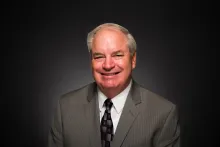
Robin Webber was born in Chicago, Illinois, in 1951, but has lived most of his life in California. He has been a part of the Church of God community since 1963. He attended Ambassador College in Pasadena from 1969-1973. He majored in theology and history.
Mr. Webber's interest remains in the study of history, socio-economics and literature. Over the years, he has offered his services to museums as a docent to share his enthusiasm and passions regarding these areas of expertise.
When time permits, he loves to go mountain biking on nearby ranch land and meet his wife as she hikes toward him.
