
Greg Thomas
This transcript was generated by AI and may contain errors. It is provided to assist those who may not be able to listen to the message.
Thank you again, Joe. Once again, everyone, welcome to the Sabbath and the fifth day of Unleavened Bread. As we know, the Spring Holy Days are rich with various spiritual meetings, and I just wanted to address one today that I think is good for us to ponder and consider during the Spring Holy Days. And I believe it's first mentioned the concept, the idea of this theme that we're going to discuss today is first mentioned in the book of Exodus. So if you turn there with me to Exodus 12, and this is in context talking about the Passover, but I want to pick it up in verse 9. This is chapter 12 and verse 9, because today I would like to talk about our sense of immediacy, our sense of urgency towards growth and towards life in general, our sense of enthusiasm about the calling that God has given us, the truth that He has revealed to us. Verse 9, again in context, talking about the Passover, which we already experienced recently, the New Covenant Passover. It says here in verse 9, Do not eat it raw, nor boiled with water, but roasted in fire, its head with its legs and its trails. You shall let none of it remain until morning, and what remains of it until morning you shall burn with fire. Here's the key, verse 11, and here's thus how you shall eat it. With a belt on your waist, with your sandals on your feet, and with your staff in your hand, you shall eat it in haste. It is the Lord's Passover. So what Moses instructed the Israelites to do is to have a sense of immediacy. They would very soon be embarking on a long journey, and they needed to be ready to go. They needed to be ready to move. How about us, brethren? Do we have a sense of urgency with the lives that God has called us? When we came into the church, didn't we have a sense of emergency when we were first called? We read booklets with enthusiasm. We discovered things in the Bible that were exciting to us. We decided we wanted to come to church and spend time with people of like mind. And we made changes in our lives. When we saw that there was something that we were doing that wasn't in harmony with God's value system, we made those kinds of changes.
That's what we did when we were first called, much like what the Israelites were told to do here. That is, they were leaving Egypt, the land of sin, and they needed to be ready. They needed to be dressed, ready to go on their journey, shoes on their feet, staff in their hand, and leaving in haste. The New Century Version translation says it this way. Psalm 11. This is the way you must eat it. You must be fully dressed as if you were going on a trip. And they were going on a trip, a very long trip. Continuing. You must have sandals on, and your walking stick in your hand. You must eat it in a hurry. This is the Lord's Passover.
So the Israelites were to be protected by the Passover lamb, and they were to be ready to flee Egypt at a moment's notice. Again, I think we understand that Egypt is a representation of sin. And we have been forgiven by the sacrifice of Jesus Christ. And what happened when we were baptized, when we were called into the faith?
We also began a long lifetime journey. That's a journey of discipleship. Our walk with God is referred to as the way in the book of Acts.
And when we recognize that we have sins in our lives, it's not time to take an opinion poll. It's not time to look in the newspaper and see what a Hollywood starlet tells us is our morals. It is time to get sin out of our lives and to take action. When we are convicted of sin, it is time to do something. It's time for immediate, forward action towards righteousness, towards conforming with God's law. We need to leave our personal Egypt in a hurry and not be distracted. And it's a principle that I think many of us understood years ago when we were in our first love.
And when we were first being called in the truth. But being human beings, all human beings in time tend to take things for granted. We really do. That's the dark side of human nature. We tend, after a while, just to take things for granted. But God doesn't want us to take for granted the rich meaning that exists, that is there for you and I, to be reminded of during the days of unleavened bread.
Let's go to Exodus 13 and verse 18. And we will see that God did not leave Israel alone to their own devices. He led them. He was willing to guide them and to lead them towards the Promised Land. And God doesn't leave us to our own devices. If we choose, we can be tapped into God's Holy Spirit, which is God's presence in us.
And if we yield to His Spirit, we too will be led and guided and protected on the journey that we have, the journey of discipleship that we presently are living together. Exodus 13, verse 18, it says, So God led the people around the way of the wilderness of the Red Sea, and the children of Israel went up in orderly ranks out of the land of Egypt. In other words, how did they leave Egypt? They put one foot in front of the other. They didn't sit around and have card games.
They weren't watching cable television. They left Egypt, and they threw one foot in front of the other foot, and they kept moving forward to leave Egypt, the land of their slavery. So they went up in orderly ranks out of the land of Egypt, and Moses took the bones of Joseph with him. For he had placed the children of Israel under solemn oath, saying, God will surely visit you, and you shall carry up my bones from here with you. So they took their journey from Sakhoth, and the camped in Itham, at the edge of the wilderness, and the Lord went before them.
And we're going to see that God was with them 24-7. It says, the Lord went before them by day in a pillar of clouds, to a pillar that looked like whitish in a cloud, to lead the way, and by night a pillar of fire to give them light. So, as to go by day and night, he did not take away the pillar of cloud by day, or the pillar of fire by night from before the people.
So I want you once again to notice that the presence of God is with them not half a day, not sometimes, not for eight hours, but for 24-7. No matter when it was time to move forward towards this new life, God was there leading and guiding them every step of the way. But you know, there's something they had to do. They had to put one foot in front of the other, and they had to follow God's lead. That's, I think, a very important concept for us to think about during the days of Unleavened Bread.
We're not going to turn to 1 Corinthians chapter 10 and verse 1, but I'll read it to you because it's Paul helping us to understand that this was literally the one who would become Jesus Christ, who was instructing Moses and giving Moses the law and providing the leadership that Israel needed. Paul said, moreover, brethren, I do not want you to be unaware that all of our fathers were under the cloud, all passed through the sea, all were baptized into Moses in the cloud, that is the pillar, that cloud that was a pillar, and in the sea, and all ate the same spiritual food, and they all drank the same spiritual drink, for they drank that spiritual rock that followed them, and that rock was Christ, Paul says.
So the one who was their leader is the same one who is our leader today, the one who later, when he walked on earth, would be given the name, Joshua, Joshua Jesus, and he is the one who led Israel out of a land of sin and towards the promised land. When Israel marched, this pillar of cloud went before them and led them to the place of the encampment, and as divine wisdom saw fit.
All they had to do was follow it and throw one foot in front of the other, and it sheltered them from the heat. That was that cloud, sheltered them from the heat of the day, and then at night the pillar of fire gave light so that they knew where they were walking. It illuminated their way. We, too, are on a journey, and we have to put one foot in front of the other. We, too, have to live by faith and not by sight because God is willing and able to lead us.
Are we following or are we stalling? What condition is our spiritual life in? Exodus 14. Let's pick it up here in verse 10. Exodus 14, beginning in verse 10. This is a horrific event for the Israelites because they're rejoicing that they're leaving the confines of Egypt, and lo and behold, there's Pharaoh with his army, and they're trapped between Pharaoh's army and the Red Sea. So picking it up here in verse 10. And when Pharaoh drew near, the children of Israel lifted their eyes, and behold, the Egyptians marched after them, so they were very afraid.
And the children of Israel cried out to the Lord. And they said to Moses, Because there were no graves in Egypt, have you given us a way to die in the wilderness? Why have you so dwelt with us to bring us up out of Egypt? Is this not the word that we told you in Egypt, saying, Let us alone that we may serve the Egyptians? It would have been better for us to serve the Egyptians than that we should die in the wilderness. So here are a group of people with different attitudes, different perspectives.
Some have the reaction that they just want to quit, and they want to go back to Egypt. And in my 40 years in the Church of God, I have to tell you sadly that I've known many people who sat in chairs just like the ones we have today, who over the years just got tired of being faithful and went back to spiritual Egypt. And went back to sins, and sometimes even greater sins and personal dysfunctions than they had before God called them to his way of life. Others were just happy to be back in their rut in Egypt. Their lives were a rut. And you know how our human minds are. We tend to deny reality. Here these people were slaves. They were treated a little better than dogs.
But some of them are opining about, oh, it was so good back in the land of Egypt. Yeah, sure it was. When you were told to work 16 hours a day. When you were told to make bricks without straw. Yeah, life was great. It was really good back there. But people get comfortable in their ruts, and they don't want to change. They don't want anything in their lives to change. They don't want to have fresh opportunities. They don't want to stretch themselves. They just want to be left alone. So let's see what occurs in this event. Verse 13. We're going to see that there are two different things that are said here. One is Moses' opinion. And the second thing that's said here is God's command. And they're not exactly the same thing. Moses has his point of view of what they should do in this situation. But on the other hand, God instructs them what they really should do in this situation. And there's a moral for you and I in our lives. Verse 13. And Moses said to the people, Do not be afraid. Stand still and see the salvation of the Lord, which he will accomplish for you today, for the Egyptians, whom you see today you shall see no more forever. The Lord will fight for you, and you shall hold your peace.
Now, of course, it sounds very powerful, but the problem is that Moses' reaction is incomplete. Moses basically tells them to stand still and watch God do everything for you. Watch the genie, the sand genie, do everything for you. Just stand still and watch this. You'll be impressed. But Moses is missing an important spiritual ingredient. Faith is wonderful. There are two sides of the coin of faith. One is, of course, belief in faith, and the other side is doing something with it. It's called action.
And we see here in verse 15, And the Lord said to Moses, Why do you cry to me? In other words, stop whining. Look at it from God's perspective. All of the miracles, plagues, and all of the miracles that he brought in Egypt to free these people, to bring them as far as he had, and already they're lacking faith and complaining about God and complaining about Moses. He says, Why do you cry to me? Tell the children of Israel to go forward. Don't stand still. Move!
Put one foot in front of the other and go forward. He says, But lift up your rod, stretch out your hand over the sea, and divide it, and the children of Israel shall go on dry ground through the midst of the sea. I've been amazed over the years how some people want to argue about faith versus works, as if somehow they're competing with one another. I'm here to tell you that faith and works are two sides of the same coin. It's not faith or works. It's faith and works. Without works, faith is dead. Living faith includes doing something. In this case, putting one foot in front of the other and going forward across through the Red Sea. If the Israelites had not got off their pity-potties and literally marched across the Red Sea, they would have never gotten out of Egypt. It's a great lesson for us. And the lesson is that God is willing to create a marvelous event and do His part.
And then we have to do our part. Whatever is going on in our lives, whether it requires prayer or faith or action of some type, we have to be willing to do our part. It's an interesting scripture because what we just read is traditionally acknowledged to have occurred on the seventh day of Unleavened Bread. Moses told the Israelites to stand still and watch God's saving hand at work. On the other hand, God told them to go forward. It was time for less talk and whining, and it was time for more action. There is an important message in all of this for you and I, not only about our calling but about life. And that is that we need to keep moving forward. We cannot stand still. When we stand still, we become stagnant. And over a period of time, if you're stagnant long enough, you begin to die. And we need, as a people, as individuals, to be growing and moving forward.
You might say to me, okay, Mr. Thomas, I've done some pretty terrible things in my life. I'm haunted by some of the things that I've done in the past. Well, my response to you would be that all human beings are flawed. All human beings make mistakes. That's why Jesus Christ was willing to become the ultimate sacrifice for our sins.
Sometimes we don't act like we should. Sometimes we don't do all the things we should. Sometimes we sin and we fall short of our calling. The message here is to repent and get on with life. Go forward. Don't stand still. Don't look back and live in the past.
But repent of your sins and get on with your life. Leave your regrets, your shame, and leave your guilt in a hurry. Just like they left Egypt. Just like the Israelites were to leave Egypt and eat the Passover in a hurry. Reliving the past doesn't change the outcome of anything that happened in our lives. I'd like to see how this theme is also brought out by Paul. Let's go to Philippians 3 and verse 8. Let's continue on with this theme. More than any other Christian that I've ever known or read about, Paul had more things to be guilty and ashamed of than any other person that I've ever known.
I'll tell you why in a minute. Let's see what he says here in his writings. Philippians 3 and verse 8. He said, He said, He counted everything that he had done in his previous life before his calling as garbage, as rubbish. He wanted just to know and gain Christ. Verse 9. But that which is through faith in Christ, the righteousness which is from God by faith, that I may know Him. So Paul wanted to have a relationship with Jesus Christ and the power of His resurrection and the fellowship of His sufferings being conformed to His death.
Verse 11. And if by any means I may attain to the resurrection of the dead, not that I have already attained, He said, I'm not perfect. I'm not there yet. I'm working on it. I'm striving for it, but I'm not there yet. He says, I am. He says, Not that I am already attained or I am already perfected, but I press on that I may lay hold of that for which Jesus Christ has also laid hold of me.
Now, I want you to realize that Paul did a lot of things that he could have been ashamed and guilty of constantly. He could have haunted him throughout his entire ministry about his past. First of all, he persecuted and he condoned the death of true believers in Jesus Christ. That's pretty shameful to know that you personally caused the death of people who believed in Jesus Christ. He broke up families by hauling mothers and fathers to jail because they were Christians before he was called breaking up families.
He had been a smug, self-righteous Pharisee and he lived by a thousand rules of do's and don'ts. That's why he reacted so harshly to legalism and people who thought that Jesus somehow could be saved by obeying law. So Paul had a lot of things that he could have been guilty about, but you know what?
He realized that that was his past. He was now in the hands of Jesus Christ. I want you to notice the latter part of verse 12. He says that, "...I may lay hold of him, may lay hold of that for which Jesus Christ has also laid hold of me." So he said, "...I am in the hands of Jesus Christ." And brethren, you are too. When God called you and put his Spirit in you, and the presence of Jesus Christ in the Father came into your life through the Holy Spirit, you too are in God's hands right now. I'd like to read this from the New Century version, verse 13.
It says, "...brothers and sisters, I know that I have not reached that goal, but there is one thing I always do, forgetting the past and straining towards what is ahead." Let's take a look at verse 13. I'll read it in the New King James version, which I'm sure most of you have in front of you. "...brothers and sisters, I do not count myself to have apprehended, but one thing I do, forgetting those things which are behind." You've got to put one foot in front of the other.
"...have you ever tried to walk forward while constantly looking behind you?" That's a disaster to be tripped up, isn't it? That's a disaster to fall flat on your face, to be trying to walk forward and have your head turned around while you're looking in the past. "...have you ever wondered why the rearview mirror in your car is so small? It's not something that takes up the entire width of the windshield. It's because it's already behind you. You can only drive effectively if you're looking forward, not if you're constantly driving while trying to drive through looking at a rearview mirror.
You'll have an accident. You'll run into things. In context, what does Paul mean when he tells us to forget about the past? Because he says again, forgetting those things which are behind and reaching forward to those things which are ahead. He said, I press toward the goal for the prize of the upward call of God in Christ Jesus. So what does he mean here when he says he reaches forward and he forgets those things that are behind? Well, there are many good things we can take from looking into the past. For example, fond memories of friends and family like our children, growing up and friends that we've known over the years.
We can learn lessons from past experiences, so we don't need to make the same mistake over again. That's called maturing and growing. We can see how much progress has been completed in our lives by comparing the present, where we are today, with maybe the way that we were 10 or 20 years ago. These are good things. So what is Paul talking about when he says, forgetting those things which are behind and reaching forward? Well, if we're not careful, we can become slaves to the past. And that is a very common problem in our world today. Very common problem. In a physical sense, I want you to consider the Israelites, because even though they left Egypt, they constantly had a slave mentality.
Throughout the years that they were in the wilderness, they were always whining, always looking back. When the leadership evaporated after the generation of Joshua, what do you find in the book of Judges? You find people that degenerated once again in the tribalism, because they had always been looking back instead of looking forward.
They wanted to go backward to Egypt. They wanted to reconstruct and rewrite the past. So let's talk about us. How does this apply to us? Well, everyone of us in this room, we have made mistakes. And if we allow ourselves to relive these mistakes over and over again, we become slaves to guilt.
And we're in a scenario of coulda, shoulda, woulda. And the beautiful meaning of the annual Passover that we recently observed is that the shed blood of Christ forgives us. Now it's time to move forward. Are we willing to do that? You see, again, if we're living in shame or guilt or something that has already occurred in the past, we are living against God's will. Because at the Passover, God forgave us. And if God has forgiven us, who are we to continue to relive painful events over and over again if we've already been forgiven by God? That doesn't even make sense. Let's take a look at another scripture. If you'll turn with me to 2 Peter 3 and verse 13.
I hope we realize that one of the reasons that God instituted the days of unleavened bread is to reveal to us the importance of having a lifestyle change. Virtually all of us are used to eating soft, cushy, leavened bread. In our culture, bread is almost in everything.
And for seven days, God says, you don't do that, but you eat unleavened bread. What is that? That is a lifestyle change. That is doing something that's out of the ordinary. That's doing something that's new for seven days. And there's a symbolism behind that. And that symbolism is that we have to constantly be willing to grow. We have to constantly be willing to change our lifestyles, to conform more to having the mind of Jesus Christ. We have to be willing to stop standing still and living in the past and to move forward. 2 Peter 3 and verse 13. Peter wrote, Notice he doesn't say, and looking back in regret, or living in the past. No, he says, looking forward to those things that God has in store for each and every one of us. Be diligent to be found by him in peace without spot and blameless, and consider that the long suffering of our Lord is salvation. And also our beloved brother Paul, according to the wisdom given to him, has written to you. So similar to what Paul said, and similar to what God told Israelites on the edge of the Red Sea. Peter also says, look forward, put one foot in front of the other, and move forward with your life. Verse 16. It says, As also in all of his epistles, again he's referring to Paul, speaking in them of these things, in which are some things hard to understand, which untaught an unstable people twist to their own destruction as they do also the rest of scriptures. Paul is a favorite person to distort what he says. And I've said for many years that depending on your mindset, you can prove anything you want out of the Bible. I can go to Paul's writings and prove to you that same-sex marriage is preferred. I can prove to you that same-sex marriage is wrong. I can prove to you that the Sabbath is Saturday. I can prove to you that it's Sunday. I can prove to you that there's no longer a Sabbath, simply by twisting the words of all people of the Apostle Paul, because he didn't write in sentences. He wrote in paragraphs.
And Paul was the most intellectual of all of the disciples, who most of them, frankly, were simple fishermen. Paul was trained to be a rabbi, so he had an intellectual bent in the way that he wrote. And you can prove anything you want, if you have such a mindset. Anything you want through the writings of Paul to prove any point that you believe in. I remember a number of years ago, I was seeing a Catholic priest on a Larry King. You may remember the old Larry King show on CNN. And the Catholic priest just told Larry King that it didn't matter if you believe in Jesus Christ in order to get to heaven. And Larry King, who was Jewish, found that rather interesting. He said, Larry King said, you mean a Hindu? Oh, absolutely. Larry King said, you mean someone of the... why? Oh, yeah, absolutely. You? Absolutely. The priest said, you have to realize that Jesus said that he who is not against me is for me. Now, that is just a little snippet of what Jesus Christ said in that statement. But what that priest looked for was a string of about six or seven words that implied that if you are not an enemy of Jesus Christ and you're a good person, that you will, quote, get to heaven.
Anyone can do that, particularly through the writings of Paul, because of the way that he wrote. But Peter also said, and also the rest of the Scriptures, verse 17, You yourself, beloved, since you know this beforehand, beware, lest you also fall from your own steadfastness, being led away with the error of the wicked, verse 18, He doesn't say, stagnate in grace and knowledge of the Lord.
Look behind you for grace and knowledge of the Lord. No? He says, grow.
How do we grow? Well, through grace, we grow because as our relationship with God deepens, we receive profound favor and mercy as His child. We have a deeper appreciation for His love. We begin to see God's blessings all around us, and even the little things in life when we grow in God's grace.
We grow in the knowledge of the Lord by understanding the law and the teachings of Jesus Christ, the messenger of the New Covenant taught. We call those doctrines or teachings. We grow in truth. We grow by learning the mind of Christ and conforming ourselves to the values and the teachings of Jesus Christ.
And that is so very important. As we've seen whether it was on the edge of the Red Sea or whether it was Paul talking to the Philippians or Peter commenting here, it is so important that we not stand still, that we not look back, but that we move forward, figuratively and spiritually with one foot in front of the other.
Because in contrast to that, unfortunately, many have chosen to become Utsi the Iceman.
Now, you may not know about Utsi the Iceman. He's a well-preserved natural mummy of a man who lived about 3300 BCE. He is 5300 years old.
And his mummy was found in September of 1991 in the Alps on the border between Austria and Italy.
He's Europe's oldest natural human mummy and has offered an unprecedented view of ancient Europeans. Because immediately after he died, he was blanketed by a snowstorm, and his body was embedded in a glacier for over 5000 years.
And the remarkable level of preservation that he has has allowed archaeologists the first detailed look into the ancient clothing and behavior, tool use, and even the diet that he had. He stood 5'2", and he weighed 134 pounds. And along with his body was found food and clothing, personal items, and a copper axe.
But you know what? He's frozen in time. There came a period of time in which he was frozen. And sure enough, over 5000 years later, he hasn't changed. He's what we call a fossil. He's what we call a mummy. And brethren, the spring holy days are here to remind us of our need to grow, to expand, to increase our momentum towards growth, and to be forward-thinking. There are too many people who have chosen to become a spiritual ootsy the ice man. Their thinking, their attitudes, and their talents are frozen in the 1960s or 1970s. And God has not called us to be spiritual or mental fossils or mummies, but to be living sacrifices who grow and change with increased grace and knowledge. That's an important biblical principle. And during the days of unleavened bread, we are reminded of the need for growth. We are reminded of the need to move forward. Let's see an example of some of the very analogies used by Jesus Christ. Matthew 9 and verse 16.
Jesus says to his hearers, Matthew 9 and verse 16, No one puts a piece of unshrunk cloth on an old garment, for the patch pulls away from the garment, and the tear is made worse. What's Jesus saying in this analogy? He's saying you cannot mix new and old thinking. An unshrunk cloth is like new thinking. It's expandable. It's capable of changing. It's new. It's strong because it's new. An old garment is like an obsolete or outdated thinking process. It's rigid. It's inflexible. And it easily tears. And what Jesus was telling them is being a new creature in Christ on one hand, while living in the past, and in context he was talking about all of the laws and the rules that the Pharisees had instituted, creates a weak bond. Jesus was saying you have to take my words and you have to be in a new thinking environment. You just can't take the new and somehow plug it into the old because it tears. It rips. Then he says in verse 17, nor do they put new wine into old wineskins or else the wineskins break and the wine is spilled and the wineskins are ruined, but they put new wine into new wineskins and both are preserved. Now why is this important? Because new wine is still expanding. Until the final edge of the fermentation process, it's changing. And putting into an old wineskin causes problems. The old wineskin is rigid. It isn't flexible. And when you put that new wine in that old wineskin, it literally causes too much pressure and that old wineskin burst open. The analogy here is that new thinking is only productive when it's part of a new attitude towards life. You can't take new thinking and merge it with a poor attitude. You can't have new thinking and be looking and living in the past. So that's a new approach. What is the new approach Jesus wants us to have? He wants us to be looking forward, reaching forward, and forgetting those things that are behind us.
So what are some of the ways that we can be sure that we're moving forward? I'd like to end the sermon today with some ideas of some ways that we can be sure that we are all moving forward. Okay? Here's the first thing. And that is, of course, the fellowship with people of like mind. But also, you need to know everyone in the congregation. You know, we tend to fellowship primarily with people in our own age group. And there are people here from different ages, vast personal life experiences that are different than our own. And fellowshiping with people that are different from you, that are younger or older than you, helps to keep you fresh. It gets you outside of your comfort zone and your box of thinking. And it exposes you to people who have lived different experiences than you have or have lived in a different generation than you have. So we need to fellowship with people of like mind and get to know everyone in the congregation from two weeks old to 99 years old and everyone in between. That's one way that we can make sure that we're moving forward. There's an old expression that occurs in a lot of churches. And that expression is kleeks. Now, I don't believe we have any in this congregation. We're very blessed, but I've certainly been in churches that had kleeks. And that is, after services, about five or six people would get in their own circles and they would all basically talk to each other. They were all good friends. But rarely did they leave that circle and talk to everyone else in the congregation. Again, that's the dark-sided human nature. That's just the way we are as human beings. But I want to encourage us to get to know everyone in the congregation of every different age and every different educational background and every different experience from life. Another thing I would like to encourage you to do is to use your talents. If you're hiding a talent or you're not using a talent that you have often, you are denying the church a precious gift. Why do you think God gave you that talent? He gave you that talent so that you can give Him glory. He gave you that talent so that you can share it and help other people to be edified and help other people to worship God and know God.
Whether it's an act of service or whether it's musical or whether it's a mechanical gift you have, whatever it is, use your talents. Look for ways to use your talents more and more. And if for some reason you can't use them in the church, then use them in your neighborhood. Use them in your community. But use the talents that God has given you.
One of the greatest ways to preach the gospel to the world is to use your talents to benefit others because they will see Jesus Christ living His life through you. So we need to grow in our talents and we need to stop hiding our talents. We need to bring them out into the light no matter what it may be and, again, use it to serve the church.
Another thing I encourage everyone to do is do something new in your life. Do I have to? Yes! Get out of the rut! Some of us are in a rut so deep, all we see is a wall to the left of us, a wall to the right of us, and if we look up high enough, we might see a little daylight up there.
Do something new in your life, whether it's a new hobby or develop a new habit or take on a new duty in the church that you've never done before. Stretch yourself! In the business world, we have a phrase that we use a lot that I use in my consulting business and we call it stepping outside of the box because we all get in our little comfort zones. And we like it in our comfort zones because there are no challenges. We can just spend our whole lives and go, oh, this is easy. This is nice. I don't have to do a whole lot. I know what I can expect. Things seldom change here. It's just kind of nice.
But God says that we need to put one foot in front of the other and we need to move forward. We need to step outside of that box and I encourage you to do something new. Expand your mind. Expand your talents and your skills and your abilities. And that will help you to get more out of the principle behind the Days of Unleavened Bread. Something else is to freshen up your Bible study and prayer. Again, we're all creatures of habit and we tend to do the same thing the same way. Why? Because it's part of our comfort zone.
So use a different translation. Go out and buy a translation of the Bible that's different than what you have. Read the Bible in a different order. Put two translations side by side regarding prayer. Use a prayer box in which you have the things you need to pray about in different categories behind index cards and mix it up and mix up your prayers. Some of us have been saying the same basic prayer for 20 years and to our loving Father, it probably sounds as repetitive as someone doing Hail Mary. Because we've been saying that prayer almost repetitiously for years and years and years. Mix it up a little bit. Change the order of who and what you pray about. Freshen up your Bible study and prayer.
Another thing we can do is to match your personal resources, which are unique to you with someone who can benefit from the resources that you have. For example, some of us are comfortable and we have money. And because we have money, we can do certain things and match our resources with someone who can benefit who doesn't have much money.
An example would be these beautiful flowers. What a wonderful offering and donation that someone did to spend money in order for us to be able to enjoy all of these flowers in the Holy Days and then give them away. Some people don't have a lot of money. What they're retired and what they do have a whole lot of, especially if they organized it, they have time.
So maybe as a resource you don't have much money, but maybe you have time to help people and to do things for others. That's a resource. Some may not have money, they may not have enough time, but they have an enormous talent in an area that other people don't have.
And if you have that resource of a talent, then look for ways to help someone who can benefit from that resource in the congregation, in your family, in your community. You may be just the person they need to help them. Become someone's miracle.
You know, when someone has a need and they pray about it and God fulfills that need by bringing someone into their life, it's that someone who came into their life that became someone's miracle. It's that person who had time or money or a talent or a resource that God put it in their heart and they said, All right, I'm going to go, so and so needs help. I'm going to offer to help. And the person says, Wow, you're exactly what I needed. In that way, you can become someone's miracle. You can help to change their life. These are all ways that we can be sure that we are moving forward and that we're not rigidly living in the past and looking behind us all the time.
Let's take a look at the final scripture that I have today in Hebrews chapter 10 and verse 19. Hebrews chapter 10 and verse 19. I've read this scripture, I believe, before the Passover, but I'd like to read it again because I think it ties in so well with the message today. Hebrews chapter 10 and verse 19. Therefore, brethren, having boldness to enter the holiest by the blood of Jesus, because of his sacrifice with boldness, we can go through that veil that existed symbolically in the ancient temple. Remember that veil stopped anyone from having access to God. Only the high priest, once a year, could park that veil and walk in there and literally talk to God. Now, we can boldly go in to the most holiest park, literally to the throne of grace, and have a conversation with God. Verse 20, he says, by a new and living way. Not like the Ice Man, not frozen in some ideas or attitudes we have from 40 years ago, but a new and living way which he has consecrated for us through the veil that is his flesh. That was the torn flesh of Jesus Christ that he experienced at his crucifixion. And having a high priest over the house of God, let us draw nearer. Let's draw nearer to God. Let's draw nearer to one another. With a true heart and full assurance of faith, having our hearts sprinkled from an evil conscience and our bodies washed with pure water. So, as I said before, and I will say it again, and I will say it until I have blew.
If you are struggling with issues of the past, of shame, and guilt, and humiliation, please let it go. The shed blood of Jesus Christ made it possible for your heart to be sprinkled from an evil conscience of whatever it was that you're ashamed of, whatever it is that has burdened you throughout your life, let it go and put one foot in front of the other and go forward. Because our bodies are washed with pure water. Verse 23, Let us hold fast the confession of our hope without wavering, for he who promised is faithful, and let us consider one another in order to stir up love and good works. Now, in the past years, we've had some people who misread verse 24. They thought it said, let us consider one another in order to stir up trouble, gossip, and commotion.
But that's not what it says here. It says, when we come together to fellowship, when we come together to worship, let us stir up each other. How? In love, in a genuine concern, in caring for each and every one of us that God has called.
And good works. Are good works sitting around expecting God to do everything? No. Good works are putting one foot in front of the other and saying, I'll do it. I volunteer. I can do that. I have the time to do that. Or I have the money to do that. Or I have the talents to do that. Or I have other resources to do that.
So let us consider one another in order to stir up love and good works, not forsaking the assembling of ourselves together as is the manner of some, but exhorting one another and so much the more as you see the day approaching.
So, brethren, on this fifth day of the Feast of Unleavened Bread, in conclusion, let's remember a few lessons left for us by Moses in Israel and reinforced to us by Paul in Peter in Jesus Christ himself. God doesn't want us to stand still. He doesn't want us to live in the past. He wants us to live in the day so that we have the opportunity to change tomorrow and make it better. Let us accept the fact that our sins are forgiven. We need to let go, and we need to keep marching towards the kingdom of God, the Promised Land. That is, being part of God's family that God has offered to each and every one of us. And by doing this, we can allow God's Spirit to help us to reach our fullest human potential. There are so many wonderful things that lay ahead for each and every one of us in this room. Let's go forward. Be sure to have a great Sabbath.
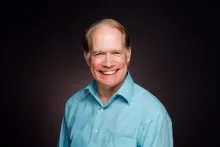
Greg Thomas is the former Pastor of the Cleveland, Ohio congregation. He retired as pastor in January 2025 and still attends there. Ordained in 1981, he has served in the ministry for 44-years. As a certified leadership consultant, Greg is the founder and president of weLEAD, Inc. Chartered in 2001, weLEAD is a 501(3)(c) non-profit organization and a major respected resource for free leadership development information reaching a worldwide audience. Greg also founded Leadership Excellence, Ltd in 2009 offering leadership training and coaching. He has an undergraduate degree from Ambassador College, and a master’s degree in leadership from Bellevue University. Greg has served on various Boards during his career. He is the author of two leadership development books, and is a certified life coach, and business coach.
Greg and his wife, B.J., live in Litchfield, Ohio. They first met in church as teenagers and were married in 1974. They enjoy spending time with family— especially their eight grandchildren.

