

Roy Holladay
This transcript was generated by AI and may contain errors. It is provided to assist those who may not be able to listen to the message.
Recently, in one of our Ministerial Leadership Conferences, we had the topic of speaking and teaching came up. This is one of the major responsibilities that the Ministry has, which is to teach. I want you to notice in 1 Timothy chapter 3 and verse 2, just to confirm the statement that I just made. 1 Timothy chapter 3 and verse 2 says, The bishop, or an overseer, must be blameless, a husband of one wife, temperate, sober-minded, of good behavior, hospitable, able to teach. It doesn't comment too much about preaching, but it says he's got to be able to teach. Notice in chapter 4 verse 6, 1 Timothy 4 and verse 6 says, If you instruct a brethren in these things, you are a good minister of Jesus Christ, nourished in the word of faith, and of the good doctrine, which you have carefully followed but profane. He says, But reject profane in old wives' fables, and exercise yourself toward godliness. Then in verse 11, he says, These things command and teach. You'll find especially in 1 Timothy and Titus, there's a lot written because here you have an apostle writing to a young evangelist instructing him on how to carry out his ministry. Verse 2, chapter 6, same book, 6.2, Those who have believing masters, let them not despise them because they are brethren, but rather serve them because they are benefited, or those who are benefited are believers in beloved. Teach and exhort these things. Then in chapter 2, verse 2, of 2 Timothy, 2 2 2, 2 Timothy, chapter 2, verse 2, These things that you have heard from me among many witnesses, commit these to faithful men, who will be able to teach others also. So, you'll find that the ministry has a responsibility of passing on the teachings as they've learned them to others who then are able to pass it on to others. What is the purpose of teaching? What is the purpose of it? What is supposed to be accomplished? When I stand up here, Alan stands up here, Jacob, whoever it is who might be giving a sermon at or a sermon, Mr. Cowan, what are we trying to accomplish? There could be all kinds of purposes, but there are some overriding purposes that we're going to take a look at today. Why do we spend so much time coming to Sabbath services? All of you have had to make the effort to come here. You've been doing this for 5, 10, 15, 20, 30, 40 years, and yet here you are faithfully attending. Why? We find that we are all teachers in one sense or another. We all have an opportunity from time to time to impart knowledge. Parents teach their children. I was struck by what Alan was talking about, teaching his children about the Sabbath and how you might not always be respected, but you've got to become better. We learn from one another, do we not? We learn by example. We learn verbally from each other. You and I have been called in this age at this time to be trained as teachers. We're going to be kings and priests, and one of the main jobs of a priest is to teach God's law and way of life. And so that's one of our main duties here in the future. Well, today, brethren, we're going to take a look at the fact that there are four levels of teaching.
Four levels. We want to evaluate these four levels from two perspectives. One, from the viewpoint of the teacher or the instructor, and secondarily, from the viewpoint of the pupil, the student, or the learner. That's us. Well, that's all of us, and actually we all fall in both categories. So we want to take a look at the four various levels of teaching. Number one is to teach to know. To teach to know. This is the usual way of teaching that you find so often in schools. You teach the student, whoever he might be, and he simply knows the material. He knows what you're trying to get across to him. How many of us, as our children, were growing up, or you knew some other young child about to go to school? Ask them the question, do you know your ABCs yet? Well, they might know their ABCs. You know, A, B, C, D, you know, they might sing to you their, you know, the ABC song. You know, that type of thing.
If you ever ask a young person, have you learned your multiplication tables yet? I remember I learned those in the third grade, in the fourth grade, in the fifth grade. Somewhere about the sixth grade, they stuck. So, you know, there are things that you think you've learned, and you've got to review them and relearn them. We learn facts about history. We learn facts about math, about language. We learn, you know, Columbus sale the ocean blue 1492, you know, these type of things. And yet, when you look into the Bible, you find that Jesus Christ, when he was here on the earth, was the master teacher. He was acknowledged as a teacher with his disciples. Let's go over here to Luke 5 verse 17. Luke chapter 5 and verse 17. There are literally dozens of scriptures that refer to Christ. His teaching being referred to as a teacher. Again, you have to realize, at this time in the history of Israel, that there were many teachers around, and many of them had disciples that they taught. So, when Christ came along and he had this gang of 12 following him, he was automatically referred to as teacher. But let's notice here, chapter 5 verse 17. It says, it happened on a certain day, as he was teaching, that there were Pharisees and teachers of the law sitting by who had come out of every town of Galilee and Judea and Jerusalem, and the power of the Lord was present to heal them. Now, as the ESV translation translates this, on one of those days, as he was teaching, so he taught on, every day, Pharisees and teachers of the law were sitting there and come from every village of Galilee and Judea and from Jerusalem, and the power of the Lord was with him to heal. So, Jesus Christ went around teaching. In Matthew 22 and verse 15, we have another example, Matthew chapter 22 and verse 15.
It says, then the Pharisees went and plotted how they might entangle him in his talk. They were trying to find something wrong with him. Mind you, the story of Daniel. You know, they couldn't find anything wrong with Daniel, and here they're trying to find something wrong with Christ. They're trying to trip him up. They went to him, or excuse me, they sent to him their disciples with a Herodian saying, teacher, we know that you are true. You teach the way of God and truth, nor do you care about anyone, for you do not regard the person of men. Tell us therefore. And then they give him a trick, or a difficult, or a hard question. Again, notice this in the ESV, verse 16. It says, they sent their disciples to him, along with the Herodian saying, teacher, we know that you are true, and that you teach the way of God truthfully, and you do not care about anyone's opinion, for you're not swayed by appearance.
Now, of course, they're buttering him up. You know, they're trying to tell him he's such a good fellow, and then, boom, they try to stick it to him. They try to, you know, find something wrong, get him to answer a question they don't think he can answer. Sometimes, I've gone through, and I've read some of these questions that they've asked Christ, and I just stop, and I ask myself, what would I have said in Christ's position? And, you know, in most cases, I would have fallen flat on my face. I would have said the wrong thing. Then you read the wisdom that he has.
The Greek word that is translated disciple, which means student, simply means to learn, to understand, to be a learner or a pupil. Now, you and I are disciples of Jesus Christ. That means we are a pupil. We're a learner. We're one who is a student. Now, you read in the Bible that John had disciples who followed him. The Pharisees had disciples. In fact, in John 928, the Pharisees told a blind man who had been healed, you are his disciple, but we are Moses' disciples. So, you know, they claim that they followed Moses, but they said, well, you're of this fellow. Now, when you look over the years, brethren, church has done a pretty good job in this area of teaching, has it not? Imparting knowledge, imparting information. We today impart a ton of information with our booklets, our magazine, our web page, our sermons, our videos. I would dare say that you have so much coming into your house that some of it you don't really read or you have trouble reading it and you have difficulty keeping up with everything. Now, how do I know that? Because I have trouble keeping up with everything that comes in. And so, it's something that we hear. A lot of times, we have people who write us and say, wow, you know, I've learned so much from your literature, and they've learned a lot from what we have written. Remember back when you first started hearing the truth. Now, for some of you, you grew up in the church, a lot of our young people, so it's sort of like you've always been around it. But for a lot of us who were wondering out here in darkness at a certain period of time, we were totally oblivious to the truth of the Bible. One day, in some way, you came in contact with a booklet, broadcast, some type of information. And I remember the first booklet I ever got and started reading was 1975 in prophecy, and then the U.S. and British Commonwealth in prophecy. And, you know, if you're going to get two booklets, those were the ones, you know, that would sort of shock you. Then you learn about the Sabbath day. You learn about the Holy Days. I heard the broadcast back in 1958, and within about three months, we met a baptizing tour. But we were... none of us were ready. My mother, my twin sister and I, none of us were ready, obviously, to be baptized. But by that fall, we were keeping the Holy Days. We started keeping the Sabbath. You're at home. You learn very quickly about the pagan holidays. Why were you born? Need to repent. You could cite a long list of things and probably many of you will remember when you first started studying. How exciting it was! Every time you picked up a booklet, it was something brand new. You didn't know about it before, and you were learning. So over the years, many people have been attracted to the Church. How? Through knowledge. They know. They hear. They read. So they are attracted to the Church through knowing. They learn something new, and as a result of learning something new, this is exciting, and they want to be a part of it. So they are attracted. Their response, in many cases, never went beyond the knowledge. They had the knowledge, but what did they do with it? They learned a lot. Many people were like the Athenians. Let's go back here to Acts 17, verse 16 in the Bible. Acts 17, verse 16. The apostle Paul was in Athens at this time. He says, Now while Paul waited for them at Athens, his spirit was provoked within him. When he saw the city, he was given over to idols. Therefore he reasoned in the synagogue with the Jews and with the Gentile worshippers in the marketplace daily with those who happened to be there. Then certain Epicureans and Stoics, philosophers encountered him and said, What does this babbler want to say? Others said he seems to be a proclaimer of a foreign god.
Because he preached to them Jesus in the resurrection. They took him and brought him to the Aeropagus, saying, May we know what this new doctrine is of which you speak? So to them it was something new. He says, For you are bringing strange things to our ears. Therefore we want to know what these things are. And he says, For all the Athenians and the foreigners who were there spent their time in nothing else but either to tell or to hear some new thing. So it was new they wanted to hear it. They wanted to be, in a sense, on the cutting edge.
Brethren, we all need to know the truth, don't we? We all need knowledge. We need to know the law of God. We need to understand what God requires of us, but there is more required. Let's notice in Matthew chapter 4 about Jesus Christ. You can make a complete study on this topic by just reading the example of Jesus Christ, the Scriptures dealing with his teaching people, and then his disciples and the other disciples who followed. In chapter 4, verse 23, we read that Jesus went about all Galilee teaching in their synagogues and preaching the gospel of the kingdom and healing all kind of sicknesses and all kind of diseases among the people. And then his fame went throughout Syria, and they brought to him all sick people who were afflicted with various diseases and torments. Those who were demon-possessed—epileptics, paraleptics—he healed them, and great multitudes followed him from Galilee and from Decapolis, Jerusalem, Judea, and beyond Jordan. You'll find that there were crowds, at times 5,000 people, who were following him. You know, huge numbers. Yet, when the day of Pentecost came, and they were in the upper room, how many were there who received the Holy Spirit when the Holy Spirit was poured out to begin with? After three and a half years of preaching, thousands of people hearing him, literally hundreds, maybe thousands, being healed, demons being cast out, miracles being performed, 120 received the Holy Spirit. Now, we know that later on that day that there were several thousand converted. But you find that people can hear, can respond to knowledge, but there has to be something else that must take place. What is it? Well, that brings us to the second level of teaching. The first level of teaching is to impart knowledge. Now, you've got to impart knowledge, but the second level of teaching is to teach to do. To teach to do. The next level where teaching is either, in this case, is either authoritarian. You must do this. You know, you tell people what you think they must do. That's not so good. Or motivational to the point that the learner will do what he has taught. That he becomes so motivated, so turned on, so excited that he begins to do it. Now, in this type of teaching, you find an individual. Maybe you're talking about the Sabbath day. You're giving knowledge about the Sabbath. Then you begin to explain why God commands us to keep the Sabbath. And that there's a reason for it. And you show the blessings that come from it. And somebody listens and they say, yes, I'm going to do it. And they began to keep the Sabbath day. They become a doer. Consider that in the early 1990s, we had 150,000 people attending the Feast of Tabernacles. 150,000. The church in our area, the era, I should say, has done a reasonable job of teaching to level two. In other words, teaching people what they should be doing. Keeping the Sabbath, keeping the Holy Days. When someone learns the truth, as you and I have, in other words, God calls him, reveals his way of life, his plan, his purpose to him. Guess what? You're faced with a decision, aren't you?
You're faced with a decision. Remember, you had to make a decision about the Sabbath day. Perhaps you were working, you're working on Saturday and all at once. You learned that Friday sunset, Saturday sunsets the Sabbath. You got to make a decision. What are you going to do? So you decided to keep the Sabbath. Not only did you receive the knowledge, but you were convicted, convinced, in your mind, in your heart, that you ought to do it. That takes you another step to be a doer. You had to do something with the knowledge that you received. As I mentioned, when I was 17 years of age, I had a decision to make. Because when I learned about the Sabbath and started keeping the Sabbath, at a conflict I was playing basketball and football in high school. You know, was I going to continue to do that? Because almost all of our games were Friday night. I just had to walk away from that. I had a decision to make.
I turned my shoes in and just stopped playing. Playing for the school. So this is a decision that we've all, at one time or another, had to face in our lives. In 1995, I never thought that I would be fired for keeping the Sabbath. And yet, those type of things occurred even within the church. I want you to notice a further explanation of the word disciple. I gave it to you to begin with. It means a pupil, a learner, a student, but it also means more in the New Testament than just merely being a pupil or a learner. It is an adherent who accepts the instructions given to him and makes it his rule of conduct. Makes it the way that he's going to live, his rule of conduct. Luke 11, verse 1. We have an example of the disciples here. Luke 11.1. They had Jesus Christ as their instructor. So they came to him, and it came to pass, as he was praying in a certain place. When he ceased, one of his disciples said to him, Lord, teach us to pray, as John also taught his disciples. So he said to them, when you pray, say. And here he gives an outline to follow. Not that you repeat these words, but he taught them how to structure their prayers, what to say, what should be included. And so he gave them something to do. Here's how you do it, he said. They asked how to do it. He says, here's the formula. Here's the way to go about praying. In Mark 10, verse 17, Jesus Christ on another occasion had a young man come to him. Notice, verse 17, now as he was going out on the road, one came running now before him, and asked him, good teacher, what shall I do? Okay, I want to be a doer. He says, what shall I do that I may inherit eternal life? And so Jesus said to him, why do you call me good? No one is good, but one that is God. You know the commandments. Do not commit adultery, do not murder, do not steal, do not bear false witness, do not defraud, honor your father and your mother. And he answered and said to him, teacher, all these things I've kept from my youth. Then Jesus, looking at him, loved him, and said to him, one thing you lack. That's why it gets us all, isn't it? See, here was Jesus Christ, and he knew exactly what this man's problem was.
Sometimes we think we're doing real well, maybe we are to a certain extent, because here it says he loved this man because he was truly striving to do what was right, and yet he had one thing that he had to give up. One thing you lack, go your way, sell whatever you have, give it to the poor, and you will have treasures in heaven, and come, take up the cross, follow me.
And he was sad at this word and went away sorrowful, for he had great possessions. He could not do what Christ asked him to do. Now, when you and I are baptized, you might remember you were asked, I was asked to do what? That you have to put God first above all. That you have to love him more than father and mother, wife, children, your own life also. That God has to come first. Now, let's go back to Matthew 5. You know, in Matthew 5, 6, and 7, you have here what's called the Sermon on the Mount. And Jesus Christ taught his disciples what they had to do to be true followers of his.
In chapter 5, beginning here in verse 1, you'll notice, seeing the multitudes, he went up into a mountain, and when he was seated, his disciples, his students, the pupils, came to him, and he opened his mouth, and he taught them, saying. So he teaches them. Now, in verses 3 through 10, basically he's imparting knowledge to them, information. Beginning in verse 11, he begins to explain to his disciples how they should act, what they should do under certain circumstances.
If they are persecuted, he said, rejoice. Now, that's not our normal reaction. Somebody runs us down, belittles us, makes fun of us, ridicules us. You know, that's not what we normally do. Verse 16, he said, you know, they should see your good works. So he's saying that we should have good works. Verse 20, he says, our righteousness has to exceed the righteousness of the Pharisees. Then, beginning in verse 21, Christ instructs his disciples on how to keep the law spiritually. He said, okay, you've heard oral tradition.
It's been said that. And then he says, I say to you. And then he begins to tell them, you've heard it's been said, you're not to commit adultery. I tell you, if you look on a woman to lust after her, you've already committed adultery. And so he begins to expand the law. And he begins to show, if you're going to keep the law, you're going to be a doer of what I'm telling you, this is what you're going to have to do. The word for teach in the Greek has inherent in its intent to influence the understanding of the person who is taught.
You are trying to influence a person to go in a certain direction. Otherwise, why stand up and talk? Why preach? Why teach? In Matthew chapter 7, Christ mentions this beginning in verse 20. If you'll remember Matthew chapter 7 in verse 20. He says, therefore by their fruit you will know them. Not everyone who says to me, Lord, Lord shall enter into the kingdom of heaven, but he who does. See, it's not those who have the knowledge, but he who does the will of my Father in heaven. So you've got to be a doer.
That's what we're talking about. Teach to do. And as a student, you and I have to respond when we hear the teaching. We have to become a doer. Many will say to me in that day, Lord, Lord, have we not prophesied in your name cast out demons in your name? Done many wonderful works in your name. And then I will declare to them, and never knew you depart from me, you who practice iniquity or lawlessness. So he was very clear about that. It's not enough to just agree with Christ, to agree with the truth, to have the knowledge of the truth.
You've got to become a doer. Remember James chapter 1, verse 25. Let's go back to the book of James chapter 1, verse 25. He who looks into the perfect law of liberty and continues in it, and is not a forgetful hearer, but a doer of the work. He will be blessed in what he does. So you and I have to be a doer.
One of the biggest problems we have is that we hear, we forget, and then we don't do. It's very difficult to remember. Remember in Romans 2, verse 13, it's the doers of the law who will be justified, and not just the hearers. Romans 2, 13. So the second level of teaching is, after teaching knowledge, is to teach people to be doers. Now, that's not all. We come to a third level, and that is to teach to be, or to teach to believe. You could make those synonymous. Teach to be, or teach to believe. This is a higher level of instruction, where the student learns to know, and why do you learn to know? Why are you learning? Why do you study the Bible? Well, it's not just to know, but you learn to know in order to do, until you become personally involved with it so that you believe it. You're not just doing it because I say it, or as a young person, you're not just doing it because your parents tell you to do it. You do it because you believe it, because you know that it's true.
Thus, you learn to be. This is the way you are. Consider that only about one-tenth of the greater church of God continues to keep the feast in God's way. It's clear that in the past we have not been effective in this area of teaching. And as students, perhaps, we've not been very effective in learning this area. The word to teach, again, in the Greek, has inherent, as I mentioned, the intent to influence the understanding of the person who is taught. You want to influence them. You want them to believe it. Notice the classic example back here of Peter in Matthew 16, beginning in verse 13. Matthew chapter 16 and verse 13.
It says, When Jesus came into the region of Caesarea Philippi, he asked his disciples, saying, Who do men say that I am?
The Son of Man. Or, who do men say that I, the Son of Man, am? So they said, Well, some say you're John, the Baptist, some Elijah, others Jeremiah, or one of the prophets. That's what they're saying. And he said to them, But who do you say that I am? And Simon Peter answered and said, You are the Christ, the Son of the living God. And Jesus answered and said to him, Blessed are you Simon Barjona, for flesh and blood is not revealed this to you, but my Father who is in heaven.
Peter believed that Jesus Christ was the Messiah, the Son of God. I mean, he believed that. He was convicted of that. Now, you'll notice here, Christ said, God has to reveal that.
Brethren, you have to know, you have to become a doer. And as you do, you begin to believe. And you've got to come, we all have to come to a point in our lives where this becomes a part of us. Let's notice in Hebrews 11 verse 6, Hebrews 11 and verse 6, that without faith it's impossible to please him, for he who comes to God must believe that he is, and that he is a rewarder of those who diligently seek him. We must believe that God is, that he does exist, and that he is a rewarder. He will bless us. He will be with us. Again, the word in the Greek for disciple or learner, pupil, student, means more in the New Testament than just a pupil or a learner. I've mentioned this a couple of times. It is an adherent who accepts the instruction given to him and makes it his rule of conduct. In other words, he becomes a doer. Jesus had disciples. It goes on to explain. In the sense that they believed and made his teachings the basis of their conduct.
You and I must believe that what we're doing is right. That what we're doing is commanded by God. Let's notice in Hebrews 8 and verse 10. Hebrews 8 and 10. What God does upon conversion to an individual. When we're truly converted, we receive God's Spirit. It says, For this is the covenant that I will make with the house of Israel after those days, says the Lord. I will put my laws in their mind. So God's law is to be etched in our mind, and I will write them on their hearts. So it's engrafted into our heart, into our very nature, our passion, our feeling, our motivation. And I will be their God, and they shall be my people. So, brethren, it has to come to a point where God's law becomes a part of us. It becomes a part of our mind, our hearts, our motivation. It becomes a part of our character, in other words. We believe. So it's not just because somebody's explained it. We've studied it. We know it. We believe it. It's foundational with it. It's the way we are. It's the way we ought to be.
Remember Matthew 22. I'll just refer to this. Matthew 22, verses 35 through 40. That you and I are to love the Lord our God with all our heart, all of our soul, all of our mind, and to love our neighbors ourselves. Well, if that's our motivation, in other words, if you're going to love God that much, you've got to know who God is. You've got to know a little bit about Him. You've got to respond to Him, and obey Him, and love Him. And that doesn't come about unless you believe in Him. The one who teaches is one who teaches because he believes. If I were to get up here and teach something I didn't believe, or you get up and you try to teach your children maybe something you don't believe, it's not going to carry very much weight. We've got to believe it. The thing aimed at when one teaches is the shaping of the will of the one taught by the communication of knowledge. Let's notice in Ephesians 4 verse 11. Ephesians 4 verse 11 why God has placed within the church the ministry. Verse 11, he himself gave some to be apostles, some prophets, some evangelists, some pastors and teachers. Actually, it's not two different things here. It's pastor-teacher slash teachers. It's Granville Sharpe's rule here. The two are joined together so that a pastor is a teacher. Why? Why is God set the ministry? Well, for the equipping of the saints, for the work of the ministry, for the edifying of the body of Christ, till we all come to the unity of the faith and the knowledge of the Son of God to a perfect man. See, a mature man. We're to grow in grace and knowledge. We're to mature. We're to grow up to the measure of the stature of the fullness of Christ that we become just like Christ, the full measure of Him, that we should no longer be children tossed to and fro and carried about with every wind of doctrine by the trickery of men and the cunning craftiness, a deceitful plotting. We need to know what we believe, but speaking the truth and love may grow up in all things unto Him who is the head, even Christ. So we're to grow up. We're to have discernment. So this is something that we believe in. We have absolute belief in the teachings of Jesus Christ, and we are to grow up and become as He is. Now, that's the third level. We come to the point where we truly believe what we've been taught, what we're doing, that it is right. And that brings us to a fourth level that most of us have probably never stopped to think about, and yet I think Alan touched on it and what he covered. The fourth level of teaching is to teach to teach. You teach others to teach. Go back here to Matthew chapter 28. Matthew the 28th chapter in verse 18.
Before Christ ascended to heaven, He told His disciples, Jesus came and spoke to them, saying, All authority has been given to me in heaven and on earth. Go therefore, make disciples in all nations, baptizing them in the name of the Father, the Son, and the Holy Spirit, teaching them to observe all things that I have commanded you, and lo, I am with you always, even to the end of the age. So Christ taught them the Twelve. Why did He teach the Twelve? Because they were going to be the foundation on which the church would be built. They then were going to go out and teach others. And through their teaching, tens of thousands, possibly hundreds of thousands, were converted in the first century. These were changed men. You might remember that when Christ was crucified, they went back and started fishing again. And we don't know everything that they thought, but they probably, well, jigs up. You know, He's dead. It was good while it lasted. But then Christ appeared to them. And, you know, here He is. He just pops. He's there in the middle of the room. He shows them where He had been crucified, His hands, His side. Thomas wasn't there. Remember, they came to Thomas and said, we've seen the Lord. Thomas said, well, unless I see the wounds on His side and His hands, I won't believe. Well, these men saw for 40 days after Christ's resurrection, He appeared to different ones and He taught His disciples. When they received the Holy Spirit, you find men who knew, they had no doubt, there was no doubt in their mind that Jesus Christ had come, that He was a Messiah. He had lived. He died according to the Scriptures. Their minds were open to understand the Scriptures now. They believed it. They had seen Him. And they went everywhere preaching the Gospel. They taught the Gospel. They raised up churches. They taught God's way of life. They believed it. And they were willing to die for what they believed. And every one of them that we know of was martyred except John. Now, we read this before, but let's go back to 2 Timothy 2. 2 Timothy 2, verse 2. They were taught by Christ. They went out teaching. And then you find that those who had the responsibility did this. And the things that you have heard from me, the knowledge, the information among many witnesses, commit these to faithful men who will be able to teach others also. So, brethren, there has been an endless chain. The disciples were taught by Christ. They taught others. Paul taught Timothy. Paul taught Titus. There were others who were then converted along the way. And they taught others who taught others who taught others. There has been an endless cycle down to our generation today. And we're sitting here today because we were taught. You know, my wife and I, you know, Alan, I assume Pam, you all, you know, we all had the chance to go to Ambassador College to be in that environment, to be taught God's way of life. And you come, you teach it, and you pass it on. And so, this is the sequence that you find that has happened down through the ages. You teach to teach. Let's notice in the book of Deuteronomy chapter 4 and verse 9. Deuteronomy 4 verse 9. The instructions that are given.
Deuteronomy chapter 4 and verse 9. It says, only take heed to yourself and diligently keep yourself, lest you forget the things that your eyes have seen, and they depart from you, or depart from your heart all the days of your life. Teach them to your children and your grandchildren. So we're commanded to teach what we learn, pass it on to our children, pass it on to our grandchildren. The net, your English translation, has this to say about verse 9. Again, however, pay very careful attention, lest you forget the things that you've seen, and disregard them for the rest of your life. Instead, teach them to your children and your grandchildren. The NIV says, be careful and watch yourself closely so you do not forget the things that your eyes have seen, or let them fade from your heart as long as you live. Teach them to your children and your children after you. So very clearly, the Bible says that we should be passing on God's way of life to our children, to our family. Chapter 11 and verse 19. Chapter 11.
Well, we could back up to verse 18. It says, therefore you shall lay up these words of mine in your heart and your soul, bind them as a sign on your hand, and they shall be as frontlets between your eyes. You shall teach them to your children. Speak of them when you sit in your house, when you walk by the way, when you lie down, when you rise up.
And you shall write them on your doorpost and on your house and on your gate, that your days and the days of your children may be multiplied in the Lamb, which the Lord, your God's sword, your father's to give you. So why teach them? So that things will go well with your children. They'll go well with you. And if you carefully keep all the commandments, which I command you to do, so you've got to be a doer to love the Lord your God, to walk in His ways, to hold fast to Him, then God promises to bless them and drive out all the nations before them.
In verse 26, And behold, I will set before you today a blessing and a cursing, a blessing if you obey. Verse 26, a cursing if you do not obey. So teach God's way to our children. The way you teach your grandchildren is to teach your children. If you teach your children to teach their children, then when they have children, they will teach their children. And then they will be teaching their children to teach their children.
And it's passed on. Parents are the primary teachers of God's way to their children, not to church, but you as a parent, if you have children. Now, most of us, our children are grown. And, you know, we all look back and say, well, if I could do it better, or if I had a chance, I would do this, I would do that. See, teaching the students so they will not only master the subject, but they will do the action, believe the truth, so that they can and will then effectively explain or teach it clearly to others. All four levels are involved if you want somebody to be an effective teacher.
It requires giving knowledge, plus understanding the point of action and belief, but also how that knowledge fits together. Why it all makes sense. It requires teaching wisdom and motivation on how to use the knowledge lovingly and effectively, and having the drive to share it with others and want to teach it to others. In Proverbs 13, verse 22, we read this, A good man leaves an inheritance to his children's children, but the wealth of the sinner is stored up for the righteous.
Now, brethren, our true faith is what we believe. See, this is why you've got to be convicted. If you believe something's the truth and you've got children, do you not think you're going to teach it to those children, the way of life that is the right way of life?
The true faith is our greatest inheritance to be taught to our children. They should be taught the faith so that they know it's their faith too, and not just their dad's religion. They should be taught the faith so that they are motivated to defend it to all comers.
You know, why are you keeping that dumb Sabbath day or crazy Sabbath? Well, they should be able to explain it. That is not dumb. And, you know, this is the reason why I do it. So that they can teach, then, their children. And again, I've mentioned this story before, but one of our sons set a record.
This was in Highland Park in the Chicago area, in high school of high jump as a freshman. And the high school coach, obviously, wanted him to go to the regional track meet. And the track meet was on Saturday. So my son explained to him that he couldn't do that because of the Sabbath. He said, well, get your dad to write a permission slip and give it to me, and then you can have permission.
He had to explain to his coach that it wasn't his dad's religion. It's what he believed.
So therefore, he wasn't going to go to the track meet. And I think every one of our sons had the same problem that Alan mentioned. That they were good enough to make the team, but because of the Sabbath, you know, the coach said, well, you either play ball in the Sabbath or not. And we only had one who finally ended up being able to play in high school. So, brethren, we need to teach to teach. This is what weaves the generations together. This is what weaves one generation to the next generation. You've been taught God's way. You then teach your children. Let's go back again to chapter 4 here in the book of Deuteronomy. Verse 9. Remember here, he says, you'll teach them to your children and your grandchildren. Last part of verse 9, verse 10. Especially concerning the day you stood before the Lord your God in Horeb, when the Lord said to me, gather the people to me, and I will let them hear my words, that they may learn to fear me all the days that they live on the earth, and that they may teach their children. And if the children learn, then they will teach it to their children. Hebrews 5 in verse 12 tells us, Paul had to admonish the church here, the Hebrews of his day. For by this time you ought to be teachers. You need someone to teach you again the first principles of the oracles of God, and you have come to need milk and not solid food. So you and I need to be able to teach. I don't mean, you know, I know people tell me, well, I can't remember scriptures, and I can't turn to such and such. Well, if you had a month to prepare a dissertation on a particular topic, I would say you could probably look it up and find the scriptures pertaining to it. But you need to know the principle. If you know the principle, why do you keep the Sabbath day? Why do we do what we do? So rather than in conclusion, you and I are to teach, and we are to be taught to know so that we can be taught to do. We're taught to believe, and then we teach to teach. Where are you today, personally, as a disciple of Christ? Where in this level of teaching do you fall? We all generally have knowledge. God calls us, reveals truth to us. We do a lot of what we hear, but this is where our level of response begins to waver, isn't it? We hear things, and we don't always do what we know we should do. We don't always do. Maybe we know we should be saving our second tide, but we don't do that. Maybe we know we should stop smoking, but we don't do that. So we hear, we know we've got to become a doer. Do we then believe this way of life down to our toes so that it's a part of us? It's written in our hearts and our minds. Then do we teach our children if we still have them at home so that they know, they do, they believe, and they're able to defend and teach God's way of life. It gives an added dimension to child-rearing and to what we need to be doing. What formula are we going to use in the world tomorrow when it comes to teaching? Because you and I will be teachers in the world tomorrow.
Number one, Isaiah 11 verse 9 tells us that the earth will be filled with the knowledge of God as the waters cover the sea beds. So you and I will be teaching the earth. We'll be teaching the right knowledge, the knowledge of God, the truth of God, the word of God throughout the millennium. So much so that it will saturate the whole earth. Number two, Zechariah 14. Remember beginning in verse 16? All nations will be required to come up to Jerusalem to keep the feast. Word keep is another word for doer. They'll have to come up and do it. They'll have to keep the feast. Worship God on the holy days. Isaiah chapter 2, verse 2 through 4 says that all nations will come up to Jerusalem to be taught the way of God. So people will believe God's way. They will know where God's way is being taught and they will come up to Jerusalem. And then finally, Isaiah 30 verses 20 through 21.
It talks about that your teachers will no longer be hidden, but you will hear a voice behind you saying, this is the way. Walk you in it. So as teachers, we will teach God's way. So rather than the millennium, one generation will pass on to the next generation of God's way of life. And the next generation will have everything that they've been taught, and then they will be able to build on that so that the next generation then will learn more. And each generation keeps passing on more, deeper knowledge and understanding. And you and I will be there to oversee, to guide, and to help them. So let's never forget that we must know, we must do, we must believe, and we must teach.
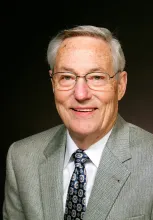
At the time of his retirement in 2016, Roy Holladay was serving the Operation Manager for Ministerial and Member Services of the United Church of God. Mr. and Mrs. Holladay have served in Pittsburgh, Akron, Toledo, Wheeling, Charleston, Uniontown, San Antonio, Austin, Corpus Christi, Uvalde, the Rio Grand Valley, Richmond, Norfolk, Arlington, Hinsdale, Chicago North, St. Petersburg, New Port Richey, Fort Myers, Miami, West Palm Beach, Big Sandy, Texarkana, Chattanooga and Rome congregations.
Roy Holladay was instrumental in the founding of the United Church of God, serving on the transitional board and later on the Council of Elders for nine years (acting as chairman for four-plus years). Mr. Holladay was the United Church of God president for three years (May 2002-July 2005). Over the years he was an instructor at Ambassador Bible College and was a festival coordinator for nine years.
