
Roy Holladay
This transcript was generated by AI and may contain errors. It is provided to assist those who may not be able to listen to the message.
When I was in the second grade, a couple years ago, I had a second grade teacher who taught my dad going through school.
And so, therefore, when I showed up, she had sort of an affinity. Actually, you could say I was a teacher's pet at that point. She lived across the street from the school. This was in Somerset, Kentucky. And there were occasions that she would send me across the street to pick something up that she left. Her mother lived there, and I'd go over. And anytime I'd go over there, knock on the door, her mother was there, I'll come in, and I'd get a cookie and a glass of milk, you know, this type of thing. I'd come wandering back to school. But for some reason, she let me do that. I don't know if it was cricket, you know, to let someone out of school like that or whatever, but she did it.
I always had a high regard for her and fond memories of her. When I got into high school here at Bradley Central High School in Cleveland, somewhere around my junior year, I discovered I wanted to go to college. And I realized I was abysmally trained to go to college. I didn't know anything. I'd come from a grade school out here in the country, where we had eight grades and two classes. And I got by, I made good grades, but I didn't really know anything. So I decided my senior year that if I was going to go to college, I needed to learn something. So I started taking what would be called today honors classes or college classes. And I remember a teacher who really left the biggest mark on my life, Mrs. Fitzgerald, taught English at Bradley. Everyone said, don't go to Mrs. Fitzgerald's class. She's the toughest teacher around. And I thought, well, that's exactly what I need. I need someone who's going to make me learn. And I probably learned as much about English that year as I learned any four or five years previous to that. And when I went to Ambassador College, some of that training really did rub off. And I was always very much appreciative of that. When you look back in your life, do you have a favorite teacher or someone that you can think of who made an impression upon you? Normally, it's somebody who really took an interest in you, who helped you along the way, and consequently, was someone that you think very highly of.
Well, the reason why I mentioned this is because, rather than there's going to come a time in the future, whether we like it or not, you're going to be a teacher. Sometimes we struggle with the job, the calling that God is going to give us, or is giving us, but you and I have all been called to be teachers in the world tomorrow, to instruct people, to educate them, to guide them.
And sometimes you and I can sit back and we can think, not me, I couldn't possibly teach anyone. And we might think that we don't have the ability, or the talent, or the skills, or the vocabulary, whatever it might be. We all clearly understand, the Bible says, we'll be kings and priests.
But do you know what the job of a priest is in the world tomorrow? One of the major responsibilities of a priest was to teach. So we will be teaching, and that's part of the job and responsibility that God will give to us. The Bible is replete with scriptures about God, about Christ, about the servants of God, and how that they were all teachers. When I get through today, if there's one thing you will know, is that the servants of God taught, and that they were teachers, that they were individuals, and that we have a wonderful group of people who have gone before us, who have set an example.
Our future in the family of God is intrinsically linked to the fact that we will be teachers as well. And the theme of teaching runs throughout the Bible and the scriptures. So we want to take a look at that today, and we want to take a look at how are you being prepared? Are you being prepared to teach, to educate? We want to examine what the Bible has to say about this. In Hebrews 5 verse 12, you might remember a very clear scripture in the New Testament. Hebrews chapter 5 verse 12 reads, thusly, For though by the time you ought to be teachers, so there comes a time that you and I ought to be able to teach.
You need someone to teach you, again, the first principles of the oracles of God, and you have come to need milk and not solid food. So God says that all of us, if we've been around for a while, should be able to come to the point of teaching. But notice what's implied with this. For everyone who partakes only, verse 13, of milk is unskilled in the word of righteousness, for he is a babe. But solid food belongs to those who are of a full age, that is, those who by reason of use have their senses exercised to discern both good and evil.
So what you find, number one, it says we ought to be able to teach. There ought to be a point where you and I should be able to teach God's way to others, and we should be able to do that if we have progressed beyond the milk of the word.
Not going to be able to teach that effectively, unless you fully understand and comprehend the principles of God's word. A teacher has to know more than his students. I mean, if you're going to go to a class and be taught, you hope that the person who's teaching you knows more than you do. I remember in high school, one of our sons was in a computer class, and they'd gotten a new computer, and the instructor was standing there, didn't even know how to turn the computer on. So one of our sons had to turn the computer on, hook it up, and you get it up and running and going, and that's not good.
It doesn't build your confidence that you're going to learn a whole lot out of that class when that type of thing happens. So let's take some of the fundamental scriptures in the Bible, progress through this. Let's see if we can pick out, glean some of the things that you and I need to be doing. Psalm 25 will begin with the book of Psalm. Verse 4, Psalm chapter 25 and verse 4.
We find here, show me your ways, O Lord. Teach me your paths. Now, if we're going to become teachers, one thing that we must do is to ask God to teach us first.
You don't just stand up and say, okay, I think I'm going to be a teacher, and you don't have any training. Oh, you've got to be taught yourself. So we ask God to teach us, lead me in your truth. Teach me, for you are the God of my salvation. Verse 8, "'Good and upright is the Lord, therefore He teaches sinners in the way.' The humble He guides and justice, the humble He teaches His way. And then you find, verse 12, who is the man who fears the Lord? Him shall He teach in the way He chooses." Notice what is a prerequisite for you and for me being taught by God. One is humility. If we want to be taught by God and learn, we can't go to God with an arrogant, vain, egotistical approach to saying, well, I know it all. You can't teach me anything. No, humility is a recognition that God is supreme and that He knows everything. And so you're asking God as the supreme creator of the universe to reveal to you His wisdom, His knowledge, and His understanding. And we need to ask God to teach us His way and to guide us as it says here. Now, David, as a young man, let's notice in Psalm 71, makes this very interesting statement in verse 17. Psalm 71 verse 17, Oh God, You have taught me from my youth.
And to this day I declare Your wondrous works.
Now also when I am old and gray-headed, Oh God, do not forsake me.
Now, I want you to notice that David was taught from his youth. I look around this room and I see a lot of young people in here. I say young people. I'm talking about twenties, teens, and even younger. And I want you to notice that God is not a respecter of persons.
And if you go before God and get down and pray to God and ask God, Father, I want to learn Your way. Teach me Your way. Help me to have an open mind. Give me understanding. Do you know that even as a young person, God will reveal His way to you and give you understanding? Because you're not cut off from God. I explained this principle the other day, but it's something that we need to focus on constantly. That is the fact that if one of your parents is in the church, then you are not cut off from God. You have access to God. You're not like the average person in the world who's totally cut off from God and doesn't have access to God. You have access to your Maker.
There are any number of scriptures we could go to, but let's go back to John 6, 45. John 6, 45. We'll look at Christ's example.
We find in verse 44 scripture that we all quote, "...none can come to me unless the Father who sent me draws him, and I will raise him up in the last days, as it is written in the prophets, and they shall all be taught by God." So there's going to come a time when all will be taught by God. Therefore, everyone who has heard and learned from the Father comes to me.
And so you find that at some time, everyone is going to be taught by God. In chapter 8, verse 28, in the book of John, John chapter 8, verse 28, "...then Jesus said to them, when you lift up the Son of Man, then you will know that I am He, and that I do nothing of myself, but as my Father taught me, I speak these things." So brethren, you find that even Jesus Christ said that He had been taught by God the Father, and as a result, He then turned around and taught others.
So as a minister, I realize, and this is true of any of us, if we're going to teach anything about God's way, we've got to first of all be taught by God, listen to God, and be able to profit from Him.
So what we find is simply this. The ultimate teacher in the universe is God. That God Himself is a teacher, and God will convey to us through His Spirit as His children. You see, we are all the children of God, and as His children, God will teach us, educate us, and train us. What you'll find as we go through the Bible, that most of the servants of God were classified in one sense as a teacher. They taught God's way. Let's go back and take a look at Moses in Deuteronomy 4, verse 1, the book of Deuteronomy, chapter 4, and verse 1. Notice here, it says, Now, O Israel, listen to the statutes and the judgments which I teach you to observe, that you may live and go in and possess the land which the Lord God of your fathers gives you. And so you find here that Moses taught the people God's way. Now, if I stand up here as a minister and teach my own ideas, my own philosophies, my own prejudices, that doesn't help you a bit. I've got to be able to open the Bible up and say, here's what God says. Here's the law of God, the statutes of God, the principles of God. And this is what God says and teach that. Well, this is exactly what Moses did.
So, it comes down to another fundamental question that is, do we know God's law well enough that we could teach it? All of us. That we could teach it. Now, I know that some of us will say, and I understand this completely, I can't remember.
Anybody have that problem? The ability to be able to remember a scripture or to be able to remember where it is? I used to remember, but sometimes you'll find you don't remember the same way you used to. Well, I don't think it's a matter of having to just quote every chapter and verse. I mean, if you were to prepare a formal sermon or a formal lecture, guess what? You've got concordances. You can look it up. You can find the scriptures, but do you know the scriptures? See, there's a difference.
I've met a lot of people who could quote scripture all day long. I mean, they run circles around me. But they didn't live by it. They could quote it. They could argue over it, but they don't live by it. What God wants us to do is to live by the principle. And if we were living by it, we've inculcated it into our minds, into our lives. Guess what? We can teach it. And when God resurrects us, clears away the fog in our memories, clears away all the plaque, gives us a, you know, a spiritual ability in mind, and we have a spiritual body, we will be able to remember. And you'll go to many of these things. So one day, you and I are going to be over cities and nations.
There will be a day that every one of you, if we make it into God's kingdom, will be standing up somewhere in the millennium at a feast at Tabernacles. And you will be preaching away on God's way. And if you're not preaching, you will be there inspiring somebody who is preaching, inspiring and helping that individual to be able to speak. Because after all, you know, this feast is in your city. You're responsible for it. You want to make sure that the right things are said and whoever is speaking speaks with inspiration. Notice verse 5, verse 14, So Moses taught statutes and judgments. Verse 14, So Moses was faithful to what God taught him. And he did that.
Now, in chapter 6 and verse 1 of the book of Deuteronomy, chapter 6, verse 1, Now this is a commandment, and these are the statutes and judgments which the Lord your God has commanded to teach you that you may observe them in the land which you are crossing over to possess. Now, remember, Moses was a type of that prophet. Moses said there's going to come a day when there will be a prophet like me and that when he arises that you are to listen to him. And of course, we know that prophet was Jesus Christ. Not anybody who's alive today, but it was Jesus Christ who was that prophet. And so you and I are to listen to him. So Moses was a type of that. Christ came and taught not only the law of God, but the spirit law, the spiritual principles of the law of God. Now, in Leviticus chapter 10, we find that not only did Moses teach, but among the Levites, there were teachers. In chapter 10, beginning in verse 8, the book of Leviticus, Leviticus 10 verse 8, notice here, the Lord spoke to Aaron saying, do not drink wine or intoxicating drink. You are your sons with you when you go into the tabernacle of meeting, unless you die. It shall be a statute forever throughout your generation. So if I got up here and tried to speak to you today, it just drunk a fifth of vodka.
I'm in trouble, and you're in trouble because you're not going to learn anything. And according to God, I could be struck down. So you don't do that. You know, that's just something you don't do. Why? Well, He shows that you may be able to distinguish between what is holy, what is unholy, between the unclean and the clean, and that you may teach the children of Israel all of the statutes which the Lord has spoken to them by the hand of Moses. So you'll find that the Levites were to teach. Now, one of the things about the Levites, they didn't really start working until they were around 25. From 25 to 30, they served an apprenticeship for five years. From 30 to 50, it was 50 or 55, they carried out their duties as priests or as Levites. And then those duties were turned over to younger men who came along. Now, what did they do after that? Did they just start to retire and do nothing? Well, no, they became the ones who lectured, who taught, who directed the choirs, who were responsible for helping to bring along that younger generation and to teach them. And so God has had those who have been teachers down through the ages. Now, in 2 Chronicles 30, verse 22, I want you to notice.
Chapter 30 and verse 22.
And we read here that Hezekiah gave encouragement to all the Levites. Because, you see, the Levites weren't always encouraged to teach God's way. There were times when they fell and disrepute. There were times when the prophets of Baal were around. And there were times when they had to go hide in caves, the servants of God, the prophets of God. But anyway, Hezekiah gave encouragement to the Levites, who taught the good knowledge of the Lord.
And they ate throughout the feast seven days, offering peace offerings and making confession to the Lord. And so you find they taught the good knowledge of God. Brethren, when we go to the feast, or one of the holy days, you should expect to be fed the good knowledge of God. What is good? What's right about God in His way? In chapter 35 here, we read another scripture, 35 verse 3.
Then He said to the Levites, who taught all Israel, who were holy to the Lord, put the holy ark in the house of Solomon. And again, you find the phrase, it's a simple phrase, but that they taught all the people. Now in the book of Nehemiah, Nehemiah chapter 8 and verse 9, it says, Nehemiah, who was the governor and Ezra the priest, inscribed, and the Levites, who taught the people, said to all the people, This day is holy to the Lord your God. Do not mourn nor weep for all the people wept when they heard the words of the Lord, or the words of the law. And then verse 13, Now on the second day of the Feast of Tabernacles, the heads of the Father's house of all the people with the priests, and the Levites were gathered to Ezra the scribe, in order to understand the words of the law. And they found written in the law, which the Lord had commanded Moses, that the children of Israel should dwell in boots during the Feast of the Seventh Month. So you'll find, again, that in order to be able to teach, you've got to study yourself. You know, there never comes a time that any teacher, I look around this room, I know like Ruth Bailey, different ones we have here who've been teachers, you can never say, Well, I went to school. I learned how to be a teacher. I am one now, and therefore I don't have to learn anymore. You are constantly learning. If I said I didn't have to learn anymore, you would never hear a sermon that ever got past what I knew 30 years ago, or 40 years ago. The Bible says we are to grow in grace and in knowledge, and any teacher knows that you have to go back for refresher courses. You go to be updated. You learn new techniques. You're always going to seminars. You're having to take extra classes so that you are able to be effective as a teacher. And the same principle applies to us. We are constantly studying the Word of God. A sermon doesn't just happen. My wife will tell you, there are a lot of times that I'll study on a topic all week. Now, everybody's different. Some ministers can study a topic. On Monday or Tuesday, they put their sermon together.
If I've got two weeks to put a sermon together, I'll take two weeks. If I've got a day, I'll take a day. But I don't know why, but I don't put the sermon together until I'm ready to give it. So my sermons go together the night before or the morning of. Now, it doesn't mean I don't have a general outline or I don't have all the information. But as far as actually putting it together, I can't do the other. It just doesn't happen. I just waste a lot of time. I find.
So my time is better spent studying, researching, preparing, gathering information. And then you begin to think about it. And after a while, you put sermons together. And you will find that most ministers Friday are burning the midnight oil. Now, in the early days, my wife used to do a lot of driving. And I would be working and putting the final touches on sermons as we headed the church.
Now, I tried to avoid that today. But there have been times that I knew I wanted to speak on a topic. I had no idea how it was going to come together. You know, you can have an idea. You sit down, you look at all this information, and it just does not click. It does not go together. So you get down and you pray. And you get back up and you sit there and you look at the paper. If you were a writer, it's called writer's block.
You're sitting there and nothing's coming out. And you go back and pray. Now, I've literally, over a period of time, prayed about a sermon. And I have absolutely, as I'm praying, started having a flood. Somebody opens a gate. And all at once, all these ideas start coming. And I learned a long time ago, keep a pad and pencil. And say, thank you, Father. Excuse me a minute. And you start writing things down. Otherwise, you forget them. And you go on and you keep going.
And I've had almost whole sermon outlines given to me. And you know, the general points are just boom. But you had to have done some studying ahead of time. You had to be prepared and do the research.
And so the same thing comes. That when you give sermons, or you speak, or you lecture, there's going to come a time when every one of us, we might not all do that now. We ought to be able, as the Bible says, back in 1st Peter 3.15, we ought to be able to give an answer for the hope that lies within us.
So we ought to be able to do that. And God is going to give us the abilities in the future. But, you know, it's got to be in there to be able to come out if we're going to be teachers in the future. Now, the book of Ezra, chapter 7, verse 10, gives an interesting principle. Ezra, chapter 7, verse 10. Now, we read here that Ezra had prepared his heart to seek the law of the Lord, to do it, and to teach the statutes and the ordinances in Israel. So to be an effective teacher, one, you have to prepare your heart.
You have to make sure your heart, your attitude, your motives are in the right way. You have to study the law of God. Then you have to apply it. You have to do it. You know, you can just get out and say, well, brethren, you need to do such and such unless you're doing it, because it doesn't work that way.
Then you can teach God's way. So in order to be an effective teacher, you have to be putting it into practice in your own life. And then you can effectively begin to teach others. That doesn't mean you're perfect. I'm not standing here saying that everything I ever talk about, I'm doing perfectly because you know better than that, and I know better than that. But we're all striving. There are standards that we're shooting for to go God's way.
Again, we have a lot of people over the years have told me, you know, how could I ever be a teacher? Well, it's based on how we live, isn't it? All of us teach by our example. The Bible says, first of all, we're to be a light and example. We teach God's way. And so we are to, let's say, to pattern that example. Now, in 1 Samuel chapter 12, 1 Samuel chapter 12 and verse 23, we find that not only did Moses and the Levites teach, but God used other servants of his to teach, too. There was another class of teachers in the Old Testament.
They were called the prophets of God. And actually, much of what we have in the Bible in the Old Testament come from the prophets. Jeremiah, Ezekiel, Daniel, Hosea, Joel, Amos, Obadiah, Jonah, all of those guys wrote for us. They taught and they conveyed God's way. Now, in verse 23 here, 1 Samuel chapter 12 and verse 23, we have Samuel speaking. It says, So, you find the prophets of God are to teach the good in the right way. And then there are times that the prophets of God have to correct also.
So, part of teaching is also correcting. If somebody is doing something wrong, they need to stop it.
So, in 2 Samuel 12, I won't go there, you can just jot it down. Nathan the prophet had to come to David. David had been guilty of murder. David had been guilty of adultery. And so, Nathan had to come to David and tell David what he had done wrong and teach him about God's law. In 1 Kings 18, we find that Elijah taught God's way. In fact, he taught it to Israel and he taught it to the prophets of Baal. They didn't listen. So, you find that the servants of God clearly, through the Old Testament, taught God's way. They were commissioned, commanded by God to teach it. Let's go to the New Testament, where we find that the greatest teacher in the New Testament, guess who that was? It was Jesus Christ, chapter 7 of the book of Matthew, verse 28.
Chapter 7 and verse 28.
Jesus Christ here, in what we call the Sermon on the Mount, chapter 5, 6, and 7 of the book of Matthew, taught the people. They were amazed at his teachings. And so it was, in verse 28, when Jesus had ended these sayings, that the people were astonished at his teaching. Now, why were they astonished? For he taught them as one having authority, not as the scribes. That's not a good recommendation for the scribes here. But Christ spoke with authority. So he didn't equivocate. He backed down. He said, well, now let me tell you now, I don't want anybody to get offended, but you know, maybe this, maybe that, and you know, no, he didn't say that. He said, you know, judge not, you won't be judged. Then, you know, he went on, ask, and you'll receive, knock, and you'll be open to you. And, you know, he went through and he spoke with authority. And you find that you and I can have authority. Where did he obtain his authority? Well, it came from God. I mean, he was placed there by God. He was taught by God. But it was also based upon this word. He knew the Bible. He knew the Scriptures backwards and forward. He had studied them from the time he could read, and he understood the principles of God. So, it was based upon the truth. One of the things that we were taught when we were at Ambassador College and coming out in the ministry as a young minister, I mean, here we are, 22 years of age, you're out pastoring two or three churches. In the early days, we don't do that anymore, but that's what happened back then. And, you know, how do you command authority? You don't get up and say, I'm in charge and you better honor me. I'm the minister. No, what you do, we were told, hide behind God's Word. So, you know, if you're going to preach, preach the Word. Hide behind it. Quote the Scriptures. And if somebody has an argument, they can argue with the Scriptures, but you preach the Word. So, your authority comes from that.
Now, you find in Mark chapter 10 in verse 1, let's go over there, Mark 10.1, says, Then he arose from there and came to the region of Judea by the other side of Jordan, and multitudes gathered to him again. And as he was accustomed, now notice, this was something he did on a regular basis, he taught them again. So, he taught them God's way. Now, I could read you all kinds. Actually, I have all kinds of Scriptures. I'm just sort of skipping over here and just picking the ones that I think really stand out, because there's so many Scriptures in the Bible. If you just look up the word teach or taught, and you read all the context around it, Jesus Christ taught his disciples for three and a half years. If you ever ask yourself, why did the disciples, when Christ came along, said, come and follow me, why did they just walk away from what they were doing? Fishing, tax collecting, whatever it was, come follow Christ. I mean, who would do that? Somebody came walking down the street of Chattanooga, and you were somewhere near, and they pointed their finger at you and said, come on and follow me. You say, huh? Why would I want to follow you? Well, what you find back at this time, Christ was called a rabbi or a teacher. There were many rabbis in Israel. They all had their disciples, and a rabbi would have a group of disciples who would gather around him, and they would follow him. And, you know, they might go over here on the seashore this time or under the tree the next day or over wherever, and he would teach them. And they would join themselves to him because they agreed with his philosophy. Obviously, if every rabbi taught the exact same thing, then they'd all be together. But each rabbi had a little different slant and a little different interpretation on the scriptures. That's much like today where you have the Baptists have a little different slant, the Presbyterians and the Lutherans and the Jehovah Witnesses, whoever it might be, Church of God. You can look at all of the various groups, sects, denominations, subdivisions, and so on. Everybody has a little different slant on how they look at things. That would be like a rabbi taking his disciples or students and they followed him. And so when Christ came along, they were looking for the Messiah to appear. In some cases, he had obviously had contact with some of them already. So when he said, come and follow me, they knew that they were going to follow somebody who was going to teach them and teach them God's way. So he taught them for three and a half years. And they were taught in the Word of God by Jesus Christ. Then, guess what?
They went out and started teaching based upon what he taught them. They taught other men who then went out and taught other men who taught other men. And here we are today. We've all been taught passed on, passed on, passed on. I'll show you that as we go on. Well, let's go over to Mark 6 while we're here in verse 30. Mark chapter 6 and verse 30. And notice what the disciples or the apostles had to say here. Then the apostles gathered to Jesus and told him all things, both what they had done and what they had taught. And he said to them, come aside by yourself to a deserted place and rest awhile, for there were many coming and going, and they did not even have time to eat. And so they departed to be by themselves. So you find that the apostles received training by Christ. Yes, he taught them for three and a half years, but there were times when he sent them out two by two. He sent 70 out on one occasion. He sent the apostles out, and they went out two by two, and they got experience. You know, that reminds me of what we've always done over the years. So in 1972, I went out on a nationwide baptizing tour.
Three months, 12 weeks. We visited over something like 360 people, counseled them for baptism, baptized about 140 or 50 people that summer. And the rest, we didn't baptize. We tried to encourage them to hang in there and not give up. You know, there would be churches, and maybe they'd be ready the next year. All of that was done for training purposes. We had men who used to be sent out a semester from ambassador to college. We'd come back, finish their education, and then you're sent out and you're trained under a minister. I can remember very vividly going out in the field, sitting there—I've mentioned this before—and being very thankful I wasn't in charge, because I had no idea what to say to these people. I had no idea how to counsel them. Maybe they're having serious marital problems.
Who knows what was going on? And so, you sit there and you learn, and you find out from various ministers how to handle situations. Well, this is what Jesus Christ did with the apostles. He taught them, and then they turned around and taught others. Acts chapter 4. We know on the day of Pentecost, in Acts 2, Peter got up and preached an inspired sermon, and 3,000 people were converted at that time. Well, here in chapter 4, you find out, as they spoke to the people, the priests, the captain of the temple, the Sadducees came upon them, being greatly disturbed that they taught the people and preached in Jesus the resurrection from the dead. So, they taught, and when they were commanded not to teach, you remember the famous chapter 5 verse 29, Peter and the other apostles answered and said, we ought to obey God rather than man. So, they said, we're still going to teach. As verse 28, they said they strictly commanded them not to teach in His name. And so, they said, well, sorry, we're still going to teach. They went ahead and taught, even though their lives were threatened. So, what you find is that the apostles then, as they went out to teach, they raised up churches, and there were other ministers who were ordained under them. The Apostle Paul was an apostle out of dew season. He came along a little later. He was taught by Christ also. He raised up churches. He left elders there to teach the people. And we find in 1st Timothy chapter 3 and verse 2, certain principles were laid down by the Apostle Paul to a young evangelist here, to Timothy, on how he was to conduct his ministry, what he was to do. And here we find about ordained men as elders, a bishop. A bishop is an overseer, one who has oversight over a congregation. Now, verse 2, a bishop then must be blameless.
The husband of one wife, so you can't have two or three, but one wife, temperate, sober-minded, of good behavior, hospitable. So, notice all of the characteristics. And one of them, for ordination, is able to teach. It doesn't say able to preach, but able to teach. There's a difference. I've known elders in the past who were not good preachers. But one on one, you ask them a question, and they had the ability to teach and to convey God's way of life. And so, this is one of the qualifications if you're going to be ordained as an elder. In chapter 4, the book of Ephesians, verse 11, if you're going to be a pastor of a church, notice what it says here. And he himself gave some to be apostles, some prophets, some evangelists, some pastors, and teachers. Now, the word teacher here, pastor and teacher, refers to a shepherd. The word pastor here actually means shepherd. And the word teacher, the construction here in the Greek is what is called Granville Sharps Rule. And all of you are familiar with Granville Sharps Rule, I'm sure. It indicates that they refer to the same individual. So what it means is that whoever is the pastor is also the teacher. The term applies to the same person. So the one who is shepherding you should also be the one who is teaching you and guiding you. Now, in 2 Timothy chapter 2 and verse 1, this is something that I've referred to before. 2 Timothy chapter 2 and verse 1, You therefore, my son, be strong in the grace that is in Christ Jesus. And the things that you have heard from me among many witnesses, commit these to faithful men who will be able to teach others also. So notice, you commit God's way of life to men who are faithful. In other words, they're going to teach the same thing. They're not going to go off and teach some heresy or some lame-brain idea. They're going to teach God's word as they've been taught that they've heard among many witnesses so that they know that this is truly the doctrine of the church.
See, this should be true of all of us. God should be able to look down and say all of us. All of us are faithful and that we should be able to teach. We should be able to be apt to teach. So the Bible is not talking about that everybody has to be apt to preach, but we should be apt to teach.
How many of you here are parents? Could I see your hands?
A couple of you. Some don't claim it. Alan's not claiming David over here. But all of us who have children, obviously, are parents.
Let's go back to Deuteronomy 6 verse 7.
Deuteronomy 6 verse 7, and we find that as parents, you and I have an awesome responsibility. One of the things that God tells us that we've got to do... Notice. Well, let's back up to verse 6.
These words which I command you today shall be in your heart. So see, they're to be written in your mind, and you shall teach them diligently to your children. You shall talk of them when you sit in your house, when you walk by the way, when you lie down, when you rise up. You shall bind them as a sign on your hand, and they shall be as frontlets between your eyes. You shall write them on the doorposts of your house and on your gates.
It's interesting that the word teach here means to wet or to sharpen. Ever use a wet stone to sharpen the blade of a knife? That's what this is talking about. When you teach, you're sharpening. It means to prick, to sharpen, to teach. So you and I are sharpening or wetting our children and their minds to teach them. And the particular Hebrew verb here, I think all of you may realize if you go looking up Hebrew verbs, they'll give you definitions, but there are different endings. There's the quail ending, the peel ending. This happens to be the peel ending to the verb, which means to sharpen or to teach. So you and I are to take our children and sharpen their minds. We are to teach them God's way of life. The book of Proverbs, Proverbs 1.8, tells young people, and I'll just address this to all of our young people here.
It says, listen to your father and your mother.
Why? Why would a father and mother be able to teach? Well, they've been around a little longer than you have. They've lived a little longer. They've gone through the same thing. I mean, you reach age 12, 13, you begin to go through puberty, and once you think you know everything.
And, you know, that's not a put down. I was that way. That's just the way teens are.
And what you find is that the psychologists say that when a young person begins about age 13, 14, they begin to think because their minds, you know, they go through puberty, their minds begin to change, and they can begin to think philosophically now. And they begin to think about philosophies a little deeper. Because they can think a little deeper, they think, aha, I'm bright. I know. You know, I understand. Well, they want you only have begun to scratch the surface. Your parents went through that. They also maybe went finished high school, maybe finished college. They've lived 15, 20 years after that. Here you are. They've got all this experience, all this education, all this background, and they've had time to develop their philosophical understanding of things also. So what we find is the Bible says, listen to your father and to your mother. I find today sometimes parents are afraid to teach their children.
Yet God gives us an absolute command, obligation, responsibility. If you don't, you're shirking the responsibility and the duty that God has given to us.
So what are we to teach when it comes to God's law?
Well, I've already quoted to you, and I'll just refer to this, Exodus 18, verse 20. We are to teach the statutes and the laws of God. Statutes and judgments. How many of us really know the statutes and judgments of God? It's an incumbent upon us to go back and read a little more of the Old Testament, I think, from time to time, as well as the New Testament. Ezekiel chapter 44 tells us in verse 23.
Ezekiel 44 verse 23.
Verse 23, You shall teach my people the difference between the holy and the unholy, and cause them to discern between the unclean and the clean. And then we're to teach them to keep God's law, His Sabbath, and so on. So we are to make a difference. We're to show people the right way, what is right, what is good, and what is holy. As I covered in the sermon that I gave to you, what laws do we keep? You know, now, today, one of the things that people forget is the fact that God has called us to be holy, to live a different way of life. And as a result of that, we don't go along just with the culture and the ideas of today. We are to live a holy life, and God has given us principles that He wants us to keep, whereby we will be holy. Now, you and I are going to be teachers in the world tomorrow. The one scripture we always think of, Isaiah chapter 30, beginning in verse 20.
Isaiah 30, verse 20. We read this, Though the Lord gives you the bread of adversity, and the water of affliction, yet your teachers will not be moved into a corner anymore. But your eyes shall see your teacher. You see, we will be spirit beings at that time, and we will be able to manifest ourselves to humans. And your ears shall hear a word behind you saying, This is the way. Walk you in it, whenever you turn to the right hand or whenever you turn to the left.
See, God's not doing that today in the sense that somebody comes up behind you when you turn to the left or the right. But God does the same thing today through His Spirit, doesn't He? The Spirit of God, if we are close to God, in attune to God, when we begin to deviate, there is a little spark in the mind that, you know, there is a, Is this right? Should I be doing this? This is wrong. You know, we begin to feel guilty. And so God convicts us. You find that there is going to come a time, as Isaiah chapter 11 shows, that the whole world is going to be taught God's way of life. That the word of God will spread over the earth like the waters covering the sea beds. So that means that God's way is going to go to all nations, to all people. You and I, brethren, are being called by God now. We're being prepared. We're being trained to become teachers. First of all, we've got to learn God's way. We've got to learn His laws. It has to be written in our hearts and our minds. We must live it. Do it, as the Bible says. We have to practice it. Put it into practice. Then we can explain it to others. If somebody comes to you and says, how do you pray? But if you've never prayed in your life, it's going to be difficult for you to explain how to pray. But if you've been praying every day for years, you can say, let me tell you how to pray. Somebody says, how to fast? What do I fast for? What are the principles concerning fasting? When you fast on a regular basis, guess what? You'll be able to tell them about fasting. Somebody asks you how to keep the Sabbath, how to keep the Holy Days. What about saving second tithe or whatever it might be? You know, because you've done it. You've lived it. It's part of you. So we can explain it to others.
Brethren, in the millennium as spirit beings, God will greatly multiply our abilities. And I sure hope so. I mean, we all need that. And we will be able to teach God's way. As I said, the fog will be lifted from our minds. We will have the character that we've developed, the knowledge that we've developed, but the limitations that we have as a human being will be removed. We will be a spirit being. We will be a part of the family of God. And we will be able to teach and explain His ways to humanity in ways that we never thought of, that God will inspire even us at that time. And we will be spirit beings. And so you find that we will be able to teach and convey God's way to all humanity. But rather than first of all, it must be engrafted in our minds. So let's make sure that we continue to study and that, as Hebrews 5, I started with in verse 12, for when we ought to be teachers. So you and I, brethren, ought to be teachers.
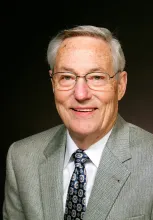
At the time of his retirement in 2016, Roy Holladay was serving the Operation Manager for Ministerial and Member Services of the United Church of God. Mr. and Mrs. Holladay have served in Pittsburgh, Akron, Toledo, Wheeling, Charleston, Uniontown, San Antonio, Austin, Corpus Christi, Uvalde, the Rio Grand Valley, Richmond, Norfolk, Arlington, Hinsdale, Chicago North, St. Petersburg, New Port Richey, Fort Myers, Miami, West Palm Beach, Big Sandy, Texarkana, Chattanooga and Rome congregations.
Roy Holladay was instrumental in the founding of the United Church of God, serving on the transitional board and later on the Council of Elders for nine years (acting as chairman for four-plus years). Mr. Holladay was the United Church of God president for three years (May 2002-July 2005). Over the years he was an instructor at Ambassador Bible College and was a festival coordinator for nine years.
