

Don Ward
This transcript was generated by AI and may contain errors. It is provided to assist those who may not be able to listen to the message.
Almost everyone in the building there asks, well, what does the Day of Trumpets picture represent? All the return of Jesus Christ's resurrection. And that is basically true. We all know that. Same with all the holy days now. For all the people who've been around the church for any length of time, they can just say what it means right off. And so what we do, try to do in the sermons is to fill in some of the details and some of the deeper means that are represented by the holy days. So what are the four principal themes of the Feast of Trumpets? They are war, judgment, resurrection, and victory. The Jews call this day Rosh Hashanah. Rosh means head, and Hashanah means year. So literally, it means the head of the year. The Jews believe, these are observant Jews, they believe that God's judgment on this day determines the course of the coming year. This day begins 10 days of what they call the Days of Ah, A-W-E. The Days of Ah in which they do self-examination, prayer, study, repenting, judging themselves. And for the judgment that will be executed on the Day of Atonement. Jewish tradition holds that Rosh Hashanah celebrates the anniversary of the creation of the world. In other words, that this is the day that God created the world. And on this day, God takes stock of his whole creation, and he looks at the world, which of course includes all of humanity. I wonder what God is thinking today as he looks at the world. He looks at the peoples of the world, the nations of the world. He looks at the chaos, the confusion, the tumult, the upset, and all the various things that plague the sons of men. Observe that Jews celebrate Rosh Hashanah for two days. They had a day to it. The second day was added by the rabbis during the Babylonian captivity. So the Jews celebrate two New Year's days, I guess you would say. Well, actually, that's what I am saying, because they celebrate Nisan in the spring, the beginning of the sacred year, and then the first of Tishri, which begins the new civil year in the fall. And the Holy Days center around those two New Year's, as it were, in the spring. The various feasts there pass over on living bread, Pentecost, and then the fall, with Trumpets, Atonement, Feast of Tabernacles, and the Eighth Day.
This day is viewed as a solemn day of soul-searching, forgiveness, repentance, and remembering God's judgments, as well as a day of joyful celebration, looking forward to God's goodness and mercy in the New Year. Let's read now Leviticus 23. Let's turn there. We get a bit of a picture there from what the Jews are doing since Jesus Christ came to the earth. And of course, He came to His own and His own received Him not. So they basically make up the observance of this day in various rituals, some of it lending itself to superstition. What is the real meaning? What is this day really all about? Leviticus 23, beginning in verse 23, and the Eternal spoke unto Moses, saying, speaking to the children of Israel, saying, In the seventh month, in the first day of the month, so it is when the month begins, the new moon, the month begins, the Hebrew calendar with the new moon, shall you have a Sabbath, a memorial of blowing trumpets, plural, a memorial of blowing trumpets, and holy convocation, and here we are in holy convocation. It's quite interesting, as I'd like to note, that people are far more apt to show up on the holy days than they are on the weekly Sabbath, but the commandments are of equal import. You look at Leviticus chapter 23 that we're in here. You look up at verse 1, Leviticus 23, the Lord spoke unto Moses, saying, speaking to the children of Israel, saying to them, Concerning the feasts of the Eternal, which you shall proclaim to be holy convocations, even these are my feasts, and the first one is the weekly Sabbath, six days you'll work, rest on the Sabbath, and holy convocation. So the command to have a holy convocation on the weekly Sabbath is just as imperative in the scriptural sense as on the holy days. But I suppose, of course, there's something special about holy days. You can sense the... There is a different kind of excitement, anticipation. There seems to be a lifted spirit. You can sense it in this building even today with the hymns, the music, and everything that goes with it. So it is a time I would sure want to be here. I wouldn't want to be anywhere else.
As I teach the classes, ministerial training, 23 most of them pastors around the nation, they talk about how it seems that people begin to take the weekly Sabbath more and more as just an option. They say, maybe I'll get more out of it staying at home than coming there. I've heard everything they have to say.
And in some ways, you could give the sermon on the meaning of any of the holy days. Most of you who have been around, you know at least the basics. And it seems that for some, while I know the basics, I'm just sort of waiting around till that trumpet sounds. Well, as we'll read later, one of the great trumpets that's sounding is the voice that cries out, Prepare you the way, prepare for the day.
Verse 25, You shall do no servile work therein, but you shall offer an offering made by fire unto the eternal. So the instructions are quite brief there in Leviticus 23 with regard to the observance of the Feast of Trumpets. If you'll turn forward to Numbers 29, it somewhat repeats what we've just read there. In Numbers 29, beginning in verse 1, In Numbers 29 and verse 1, And in the seventh month, on the first day of the month, you shall have an holy convocation. You shall do no servile work. It is a day of blowing the trumpets.
And you shall offer a burnt offering for a sweet savor unto the eternal. One young bullet, one ram, seven lambs, and it adds here what the offerings are. Verse 3 and 4 and 5 and 6 and 7. So on it goes about the offerings that would be offered in the Feast of Trumpets. The trumpets referred to on the day of trumpets was not just the silver trumpets that they usually sounded at the new moon or at the time of a victory celebration or calling for the assembly to come together. The trumpet referred to is the shofar. The shofar is a ram's horn, a ram's horn that has been hollowed out and made possible for it to sound notes. There are some five or so different trumpet blasts that are used by the observant Jews today. They start off by, say, 100 notes from the shofar. So the shofar is not the same as the silver trumpets blown on the other new moons. Silver trumpets were sounded at the daily burnt offerings and of the beginning of each new month. And you can read about that in Numbers chapter 10. But the shofar was specifically blown on the beginning of the month of Tishri. On this day, on the day of trumpets, so a distinguishing feature of the Feast of Trumpets is a climatic blast on the shofar. It's a long blast. It's not the usual series of short bursts signaling alarm or bad news as with the silver trumpets. It is a long blast signaling victory or good news. It is this long blast that is referred to probably as the last trump.
However, as we shall see, we know that the seventh trump is divided into seven other times in which an angel sounds, and the vials of wrath each one is poured out. So the Jews, they call this day the day of the awakening blast, because it is said that this blast awakens the dead. Of course, it is nothing new. We don't have any corner on the market with regard to what has been historically understood with regard to trumpets. It has been taught for a long, long time that this day is connected with resurrection. So if we read Leviticus 23 and also Numbers 29, it said, The blowing of trumpets. The trumpet sounds throughout the day of the Lord. If not literally, then figuratively. Now, please turn to Revelation 10. Revelation 10.
If we master all we're going to say here today, we'll have a far greater understanding of this. Some of it might be in the speculative realm. We support what we say by Scripture, but Scripture does not address every last little detail and answer every last question that people have about timing and that kind of thing. In Revelation 10, verse 6, This present age, Aeon, is going to slip away. The Greek word there for time is kronos, from which we get chronology, the marking of time. But in the days of the voice of the seventh angel, when he shall begin to sound, the mystery of God should be finished. What is the greatest of mysteries of God is how that flesh can be begotten of the Spirit of God and eventually born into the family of God. Angels were created beings created to whatever state. There are three levels, at least, of angels, the ordinary angels, the seraphs, and the caravs. Three caravs are identified in the Bible, Michael, Gabriel, and Lucifer. Of course, Lucifer, as you know, became Satan the devil.
When this begins to sound, the mystery of God should be finished as he is declared to his servants the prophets. And of course, you read in the Old Testament, some might say, well, it's pretty hard to find much about trumpets in the Old Testament, but there is quite a lot, as we shall see. And when the Bible speaks of trumpets, it speaks both literally and figuratively. If you look at Revelation chapter 1, you'll see the figurative sense as well. Verse 10, I was in the Spirit, and the proper translation, Kuryake ekumara, is translated correctly in 1 Thessalonians 5 verse 2, is the day of the Lord. Now, of course, Protestants try to use this to say the Lord's day being Sunday, but it's not a Sunday. This time setting is the day of the Lord. Basically, what the book of Revelation is about is the day of the Lord, when God and Christ directly intervene in the affairs of men. I was in the Spirit on the day of the Lord and heard behind me a great voice as of a trumpet, saying, I am Alpha and Omega, the first and the last, and what you see right in a book, send it to the seven churches, which are in Asia, and it lists the seven. And I turned to see the voice that spoke with me, and this voice was a powerful voice as of a trumpet. So, in the scripture you'll also read, lift up your voice as a trumpet. So, the trumpet sounds throughout the day of the Lord. Note that it says, when the seventh angel begins to sound. The trumpets are blown all through the day of the Lord, showing that it will take some time for all of these events to be fulfilled. I think we have too much of a sort of a fairy tale kind of thing, that this happens, that happens, it all happens just so quickly. The things that you see being played out today on the news, and then with world leaders and the nations striving, as it talks about in Psalm chapter 2, which we'll probably read later, these things are events leading up. It's not just mystical magically at all. I mean, we are involved. We're in the middle of it.
And you'll see much of it live and in color as long as the power grid is up.
The seven vials of wrath are probably announced with the trumpet blast also. You look at Revelation 16. Revelation 16.
And I heard a great voice out of the temple saying to the seven angels, Go your ways and pour out the vials of wrath of God upon the earth. And the first went and poured out the vials upon the earth. And so there are seven angels involved there that go forth and pour out those vials. We'll come back to that later. But this great mystery of how a mortal human being made of the dust of the earth can become a spirit being through a spiritual birth. The angels were created, but God in His grace and love and mercy wanted to have a family. And so He created human beings and ordained a plan whereby they would be begotten of His Spirit, the down payment on eternal life and eventually born into His family. Now, there are resurrections to physical life recorded in the Bible. You know about Elijah. You know about the man falling out of the loft when Paul was preaching and was resurrected back to life. You know that Jesus Christ raised Lazarus from the dead but not to spirit life. There is only one resurrection recorded in the Bible in which one who lived in the flesh was resurrected to spiritual life. Now, some might say, well, what about Enoch? Well, Enoch was translated. The two witnesses, after they're killed, they're caught up. And people watch and observe and are gassed, I'm quite sure, at that. Now, whether or not that is resurrection to spirit life forever, I don't know. The Bible doesn't say for sure. We could make assumptions with regard to that. But we know for sure that there is one who lived in the flesh and who was resurrected to spirit life. He became the firstborn among many brethren. Look at Psalm 2 and the book of Psalms. And Psalm 2 is very reflective of this time in which we're living and the fulfillment of this day. Beginning with, of course, Jesus Christ has gone through this already, lived in the flesh, is resurrected as a spirit being. Why do the nations rage and the people imagine a vain thing? Why do they do that? Why does the UN get together? Why do the leaders of the world try to say that all religions are basically the same and we all worship the same God? We do not worship the same God. Of course, what they will eventually come to, as in Revelation 13, is that one world religion will eventually be enforced upon the whole earth. And everyone will bow down and worship except those whose names are written in the Lamb's Book of Life. Why do the nations rage and the people imagine a vain thing? The kings of the earth set themselves and the rulers take counsel together against the eternal and against his anointed. Christ, the word Christ, means the anointed one. Messiah, the anointed one. What are they saying? Let us break their bands asunder, cast away their cords from us. He that sits in the heavens shall laugh. The Lord shall have them in derision. I mean, these puny physical leaders with their pomp and pomposity and arrogant egos parade around as if they are going to bring peace to the earth. Then shall he speak unto them in his wrath and vex them in his sword as pleasure. In contrast to that, beginning at verse 6, what?
Yet have I set my key upon my holy hill of Zion, Zion, a geographical place in the environs of Jerusalem, Zion, symbolic of the church, Hebrews 12, 22, and 23. I will declare the decree that the Eternal has set unto me, You are my Son, You are my Son, this day have I brought you to birth. That's literally what it's saying. The Hebrew word for begotten there is yalad. Y-A-L-A-D. It is the same as Gedao in the New Testament.
Paul quotes this in his famous sermon in Acts 13. We'll read in just a minute. This day have I brought you to birth. Ask of me and I shall give you the nations for your inheritance and the uttermost parts of the earth for your possession. You shall break them with a rod of iron, you shall dash them in pieces like a potter's vessel. So in view of this, what about you kings? What about you leaders of the earth? Do you get the message? Be wise now therefore, O you kings. Be instructed, you judges of the earth. Serve the eternal with fear and rejoice with trembling. Kiss the son lest he be angry and you perish from the way. When his wrath is kindled but a little, blessed are all they that put their trust in him. Of course, the only way that anyone is going to survive what lies ahead is to put their trust in God and Jesus Christ. Now in Acts 13, Paul preaching a great sermon here. There are three great sermons that are recorded in the book of Acts. Peter's Sermon on the Day of Pentecost, Acts 2, Stephen's Sermon before he was stoned in Acts 7, and this great sermon by Paul in Acts 13. If you're not familiar with these, all three of these, to some degree, trace the history of Israel bringing it up to the time of Jesus Christ.
In verse 29, breaking in on the thought and then picking up the thought, and when they had fulfilled all that was written of him, that is Christ, they took him down from the tree and laid him in a sepulchre. So they crucified Christ, put him in the sepulchre, the tomb, but God raised him from the dead. And he was seen many days of them which came up with him from Galilee to Jerusalem, who are his witnesses under the people. And we declare unto you glad tidings how that the promise which was made under the fathers, God has fulfilled the same unto us their children, in that he, God, has raised up Jesus again as it is written in the second psalm, which we have just read, This day, this particular day, day, yom, this day have I brought you to birth. You are my son, this day have I ganao you. Ganao, when it is used of the father, means to engender new life. When it is used of the mother, it means to bring forth. And so God the father brought forth Jesus from the dead, and as concerning that, he raised him up from the dead. Now no more to return to corruption. He said on this wise, I will give him the sure mercies of David. So in Revelation, chapter 1, we see in verses 4, 5, 4 through 7, we're going to read here in Revelation chapter 1, that Jesus Christ is the firstborn among many brethren, raised from the dead.
Revelation 1, John did the seven churches, grace and peace, from him which is, which was, which is to come, and from the seven spirits which are before his throne. Now who is that speaking of in verse 4, which is to come?
Well, you'll probably say Jesus Christ, unless you've heard me. This is about the tenth time I've covered this. In verse 5, and from Jesus Christ, and from Jesus Christ, who is the faithful witness and the firstborn, prototical, of the dead, the firstborn of the dead and the prince of the kings of the earth, unto him that loved us, washed us from our sins in his own blood, and that made us kings and priests unto God and his Father, to him be glory and dominion forever and ever. Amen. Behold, he comes with clouds, and every eye shall see him, they also which pierced him, and all the kindred of the earth shall wail because of him, even so, amen. The fulfillment of this day is going to be perhaps the most momentous day in the history of the universe, because this present evil age is going to come to a grand crescendo and a halt, being culminated with the day of atonement and the binding of Satan and the Feast of Tabernacles in the eighth day, the great fulfillment of the plan of God. Spirit begotten believers are now espoused to Christ. What we're about to cover now, very important to understand the whole thrust of this day.
And it also, I think, helps us with some of the time elements of it as well. 2 Corinthians 11.2, if you turn there, we have been covering 2 Corinthians in our ministerial training class. You have to read this verse by verse, probably out loud and really meditate on it. What Paul went through with the Corinthians, the criticisms that he received from them, was absolutely unbelievable. But he endured through it all, he loved them all the way through, and he never gave up. And I think eventually he somewhat won them over, though at great, great grief through a period of several years. In verse 2 of 2 Corinthians 11, I am jealous over you with godly jealousy, for I have espoused you to one husband.
Paul fathered them in the Gospel. In 1 Corinthians 4, he says something like this, because though you have 10,000 teachers, there is only one that has fathered you in the Gospel. Of course, a lot of men came into Corinth and stole the hearts of the Corinthians to some degree. Handsome men, well-spoken men, eloquent speakers, and people tended to follow them.
And they stole...he talks about the false apostles in chapter 13, and they stole the hearts of the Corinthians. On the other hand, they said, well, Paul, he's weak in appearance, and his voice is not very pleasing. And the various other criticisms that they leveled at him. But he says, I have espoused you to one husband that I may present you as a chaste virgin to Christ. And of course, it is the role of the ministry to try to present whomever he is responsible for as chaste virgins to Christ. Because judgment is much greater for a minister, one who stands before the people. And all you can do is to beseech and try your best to teach and all the things that go with it. And he that hath an ear to hear, let him hear. And it's not just hearing, it is actually doing, as in nearly every opening prayer or closing prayer especially, that we put these things to practice in our lives. And we do not take it for granted that we know it all. In the Jewish wedding tradition, the bride entered into her closet and came out at the appointed time.
The bride entered into her closet and came out at the appointed time. We have been espoused to Christ. If you go to Isaiah now, chapter 26, Isaiah 26, 25, 26, in this totality, if really understood and taught openly, you would be quite amazed at some of the things that are contained herein and therein. In Isaiah chapter 26, verse 1, In that day shall this song be sung in the land of Judah. And that day is the day in which the millennium is beginning. We have a strong city. Salvation will guide a point for walls and boards. Open you the gates that the righteous nation, this is one place where the church is called a righteous nation. Remember in 1 Peter 2, verse 9, You are a holy nation. Open the gates that the righteous nation, which keeps the truth, may enter in.
You will keep him in perfect peace, whose mind has stayed on you, because he trusts in you. We don't have time to read the whole chapter. We skip down now to verse 20. You should read it all and really meditate on it and glean from it whatever you can, because it is rich. Come, my people, enter into your chambers, and shut your doors about you. Hide yourself, as it were, for a little moment until the indignation be passed. God, during the day of the Lord, introduced by the blowing of the trumpets, is going to plead with all flesh, it will be a time of great indignation. For behold, the Lord comes out of his place to punish the inhabitants of the earth for their iniquity, their lawlessness, and the earth also shall disclose her blood and shall no more cover her slain.
In that day the Lord, with his great and strong sword, shall punish Leviathan. This is an atonement scripture, because Satan the Devil is symbolized by Leviathan, even Leviathan, that crooked serpent, and he shall slay the dragon that is in the sea, that great dragon, Satan the Devil, who is deceiving the whole world. Look at Joel, chapter 2. Joel, chapter 2, verse 1, the church is admonished to blow the trumpet, not the literal trumpet, not the shofar or any other trumpet. Shofar, round horn, silver, any other. Blow the trumpet in Zion.
Blow the trumpet in the church of God. I wrote a letter of January 1, 1982. I don't know if that was the date on the letter, but that's the day the fasting was called. Mr. Armstrong sent out a letter, quoting this verse, Blow you the trumpet in Zion.
In the church of God, sound an alarm in my holy mountain. Let all the inhabitants of the land tremble, for the day of the Lord comes. It is nigh at hand. A day of darkness and gloominess, a day of clouds and of thick darkness, as the morning spread upon the mountains. A great people and strong, there's never, ever been the like. Neither shall there be after it, even to the years of many generations.
Now, in view of this, what is God wanting us to do? Verse 13. Of course, in all of these things, if you want to hold a complete picture and a greater understanding, you'll need to follow up. I'm hitting the highest points.
Verse 13. And rend your heart and not your garments, and turn unto the eternal your God, for he is gracious and merciful, slow to anger and of great kindness, and repents him of the Reah. King James' translation, evil, should be better translated to calamity, upset, it is a Reah. It is not evil in the sense of God is committed evil, and he has to repent of it. Maybe he'll change his mind about what he's about to do with regard to the judgment. Who knows if he will return and repent that he's changed his mind, leave a blessing behind him, even a meat offering and a drink offering to eternal your God. Blow the trumpet inside him. Sanctify a fast, call a solemn assembly. Gather the people, sanctify the congregation, assemble the elders. Gather the children and those that suck on the breasts. Let the bridegroom go forth of his chamber and the bride out of her closet. And so, in the Jewish ceremony, the bride entered into her closet, came out at the appointed time. And at the appointed time, God is going to knock on the door, as we'll read in a few minutes. The bridegroom has come for the bride. And the question, of course, for all is, are we ready? Let the priests, the ministers of the Lord, weep between the porch and the altar. There was a porch onto the temple. Spare your people, O Lord, and give not your heritage to reproach, that the nations should rule over them. Wherefore should they say among the people, Where is their God? Then will the Lord be jealous for his land and pity his people? Yes, the Lord will answer and say unto his people, Behold, I will send you corn and wine.
Of course, corn from which you can get bread, you could say, Well, these things symbolize spiritual things, and bread symbolizes the word of God and wine, symbolizes the blood and oil of the Holy Spirit. And you shall be satisfied therewith, and I will no more make you a reproach among the nations. The Jewish wedding, the groom, comes for his bride like a thief in the night. He comes for his bride like a thief in the night, and where does he take the bride? He takes the bride away into the bridal chamber for the bridal week at his father's house. The bridegroom takes the bride to a bridal chamber that the groom's father has prepared, takes the bride to the father's house. Now we look at Matthew, chapter 25. Matthew 25 is a part of the Olivet Prophecy. The Olivet Prophecy is given in response to the disciples' questions, saying, Master, what shall be the sign of the end of the age in your coming? Matthew 25 gives the recipe, I guess you could call it, the formula for being ready when the bridegroom comes. In Matthew 25, when shall the kingdom of heaven be like that? It is when verses 48 and 49 are taking place, when people are saying, My Lord, the lace is coming, when they're smiting their fellow servants, when they're eating, drinking, making merry, the Lord of that servant will come in a time when he looks not for him in an hour that he thinks not, cut him asunder, weeping and ashing of teeth. Then, when that's going on, then shall the kingdom of heaven be like it, unto ten virgins which took their lamps, went forth, and meet the bridegroom. And five of them were wise, and five were foolish. They that were foolish took their lamps, took no oil with them. But the wise took oil into their vessels with their lamps, while the bridegroom tarried. They all slumbered and slept, all of them! They slumbered and slept. Now, if you look at the messages to the seven churches in the sense of seven epics, seven periods of history in the church, we know what it says about Leah the Seer, the last one listed, Luke warm, rich and creased with goods.
While the bridegroom tarried, they all slumbered and slept, and at midnight there was a cry made, Behold, the bridegroom comes, comes as a thief at night, to take the bride away to the bright old chamber that the father has prepared for the bride for this week here, consummating the wedding, the marriage. Behold, the bridegroom comes, go you out to meet him. Then all those virgins arose and trimmed their lamps, but it was too late for the foolish.
It was too late for them. Look at verse 10.
And while they went to buy, the bridegroom came, that is, the foolish, and they that were ready went in with him to the marriage, and the door was shut. They went with him to the marriage, where now betrothed. The door was shut. Afterward came also the other virgins, saying, Lord, Lord, open to us. But he answered and said, Barely I say unto you, I know you not. Watch there, for you know neither the day nor the hour, wherein the Son of Man comes. He comes as a thief in the night. That's repeated several times. And at midnight there was a cry, Behold, the bridegroom comes.
Note the words of the Apostle, and these were the words that were sung here for the special music. Let's go to 1 Thessalonians chapter 4. 1 Thessalonians chapter 4, which describes some of the events that take place in the fulfillment of this day, as you heard in the special music. 1 Thessalonians chapter 4, verse 13, But I would not have to be ignorant, brethren, concerning them which are dead or asleep, that you sorrow not even as others which have no hope. For if you believe that Jesus died and rose again, even so them which sleep in Jesus will God bring with him. For this we say unto you, by the word of the Lord, that we which are alive and remain under the coming of the Lord shall not precede those who are dead.
For the Lord himself shall descend from heaven with a shout, with the voice of the archangel, and with the trump of God, and the dead in Christ shall rise first.
Then we which are alive and remain shall be caught up together with them in the clouds to meet the Lord in the air, and so shall we ever be with the Lord.
So shall we ever be with the Lord.
The saints are with him when he returns, riding on white horses and clothed in white linen. We'll read that in just a moment. Of course, we want to make sure that we're riding the right white horse because there will be a lot of false christs going out, and they will be pretending to be those who can bring peace to the world.
I don't know if any of us have in our minds that you're resurrected at the seventh trump, caught up in the air, attend the marriage supper of the Lamb, come back with Christ, fight the battle of the great day of God Almighty in 24 hours. That's not going to happen. And I'll show it clearly from the scripture.
Not to mention the fact that there are seven bowls of wrath poured out between the last trump and the completion of the seven vials of wrath. So we should note and be keenly aware of the fact that seven vials of wrath are described in Revelation 16.
So let's notice Revelation 16.
Before we read Revelation 16, let's go to 15, back up just a bit.
Because I want to focus on this phrase that we just read.
So shall we ever be with the Lord. Just read that from 1 Thessalonians 5, 17. So shall we ever be with the Lord. So shall we ever be with the Lord. Where is the Lord going to be?
And where will the resurrected saints be during the time that the seven vials of wrath are poured out?
Perhaps resurrected saints are the ones that are described here in Revelation 15. Standing on the sea of glass before the seven last plagues are poured out. In Revelation 15, verse 1, And I saw, as it were, a sea of glass mingled with fire, and them that had gotten, them that had gotten the victory over the beast, over the image, over the mark, and over the number of his name, stand on the sea of glass, having the harps of God. And they sing the song of Moses, the servant of God, and the song of the Lamb, saying, Great and marvelous are your works, Lord God Almighty. Just and true are your ways, you king of saints. Who shall not fear you, O Lord, and glorify your name? For you only art holy, for all nations shall come and worship before you, for your judgments are made manifest. Now, we have in our doctrine so emphasized the reward of the save is not heaven, and it is not. Of course, Jesus Christ, who was the firstborn from the dead, read in Revelation 1.5, He now sits at the right hand of the Father in the heavenlies, making intercession for us. After He was resurrected, He appeared to the disciples, manifested Himself as in the flesh, walked through the wall, and of course they saw Him ascend into heaven. So here's Jesus Christ, the resurrected being. But where is Jesus Christ going to rule and reign? Well, we will read the Scripture a little later. See, we're going to rule and reign on the earth. The New Jerusalem comes down out of heaven, adorned as a bride for her husband. Come here, I will show you the Lamb's wife, and I saw the New Jerusalem descending from heaven. Continuing here, verse 5, After that I looked, and behold, the temple of the tabernacle of the testimony in heaven was opened. And seven angels came out of the temple, having the seven plagues clothed in pure and white linen, and having their breasts girded with golden girdles. And one of the four beasts gave unto the seven angels seven golden vials full of the wrath of God, who lives forever and ever. And the temple was filled with smoke from the glory of God and from His power, and no man was able to enter the temple until the seven plagues of the seven angels were fulfilled. And I heard a great voice out of the temple, saying to the seven angels, Go your ways, and pour out the vials of the wrath of God upon the earth.
Now these vials take some time. They don't happen overnight. It would be quite impossible for them to happen overnight. Verse 2, The first went and poured out his vial upon the earth. There fell a noisome and grievous sower upon men, which had the mark of the beast upon them. The second poured out his vial upon the sea. It became his blood. The third poured out his vial on the rivers, the fountains. The fourth poured out his vial, verse 8, upon the sun, the scorched men. The fifth, verse 10, poured out the vial upon the seed of the beast. And it was full of darkness, and there gnawed their tongues. And the sixth, and this is very crucial here, and the sixth angel poured out his vial upon the great river Euphrates. And the water was dried up that the way of the kings of the east might be prepared. And I saw three unclean spirits like frogs come out of the mouth of the dragon, and out of the mouth of the beast, and out of the mouth of the false prophet. For they are spirits of devils working miracles, which go forth unto the kings of the earth, and of the whole world, to gather them to the battle of the great day of God Almighty. See, the great battle of the great day of God Almighty occurs at the sixth vial of wrath. Who's going to fight the battle of the great day of God Almighty? Then this inset verse, once again a warning, Behold, I come as a thief. Blessed is he that watches and keeps his garments, lest he walk naked, and they shall see his shame. And he gathered them, that is, the nations, into a place called in the Hebrew tongue Armageddon, and the seventh angel poured out his vial into the air. There came a great voice out of the temple, saying from the throne, Behold, it is done. And this is where, verse 19, Babylon falls after the battle of the great day of God Almighty, who fights this great battle of the day of God Almighty.
We look at Revelation chapter 19.
Revelation 19, And after these things, I heard a great voice of many people in heaven, saying, We've recently treated this in a doctrinal meeting, and just speaking frankly, there was not unanimous agreement because it is ambiguous to some degree about these, but let's read it and see what it says. After these things, I heard a great voice of much people in heaven, saying, Alleluia, salvation and glory and honor and power unto the Lord our God.
Some say, well, this is a vision. You're seeing this vision. Or you're hearing this. It's not literally happening. However, people might try to interpret this. Let the Scripture speak for itself.
For true and righteous are his judgments, for he has judged the great whore, and that is Babylon, which did corrupt the earth and her fornication, and hath avenged the blood of his servants at her hand. And again they said, Alleluia, and the smoke rose up forever and ever.
And the twenty-four elders and the four bees fell down and worshipped God, that sat on the throne, saying, Amen, Alleluia.
And a voice came out of the throne, saying, Praise our God, all you his servants, and you that fear him, small and great. And I heard, as it were, the voice of a great multitude, and as the voice of many waters, and as the voice of a mighty thundering, saying, Alleluia, for the Lord God, omnipotent reigns. That will be a glorious time when the kingdoms of this world become the kingdoms of God and his Christ, and they shall reign forever and ever.
Let us be glad in her joys and give honor to him, for the marriage of the Lamb is come, his wife has made herself ready.
And to her was granted that she should be arrayed in fine linen, clean and white, for the fine linen is the righteousness of the saints. And he said unto me, Write, Blessed are they which are called unto the marriage supper of the Lamb. And he said unto me, These are the true sayings of God, and I fell at his feet to worship him. He said unto me, See that ye do it not. I am your fellow servant, and of your brethren, that have the testimony of the witness of Jesus Christ, the testimony of Jesus, worship God, the testimony of him.
And that this commencement of Jesus is the spirit of prophecy, Now you see a description of Jesus Christ coming, the saints are with him, as Lord of lords and king of kings, and the opposition is going to be defeated.
In verse 11, He that set upon him was called Faithful and True, and in righteousness he did judge and make war. His eyes were as a flame of fire, his head were on his head many crowns, and he had a name written that no man knows, but he himself. He was clothed with a vesture dipped in blood, and his name is called the Word of God.
John writes this, remembering John 1-1, In the beginning was the Word, the Word was with God, and the Word was God, showing existence, relationship, identity. That name is still here. And the armies which were in heaven followed him upon white horses, clothed in fine linen, white and clean. And to her was granted that she should be arrayed in fine linen, clean and white. For the fine linen is the righteousness of saints. The armies which were in heaven followed him upon white horses, clothed in fine linen, white and clean. And out of his mouth goes a sharp sword, that with it he should smite the nations, and he shall rule them with a rod of iron.
And he treads down the winepress of the fierceness and wrath of Almighty God. He had on his vesture a name written, King of Kings and Lord of Lords, Hallelujah Chorus. And I saw an angel standing in the sun, and cried with a loud voice, saying to the fowls that fly in the midst of heaven, Come and gather yourselves together unto the supper of the great God, that you may eat the flesh of the kings and the flesh of captains.
For here is the fighting of the battle of the great day of God Almighty, where all the nations are gathered together against the return of Jesus Christ. What happens to them? Eat the flesh of kings, the flesh of captains, the flesh of mighty men, the flesh of horses, and then that sit on them, and the flesh of all men, both free and bond, both small and great. And I saw the beasts and the kings of the earth, and their armies gathered together to make war against him, that sat on the horse and against his army.
You see, this is the word of God. This is not make-believe. And the beast was taken, and with him the false prophet that wrought miracles before him, with which he deceived them that had received the mark of the beast, and then that worshipped his image. These both were cast alive into a lake of fire burning with brimstone. And the remnant were slain with the sword of him that sat upon the horse, which sword proceeds out of his mouth, and all the fowls were filled with their flesh.
And then the binding of Satan and atonement in verses 1, 2, and 3, and so on. So the saints were with him riding on white horses clothed in white linen. As previously noted, the nations are not gathered to fight the battle of the great day of God Almighty until the sixth vial of wrath is poured out. Babylon is not destroyed until the pouring out of the seventh vial of wrath. We should be acutely aware of the fact that the Holy Days have a literal and also a parallel spiritual fulfillment. Beginning with, I should say, festivals, Passover is not listed as a Holy Day, but it's commanded to keep. Passover, Jesus Christ, was killed on Passover, which made it possible for us to keep the Feast of Unleavened Bread and have our sins remitted.
After we accept Jesus Christ, we repent, we're to be baptized, and then we receive the laying on of hands and receive the Holy Spirit. The day of Pentecost and the spiritual sense was fulfilled literally on the day of Pentecost. Of course, each person has to go through the fulfillment of these days in their personal lives. So we're in the period of great universal plan of God with regard to literal fulfillment of the Holy Days in the ultimate sense between the Feast of Pentecost and the Feast of Trumpets. But on the other hand, we are to live spiritually all of the Holy Days right now. So since the Feast of Trumpets pictures resurrection, we are to live the resurrected life now.
Since we are to overcome the world in Satan now, we are binding Satan now. Since we are living under God's government now, we are in effect keeping the Feast of Tabernacles in the flesh now. We will keep it and be kings and priests in the millennium. So the Spring Feasts focus on how we individually and personally come into a personal relationship with God, with God and Christ in each member of the body of Christ.
They also reveal Christ in his priestly role. So in the Spring Feast, Jesus is the sacrificial lamb, the suffering servant laying down his life for the sheep, for the world. So all the Spring Feasts have been fulfilled on the exact day of each feast. In the Fall Feast, the focus is on the completion of God's great plan of salvation, and on the kingly role of Christ and the kings as King of Kings and Lord of Lords. Now go to Zechariah chapter 6.
Zechariah chapter 6 is the one who fulfills in the ultimate sense the role of Joshua and Zerubbabel, that he will be a king and priest on his throne. This is Zechariah 6, 12. Speaking to them, saying, Thus speaks the Lord of hosts, saying, Behold, the man whose name is the branch, that is Jesus Christ. He shall grow up out of his place, and he shall build the temple of the Lord, not made by hands, as it says in Hebrews 8. Even he shall build the temple of the Lord. He shall bear the glory, and shall sit and rule upon his throne, and he shall be a priest upon his throne, church and state combined. And the counsel of peace shall be between them both, that is, between king and priest. Now, what role are we going to play? What is the role of, quote, the saved? We look back now in Revelation once again, in Revelation chapter 5 and verse 10. God has made us unto our God kings and priests, and we shall reign on the earth. We shall reign on the earth.
In his role as king of kings and Lord of lords, all nations will be under the religious and political authority of God in Christ and the saints. God is now calling out a covenant people to be with him, to rule with him, for ever and ever in the kingdom of God. They are the very elect. They are the chosen ones, the ones called out from all nations, kindreds, races and tongues. Satan, of course, will try to counterfeit this and set up a kingdom before Christ returns. And when he energizes one to sit in the temple of God proclaiming that he is God, and sadly, everyone whose names are not written in the Lamb's Book of Life will be deceived. The time of Satan's rule is going to come to an end. Now notice back in Psalm 50. Does the Bible talk about this day in the Old Testament? Yes, it does. Psalm 50. In Psalm 50, the mighty God, even the Lord, has spoken. And called the earth from the rising of the sun, and to the going down thereof, out of Zion, the perfection of beauty God has shined. And God shall come and shall not keep silence. A fire shall devour before him, and it shall be very tempestuous round about him. He shall call to the heavens from above, and to the earth, that he may judge his people. Gather my saints together unto me, those that have made a covenant with me by sacrifice, and the heavens shall declare his righteousness, for God is judge himself. Now the rest of Psalm 50 shows you the basis for God's judgment. Let me look at Zechariah again. Remember, those of you who are in our monthly Bible study, we are now in the book of Haggai, and Haggai and Zechariah came on the scene to help the people, to stir them up, to stimulate them into building the Restoration Temple, which is symbolic of that which is to come, that is, the Spiritual Temple of God. Zechariah writes in Zechariah chapter 2 verse 5, For I, says the Lord, will be unto her a wall of fire roundabout, and will be the glory in the midst of her.
Verse 7, Deliver yourself, O Zion, that dwells with the daughter of Babylon. We have that warning in Revelation 18.4, Come out of her, my people, that ye be not partakers of her plagues. And thus, as the Lord of hosts, after the glory, hath he sent me unto the nations, which boil you. For he that touches you touches the apple of his eye. God's eye is on the church of God, and God is looking to us to fulfill his commission, his mission, that he has given to us. He will never leave us, he will never forsake us. For behold, I will shake mine hand upon them, and they shall be a spoil to their servants, and you shall know that the Lord of hosts has sent me. Seeing and rejoiced, O daughter of Zion, for lo, I come, and I will dwell in the midst of you, says the Lord. And many nations shall be joined to the Lord in that day, and shall be my people, and I will dwell in the midst of you, and you shall know that the Lord of hosts has sent me unto you. And the Lord shall inherit Judah, his portion, in the holy land, and shall choose Jerusalem again. Be silent, O all you flesh, before the Eternal, for he is raised up out of his holy habitation. So sometime in the near future, God is going to send Jesus Christ back to this earth. He will raise up out of his holy habitation, and we are going to be a part of achieving the final victory. Yes, there will be judgment, there will be war, there will be resurrection, and there will be this great victory. The greatest victory that humankind has ever known, the victory of the resurrection. Let's turn there and read that. 1 Corinthians chapter 15.
Now this I say, brethren, that flesh and blood cannot inherit the kingdom of God. When we go to the feast and preach the sermons about the feast of Tabernacles, oftentimes they talk about it almost like we, as resurrected saints, are living in the flesh. It's not to say, of course, that Christ, after he was resurrected, ate fish with the apostles there on the seaside. So it's not to say that we can't enjoy that, but flesh and blood cannot inherit the kingdom of God. It is through the resurrection being born into the kingdom of God that you inherit the kingdom of God. I say that flesh and blood cannot inherit the kingdom of God, neither does corruption inherit incorruption. I show you a mystery. We shall not all sleep. We shall all be changed in a moment and a twinkling of an eye. At the last trump, for the trumpet shall sound, the dead shall be raised incorruptible and shall be changed. Why? This mortal must put on immortality, and this corruptible must put on incorruption. And this mortal shall have, when this mortal shall put on immortality, then shall be brought to pass the saying that is written, Death is swallowed up in victory. Judgment, war, resurrection, victory.
So, at midnight the bridegroom came, and the wise virgins rose to meet him with their lamps filled with oil. So, as we observe this day today, of course we'll have wonderful potluck here. All of you are invited. And then we'll have two more messages this afternoon. I hope all of you stay for these messages. This day is so significant in the plan of God. There's no way that humanly we can impress upon our minds so much how great this day is. So, we ask, is my lamp filled with oil? Am I filled with God's Spirit? Am I ready for the Feast of Trumpets?
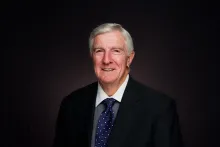
Before his retirement in 2021, Dr. Donald Ward pastored churches in Texas and Louisiana, and taught at Ambassador Bible College in Cincinnati, Ohio. He has also served as chairman of the Council of Elders of the United Church of God. He holds a BS degree; a BA in theology; a MS degree; a doctor’s degree in education from East Texas State University; and has completed 18 hours of graduate theology from SMU.
