

Don Ward
This transcript was generated by AI and may contain errors. It is provided to assist those who may not be able to listen to the message.
Well, today, in case you haven't heard, we're observing the Feast of Trumpets. Personally, I love the sound of a trumpet. It tends to energize my entire body. Music has an uncontrollable effect upon the human nervous system and even the psyche of a person. Remember when Saul was troubled by the evil spirit that David came and played the harp, and the evil spirit departed from him. I used to use music back when I was coaching football, bring all the players down before the game, put them in a little low-lidded room and play songs from the Green Beret, fighting soldiers from the sky, men who jump and die, men who mean just what they say of fighting men in the Green Beret. After you listen to some of that, you are pumped and ready to go. But music, and especially trumpets, tends to lift the spirits and emotions to a level of great excitement, enthusiasm, expectation, and anticipation. In the temple services during the days of the Old Testament, Old Covenant, David established an order of the singers and music. It played a vital role in transmitting the words of God to the congregation and also involved them in it.
But the Feast of Trumpets is much, much more meaningful in the plan of God than just the sound of an instrument or instruments or voices. Trumpets did play an important role in the history of Israel and were used on several occasions and for several different purposes—general assembly, assembly of the elders, when they went to war, and they blew the trumpets, of course, on the holy days. When the seventh angel begins to sound and the resurrection takes place, then this world will begin to be relieved of the oppression that Satan has brought upon the world. Relieved to that oppression, the trumpet will declare that the kingdoms of this world are become and becoming the kingdoms of God and His Christ. We'll read these two verses later, but let's read them right now in Revelation chapter 10 and verse 7. When the seventh angel begins to sound, the mystery of God should be finished. Revelation 10 verse 7. If you want to turn there, we will read it together. Revelation 10 and verse 7. But in the days of the voice of the seventh angel, when he shall begin to sound, the mystery of God should be finished. How can one, made of the dust of the ground, be born in the family of God as a glorious, radiant spirit being? The mystery of God should be finished as he has declared to his servants the prophets. Now in chapter 11 and verse 15. And the seventh angel sounded, and there were great voices in heaven, saying, The kingdoms of this world become the kingdoms of our Lord and his Christ, and he shall reign forever and ever. God will begin to destroy with the brightness of his coming the author of war, famine, disease, sin, sickness, and death. But before that happens, before that glorious time happens, and that will be a traumatic time, it will be a joyful time on one end, and it will be a dark time on the other hand. On one side of the day of trumpets is gleaming doom, and on the other side is the victory that you heard in the special music.
But before this happens, the world must experience the literal fulfillment of the vessel of trumpets. The Church of God must sound the alarm to the world. Look at Joel 2.
Joel 2 and verse 1. As we turn to Joel 2.1, I shall continue talking, and you remember that we have said many times and have read from Hebrews 12, 22, 23, that Zion symbolizes the Church, for you have come to Mount Zion, to the city of the living God, to the General Assembly Church of the firstborn. So in Joel chapter 2 and verse 1, blow the trumpet in Zion. In Revelation 1.10, John talks about he was in the Spirit on the Lord's Day, and he heard as a trumpet, a voice, as a great trumpet, or as great thunder. So trumpet can be used synonymously with the voice, blow you the trumpet in Zion, and sound the alarm in my holy mountain. Let all the inhabitants of the land tremble, for the day of the Lord comes, for it is not at hand. And as we shall see also from Zephaniah, that the day of trumpets is inexorably linked to the day of the Lord. A day of darkness and of gloominess, a day of clouds and of thick darkness, as the morning spread upon the mountains, a great people and a strong. There's never ever been the light, neither shall there be any more after it, even to the years of many generations. It goes on to describe how this great army is going to come upon the land. Then another warning in verse 15, blow the trumpet in Zion, sanctify the phaethas, call a solemn assembly. And that's what we are here today. We have a solemn assembly. And of course everybody can say, well, the day of trumpet pictures the return of Jesus Christ. But there's so much more than just being able to parrot those words. Now we go to Zephaniah several pages forward. Zephaniah, just before Haggai, in Zephaniah chapter 1 and verse 14.
Zephaniah chapter 1 verse 14, The great day of the Lord is near, it is near, and hastens quickly, even the voice of the day of the Lord. The mighty man shall cry there bitterly. That day is a day of wrath, a day of trouble and disease, a day of wasteness and desolation, a day of darkness and gloominess, a day of clouds and thick darkness, a day of the trumpet and alarm against the fence cities and against the high towers.
And I will bring distress upon men that they shall walk like blind men because they have sinned against the eternal, and their blood shall be poured out as dust and their flesh as the dung. Neither their silver nor their gold shall be able to deliver them in the day of the Lord's wrath, but the whole land shall be devoured by the fire of his jealousy, for he shall make even a speedy riddance of all them that dwell on the earth.
So we see that the day of the Lord is inextricably linked to the Feast of Trumpets. On the one side, gloom and doom. On the other side, great joy and victory. God began to reveal the annual Holy Days to Israel as they came out of Egypt, as recorded in Exodus 12. In Exodus 12, you find that God says, this year or this month shall be the first month of the year, shall be holy unto you, and you shall observe my Passover.
So God reveals to them the Passover and the Feast of Unleavened Bread. All of the annual feasts and the weekly Sabbath are revealed and briefly described in Leviticus 23. Let's go to Leviticus 23. We have in Leviticus 23 the weekly Sabbath, and then we have the annual Holy Convocations. Passover is not a holy day, but it is a commanded assembly, and whosoever does not eat of my flesh and drink of my blood has no life in him. In Leviticus 23.1, the Lord spoke unto Moses, saying, speaking to the children of Israel, and say unto them, concerning the Feast, these are the Feast of the Eternal, concerning the Feast of the Eternal, which you shall proclaim to be holy convocations.
Even these are my feasts. These are not Jewish feasts. These are not just the Feast of Israel. These are the feasts of Israel for all people. And one of the things that one of the great rabbis of the world was asked last night, if you had to summarize the holy days, and what did the holy days mean to you, and what do you look forward to? And he said, when God, the God, is God of the whole earth.
And of course, there's a prophecy in Zechariah, though they don't understand how you get there, because they have not yet looked upon him whom they have pierced, and they have not yet solved the sin problem. See, Christianity is the only religion that solves the sin problem, that through the sacrifice of Jesus Christ, sins can be remitted.
Continuing here in Exodus, I mean in Leviticus 23 verse 3, 6 days shall work be done, but the seventh day is the Sabbath rest and holy convocation. You shall do no work therein. It is the Sabbath of the Lord in all your dwelling, so the weekly Sabbath. These are the feasts of the eternal, even holy convocations which you shall proclaim in their seasons. Then it gives even the day of the week, the month and the day of the week that these feasts are being observed.
These feasts have four aspects to them. One, the literal event. Two, the spiritual intent or spiritual fulfillment. Three, the doctrine that is involved in it. And four, the prophetic sequence in which it's involved. So we will look at that as we go along here.
One of the things that I did this past week too was to I spent a lot of time listening to watching the hearings for Supreme Court nominee Brett Kavanaugh, and I was enthralled to some degree by how well he and others could answer questions about the Constitution. How they could parse it. How they could quote it. How they could say, here's the intent. This is what it means.
And I got to thinking, do we really do that ourselves with the Scripture? How deeply are we digging into the Scriptures? Do we just sort of skim off the top and say, oh, feasts of trumpets pictures, the time of the return of Jesus Christ, and so on. And we go home happy, and we don't really understand and get a connection between time and memorial and the future.
God's great plan. So you have the literal physical implementation of the day. Israel observed the Passover, what it represents and its spiritual fulfillment. Having your sins passed over. And, of course, you read in 1 Corinthians chapter 5 verses 7 and 8 that Jesus Christ today is our Passover. It is not the blood of bulls and goats, but the blood of Jesus Christ. Then the doctrinal teaching. You have to repent and exercise faith in the sacrifice of Christ, getting ready to take the Passover and the prophetic timeline. In due season, Jesus Christ came on the scene and gave us the fulfillment, the Feast of Unleavened Bread. But Israel left Egypt on the first day of the Feast of Unleavened Bread on the 15th day of the month. Look at Numbers 33. You see here the literal fulfillment of that time in Numbers 33. Numbers 33 and verse 3, "...and they departed from Rameses in the first month on the 15th day of the first month on the morrow after the Passover, the first day of the Feast of Unleavened Bread, the children of Israel went out of Egypt with a high hand in the sight of all the Egyptians." So that is a literal and, of course, today that we go out of sin and death through the sacrifice of Jesus Christ. And on the last day of the Feast of Unleavened Bread, according to Jewish tradition, they came to the Red Sea. They had the sea in front of them. They were hemmed in by the mountains on either side, and they had the host of Pharaoh and Pharaoh's army coming up behind them, and they cried out, what are we going to do? And, of course, God performed a great miracle, and they crossed through on dry land as the Red Sea was parted. That was, in the doctrinal sense, their baptism. Look at 1 Corinthians 10 verse 4. Hopefully you're beginning to see now. And, of course, pass over. It has taken place in the literal sense. The spiritual application of it has been given, the doctrinal application. And we see the prophetic sequence as it progresses in 1 Corinthians 10 and verse 1. Then, Moira, brethren, I would not that you should be ignorant how that all our fathers were under the cloud and passed through the sea the last day of the Feast of Unleavened Bread, and were baptized unto Moses in the cloud and in the sea. See, that was their baptism.
And when they came up out of those waters, they were to live by faith in God. Of course, we know that by the time they came to Mount Sinai and the Feast of Pentecost, they had tempted God several times. So that was their baptism. We have been baptized, and we are now to live the resurrected life, as we will mention a little bit later here. Pentecost came to Mount Sinai, and we see where they come to.
In the third month, when the children of Israel were gone forth out of the land of Egypt, the same day they came into the wilderness of Sinai. And here God began to prepare them to receive the Ten Commandments. So the Ten Commandments, which summarizes the spiritual law in one sense, but they did not have the Holy Spirit at that time. But there was a literal giving of the law. Notice that it was in conjunction with a trumpet in Exodus 19. In verse 12, we shall begin, Exodus 19 and 12, and you shall set bounds unto the people round about, take heed to yourself, that you go not up into the mount. Why couldn't they go up into the mount? It was the same reason that Uzzah couldn't touch the ark, because God's presence was there. You cannot go into God's presence unless you are clean. Do not touch the mount. He who touches the mount shall be surely put to death. There shall not in hand touch it, but he shall surely be stoned or shot through, whether it be beast or man. It shall not live. When the trumpet sounds long, they shall come up to the mount. So the trumpet hearkened them to the mount to receive the law, and they came there. Now in Acts chapter 2, on the very day of Pentecost, the Holy Spirit was given. The Holy Spirit, the very essence of God, can be in our very being. And so those days have been literally fulfilled with a prophetic sequence to it, and now here we are at Trumpets. Even though Trumpets has not been literally fulfilled in the grand climatic sense, as was Passover in the Old Testament, and 11 bread, Pentecost, and even the spiritual fulfillment through Pentecost today, so in the prophetic sense, we're between Pentecost and Trumpets. And even though the grand dramatic climax of it, that is, of Trumpets, has not been fulfilled, we are to live the resurrected life today. Look at 1 Corinthians chapter 6, 1 Corinthians chapter 6, which is about baptism.
I mean, I want Romans 6, I said 1 Corinthians. In Romans chapter 6, 1 Corinthians chapter 6, what shall we say then? Shall we continue in sin that grace may abound?
God forbid, how shall we that are dead to sin live any longer therein? Know you not, that so many of us, as were baptized into Jesus, were baptized into his death. Therefore we are buried with him by baptism unto death, that like his Christ was raised up from the dead, by the glory of the Father. Even so, we also shall walk in newness of life.
For if we have been planted together in likeness of his death, we shall also be in the likeness of his resurrection. We are to live the resurrected life now. So in that sense, fulfilling what we talk about as what today represents the resurrection, we're to live the resurrected spiritual life now, knowing that our old man is crucified with him, that the body of sin might be destroyed, and henceforth we should not serve sin. So we are raised up out of the water. Baptism has two aspects, one, burying the old man, secondly, being resurrected up out of the water to live the resurrected life. Of course, the Jews kept the Feast of Atonement, and much is said about the Feast of Atonement in Leviticus 16, how that once a year the high priest went into the holy place and took sacrifice for himself, then for the people and for the tabernacle. So today we talk about Satan being bound. We are to overcome Satan now. And then Feast of Tabernacles. Of course, Israel observed the Feast of Tabernacles off and on for many years, and they pictured it as the Feast of End Gathering. And we know a great fall harvest is coming.
So Atonement, going back to Atonement once again, is coming up in 10 days, on the 10th day, that we're to bind Satan now and cast him out. This is our opportunity to live, as it were, in the millennium in the flesh, knowing the truth and abiding by the Constitution of God. Whereas they talk about the Constitution of the land and living under the Constitution and being faithful to the Constitution. Well, God's great Constitution is his immutable spiritual law, which we shall be taught during the millennium, when all nations go up, as it says in Isaiah 2, up to Jerusalem and to Mount Zion, and out of Zion and Jerusalem shall go the law, and we'll be taught of God. And then the eighth day, going on to perfection, when all peoples have an opportunity to go on to perfection. So you see in all of that a literal event, you see a spiritual fulfillment, you see a doctrinal aspect, and you see a prophetic aspect. So we're in this pivotal point here. Trumpets has often been called the pivotal point in God's plan. So let's go now to Leviticus 23. I don't know where we are, but anyhow, in Leviticus 23 and verse 24, let's read where the holy days are being revealed, as we mentioned earlier. We left off there in verse 4. In Leviticus 23 and 24, speaking of the children of Israel saying, the fifteenth day of the seventh month, that's the Feast of Tabernacles, I'm reading 34 instead of 24. In 24, speaking of the children of Israel saying, in the seventh month, the first day of the month, shall you have a Sabbath, a memorial of blowing trumpets and holy convocation. And you might be surprised if you go to your Strong's Concordance and look at the Hebrew for blowing of trumpets, which is Zechariah Teruah, Zechariah Teruah, which literally means a memorial.
It means Zechariah is a memorial, literally means a memorial, and it's translated as memorial there. And blowing of trumpets is Teruah, which means a time of praise and joy and celebration. The word trumpets so far is not in this verse. But over the years, the Jews came to apply the blowing of trumpets to the holy days because God does say to blow the trumpet on the holy days. The Jews came to associate it with the blowing of trumpets and also on several other occasions they would blow trumpets, as we've already said.
Now the Jewish tradition with regard to this... So look at it. Let's read this verse again. 24. Speaking of the children of Israel, saying, in the seventh month, in the first day of the month, you shall have a Sabbath, a memorial, the Zecharom, of blowing of trumpets, a time of joy and praise and celebration, is what it literally means, and holy convocation. See, a memorial of blowing trumpets. So what was the memorial? The memorial literally means a remembrance. So it is a celebration of something from the past and which is applied in the spiritual sense to the future. According to the Jews, Jewish tradition, it was a memorial of the creation of the world, at which time the sons of God, the angels, shouted for joy and shouted praise. We can look at that, look at Job 38.
Job 38 verse 7, when God suspended this beautiful orb out there, the planet earth, and suspended it in space. This part here, God is talking to Job and saying, Job, where were you when I did all of these wonderful things? Let's read Job 38 verse 5. Who hath laid the measures thereof, if you know, or who hath stretched the line upon it? Whereupon are the foundations thereof fastened? Or who hath laid the cornerstone thereof, when the morning stars sang together, and all the sons of God shouted for joy? So, the sons say, this is a celebration of the creation wherein the morning stars sang for joy. Another explanation of memorial of trumpets says, well, this is a time when the law was given to Israel, and it was a great celebration and anniversary of the giving of the law, which teaches us how to live.
But the older tradition and teaching, the way that they observed it, it was a memorial of the anniversary of the creation of the world, a day in which God would take stock of all his creation. He would look over the whole universe on the day of trumpets, and especially humanity.
And so, Jews believe that God's judgment on this day determines the course of the coming year, and it introduces what they call the nine or ten days of awe, depending on how you count it. From this point to atonement, you prepare yourself for atonement, the most solemn time of the year.
The Jews observe Rosh Hashanah, as they call it. Actually, they observe it two days. That started back, that's a rabbinical tradition, started back about 500 BC. And they celebrate it for two days. And the shofar especially was blown on the beginning of the month of Tishri. So last night, you might have notice with regard to the moon, and the new months were introduced by the blowing of trumpets. But a distinguishing feature of the Feast of Trumpets that they began to use as they understood more and more about the meaning was a climatic blast, the takhiyat shofar. That is, it was the signaling of a long blast, the victory or good news. It is the blast that awakens the dead.
So in Jewish circles, it is called the day of the awakening blast because it awakens the dead. And some of the Jewish sects will blow the trumpet all day long.
Now you say, well, we don't want to hear anything about what the Jews do, but some of the carryover from the customs and traditions and what they came to understand are also found, as we have already noted, where trumpets is inextricably linked to events in the New Testament. For centuries, the Jews linked the Feast of Trumpets with the resurrection from the dead. There are several verses in the Old Testament that refer to the resurrection of the dead. Let's look at those. We're in Job right now, so you go back to Job 14 and verse 14. Job 14 and verse 14. Job understood about the resurrection of the dead.
If a man dies, shall he live again?
All the days of my appointed time will I wait till my change come. You shall call and I will answer you. You will have a desire to the work of your hands. In Psalm 17 and verse 15, forward a few pages there, Psalm 17 and verse 15, we're talking about resurrection from the dead.
In 1 Thessalonians, like you heard in special music and in other places in the New Testament, you see where death is likened unto sleep. In Psalm 17 and verse 15, for as for me, I will behold your face in righteousness. I shall be satisfied when I awake with your likeness. I awake with your likeness. Sleep equated with death. And upon resurrection, it talks about in 1 John 3, we shall see him as he is in Revelation 22. It talks about we shall look upon his face. Now, other places in Isaiah 26 and verse 19, we're talking about now places in the Old Testament that mentions resurrection. I mean, Isaiah read, well, actually read all of Isaiah. We started that in Bible study and got started a little bit. I think one or two, I know one session on it, one of the most neglected but most important prophetic books in the whole Bible. I would encourage you to read, especially Isaiah 20 through 30. In Isaiah 26 and verse 19, your dead men shall live together with my dead body, shall they arise awake and seen, you that dwell in the dust. For your dew is the dew of herbs, and the earth shall cast out the dead.
One of the main places, well, let's look at two more. One more in Isaiah there, in Isaiah 52, because here it's speaking literally of the church in Zion. In Isaiah 52, Isaiah 52 and verse 1. A wake, a wake, put on your strength, O Zion. Put on your beautiful garments.
Just think about it. We try to dress the best we can on the Sabbath, at least hopefully we do, because we were appearing before Almighty God. There's something special about the Sabbath day, and God loves harmony, beauty. You can read about what the high priest went through before he went in the Holy of Holies on the Day of Atonement. But in resurrection, we're going to put on garments we never dreamed of. A wake, a wake, put on your strength, O Zion. Put on your beautiful garments, O Jerusalem, the Holy City. For henceforth there shall no more come into you the uncircumcised and the unclean. Shake yourself from the dust, arise and sit down, O Jerusalem. Loose yourself from the bonds of your neck, O captive daughter of Zion. Yes, we're going to be liberated and put on a new body. Now, in Daniel—I love this one in Daniel also—in Daniel chapter 12, verse 2 or 3 verses there, Daniel chapter 12, and at that time shall Michael stand up, the great prince, Michael 12'1, Daniel 12'1.
Daniel 12'1. At that time shall Michael stand up, the great prince, which stands for the children of your people. And there should be a time of trouble, such as never was, since there was a nation, even to that same time. And at that time your people shall be delivered, everyone that shall be found, written in the book. And many of them that sleep in the dust of the earth shall awake, some to everlasting life, some to shame and everlasting contempt. And they that are wise shall shine as the brightness of the firmament. Oh yes, put on your beautiful garments, O Zion.
And they shall turn many to righteousness as the stars for ever and ever. As we have already noted, the Old Testament prophets make it clear that the Feast of Trumpets is inextricably linked to the day of the Lord. So let's go now to the book of Revelation to see how the day of the Lord is introduced. We understand that there are seven seals, so let's be turning to Revelation chapter 5. Revelation chapter 5. In Revelation 5.1 we see that there is great distress because no one is counted worthy to open the seals.
Of course, we should already know there are seven seals. The seventh seal is divided into the seven trumpet plagues and the seventh trumpet is divided into the seven vials of wrath.
In Revelation chapter 5 verse 1, And I saw in the right hand of him that set on the throne a book.
Now that is the father sitting there, a book written, and on the backside seal with seven seals, I saw a strong angel proclaiming with a loud voice, who is worthy to open the book and to loose the seals thereof. And no man in heaven nor in earth, neither under the earth, were able to open the book, neither to look thereon. And I wept much because no man was found worthy to open and to read the book and to look thereon.
And one of the elders said unto me, Weep not, behold, the lion, the tribe of Judah, the root of David, you can read about that in Isaiah chapter 11, hath prevailed to open the book and to loose the seven seals. And I beheld and lo in the midst of the throne and of the four beasts and in the midst of the elders stood a lamb, as it has been slain, having seven horns, seven eyes, which are the seven spirits of God sent forth into the earth. And he came and took the book out of the right hand of him that set upon the throne. And after he had taken the book, the four beasts, twenty-four elders, fell down before the lamb, having every one of them harps and golden vials. And notice this, because it plays a role in trumpets. Having every one of them having harps and golden vials full of odors, which are the prayers of saints. So somehow, some way, of course, the incense prayer is likened unto incense. Of course, the priests offered incense with the offerings that they offered in temple worship. And we send up our prayers today, which is an incense unto God.
They sung a new song, You're worthy to take the book and to open the seals thereof, for you were slain and have redeemed us to God by your blood out of every kindred, antong, and people and nation, and have made us unto our God kings and priests, and we shall reign on the earth.
And so Jesus Christ, the Lamb of God, was counted worthy to open the seals.
Then in chapter 6, the first six seals are opened. In verse 1, And I saw when the Lamb opened one of the seals, I heard, as it were, a noise of thunder, one of the four beasts, saying, Come and see. And I saw, and behold, a white horse. And of course, we talk about the four horsemen of the apocalypse.
The white horse. There's one that goes out. You see the world, according to Daniel chapter 8, that one of the things that the beast power does in coming to power is through peace. He corrupts through peace. And I saw, and behold, a white horse. And he that sat on him had a bow, and a crown was given unto him, and he went forth, conquering for to conquer. Of course, there are many interpretations given with regard to this, but he's setting the stage, really, for what happens next, and that's the red horse, which symbolizes war.
And then you have the other horsemen that come on the scene, and the seals. The first five seals are opened. Then we're going to look now at the sixth seal, verse 12.
And I beheld when he had opened the sixth seal, and lo, there was a great earthquake, and the sun became as sackcloth of hair, and the moon became as blood. And the stars of heaven fell unto the earth, even as a fig tree cast her on timely figs, when she is shaken of a mighty wind.
And the heavens departed as a scroll, when it rolled together, and every mountain and island were moved out of their places. Now, we have, of course, one of the things you do, I read the Jewish newspapers every week, and they are really trying to push a millennial kind of theme of Zionism, bringing peace to the whole world. And when things like the blood moons occur or great tsunamis occur, they talk about it. Well, this is perhaps the fulfillment of the prophecy and quote some verse from the Old Testament.
Or moving of the capital from Tel Aviv to Jerusalem. Well, this is preparing to build the third temple, because the Bible says Jerusalem shall be the capital of the whole world in Isaiah chapter 2. Not in that exact language, but that is the implication.
And so they talk about how the Jews are returning to Israel in restoration and all that, but they have not yet looked on him whom they have pierced. What is my point here? What I'm saying is when God begins to intervene, you will know it. It won't be some kind of natural phenomenon. There have been blood moons before. It may not have another one for 200 years. I don't know how long it's going to be, but it's in the cycle, as it were.
So continuing here, the heavens departed as a scroll. Every mountain moved out of its place. The kings of the earth and the great men and the rich men and the chief captains and mighty men and every bondman and every man hid themselves in the dens and the rocks of the mountains and said to the mountains and rocks, fall on us and hide us from the face of him that sits on the throne and from the lamb and from the wrath of the lamb. For the great day of his wrath has come and who shall be able to stand? So here are the opening of the sixth seal and the heavenly signs.
Then in chapter 7, verse 1, and after these things I saw four angels standing on the four corners of the earth holding the four winds of the earth that the wind should not blow on the earth nor on the sea or any tree. And I saw another angel ascending from the east having the seal of the living God and he cried with a loud voice to the four angels to whom it was given to hurt the earth in the sea. Now those four angels are going to pour out the four trumpet plagues as we shall see in just a moment. So they were told to wait until 144,000 or sealed, 12,000 from each of the tribes. Then we come to chapter 8 and the seventh seal is opened. Chapter 8, verse 1.
And when he had opened the seventh seal there was silence in heaven about the space of half an hour. And I saw the seven angels which stood before God and to them were given seven trumpets. Chapter 8 is taken up with those first four trumpet plagues. And another angel came and stood at the altar having a golden censer and there was given unto him much incense and he should offer it with the prayers of all saints. Remember the verse we read from chapter 5? And they had gathered the odors which are the prayers of the saints.
Offer it with the prayers of all saints upon the golden altar which was before the throne. See, it's before the throne. It wafts up before the very, if you want to use human terms, the nostrils of God.
So it is, see this plays a role in it. What does a model prayer say? Our Father who art in heaven, hallowed be your name. Thy kingdom come, thy will be done on earth as it is in heaven.
And the incense and the smoke of the incense which came with the prayers of the saints is sent before God out of the angels hands. And the angel took the censer and filled it with fire of the altar. Cast it into the earth and there were voices and thunderings and lightnings and an earthquake.
And the seven angels which had the seven trumpets prepared themselves to sound and the first angel sounded.
And so the rest of chapter 8 is taken up with the four angels that bring forth the trumpet plagues basically upon the environment of the earth. Now if you look at chapter 9, chapter 9 is taken up with the first two woes. Two great battles take place and they are called the the two woes, the first two woes. They are, they are, now get this, they are the fifth and sixth trumpet plagues. The two woes are the fifth and sixth trumpet plagues.
Chapter 10, we'll read again what we read earlier, in chapter 10 verse 6, and swore by him that lives forever and ever who created heaven and the things which therein and the earth and the things which therein are and the sea and the things which are therein, that there should be time no longer. So we, one of the hymns that we sang today, talked about time no longer. But there is quite a long period of time that is involved in the seventh trumpet. It's not snap your finger here and snap your finger there, it's all over.
Verse 7, but in the days, the days of the voice of the seventh angel, when he shall begin to sound, the mystery of God should be finished, as he is declared to his servants the prophets. And the voice which I heard from heaven spoke unto me, saying, Go and take the little book which is upon the hand of the angel which stands upon the sea and upon the earth. John is told to eat this book, that he will have to prophesy before kings and dignitaries again. It was both sweet and bitter to his belly. Then we come to chapter 11.
In chapter 11, verse 14. Verse 14 is a very important transitional verse which you may overread. You may just look over it. What does it say? Revelation 11.14, the second woe is passed.
So six trumpet plagues have come and gone, and behold, the third woe comes quickly, and the seventh angel sounded, the seventh trumpet. There were great voices in heaven, saying, The kingdoms of this world are become the kingdoms of our Lord and of his Christ, and he shall reign forever and ever. Now this tells you very clearly when the resurrection takes place. Not at Pentecost. Pentecost is a calling out of the first fruits.
You say, well, it could... well, just let's read the rest of it.
And the 24 elders which were... I don't know if I read that. The kingdom of this world had become the kingdom of our Lord and his Christ, and he shall reign forever and ever, and the 24 elders which sat before God on their seats fell upon their faces and worshiped God, saying, We give you thanks, O Lord God Almighty, which was and are to come, because you have taken to yourself great power and have reigned. And the nations where anger and your wrath has come, in the time of the dead, that they should be judged, and that you should give reward unto your servants, the prophets and of the saints, and them that fear your name, small and great, and should destroy them which destroy the earth. Of course, the earth is being destroyed by the activities of man.
There's a dump of garbage out in the Pacific Ocean that's larger than the state of Rhode Island. You say, well, that's not very big. Well, it's pretty big.
And there's a dump of plastic. They can't get rid of it. They don't know how to get rid of it. The Dead Sea is not the Dead Sea, but the Black Sea is pretty much dead as a Dead Sea.
And the temple of God was opened in heaven, and there was seen in his temple the ark of his testament. There were lightnings and voices and thunderings and an earthquake and great hail. So we just read in Revelation 10.7, when the seventh angel begins to sign also Revelation 11.15, the resurrection takes place. The resurrection is equated with birth. The resurrection is equated with birth. Could you explain it? Could you turn to the verses?
Well, we'll take a shortcut. In Acts 13, there are at least three great sermons in Acts.
Acts 2, where Peter gives a great inspired sermon on the day of Pentecost when the Holy Spirit was sent. Acts 7, where Stephen gives his great inspired sermon before the Sanhedrin.
And then the one that Paul gives here in Acts 13. We'll begin in verse 29, I guess. And when they had fulfilled all that was written of him, they took him down from the tree and laid him in a sepulcher. But God raised him from the dead. Who raised Jesus from the dead? Well, it's given several times in the New Testament. God raised him from the dead.
And he was seen many days of them which came up with him from Galilee to Jerusalem, who are his witnesses under the people. And we declare unto you glad tidings how that the promise which was made unto the fathers, Abraham, Isaac, and Jacob, are called the patriarchs, the fathers. God has fulfilled the same unto us, their children, in that he has raised up Jesus again, as it is also written in the second psalm. Psalm 2 verse 7 says, Today have I begotten you. Now, of course, in Psalm 2.7, begotten is a Hebrew word, yelad, it is the equivalent of the Greek, gedao. When used to the mother, it means to bring forth. When used to the father, it means to engender or to beget. God the father begets us with his spirit, and he brings us forth from the grave. He begot Jesus Christ, he brought him forth from the grave, and God raised him from the dead. Continuing here, as it is also written in the second psalm, you are my son. This day have I, gedao, you. I raised you from the dead. I brought you forth to new life.
And as concerning that he raised him up from the dead, now to no more return to corruption, he said on this wise, I will give you the sure mercies of David. Now look quickly at Romans 1 verses 3 and 4, just a few pages, Romans 1 verses 3 and 4.
Concerning his son Jesus Christ, Romans 1-3, concerning his son Jesus Christ our Lord, which was made of the seed of David according to the flesh, and declared to be the Son of God with power, according to the Spirit of holiness, by the resurrection from the dead. Now go to Revelation 1-5 quickly.
Revelation 1 and verse 5. And what does it say about Jesus Christ?
Revelation 1 verse 5.
And from Jesus Christ, who is the faithful witness and the first-born from the dead, Protodico's, the first-born of the dead and of the prince of the kings of the earth, unto him that loved us and washes from our sins in his own blood.
We, as spirit believers, spirit-begotten believers, are now a spouse to Christ.
In the Jewish wedding tradition, the bride entered into the closet and came out at the appointed time.
In the Jewish wedding tradition, the groom comes for the bride, like a thief in the night, to take her away into the bridal chamber for the bridal week at his father's house.
Let's look at a couple of places in the Old Testament, first of all, concerning what we just said. We'll go to Isaiah 26. We read Isaiah 26 and 19 earlier. I'm sure you remember that. We go to Isaiah 26 again.
Verse 1, in that day, when you see that expression in the Old Testament, in that day, it's a period of time merging into the millennium.
In that day, this song shall be sung in the land of Judah. We have a strong city, salvation with God, a point for walls and bulwarks. Open you the gates that the righteous nation, the righteous nation. See, in 1 Peter 2.9, the church is called a holy nation.
Here, the only righteous nation would be a nation that has been converted.
Open the gates that the righteous nation, which keeps the truth, may enter in. Open the gates that the righteous nation, which keeps the truth, may enter in. You will keep Him in perfect peace, whose mind has stayed on you because He trusts in you. Now go to verse 20. We read 19 earlier about awakening out of the dirt and living.
Verse 20, come, my people, enter into your chambers. Shut your doors about you. Hide yourself, as it were, for a little moment until the ending nation be overpassed. For behold, the Lord comes out of the place to punish the inhabitants of the earth for their iniquity. The earth also shall disclose her blood and shall no more cover her slain. Now go to Joel chapter 2. We read from Joel chapter 2 verses 1 through 4 and verse 15. But now we want to pick up with 16 in Joel 2 and verse 16. Joel 2 verse 16. Gather the people, sanctify the congregation. What is this preceded by? Blow the trumpet and Zion, sanctify a fast, call a solemn assembly. Gather the people, sanctify the congregation, assemble the elders, gather the children and those that suck the breast. Let the bridegroom go forth out of his chamber and the bride out of her closet. Let the priests, the ministers of the eternal wheat between the porch and the altar, and let them say, Spare your people, O Lord, and give not your heritage to reproach, that the nation should rule over them. Wherefore should they say among the people, Where is their God? Of course, God is going to deliver. Go quickly to Matthew 25, the parable of the ten virgins. See, these prophets, the words of the prophets, Isaiah and Joel, are in keeping with Matthew 25 and the parable of the ten virgins. Where the bridegroom comes at the midnight hour at a time you wouldn't expect, and he knocks on the door.
And will he find the bride ready?
Matthew 25 verse 10, And while they went to buy, the bridegroom came, and they that were ready went to meet him, the marriage supper, and the door was shut. After came the other virgin, saying, Lord, Lord, open to us. But he answered and said, Barely I say unto you, I know you not.
Watch therefore you know not neither the day nor the hour, or in the Son of Man comes.
And then he gives those three parables, and warning us that we better make best use of what God has given us, because one of the days God is going to knock on our door.
Remember the seventh trumpet also includes the seven vials of wrath. So we go back to Revelation and we wind this thing down, this wonderful does it disservice to call it a thing.
The wonderful events that are going to unfold, and whether we live or whether we die.
What a wonderful time it's going to be if we have made ourselves ready, and whenever the knock comes on our door, we'll be able to open to the bridegroom. Revelation 15.1, I saw another sign in heaven, great and marvelous, seven angels having the seven last plagues, for in them is filled up the wrath of God.
Verse 5, and after that I looked, and behold the temple of the tabernacle of the testimony, and heaven was opened, and the seven angels came out of the temple. These are the seven angels that are going to administer the seven vials of wrath, having the seven plagues clothed and pure and white linen, and having their breasts girded with golden girdles. And one of the four beasts gave unto the seven angels seven golden vials full of the wrath of God, who lives forever and ever. Verse 16 verse 1, and I heard a great voice out of the temple saying to the seven angels, Go your way and pour out the vials of the wrath of God upon the earth. And then it catalogs each one of those. We come down to verse 12. See, there are a lot of events between the sounding of the first angel when the seventh angel begins to sound, and here is we're coming now to the sixth vial of wrath. Verse 12, the sixth angel, that's the sixth angel of the vials of wrath, poured out his vial upon the great river Euphrates, and the water thereof was dried up, that the way of the kings of the east might be prepared. And I saw three unclean spirits like frogs come out of the mouth of the dragon, out of the mouth of the beast, and out of the mouth of the false prophet. So this unholy triad are still and lead together through the seals, through the trumpet plagues, through the vials of wrath, all the way down to the last vial of wrath. For they are spirits of devils working miracles, which go forth unto the kings of the earth and of the whole world, together them to the battle of the great day of God Almighty. Then this morning seems out of place once again in verse 15. How does this come upon people as a thief in the night with all this going on? The people are so deceived. Behold, I come as a thief, behold, blessed is he that wakes or watches and keeps his garments, lest he should be naked and they see his shame. And he gathered them together into a place which is called in the Hebrew tongue Armageddon, and the seventh angel poured out his vial into the air, and they carried me great voice out of the temple of heaven from the throne, saying, It is done. Then it describes the fall of Babylon in the final sense. Chapter 19 describes the marriage supper of the Lamb and Jesus returning as Lord of Lords and King of Kings. The saints will be with him, riding on white horses. Will you or I be riding on one of those horses?
Hopefully, if we're alive, we will be.
Jude, in Jude chapter 1, there's only one chapter, verse 14, Jude prophesied that Christ would come with ten thousands of his saints.
Revelation 19 pictures him coming, and by the word that goes out of his mouth, the sword of the spirit, he smites the nations. Those who are with Christ will be called, faithful, and chosen.
They will have on the wedding garment of the Lamb.
Verse 19, verse 6, I heard as a word the voice of great multitude, and the voice of many waters, and the voice of a mighty thundering, saying, Hallelujah, and praise, joy, and happiness to God. For the Lord God, omnipotent reigneth, let us be glad and rejoice and give honor to him, for the marriage of the Lamb has come, and his wife has made herself ready. And to her was given, or granted, that she should be a raid and fine linen, clean and white. For the fine linen is the righteousness of the saints. He said unto me, Write, blessed are they which are called to the marriage supper of the Lamb. And he said unto me, These are the true sayings of God. Brethren, I hope we are digging into the word of God as never before that we are making ourselves ready, that we have on our wedding garments, and that we are ready to stand before the King of Kings and the Lord of Lords when he returns. In fact, to be with him if we're alive at that time, riding one of those white horses, of course, there's a great battle to be fought, as we read from Revelation 16, the battle of the great day of God Almighty. And so we are looking forward to that time. So I would say today the voice of the trumpet is sounding in the Church of God, and we need to hear and heed. Hear and heed.
So the trumpet is being sounded, the day of the Lord is at hand. The trumpet may not be a literal blast of thousands of silver trumpets.
Look at Ezekiel 33. Here's a great warning to all of us.
You know, just because we come to services on a piece of trumpets, or show up at Passover in the other Holy Days, they give an offering. Or if we come to services every Sabbath and we sit and listen, do we have oil in our lamps? Are we ready?
You should read all of Ezekiel 33 when you go home tonight.
We'll start in verse 30. Ezekiel 33. Also, you son of man, the children of your people still are talking against you.
Better translation in this case would be about you, by the walls and in the doors of the houses, and speak to one another, everyone to the brother, saying, Come, I pray you, and hear what is the word that comes forth of the Lord. What are they going to say today?
You know, I already know everything, but we're supposed to go, commanded assembly.
And sometimes it's really good. Sometimes I have to endure.
And they come unto you as the people comes. They sit before you as my people, and they hear the words, but they will not do them. For with their mouth they show much love, but their heart goes after their covetousness. And lo, you are unto them as a very lovely song, a one that has a pleasant voice and can play well on an instrument, for they hear the words, but they will not do them. Brother, that cannot be said of us.
I believe that we have one of the most dedicated, converted congregations that I've ever been a part of, including our young people. We got, as they say, we got a good thing going. And we need to stoke the fires and turn up the heat and become even more zealous.
That should never be said of anyone in the Church of God. But when the bridegroom knocks on the door, half are not ready. If, and I believe it does, a feast of trumpets represents the return of Christ, we know what that means.
And when this comes to pass, and lo, it will come, then shall they know that a prophet has been among them. Of course, the ministers that stand before us, they are speaking the words faithfully of the prophets, and Jesus Christ, and God the Father. So, brethren, let us rejoice in this great day, the feast of trumpets on one side, gloom and doom. On the other side, joy and victory forevermore.
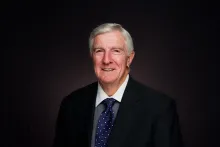
Before his retirement in 2021, Dr. Donald Ward pastored churches in Texas and Louisiana, and taught at Ambassador Bible College in Cincinnati, Ohio. He has also served as chairman of the Council of Elders of the United Church of God. He holds a BS degree; a BA in theology; a MS degree; a doctor’s degree in education from East Texas State University; and has completed 18 hours of graduate theology from SMU.
