
Don Ward
This transcript was generated by AI and may contain errors. It is provided to assist those who may not be able to listen to the message.
There are three-word sentences. Three three-word sentences. Three three-word sentences. No, we're going to make it four. Four three-word sentences that can save your life. And I want you to either write down on paper. I would love for you to write it on paper or indelibly stamp it on your mind. We might say that what I believe here is somewhat subjective, but I believe we can show that it is indeed the case. What is the most significant, important, and relative three-word sentence that has ever been penned or ever uttered?
Of course, if you were listening to Mr. Wright's sermon, this would be a gimme. What would you say?
What is the second most powerful, motivating, and significant, and relative three-word sentence ever uttered? The second most? Then what is the third most significant, important, and relative three-word sentence ever uttered? We're talking about a complete sentence. And what is the fourth most significant, important, and relative three-word sentence ever uttered? So back to number one. What did you say? The most important three-word sentence ever uttered. And whether you're young or old, the reason you are here today is because this is a truism. It is the truth.
The first and greatest three-word sentence of all times is, God is love. How many put that down?
Looks like about 40 percent.
Love is the greatest force for good in the universe. Love is outgoing concern for others, coupled with, and notice this, coupled with the desire to share that love in relationships with others. Otherwise, it's self-love.
You can say you love someone all you want to, but unless it is demonstrated through relationship and contact with another person, it is really of no value.
Love that is not shared is of no value. Because God is love and wants to share His love with other beings in a family relationship, humankind was created.
That's why you're here. You're here because God is love. If parents could begin to teach just that simple fact, the reason why you were born is because God is love and He wanted to share that love with you in a family relationship.
Over the past couple of years, I've really emphasized what I call the seven greatest questions of life. I began back in the 70s when I was teaching, of course, an ambassador, titled Introduction to Western Thought, of having students write a term paper on the ten greatest questions of all times.
And I've distilled that and changed it from what the philosophy books might say. Some are common to that because all of humankind has wanted to know the answer to these questions.
The first and greatest question is, does God exist? And if God exists, these three questions. Who is God, what is God, and what is His purpose?
And corollary to that is, who is man, what is man, and what is His purpose? I can answer those so quickly, and all the world and philosophers have written books that would fill this room, stacked from floor to ceiling, trying to answer those questions. Yes, God exists. It is a matter also of faith, but the Bible clearly shows us that He exists. And no matter how much Stephen Hawkins or any other so-called great intellect wants to try to show otherwise, I think Hawking now has left a little peephole for the possible existence of some kind of greater force somewhere in the universe.
Who is God? God is our Creator. He is our Father. What is God? God is Spirit, and those who worship Him must worship Him in Spirit and True. What is His purpose? The overriding purpose of God, because He is love, is to bring sons and daughters to glory in His family.
Who is man? Man was made in the image of God with faculties akin to God, ability to think, to reason. And think about life even beyond this life, immortality, of which we do not possess, which leads to the next.
What is man? Man is physical, subject to sin and death. And the only thing that can bridge that great gap between mortality and immortality is the very essence of God, the Holy Spirit. What is man's purpose? The overriding purpose? Why were you born? Why were you here? It is to become a member of the family of God, and if you don't do that, you fail. I don't care if you become king of the universe. So young and old, if you can teach your children the answers to those seven questions in a meaningful way, you shall have accomplished more than the great universities and educators through the ages have done with regard to what is most important in life. You and I exist because God is love. You and I are here today because God is love. Because of his divine favor, he called you at this critical, crucial juncture in human history. The world is teetering on the brink of destruction. We know the world is not going to be destroyed, and as we say, we know the end of what the outcome is going to be. The great question is whether or not we are going to be or not to be.
The great verse that Mr. Wright referred to, John 3, 16, For God so loved the world that he gave his only begotten Son, whosoever who believed in him should not perish, but have everlasting life.
So I believe the most important, powerfully motivating three-word sentence ever uttered, God is love.
The second most powerful three-word sentence, what would you say it is?
I believe that the second most important relative, complete sentence, Mr. Wright spoke of five words, love God and love neighbor.
I'm speaking of 12 words, four three-word sentences.
I believe the second most important is, I love you.
I love you. Researchers try to find out how people perceive love from others.
And one of the ways, there are many different ways, of course, doing something for somebody else, touching them. There are many different ways that you might perceive love, but according to the research findings of this particular study, and I think it has merit, is that, to simply say, I love you. I love you can melt the hardest heart that has ever been formed.
And God didn't create a hard heart. The greatest weakness in our culture is the ability to correctly show and perceive love. The world has lost the ability to define, explain, much less actually develop loving relationships.
See, one of the things that United Church of God is being criticized for now is that we're emphasizing love in the church. And through the years, we said, oh, we're Philadelphia! That means brotherly love.
And you're telling me you're going to talk about love? I have mercy.
And then we know, we know, the Bible definition of love, for this is the love of God, that we should keep His commandments, and His commandments are not grievous. And in fact, you cannot love in the true Biblical spiritual sense unless you do keep the commandments.
The Word of God is clear on the importance of loving God and your neighbor. Love is an emotion that can be sensed by the object of our affection.
Love has a concrete basis, in fact, in the Bible definition, which we've already quoted, 1 John 5, 3. For this is the love of God, that we should keep His commandments, and His commandments are not burdensome or grievous.
So love involves words and actions. Let's go to 1 John 3.14 and read that. Love involves words and actions. God has demonstrated His love and His righteousness in that He created us, and He ordained a great plan of salvation. His great purpose is to bring sons and daughters to glory in His family.
Now we note here, 1 John 3.14, We know that we have passed from death unto life because we love the brethren. He that loves not his brother abides in death.
It's as simple as that. So I would imagine you would want to learn how to love as God gave commandment.
Whosoever hates his brother is a murderer. We know that no murderer hath eternal life abiding in him. Hereby perceive with the love of God because he laid down his life for us. We ought to lay down our lives for the brethren. But whoso hates this world's good and sees his brother have need and shuts up his vows of compassion from him, how dwells the love of God in him. In our key verse here, My little children, let us not love in word, neither in tongue, but in deed and in truth. Paul tells us in Romans 12.5 that we are members one of another. We are members. Everyone that has the Holy Spirit is members one of another because we share the divine essence of God and Jesus Christ, the Holy Spirit. Therefore, we're all connected through that one Spirit. Last week here I gave a sermon on the body of Christ going into great detail of how we are connected to each other. We have that same spiritual DNA, if you want to use that analogy, DNA in us that God and Jesus Christ have in them. We are. We say we are the body of Christ, that the church is a living organism. And Paul tells us to have the same love, care, and concern one for another. When one member suffers, we all suffer so that there be no division in the body. And just as the body has many members with each part affecting the whole, so it is with the body of Christ. Now we come to the third. What would you say is the third most important relative significant three-word sentence? And as I said, this is, of course, somewhat subjective. I don't think the first two are that subjective, especially number one. Number three. These three words. I am accountable. I am accountable. And one of the great weaknesses has been in the church with our child rearing. We have failed to adequately teach accountability to our children. We have overreacted to the Protestants trying to save the souls of their children, to save the souls of their children for those who believe that you have a soul that is immortal. What a contradiction, anyhow. Why would a loving Creator God create you in a physical body that is subject to sin and death, then at the same time create a good immortal soul and put it in this body and then challenge you to save your soul? I mean, it's one of the greatest contradictions of all times. They don't even think along those lines at all. When I brought this up to my mother one time, she said, Oh, son, I just don't ever think that way. I just... You know, it's to ask some of the questions that need to be asked. So I think we've overreacted to the Protestants trying to save the souls of their children from their belief in an ever-burning hill. Virtually all cultures have what is called a rite of passage. In other words, at a certain age, you merge from childhood into adulthood. And it seems like, to some degree, it's like, well, we sort of ignore children. I know we've done a lot better through the years and made progress, and then we've regressed and made progress and regressed. That's sort of been the history of the Church of God. During the 20th century, and I hope in the 21st century it completely turns around, and we are able to sustain programs that really we need within the spiritual body of Christ.
The Jews, for example, have such a rite of passage. For the men, it's called the bar mitzvah, and the name is similar for the women, both men and women. Boys and girls go through this ritual that signifies they have passed from childhood into adulthood and that they are accountable. It's along about the ages of 12, 13 that in the human growth and development, that you really began to, as a human being, to deal with abstraction, far greater, of course, than you can when you're much younger. And you really, at that age, you pretty well know right from wrong.
So we talk much about having to be called and that this is the only day of salvation to the point that we can convey the idea to our youth that they can do what they want to do, sow their wild oats, and still be in the kingdom of God. You go to church up there every day and you're sanctified, you're set apart because your parents are there. You have access to the tree of life.
It is being presented to you every week, virtually every day of the week. And what are you going to do with it? Are you going to just ignore it? So one of the first study papers, and I was on the Council of Elders the first six years of United, one of the very first study papers that we produced was, are your children being called now? And the resounding answer, conclusion of that paper is, was, yes they are.
The resounding, yes they are being called, but anyone can resist the call. And you can resist anything that is said here today. And one of the things that the Bible admonishes us to do is to receive the word of truth, the engrafted word of truth with a perfectly teachable heart. No matter how great the teacher is, no matter how perfect the environment, you can resist the call. You can resist going for the tree of life and eat of the tree of good and evil, just as Adam and Eve did. Adam and Eve had the perfect teacher.
In Genesis 2 verses 16 and 17, the Lord God instructed them, commanded them. They had a perfect environment, the Garden of Eden. And yet, they listened to the great deceiver, the seducer, who led them away from the tree of life. You can always go away from the tree of life if that's what you want. But I'm telling you, you're here. Some of you may live to be a hundred. I doubt it. Some might, in the flesh, a hundred. What did you do? And what if you have great acclaim and attained a fame and fortune? A hundred years out of eternity?
What is that? I mean, it's nothing. But on the other hand, you can have eternal life. Let's note what Solomon and the inspiration of the Holy Spirit writes in Ecclesiastes 11. Ecclesiastes 11, right after Proverbs. Ecclesiastes 11, verse 9. I don't think very many people really understand the book of Ecclesiastes, because, in fact, for the most part of the book of Ecclesiastes, it talks about vanity, vanity of vanities, all is vanity, and so on.
That word vanity, the more literal meaning of it, not as we think about being vain today and puffed up, is more temporary. It lasts for a short period of time. And then what? And so the ellipse is vanity of vanity, all is vanity, apart from God. Apart from God. It's just all going to pass away.
In Ecclesiastes 11, verse 9. Rejoice, O young man, in your youth, and let your heart cheer you in the days of your youth, and walk in the ways of your heart and in the sight of your eyes. God wants us to enjoy life and have a good time and have fun and fellowship and everything that goes with it, that is within the bounds of what God has set for us.
But know you that for all these things, God will bring you into judgment. There is no question about it. Therefore remove sorrow from your heart and put away evil from your flesh, for childhood and youth are vanity, temporary, last a little time. As Mr. Wright referred to in the sermon of playing baseball at age 20 versus playing baseball at age 60, we are accountable. In plain language, once you know that a thing is wrong, you are accountable. Have we taught that to our children? Are we teaching that to our children? Let's note the words of Ezekiel concerning this.
In Ezekiel 14, verse 14, this is plain as it can be. And you've heard the expression that some people think they're going to slip into the kingdom on the coattails of their parents? You ain't going to do it. It's not going to happen. Salvation is individual and specific. The Old Covenant was a national covenant with the nation of Israel and the proselytes that came into relationship with Israel under the terms of the Old Covenant. The New Covenant is for all nations, kindreds, peoples, tongues, ethnic groups, and it's individual and specific.
In Ezekiel 14, verse 14, though these three men, Noah, Daniel, and Job, were in it, they should deliver but their own souls by their righteousness says the eternal. The first part of the chapter describes the judgment that is going to come upon the land. Of course, you heard the very moving, inspiring, special music of heal our land. All that we would pray that prayer today and really mean it.
We know what human nature is like and we know that Satan and his agents are busily trying to destroy every last vestige of that which is good and right. And to lead our people down the path of chaos and confusion, which eventually leads to destruction. Verse 18, though these three men were in it, as I live, says the eternal God or Lord God in this case, they shall deliver neither sons nor daughters, but they shall only be delivered themselves. It is individual and it is specific. So I ask you, do you understand? If you're age 8, 9, 10, I know when I was at that age, I began to think about. Of course, we would have a memory verse. I grew up in a Baptist church. There were some good things. They didn't have the truth. And if you follow that path, it's a path of destruction. But at the same time, you learn quite a bit about the Bible and you could quote verses and all that. You learn at an early age, hopefully, to have a relationship with God. So that's one of the things that I've really emphasized with our Sabbath school teachers here, that we want them to come to understand these seven great questions of life and to have a relationship with God. From a very, from cradle to grave kind of thing. And if we're diligent to do that, we... The only way the land can be healed is that we do turn to God as we heard in the special music. Let's go now to Romans chapter 14. Romans chapter 14 and verse 10. We are all standing daily, all standing before the judgment seat of Christ. We can probably quote the Scripture that in Peter 4... Peter 4.17, judgment is now on the house of God. In Romans 14. But this... this is more individual and specific than it's worded there of house of God. It's the whole house of God. I'm part of the house of God. This is very individual. It is very specific. You are accountable. So you turn it around and you say, I am accountable. No one else. I am accountable. And hopefully you begin to learn that at a very early age. In Romans 14 verse 10. But why do you judge your brother? Or why do you set at nothing your brother? For we shall all stand before the judgment seat of Christ. And in some translations, we are standing before the judgment seat of Christ. And of course, if we have been called in His marvelous light, truth, we are standing. Think another thing we have done. We have conveyed the message some way, somehow. And it is more through what I would call, I don't know if the term, the term probably wouldn't be folklore. But some, I can't think of exactly how to phrase it, the notion that I'm not really accountable until I'm baptized. Well, if you weren't accountable, there would be no need to be baptized. Don't you understand that? There would be no need. So it's like, well, if I don't get baptized and make a commitment until I'm 82, then all that in the past, that's okay. It says in Proverbs 29.1 something like that, the center being often reproved and hardened in his heart is on the path to destruction. That's the least paraphrase. Continue here in Romans, verse 11. For it is written, as I live, it's like God swearing to himself, as I live says the Lord, every niche shall bow to me, and every tongue shall confess to God. You can do it now or you can do it later. But the Bible says today, if you would hear his voice, harden out your heart. You can always harden your heart. You can always harden your heart. You can turn a deaf ear. You can focus on, quote, what's wrong with the church. You can focus on what's wrong with the minister. You can focus on what's wrong with the people.
And that will lead to our next one, our fourth and last of the great statements, three-word sentences.
Let's read the rest of this. So then, everyone, every one of us shall give account to himself to God.
So, so far, the three great three-word sentences, God is love, I love you, I am accountable. Leading to our fourth, it's closely associated with number three of being accountable.
This fourth great relevant, significant, important sentence, three-word sentence, I am responsible. I am responsible.
I'm now going to read part of a letter written by Alexander Green. He has a newsletter service. I don't know if it's more than the Internet or not. A friend sent this to me. And it's titled, Three Words That Will Save Your Life.
Dear reader, talk about a model prisoner in 1985, Fleet Mall. His first name is Fleet, F-L-E-E-T. Last name is M-A-U-L-L. Fleet Mall began serving a 14-year sentence for drug trafficking.
During his incarceration, he completed a Ph.D. in psychology, authored a well-received book, became an ordained priest, founded a prison hospice program, and launched the Prison Dharma Network, a nonprofit organization that supports prisoner rehabilitation through contemplative spirituality. Now, I'm not a fan of Fleet Mall necessarily, but it shows that even in prison, under dire circumstances, what can be achieved if you come to understand I am responsible. Today, Mall works as a peace activist and personal effectiveness coach, lecturing at leading universities in corporate boardrooms, in high-risk areas like Rwanda and the Middle East, in what he calls the forgotten world, and also in our jails and prisons. We have some of you. I know in the Houston area we have quite a number that have been involved in prison ministry, either as ministers or as laypersons, as they say, and there are a lot of prisons in and around Houston.
We lived near several units when we were there.
Mall has plenty of wisdom and experience to share, but he sums up his core message in a single phrase, radical responsibility, a little bit of alliteration, radical responsibility. I am responsible.
Mall believes we create everything that is happening in our lives, good and bad. It is only when we accept complete responsibility that we take the giant step from childhood to adulthood. And I submit that you cannot take that step unless you also come to understand those other three questions, and especially God is loving while you are here, and to know that you are accountable.
Self-responsibility is the key to personal effectiveness in every sphere of life.
There's an old song that says, you gotta walk that lonesome valley. You gotta walk it all by yourself. No one else can walk it for you. You've gotta walk it by yourself. When it really comes down to it, that's the way it is. You are responsible. And you say, I am responsible.
So why did so many choose to embrace the psychology of helplessness and victimhood? That's where the world is. And they love it, they enjoy it.
They would love to be on the dole for the rest of their lives, preferring to explain all their struggles in terms of the actions of others.
Green states that he meets many people, middle-aged men and women, who are still grumbling and complaining about earlier unhappy experiences, who are still blaming their problems on other people or the breaks. I didn't get the right break in life. They were against me.
They're angry with their parents, fuming at an old boss, still simmering over their ex-spouse.
They're trapped in the past, and they can't get free, because they can accept the key to freedom.
God is love. I love you. I am accountable. I am responsible. So therefore, they're in their own prison house. They're their own jailer, and they keep themselves locked up. They wallow in their bitterness and use it as a reason to remain in a perpetual state of anger and bitterness.
Researchers tell us that the greatest enemy of success and happiness is negative emotions. Emotions like self-pity, envy, jealousy, and anger hold us back, tie us down, and suck the joy out of our lives.
From Cain and Abel to the present day, this thing of envy and jealousy not only haunts the world, but it also haunts the people of God. To a large degree, it was responsible for the division that we experienced.
Let's go to James 3 and verse 13.
There are so many components to this God is love because God is love explains why you're here, why you were born, why you exist. The purpose of God, the purpose of man.
And once you get your eyes and your focus set on something outside of seek you first the kingdom of God and His righteousness and all the...
Seek you first the kingdom of God and His righteousness and all these things will be added unto you. When you get your focus off that, you get your priorities upside down, then that's where trouble sets in. In James 3, 13, but as earthly, sensual, devilish, for where envy and strife is, there is confusion and every evil work included murder.
You see, to falsely charge, accuse your brother, and not love as God gave commandment is the same as murder.
And so we have many social weapons today to murder humankind. Oh, they're not nuclear weapons. These are more deadly than what Iran might produce.
These weapons are the weapons that were mentioned in the first message, and that is gossip, Facebook.
I know some of you use Facebook correctly. Just being known unto you that they're recording this in the Smithsonian.
But if you have bitter envy and strife in your hearts, and lie not against the truth, this wisdom descends not from above, but is earthly, sensual, devilish, for where envy and strife is, there is confusion and every evil work. But the wisdom that is from above is first purer than peaceable, gentle, easily to be entreated, full of mercy and good fruits, without partiality, without hypocrisy.
And the fruit of righteousness is sown in peace of them that make peace. But if you want to continually grind the axe, the sparks or the fragments will always fly. It's just a physical law, and it then is also a spiritual law. Studies show that there are... that these four things, self-pity, envy, jealousy, and anger, hold us back, these negative emotions. Once you identify them, you can begin to banish them. Here's an essay titled, SELF-PITY. Get angry with yourself, pat yourself on the back, commend yourself, praise, blame, love, or hate yourself, but don't pity yourself. Self-pity has a certain septic satisfaction like picking at a sower, and there is an undeniable luxury of self-dispraise, but it's as dangerous as getting drunk. Its habit forming, it grows on one, quit it. Now, in contrast, pity, pity, is a glorious, incredible attribute when it flows out toward another. Then it is like the mountain brook sparkling, chattering, leaping the laughter of woods, the refreshment of bird and bees, carrying health and joy to all who drink of its cool streams, or even gaze upon its happy play. But pity, when it turns upon self, is like a stagnant pool, covered with hateful scum and concealing ugly, slimy things in its foul ooze. Self-pity is the collapse of all the faculties. It is cowardly surrender in the face of the enemy.
Don't complain, keep your chin up, the courageous soul, and no matter what condition is a point of cheer or a lamp of brightness, a tonic draw to his fellow man. So, we want to remove these negative emotions, the self-pity, this envy, jealousy, and anger, and come to the point to where we can say, I am responsible. Every time you blame someone else or make excuses, you give away your power. You feel weakened and diminished. Without the acceptance of complete responsibility, no progress is possible. On the other hand, once you accept total responsibility for your life, there are no limits to what you can be, do, and have, as exemplified by Fleet Mall, who did all those things while in prison. Yet many would rather train for the Boston Marathon and run the marathon in three feet of snow or whatever than to take hold and say, I am accountable, I am responsible. Whether we recognize it or not, we tend to take responsibility for the positive developments in our lives and attribute unfavorable ones to other circumstances.
So, brother, here we are at this critical time in human history. We should consider it a privilege and an honor to take ownership of our actions. That's what real maturity is all about. And to forgive those who do evil against us, the most mature emotional statement ever uttered, what is that? As Jesus Christ, on the stake, during the last few breaths of his life, said, Father in heaven, forgive them, for they know not what they do.
Self-reliance is a great source of personal power. We create ourselves, shape our identity, determine the course of our lives by what we are willing to take responsibility for. So, you want to change your life and solve your problems? Start saying today these three words, simple words, I am responsible. Alexander Greene closes his letter with the Latin phrase, which was also mentioned in the sermon, carpe diem, carpe diem, Latin term for seize the day. Today, if you would hear his voice, harden out your heart. Seize the day. Today is the day to come to understand to the depth of your being the meaning and the significance and the relevance of these four three-word sentences. God is love. I love you. I am accountable. I am responsible. Let's seize the day.
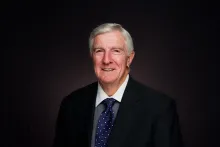
Before his retirement in 2021, Dr. Donald Ward pastored churches in Texas and Louisiana, and taught at Ambassador Bible College in Cincinnati, Ohio. He has also served as chairman of the Council of Elders of the United Church of God. He holds a BS degree; a BA in theology; a MS degree; a doctor’s degree in education from East Texas State University; and has completed 18 hours of graduate theology from SMU.
