
Don Ward
We continue our study into the general epistles.
This transcript was generated by AI and may contain errors. It is provided to assist those who may not be able to listen to the message.
Greetings, everybody, and welcome to tonight's Bible study. We have come to 1 Peter 4, so we'll begin there this evening. It seems that we got a call from our granddaughter who lives in the Dallas area today. The Iranians have been able to hack into their system. She works for a software company, and all of their communication devices have been shut down, including her cell phone. So it's really, really, regardless of what the president might be saying, I don't know if we're going to prevail in this or not. So we sure need prayer for the leaders of the world to make the right decisions.
So we are in 1 Peter 4. I'm waiting for it to come up. I thought it was already up. In 1 Peter 4, verse 1, for as much then as Christ has suffered for us in the flesh, and this is in view of what has gone on in the past three chapters, in view of what Christ has suffered for us, arm yourselves, likewise, with the same mind. We're going to suffer. We have been really, part of the calling is to suffer. And at baptism, when we go under the baptismal waters, as we talked about last time, we vow that we're going to bury the old person, and that we will come up newness of life and walk in the spirit from henceforth and from then on. For he that has suffered in the flesh has ceased from sin. And one of the reasons why that God brings trials and difficulties upon us and chases us, you know, it says in Hebrews that he chastens every son that he loves, and if you're without chastisement, then you're as illegitimate sons and daughters. So we can always expect some trials and difficulties to come our way. And now, a lot of people don't really learn the lesson and cease from sin, and whatever it is is causing their difficulties. But that verse here, we should be learning the lessons when we are tried so that we also cease from sin, also to be healed, and also to cease from sin, that he no longer should live the rest of the time in the flesh. We're not called to live in the flesh, but we're called to live in the spirit if we walk in the spirit. Remember the carnal mind is enmity toward God, not subject to it. Neither indeed can be Romans 8-7 or Romans 8-8, but see, you are not in the flesh. You are in the spirit. You have been called in the spirit to walk in the spirit. So we're no longer to walk in the flesh, but to walk in the spirit, not subject to the laws of men, but to the will of God. The will of God is going to be done, and we are to remember that whatsoever we do, whatsoever our hand finds to do, to do it with all our might, and to do it according to the will of God. Remember we read from the book of James in chapter 4, say not tomorrow that I'm going to go into the city and do such and such, but say if the Lord will. So always we preface whatever we're going to do with God willing, I'm going to do it. We don't swear in the sense of saying that we're going to do something on our own, but in the back of our mind and our hearts and minds, we know that we want to please God. We want to seek His kingdom first, and we want to do His will. For the time past of life may suffice, may suffice us to rot or done the will of the Gentiles of the nations. That Greek word there that's translated Gentiles, it's a word you ought to come to know. It is the word ethnos, and the word ethnos means it is non-Jewish. By implication, it is every nation that is not converted. Gentile, heathen nation, people that are not converted. We sometimes call them pagans, Gentiles, heathen nation, or peoples that are not converted. So, in times past, as we had talked about before, Peter's writing those who are newer in the faith, who are having grave difficulties at the present time. When we walk in lasciviousness, and lasciviousness really means people who have an air about them that they, like, I am a Christian, I can do whatever I want. I can do this, I can do that.
But God says us to seek His will, to do His will, and to walk according to the Spirit, and according to the law of God. And He writes indelibly upon our hearts and minds, as it says in Hebrews chapter 8 and Hebrews chapter 10, the word of God is written on our inward parts. So, don't be guilty of lasciviousness, lust, wrong desires, excess of wine, and we have to really be careful of what strong drink, or wine, or beer, for that matter, can do. Some people can sit down and drink a six-pack of beer. I don't know how they do it. I know if I drink one beer, I'm full as I can be, so I can only drink one at a time, and one for a long time. That has to be hours in between, or unless I feel so bloated I can't hardly walk. So, excessive wine, revelings, and banquetings, partying all the time, and abominable idolatries. Of course, idolatries, as is defined covetousness, is idolatry. So, idolatry has to do with that which you worship, that which fills your time, your mind, your efforts, and to be caught up with idolatries, to be caught up with covetousness, is not what God wants. He wants us to think on that whatever things are good, just, pure, a good report. If there be any virtue, be any praise, think on these things as Philippians 4 and verse 10.
Wherein they think it's strange that you run not with them to the same excess of riots speaking evil of you. So, people may say, I wonder what's wrong with him? He doesn't like to do this or like to do that. I've had that said about me. I remember in college, there was a guy who said, what's happening to you, Don? You used to go with us and used to do this, you used to do that, but you don't do that anymore. What's wrong with you? And so, if you turn away from the thundering herd, from the herd that is walking the path of destruction, oftentimes there would be people who wonder about you, who criticize you, and say, I wonder what happened to them? They are not the same, but what we're trying to do is to please God. Who should give account to him that is ready to judge the quick and the dead? Of course, Judgment Day is coming. We're standing before the Judgment Seat of Christ every day, as it says later on in this chapter. And, of course, God is going to judge the dead as well when they come up in the resurrection, and their day of salvation is at hand. For this cause was the gospel priests also to them that are dead. Now, some people look at this as dead spiritually. I think it means, and I'm not 100%, I think it means that are dead physically to men in the flesh.
Or it can mean spiritually that men think you are dead in the flesh because you're walking after the Spirit, as the last part of this verse indicates, but live according to God in the Spirit. So, once again, they're going to mock you, judge you if you walk according to the Spirit. Just about everybody that I walk with or really have a relationship with there in the church, I have some to keep. Ken folks, I guess you would say, had a few business acquaintances that are not in the church, but they know that I am in the church, and whatever they say behind my back, that's their problem, not mine. But the end of all things, the outcome or the result of where to end, once again, is TELOS. T-E-L-O-S. The outcome or result of all things is at hand. Be you, therefore, sober. And of course, we're living in a period of time. There's never been a time like this in the whole world. The world could go up and smoke almost at any moment, any wrong button pushed or any wrong thing or said, or any wrong person, persons or nations attacked. Those things can happen, and because of the martyrdom of one person, everything can go up and smoke. So you have to be very careful. You need to be careful and watchful, looking over your shoulder, because we're living in trying times. There are people who are being gunned down, who have not done one evil thing. They were just the wrong place at the wrong time and became recipients of the enemy's fire. So be sober, that word sober really means watchful. Be wakeful, be watchful, be alert, and watch under prayer. And above all things, have fervent charity. The word is agape. Agape, it means love. Have spiritual love. Feeling fervent means unfeigned. You don't expect anything in return. Have fervent charity among yourselves, for charity shall cover the multitude of sins. Now, if you really love somebody and really care for them, this can work two ways. One way is by, of course, setting the right example and showing your love, care, and concern for them. And the other way is if they do something wrong and you see it, you are to turn them around. As we talked about last time, we talked about the last verse there in James where it says, let him know he that turns about the sinner shall save a soul from death. And we talked about saving a person. We wanted to, I don't know how thoroughly we reviewed that, but let's review it again. If you would turn to Leviticus chapter 19. Now, we just read the verse that love will cover a multitude of sins. We'll just say to a person, I love you in performing acts of love, forgive sin. Will that cover a multitude of sins? It will cover one sin, much less a multitude. As it says in Hebrews, I believe it's chapter 10, it says, without the shedding of blood, there is no remission of sin. So we go to Leviticus 19 and verse 15. So go to Leviticus 19 and verse 15. You shall do no unrighteousness in judgment. You shall not respect the person of the poor, nor honor the person of the mighty, but in righteousness you shall judge your neighbor. You shall not go up and down as a tailbearer among your people. Neither shall you stand against the blood of your neighbor. I am the eternal. You see, if you do not bring it to the person's attention and you bring it in the right ways, considering the same thing could be happening to you.
Now verse 17, you shall not hate. Remember, maybe we should read that verse a little later, 1 John 3, that murder, that hate is acquainted with murder. You shall not hate or murder your brother in your heart. You shall in any wise rebuke your neighbor and not suffer sin upon him. And what the correct translation is, and not bear or suffer sin for him.
You shall not avenge nor bear any grudge against the children of your people, but you shall love your neighbor as yourself. I am the eternal. Because the golden rule, loving your neighbor as yourself. Now we want to go to Leviticus chapter 5 and verse 1. And Leviticus 5, 1. And boy, this one is so difficult. And if a soul, if a person sees sin, and if a soul sinned, and hears the voice of swearing, and is a witness, whether he has seen it or known of it, if he do not utter it, then he shall bear his iniquity. In other words, he will pay the price the same as the person who said it. So you see that you can't just tell a person that I love you, and I forgive you of your sins. Of course, we are to forgive people of their sins, but just saying I love you and I forgive you doesn't necessarily cover the act of sin. We have to cover sin, and it can only be covered by the person repenting of whatever he or she is doing. And we stand guilty if we don't bring it to the attention of the person who did the sin.
Now we go back to 1 Peter. 1 Peter in verse 5 will have to give an account who has given an account to him that is ready to judge the quick and the dead. And we talked about verse 6 and verse 7. Now we are at verse 8 again. And above all things, have fervor and charity among yourselves, for charity for love shall cover the multitude of sins. But as I said, you can cover sin and help a person along the way by showing unfeigned love for him. But there is also this dimension that I've just read from Leviticus. You can't just say I love you and my love is sufficient for you. We must not forget what it says. In Hebrews 10, without the shedding of blood, there is no remission of sin.
Then verse 9, use hospitality one to another. And that's one thing that is sort of gone by the boards. I know that my mother, she wasn't in the church, but she would generally try to have somebody over after services on each Sunday. And we now have snacks after services, and a lot of people do their Sabbath evening meal eating the snack at church. And of course, I know Sabbath evening is not exactly a good time to have people over because of the work that's involved in it. But to have people to your home and to share a meal with them is one of the most hospitable things that you can possibly do. Use hospitality. Verse 9, use hospitality one to another without dredging.
You wouldn't invite somebody over to your house and say, oh, well, the Bible says I should do this, so I don't really want to, but I'm going to do it anyhow. And maybe God will bless me for doing it. But that's not the attitude, of course, that God is looking for. And every man or person has received the gift, even so minister the same. As every man has received the gift, minister the same. We all have different gifts. The gifts of the Spirit are listed in 1 Corinthians 12, they're listed also in Romans chapter 12, gifts of the Spirit. Also in Matthew 25, it talks about God giving talents to various people to the one He gave five to the least He gave one talent. The one that got only one talent, He went and buried His. Say, I knew you were stern, so I went and buried mine, so I wouldn't lose it. And God says, you unjust toured, you were given that gift so you would multiply. You could have at least put it out to the lenders should at least draw interest, but you went and buried it. The same one to another is good stewards of the manifold grace of God. God owns everything as it says in Psalm 51. Maybe it's Psalm 50. I believe it's Psalm 50 that He owns the cattle on a thousand hills, and it says that if He were hungry, He would not ask you because He owns everything anyhow. So, we need to share what we have with other people as well, and be hospitable as much as we can and as often as we can. If any man speak, let him speak as oracles of God. If any man minister, now this speaking in Colossians, we read the verse. I forget. I think it's in chapter four, the exact verse, that let your speech be filled with grace seasoned with salt so you'll know how to answer every man. And also it says in Proverbs that a gentle answer will turn away wrath. If any man speak, let him speak as the oracles of God. In other words, according to the structure and admonitions that are given by the Word of God, if any man minister, let him do it as the ability which God gives that God in all things may be glorified through Jesus Christ. There's a verse in the New Testament that says, let all things be done through the glory of God. To whom he prays in dominion. He has a rulership and he should be praised because he has dominion over the entire universe. He holds the keys to life and death and he has generously given those keys to us. And oftentimes we need to thank him for calling us into his marvelous light at this particular time in life. He has dominion forever and ever. Now there's a shift in enduring suffering as a Christian.
Beloved, think it not strange concerning the fiery trial which is to try you as though some strange thing happened unto you. We've already mentioned Hebrews 12 where it says God chastens every son that he loves. Every son, every daughter that he loves will be chastened from time to time. Every son, every daughter will be tried from time to time to see what's really in the heart. God allows tests, he allows trials, difficulties, trouble. We just hope we can bear it patiently. To bear it patiently means that we know and know that we know that whether in this life or the life to come, God will relieve us of the trial or difficulty that we're experiencing. Well, rejoice in as much as you are partakers of Christ's sufferings. Just like in the once again the symbolism of baptism, we symbolize what we're going to do by the act of baptism of going under the water in the water, the grave death to the old person raised to newness of life that when his glory shall be revealed, he may be glad also with exceeding joy. You know, we read from chapter one, the joy unspeakable and full of glory. If you've even approached for the name of Christ, happy are you for the Spirit of glory and of God rest upon you. If you're criticized because you're following God, it says happy are you and your glory in the Spirit of God because the Spirit of God rest upon you. On their part, he is evil, spoken of, but on your part, he is glorified. They may say evil things about your God, about the God, but if you do the right thing, he is glorified. But let none of you suffer as a murderer or as a thief or as an evildoer or as a busybody in other men's matters. And of course, that list could be extended to many, many other behaviors that we might engage in. If any man suffer as a Christian, let him not be ashamed, but let him glorify God on this behalf. Glorify God. You know, in the book of Acts, the apostles were beaten and commanded to no longer preach Christ, and they went away glorifying God because they were counted worthy to suffer for his namesake. Amazing! And that's the kind of attitude that God wants us to have, that we're counted worthy to suffer. For the time has come that judgment must begin at the house of God.
And if it first began at us, what shall be the outcome or result of them that obey not the gospel of God? Well, they'll be judged as we're being judged now. Judgment is now upon us. This is our day of salvation, when those who've never had an opportunity for salvation come up in the resurrection.
If you've had a relationship with them, perhaps they will remember you, the example that you said, that even though you didn't lead them to the truth and lead them to conversion attempt in this life, maybe you'll be given a second opportunity in the life to come. And if the righteous scarcely be saved, and of course we are to do everything that we can to do the will of God, where shall the ungodly and the sinner appear? Well, the ungodly and sinner will appear in judgment. The hope is not the final judgment. We hope it's not the judgment that results in the second death. Wherefore, let them that suffer according to the will of God commit the keeping of their life essence in him in well-doing as unto a faithful Creator. Sometimes, and I've oftentimes wondered about this, sometimes I even prayed and maybe should not have my mother suffered tremendously in the latter days of her life. And a lot of people suffer a lot of things all the way to death, and they remain faithful unto death. And we can all pray, of course, that when we die, there's an old country song that says I'm not afraid of being dead, but what worries me is the thought of dying. The thought of dying and what you might have to go through in order to escape out of this life. And a lot of people suffer tremendously departing from this life. But God has called us to hoe to the end of the rope, to be faithful in all things, and to remember that we are serving God, and He has a purpose and a plan for each one of us, and His life is in His hands.
There's a song also about that. He has a whole world in His hands, and in a sense, so He does. God is the ultimate one that decides life and death.
Now we go to chapter 5. In chapter 5, the first four chapters of the book of 1 Peter be mainly focuses in this epistle to church members who are non-ordained, per se. That's the main focus, and it's for everybody, really. But the focus is more with them. Specifically in chapter 5, He brings the elders to task and what they should be doing. The elders which are among you I exhort. So, who am also an elder. So Peter doesn't pull rank and say, well, I am an apostle. He says, I am an elder. You remember that James says that he's the younger brother of Jesus Christ. He doesn't boast that he is the pastor of the headquarters church in Jerusalem. He doesn't boast that some commentators say that he became an apostle. Some commentators say that he's not one of the original 12. That is, James is not one of the original 12. But of course, Peter was of the original 12. And he says, I exhort the elders which are among you. I exhort. And he takes on the role of an elder and a witness to the sufferings of Christ and also a partaker that shall be revealed. Well, Peter was on hand for the transfiguration. And so he was there when God transfigured himself. And he showed him what it would be like to be in resurrection.
So the transfiguration is what is being spoken of when it says that I am a partaker of the glory that shall be revealed. The glory that shall be revealed is that glory that Peter, James, and John saw in what was called the Mount of Transfiguration. And when that occurred, one of the apostles said, shall we make a booze here to dwell in? Because he equated that with the Feast of Tabernacles. So the glory that will be revealed is when Christ comes and he establishes his kingdom. And we glory in that kingdom. I'm looking right now for the verse that covers the transfiguration of St. Matthew 17. Does anyone have that right, ending the transfiguration, the verse? Matthew 17 is the place in Matthew 17, verse 1. And after six days, Jesus took Peter, James, and John, his brother, and brought them into a high mountain apart, apart from everybody else, and was transfigured before them. And his face did shine as the sun, and his raiment was white as the light. So it's similar to the description and given of Christ in Revelation chapter 1, where Christ is described in detail.
And behold, there appeared unto him them Moses and Elijah talking with him. Then answered Peter and then answered Peter and said unto Jesus, Lord, it is good for us to be here with you, and shall we make here three tabernacles, one for you and one for Moses and one for Elijah. And while he yet spoke, behold, a bright light, a cloud overshadowed them. And behold, a voice out of the cloud said, This is my beloved Son. This is the second time that Christ was identified by a voice from heaven. Remember, after he was baptized, a voice from heaven in the form of a dove lit upon him, and the voice from heaven said, This is my beloved Son, in whom I am well pleased. And here it adds, This is my Son, in whom I am well pleased. Hear you, him. So the admonition is to hear Jesus Christ, because our calling, in one sense, came through Christ. He raised up the church, and he commissioned us to take the gospel, take the gospel message to the world. So the transfiguration is what is being spoke of when Peter says what he says there about it. About it he was there and saw the glory. And I got to get back to 1 Peter chapter 1 again. 1 Peter chapter 1, we're going to read verse 1 again. The elders which are among you, Peter, and Lord himself to an elder, you I exhort him also an elder, that witnesses are the sufferings of Christ. Of course, he was there apparently at the stake when Christ was crucified, and also pertaker of the glory that shall be revealed. So Peter was a partaker of the sufferings of Christ, and also of him in the glorified state.
Feed the flock of God. That is the command to the elders. And one of the things that the administration and council of elders is focusing on, and a part of this strategic plan is to more thoroughly, I guess you would say, feed the flock of God which is among you. We need to really preach the word, instant, season, out of season, rebuke, exhort with all long suffering, and especially rebuke, convict, come across with a message that convicts people of their sins and causes them to turn about. And that's what repentance is all about, to turn about and go the opposite way. Feed the flock of God which is among you, taking the oversight thereof, not by constraints, not because you have to, but willingly, not for filthy lucre, not for your paycheck, but of a ready mind, because you want to, you feel an obligation. And I wrestle with this obligation tremendously all the time. What more can I do? What should I do? And it's a heavy responsibility to be an elder and to be a messenger. All of us are called to be messengers of God. We are to be messengers. We are to take the truth to the world. Remember what the Great Commission is. The Great Commission is the last two verses there. And Matthew 28, Go ye therefore into all the world, make disciples of all nations, teach them to observe all things whatsoever I have commanded you. And lo, I am with you even to the end of the age, of the Aon, of this church age. We are in the church age. We'll be given an opportunity to be a part of the first fruits, a partaker of the glory that shall be revealed. Give face, shone, shine like the light. Feed the flock of God, which is among you.
Not for money, not for a paycheck, but willingly. The most important thing we can do, of course, is to encourage and love one another. And we do that to a large degree by the tongue, by the spoken word. In a recent, well, it's been quite a time now, since the study was made, how do people perceive love from us? A lot of the way is through the spoken word. And when they get a study and ask people, how do you perceive that somebody loves you? Well, the number one way that they perceive it was for a person to simply say, I love you. I love you. And the second way was through a human touch. It can be a handshake, it can be a holy kiss, as it talks about in this chapter. But we are not in the kissing mode, so we do handshakes instead of kisses in today's world. So willingly, not for filthy Luger, but of a ready mind. Neither being as lords over God's heritage. We don't over it, and we don't tell people what to do in every situation. There was a time in which almost every decision that a person made back in the early days of this age of the church, in which they would ask the minister some things that the Bible is quite clear on. You wouldn't have to ask the minister what kind of car should you buy, or what bottle of car should you buy, or what make of car should you buy. So no being overlord, neither is being lords over God's heritage. One time I was on the visiting team, and one of the guys who was leading the visiting team talked with the poor widow woman for a while, and then he said, well, I'm going to check your kitchen out, see if you have any brown sugar here, or anything you shouldn't have. Not brown sugar, but white sugar. I had it reversed. See if you have any white sugar here. You know, you're not supposed to use white sugar. You're just sweetened with brown sugar. All that kind of stuff. Of course, brown sugar has been artificially flavored, and it's an artificial product to a large degree, but neither being as overlords over God's heritage, but being examples to the flock. So it's, once again, I'd rather see a sermon than to hear one. That is continually the message that we will see and we will hear. And when the chief shepherd shall appear, you shall receive a crown of glory that fades not away. There are three aspects of being a shepherd. The good shepherd gives his life for the sheep. In Psalm 22, if we would turn to Psalm 22, it depicts the suffering of Christ. Psalm 22.
In Psalm 22, we see a vivid picture of the suffering of Christ. In verse 1, to the chief musician upon Agileth, Shahar, a psalm of David, My God, my God, why have you forsaken me? Of course, he uttered those words on the stake. Why are you so far from helping me and from the words of my roaring? Of course, he had prayed that this cup would pass from him. If there be any other way, let it pass away. Let it pass from me.
But of course, he sent us an example of suffering and still remaining faithful, and he endured every temptation that was possible for human beings to endure. Verse 2, Oh my God, I cry in the daytime, but you hear not, and in the night season am I not silent. I'm still praying day and night, but you holy one, oh that inhabit the praises of Israel. Our fathers trusted in you, they trusted in you to deliver them. I'm not going to read the whole thing. The whole thing depicts the sufferings of Christ, that he gave his life blood. Of course, Galatians 3 talks about he took upon himself our sins, all of our sins. He took upon himself. The Great Shepherd, that term Great Shepherd is given in Hebrews 13 and verse 20. So we want to go to Hebrews 13 and verse 20. In Hebrews 13 and verse 20, we're going to read what the term the Great Shepherd is used. And so in Hebrews 12 and 13 and verse 20, and now the God of peace that brought you again from the dead, our Lord Jesus Christ, of course Jesus Christ resurrected Jesus from the dead. And one of your assignments says to memorize Romans 8-11 by the same spirit that he quickly and made alive Jesus Christ, he will also make alive your dead bodies so that you are alive in the spirit and become a glorious radiant spirit being. Now Hebrews 13-20, now the God of peace that brought again from the dead, our Lord Jesus Christ, he resurrected him, the Great Shepherd of the sheep through the blood of the Everlasting Covenant. So the Great Shepherd is going to come again and he is going to make you a glorious radiant spirit being. So may that Great Shepherd make you perfect in every good work to do his will working in you that which is well pleasing in his sight and through Jesus Christ to whom be glory forever and ever. Amen.
So the Great Shepherd is given there and then the Chief Shepherd that we just read about in 1 Peter is when he actually gives you his crown. You are your crown and you will be given a crown and you'll sit on thrones and you will be given the charge over some people, some cities, some responsibility in the kingdom of God. So we're back to 1 Peter again. I've got to get there. 1 Peter again.
1 Peter 5 verse 4 again. Then when the Chief Shepherd shall appear, you shall receive a crown of glory that fades not away. The Good Shepherd giving his life, the Great Shepherd who resurrects us and God who gives us eternal life in the kingdom of God. And when the Chief Shepherd shall appear, you shall receive a crown of life of glory that fades not away. Likewise, you younger submit yourselves under the Elder. And of course, that's one of the things that we have gotten away from as well. I know that in talking with various people they talk about, well, why don't we have younger people doing this or that or the other? And why do we do this or why do we do that? So you younger submit yourselves under the Elder. And of course, it is, you can be taken both ways. It's to the Elder in age and it's also to the ministry and to the Elder in the spiritual sense. Likewise, you younger submit yourselves under the Elder. Even all be subject one to another and be a cloth with humility. And at one time I gave a sermon titled, God is in the clothing business. God is in the clothing business. He is clothing us with humility. Yes, let all of you be subject one to another and be clothed with humility, for God resists the proud and gives grace to the humble. Once again, grace the Greek word charis and it means divine favor. God gives his favor to the humble. He doesn't give it to the hottie and the proud. And pride goes before all as it says in the book of Proverbs. Hum on yourselves therefore. So in view of that, hum on yourselves therefore, under the mighty hand of God that he may exalt you in due season or in due time. God is going to exalt everyone that is in the first resurrection, the first fruits and those who die in the faith thereafter. He is going to exalt you. You're going to become the first fruits. You're going to be servants of God and Christ. You're going to be ministers of God, as it talks about in the book of Isaiah. I believe it's chapter 51, I think. Hum on yourselves therefore, under the mighty hand of God that he may exalt you in due time, casting all your care upon him, for he cares for you. It's similar to that verse of all ye that are heavy and laden with heavy burdens, cast all your burdens or care upon him, for he is weak and lowly and he will take care of you. So the same thing is being said here. It is something that we really need to learn, casting all your care upon him, for he cares for you.
I have a tendency to try to work it out myself. Maybe you have that tendency to try to work it out yourself, but this verse says casting all your care upon him, for he cares for you.
Remember I said last time, say to yourself several times during the day, God loves me. God loves me. And say, I am a child of God. I am a child of God. God loves me.
That's what is really humbling in one sense to say that. Once again, be sober. That's to be watchful. Be vigilant. Sober, watchful. Be on guard because you're adversary of the devil and he's always there. And you can't tell me that people who can slaughter people, as we see today, who mercilessly and willingly gun people down without a cause, that's why God is so against warfare, that they are doing the bidding of Satan the devil. Satan the devil loves to see humanity suffer, loves to see humanity dead, loves to see you miss out on the kingdom of God. So be watchful. Be vigilant because you're adversary of the devil. As a roaring lion, you don't see a roaring lion, but Satan is there. He's ever there, everywhere, ever there, walking about, seeking whom he may devour. Don't become an easy mark for Satan. There are many ways that you can become an easy mark. You can become an easy mark by dabbling with things that you should not dabble in. And God makes it clear in his Word that you shall not learn any other way of the pagans of divination or any such thing. Whom resists steadfast, that is, we resist steadfast in the faith. And we read from the book of James, it says, resist the devil, and he will flee from you. Whom resists steadfast in the faith, knowing that the same afflictions are accomplished in your brethrens that are in the world. There is a lot of suffering going on in the Church of God today. People in all kinds of states, people who have had nervous backgrounds, people that have experienced all kinds of diseases. So remember them. Whom resists steadfast in the faith, resists safe in the devil. And remember the brethren, the afflictions that are going through. They are out there. There are so many scattered all over the world. But in the God of all grace, put your trust in Him.
But the God of all grace, all divine favor, who has called us under His eternal glory by Christ. Notice that He calls us by Christ. Christ raised that to church. He called the apostles.
Christ spoke to the apostles. And the apostles speak to us through the Holy Spirit. And we have a sure word of prophecy, as it says in 2 Peter 2, that God is calling us to salvation at the present time through Christ, who has called us unto His eternal glory by Christ. Jesus, after that, You have learned awhile, make You perfect, establish, strengthen, and settle You. To whom be glory and dominion forever and ever. Amen. The second time He has said that. Amen. And now we have the final greetings from the apostle Peter, both Silvanus. Another name for Silvanus is Silas. Silas was his Greek name. You read the book of Acts. Very often, Silas was one of Paul's traveling companions. In Acts chapter 19, where Paul and Silas are in jail, and they began singing a hymn, and suddenly they are released from prison, and the prison guards are amazed. They don't know what to think. And Paul and Silas says, don't fear, we're still here. So, by Silvanus or Silas, which was probably the Manuisas, meaning that he was described, he was the one who wrote it down. Also, remember that 1st and 2nd Peter are written in impeccable Greek.
So Peter, being a fisherman, possibly did not write the epistle of 1st Peter, but he dictated it to Silvanus. I have written briefly exhorting and testifying that this is the true divine favor of God wherein you stand. The church at Babylon, remember that, a lot of commentaries and commentators try to make Rome into Babylon and say that Peter was crucified and died at Rome, but there is no evidence from Scripture or from many commentators that say this. Many of them say that there's no evidence that Peter was ever in Rome. The church that is at Babylon elected together with you salutes you, and Marcus, my son. Mark was also a traveling partner with Paul later on. In some Scriptures you'll read it Paul, Silas, and Mark. Mark, of course, left Paul and Barnabas at one time and didn't go with him, and Paul was put out by that, but later on Mark repented that he was a traveling companion with Paul. So Silas or Silvanus and Marcus greet you and greet one another with a kiss of charity. Today we shake hands or we touch somebody or we pat them on the back or we touch them on the shoulder. Peace be with you. Peace be with you all that are in Christ. All that are in Christ Jesus. And so we come to the end of tonight's Bible study, and once again we ask, do you have any question or comment from any of you? Any question or comment? No question or comment. I'll jump in Dr. Ward. Good evening. I particularly like this part through 1 Peter chapter 4 we were walking through talking about, you know, being willing to suffer for righteousness sake. You know, this time of the year we think of Jesus Christ and what he was willing to endure on our behalf and the fact that suffering wrong when you're walking according to the way of God and taking it well is a Christ-like quality, but that goes counterintuitive to our culture definitely where we jump up and down for our rights. So I think sometimes we can find ourselves in a little internal conflict as to, you know, how much wrong are we willing to suffer versus, you know, standing up for our rights in this country? And I guess I just throw that out there as something that can be a conflict for end-time Christians sometime is coming to terms with how do we truly suffer for righteousness sake? Well, there are many ways, of course, and people saying evil things about you and then God allows us to be tested and tried in various ways. One way, of course, is sickness, and there are a lot of different ways in which we're tried and tested. Thank you for that point, and especially as we are leading up to Passover, it is a time to realize what Christ took on himself and read Galatians chapter 3 once again. Yeah. Thank you, Paul. Any other comments, Paul?
Non here. Just a reminder, as you said, the Passover and the example of Christ set for all of us of being willing to suffer for God's way because obviously someone who lived it perfectly actually suffered persecution from those who called themselves God's people, and I think it shows us that there's going to be times, and especially at the end of the age, that we will suffer just simply for who we are truly as the people of God if we're living by Christ's example. So it's just something that I reflect on this time of the year. Yes, the first two verses of 1 Peter chapter 4 that we read tonight, it says likewise, arm yourself with the same mind that was in Christ who did no evil, and he suffered what he suffered what you're talking about. Okay, any other comment or question?
Dr. Worre, you say... Go ahead, Tim. I got two things. I've been talking with this guy about Valentine's Day, and I was going to look at a sermon tonight on Valentine's Day.
The man said that Saint Valentine was a good guy, and... but I was going to relate to him some pagan things about Valentine's Day. Is there one or two things you can mention to me about pagan things for Valentine's Day? Tim was asking what pagan things we could say about Valentine's Day. Right. First of all, there are no saints except those that are in the Church of God.
I'm going to see him tomorrow and talk with him. Pardon? I'm going to see him tomorrow and talk with him about it. Okay. Anybody else have a question or comment? I had the second thing. I was talking with a professing Christian yesterday. He's got a ponytail with long hair, so I wanted to share that verse with him where it says it's a shame to have long hair, a man to have long hair. That's okay, isn't it? Yeah, you have to be careful when you're talking to one. It says in fact, it says in 1 Peter 3, where we talked about last time, wives can win their husbands and workers can win their fellow workers through the things which they set examples for. It's through your example, not necessarily quoting Scripture. You have to be careful quoting Scripture. Anybody else? We're talking about mainly the Bible study tonight. Any question or comment on the Bible study? Okay, we'll see you next time.
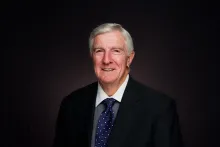
Before his retirement in 2021, Dr. Donald Ward pastored churches in Texas and Louisiana, and taught at Ambassador Bible College in Cincinnati, Ohio. He has also served as chairman of the Council of Elders of the United Church of God. He holds a BS degree; a BA in theology; a MS degree; a doctor’s degree in education from East Texas State University; and has completed 18 hours of graduate theology from SMU.
