
Don Ward
We continue our study of the general epistles.
This transcript was generated by AI and may contain errors. It is provided to assist those who may not be able to listen to the message.
So good evening, everyone, and welcome once again to tonight's Bible study. We're studying 2 Peter, chapter 1, and this is where we'll begin. We're not yet ready to actually start going verse by verse, but we will shortly. Let's talk a bit about the Apostle Peter. Some of the higher critics and scholars claim that Peter didn't write 2 Peter, but we're here to defend that he is the author of 2 Peter. He was accused of being uneducated and barely able to read and write, or maybe even accusing him of being illiterate. I don't know for sure what all the accusations are with him, but one of the things that they talk about... We'll read the verse. It says, Simon Peter, whereas in the 1 Peter chapter 1 it says... It starts with Peter. So the critical scholars jump on that and say, Oh well, why didn't he use the same name and greeting as it did in 1 Peter?
I'm questioning whether or not he wrote it, but I think he added the name Simon in order to confirm authenticity and authority that he indeed is the one that wrote 1 Peter.
The author claims that the letter goes well beyond the opening lines, as it makes positive claims to be the person who bears that name and recounts events that took place in Jesus' name. That is a line I read speaking of the apostle Peter. The apostle Peter presents to us in this epistle a lot of personal experience that he had with Jesus Christ. Now it is possible that there was an Emanuecus who copied Peter's dictation, as in the case of 1 Peter, where it talks about Silvanus, who is also named Silas, that Peter had a second Peter, had an Emanuecus, one who would write for him.
They also attacked the grammar. The grammar is not as eloquent as in, according to them, is not as eloquent as that of 1 Peter, but I don't think any of us would recognize that or criticize that in any way.
In talking about personal experiences, the author of 2 Peter says that the Lord had showed him how he was to put off his life, and in 2 Peter 1.14, that his life was near in hand, how that he must put it off, that being crucified. He also identifies himself as the apostle that knew the apostle Paul. You remember in Galatians chapter 2 that the apostle Paul rebuked Peter for not eating with the gentiles. He was eating only with the Jews. One of the arguments that scholars use to say that Peter could not have written is once again saying that he was illiterate, that he was unlearned, that he does not possess the literary or the grammar skills necessary to write such a letter or an epistle. A further argument that critical scholars use against Peter being the author is that he didn't understand the concepts of Greek philosophy, and he uses the word nature, which is one of the, of course, human nature and the nature of man and that kind of thing that we actually put on as Peter brings out the nature of God himself.
In 1 Peter, in 2 Peter, critical scholars argue that because of the grammar and the styles we've already mentioned, he couldn't have been the author.
Now some of the, even though there's controversy with regard to who is the author, let's examine some of the common writing styles. One of the things that Peter mentions in 2 Peter is that the Bible is inspired. He mentions that in 1 Peter as well. 1 Peter 10 through 12, he talks about the inspiration of Scripture. In 2 Peter 1 19 21, he talks about the inspiration of Scripture. In 1 Peter, he talks about the doctrine of election or calling, how that God calls us into the truth. In 1 Peter 1 2, he talks about that. In 2 Peter 1 verse 30, I'm sorry, verse 10, he talks about how that we are elected and to make our calling and election sure.
In 1 Peter, he talks about the doctrine of the new birth, and he talks about that in 2 Peter in chapter 1 verse 4. He talks about the need for holiness. He talks about the need for no one in his family to be protected. He talks about immorality and judgment. He talks about expectation to the Christian living forever. He talks about, he gives a doxology that is closing statements. There's much more with regard to it. Once again, in today's world, we have the benefit of artificial intelligence and also the computer and mother Google, whatever you want to call it, mother Google or father Google or just Google. You can Google just about anything under the sun, and it will give you the whole list of things, and you can pair them with the Word of God. You always make sure that it conforms to the Word of God.
Now continuing here in 1 Peter, as I said, there are many other reasons to know that you can refute any claim that Peter did not write the epistle.
So we're reading, once again, 2 Peter, 1-1, Simon Peter. He adds Simon, which is not in verse Peter, just says Peter, Petros, a servant. That Greek word for servant is doulos, D-U-L-O-S, and it literally means a bond servant. So Peter does not exalt himself again, but he does say that he is a servant and an apostle. And so that is a little bit different from what he's be greeting in 1 Peter. Simon Peter, a servant and apostle of Jesus Christ, to them that have obtained the precious faith, the precious faith. You know, there are four enemies of faith, four enemies of faith. Maybe we should turn to those.
I have given sermons and then on the four enemies of faith, and then we have had people who have copied that and come along and have given sermons on the enemies of faith. The four enemies of faith are, let's turn to Matthew chapter 6 verse 29. We may not start exactly in 29, but we'll see.
In Matthew 6 and verse 29.
We'll start in 27. Which of you, by taking thought, can add one cubic unto his statue? Now, what are we talking about? We're talking about the four enemies of faith. The first one we're going to talk about is anxious care. Is the state of being of anxiety, will this happen? Will that happen? What's going to happen to me? What's going to happen to them? And so on. So does the state of anxiety. And why take you thought for raiment and consider the lilies of the field? How they grow, they toil, they toil not. Neither do they spin. And yet I say unto you that even Solomon in all his glory was not a raid like one of these. Wherefore, in view of all of that, of what God does for even nature, wherefore of God so clothed the grass of the field, which today is and tomorrow is cast in the oven, shall he not much more clothe you, O you of little faith. So the admonition is don't be anxious. Don't be filled with anxious care. Now we go to Matthew 8 and verse 24. And once again, I haven't decided exactly what verse we'll start on. Matthew 8 and verse 24.
And behold, there rose a great tempest. So the disciples and Jesus are out on the sea. A storm comes up, the boat seeming like it's going to sink and they're being tossed to and fro. And a boat comes up, a storm comes up and begins to toss them to and fro.
And he said unto them, this is verse 26, Why are you fearful, O you of little faith? Then he arose and rebuked the winds and the sea, and there was a great calm. There's a great hymn that I find myself singing quite often, and it's called Peace Be Still. Peace, peace, peace, be still. The winds and the storms obey his word. Peace, be still. And then the other one of the things that Peter has the great distinction of doing that I don't know if anybody else has done this, that Peter has walked on water.
I don't advise that we try that, but he actually walked on water. And we pick it up in verse 24. This is Matthew 14, 24. Matthew 14, 24.
And the ship was now in the midst of the sea, tossed with leaves for the wind. I like it one too many times.
This is verse 25. Matthew 14, 25. And in the fourth watch, the night Jesus went unto them, walking on the sea. And when the disciples saw him walking on the sea, they were troubled, saying, It is a spirit. It is a spirit. That word, the spirit is phantosma. It is a spirit. It is not the spirit of God, of course. It is a spirit. And they cried out, For fear. So far we've seen anxious care, doubt. Why did you doubt? And now we see fear. Anxious care, doubt, fear.
So Jesus is walking toward them on water. But straight away Jesus spoke to them, saying, Be of good cheer, it is I. Be not afraid. And Peter answered and said unto him, Lord, be you. Bid me come unto you on the water. And he said, Come. And Peter was come down out of the ship. He walked on the water to go to Jesus. But when he saw the wind boisterous, he was afraid. Then he was gripped with fear and he began to sink. He cried, Saying, Lord, save me. And immediately Jesus stretched forth his hand and caught him and said unto him, O you of little faith, wherefore did you doubt? Fear and doubt are just about the same thing. We had fear and eight. I may have reversed those at one time. You had fear in chapter eight. We have doubt in chapter 14. And now the one that we're all guilty of and anxious care, fear and doubt, feed on this one, especially when you start in Matthew 6.1. The fear of Pharisees also with the Sadducees came, tempting, desired him that he would show them a sign from heaven. And he answered and said unto them, When it is evening, you say, it will be fair weather for the sky. And the morning it will be foul weather today for the sky is red. And lowering, O you hypocrites, you can discern the face of the sky, but cannot discern the sign of the times. Brethren, we are living in critical, crucial times. The world could go up and smoke at any time, as they say, unless God would intervene. And he has promised that he will not allow all flesh to be destroyed or all of the earth to be destroyed. A wicked and adulterous generation seeks after a sign, and there shall no sign be given unto them. But the sign of the prophet Jonah, as he was three days and three nights in the belly of the whale, so it will be with you. Of course, I added that the sign of the prophet Jonah and left them and departed. We know what that sign was, three days and three nights in the belly of the great fish and the great fish vomited. Now, the fourth enemy of faith, the leaven of the Pharisees and Sadducees. And when his disciples were come to the other side, they had forgotten to take bread. And this shows that we generally look at things, first of all, physically instead of spiritually. And this demonstrates this right now. Then Jesus said unto them, take heed and beware of the leaven of the Pharisees and of the Sadducees. The Pharisees believed that there was life after death and the Sadducees did not believe in life after death. Though the Sadducees claimed that they, by genetic inheritance, were the true inheritors of the priesthood. That's another subject. In Matthew 16 and 7, and they reasoned among themselves. So one of the greatest enemies of faith is human reasoning apart from the Word of God. They didn't reason according to the Scripture. They reasoned among themselves. They reasoned among themselves, saying it is because we've taken no bread. We didn't bring any bread out here. And when Jesus perceived, he said unto them, O ye of little faith, why reason you among yourselves because you have brought no bread? And of course, you know the rest of the story how that he took up, how he fed 5,000 and many baskets were taken up after he had fed the 5,000. Now we're going back to 1 Peter, I mean 2 Peter and verse 1.
2 Peter chapter 1, 1 Peter's servant and an apostle Jesus Christ to them that have obtained the precious faith. We just saw what the four great enemies of faith are, and we don't want to be caught in any way filled with anxious care, fear, doubt, human reasoning. At times it just crops in, and we have to kick it out. One of the ways to kick out fear and doubt is go to Psalm 119. Psalm 119 is a psalm that can be made into a prayer. Of course, not every verse is comforting. In some verses, David is talking about taking vengeance against his enemies, but for the most part, it's very comforting about trusting in God.
So, to those who are partakers of the precious faith with us through the righteousness of God, God has made it possible that he might be made righteous, how? And our Savior Jesus Christ, we're made righteous through Christ, as verse 2 tells us, grace, which means divine favor. We have divine favor from God our Father and Jesus Christ, and peace, grace and peace, be multiplied unto you through the knowledge of God. Now, one of the reasons why the next epistle that we're going to read is 1 John, and one of the reasons why John wrote 1 John was to combat Gnosticism. So, we will spend some time on Gnosticism right now.
Now, let's read this clause once again.
Grace and peace be multiplied unto you through the knowledge of God and of Jesus Christ. Okay, the word knowledge. In this case, of course, we have heard of Gnosticism. One of the things that plagued the New Testament church was Gnosticism.
God and Christ had to continually combat Gnosticism, and Gnosticism was combated by the apostle Paul as well, and the apostle John especially. Those two, and now Peter, combats Gnosticism in an indirect way. He says, knowledge of God.
So, the word knowledge is Gnosting, but the following and making it into a religious dogma or doctrine or teaching is Gnosticism, where you spell Gnostic. G-n-o-s-t-i-c-i-s-m. You spell Gnostic. And, or the word Gnostic, one who is a Gnostic, one who believes in Gnosticism. In this case, this word is Epi. Epi means above and beyond.
Epinosis, above and beyond the knowledge of man. That is, reveal knowledge. Now, the Greeks claimed that they had Epinosis, that is, knowledge above and beyond what the normal man has. And, in fact, the Greeks divided men into two different classes. One class was the Suki Koi. The Suki Koi were lesser men who were limited to animal living. And it's spelled P-S-U-C-H-I-K-O-I. Suki Koi. The Greeks limited those people to an animal style of living. And then there were the Numata Koi. The Numata Koi, according to the Greeks, they were truly humans and they could be taught and they themselves could become Gnostics. And they said that all the Numata Koi were Gnostics. So that's one little thing about the Greeks that you might keep in mind. Well, what this is saying here is that the Apostle Peter is saying that we have been given, we've been called to the knowledge, the epi-knowledge of God and of Jesus Christ. It is knowledge beyond the human ability to perceive the revelation.
You have to have, I perhaps said that wrong, you have to have revelation to get the epinosis of God. How knows the things of man except the spirit of breath of man that is in him, and how knows the things of God except the spirit of God that is in him.
So the epinosis, the gnosis that only comes from God through revelation. 1 Corinthians 2 makes it very clear that that is the way. Now, maybe we need to turn there and read that. 1 Corinthians chapter 2 will begin in chapter 2. 1 Corinthians chapter 2 and verse 9 will start in verse 9. But as it is written, I had not seen nor hear heard, neither has entered into the heart of man the things God has prepared for those that love him. But God has revealed, that's the key word, has revealed them unto us by his spirit.
So in the opening prayer, I said, thank you that you reveal yourself to us through your son.
He was the one who brought truth and knowledge and light into the world.
The truth and knowledge of salvation, even though salvation was preached for those who could discern it in the Old Testament. But God has revealed unto us by his spirit, for the Spirit searches all things, yea, the deep things of God. For what man knows the things of a man save the Spirit or breath or spirit and breath of which is in him. And spirit here is pneuma. We say we have pneumatic tires. That means we have air. It's the Greek word for air or breath and or spirit. The Spirit of man, which is in him. Even so, the things of God knows no man, but the Spirit of God. And you've received that Spirit by revelation.
As we read there in verse 12, but now we have received not the Spirit of the world, but the Spirit which is of God, that we might know the things that are freely given to us of God. So we know God through revelation. Now back to 2 Peter. So we have epi-knowledge. The knowledge that is superior from God is not what the Gnostics claim. Now what I want you to do now, I'm going to teach you right quickly what Gnosticism is all about. If you will draw a line, if you have pencil and paper, if not, you can imagine it in your mind. Draw a line, a long line, and then draw six or seven lesser lines, shorter lines, each one getting shorter successively until you have no line at all, and you have a dark spot, which would be the... you bear down on the pencil, make a dark spot. Now what the Gnostics claim is that God is pure light, that he does not concern himself with being in the flesh. He is strictly light, and the goal of humankind is to get back to light. So each one of these lines represent a series of genealogies and strategies to get back to God using the quote, epinosis of man, superior knowledge of man, to get back to God. They claim that God cannot touch anything physical, and so they claim that God was just a phantom in human form, that Jesus Christ, who is God, the Son of God, he is God, that Jesus Christ did not make footprints when he walked, that he was a phantom in human form, he did not make footprints, and he could not be touched by human beings. Now we know that doctrine is false, and it doesn't make sense to begin with it. But then they claim that there are genealogies and structures that you can, and passwords, as you get back with this superior knowledge of God. You go to Galatians chapter 1 and verse 1, verse 2.
We're down now to verse 6. Galatians 1 verse 6. I marvel that you are so soon removed from him that called you in the grace of God unto another gospel. We don't usually talk about what the other gospel is, we just say it's another gospel. Now verse 7, Which is not another, but there be some that trouble you and would pervert the gospel of Christ. But though we are an angel from heaven, preach any other gospel, other than that which we have preached unto you, let him be accursed.
And we say so as we said before, so say I. Now again, if any preach any other gospel unto you than you have received, let him be accursed. 1, verse 10. For I now persuade men, for do I now persuade men or God, or do I seek to please men? For if I yet please men, I should not be the serving of Christ. But I certify you, brethren, that the gospel which we preach of me is not after man, for neither is it received, it is risen, but for I neither received it of man, neither was taught it, but by the revelation of Jesus Christ. What we read from 1 Corinthians 2, verses 9 through 11, I believe.
For now we have heard of my conduct in the past, in the Jews' religion, how I persecuted beyond measure the church of God, and how I profited from the gospel.
And Paul goes on later on in this epistle to talk about the genealogies, that you don't get caught up with genealogies. And one of the things that the Gnostics did was to get caught up in genealogies and try to learn the genealogies as if that would bring them into closer light. And then they would get, if you start with genealogies, as Luke does in his gospel, you'll get back to the very beginning of Adam and Eve. And then you get to the creator of Adam and Eve. God is the great creator, but Jesus Christ is the agent of creation.
So the Gnostics taught that you can have a superior knowledge, and Paul combated them as saying, you don't learn any other gospel but the gospel that I have preached. And Peter preaches the same gospel that the apostle Paul preached. So we're back to 2 Peter once again. And we will read verse 2 once again. Grace, divine favor, and peace be multiplied unto you through the knowledge, the epinoses of God. Not the gnosis, not the knowledge of the Gnostics, not the gospel that they brought, but the knowledge of God and of Jesus Christ our Lord.
And it was through Revelation, as we read from 1 Corinthians chapter 2, and also from Galatians chapter 1, that if anyone preaches any other gospel, the one that Paul preached let them be accursed. Now verse 3, according to his divine power, has given us all things that pertain to life and godliness through the knowledge that, once again, is epinoses, the superior knowledge that is known through Jesus Christ, has given us knowledge of godliness through him that had called us to glory and to virtue.
I would imagine that everybody can quote John 644, no man can come to Jesus Christ except the Father draw him, or Christ said, no man can come to me except the Father draw him. So God the Father is involved in you being at this Bible study tonight, or you are an imposter and you are a planted root, you are a tare, and I don't think any of you are planted roots or tares. I think you're here because you're called and you're trying to make yourself chosen and faithful so that when Christ comes again with that great army that he comes to fight the battle of the great day of God Almighty, that you will be ready.
Now verse 4, whereby I are given unto us exceeding great precious promises, that by these you might be partakers of the divine nature. So once again, we see this, what the critics tried to say, well how would an unlearned fisherman know anything about the nature of God or of man or anything like that? So he must not have written this. Somebody else must have written this and signed their name to it. Know there's too much. This is one of the most instructive epistles in the whole Bible.
It is so full of absolute truths that you need to know to survive in the world that we live in. Partakers of the divine nature. We have been, what is the divine nature? The divine nature is the very essence of God. It is the Holy Spirit. We're partakers of the divine nature. What is God's nature? It is the same as His essence. His nature is spirit. The Gospel of John chapter 4 verse 24, God is spirit and those who worship Him must worship Him in spirit and truth.
So we are partakers of that divine nature, the Holy Spirit. That is made possible that we can become partakers. How do we become partakers? Some criticize Peter for not going into the details that Romans, the first six, especially chapters of Romans, goes into about repentance and burying the old man and all of that.
He assumes that you know about the divine nature, about the Holy Spirit, and you have escaped the corruption that is in the world through lust, through lust, and that is wrong desire. And besides this, giving all diligence and to your faith, we talked about the enemies of faith, virtue and to virtue knowledge.
And what's in this word here is gnosis. It is not epinosis. It is notice. It is gnosis. So that knowledge can be the knowledge of man and to virtue knowledge. So we have to have knowledge of the workings of the cosmos, the world order, in order to be able to navigate through it. And to knowledge, once again, that word is gnosis. It's not epinosis. And to knowledge, gnosis, temperance, and to temperance patience.
Now, you know Luke 21 verse 41, I believe it is, Luke's account of the Olivet prophecy, in your patience possess you your souls, your life essence. It's interesting what the dictionary says about soul. I have written quite a bit on you don't have an immortal soul.
But I looked up soul in, I Googled soul. Here's what I got in the Bible. In Hebrew, it is neifish, neifesh. In Greek, it is sukei, primarily refers to the whole person, a living being, or the life force itself rather than just an impure and immaterial part that survives death. So even the dictionary defines it as saying that it's something it is more than just, of course, they have the part about the immaterial part that survives. Of course, when the soul, when the body dies, there's no more soul. And no matter what anybody wants to do or say or whatever they want to do or say, they cannot make a soul say anything. There is no such thing as an immortal soul. So we have in the patience, godliness, verse 7. In the godliness, brotherly kindness, in a brotherly kindness, charity, which is love. By this shall all men know, this is written in John 15, by this shall all men know that you are my disciples. If you have loved one for another. And in 1 John 4, how say you that you love God and you hate your brother? You can't have it both ways. You can't.
They are reciprocals if you have to love your brother in order to love God.
Now, verse 8. For if these things be in you and abound, they dwell in you there there.
They make you that you shall neither be barren nor unfruitful in the knowledge. This is Epinosis, the superior knowledge of our Lord Jesus Christ.
So those things need to be you and you and abound to make your calling an election sure.
Once again, you need to—I don't think so many people that have left the Church, they don't realize what they have turned down. Our calling is a precious calling. It is our one and only chance to be in the kingdom of God. After you have known the truth, if you turn your back on the truth—this is Hebrews 6, verses 4 through 6—if you turn your back on the truth, it's impossible after you have equished the Spirit to where the light is totally gone out. It is impossible to renew them again. That's what the Word of God says. I did not write it, did it? The Apostle Paul, I believe, wrote the book of Hebrews, and that's what is written there, that once you have had the Holy Spirit and you wander away from God using the analogy of a rubber band, to that point that if the band breaks, there is no way back. It is a frightful thing to fall into the hands of the living God.
He that lacks these things, is blind, cannot see it, afar off, and hath forgotten that He was purged from His old sins. Wherefore the rather brethren give diligence, make your calling an election sure.
Make your calling an election sure, for if you do these things, you shall never fall, for so an entrance shall be ministered unto you abundantly, and of the everlasting kingdom of our Lord and Savior Jesus Christ. While some of the critics say, well, He doesn't even talk about the resurrection. While the word resurrection is not found in the epistle, but the implication, you have to be resurrected in order to be in the kingdom of God. You have to be, you can be a child of the kingdom at the present time, but to be in the kingdom of God, born again as a glorious radiant spirit being, you have to be filled with the Holy Spirit, and you have to have been resurrected, or if you're alive, you're caught up in the air and changed immediately. Wherefore, I will not be negligent to put you always in remembrance of these things, though you know them. Some people get tired of, well, I've heard that for years. I just heard that over and over again, and these sermons are so boring. Well, maybe we need to go over and over them again. That's not to say that we do not need to be relevant and preach what we should be preaching and be up with the times and be able to discuss intelligently from a Bible point of view what is going on in the world. So I will not be negligent to put you in remembrance of these things, though you know them, and be established in the present truth. So we can ask ourselves, are you established in the present truth? Can you teach what we're teaching here tonight? You should be able to. Yes, I think it fitting as long as I am in this tabernacle. He uses the word tabernacle.
Man, those who believe in a mortal soul. Oh yeah, that just shows he's in a tent. This is not the real life. He'll be resurrected and be in the spirit body later on. No, he is in the flesh. As long as I'm in this tabernacle or in the flesh, the word there literally is the word for tabernacle and the Greek word. It is schinoma. Schinoma. Knowing that shortly I must put off my tabernacle, this schinoma or body, even as our Lord Jesus Christ has showed me. Moreover, I will endeavor that you may be able after my disease to have these things always in remembrance.
Now, Paul now, Peter knew that he was going to die shortly, and he brings that up in the next verses.
Now he brings up what he brought up also in 2 Peter, where we have read that from 1 Peter chapter 5 verses 3.
So in 2 Peter 1.16, for we have not followed cutting, kindly devised fables, where we may note unto you the power and coming. So he preaches his second coming of Jesus Christ, but we're eyewitnesses of his majesty. That's talking about the transfiguration, which we covered in 2 Peter, I mean 1 Peter, chapter 5. Now the scriptural reference to that is in Matthew and Mark. I don't know if it's in Luke or not, but in Matthew, you read the first 10 chapters, you'll see where the transfiguration is covered in scripture. Matthew chapter 17 verses 1 through 10. For he received from God the Father honor and glory. You know Jesus Christ prayed before he was crucified. Restore unto me, this is John 17, restore unto me the glory that I had with you before the world began. For he received glory from the Father and honor and glory. Jesus Christ gave up his glory, took on the form of a human being, took on the form of flesh, yet he did not give up his divinity. He was yet God in the flesh, but he was totally flesh and subject to the temptation trials that flesh is subject to, as we read in Hebrews chapter 2 and other places. When there came such a voice in him from the excellent glory, this is my beloved son in whom I'm well pleased. That was at his baptism that he said, I am well pleased. But at his transfiguration, he said, I am well pleased, and he said, and he said, hear him. This is my son in whom I'm well pleased. Hear him. So after Christ is baptized, we always also read that that a voice came from heaven saying, this is my son in whom I am well pleased.
And this voice which came from heaven, we heard when we were with him in the holy mount.
So the transfiguration, of course, why was it the holy mount? It was a holy mount. It was like any other mount. It was made holy because God's presence was in it.
Remember that? I've said it several times. Sacred things point to a higher reality. We've seen sacred songs pointing to God. Holy things have God's active presence in it. In other words, some way, somehow, God's presence is in it. Take off your shoes, Moses, because the ground you stand on is holy ground.
Because God was in, the voice came from the burning bush.
So, take heed as unto a light that shines in a dark place, until the day dawn, the day star arise in your hearts. Now, the day star is Jesus Christ. In Revelation 22, the last four or five verses there, you should read because it says that Jesus Christ is the bright morning star and he is the day star.
Knowing this first, that no prophecy of scripture is of any private interpretation. Now, interpretation doesn't capture, in other words, the Bible.
This word here is epileusis. Epileusis. It wasn't given through the will of man, but it was given through the inspiration of man, as Paul writes in 2 Timothy chapter 3, all scriptures given of inspiration of God. And we can say it is not of any private interpretation as well, because scripture, the main rule of homiletics is the study of exegesis, and exegesis is the explanation of what any verse in the Bible means. So, it is not of any private explanation or exegesis. For the prophecy came not whole time by the will of man, but holy men spoke as they were moved by the Holy Spirit. They were inspired of God. Now, we get into plenary inspiration versus word for word inspiration.
It seems that the authors use their style in writing it, but they were inspired by the Holy Spirit according to the Bible, and I choose to believe the Bible.
Okay, we have covered chapter 1, and there's so much there, and even when we covered and go over it the way we did, there's still tons there that could be brought out.
So, do you have any question or comment? Any of you?
I'm still...
Hey, Dr. Ward?
What's the...
So, I wasn't sure if somebody else was speaking or not. I was just... I was thinking through the study, it's very meaningful. This time of the year that we're in, examining ourselves and preparing for the Holy Days, pass over a piece of unleavened bread. As you were reading through the verses, talking about verse 9, being cleansed from our old sins, we don't want to forget that. We are examining ourselves and still continuing to go through the cleansing process as we pray and ask for forgiveness and all that. But we do want to as well. We do those things, and then we go on as we try to put sin out and then bring Jesus Christ in. We then go on to like what we read in verses 5 and 7, and those adding to faith, virtue, and virtue, and knowledge, and self-control, and all of that, trying to move towards those things. So it was meaningful thinking about that in the light of examining ourselves and the Holy Day season coming up. Yes, thank you for your comment. Anybody else have a comment or a question?
Dr. Ward? Yes. I like Proverbs 2, 3-6. Can I read it?
I can hardly hear you every time you talk. If it's on the subject, yes. If it's not, if it's not on the subject, no.
Proverbs chapter 2, verse 3-6. I can hardly hear you. Can you talk?
Proverbs 2, 3-6. Okay, read it.
Yeah, if you cry after knowledge and lift up your voice for understanding, if you seek her as silver and search for her as for hid treasure, then shall you understand the fear of the Lord and find the knowledge of God.
For the Lord gives wisdom.
Out of his mouth comes knowledge and understanding. Yes, that's a good one to include in the Bible study in 2 Peter chapter 1, and in John, verse 1, chapter 1 as well. Thank you.
Anybody else have a question or comment? Yeah. Can I get you to list the four enemies of faith again?
Go ahead. Should I get you to list the four enemies of faith again?
All of the four enemies of faith.
I can't hear you.
I'm needing to get the four enemies of faith.
I'm sorry, but I can hear a muffled. He was asking what the four enemies of faith were again. Okay.
It is anxious care, fear, doubt, human reason. Anxious care is in Matthew 6. Fear is in Matthew 8.
Doubt is in Matthew 14.
Human reason is in Matthew 16.
Anybody else have a question or comment?
Now is the time.
Dr. Ward, the lines of Gnosisism you were talking about, they believe that people are striving to be on the God of life, or they believe only Jesus Christ did that.
Say that again.
You mentioned about the lines, you explained about the getting smaller lines of Gnosisism.
Do they believe, did the Gnostics believe humans were on that, those lines trying to get to be God, or that there was a separation that only God could do that?
Their view of salvation was to get back into the light, and as far as what they believed the afterlife, I don't know. One thing I think I failed to mention when talking about the Gnostics was that I told you to make a dark dot or a black dot at the bottom of the lines.
That represents the demiurge. They call Satan or the one who created the physical the demiurge. D-E-M-I-U-R-G-E. Demiurge. That says God would not touch anything physical.
The demiurge created the universe and humankind, and the God that they were worshiping was just pure light. The way to God was through this knowledge of the various bands of knowledge that existed. They would say metaphorically, they were bands of light. Actually, they were they were bands of knowledge that consisted of pass, by-words, password. I hate the word password. By-words and genealogies and such to get back to the light. And only the pneumaticoey were the ones worthy of doing that. If you couldn't get back there, then you were of the suki-koi. You were of animal existence.
Okay, thank you. And anosicism took on, we'll repeat this when we come, some of it, when we come to 1 John, the anosicism took on the form of asceticism or hedonism. Asceticism is deny the flesh and purify it. So this one Greek philosopher died and he's lived in a barrel. He did it all in a barrel. I don't know how he managed to do that. That's what I've read and others have said. And hedonism, of course, eat, drink, be merry, just do whatever you please. And of course, there is the knowledge of God and the truth.
But these beliefs started in the early church, didn't it? Didn't anosicism?
Yes. Paul and the writers, Paul, Peter, and the apostle John were continually combating anosicism. Okay, thank you.
Anybody else?
Dr. Ward, I have a quick question regarding 2 Peter chapter 1 and verse 15. There Paul says Peter says, Moreover, I will be careful to ensure that you always have a reminder of these things after my decease or departure. Do you think that verse is an indicator of the apostles' knowledge, that they're writing scripture and that these things are being collected together and preserved for the church going forward? Well, to some degree, I don't know if he specifically addressed that, but the whole epistle is addressed to the church so that it's addressed to the same group of people as we'll see in 2 Peter 3.1, where he says clearly that this is the second time he's written to them.
That he wanted to leave this behind so that others might know it, and knowing that his life was short and was about to end, have to put off this tabernacle that he wrote to this epistle to warn them and to help them to make their calling and election sure. I don't know if that's exactly what you're asking.
I think that generally answers it. I know there's just glimpses here and there in the scriptures of the New Testament that give the indication the apostles recognize that we're writing scripture.
As it was said, people like to twist Paul's writings as they do the rest of scripture. That was an indication of an understanding these words become scripture. In a time where Paul asked, I believe that was in 2 Timothy at his near the end of his life, to bring the books and especially the parchments. It just seems like there's bits and pieces here and there of them making sure there's a record that's collected together for the church of what they've written. Yeah, of course, who preserved the scriptures through the years? The scribes, it says, unto them who committed the oracles of God, that they were given the responsibility.
It's amazing that we have the scripture today. The canon wasn't fully finalized until the 3-23-25 somewhere along there. When the emperor Constantine made Roman Catholicism the official language of the Roman Empire, he is trying to bring about unity. Of course, the pagans resisted that so much that he changed the worship day from Saturday to Sunday. It was just a political decision. That's the reason he did it. And then, of course, they searched for scriptures to try to justify it like, oh Christ was resurrected on a Sunday morning. Well, he wasn't resurrected on a Sunday morning. Even that justification is not true. So-called justification. We had a person named Ernest Martin, who was the dean of the faculty of Bridget Wood, who wrote and we used this when I took systematic theology at the college in the 60s. We used that as a textbook that Paul and Peter and some of the other apostles, Ezra especially in the Old Testament, were the ones that actually had made sure that they were canonized and brought together for the Church. It's miraculous that we have it today. We have this material for us. And so he, sadly, Ernest Martin, eventually fell away. And I debated him once at a Friends of the Seventh meeting in, I think it was San Antonio, San Antonio Ross. Way back when worldwide was falling apart and we were in that stage between the worldwide falling apart and the United Beginning.
But I think there's validity to why would Paul say, bring the Parchments? If he, there wasn't something going on.
So it would seem, you know, primarily the Old Testament kept contained and preserved by those the scribes and those who were given the oracles of God. And we would generally say the New Testament preserved under God's blessing and authority by the Church. Well, that's the scholars would say that the Church canonized the Bible. We would say that the Bible was canonized by earlier at the mainly at the Council of Jambnia in the 90s A.D. Maybe you look up, I haven't looked up Council of Jambnia in years. I think it's J-A-M-N-I-A.
You usually don't have to spell it exactly for it to come up. The Council of Jambnia.
I, at one time, I taught canonization of the Bible. And it was called, I don't know if it's called systematic theology or I think it was fundamentals of theology.
Thank you.
The Catholics want to say we were the ones to determine and preserve the Bible, but that's far from the truth.
Okay. Anybody else?
Okay, we'll call it a night and say good night.
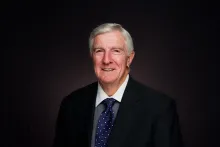
Before his retirement in 2021, Dr. Donald Ward pastored churches in Texas and Louisiana, and taught at Ambassador Bible College in Cincinnati, Ohio. He has also served as chairman of the Council of Elders of the United Church of God. He holds a BS degree; a BA in theology; a MS degree; a doctor’s degree in education from East Texas State University; and has completed 18 hours of graduate theology from SMU.
