
Don Ward
We continue our bible study into the general epistles.
This transcript was generated by AI and may contain errors. It is provided to assist those who may not be able to listen to the message.
So, greetings once again, everybody, and we are at 1 John chapter 3 and verse 1. If you would turn there, please, to 1 John 3 and verse 1. Behold, what manner of love the Father has bestowed upon us, that we should be called the sons of God. That's the first sentence. Now, let's look at some of the key words here. Behold. The word behold does not fully capture. It's an archaic word to some degree, where the old King James translators translated it behold.
The Greek word is eido. It is spelled e-i-d-o. E-i-d-o. It is pronounced e-do. And so, it means how amazing it is that God has bestowed His love upon us, permitting us to address Him as our Father. And we also want to make comment with regard to the use of the word father and sons. We are sons of God. We're not sons of Christ. We are brothers with Christ. Remember in Hebrews 2, verse 11, it says, that Christ is not ashamed to call us brethren.
So, we are brothers of Jesus Christ, and we are sons and daughters of God. So, that is very important distinction, that we are sons of God. We are brothers of Jesus Christ. Jesus Christ has gone through the same process that we go through, of being begotten, and then upon being in the grave three days and three nights, He was resurrected by the Father. It says several times in the New Testament that Jesus Christ was resurrected by the Father.
So, we call Him Father, and what a wonderful blessing it is to be able to call Him Father. And look at this. This verse is so rich in all it contains. Behold what manner of love?
It's amazing the manner of love that God has bestowed upon us. The word love appears in some form about 31, it depends on how you count it, 31 to 41 times, and then with the other derivations of the word love, like loving, beloved, and so on. 46 times in 1 John, the Gospel of 1 John does the word love and the rootings appear. So, what manner of love God has bestowed upon us? We are His sons. So, we should be called the sons of God. And I have asked the congregation here, and I've asked you to just say, God loves me. You are a son.
You are a child of God. Now, this word here that is translated son is the Greek word teknon. T-E-K-N-O-N. Tech-non. And it means little children. We're called the little children of God. Therefore, the world, the cosmos, the whole order of the universe knows us not because it knew Him not.
In fact, they crucified Him, everyone, except very few people crucified Him. And even the apostles didn't really understand what they had been called to and what they were a part of until God opened their eyes more clearly, as we read about in Luke chapter 24, where He opened their eyes and they really began to understand what they had been called.
That Jesus Christ must suffer, pay for the sins of the world, and ascend back to heaven, send the Holy Spirit, and begin us with the word of truth and with the Holy Spirit. So now we come to verse 2. Beloved, now are we the sons of God. Once again, what a privilege it is.
He calls us here, Beloved. It is a term of endearment, of course, that we are called Beloved. You are Beloved. It is from there that we have such expressions as dearly beloved and well beloved and so on. So wonderful blessing that He has called us the beloved sons of God. Beloved, now we are the sons of God. It does not yet appear what we shall be.
But we know that when He shall appear, we shall be like Him, or we shall see Him as He is. Remember that when Moses desired to see God, God hid Himself in the cleft of the rocks, and Moses was allowed to see His high in parts. It is from that we get the song, Rock of Ages, cleft for me, let me hide myself and thee.
So even Moses was not allowed to look upon God in His glorified form. So no man can look upon God in His glorified form and live, but in resurrection we shall be able to look upon Him. In fact, if you look at the last chapter of the Bible, Revelation 22, when I give sermons, I generally close with this verse, and I ask the question, are you able to look upon the face of God?
And so we look at Revelation 22 and verse 4, and they shall see His face, and His name shall be in their foreheads. We look forward to that time where we will be face to face with God. What a joyous time! That will be an awesome time to look upon the face of God. Are we ready to look upon His face? Now we're back in John chapter 3 and continuing. Beloved, now we are the sons of God, and it does not yet appear what we shall be, but we know that when He shall appear, we shall be like Him, or we shall see Him as He is.
We'll see Him in His glorified form. Now in verse 3, and every man that has this hope, now hope has this hope in him, that is, a hope of looking upon the face of God and being in the kingdom of God purifies Himself even as He is pure. How do we purify ourselves? Well, we purify ourselves. We look at the book of Ephesians. Look at Ephesians 6. And we'll look here at how we can purify ourselves and how we are purified by Jesus Christ at the present time.
I want, instead of 6, I want 5. Sorry about that. Ephesians chapter 5. Chapter 5 of Ephesians, where Jesus Christ says that He has clearly clarified it, that He has purified us by the washing of the water. So in Ephesians 5, 26, that He might sanctify and cleanse it, that is, the Church of God, with the washing of water by the Word. So how are we cleaned up? We have to read and study the Word of God. As we read and study the Word of God, God will reveal to us that He will lay onto our hearts what we need to do to be cleaned, to be sanctified and pure.
Look at verse 26. That He might sanctify and cleanse it with the washing of water by the Word. Now verse 27. That He might present it to Himself a glorious Church, not having spot or wrinkle or any such thing, but it should be holy and without blemish. Now, further key to how we can cleanse ourselves and even come to the point that we sin not. How do we sin not? Well, there's a verse in the Bible, and if you'll turn to Psalm 19, please turn to Psalm 19 and verse 9. Psalm 19 and verse 9. I'm sorry, I didn't say 119. I'm sorry.
Psalm 119 and verse 9. I will keep your statues, O forsake me not utterly. How can we prevent God from forsaking us, and how can we be cleansed and sin free? Verse 9. For with all shall a young man cleanse his way, by taking heed unto their according to your word. With my whole heart have I sought you, and let me not wander from your commandments. Your word have I hidden in my heart that I might not sin against you.
Blessed be you, O Lord, teach me your statues. Notice verse 11 again. We hide the word of God in our hearts and our minds. We can have a new knowing within. And that is one of the most wonderful things there is that we can contemplate is for us to have a new knowing within ourselves.
Now, we need to turn to Hebrews chapter 9 to notice this, that under the terms of the new covenant, we can have a new knowing within. The old covenant can keep those who offer the animal sacrifices ceremonially pure, but they cannot change the conscience of the mind.
So, we look at Hebrews chapter 9 and verse 11. But Christ being come, at high praise some good things to come, by a greater and more perfect tabernacle, not made with hands. That is to say, not of this building. Of course, that building is a church of God. It is a spiritual building. It is where God and God is placed His dwelling place in each one of us. We are His abode. Now verse 12. Neither by the blood of goats and calves, but by His own blood He entered in once into the holy place, having obtained eternal redemption.
Verse 13. For if the blood of bulls and goats and the ashes of an average sprinkling, the unclean sanctifies to the purifying of the flesh, how much more shall the blood of Christ, who through the eternal Spirit, see, we have the eternal Spirit. The Spirit that is in God is in Christ, is in us. The Spirit that is eternal. It doesn't just begin.
It is the eternal Spirit that we are begotten with, offering Himself without spot to God. Purge your conscience. Purge your conscience. The conscience is a word that means the knowing within. So we have a new knowing within. We have a new conscience. The Word of God is written on our inward hearts. It is amazing in all of the things that are contained in 1 John chapter 3. Continuing in 1 John chapter 3.
Now verse 3. And every man has this hope. We've talked about hope. Now verse 4. Whosever commits. Now this word commits is a word that you really need to be familiar with. The word in Greek is po-e-o. It is P-O-I-E-O. Po-e, I in most languages, has a D sound. And an E in most languages has an A sound. And so it's O along O. Po-e-o. Uso commits sin. Uso po-e-o sin. Now I want to read to you what the Strong says about po-e-o. It's very important. It is a word with wide application. More or less direct. Abide, agree, appoint, avenge, band together. Bring, cast out, cause, commit, continue, deal without, delay, execute, exercise. And it continues on about 20 more words. So it does indeed have a wide range of meaning. Now there's another word that we must be familiar with, and it is introduced in the next verse or so. And that is the word, the Greek word, ganao. Ganao. It is spelled G-e-n-n-a-o. Ganaao. G-e-n-n-a-o. This is very important. Now, ganao has more than one meaning in the sense of when it is used out of the father, it is used to denote begetting, to engender life. When it is used out of the mother, it is used to bring forth, to give birth, to give birth, to bring forth. It's very important to understanding these words here in first John. So now, whosoever commits sin transgresses also the law. Now, we know I'm not going to turn there, but I ask you to write it down and look at it. And that is Romans 7.14. What does Romans 7.14 say? Romans 7.14 says that the law is spiritual. And Paul says, but I am carnal, sold under sin. But the law is spiritual. The law, the immutable spiritual law of God, cannot be done away with. The eternal spiritual law of God is eternal like the Spirit of God is. God is eternal. He's always existing. The word, the one who became Christ, is eternal. He's always existing. Whosoever commits sin. Now, once again, a wide range of meanings. So whosoever commits sin transgresses the law. Now, this is one of the few places in the Bible where sin is defined. Another place in the Bible that says, whatsoever is not of faith is sin. And it says also that, say not on the moral that you're going to do such and such, but say, if the Lord will, I will do such and such. To do otherwise, whatsoever is not of faith is sin. And to say that you're going to do something, the Bible clearly in James says, swear not at all. Now, swearing is not necessarily taking the name of God. Well, let's say it this way. It is not necessarily saying four-letter words. To swear, to say you're going to do something apart from God, is swearing. I swear that I'm going to do such and such. And you don't have to say the word swear, just to say I'm going to do such and such and leave God out of the picture. We don't necessarily have to say it each time. I swear to God. But we do have it in mind and in heart, we need to say it and be aware of it. Sin is a transgression of the law. One time I had two young men, Mormons, dressed nicely with white shirts and black ties, show up on the doorsteps in Houston. And they said, we would like to give you the Book of Mormon. I said, well, if you can tell me where the Bible defines sin, I will accept it. But if you can't, I won't. I also said, I already have a copy of the Book of Mormon, and it's filled with a lot of contradictions and untrue statements. And they began to search their Bibles, and they could not come up with 1 John 3-4.
They said all kinds of things that you might expect anyone to say, but they could not say that sin is a transgression of the law. And we know that he was manifested. Verse 5. Manifested means to show, to reveal. He was shown, he was sent to take away our sins, and in him is no sin. So God was sent by, I mean, Christ was sent by God the Father to take away sin, and in him was no sin.
That's how he qualified to become our Savior. He had no sin. Whosever abides in him. Now, John is famous for using the word abide. I think the word abide appears 24 times in 1 John. Abides, abideth, or derivations of it. Whosever abides in him, that is, lives in him. Remember John 4, 23?
Not John 4, but John 14. John 14, 23 says, And we both will make our abode in him. So God and Christ abides in us, as we've already stated once, and we've probably stated many more times before we finish the general epistles. God abides, lives in us. That's how we can say, I am a child of God. I am a son of God. And once again, we're not children of Christ. We are children of God. He is the one that gets us, that Christ plays a role in, and we can't even come to the Father, except Christ reveal the Father to us.
So we are well aware of our calling, and I knew we really appreciate our calling as we should. Now we come to verse 8. Well, let's finish. Let's read verse 7 again. And of course, as we've said so often in Matthew 24, the deception is going to be so great at the end of this age that if it were possible, the very elect would be deceived. But God, if we love the truth, prevents us from being deceived. He will not send us strong delusion. But those who do not believe in Him, on Him, should be on Him, not in Him.
Those who do not believe on Him will be sent grand delusion. He that does righteousness is righteous even as He is righteous. What makes one righteous? Right with God. You have to be obeying God. The law is spiritual. Now we come to 8. He that po'e'e'o, He that commits sin, practices sin, is of the devil. Or we could say He that continues in sin is of the devil.
He is John 8.44 says that in Christ speaking to the Pharisees, He says, You are of your Father, the devil, who was a liar and a murderer from the beginning. So those who sin are of the devil, a sin from the beginning. He left His first estate, according to Isaiah 14, and tried to overthrow the throne of God. For this purpose, the Son of God was manifested, that He might destroy the works of the devil. So once again, Jesus Christ came to this earth to destroy the works of the devil.
The devil had done many mighty works in leading a third of the angels to follow Him. Now we come to that word, Gennao, that I'll introduce you to. Whosoever is born of God, now remember, it can be translated, begotten when used to the Father. It can be translated, born when used to the Mother, means to bring forth or to give birth. Whosoever, in this case, is begotten of God, commits not sin. It doesn't continue in sin. It doesn't practice sin.
The word for sin is po'eo, and we have read about 15 of the meanings, and there are 15 others. One is continue, which also has to do with practice. You don't continue to practice sin for His seed. The seed that is planted in us upon the laying on of hands is the Holy Spirit. His seed remains in Him, of course, to the point, if you commit the unpardonable sin, and unless used instead of the rubber band, thus use the placenta of the Mother.
Remember, Galatians 4, 26, says Jerusalem above is the Mother of us all. So that placenta connects us with the Mother, connects us with the Church. It is through the Church, through the placenta, that the infant receives its nourishment, the unborn before he or she is born. And he cannot sin because he is born of God. Now, if you translate this as born of God, as it is here, it would be correct that once you are born of God, born of God, you don't commit sin for His sin, for His seed remains in you, and He cannot sin because He is born of God.
Once you are born of God, you cannot sin. The angels set their minds in a certain direction, and now the good angels do not sin, and apparently cannot sin, and they remain faithful. Once you are resurrected as a glorious, radiant spirit being, you do not sin because His seed remains in you. Now, in the Begettles stage, you don't practice sin, and you don't practice sin because you are begotten of God through His Holy Spirit.
Now, you do sin, and if you do sin, as we noted in 1 John 1, if you go before God and covet your sins, He is faithful and just to forgive you of all righteousness. So, continuing in verse 10, So, you have love is introduced right there, and so if you practice sin and continue in sin, eventually the placenta is broken in connection with the mother through whom you receive the nourishment is broken, and you are cast off as an unborn child that is miscarried, and there is no way to get you back and reconnect you with the placenta.
Now, the admonition is to love one another, for this is the message that you heard from the beginning, that you love one another. Remember we talked about in 1 John 2, that we are to love each other as Christ loved us, and the Gospel of John talks about, that you are in the faith if you love one another, for this is the great message, or the message that you heard from the beginning, that we should love one another. That is the message from Genesis to Revelation.
Not as Cain, and so we're back in Genesis, not as Cain, who was of the wicked one, and slew his brother Abel. And why did he slay him? Because his own works were evil, and his brothers righteous. So we want to turn back to Galatians, not Galatians, but Genesis, chapter 4. In Genesis chapter 4, turn back to Genesis chapter 4, and we want to read there from Genesis chapter 4. And Adam knew his wife Eve, and she conceived, and bare Cain, and said, I've gotten a man from the Lord. Now, initially, Eve might have thought that she had given birth to the Messiah. Remember the promise in Genesis 3, verse 15, that there would be one that would come and bruise the head of Satan and put him away.
He'll bruise his head and put him away. That bruising is spoken of also in Romans 16. Bruise his head and put him away. He is defeated by God, the Father, and Jesus Christ, and is put away. So Eve might have thought, I've given birth to the Messiah, and obviously Cain got the idea that he was the Messiah. And when he brought about an offering, verse 3, and in the process of time, Cain brought the fruit of the ground, an offering unto the eternal.
So Cain was a tiller to the ground. Abel was a keeper of the sheep. In verse 4, and Abel also brought the firstlings of his flock, and of that, and... And they ate their own. So the firstlings of the flock were brought by Abel, and that signifies...what did that signify? It signified that Abel realized that he was a sinner, and he was in need of a sacrifice to remain ceremonially clean.
It also points to Jesus Christ, who came and lived perfectly and became our sacrifice, so that we might have the earnest of the Spirit, the down payment on eternal life, and live a life according to the Spirit. Cain, on the other hand, brought a thank offering, perhaps thinking that he was the Messiah. He was not in need of a sacrificial offering to cover his sin, because he viewed himself as sinless.
And of course, Cain is symbolic of the evil ones that have come and gone through the ages. And they're evil ones to come at the end of the age, and they're already among us. So we see here not as Cain, who was the wicked one, he was the devil, and he killed his brother. And why did he kill him? Because his own works were evil at his brother's righteous. And we made that distinction. Cain brought a thank offering, did not admit he was a sinner.
Cain brought a sacrifice, admitted that he was a sinner. And then it says, Cain was really mad because of that, and he was so mad and angry that he killed his brother. And God says, don't you know if you do well, you'll have the preeminence, you are the firstborn, and you will rule over your brother. But if not, if you do evil, he will rule over you. And so it was that Abel ruled over Cain, and Cain fled to another country, to another place, I don't know if it was another country. And there he took a wife, not converted. And so the story of Cain haunts us to this day.
Now continuing in verse 13. Marvel not my brethren, if the world hates you, the cosmos. Remember we've already read that it will hate you. And it says that it hated the world because it hated Jesus Christ. It will hate you because it hated Jesus Christ. Marvel not my brethren, for the world will hate you. We know that we have passed from death unto life because we love the brethren. He that loves not, his brother abides in death. Once again that abides.
That's where he lives. That's where he is. Contrasted with eternal life, abiding in God and Christ and them abiding in you. Whosoever hates his brother is a murderer. Now that is perhaps the strongest statement in the whole Bible.
And it is taken for granted by so many. You cannot hate your brother and claim to be a Christian. It is not possible. Whosoever hates his brother is a murderer. Now I did not write this. It is the word of God. It is the word here. It means a man-slayer. The Greek word is almost unpronounceable. But it means a man-slayer. The one who kills. So whosoever hates his brother is a murderer.
And you know that no murderer has eternal life abiding in him. So we are to be our brother's keeper. From Genesis to Revelation, it is revealed that we are to be our brother's keeper. We want to go now to Leviticus 19.15 because Leviticus 19.15 speaks to something that we all must be wary of and we must all understand that we are to turn our brother about. And we are to keep him from sending the unparnable sin and denying the faith and going in the opposite direction.
So we want Leviticus 19 and verse 15. Leviticus 19 and verse 15. So if you're at Leviticus 19 and verse 15, I'm having trouble landing right on the verse. Leviticus 19.15. This is such an important verse and it's one that is so overlooked that, especially in today's world, you shall do no unrighteousness in judgment. Now we have that scripture in Matthew that says, judge not that you be not judged. Part of what judgment you judge is to be met in or measured unto you.
You'll receive the same judgment. But you're to cleanse your heart and your mind, then judge your brother and realize that you could be in the same condition that he's in. But if there were no judgments made, there could be no sin because you have to judge and the law identifies that which is sin.
And to transgress the law as we have read is sin. So you shall do no unrighteousness in judgment. You shall not respect the person of the poor. In other words, you're going to judge the rich just the way you do the poor. You're not to be in respect of persons. God is not in respect of persons. He says that in Romans 1, I believe it's verse 10, maybe 11 or 12.
And God is not in respect of persons. So you shall not respect the person of the poor nor honor the person of the mighty, but in righteousness, according to the immutable, spiritual of God, shall you judge. And so then you have a commandment that my wife and I have tried to live by. And we have celebrated 70 years of married life. You shall not go up and down as a tailbearer among your people. Neither shall you stand against the blood of your neighbor.
I am the Lord. You shall not hate your brother in your heart. You see, we just read from 1 John that if you hate your brother, you are a murderer. So, hating is equated with murder. You shall not hate your brother in your heart. You shall not, in any wise, rebuke your neighbor and not bear sin for him.
The Old King James is an awkward translation. It literally means, and not bear sin for him. In other words, if you do not confront your brother and try to turn him about from the era of his ways, then you are as guilty as your brother, and you are counted as a murderer, and you know a murderer has eternal life abiding in him.
That is the Word of God. Not my words, but the words of God. I mean, the strictness with which we are to observe what is written in the Scripture is far beyond what we oftentimes hear about or think about. Now we go to Leviticus 5.1, and it says, who said the wrong word.
So we have a warning in James chapter 5 that we're not to be a partial in judgment, and the unrighteousness, the rich man, is forever judging the poor, but we're not to judge anyone until we clean up our own act. And then we are free to judge. But it is so critical that we judge according to the Scriptures and by the Scriptures. We are judged. And so we go back to 1 John once again, and 1 John chapter 3. I'll get there eventually. In 1 John chapter 3, I'm looking for 1 John chapter 3. I guess I'll go to the non-bible and set a computer on, having difficulty with a computer.
So back in 1 John chapter 3, we read once again that you're a murderer if you hate your brother. So verse 15 again, Whosoever believes in him should not perish. I'm reading John the Gospel. 1 John chapter 3 and verse 15. Whosoever hates his brother is a murderer, and we know that no murderer hath eternal life abiding in him.
Hereby we perceive the love of God because he laid down his life for us. We ought to lay down our lives for the brethren. So we lay down our lives in several different ways. And once again, if you don't turn your brother about, then you are as guilty as he is. So we look at the last two verses in James. And of course, we covered this when we covered the book of James, James 5, 19. Brethren, if any of you do err from the truth, and one could burn him, let him know that he which converts the sinner from the air of his weight shall save a life essential, a soul, from death and shall hide a multitude of sins.
So if you turn your brother about and say, hey, I saw you, or I heard you, and so on, it goes, whichever way that you use to correct your brother, then God says, I will come unto you, and I will minister to you.
And you will be one of mine, because you were brave enough. It's interesting to note with regard to serving our brethren, that we're quick to do it in a physical sense. So if the house burns down, we're quick to take up an offering and give it to our brother.
But if we see our brother sin, we tell somebody else, or we don't say anything. We tell our wife, we tell our neighbor, we may tell the pastor. But we have verse 16 hanging before us. Hereby we perceive the love of God because He laid down His life for us, and we ought to lay down our lives for the brethren. It doesn't mean just an occasion of fire, that you might rush in and save somebody even more. It has to do with judging righteous judgment. It has to do with not swearing, and all are hearing someone swear.
And remember what swearing is. It is more having to do with saying that you're going to do such and such, than it is using a four-letter word, though. Four-letter words are not to be used. And that's one of the habits we should break. But who so has this world's goods, and sees his brother in need, and shuts up his piles of compassion? From him how dwells the love of God in him. So, if we're going to love God, we have to love our brethren. It's a reciprocal relationship. You can't love God and hate your brother. In fact, you have to love your brother and love God. My children let us not love and word neither in tongue, but in deed and in truth. So, what is the truth? I've just read the truth. We know that no murderer has eternal life abiding in them. And hereby we know that we are of the truth, and shall assure our hearts before him. For if our hearts condemn us not, God is greater than our heart, and knows all things. When we do something wrong, our knowing within comes to the poor and says, You should have done something. You should have said something. You should have helped him. You should have, and you can fill in the blank of whatever it is, you should have done. But God knows God is greater than our hearts. Of course, he already knows what we did. So, if our heart condemns us not, then we'll have great boldness before God. So, once again, verse 19, And hereby we know that we are of the truth, and shall assure our hearts before him. For if our hearts condemn us not, God is greater than our heart, and knows all things. 11. If our heart condemns us not, then have we confidence toward God. In other words, if we have a clear conscience, then we have boldness toward God. And, whatever we ask, we'll receive of him, because we keep his commandments, and do those things that are pleasing in his sight. And this is his commandment, that we should believe on the name of the Son of Jesus Christ. Now, to believe on a name is not what the preachers of the day might say. Just believe on the name of Jesus Christ. It means everything. If you believe on a name, when this was translated, to believe on a name means that you believe everything that the person, the being, stood for, the name of his Son Jesus Christ, and love one another as he gave us commandment. Not only did he give us commandment, he gave us an example. And he that keeps this commandment dwells in him, and it should be on him. We don't... He dwells in us, and we can... We believe in him... Oh, I'm sorry. We believe on him, and he dwells in us, and we dwell in him. And he that keeps this commandment dwells in him, believes on him, and he in him, and hereby we know that he abides in us by the Spirit which he has given unto us. And of course, it says in Thessalonians, 1 Thessalonians, that quench not the Spirit. So, we have completed another chapter. Now we have opportunity to receive feedback from any of you. Any of you have a question or comment? Question or comment, please. So, if we have no question or comment, we will call it a night. When will we meet again? I know it's tough to meet during Daylight Savings Time, but if we want to finish the general epistles, is there so much great information and knowledge that we should be aware of?
June 10th. June 10th.
Go ahead. June 10th. I can't hear you. June 10th.
He said June 10th. He said June 10th. He says what? June 10th for the next Bible study. Oh, next meeting, next June 10th. Okay. Any other comments?
Dr. Ward, so if we see our brother sin, do we go and... I understand that we're to make sure that we don't have... We have to make sure our heart's right and we don't have a beam in our own eye, so if we go and talk to him, if we're aware of it and we don't go to talk to him, then from my understanding that means the sin is upon us. Is that correct? That's what the Scripture says. Okay. Not bear sin for him is a correct translation.
We could look at other translations and make sure... But even most King James translations will have a footnote to the side that says, Not bear sin for him.
And the same is in Leviticus 5 and verse 1. And we hear the voice of swearing, and don't utter it, then we bear sin for him. It's one of the greatest weaknesses of all time, and the greatest weakness, I think... I'm sure it's in the top two or three of the whole church, probably through all times. I'm not sure. I believe it is in this era of the church that, rather than facing our brother, we tell somebody else, and we don't really... One of the thing... One of the Scriptures I intended to turn to tonight is 2 Corinthians 5, 17, that God has given us a ministry of reconciliation. So if we see our brother sin as sin, and we don't help him, see, real quick, to help in the physical sense, because that's easy. Just give whatever offering we want to give. His house burned down, so we give him clothes, we give him whatever. Or we know he's out of job, we give him groceries, whatever. But we are not quick to help spiritually. We place that blame, that load of burden, whatever you want to call it, responsibility on someone else.
Almost no one does that. I know. I know. I'm guilty. I'm sorry to say, I haven't myself at times. I think, well, maybe I didn't understand something, or whatever, and then I just pass it off. Yeah, we make excuses. We can rationalize almost anything we want to say. We want to name. But you know, there are some out there that would tell you that you're doing something wrong. But they will be the ones that will be interpreting Scripture inaccurately. They'll try to get you to do something, believe their doctrine, believe their pet doctrine, or whatever, and say that you're sinning by not believing it. And that's incumbent upon us to know our Bibles and be able to refute that, if need be. But I think some people would do that as well, in the name of that Scripture as well. I've got to turn these people from the error of their ways. Just because somebody tells us we're an error, obviously they could be the ones in error. That's true, but we can't allow that to keep us from doing it, though. Oh yeah, I agree, definitely. I see that especially on social media. People will put all sorts of stuff out there, thinking that they're trying to help people, whatever. But what they're saying is an error. Right. Well, Dr. Ward, that's not necessarily going to your brother if you just put it on social media. The Scripture says to go to them, you and him alone, correct? Right. It has a beginning step.
It has a step by step in Matthew 18, the anniversary of the... Go to him alone, then you take somebody, still won't hear you, bring it to the church. Well, we generally in the church, what is done is we, of course, generally tell our wives, we tell the minister, and then he's incumbent then upon the minister to do something. And if the minister doesn't do anything, they would say, well, I told the minister, he didn't do anything, so must be okay. Well, God doesn't let us off the hook if we just tell the minister, though, does he? No. I mean, it's one of the most difficult things in the whole Bible. Most people are... most ministers don't preach it, don't teach it because it's not popular. Now, what is popular is, judge not judge. That's a real popular way to go. Now, like you say on social media, and like Jim is talking about, a lot of people get on their soapbox on social media, and it's just thrown out there for everyone to see. And a lot of times, what they're saying is totally wrong. So you always have to see what the Bible says.
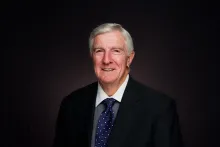
Before his retirement in 2021, Dr. Donald Ward pastored churches in Texas and Louisiana, and taught at Ambassador Bible College in Cincinnati, Ohio. He has also served as chairman of the Council of Elders of the United Church of God. He holds a BS degree; a BA in theology; a MS degree; a doctor’s degree in education from East Texas State University; and has completed 18 hours of graduate theology from SMU.
