

Jorge de Campos
This transcript was generated by AI and may contain errors. It is provided to assist those who may not be able to listen to the message.
Some years back, I was sitting with other ministers and we were talking and trying to understand certain situations and this one minister, very well known in the church, said, you got to understand the Genesis. And understanding the Genesis, in other words, the beginnings, is always very important. And when he said that, to me it was a profound statement and for many years I kept thinking and meditating about it, literally, for a long time. And the Genesis, the beginnings of something, of anything, could be of a construction project. Why are you building this building, for instance? Why are you getting married? You know, what is it reveals something? Reveals the motive, the intent, and the purpose. And it's very important for us to understand the Genesis because we then understand what was the motive, the intent and purpose of why this thing was created or built or started. Was the motive, the intent, and the purpose, an honorable one, or was based on a mixture of good and evil, in other words, a fraudulent Genesis. My purpose today, brethren, is to talk about the Genesis, in other words, the purpose, the intent of the creation of man, the creation of mankind. And that intent is really revealed right at the beginning in the book of Genesis in chapter 1, verse 26. So let's turn to Genesis chapter 1, verse 26. And it says, then God said, let us make man in our image and according to our likeness. And then a little later in verse 27 says, so God created man in his own image, in the image of God, he created man. So obviously when we use the word man, we mean mankind. That obviously means man and woman. But the intent and purpose, the desire, the ultimate desire of God was to create sons and daughters of God in his image and in his likeness.
Now think about it. Think about it. For you to be a son of God, just like your own children and your children and your daughters are like you. They, I was just watching one of my grandsons, you know, he's playing with the parents and he's being a little cheeky and he says, well, this is my bed. Well, it's actually the parents' bed, you know, and things like that. So it's so cute, but it just shows there is that bond. And then he says, well, where's mom's bed? Well, it's here, and where's dad's bed? Yeah, and where's your bed? It's yeah, in the middle. You know, it's so cute seeing they're doing little things like it, but it just shows that closeness that it is between parents and children. They are one kind. There's one likeness. And therefore, to be of the likenesses, it says, in God's image and his likeness, we would have to be beings, and we would have to be, because that's part of the goal, beings that can make decisions.
And you know, you and I, when we raise our children, one of the things we want our children is teach them values that they learn to make good decisions. Isn't that, I mean, that's in the end, one of the goals of child reading, that your children make right decisions, because that's going to affect their whole life. You can make one wrong decision. Sometimes you make wrong decisions, and they minor things, but you can make one wrong decision and messes your whole life for your whole life. One wrong decision. So you want to kind of teach your children in a way to protect them, to make them aware of the danger of making a wrong decision that will affect them completely. Think about it. God wants you and I, part of his family, having his likeness, having us, ultimately, as spirit beings in his family, like he is being able to make sound, balanced decisions which are based on the law of love, and what can concern over the good of all, and for men, of all beings. And he wants to give you that power, eternal power and eternity, to do that. So, could he do, could he teach you that by making you a robot? No, because you'll never learn the lessons. You see, it's like for you to learn a bicycle, ride a bicycle, you have to get on the bicycle and you have to try and maybe follow it and get up again and you help until you actually ride the bicycle. But you have to go through it and learn when you fall to get up again.
So, the intent of God to create mankind. There was the genesis, the beginning. Why did it create mankind? It's so that mankind are going to be children of God in the kingdom of God.
Yeah, that's what it says here in Genesis 1 26 27, basically. But to do that, he has to give mankind free moral agency, the option to make their own choices and to mess it up and to hit the nose or the face against the wall and realize, ha ha, that's a wall, I better not go that way. Now, God can tell you, don't go that way. But you know, you and I are just kind of stubborn. We'll go that way, bang! And then we realize, well, it's a wall. Well, God says, well, I told you. And then you learn to go the right way and he said, okay, fine, now I'll go the right way. But you know, we have to learn through what it's called the school of hard knocks. Isn't it so true? Don't our children have to go through that?
It's a fact. Now, for us to be part of the family of God, God had to give us that, the opportunity of having free moral agency. The alternative, your robot. You know, you just do what's been programmed to do. And that is not what God wants of his children. He wants children that will do things the way God does, but a free way without God having to be on top of them. You know, it's kind of sometimes we see people in the church for a long time and then they say, why doesn't God show me what to do? Well, maybe God is taking his hands off to see if you're learning to make the decision so that he can give you more power in the world tomorrow. Maybe. You know, as initially when we're children, we have to be told, don't do this, don't do that, don't do that. But as we are teenagers, we expect the children to be able to make some decisions. And it's kind of like through that teenage, we kind of start loosening the bonds and allowing them to make some decisions, but not too much so that they don't get badly hurt. But, you know, it's part of that growing process. You know what I'm talking about. You are parents. You know what I'm talking about. So God has to do the same thing with us. Let me ask another question. You as parents, have you ever seen one of your children that has never, never in his life done anything wrong? Have you ever seen a child that has never, even though you told him, don't do that, sooner or later, we'll do something wrong? In fact, they'll do it. Therefore, you as a parent know what?
You know that there will be times that you'll have to correct him. And by correct, I mean, guide them the right direction to say, this is the way, walk you in it. Not the other way. Hey, not that way, but this way. That's what I mean by correct. It's not taking a whip and whatever. I mean, correct is just pointing the right direction, says, no, no, not that way, this way.
That's a fact. You know that.
So you know, and I know, we know as parents, that our children will one day sooner or later do something wrong. Fact.
Therefore, God knew from the beginning that sooner or later his children, mankind, will do something wrong. Fact.
But that thing wrong would be breaking God's law of love. Fact. He knew that mankind sooner or later would break God's law of love. John, like Romans 6, 23 says, the wages of sin is there, right? So God knew that sooner or later you would die because you made the wrong decision. And therefore, God's plan of making you a son of God is expired because you did.
He wants to have children. He has to give them free moral agency. He knows that sooner or later they're going to do something wrong. Therefore, they're going to sin. Therefore, the wage of sin is dead. Therefore, his plan cannot be executed because the children will die.
Therefore, before he created the plan, he devised a plan of buying the people back from death by having the Word which became Christ, his Son, emptying himself, becoming a human being, and dying for us so that through his suffering and sacrifice, we could be brought back, redeemed, back to life.
And that way his plan could succeed. The second, the suffering, understand this. This is vital for us to understand. The suffering and the sacrifice of Jesus Christ was and was required as an integral part of the success of that plan before the beginning of the plan and it had been decided before the plan started being executed.
Turn with me to 1st Peter chapter 1. 1st Peter chapter 1. 1st Peter chapter 1. 1st Peter chapter 1. 1st Peter chapter 1. 1st Peter chapter 1.
Knowing that you are not redeemed, brethren, we know that we're not brought back from death. We are not brought back with US dollars printed by the federal bank or with cryptocurrency or whatever. You are not redeemed, as it says here in verse 18, with corruptible things. Corruptible things like silver or gold from our aimless conduct, from our behavior, then we kept knocking the nose and the head against the wall. We are not brought back because that way is the way of death. And that way we're received by tradition from our families. It's our genetic culture, it's the way we made. But we were brought back with the precious blood of Christ as a lamb without blemish and without spot. He, indeed, Christ, indeed, was foreordained. It was known before, decided before, the foundation of the world. It was decided before the foundation of the world that He would have to suffer and die for us. But that was only made revealed by manifest in these lost times.
Let's just make sure that we underline this principle, that we have to understand Christ's death was, in fact, suffering and death was an integral part and necessity of the plan of God to create sons and daughters of God in His family. The suffering and sacrifice of Jesus Christ is a requirement, is an integral part, it's a necessity for the success of this plan.
Why?
So that you and I can learn by our wrong choices. Now, when you and I make wrong choices, what do we cause? Sure, the end result is death, but before that we cause suffering.
Suffering on us or suffering on others. Like for instance, you drive bad and you cause an accident, other innocent people suffer and maybe they suffer for the rest of their lives because of your wrong decision.
So Christ's suffering and death is a requirement for this plan to succeed so they can pay and redeem us back, but we have to be allowed free moral agency so that we learn from the school of hard knocks not to do it again. Therefore, that is the way that we can be children of God in a family of God.
But it's not just therefore us that suffer, but Christ that to suffer and die. But now think about this. Many of you have children and I want to ask you as parents, when your children suffer and when your children die, do you pain over it or no? Do you feel the pain? Do you suffer as well? Probably even more than them.
As parents, you suffer as well. You're paying for your children.
You see, both the father and the son. Suffered.
It was not just a son. I mean, yes, we can say, we can understand Christ's suffering. You're reading Philippians chapter 2 verse 6 to 8. You know that he was in the form of God, he was equal to God, and he emptied himself voluntarily. In other words, he became a human being, voluntary from the kind of being or the form of God to become of the form of man. He did that voluntarily, and not only did he do, but he became obedient. In his eyes, two lessons is, he humbled himself and obedience. Big pillars, big pillars, humility and obedience, humility and obedience. Or put in other ways, being humble and being showing righteousness or having integrity. A leader, a good true leader, must be humble and have absolute integrity. And Christ showed that he humbled himself from being in the form of God to become a human being and dying in the cross for you and I. Absolute humility, and he was obedient to death. Absolute integrity. Key characteristics of a leader. Ask, speak to any leadership school. They'll tell you key important points. As a leader, you're going to remain humble and you're going to have integrity. That's why this world is full of corruption, because a lot of our leaders are not humble and they do not have integrity. But, getting back to the point, Christ suffered. Yes, you and I can understand Christ suffered. But what quite often we do not think is that the father also suffered. Just like you as a parent, if you see your child suffering, you suffer with them. I remember my mom when my dad died and he died of cancer and my mom said to her that was a enormous pain seeing a son dying before her. A parent usually thinks, well, I'm going to die first, old age. And the son from the side, I know in the case of my brother, he didn't want to tell my mom that he was very bad because he didn't want to disappoint her because he thought, well, because she's old, she's probably going to go away first, so I don't want to tell her. But then the situation, he worsened very quickly and then we had to tell her kind of on the last moment, on the last few days, and that was an even bigger shock. So, but the point I'm saying is the parents suffer. Mom and dad suffer when they see the children suffering or dying. Look with me to Romans chapter 5. Romans chapter 5.
Romans chapter 5 verse 8.
But God demonstrates, that's the Father demonstrates, his own love towards us.
The Father demonstrates his own love towards us in that while we were still sinners, Christ died for us.
He sent his beloved son to die for us while we were sinners. That proves the Father's love. You as a parent, let your child die for somebody else that shows love for somebody else. So, let's recap what we said so far.
God's plan and purpose for mankind is for us to be beings with the capability to make decisions in eternity without always having to, oh make sure there'll be times, but without always being, what do I do this? Do I do this to the left or to the right? Hey, you grown up! You grown up! Make your decisions and that's what it is. God wants you and I to grow up and to make decisions as children of God. But this learning process involves developing character, involves learning to overcome, involves having to make sometimes wrong decisions, and therefore it required the death of Christ to buy us back. And you know, that's how God dealt all the way from the beginning. You look at Adam and Eve. They had a choice, two trees, and they made the wrong choice. They said, take this tree, the tree of life, which basically means God tells you what is right and wrong, and you believe and trust God. You are faithful. You are loyal.
You know, so, as we heard in the sermon, loyalty. Basically, loyalty is faithfulness. You know, you are faithful. You are loyal. So, God tells us what's right and wrong. How does He tell us? Through His law of love. And He says, follow what I'm telling you right and wrong, and you will have life. And this is the tree of life. But then He gave to Adam and Eve the other tree that says, you have the free moral agency to yes. I think that door is open. I think that door is open. Somebody can just close the first piece. You have the free moral agency to decide to believe in me, to trust in me. Or you say, I don't trust God. And therefore, I don't obey God because I don't trust Him. I don't believe God because I don't trust Him. You know, trust and belief are very similar words. But I will decide for myself what is right and wrong.
I will decide what is right. And this is what the society is today. Well, you can decide whether this is right or whether that is wrong. It depends on your circumstance or whatever it is. And that is the tree of knowledge of good and evil. Or in other words, the tree of death. So God gave Adam and Eve a choice. Trust me or don't trust me? Trust me. I'll tell you what's right and wrong. You don't trust me. You decide for yourself what's right and wrong. And you're gonna hit your head against the wall until you learn that what I'm saying is true.
And that's the situation with Adam. In fact, even if he's children, even look at Cain. Look at Genesis chapter 4 verse 5. Genesis chapter 4 verse 5.
You get a situation there? That Cain was unhappy because God did not like the sacrifice of Cain. He disobeyed. He disobeyed. This is speculative. Maybe it was the sacrifice because they were doing the Passover and had to be a sacrifice of an animal. Because the Passover already. Remember, Christ was slain from the foundation of the world. So surely I would not be surprised if that was probably the reason of that sacrifice. That they had to be an animal. And Cain said, well, I'll just take sacrifices of vegetables or whatever. Which is an acceptable sacrifice, but not in this instance. And so he disobeyed. He decided for himself what's right and wrong.
So his countenance was unhappy. God doesn't love me, you know, smacked me or whatever. You know, it's like children, you know, when you do wrong and mom and dad gives you a smack. Then what did God say to him? Look at verse 7. If you do well, will you not be accepted?
But if you do not do well, sin is at the door. And the desire of sin is for you. In other words, your ways being caught, captivated, a slave of that desire of sin, a slave of sin. But you should rule over it. You're going to have self-control and overcome and put away sin. That's what he's saying. You have to overcome. That's what God was telling him. Overcome. Reven, that's the same thing we tell our children. Don't do it. You've got to overcome. And you know, it's the same thing is true for all of us. For all of us. In fact, throughout the church era, you read in Revelation 2 and Revelation 3, which is the seven letters to the seven churches, the seven letters to the seven churches, and all of them at the end says, overcome. All of them.
There's no exception. All of them says, overcome. We all have to overcome.
And brethren, we have to fight this, as it as it told Cain, you got to rule over it. We got to have a fighting spirit. You see, you read at the end of Revelation, it says cowards will not be in the kingdom. Why? Because you have to have a fighting spirit. Look at Matthew 11 verse 12. Matthew 11 verse 12. Matthew 11 verse 12. And from the days of John the Baptist until now, the kingdom of God, the kingdom of heaven, suffers violence and the violent take it by force. Brethren, you and I have to be violent and and overcome our weak human natures by force. We got to be violent against our own carnality. We got to be violent against our own weaknesses and flaws. You can now say, oh well, you know, it's me, I just can't overcome. Well, God gives us his spirit and you have to exercise self-control. God does not give you a spirit of fear, but of power, of love, and of a sound mind. Second to Matthew chapter 2 verse 6 and 7. You have to have courage, you have to have force, you have to have power and love towards fellow man. It's not violence against your enemies, because it says, love your enemies. It's violence against your own self, against your own human nature, against your own flaws. That's what we got to fight. And we're gonna have a sound mind. We got to think clearly. Brethren, this wall today, you hear what people say, there's no sound minds. There's no common sense. Common sense is gone out. I'm disgusted when I hear some of the news, in particular political comments, there's no common sense. These people have gone bonkers.
You and I do not have a spirit of fear, because we got to be violent against ourselves, against our own natures, not against other people, but against ourselves. And we're going to take the kingdom by force. In other words, you and I have to do our part. We have to be soldiers of Christ with ourselves, with our common mind.
Look at Ephesians chapter 6. Ephesians chapter 6 verse 12 and 13.
For we do not wrestle against other people. You see, our fight is not against other people. We're fighting wrong vibes, wrong feelings, wrong things. We have a spiritual warfare against ourselves and against spiritual beings. Therefore, verse 13, take up the whole armor of God and stand as a fighter and fight with the truth and with righteousness, doing what's right, and having the hope of the gospel of peace, because that keeps you anchored and have absolute trust and faith in God that He will help you. And keep thinking about the salvation of what God is giving us and use God's Holy Spirit, which is the spirit of power, of love, and of sound mind. You see, Cain had this test. Cain had to overcome, but he did not overcome it. He did not overcome it. He killed his brother. He took him aside and killed his brother. He was overrun by his own self-innovation carnality, and that led to murder.
Do you know what that means? It means that he did not believe or trust what God said. God said to him, you gotta overcome it. You gotta fight that desire. And what he did? He did not trust God. He did not have faith in what God said to him. Ah, no, let's... I'll just do what I feel.
And so, it has been the story of mankind.
In other words, not trusting God. Or, in other words, not having the courage to do what we are told and supposed to do.
And that's been the history of mankind. Okay, a few notable exceptions, for instance, Noah and others. A few notable exceptions. But otherwise, mankind has always gone down this road of not trusting and not believing what God said.
And then, getting back to the Genesis, we get to a man that trusted God. You know, was that obeyed God? When God said do, he did it because he trusted God, he believed in God. You see, believe means trust. Whenever you read the word believe, read trust.
In other words, read or buy.
Whenever you read the word believe, read or buy. You see, if you believe me, you're going to do what I tell you. And before you're going to, by doing what I'm telling you, that means you obey. Believe means obey. If you don't believe, if I tell you, don't cross the street, there's a car coming, oh, I don't believe, I'll cross the street, bang, and you eat by a car. Well, you didn't believe because you didn't obey. That's what it is. When we believe God, we obey God. We trust what he says. But then we get to the story of a man, Abraham. A man that not only he trusted God, he believed God, but he taught, he commanded his family and his children to obey.
Yes, we have a man that not only he believed, yeah, there were others that believed and obey, like Noah, but we don't have a good story of the children, etc., of Noah.
But we have a story of Abraham, in a sense, was the first family because you hear the father of the faithful, Abraham, Isaac, and Jacob. It ran down that family tree. And yeah, it's a big lesson for us. Are we practicing something and encouraging and coaching our children and grandchildren to go the same way? It doesn't mean that we'll always succeed because once they grow up they're going to do their own thing, but are we doing like Abraham did?
And we're reading Genesis chapter 12 that he stole, leave the land where you live, Genesis chapter 12. And then he says, get out of your country from your family, from the father's house. It was not to be influenced by this wall around you and build up a family which is a godly family. And then I'll make you, verse 2, a great nation. I'll bless you and make your name great and you shall be a blessing. I'll bless those who bless you and I'll curse him who curses you. In other words, God was seeing that Abraham had the potential to not only obey but to teach his children to obey.
Sure, there were a lot of faults. You all can see. We all do faults, right? So yeah, we're all the faults. It's not snow white, whatever, you know, it's not. But there is that that linkage of obedience going from Abraham, Isaac and Jacob. So he says, and because of that, because of your family, he saw the potential of that. And therefore, I'll bless your family. It will become a great nation, a great blessing of your genealogy, which usually in the church is used called the word race.
But I'm not talking about race as in race, but in genealogy, as you'll, because there were various nations that came out of it. But also it says at the end of verse two, And in you all the families of the earth shall be blessed. There was not only a blessing for his genealogy and children and grandchildren and children beyond, but also to the whole of mankind.
It was a promise of grace. All families of the earth will be blessed. And we read in Genesis 12, later on, and in Genesis 17, that his name was changed to Abraham instead of Abram, meaning the father of many nations. And you can read through that story. But one point I brief I want to highlight here is Genesis 18. Genesis 18 verse 10, starting from verse 10, and it says, I'll certainly return to you according to the time of life, said your wife shall have a son.
So Yai is promising him to have a child when they wear already at an age where she could not bear children. So there is a promise, and he believed. And he believed. And then it says in verse 19, you see, this is a very interesting statement that sometimes we don't notice. And it says, God is saying, I know Abraham, I know him, in order that he may command his children and his household after him, that they keep the way of the Lord to do righteousness and justice, that the Lord may bring to Abram what he has spoken to him.
God had the inkling, let's call it that, he could see the character, you know, and quite often you can see people say, he's got that, he's got that potential, you know, and God could see with his greater wisdom, could see had a potential that he was gonna teach his children that he would have an obedient family.
That is important. That's why we have the genesis, Yai, of a family from which all the promises follow, because there's a family here. And how many people have you seen these families in the church will kind of spread out and are blessed and different things through those families. That is such a blessing. And then we see Isaac being born.
Isaac was a child of promise. You know, he was under years old, his wife, I think, was about 90 years old, if I remember correctly. So she was beyond childbearing. And then we read in Genesis chapter 22, where God says, go and sacrifice your son. Go and sacrifice your son. And as you read through it, you see that Isaac was not three years old or five years old.
He was probably in his early 20s or late teens or early 20s, and therefore was a strong young man.
And you know what Abraham did?
He trusted God. He did what God told him to do. And look at verse 8 and verse 9 of Genesis 22. Genesis 22 verse 8 and 9. And Abraham said, because Isaac said, dad, where's the offering? Where's the sheep or the lamb or the goat? The goat. And he said, my son, verse 8, God will provide for himself the lamb for a burnt offering. And so the two went together.
Now, they go up. Now there's a place where he's going to sacrifice him. He gets everything ready there and he says, and they built an altar. You see that in verse 9. And then he placed the wood in order. And then Isaac said, Isaac, lie down. What dad? Me? Yes, you, Isaac, lie down. And he binds Isaac. Now, if you were a 20-year-old young man, what are you going to do? He says, no dad, you're nuts. No dad. But you see, God had promised to Abraham that through Isaac there will be descendants. And God gave him Isaac. So he had this knowledge of surely a promise from God that God does not lie, that he's faithful, that he's loyal.
And so he trusted in God. That's why he said God will provide. Absolute trust! You see, Isaac was a son of promise, was a gift. He's the only child born that way of him through a promise.
Ishmael was not born through a promise, but he was born through a promise. And then he bound him. And then he bound him. And then you read that in verse 11. So in verse 10, he was ready to actually kill him. He was kind of with the hand or going down with the knife to kill him. And the angel of the Lord called to him from heaven and said, Abraham, Abraham. So he said, yes, God, here I am. And he said, do not lay your hand on the lad, or do anything to him. For now I know, now I know that you fear God.
Since you have not withheld your son, your only son, your only son of a promise, the only son this way of this kind, from me, you've not withheld it.
Imagine the challenge, mental challenge that Abraham was going through in his mind, having to kill his son. I mean, imagine how would you react?
Imagine the anguish in the sun when you're seeing what his dad was going to do. It's both. And so Abraham proved his love. And therefore, now the promise becomes unconditional. You can see, therefore now this will happen. You read that in verse 15 through 18. This will happen. But look at here. Abraham gave his son Isaac, which he received by faith.
He was prepared to do that. He received by faith from God. But God also gave Abraham, because of his faith, the sacrifice.
You see, faith works through. Faith without works is dead. You read that in James chapter 2 verse 20. Faith without works is dead. And you read the story. James clearly shows that Abraham and Isaac, here, we can see an interesting point of type and archetype.
Think about that. Abraham and Isaac is a type of the love the Father and Jesus Christ have for us. A type and an anti-type. Abraham and Isaac, he has a type pointing to exactly what God is doing with his son, who has done with his son. And therefore, it shows love and sacrifice. And we read in Romans 5 verse 8, he says, this therefore proves the Father's love towards us. And the interesting thing, even the Father has works. Think about it. They had to do, they had works. The son had works. They had to do it. They had to go through it. To pay for our sins.
You know John 3 16, your only begotten son so loves God the wall that he gave his only begotten son. Verse therefore makes it even clearer how God loves us.
God wants you and I in his family as his children.
Look at John 1 John 1 John chapter 4 1 John chapter 4.
Verse 9 and 10.
In this is the love of God was manifested towards us that God has sent his only begotten son. The only son monogeneous that was begotten that way, just like Isaac was the only son begotten that way. Into the world that we might live through him.
In this is love, not that we loved God but that he loved us and sent us his son to be the atonement, the propitiation for our sins.
He's the atonement for our sins. He's the propitiation. The word propitiation basically means atonement to make us at one within.
This is the genesis of physical Israel and spiritual Israel through a family which is Abram, Isaac and Jacob. Physical Israel was supposed to be a blessing to all nations. Look at Genesis 35 verse 1 and 2. Genesis 35 verse 1 and 2. So another little scripture there that backs up the one I mentioned just now in Genesis 18 verse 19. But look at Genesis 35 verse 1 and 2.
Genesis 35 verse 1 and 2.
Then God said to Jacob, Abram, Isaac, Jacob. You see that family line? Jacob, arise, go to Bethel, and well they and make an altar there to God who appear to you when you fled from the face of his soul, your brother.
And Jacob said to his household and to all who wear with him, put away the foreign gods that are among you, purify yourselves and change your gums.
Can you see that same attitude of commanding his household to follow and do what God wants them to do? It's a family example all the way from Abram. And therefore we see that Jacob now becomes Israel. He's changed his name to Israel. And then we know the story in Genesis 48 where Israel, which is Jacob, blesses his children or grandchildren. And in case of Ephraim and Manasseh, he takes Ephraim, which was the youngest, and says he's going to be a multitude of nations with his right hand. And Manasseh, the older, to be a great nation with his left hand. And we have a booklet that explains in great detail how the blessings, physical blessings of Israel have been passed down. And that's the reason why this nation is so blessed today.
Great physical blessings. And through Israel, many other nations are being blessed, physically speaking. And this shows how the United States of America, for instance, has been blessed. It shows God's faithfulness to that original promise to Abraham.
But, but the nation of Israel, the Greater Israel, Ephraim and Manasseh, Israelite people, the English-speaking people, the United States and England and other English-speaking nations, we have disobeyed God. And we are disobeyed God. And you read the Deuteronomy 28 says, you do what I say and there'll be blessings. From verse 1 through 14, there'll be blessings. And then from verse 15 to the end of the chapter, but if you don't obey me, you'll be cursed in the city, in the land, and things like that. Brethren, brethren, the time of punishment is upon us now.
I can't say times, nobody can say times, but I'm telling you, it's very soon. It's very soon. God is faithful, was faithful in promises, they've been fulfilled, and there's going to be big trouble soon.
Don't think the Lord is the line is coming. Do not think the Lord is the line is coming. And what about spiritual Israel? Well, the promise would also to his descendants, which is Christ. And we read that in Galatians 3 verse 16. We read that, let's just turn there briefly. Galatians 3 verse 16.
Galatians 3 verse 16. Now to Abraham, hand is seed where the promise is made. Who is his seed? Jesus Christ. He's his descendant to whom the promise were made. He does not say to seeds as of many, but as of one, and to your seed who is Christ. And so through Christ is a blessing to all mankind. Look at Romans chapter 4. Romans chapter 4. Romans chapter 4. verse 11.
And he received the sign of circumcision. Who? Abraham received the sign of circumcision. A seal of the righteousness of faith. The righteousness that he trusted and believed God and therefore he obeyed in faith.
Which he had while Abraham was still uncircumcised. Yes, indeed.
The faith of Abraham, original faith, was before he was circumcised. Why? That he may be the father of all of those who believe, though they are uncircumcised, that righteousness might be imputed to them also. In other words, to Gentiles and to Israelites. Israelites? Yes, circumcised. Gentiles? No, not circumcised. Therefore, the righteous is imputed to all. Brethren, we are justified by faith because Christ died for us. He sacrificed. We need to understand, brethren. We need to understand. And I think this sometimes would be an encouragement to some people that will say, oh, I've sinned so much. I have had so many sins that God will never forgive me. He'll never forgive me. I have come across a lot of people that said, I have done so much, God will never forgive me. Do you know what you're saying? Christ's sacrifice is not good enough. You know that He was of the form of God, empty Himself from there of being eternal, co-eternal with the Father. He emptied Himself, became a human being and He died and that was not good enough. What? You and I have no sin that cannot be forgiven. That cannot be forgiven. You and I have no sin that cannot be forgiven. Unless you don't repent.
You see, the child can keep knocking against the wall. If he doesn't end the lesson and says, all right, I better walk the right way. If he says, I'm going to keep knocking at the wall. That's it. But he says, no, don't knock at the wall. Just walk you in this way. Walk this way. This is the way. Walk in it. If he says, no, I don't want that. I want to keep knowing that. What are you doing? You're blaspheming the power of the Holy Spirit because God's Holy Spirit is what's going to give you the help to help you overcome.
We need to learn the lesson of hard knocks and change and change.
That's an important scripture in Hebrews chapter 10.
Hebrews chapter 10.
Verse 10.
By that will, in other words, Jesus Christ said, I've come to do your will, O God, says that in verse 9. Verse 9 says, that will is Christ's will, desire to come to die for us, to die freely for us, freely. We have been sanctified. In other words, we have been justified. Right? We have been cleansed through the offering of the body of Jesus Christ once for all. Our sins have been cleansed.
We have been made perfect once for all. This is very big for us to grasp, but we need to grasp. One sacrifice of Christ is enough, is enough to cleanse us, to perfect us. That is it. You and I now are justified before God. All your sins are washed away. God, God, you can now stand boldly in front of God through the through the veil, which is Christ's body, and you can approach the Holy of Holies, because Christ has cleansed you and I once for all. Look at verse 14. For by one offering, one offering, Christ's offering, once He has perfected forever that one offering has cleansed us. That's it. That's it. You don't need Christ to die a second time, or a third time, or every year. It's once. And there's no big sin that Christ can't forgive, provided you repent.
He says, yes, perfect is forever. Those who are being sanctified. In other words, you and I that are on the road to say, I'm now trying, and I'm now using God's early spirit. And I'm now using God's early spirit. Yeah, occasionally I trip, occasionally I fall, but I stand up, I ask for forgiveness, and I keep going. But I am on the way there. Yes, I slip up. I'm walking in the light. That does not mean that we don't sin. I'm walking in the light. I'm not walking darkness. I'm walking the light. Yes, I trip. Yes, occasionally I sin, but I don't want to sin. I ask God again for his spirit. Or yes, maybe I fell because of my weakness, but it was not willful. Yeah, maybe in your weakness you willingly fell, but that was not willful. There's a difference between willing and willful. Willful means I will not repent. I will hate God. I will not repent. I will not go that way, and that is it. That's willful. But provided you trip, and with the help of God's early spirit you ask for forgiveness, and with the help of God's early spirit you keep going. Remember, you've been perfected. Your relationship with God is clean. Our advocate is defending us, and he says, okay, George, I'll put your name in there. Okay, keep going and use the Holy Spirit. Don't quench the Spirit. Use the Spirit and overcome, and overcome. And look at verse 19 there. Therefore, brethren, therefore, having boldness. Take the kingdom of God by force, having boldness. Not arrogant, but boldness. Having trust that Christ's sacrifice is good enough for you, and for me, and for all of us. And therefore, have boldness to hinder the holiest of all, the holiest. It was God's throne in heaven. You and I enter it today by the blood of Christ. How? Not in the old way that I priest will do that only once a year on the day of atonement, and only the high priest, but now it's a new and living way that you and I do it. A way which Christ consecrated that through the veil, that was the veil between the holy and the holy and that is through His flesh. You and I can get through. Verse 22, let us draw near with a true heart of full assurance of faith. Don't doubt, and have your conscience. Have your conscience, or whatever thing you've done in the past, your heart sprinkled from an evil conscience. If you are trying hard, and you are trying, and you know, and you know that you're trying, and you're not on the other side, yes, I fell down again. But you know, I'm gonna work on it again. I'm gonna work on it again. I'm gonna work on it again. Therefore, do it. Keep doing. And, by the way, verse 24, consider one another to stir up love and good work. So, you know, the ultimate goal is for us to be children of God in the kingdom of God, and that means to have love for other people. So, consider one another in the spirit of love, and how do you do that? Not forsaking verse 25, the assembling ourselves together. We have holy convocations. It's a holy convocation. That means it's a holy commandment to get together at Sabbath services and the holy days, holy convocations. Yes, if you can't, you unwell, etc. Yes, God provides a way, particularly today, with God's other means. But you are commanded, not as the manner of some is. Unfortunately, the manner of many is today's soul. For, because, because, verse 26, because if you do that, you could be sinning woefully.
If you are woefully not coming to church when you can, because it's a holy convocation, you could be committing the unpardonable sin. That's what it says in verse 26.
Let's get back to the big picture.
The importance of Genesis. God is creating a family of many children. He wants you and I to be in the kingdom, to have love and outgun concern for others, because that's the law of love. That's what he wants. He wants us to be able to have the power to make decisions and to be wise. And therefore, of that, it was necessary that we have free moral agency. Therefore, it was required that Christ would die and suffer. God, therefore, now is working through a physical family to bless the whole world physically, and we will do so in the world tomorrow. And God is working through a spiritual family, spiritual Israel, the body of Christ, the church of God, to bless the whole world spiritually and to be ultimately the whole world, to be ultimately in a family of God. And that will start, as we'll see, at Christ's second coming. And God is doing all this through the family, Abraham, Isaac and Jacob, Israel, is the sirens, that prove their trust, their loyalty, their faith in God. You and I need to do the same, brethren, individually and to our families. As we have ability, we need to be alight, and you and I need to use God's Holy Spirit to go forward, which is the spirit of power, of love and of a sound mind.
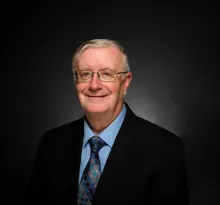
Jorge and his wife Kathy serve the Dallas (TX) and Lawton (OK) congregations. Jorge was born in Portuguese East Africa, now Mozambique, and also lived and served the Church in South Africa. He is also responsible for God’s Work in the Portuguese language, and has been visiting Portugal, Brazil and Angola at least once a year. Kathy was born in Pennsylvania and also served for a number of years in South Africa. They are the proud parents of five children, with 12 grandchildren and live in Allen, north of Dallas (TX).
