

Chuck Smith
This transcript was generated by AI and may contain errors. It is provided to assist those who may not be able to listen to the message.
Well, thank you again, gentlemen. Appreciate your dutiful service to God's people today. And again, happy Sabbath. So I'm going to start out with a question today, and here it is.
Do you want to be successful?
Millions of Americans obviously do, because hundreds of millions of books and digital media are marketed every year on the topic of being a success, on being successful. The topic of success is a multi-billion dollar industry in the United States. People want to be successful, and they want to be considered successful by their peers, by other people who look at their lives and observe them. They want to be in that club that is known as being successful in life. Well, it's good to be successful, but what does it really mean to be successful? What is success? You probably won't be surprised to learn that God's definition of what success is is far different than what this world's definition of success is, what our culture defines as being a success.
So how does the Bible define success? You know, in the original King James version of the Bible, the word success between Genesis and Revelation is only used, translated success, one time in the entire Bible, and it tells us how to be successful. Do you know where that scripture is?
We're going to cover that, and a little bit later we're going to discover that scripture together.
First, though, we need to discuss the achievement of success as defined by the world that we live in, by our modern culture. The late Dr. Stephen Covey had an interesting observation about what we call success literature, all this literature that's pumped out every year and sold by the hundreds of millions of copies of books and digital talking and everything involved in the success industry. He observed in his studies that up until about 1950, most literature on success emphasized self-discipline. It emphasized character, traits of character development, but beginning about the 1950s, a shift occurred and began to focus more on tips, tricks, techniques, skills that were not necessarily related to self-discipline, changing you and who you are.
It was superficial, and he observed that himself as he studied into the topic.
So that's something that Dr. Covey observed in much of today's success literature.
Wants you to believe that only a few elite can be successful in life, and the rest of the human race is unfortunately left out. Because we'll talk about what the definition of success is in our modern world. There are two philosophies that struggle against each other regarding living a life of productivity, a life of abundance, and that is something called an abundance mentality, which actually is biblical, and a scarcity mentality. Here's the difference between the two. The abundance mentality says everyone can be successful, that things are unlimited, and by doing certain things, making certain choices, anyone has the opportunity to be successful. That's the abundance mentality. There's no limit. Everyone has a chance at the piece of the pie, where the scarcity mentality says, oh no, these attributes of being successful are limited.
You have to be competitive. You have to claw your way to the top. It's very limited, and there's only so much, and if somebody else has it, that's something you can't have. So therefore, it's all about scarcity. So we're going to talk about that a little bit today. The American Heritage Dictionary defines success is this way. Quote, the achievement of something desired, planned, or attempted. That's not so bad. But then it says the gaining of fame or prosperity, the gaining of fame or prosperity. They're on to something regarding what success is defined as by our modern culture of three things that our modern human culture defines as characteristics of success. If you have these things, our culture says, then you are successful.
Let's see quickly what they are. The first one is wealth. Money. Money can give you the ability to buy lots of material possessions, lots of toys. It also can help you to buy influence.
If you have enough money, for example, you can give to a political candidate and buy that political candidate's ear and have influence on the decisions that candidate may make.
And there are other ways that you can be influential if you have lots of money.
Power. Money can buy you power. It can buy you the ability to own businesses, to own stock, to run for political office yourself and finance your own campaign.
It can give you the ability to do lots of things to be powerful.
Wealth can also give you the ability to buy people, to buy their loyalty and friendship.
It can give you the ability to control others because you pay their salary or you give them your money in order for their absolute loyalty to you.
Let's take a look at the first scripture here that we're going to look at today. Proverbs 13 and verse 22, if you'll kindly turn there with me. Proverbs 13, 22.
Short one verse we're going to read here. Wealth in itself is not evil. Money of itself is not evil. It says the scriptures say in 1st Timothy 6 10, it's the love of money that is the root of all evil.
Loving money is the desire to make more and more money, and that becomes your goal. It's fun.
So you want to make more money and even more money. It corrupts your values. It corrupts your morality. That love of money corrupts and distorts the way and the value you see other people.
Using other people becomes easier as you make more and more money, and your value system is eroded, and that becomes a way of life. Proverbs 13 and verse 22. First it talks about something good that you can do with wealth. Good and beneficial. A good man leaves an inheritance to his children's children, but the wealth of the sinner is stored up for the righteous.
Now what does the proverb mean here? First of all, it means a good man leaves an inheritance for his children and his grandchildren. See, so wealth in itself, money in itself, is not bad. It's what you use that wealth for. The part of the American dream that I believe in that most of us have been fortunate to live in, part of the American dream, is that you want your children to have an opportunity to have a better life than you do. And it certainly worked well in my family, my grandparents were immigrants, and I've lived an incredible life. Hopefully they would be proud of the things that I've done and the decisions that I've made. I was the first one in my family to go to college. The next generation, all three of my daughters went to college. That's part of the American dream. You should want to see the next generation have opportunities and benefits greater than the ones we were able to experience. So that's very important. A good man leaves an inheritance for his children's children. He thinks about the future. He thinks about, or she thinks about, their responsibility to help out the next generation. As I said, that's a good thing.
But what the scripture is also saying, let's take a look at the latter half of it, but the wealth of the sinner is stored up for the righteous. God is storing up and is going to take all the wealth that exists in this world today, and he's going to give it to his children in the world tomorrow.
Not so. They can build mansions and palatial estates and gold leaf on the ceilings. That's not about it at all. It's so that it can be redistributed in equity to help build a new and better and wonderful world. Isaiah chapter 60, by the way, mentions how the Gentiles and the wealth of kings and everyone will be brought to Zion and given to those who reside in Zion. That's what Isaiah chapter 60 is about. So the wealth that exists in the world today is being stored up to grant to the saints to be used properly in God's kingdom. So that's what the latter half of that verse means. Why is that important? Well, according to the Credit Suisse Global Wealth Report, this occurred in 2019, so it's only a little over a year old. Here's what it says, quote, the world's richest one percent, those with more than one million, own 44 percent of the world's wealth.
One percent owns 44 percent of the world's wealth. It's not going to be that way in God's kingdom. It's not going to be that way in the world tomorrow. So because of that, because of the influence that money has, that is usually one of the markers that our culture says, oh, that person's successful because they have lots of money. That's what our culture does. Indeed, money can buy you material pleasures, some good, and some illicit. It can buy you influence. It can buy you power. It can buy you prestige. If you have money, you can buy ads on YouTube and buy ads on Google, and you can make a name for yourself almost overnight if you buy enough ads because people will click, click, click, click, click. Next thing you know, you have a million Twitter followers. You are a celebrity. If you spend enough money, you can do that rather quickly.
Another thing money can buy you in our culture today is justice. Anyone who's in the justice system knows that a wealthy man can buy the best lawyers and can oftentimes either get off of serving a crime or a sentence of guilty or can get a reduced sentence because the better lawyers are very good at knowing all the loopholes, and they have the reputation, and that things magically happen for wealthy people and lawyers. But you know something it can't buy? All the wealth in the world, all the money in the world, it can't not buy you personal fulfillment. It can not buy you happiness. And I'll give you a very recent example. The founder of Amazon is one of the world's richest men. He was until recently when he was eclipsed by an automaker. He chose to commit adultery in 2018, and he and his wife separated in 2019. The divorce settlement in that settlement, she received 25 percent of Jeff Bezos' stake in Amazon. She has suggested to be worth only about 35 billion dollars.
She became one of Amazon's biggest shareholders overnight.
Now, if money and could buy fulfillment and happiness, none of that would have happened.
So all the money that you can have does not buy you a good marriage. All the money in the world cannot buy you a happy relationship with your spouse, or frankly, virtually anything else that's of value and importance in this world. Let's go to Proverbs chapter 18 and verse 11, if you'll turn there with me. Proverbs 18 11, we're looking at the first characteristic of what the world defines as success, and that's having lots of money, being wealthy, just something that all there's an awe that's attached to people who have money. Proverbs chapter 18 and verse 11, the rich man's wealth is his strong city and like a high wall in his own esteem, till rich man at money gives them security and protection. And as I said earlier, indeed, if you have lots of money, you can usually buy justice to a certain degree. And like a high wall in their own esteem, I'm important. People look at me. People call me sir or ma'am. People idolize me because I've got the big bucks. Verse 12, before destruction, the heart of a man is haughty, and before honor is humility. That's godly honor that it's talking about in context. I'm going to read these verses from the new international version because I think it does a little better job in translating it. The wealth of the rich is their fortified city. They imagine an unscalable wall. They say, look, I'm secure. I've got all this money. I'm secure. I'm protected.
Verse 12, before his downfall, a man's heart is proud. So holding yourself high in your own self-esteem and having a proud heart, being haughty, being arrogant, eventually what goes around comes around, and eventually there's some kind of a fall. But humility comes before honor, the Scripture says.
What they're saying here in the Proverbs is that all the wealth in the world can only give you physical things, and life is short. All the wealth in the world cannot protect you from your own stupidity. It cannot protect you from aging. It cannot protect you from ultimate death.
All the money in the world, though it may seem important at the time, though it may get you the acclamation of others, and though some may idolize you because you're rich or you have money, it's all shallow and it's all fleeting. That's the point I want to bring across. It's all so shallow and fleeting. Proverbs, we're already in the book of Proverbs, chapter 22 and verse 4. Go ahead a few chapters and join me in chapter 22 and verse 4.
The author of the Proverb says, "...by humility and the fear of the Lord are riches and honor and life." When it says riches, it's not talking about necessarily having money. It's talking about the riches of having a fulfilled life. I've had meaningful relationships with other people, of having a personal relationship with God. Those are the kind of riches that it's talking about, not necessarily how much money you have in the bank. A truly abundant and successful life has riches that go far beyond whatever is stated in your bank account. And again, this comes by humility and a profound respect for the awesome majesty of God. Personally, I don't have to worry about wealth.
As I've said before, with Mrs. Thomas, with BJ, money talks.
Unfortunately, it's always saying goodbye.
So that's something I've never had to worry about. All right, let's see another way the world defines success, aside from wealth and the fact that I won't be eating this evening. Number two, the second characteristic thing that people use to define, oh, that person's successful, is power.
First, we talked about wealth. Now we're going to talk about power. That's the ability to influence decisions or other people. The thing is, one does not need money to have power. They're independent of each other. Yes, some people with money can purchase power, but it's not necessary to have money to have power. For example, Gandhi. How much money did Gandhi have? He brought an entire area of the earth out of domination from the British Empire, so India could be free. He didn't have very much money. It wasn't about money that created that. It was about power, the power of the people, the power of the people to rise up and say, we want our independence. We want our freedom.
And we're tired of waiting, and we want it now. And if we have to signal that through civil disobedience, we'll do that if that's what it takes. Mother Teresa is a name that we've all heard of. She didn't have much money, if any money. Yet she has quite a reputation for her kindness in India to help those who lived in abject poverty. So those are just two examples of individuals who have power, but kept power to change, power to help other people, but they didn't have any money necessarily. The Bible is full of stories of other great powerful men and women, including Joseph. He was powerful. He was made the vizier, or prime minister of Egypt.
Daniel went from just an enslaved Jewish kid being very powerful in the court.
Deborah helped to free her people during the time of the Judges. But again, power alone doesn't equal success. Power, too, is fleeting. Many of our politicians today, from both parties, I might add, are a national embarrassment because of their lifestyles, or the continuous flow of idiocy that comes out of their mouth when they stand in front of a camera. I'm getting to the point where I believe that some of them wake up in the morning and the first words out of their mouth is, where's a camera? They just can't wait to say something stupid in front of a camera.
And you know what? For a short time, they will have a title. They'll be Mr. or Mrs. Congressman, Mr. or Mrs. Senator. But in time, it will take long, they will fade away into obscurity almost weekly. The news mentions a former congressman or former senator who dies, and I think, oh yeah, I remember that guy from the 19th century. He was Speaker of the House, or he was the Senate in the Judiciary Committee. He was this, and I wonder what happened to him the last 30 years.
He faded into obscurity. At one time, he had this powerful title, Senator, Congressman.
But that fades away, and pretty soon, it means absolutely nothing. All the power in the world can't protect you from aging, and ultimate death, and the loss of that power that you thought was so influential or so important. All human power is shallow and fleeting. Let's take a look at a couple examples. First, how power can be used in a positive way. Then we'll go to another scripture and see how it's negatively used in our world today. First, a positive way. We're already in Proverbs. Let's go back to chapter 3 and verse 27 and see how we can use power in a positive way.
Proverbs chapter 3 and verse 27.
The scripture says, Do not withhold good from those to whom it is due, when it is in the power of your hand to do it. That's power. That's godly power.
See someone who has need, you can help them in some way. Maybe you have some money that you can give them because you see they're struggling.
That's the power of your hand to do good. Someone who's down or discouraged, and you take some time to talk to them and encourage them. Or sometimes you just listen and listen without making many comments. That's the power of your hand to do good. Seeing a brother or sister totally going astray, and you have a very strong talk with them and encourage them in a tactful way to wake up that they're on the wrong path. That's in the power of your hand to do good. So we have the power to do good through our examples, through physical actions, through praying for other people. Even there's something we can't do through physical actions. We can pray about the situation, and we should definitely use power to do good. Now let's take a look at a negative use of power that's going to happen in the future. Revelation chapter 13 verses 1 through 2. The scripture really tells us nothing to do because the real power that goes on in this world, the roots of all power that goes on in this world is through Satan the devil. He controls the levers of power.
Every human government, every human institution is behind the scenes, controlled, influenced by the power of Satan the devil. And it's no different than the great European superpower that's going to rise in the future and rock this world. Revelation chapter 13 verse 1. Then I stood on the sand of the sea, and I saw a beast rising out of the sea, having seven heads and ten horns. Again, this is a European superpower. This is talking about its history, the seven heads and ten horns, the rise and fall of the Roman Empire. And on its horn, ten crowns, and on its heads, a blasphemous name. On its heads is a name that implies we're of God, that we somehow are Catholic or universal, that we represent God in every way. And that's blasphemy. To say that you're something that you are not and to use God's name in vain is blasphemy, a blasphemous name. Now the beast which I saw was like a leopard. His feet were like the feet of a bear and his mouth like the mouth of a lion. And here's who's behind it all, this future European superpower and its influence from a religious organization. The dragon gave him his power, his throne, and great authority. Well, of course, that dragon is none other than Satan the devil. The truth, brethren, is that most power exercised in this world today, including governments, is rooted in Satan's personal power. There's a reason, and Paul said in Ephesians chapter 2 and verse 2, that Satan is the prince of the power of the air because he's pulling all of those lepers. And one of the ways that this world defines success is having power. Power over governments, power over people, power to pass laws. But it's all so shallow, and it's all so fleeting because 50 years from now, people who are in power today would be in dust. They'll be in the earth, and it'll be turning to dust. The third characteristic in which people define success today is prestige or celebrity. This is more prominent than ever before thanks to social media, and I mean the word thanks sarcastically. Thanks to social media we have today. That's the ability to be recognized and honored by others for being someone special, being someone who's prominent, someone who's seen. And of course, when you have prestige and celebrity, you have influence because you've got lots and lots of powers. Being considered important is one mark of success in this world today. Being a person of prominence, everybody knows who you are. Somebody mentioned your name? Oh yeah, I know, I've read about that person. That's celebrity, that's the prestige that exists in our world today. Again, prestige can be an effective way to influence large numbers of people either for good or in a bad way. But prestige alone doesn't equal success. For example, I can name numerous times, numerous celebrities in the past who lasted for a while, and then their celebrity ended. And no one ever heard of them again. You've ever heard the phrase one-hit wonders? That's someone who comes out with one song that was on the airways for maybe two weeks. Maybe they were number one! No one ever heard of them again. It can all be so fleeting because it's all so shallow. You know that yesterday's heroes can be canceled by future generations? I even heard once there was a culture that took statues of individuals like Abraham Lincoln and tore them down. There was a man who was a hero 50 years ago. There were statues to him. Now they pull him down. And that's not new. I mean, as frustrating as it may be, before the American Revolution, there were statues of the king in New England. Statues of great British leaders. You know what happened after independence?
Tore them down. So as each generation has different ideas and thoughts, yesterday's heroes are today's bum. So prestige and celebrity is all so fleeting. In my lifetime, I've known religious leaders who had prestige and celebrity because they were on TV or the radio years ago.
And they faded into obscurity. 1 Samuel chapter 15 and verse 12, how important is it is for human nature, for our carnality to be recognized, to be considered a celebrity or to seek prestige? How important is that wired within us? Well, let's see. 1 Samuel chapter 15 and verse 12.
1 Samuel chapter 15 and verse 12.
Saul's already displeased God. There's already issues going on here. It says, So when Samuel rose up early in the morning to meet Saul, it was told Samuel, saying, Saul went to Carmel, and indeed he has set up a monument for himself.
And he has gone on around, passed by, and gone down to Gilgal.
At one time he was king. He was a celebrity. He had prestige. King, all hail King Saul.
God save the king! Where's that monument today?
It doesn't exist. It was probably someone took it down to build an outhouse.
All that celebrity, all that prestige, shallow, short-lived, gone. No, monument exists for Saul today. All that prestige and celebrity was fleeting.
Yes, he was king, and for a while he was important. Then he became a has-been. Another example. We won't turn there. It's in 2 Samuel chapter 18 and verse 18. Speaking of Absalom, who was a prince. Now Absalom in his lifetime had taken and set up a pillar for himself, which is in the King's Valley, for he said, I have no son. To keep my name in remembrance, he called the pillar after his own name, and to this day it's called Absalom's monument.
These aren't unusual. I know lots of people who spent their entire lifetimes trying to build a monument to themselves. Sometimes it was a business. Sometimes they were religious leaders.
I've known people from all walks of life who spent their lifetimes in an attempt to build a monument to themselves and what they did and who they were.
But it all comes tumbling down.
Absalom's monument is dust today. You can't find it. The only remembrance we have of him is that he was rebellious against his father. And oh, what wasted talent he could have done so much and what wasted talent Absalom had. This kind of prestige and celebrity is what carnal human beings seek because they want to leave a legacy.
So now let's go to the next chapter and see what God thinks about human prestige and celebrity. I love this because this shows us how shallow our thinking is and why we have to be on guard. How shallow, silly human thinking and reasoning is about making heroes out of mere human beings.
First Samuel chapter 16 and verse 1. If you'll turn there with me.
First Samuel chapter 16 and verse 1.
So Samuel is told to go and anoint the next king of Israel to replace Saul ultimately.
Now the Lord said to Samuel, How long will you mourn for Saul, seeing that I've rejected him from reigning over Israel? Fill your horn with oil and go, and I'm sending you to Jesse, the Bethlehemite. For I have provided myself a king among his sons.
In essence, God is saying, Last time I gave you the king that you wanted. Remember you all came, said Samuel, Samuel came to me, and you all said, Ma, we want to be like everyone else. We want to be little lemmings led to the slaughter. We want a king like the other nations. God said, I'll give you exactly what you want. I'll give you someone who's tall, a good warrior. His name is Saul. Good lineage, good background.
He just lacks character. But I'll give you what you want, and I'll give you what you deserve. This time, God says, I have provided myself a king among his sons. Verse 2. And Samuel said, How can I go? If Saul is there, he will kill me. And the Lord said, Take a halfer with you, and say, I have come to sacrifice to the Lord. Then invite Jesse to the sacrifice, and I will show you what you shall do. You shall anoint for me the one that I name to you. I'm going to point him out, God says. So Samuel did what the Lord said, and he went to Bethlehem, and the elders of the town trembled at his coming. Because they don't want Saul coming down, crashing on this village, taking any vengeance or anger towards Samuel out on them. Do you come peacefully or peaceably? And he said, Peaceably, I've come to sacrifice to the Lord. Sanctify yourselves, and come with me to the sacrifice. Then he consecrated Jesse and his sons, and invited them to the sacrifice. So it was when they came that he looked at Eliab and said, Surely, says to himself, Surely the Lord's anointed is before him. This is the one! Eliab is tall! He's good looking! He's got charisma! He can play shekel ball really well! He reads poetry that is so wonderful! Surely it's this one, because he checks all the boxes of what it is to be successful.
And the Lord said to Samuel, Do not look at his appearance, or at the height of his stature, because he's very tall, and people like that. If you look at most political candidates, many of them, when there have been studies on that, the taller one oftentimes wins, and those that are considered cosmetically better looking oftentimes win, no matter what their personal beliefs are, or how intelligent they are. Do not look at his appearance, or at the height of his stature, because I have refused him. For the Lord does not see as man sees, for man looks at the outward appearance. But the Lord, he looks at the heart. He looks at the inside.
God doesn't look at how much money you have, how much power you think you have or have.
He doesn't care that you're a celebrity in the eyes of other people, or that you have prestige.
That's the kind of things that human beings, because of their weakness, their carnality, are attracted to and think is important.
Samuel has told, what's on the inside, what's in their hearts, is important. So how does man see? Let's take a look at our culture today. Oh wow! This person plays with balls, and they have multi-million dollar contracts. I will idolize him. Oh wow! This person is an actor, which means you're pretending to be something you're not, and they have millions of dollars. I will idolize her. Oh wow! This person is good looking. They have charisma, or a very compelling message. I will idolize them. Where can I write my check to? That's the kind of world that we live in today, because we define what success is completely opposite of what God defines success is. God looks at the intent and motives on the inside of a person. He doesn't look at the shallowness of physical features or physical possessions. All the prestige in the world, all the celebrity in the world, cannot protect you from your own stupidity.
It cannot protect you from time, which will erode your prestige and celebrity, because it always has. It cannot protect you from growing old. It cannot protect you from dying. It's all temporary, and it's all fleeting. So the fact is this. True success, true success, may not include any of these three characteristics. We've looked at wealth, or power, or prestige. You can be highly successful and not have any of these three traits we just looked at. But I might add, it's also possible to be truly successful and have one of these traits, or two of these traits, or all three of these traits, if used for the right reasons and motives. God can bless us so that we may have one, two, or three of those traits, and that's okay.
As long as we seek the kingdom of God first and do them with the right intentions and use them as tools for good, rather than tools for selfishness. But wealth, and power, and prestige are independents of true success. Some successful people have them, while others who have had all three of them throughout history have been abject failures, because they never found fulfillment.
They never found a life in which they got their act together and felt like their life had purpose and was worthwhile, even though they had wealth, and power, and prestige.
Many wealthy people have committed suicide. Many powerful people have committed suicide over the centuries. Many celebrities, sometimes getting old and they see wrinkles in the mirror, I'm washed up, I'm ruined, they kill themselves. They commit suicide because the celebrity doesn't last. Turn with me, with the Joshua chapter one. Joshua chapter one. Many years ago, the church published a booklet. It was called The Seven Laws of Success. It was one of the first booklets that I read in the late 60s. It's a great booklet and very popular at the time, and the first six laws were focused on the disciplines and characteristics of success. It was kind of focused on what Dr. Cubby said was focused on before the 1950s, when there was a shift in success literature. But what's the biblical definition of success? As I said earlier, the original King James Version of the Bible, the word translated in English success, is only used once. So let's find out where it's used and what it says success is, or being successful is.
Joshua chapter one and verse six is really about ready to enter the promised land. Be strong and of good courage, for to this people you shall divide as an inheritance the land which I swore to their fathers to give you. Only be strong and very courageous. He's going to say that three times.
Be strong and very courageous that you may observe to do according to all the law which Moses my servant commanded you. Do not turn to the right hand or to the left that you may prosper wherever you go. Keep God's law, keep God's commandments. He says, and if you do that you will prosper. Let's continue. Verse eight. This book of the law shall not depart from your mouth.
You shall meditate in it day and night that you may observe and do according to all that is written in it. Get more emphasis in God's law. Continuing then you will make your way prosperous.
Then you will have good success. So what is success tied to? Money? Power. Celebrity? Money? None of those things. It's tied to the transformation in our lives that take place when we love God's law and we begin to use the law of God and his commandments to improve and change our lives. The scripture states that living by God's law, that it's through meditation and observance will make you prosperous and successful. This is really what the Bible emphasizes from cover to cover. Think about the purpose of the Ten Commandments themselves.
I was once part of a church many years ago that changed the Ten Commandments into the Nine Suggestions, but we believe in all of the Ten Commandments. And not just the Ten Commandments that stayed at Sinai, we believe in the spiritual application that Jesus taught as he restored the original intent of those commandments from God. The emphasis is this, that God wants us to be as he is. He wants us to reject the carnal human values that are in this world today and to be transformed into living by his values.
This includes the ability to enhance the lives of other people, to serve other people in a positive and productive way. Why? Because God serves. Jesus Christ came to earth to serve. Every day God serves. He provides a beautiful sunrise, whether you're good or evil. He provides so many blessings, the ability to grow crops from the ground so that we can eat. And all the gifts that we have in this physical planet, in this physical world, are because God continues to serve us.
The law that Joshua speaks about here teaches us how to respect God, teaches us how to respect others, to value others, to be an asset and a contributor to your family, to your spiritual family, to your community.
This is the biblical definition of what true success really is. One point that most people fail to realize is that you can't be truly successful until you are fulfilled. Filled to the full. What does that mean? Fulfilled means to live a life of purpose and have personal contentment without anxiety, without fear, without shame, without resentment. That's what it means to be filled to the full, a contentment that can only come by having a deep relationship with God.
Then you have everything in the world in the right perspective, all your problems and trials and personal issues in the right perspective, and you can move forward without living in anxiety, fear, and resentment. Resentment of God or resentment of other people. Joy shouldn't be something that we achieve near the end of our life or near the end of the journey. Joy should be part of our daily life, part of our daily journey. Too many people think they'll be happy when they have enough freedom, or when they have more time, or they have money, or power, or celebrity.
They live for this someday joy and happiness. And that's not the way it works. God has given us the ability to glean joy out of each and every day that we live. I want you to notice that Joshua states it's living by the law of God that will make one prosperous. Here's what the American Heritage Dictionary defines as prosperous. It is, quote, improving, growing, succeeding, steadily thriving or favored. And all of those things we are in the eyes of God, our Father, who loves His children. God wants all of His children to be blessed with these things.
Proverbs chapter 3 and verse 1, let's go back to the book of Proverbs and reinforce what we just read here in Joshua. So will he understand the vast distinction between what the world calls success and God's definition of being successful and prosperous. Proverbs chapter 3 and verse 1. It is written, My son, do not forget my law, but let your heart keep my commands. For length of days and long life and peace they will add to you.
Let not mercy and truth forsake you, bind them around your neck, and write them on the tablet of your heart. You see, we don't need phylacteries anymore. We don't need something on our forehead. We don't need little boxes hanging out to remind us of God's law.
We don't need tassels. When you have God's Spirit, you don't need a reminder because it's supposed to be written on our hearts. That means it's an integral part of us. It is our value system. Write them. This is His commands on the tablet of your heart, and so find favor and high esteem in the sight of God and man. Trust in the Lord with all your heart and lean not on your own understanding.
In all your ways, acknowledge Him. Give God the credit. You develop some wealth in your lifetime. Use it properly. Use it in a good way, and give God the credit. It's God who gives wealth, who made that possible. You end up in a situation due to your career, or that you maybe have some power in your community. Use it in a good and effective way, not for manipulation, but to do good at your hand and give God the credit for that. You do some things, and you end up with some celebrity or prominence in some way in some part of this world.
Use it to help people, to improve people, and give all the credit of everything you have to God. Acknowledge Him in all your ways, and He shall direct your paths. Do not be wise in your own eyes. Don't be arrogant or naughty or think you did it all. Fear the Lord and depart from evil. It will be health to your flesh and strength to your bones. Now, this is the New King James Version. I want to read to you verse 4 from the God's Word translation. Here's what it says. Then you shall find favor and much success in the sight of God and humanity.
Much success. Again, I want you to notice how success, being successful, is connected to the transformation that takes place when we meditate on God's law, when we observe God's law, when we've worked hard to have it written in our hearts, that it literally reflects who and what we are.
That is God's definition of success because that will last for eternity. That's not shallow. It doesn't go away like it does with physical material wealth in this world. It doesn't go away like power does in this world. It doesn't go away like the fleeting celebrity or prominence that so many people see in this world.
The change of you and your character is a change for your destiny, is a change for your eternity, and it will last forever. Let's go to Ecclesiastes chapter 10 and verse 10.
I've already mentioned the late Dr. Cubby earlier today.
He wrote a very popular book, The Seven Habits of Highly Effective People. You may read that. And one of the habits was sharpening acts. I was getting people say, oh Dr. Cubby, he was so insightful.
Insightful my foot.
What he did is he read the Bible, and he plagiarized scripture. He just secularized scripture for his point. By the way, all seven come from the Bible. He was a deeply religious man. All seven habits are biblically based. Ecclesiastes chapter 10 and verse 10. He called it sharpening acts, which means you have to get refreshed, and it's just not working harder, but it's looking at your life and refining the way that you do and improving yourself. And then you get more done, and you don't have to work so hard, like chopping wood with a dull axe. Ecclesiastes chapter 10 and verse 10. If the axe is dull and no one sharpens the edge, then he must use more strength, but wisdom brings success.
So Dr. Cubby just plagiarized his scripture. And that's okay. I plagiarize scripture all the time. I'm not putting him down for that. He just plagiarized scripture and secularized it and sold millions and millions and millions and millions of the book that had this scripture in it. And, of course, the scripture says that if you have a dull axe and you don't take the time to sharpen it, all you do is use more and more effort and energy to get the job done. But when you have wisdom, you say, let me stop here a second. Let me think about this. Maybe I should sharpen the axe, and maybe I should take 15 minutes and allow my muscles to regenerate themselves, take a little break here, sharpen the axe, and then come back, and I'll probably get a lot more done, because I'll be refreshed, and my tool will be in peak performance, and I'll be able to get the job done more quickly. That's wisdom. That's sinking through a situation and coming to a good conclusion.
Wisdom comes from living by the law of God and applying it to new or unfamiliar situations in our lives. That's the gift of wisdom. When the commandments are our foundation, because they're written in our hearts, making difficult decisions are easier. And most of our decisions are better. They're never perfect, and we're all human, and we will make mistakes. But when God's law is written in our hearts, a byproduct of that is wisdom, and we will make better decisions for our lives.
I said earlier that the original King James Version used the English word success one time in the entire Scripture. However, the new King James Version, as we've already seen, uses the word success a number of additional times, like Ecclesiastes 10.10 we just read. Let's go to Genesis chapter 39 and verse 1. Genesis 39 verse 1, the last Scripture that we'll talk about today, the story of Joseph. And I want to bring out some points about God's definition of success.
Genesis chapter 39 and verse 1.
It says, now Joseph had been taken down to Egypt. This is after he was sold into slavery by his own flesh and blood, his own brothers. He had been taken down to Egypt. And Potiphar, an officer of Pharaoh, captain of the guard in Egyptian, bought him from the Ishmaelites who had taken him down there.
The Lord was with Joseph, and he was a successful man. Now we know from previous Scriptures that he had a good relationship with God. God had already revealed a number of dreams to him. God had plans for Joseph his whole life. He was working through Joseph right now. Had a relationship with Joseph.
He refused to commit adultery with Potiphar's wife by saying, showing that the Ten Commandments were enforced before Moses, saying, the Master has not withheld anything from me. I can't have relations with you and sin against God. Again, proving the Ten Commandments were enforced long before they were given to Moses at Sinai. So he had a relationship with God. And he was a successful man. And he was in the house of his master of the Egyptian. And his master saw that the Lord was with him, and the Lord made all that he did to prosper in his hand. So Joseph found favor in his sight and served him. And he made him overseer of his house. And all that he had was put under his authority. So we see here that Joseph's personal success was because he had a relationship with God. He even refused to commit adultery when confronted with that temptation and opportunity. He had a relationship with God, and because of this, God favored Joseph. And God opened doors so that opportunities occurred for Joseph throughout his life, no matter what happened, no matter what bad things happened. And this is the important part for you and I. No matter what bad things happen temporarily, that God provides the opportunities to get beyond that.
This doesn't mean that everything that Joseph did was sugar plums and unicorns in his life.
You know, he faced a lot of trials. The same God here who made him a successful man, also that same God allowed his brothers to sell him into slavery.
Right? The same God who made him a successful man is the same God that allows him to be sent into a prison because he will not commit adultery with Potiphar's wife. So my point is that because you're successful doesn't mean you don't have trials. Doesn't mean that bad things don't happen to you. That's part of being successful. That's part of the process of spiritual growth and development.
We need to understand that and appreciate that. Jesus went through trials. He obviously was successful. He went through difficult trials. Joseph, we saw here, is going through a trial. Moses went through a number of difficult trials. He was exiled in the Egypt after the wealth, power, and prestige of Egypt. Banished because it's all so fleeting into the wilderness for 40 years before God called him to use him. Paul was beat up a number of times, left for dead. Yet all of these individuals were successful. Successful in God's eyes. Successful according to God's definition of success. And they all faced severe personal trials. How about crucifixion? Did you consider that a trial? I do. So putting all of this together, what is success and how can you be successful? The world puts a lot of emphasis on being successful. Billions of dollars, enormous amounts of time and resources are spent by people to achieve the goal of being a success. Unfortunately, its definition of success is distorted. It's focusing on gaining wealth or power or prestige or celebrity.
And these are also very shallow and fleeting. In most cases, even when they are achieved, they don't give fulfillment to people. I've known many wealthy people who were grumpy and hated other people and angry at other people and they had all kinds of money. It didn't buy them personal fulfillment or contentment. Not at all. The word of God teaches that real success comes when we have a real genuine relationship with God and have His commandments written on our hearts.
And this is what creates personal fulfillment. Again, to be fulfilled means to live life with a purpose. You have a reason to get up in the morning. You have a little bounce in your step.
It means to have personal contentment without anxiety or fear or guilt or resentment.
Real success is that which lasts forever. It lasts for an eternity. It doesn't depend on gaining wealth or power or prestige, even though some successful people, truly successful people, have one, two, or all three of those qualities. And one of the greatest qualities of success is humility. Giving God the credit for the blessings that we have and the acquisition, perhaps, of wealth. Giving God the credit. Acquisition of power. Giving God the credit. Acquisition of celebrity or prestige. Humbly giving all the credit and the glory to God.
Learning to become more like God and accept his value system, which again is his law written in our hearts. God allows us to go through trials and difficulties to test our mettle. Just because you're going through a trial doesn't mean you're a failure. It doesn't mean that you're not successful.
Some of the most successful individuals in the Bible went through very severe trials, again, including Joseph, Moses, Jesus, Paul, and many, many others experienced terrible trials. Yet anyone who has a religious background would look at those individuals and say, highly successful. Job well done. Mission accomplished. Great job. So do you want to be successful?
Well, I'm sure you do. Just remember the real definition of being a success is not the way our human culture defines what it is to be successful. Everything that humans achieve eventually becomes dust and is forgotten. Genuine success is not about wealth or power or celebrity. It's about having a deep personal relationship with God and allowing through the work of the Holy Spirit for Him to do a great work in your life. I wish all of you a very wonderful Sabbath.
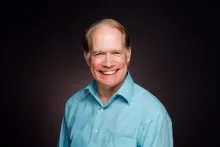
Greg Thomas is the former Pastor of the Cleveland, Ohio congregation. He retired as pastor in January 2025 and still attends there. Ordained in 1981, he has served in the ministry for 44-years. As a certified leadership consultant, Greg is the founder and president of weLEAD, Inc. Chartered in 2001, weLEAD is a 501(3)(c) non-profit organization and a major respected resource for free leadership development information reaching a worldwide audience. Greg also founded Leadership Excellence, Ltd in 2009 offering leadership training and coaching. He has an undergraduate degree from Ambassador College, and a master’s degree in leadership from Bellevue University. Greg has served on various Boards during his career. He is the author of two leadership development books, and is a certified life coach, and business coach.
Greg and his wife, B.J., live in Litchfield, Ohio. They first met in church as teenagers and were married in 1974. They enjoy spending time with family— especially their eight grandchildren.
