

John Elliott
This transcript was generated by AI and may contain errors. It is provided to assist those who may not be able to listen to the message.
I see two attributes of leaders in society today. One is a leader today is passionate about what he or she wants. And this passion is very strong, and all the stops are pulled out to go after this thing that the individual wants. In fact, because this passion and this goal is so focused and it's so unique to what everybody else seems to want, we think that that person is visionary. That's a term we'll give to a leader. That person is visionary, because they have this goal that they are really focused on. And the second attribute of a modern leader is that they are persuasive. They will persuade others to support them in pursuing that goal. And the persuasion can be quite strong. The mentality of the people who see one of these so-called great leaders is that they have awe. They have some respect for them. Somebody who can go after what usually is power, and sometimes money accompanying it, is respected by others. Let me ask you a question. What would you think of the man who killed 79 million of his own people? What do you think about that? 39 million? He starved to death. In the silent famine it was referred to. And some of those in that 39 million, as one report said, were worked to death. Another 15 to 30 million were killed in political liquidation campaigns, according to the Walker report to the U.S. Senate. What do you think about that individual? Well, I'll tell you. He is regarded as one of the most important figures in modern world history, according to Wikipedia. He was named Time magazine's one of the most influential people of the 20th century. His mausoleum was being polished up when Monty Knudsen and I visited there.
In anticipation of the world coming to see China during the Olympics. Mao Zedong. Pictures of him everywhere. People coming out on a holiday and standing in front of his big portrait up there and having their picture taken.
The primary goals of a modern leader are commonly personal power and wealth. Power for me. If you listen to candidates around the world, I'm not picking on any particular candidates, but as you travel, you go to various places in other countries where people seem to always be running for office. And you usually hear the same motivation itself. I and me and my and this is my and I and I want. And then you witness the passion of the self-promotion. Hundreds of millions of dollars have been spent in recent months in this country. Hundreds of millions of dollars for the passion of getting I and me and my up to the front.
Crafted words, great energy, strategies, polls are taken simply in a fake way to figure out what's important to people and then to sort of address those things like you care about them. Slander, boasting, ripping apart. And then in the end, well, that was a well-fought campaign. Well done. Now let's join together. And we'll go on with this pursuit. The question that has rung in my ears for a long time is where is concern for the citizens? And traveling in Africa and being with the people over there and going through a really ronkers, raucous election in the last six months where many people were inspired and whipped up to kill one another even.
Burning them and slicing and slaughtering them. And you go back and see some of the ones who were involved in that and talk with them on the streets and hear them smile and laugh and, yeah, that was quite a campaign. That was interesting.
But that's behind us now. We're all getting together and going forward. What is that? Secondary is concern for the citizens. Primary is concern for the self. The ambitions for oneself. Now, once in power, it's interesting what happens. Once a person gets the power and gets the prospective wealth, the potential position whereby wealth can ultimately be acquired, it's amazing how benevolent they can then become, or at least then sound.
The secondary begins to kick in. And there are many leaders who do show concern. I think you can probably think of some. I've been to Washington a few times with teen groups and met our senator or congressman one time, once or twice in fact. I've talked to Tom Daschle, the senate minority leader at one time. And he was very caring and compassionate and very zealous to try to help out the constituencies in agriculture.
I was in the office recently of another individual, Congressman Jeff Flake. And there in Washington, this man shows an unusual amount of commitment to his job in that he doesn't leave the office. He lives in the office. He sleeps in the office. He showers in the office. Talked to one of his aides on a tour for a while. And she was just admiring how dedicated he was to every issue that came up and how he was involved and kept the staff involved and just wouldn't leave the office except to come home to Phoenix on weekends to be with the family.
So, I'm not saying that people aren't devoted and aren't helpful at times. But where is the commitment really to the citizens? I know in Africa we have a government over there with some over 400 members of parliament who all receive 17,000 US dollars a month. That's what they have paid themselves. Recently gave themselves an increase of pay, in fact.
But I have yet to meet a single Kenyan who has ever received one dollar of assistance or aid or support or any kind of help from government, aid agencies, any international aid, anything that's ever come into that country. I have yet to meet one. I ask all the time. Instead, our brethren, some 750 people attending church and those who qualify for assistance, they rely on the church.
And right now, they'd be starving if we weren't giving them some cornmeal to eat because of the famines that have been going on. Where is the concern? Where is the concern from the government, from those who have gotten the power? The direction that we see leaders taking the world, the fruits, the results of that leadership, continually take society further towards the brink of disaster. The world is not getting better. Problems just keep getting worse and worse and worse. It was energy. Now it's food. It's running out of fish populations just up in Alaska.
And to hear them talk about the lack of fish now, to hear concerns about water not being available to most people in the world in the near future, if things continue the way they go. There are some big problems that are right on our horizon. Not only that, but the specter of war, terrorism. This is where leadership is taking our world, and it's a downward trend. It's leading to what Christ called the end of this age, the end of the age of Satan's rule, end of the age of his mentality.
And we know at the end of this age, there's going to be increased power and increased wealth. See how these two keep coming around? It's a leadership thing. You want to define it as that. The leadership increased the power and the wealth, and concurrently the problems that face humanity, their constituents, are increased as well. We look at Revelation 13, verse 4. We see that during the time of the tribulation, there is a means by which people can get even more power than they've had before.
There's a consortium of nations. Rather than going it alone as we have traditionally done as humans, and you have these superpowers that have been emerging, now we can have a superpower of superpowers. That'll really pull the power and the economics together. It says, And they worshipped the beast, the ten-nation consortium, saying, Who is like the beast? Who is more powerful? In other words, there's something unique about the beast. Who is more powerful? Who is richer than the beast? Who is able to make war with him? He is so powerful that even the powerhouses can't make war with him. You can see the consolidation that takes place here.
In verse 7, it says, It was granted to him to make war with the saints, with righteous people, who love and serve and obey and help. These are the model citizens in any society. Whenever you have a saint with God's Holy Spirit, you have somebody with excellent character. And yet, these make war with the saints and cause them to be overcome. What do you think about a government that kills its finest? Who cares under that type of government? In fact, who cares in our world today about ethics, about morals, about right and wrong, about decency, about care and concern.
No, humans today respect power, and they respect money and good economics, and they respect those who have power, and they respect those who have money. And that's going to pretty much make your top 100 list anytime. Today, I want to ask the question. Out of all of humanity's problems, which is the most urgent? Is it food? Is it fuel? Is it the environment? Is it water? Is it war? Is it health? I believe we would agree that the greatest need that humanity has is the need for godliness in people's minds.
The need for godliness in the minds of humanity. This day, the Feast of First Fruits speaks of a movement that is beginning. It has begun. A movement that will one day encompass the world and its inhabitants, and will move them towards being godly people. That does not come automatically. It's not waved with a magic wand. We don't have poof, the magic kingdom, and everybody is happy and good. It comes through work. It comes through effort, just like with you and me. It's a very labor-intensive process. You can't snap your fingers. In Romans chapter 10 and verse 14, we find that this coming kingdom, which Jesus Christ will rule, is going to take a lot of work.
If we look at this passage in a prophetic sense, in a future sense, we get the idea of what we will be doing as first fruits in the kingdom of God. Romans 10 verse 14 says, How shall they call upon Him in whom they have not believed?
That's going to be the first big issue in bringing a world to godliness.
And how shall they believe in Him of whom they have not heard?
And how shall they hear without a preacher? And how shall they preach unless they are sent?
Today is the feast of the harvest of the first fruits. Those who will be sent. Those who are being prepared to be sent as kings and as priests, as teachers, as models of godliness.
This labor-intensive process requires skilled personnel.
The title of the sermon today is, Leaders in Godliness. Leaders in godliness.
It's not something that you hear. It's not something that you just teach. It's something that you do.
And so it's not a leader of godliness, but a leader in godliness.
Pentecost celebrates graduation day, as it were, of the leaders of godliness.
Graduation, though, really doesn't cover it. I was telling my wife, I said, you know, graduation day is kind of like, you know, you finally finish your training, and this is graduation, and then you move on. Except when you graduate from something, you're still a human being. But Pentecost talks about humans being upgraded to spirit beings, upgraded to god-family beings. So it's more of the upgrading to the god-family, and really becoming the tools that Jesus Christ can use in ruling and leading in the world tomorrow. And this day is followed by the next feast, the Feaster Trumpets, which is the inauguration of Jesus Christ and the saints as the rulers of the world. And we certainly look forward to that. These two are really inseparable, because each festival leads into the next. You can't separate out one from the other. And we grow, and then we reach a maturity and a graduation, and then an upgrade, and then the ruling, and then the removal of Satan, and then beginning to harvest the individuals and the resurrections ahead for the family of God.
It's an important time, and I'd like to look at leadership in the context of the Feast of the Firstfruits with you today. In doing so, we're going to see an important responsibility that each of us have in developing as leaders in godliness. Again, the question, what is the problem that faces the world today? And then what is the solution to the problem that faces the world today?
That question and answer is summarized for us in Romans 8, verses 5 through 9.
Romans 8 will begin in verse 5.
For those who live according to the flesh, set their minds on the things of the flesh.
There's the problem. There is the problem that humanity, including you and I, face and struggle with. And when we focus on ourselves and the flesh and our passions, and we focus then on pride and ego and vanity, and we focus on power and wealth, we get ourselves into a hopeless situation that ultimately would erase us off the face of the earth if we weren't saved out of it. But then, going on. But those who live according to the Spirit, they mind the things of the Spirit. That is the solution. If we have the mind of God, the mind of Christ, the temple of God's Holy Spirit is what we are. And if we allow God and Jesus Christ to live in us, and their Spirit mingles with our Spirit, then we set our things on things of Spirit. Let me define things of Spirit for you. Love and concern for all.
That's a humble love, compassion, consideration, concern for everyone. That is the solution.
Verse 6, For to be carnally minded is death. That physical pursuit takes you nowhere, it ends nowhere, but death. But to be spiritually minded is life and world peace.
You can insert the word world there. You can insert anything there. It's peace.
Peace between two people, peace between us and God, peace between groups of people, humanity, peace. And life. Not just enduring life, but real life. And not just real physical life, but even eternal, real, wonderful, joyful life. So we see at once the problem and the solution.
Verse 7, Because the carnal mind is against the mind of God, it is not subject to the law of God, nor can it be subject to the law of God. The world needs godly, loving, caring, leadership to encourage, to inspire, to motivate, to get people to rally, to get rid of self and bring in God's mentality. But where will this come from? Where is it going to come from? Well, God is developing a new kind of leadership. And I hope you don't get swayed and pulled and mesmerized. I remember that snake in that movie.
Jungle Book. Thank you, thank you. Jungle Book. Years ago when the kids were little, I saw this Jungle Book movie and a snake comes down out of the tree. He looks right in the eyes and his eyes kind of spiral. And pretty soon, you know, this kid, you know, he was very normal a minute ago.
It was just transfixed. Well, we are pursuing our path, just like that boy was in Jungle Book. We don't want to have some snake come along and twizzle his little eyes at us. And we think, oh, leadership! Oh, yeah! Power, position, prestige, fame, you know, money.
No, we are constantly bombarded by Satan, but God is developing a new kind of leadership for those who want to help out. It's a different mentality. It's the God-family mentality.
In verse 14 going on, for as many as are led by the Spirit of God, these are sons of God.
A new family mentality. We've said goodbye to our old father, the devil, and we're now embracing the new father from above that we've been engendered by through his Spirit.
Verse 16, the Spirit itself bears witness with our spirit that we are children of God. And if children then heirs, heirs of God, and joined heirs with Christ, Jesus Christ is coming to receive his full inheritance, the entire universe, and everything in it and on it. The day of Pentecost brought the Holy Spirit along with the law of God. And with God's mind, we can love the law, we can embrace, we can live it, we can change to be what God is as described and defined by his law.
And in doing so, we become part of his family. We have that family mentality. It says, if indeed we suffer with him, in other words, we have to bear our cross. We have to crucify our old passions and desires. We have to die to our old selfish state and become new, living children of God, walking in a new way of life that we may also be glorified together.
We are going to be glorified as Jesus Christ is glorified. We are going to be with him and be as him. I can read that in 1 Corinthians 15. But God has brought us into his plan. He is developing the leadership in our minds that is necessary to lead humanity into godly living in the world tomorrow. It says in verse 19, For the earnest expectation of the creation eagerly waits for the revealing of the sons of God. When we see creation, or we say the word creation today, we tend to think green. You know, creation and think, oh yeah, rocks and animals and trees. But what was the most important part of the creation? Humans. Humans are by far the pinnacle of the creation. So what's this referring to?
If you look, it even says the word creature. I think if you look deeper, you'll find that this is not talking about the world's environment. It's talking about the pinnacle of the creation and what those environments are here to support. The people. The earnest expectation of the people eagerly waits for the revealing of the sons of God. Humanity can't reach its potential without the sons of God being led by Jesus Christ. For the creation, the humans on it were subjected to futility. Life is futile. Not willingly, but because of Christ who subjected it in hope. They are subjected, but in hope. Deceived for now, but in hope. Because the creation itself – forget the trees for a minute, think of the people, the important part – humanity itself will also be delivered from the bondage of corruption – that's rotting, decaying flesh – into the glorious liberty of the children of God. We have been called as firstfruits. There is an order to everyone, Paul says in 1 Corinthians 15, Christ the first of the firstfruits, and then later those who are His at His coming. And those who overcome Satan's nature, get rid of it, bring in godly nature, and are leaders of godliness, then they will be able to assist in the world tomorrow. And that kind of work is a very important part of the world. I've given you two attributes of current leaders in the world. I'd like to give two attributes of leaders in godliness now, as opposed to the power and wealth leaders of today. The first attributes of a godly leader is that he is spiritually minded. He or she is spiritually minded. God gave us a lesson from ancient times, a lesson you and I know well, but sometimes we need a good application for the lesson. We can apply it to our life. 1 Samuel 13, verse 13, talks about the first king of Israel. We're going to break into the story. In 1 Samuel 13, verse 13, Samuel came to Saul. His kingship, by the way, was going along quite well when you consider power and wealth. He was doing fine. But Samuel said to Saul, you have done foolishly. You have not kept the commandment of the Lord your God, which he commanded you. He was not spiritually minded. For now the Lord would have established your kingdom over Israel forever, but now your kingdom shall not continue. The Lord has sought for himself a man after his own heart.
You see, God wants leaders who are spiritual. God wants godly leaders and rejects all others. God only chooses leaders who are spiritually strong. You go back to the first deacons who were ever ordained. We see in Acts 6, verse 3, the apostles got the brethren involved in this. And here's what he told them, Therefore, brethren, seek out from among you seven men of good reputation, full of the Holy Spirit and wisdom whom we may appoint over this business. Spiritually minded men was the requirement made for those who would serve tables, those who would serve in a physical way. But they would be leaders of those who would serve. They wouldn't do all the work themselves. And in doing so, God wanted them to be examples of his mindset.
Notice the godliness component of Christ's leaders in Matthew, chapter 24, verses 45 through 51. Matthew 24, verses 45 through 51. You know, Matthew, chapter 24 is the Olivet prophecy. It's the prophecies of the end time. It's that thing that is very important to us. And yet in the same chapter is a discussion about leadership. You have the wrong leadership that goes to chaos that if Christ didn't intervene, all world would die. And right after that, he then talks about his government and the leadership. Who then is a faithful and wise servant whom his master made ruler over his house to give them food in due season?
Right here we find that there's something unique about God's leaders, about godly leaders. They are actually helping people. They're giving food when it's needed in due season. That's unique.
Blessed. Oh, how supremely blessed is that servant whom his master, when he comes, will find so doing. Will find so doing what? Giving food. Spiritual food. Physical food. Helping. Serving people. That person will be supremely blessed. Why? Because that's who Jesus Christ is looking for to serve in his kingdom.
Assuredly I say to you that he will make him ruler over all his goods.
Means he's going to share his inheritance with him. Notice verse 48. But if that evil servant is a different individual, now you have a different type of leader. That evil servant says in his heart, what is evil? Breaking the laws of God, what are the laws of God? Loving your neighbor.
This person doesn't love other people. He's self-centered. My master's delaying his coming, so I'll begin to beat my fellow servants. That's not loving people. That's not the mind of God. He says in verse 51, I'll cut him in two and appoint him, his portion, with the hypocrites. That's not leadership. That's not part of godliness.
That's a hypocrite. That's saying I love God and love God's way, but not doing it.
In Mark chapter 10 and verse 24, I'm sorry, Mark 10 verse 42, Mark 10 verse 42, That's a different mentality. What is a servant? It's one who perceives, looks after the needs. What is a slave? It's one who does the will and perceives the needs. Some of those needs are not the grand needs. They're not parking the pastor's car. It's cleaning the vomit out of the bathroom after the kids puke. That is what a servant does. That's what a slave does. It washes the dirty feet of someone who's coming into the home.
In Matthew 10 and verse 42, similar chapter in verse, he said, Whoever gives one of these little ones only a cup of cold water in the name of a disciple. Now that doesn't sound very big, does it? You give a little one a cup of cold water in the name of a disciple. What does he say about that? Well, he shall by no means lose his reward. We begin to see here that a person who would go to a little one in the congregation and give them something like cold water. Notice, it was somebody who needed water, and there was a perception that had to be made.
They had to think, that person somehow needs water. I'm going to give them some water. Now, if I were going to drink water, how would I want that water? Luke 1 or with ice? So, I'll give them cold water. Jesus Christ says, this individual I can use. I can use that person. Modern leaders don't interface with the little ones. Anywhere you go, the big leaders, they don't interface with the little people. They have layers and layers and layers between them and the little people. The only time they'll go out with the little people is when a campaign's on, and you're going to go shake some hands. That's not what God wants. He wants people who will go up and help a person and appear and behind them tell them, no, no, that's not the way. That's not what you should do here. Let me show you. Let me help you. One little step at a time and has the love and the patience to do so. Christ was all about serving the little ones. Just look at His ministry. Look who He went to. It was all about the little ones, the deformed, the vile, the ones that were outcasts. And His ministry also was all about water. So I like the fact that He says, if you give a cup of cold water to a little one, there's an identity there. He was all about water. The washing through the baptism, the Holy Spirit, the washing of the water of the Word. Water and little ones go together. The water of life comes to humanity through God, God's Holy Spirit, which this day in part reminds us of. It is that water of life. That is what we can one day bring to people who right now are cut off from the precious water of life. The second thing, the second attribute of godly leaders is that they sacrifice to serve. I think sacrificing to serve really shows that you're not a hypocrite.
It really shows that you want to sacrifice at any cost.
There's a book by J. Oswald Sanders, and a quote from it says, True greatness, true leadership, is found in giving yourself in service to others, not coaxing or inducing others to serve you.
That's what leaders often do. We'll coax and get other people to feather our bed to serve us, to park our car, give us the best. You see? Wait a minute. What's a leader supposed to be doing? They're supposed to be helping the people, but somehow this gets turned around, doesn't it?
True service is never without cost. Often it comes with suffering. How true that is. What was the central factor in Jesus Christ's ministry? Just sort of the core of his whole ministry here on earth. He did many things, but what was the central core to it all? It was his sacrifice, wasn't it? He was coming to die for our sins, to remove the sins of humanity. That's what the Passover service, the core of the Passover service is, sort of the core of his ministry. It's service with sacrifice. And he set us an example himself of the ultimate sacrifice. He said in Matthew 10, in verse 45, what his reason for coming was. He says, For even the Son of Man did not come to be served. He didn't show up and say, Okay, I'm here. Hey, I made all you and everything. So, hey, I'm only going to be here for 33 and a half years. So, why don't you make it a good one for me? Let's see how good you can put it on for the King here. I'll just be taking whatever it is you can come up with, whatever you can give. Make it good, because I've really done a lot for you. And now it's your turn to help me enjoy this human experience. Or he could have looked around and said, Whoo, there's a lot of opportunities here. I could live over there. I could have a business here. We could really do some construction projects. There's some ladies I could choose a wife from and have a family. This would be great. And I'm sure he thought of certain things like that as far as a temptation went. But he said, I did not come to be served, but to serve and to give his life a ransom for the many. He gave his life, and he came to serve. We're also told to sacrifice our lives for others. In other words, I need to match my personal ambitions with helping you fulfill your personal ambitions. And I need to get rid of my selfish nature and die to that and replace it with God's selfish nature. I need to sacrifice two different forms of sacrifice. One is to sacrifice the little icon image that I've been making of myself my whole life. I got educated. I got this. I'm talented in that. I've got my house ready. I've got my lawn all manicured. I'm shining up that little Oscar image of myself. What you want to do is take that and throw it in the trash. Throw it in the trash. Oh, but it sure looked and felt good. Now will you sacrifice that? Get rid of that. Kill that one off. And instead, we'll think about God and godliness and helping and helping humanity. We have to sacrifice our lives to serve others and to crucify the selfish mentality in order to serve Jesus Christ. So leaders of godliness will have these two attributes. They will first be spiritually minded and secondarily they will be serving with sacrifice. And the result is being like-minded with Christ. That's what Christ is. That's what He did. That's what He remains. And He is looking for like-minded people to rule with Him in the world tomorrow. Now what a world tomorrow it will be when leaders are leaders in godliness. And everything about them stands for godliness. Godliness with contentment, the Bible says, is great gain. You want to talk about an environment in which people prosper, really prosper in every way. Happy, fulfilled, meaningful lives that aren't filled with the chaos of disease and environmental degradation and conflict and war. What would this world be like if every time we built something it wasn't ripped apart and torn down?
Well, the next world will not be plagued with that self-centered mentality. Christ is going to have power over the nations, but notice how He weaves the first fruits into the power over the nations. We'll take a look at a couple of scriptures. Hebrews 2 and verse 9.
Yes, Jesus Christ is coming to rule the world, but He's coming to rule it with an inclusive of the first fruits.
Hebrews 2 and verse 9.
But we see Jesus, who is made a little lower than the angels, for the suffering of death, crowned with glory and honor, that He, by the grace of God, might taste death for everyone.
It's a fabulous, wonderful, sacrificing gift of service.
But it was fitting for Him, for whom are all things, in bringing many sons to glory, to be the captain of their salvation, perfect through suffering. For both He who sanctifies and those who are being sanctified are all one.
All one.
See, we are joined together with Him, and for that reason He is not ashamed to call them brethren, brothers.
We find over in Revelation 2, verses 26 and 27, something else about His coming and the power that He will use.
In verse 26 it says, And He who overcomes, that's you and me. If we do what the last festival's picture, come out of sin, and are washed from it by Christ's blood, then we overcome and keep my works to the end. To Him I will give power over the nations.
Now there's an insert here. You see in your Bible a long dash. He's going to say something else, and then after that dash He's going to continue the thought. I'm going to take out the dashes and just read it without that insert.
He says, To Him I will give power over the nations, as I also have received from my Father.
See what Christ is going to do to the firstfruits? He's going to share the power over the nations, and we together will rule and reign as kings and priests, as the kingdom of God begins.
Leaders of godliness must grow in godliness. We're not there yet. It's nice to think about these things. It's nice to think of ourselves as leaders of godliness, and in a sense we are, but we're not there yet. We're not perfected yet. We're still marching out of our Egypt, aren't we?
We're transforming from ordinary, but we still, in a sense, are ordinary.
We are growing into leaders in godliness to reign with Jesus Christ, but it's a process. And the firstfruits are always growing fruit, and Christ wants us to bear much fruit. The Father wants us to bear much fruit, and we'll get trimmed and pruned, and various things will come upon us that will all work together for good if we are really involved in this process.
In Luke chapter 19 and verse 12, Jesus speaks to this process and encourages us to be producing fruit for the kingdom.
The Feast of the First Fruits was also a harvest, and it's a grain harvest, and it needs to be a well-developed harvest.
The grain in it needs to be well-developed.
He said in Luke 19 verse 12, A certain nobleman went into a far country to receive for himself a kingdom and to return. So Jesus Christ at his death went back to the throne of God in heaven to wait until he received the kingdom and then to return with it. And verse 15, He came and dwelt in them as the temple. He and the Father came and lived with them and were one with them. And then he comes back to assess and says, How have you done? It's time for the harvest. How have you done?
He might know, he called them together, that he might know how much every man had gained by trading.
And then came the first saying, Master, your mena has earned ten menas. You gave me some of your nature and I have been able to produce ten times more than what you gave me. Over the course of my spiritual life, I have grown by tenfold. And another came and said, I have grown by fivefold. And to the first he said, Well done, you were faithful and very little have authority over ten cities.
And the second was, Well done, faithful, have authority over five cities.
We see here two things. First of all, the leaders in godliness had to grow in that.
And secondarily, it is godliness that forms the character of the leaders that will rule over the cities in the world tomorrow. That was the sole thing that he was selecting them for and assigning their responsibilities over. You'll find the same thing assigned in the twenty-sixth chapter of Matthew, the next chapter, where... After Matthew 24, anyway, Matthew chapter 26, I believe it is, where... or 25, where you have the sheep and the goats.
What is he looking at there? You gave me water if you gave it to the little ones. You gave me food if you gave it to the little ones. You gave me shelter if you gave it to the little ones. Sick and you visited me. It's all about godliness.
God wants leaders of godliness.
Let's go back to Exodus chapter 18 and verse 21. This has always been the criteria that God has used for leaders.
If you think it's something new and something unique because we live in a world that has the other type of leadership, well, then we need to understand that God never changes.
In Exodus chapter 18 and verse 21, moreover, you shall select from all the people able men.
These are going to be the captains here. Who do we want? Able men? Do we want people strong, self-motivated, fairly wealthy?
Such as fear God. They have a deep awe and respect of God.
Men of truth, hating covetousness, and place such over them to be rulers.
That's what God has always wanted. That's what God is always trying to select.
In Deuteronomy 17 and verse 18, regarding the kings of Israel, let's just notice here, Deuteronomy 17 and verse 18, what did God want from the kings that would come up in Israel?
And it shall be when He, the king, sits on His throne, the throne of His kingdom, that He shall write for Himself a copy of this law in a book from the one before the priests, the Levites.
It shall be with Him, and He shall read it all the days of His life, that He may learn to fear the Lord His God, and be careful to observe all the words of this law and those statutes, that His heart may not be lifted up above His brethren, that He may not turn aside from the commandment to the right hand or to the left. In Titus chapter 1 and verse 5, we see some qualifications similar to 1 Timothy 3.
These are qualifications for leaders in the church.
Titus, verse 5 says regarding church leaders, Paul says, For this reason I left you, Titus, in Crete, that you should set in order the things that are lacking and appoint elders in every city as I commanded you.
What kind of elders?
If a man is blameless, doesn't mean if he's not guilty, not found guilty.
You see people going to court today who can weasel out of just about anything, but they're not blameless.
This person should not be blamed for things.
The husband of one wife doesn't mean married to one woman at a time only.
It means he's a husband. He's a loving, supporting, faithful husband to his one wife.
Having faithful children.
Verse 7, For a bishop, an overseer, must be blameless as a steward of God, not self-willed, not quick-tempered.
If it doesn't go my way, oh, I get mad.
Not given to wine, not violent, not greedy for money.
Those are the nots.
But what about the ours?
Or the is's.
But is hospitable.
A lover of what is good, sober-minded, just, holy, self-controlled, holding fast the faithful word as he has been taught, that he may be able by sound doctrine, both to exhort and convict those who contradict.
God, in other words, is always looking for leadership. That is godly, that is serving, that is loving, that is of his mentality.
And if you and I perceive these values in our life as important, and we then pursue those values, we will produce the fruit that will be harvested for the kingdom of God.
And the resulting leadership that Jesus Christ will have will be examples and encouragers of godliness, of happiness, of unity, and of growth.
And that is what will make the kingdom, or the world tomorrow, a wonderful place.
It is all the spirituality and the godliness and the growth and the love that takes place.
There is a proverb, Proverbs 29 and verse 2.
It simply says, When the righteous are in authority, the people rejoice.
But when the wicked rule, the people mourn.
Now, it is easy to close the book at that point and say, Yep, that is right. But let's stop and think a second about what is being said there.
When the righteous are in authority in the kingdom of God, in the millennial phase of the kingdom, what will they be doing?
The righteous will be leaders in righteousness, leaders in godliness.
They will be setting a standard. They will be living the standard.
The standard will then be followed by others.
And so when the righteous are in authority, the people will rejoice because they also will be becoming righteous. They also will be having godliness come into their life.
And you know, joy is a byproduct of godliness.
You know, love, joy, peace, these are the things.
And so when the righteous are in authority under Jesus Christ, those whom they serve will be rejoicing on a regular basis.
On the other hand, when the wicked rule... And I wish you could come over and live for a time in East Africa sometime, or in many parts of the world, come to China or wherever.
And where you have the wicked rule, who somehow have all the power and all the money, and they hoard it behind walls that you can't go in and see, and they stack it in foreign banks by the millions and billions, when the wicked rule, the people they rule over learn how to do the same thing.
They just can't do it on the same scale.
Okay? They can't do it on the same scale.
In our country, it's a little nicer. You don't tend to see it.
It's still just as corrupt, but we just do it in a nicer, more legal way.
But when the wicked rule, who are self-centered, anybody who is self-centered, and they have the power and they have the money, the others say, Ah, I want power and money. That's how I get it.
And they go about it in onesies and twosies and small groups of also being wicked.
And the people mourn.
Because the byproduct of sin is death and dying and its unhappiness.
The leaders of this world are causing the people on earth today to mourn, but the people in God's kingdom will cause the people to rejoice.
In closing, the world desperately needs leaders of godliness to help them to have meaningful lives, happy lives, prosperous lives, fulfilling lives.
And this festival of the first fruits reminds us that God has called a few at this time.
This is just the first harvest.
But the few have an important responsibility for the future of all.
And that is to lead a great number of people for a thousand years in the ways of God.
In Revelation 3, verse 21, I'll close with this scripture.
To him who overcomes, I will grant to sit with me on my throne, said Jesus Christ, as I also overcame and sat down with my Father on his throne.
This day tells us of that event and the great responsibility that the first fruits will have in rehabilitating the citizens on this planet. In the meantime, let's be growing in godliness, and thereby becoming ready to be leaders in godliness in the kingdom of God.
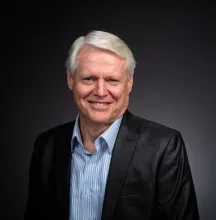
John Elliott serves in the role of President of the United Church of God, an International Association.
