

David Mills
This transcript was generated by AI and may contain errors. It is provided to assist those who may not be able to listen to the message.
I think we all are very much aware that healing is one of the basic doctrines in the Bible, and healing is one of those benefits that God gives to His people. Let's read about that in Psalm 103, the first three verses in this psalm. Psalm 103, beginning in verse 1. Bless the Lord, O my soul, and all that is within me. How positive can you be in blessing and praising God? Verse 2. Bless the Lord, O my soul, and forget not all his benefits, who forgives all your iniquities, who heals all your diseases.
And so one of the benefits that God grants to His people is healing. I want to talk about that today.
You know, healing is one of those benefits, then, that God grants. The Hebrew for the word benefits here is recompense, or means recompense, reward, or like a gift. You know, just as an insurance policy carries with it benefits, a relationship with God carries the benefit of healing. Are we taking advantage of that? Last week we spoke about the laws, the keys that lead to a long, healthy life, but there are times in our life, no matter how well we do things, that we are going to come down sick and we will need to be anointed. I have several times in my life, not real, real often, but I need it to be anointed. I had Mr. Martin to anoint me just a week or two before his death, actually, for something, and you know, it's doing a lot better. It's pretty much healed up. It's an area around my right knee. So thus, I took advantage of that benefit that God offers to us, the benefit of healing. Are we taking advantage of that? And if you have a benefit, insurance claim or something, you take advantage of that benefit, don't you? Well, healing is that same thing. It's something God offers to us as we need it.
Mankind then does come down sick. Disease does happen. There's an old saying, I felt so bad, I thought I was going to die. Then I got worse and I was afraid I wouldn't die.
Well, it can be almost that way. Sickness can make you feel miserable, and it impairs us, it debilitates, it destroys us, and God doesn't want us to feel that way. And He provides healing. Healing is a supernatural intervention by God in our health. It's doing something for us we are not able to do for ourselves. Let's examine the biblical teaching on healing.
We can begin way back in the Old Testament. Let's read several verses, first of all, beginning in Genesis chapter 20, Genesis chapter 20 and verse 17. This is the incident where Abraham prayed for Abimelech, after Abimelech had taken his wife and God had to get all that straightened out. So verse 17, Abraham prayed to God and God healed Abimelech. Now Abimelech was not in the church, he was not a converted man, but God healed Abimelech. His wife has made servants and they bore children. For the Lord had closed up their wounds because of Sarah, Abraham's wife.
Okay, let's go to Exodus 15. We'll just read through these verses very quickly in Exodus chapter 15 and verse 26. We'll find quite a few verses about this benefit that God gives to us right here in the Old Testament scriptures. In Exodus chapter 15 and verse 26, if you diligently heed the voice of the Lord your God and do what is right in his sight and give ear to his commandments and keep all his statutes, I will put none of these diseases on you which I have brought on the Egyptians. For I am the Lord who heals you. And you know that one way that God heals really is to keep disease away from us. If we obey him, maybe we will not even come down with a sickness or disease. If we do, he certainly then promises or will help to heal us. Let's read in Exodus here chapter 23 and verse 25.
So you shall serve the Lord your God and he will bless your bread and your water, and I will take sickness away from the midst of you. So when we obey God, actually one way that we enjoy good health is preventing sickness and disease coming on. You can read this later on. I won't take time right now, but Leviticus 26 and Deuteronomy 28, the blessings and the curses chapters have things to say about sickness and disease and that if we are obedient to God's laws, we will be blessed. If not, then sickness and disease will certainly occur. All kinds of sicknesses and diseases are mentioned. I want to read one final Old Testament scripture about healing. There are many others, but 2 Kings chapter 20. And this is just really an outstanding example of God intervening for a king of Judah. 2 Kings chapter 20 and verse 1. There is a man named Hezekiah, king of Judah. In those days Hezekiah was sick and near death.
And Isaiah the prophet, the son of Amaz, went to him and said to him, Thus says the Lord, Set your house in order, for you shall die and not live. Well, this man turned his face toward the wall. He didn't take what Isaiah said sitting down. You know someone pronounced death upon us, that we should set our house in order. We don't have to take it sitting down then. Hezekiah didn't.
He turned his face toward the wall and prayed. Verse 3, Remember now, O Lord, I pray, how I have walked before you in truth and with a loyal heart, King James says, a perfect heart, and have done what was good in your sight. And Hezekiah wept bitterly. There was a man who obviously was not at that age where you would expect him to die. He had some years remaining. He may very likely have been in his fifties or maybe early sixties. So guess what? He wept bitterly. In verse 4, it happened before Isaiah had gone out into the middle court that the word of the Lord came to him, saying, Return, and tell Hezekiah, the leader of my people. Thus says the Lord, the God of David, your father. I have heard your prayer. I have seen your tears. Surely I will heal you. On the third day you shall go up to the house of the Lord. In verse 6, I will add to your days 15 years and deliver you and this city from the hand of the king of Assyria and defend this city for my own sake and the sake of my servant David. So this man had 15 years added to his life.
Who knows? You know, if you seem to be on your death bed and you turn to God and ask Him to be merciful, to remember that you've tried to do His will, who knows but what He might add years to your life. I would not be surprised if this has not happened unknown to us in the lives of others who have prayed such a prayer. The God has added to their life months and even years like it did Hezekiah.
So that's a wonderful Old Testament example, isn't it? Let's go to the New Testament and we find examples of wonderful examples of healing. Matthew chapter 4 verse 23. When Jesus Christ came preaching the gospel of the kingdom of God, guess what happened? What accompanied His preaching of the gospel? Matthew 4 and verse 23. Jesus went about all Galilee teaching in their synagogues, preaching the gospel of the kingdom and healing all kinds of sickness and all kinds of disease among the people.
Yes, healings accompanied the preaching of the gospel during the ministry of Christ. In Matthew chapter 8 and verse 1, He came down from the mountain and He had just given the Sermon on the Mount. Great multitudes followed Him. A leper came and worshiped and said, Lord, if you are willing, you can make me clean.
Was Jesus willing? Verse 3. Jesus put out His hand and touched Him and said, I am willing. Be cleansed. And immediately His leprosy was cleansed. And you can read on. There are other examples of the centurion's servant, the centurion who didn't even feel worried that Jesus would enter his house. And Jesus, this man was the servant, was healed the very same hour.
Peter's mother-in-law, verse 14, Jesus came to Peter's house and He saw His wife's mother lying sick with a fever. And He touched her hand, and the fever left her, and she arose and served them. So example after example, we can find. Matthew chapter 9 and verse 35. Matthew chapter 9 and verse 35. Jesus went about all the cities and villages teaching in their synagogues, preaching the gospel of the kingdom and healing every sickness and every disease among the people.
So fantastic miracles. We know that these are just only a very few of the ones. Fantastic, miraculous healings accompanied the preaching of the gospel by Jesus Christ. What about the early church? We find the same thing in the early church. Let's go to Acts chapter 3 and beginning in verse 2. Acts chapter 3. We have a man here that was lame. He had been lame a long time.
Let's read about that. In Acts chapter 3 and verse 2, a certain man lame from his mother's womb. He was born lame. He was carried, and they laid daily at the gate of the temple called Beautiful to ask alms. He was looking for money from those who entered the temple. Who, seeing Peter and John about to go into the temple, asked for alms. And fixing his eyes on him with John Peter said, look at us. He gave them attention expecting to receive something. Peter says, silver and gold I do not have, but what I do have I give to you in the name of Jesus Christ of Nazareth rise up and walk.
And he took him by the right hand and lifted him up and immediately his feet and ankle bones received strength and he went leaping and stood and walked and entered the temple walking leaping and praising God.
All the people saw it. They knew who this was. A tremendous miracle was done. You know, miracles were so great in the early church that in chapter 5 and verse 14, Acts 5 and verse 14, notice what fantastic miracles took place here. Acts 5 and verse 14, believers were increasingly added to the Lord, multitudes of both men and women, so that they brought the sick out of the streets and laid them on beds and couches that at least the shadow of Peter passing by might fall on some of them.
And a multitude gathered from the surrounding cities of Jerusalem, bringing sick people and those who were tormented by unclean spirits and they were all healed. Apparently even the shadow of Peter passing over them. Fantastic miracles. So, tremendous miracles in the early church as well. Chapter 8, you can read about healings in Samaria. We won't turn to that. What about down through the church age? Let's go to Mark chapter 16.
This healing is worth to be one of those things that would accompany the preaching of the gospel done through the church age. Right on down to our time today. Mark chapter 16 and verse 17. Mark 16 and verse 17. And this is about the commission to go and preach the gospel to everyone. Verse 17, these signs will follow those who believe. In my name they will cast out demons. They will speak with new tongues. They will take up serpents and if they drink anything deadly it will by no means hurt them.
They will lay hands on the sick and they will recover. So that was to accompany the preaching of the gospel.
You know, we have we had that in our age. We have. When I went to Ambassador College in 1958, there was a man there who had a wartime injury who was wheelchair bound. But he was up walking around by the time I came. This had happened before before I arrived on the campus. Yes, my wife and I visited a young paralyzed girl in Jacksonville, Florida many years ago. And on our second or third visit, we came to see her and her mother answered the door and and we said, well, we'd like to visit with Nancy.
Nancy usually we went back to her room in the back. The mother said, well, just sit right here. I said, well, we'd like to visit with her. She said, Nancy, we'll be out in just a moment. She came walking out and she came to services for for several years. Became a member of the church. Do you know what? She eventually stopped at the church of all things. I never did understand that. So we have seen healings in our time. My wife and I have seen it in our lives.
And we've seen it also with our children. So, but you know, one important thing to point out regarding healing. Have we seen the same degree and the same extent of healings and even people that were dead being brought back to life as in the time of Jesus, in the time of the New Testament church? So, no, we have not. And so a very important, important point to realize is that God has not always done the same level of miracles down in every age. He did it in the time of Christ because that really, that really put the focus then the attention on this man that was able to do that. That here was a man of God. It put an accent then on the work, on the message he was preaching.
And so there have been times when miracles have been greater. Miracles were greater back in the days of the Exodus when the Israelites were being set free to come out of Egypt. And greater miracles during the ministry of Christ, greater miracles during the early New Testament church. It is evident that in the latter New Testament church, not the same extent or degree. I didn't get the verse down, but there's one verse about one of the servants of God being left sick at a certain place. Well, what didn't they just go ahead and, you know, pray for him and and heal him. So lesser miracles appear to be done even in the latter New Testament church. That's an important point for us to realize. So at the end of this age, we know the two witnesses are going to do fantastic miracles. Might there also be an increase in the miracle of healing? It's possible. We don't know for sure. But God can do greater or lesser miracles according to his plan and purpose at the moment. That's very important to realize. But we are having miracles to be done. I've seen them in my own life and I've seen them also in the church as well. We do have the miracle of healing that has taken place and we'll continue. Let's ask a few questions. How is healing made possible? Let's go back to Isaiah 53, this chapter that is about the first coming of Jesus Christ to be our sacrifice for sin. Notice in Isaiah 53, he is despised and rejected by men, a man of sorrows and acquainted with grief. We hid, as it were, our faces from him. He was despised and we did not esteem him. Surely he has borne our griefs, sicknesses, that is, and carried our sorrows, our pains. Yet we esteemed him stricken, smitten by God, and afflicted. He was wounded for our transgressions. He was bruised for our iniquities. The chastisement for our peace was upon him and by his stripes we are healed. You know, sickness is painful. It makes us feel wretched, miserable, and Jesus Christ has taken our pain and suffering upon himself through the stripes that were laid upon him. Let's go to Matthew 8 and verse 16. So it is by the stripes of Christ that we are healed. Matthew chapter 8 and verse 16.
Matthew 8 and verse 16, when the evening had come they brought demon possessed. He cast out the spirits with the word and healed all who were sick. He healed the sick that it might be fulfilled which was spoken by Isaiah the prophet which we just read. He himself took our infirmities and bore our sicknesses. So Jesus Christ has taken upon himself our sicknesses, our diseases. He has suffered in our stead. He knows what it's like to feel wretched, miserable, sick, suffer pain. Let's go also to 1 Peter 2.24. 1 Peter chapter 2 and verse 24. So it's by the stripes of Christ that we are healed. 1 Peter chapter 2 and verse 24, who himself bore our sins in his own body on the tree, that we having died to sins might live for righteousness by whose stripes you were healed. So again, these verses show that Jesus Christ not only paid the price for our spiritual sins, but he also, through his sacrifice and scourging and beating, provides healing and restoration for our physical bodies. But who needs God's offer to heal us? God offers to heal.
Who needs it? We all do. Physically and spiritually, we need healing. Let's go to Luke chapter 4. It's not only physically, but even emotionally and spiritually.
Today there's a lot of anxiety, a lot of depression. So people are suffering in that way. They need healing spiritually and mentally, emotional type healing. Luke chapter 4 and verse 16.
Jesus came to Nazareth and he read from Isaiah 61, is that? Isaiah 61, yes. From the prophet Isaiah, he read verse 18, The Spirit of the Lord is upon me, because he has anointed me to preach the gospel to the poor. He has sent me to heal the brokenhearted. So there's healing in that way as well. And we all need that, certainly from time to time, to preach deliverance to the captives and recovery of sight to the blind and set at liberty those who are oppressed and preach the acceptable year of the Lord. So we need also spiritual, mental, emotional type healing.
The word for brokenhearted in verse 18 is, in the Greek means crushed, the bruised, shattered.
And you know, there are many who have been physically abused, sexually abused even, emotionally abused, who have scars and injuries, are also sexual perversion, such as same-sex attraction, addictions, substance abuse. Healing is also for that. I can heal a person of all of that. All these things that crush and bruise. God heals the damage done to our physical bodies and to our minds and our emotions. He restores balance, well-being, and removes guilt and pain and fear, and replaces it with this love and joy and peace. I tell you, healing is a wonderful thing, physically, emotionally, and in every way that we can think of it. It's an important part of our relationship with God. Are we using it to be restored, to be healed, for God to provide for us and sustain us physically and emotionally and spiritually? You know, we need the same deep faith. We're not going to turn to it, but in Mark chapter 2, there is a man who wanted to be healed so badly of his affliction that he had people to let him down through a roof. They took the roof, the tiles, and things off to let him down so that he could be brought before Jesus Christ and be healed, and this man was. Also, there's a woman in Mark chapter 5 who said there was a crowd of people around Jesus, and this woman said, if I can just touch the hem of his garment, I'll be made well. Jesus perceived virtue. His strength had gone out from him and said, who touched me? The disciples said, what do you mean? All these crowd of people all around you. But it was this woman who came up and confessed it was her, and she was healed. So we need that same kind of faith that this man let down through the roof, this woman that touched Jesus' garment had. Well, how should we ask for God's healing? You know, we should, first of all, certainly do some private prayer ourselves, and then we have some instruction on something that we should take advantage of and do it as instructed. Let's go to James chapter 5 and verse 14. James chapter 5 and verse 14.
Might begin in verse 13. James 5 and verse 13. If someone among you, or is anyone among you, suffering, let him pray. Is anyone cheerful? Let him sing psalms. Is anyone among you sick?
What should he do? Let him call for the elders of the church and let them pray over him, anointing him with oil in the name of the Lord. And the prayer of faith will save the sick, and the Lord will raise him up. If he has committed sins, it will be forgiven.
And verse 16 goes on to say, confess your trespasses to one another and pray for one another. We should remember to do that. Pray for one another that you may be healed.
We should remember to pray for those who need our prayers. And it goes on to say that the effective, fervent prayer of a righteous man avails much. So we should remember. We have a number of people that we hear about who need our prayers. We should remember to pray for them. But we should not be afraid to confess our needs, especially to ones that we know well, to be praying for us. We can say, well, I've got this problem. I've got this sickness. I need your prayers. We should be and maybe have the whole church even to announce it and to have the whole church to be praying for us. Now, what if the minister is not able to come, the elder? What if it's far, far away? We are very scattered. Let's go to Acts chapter 19. And God has provided the way that we can still do something that is symbolic of our faith and our trust. It's something of a physical nature in the way, just like anointing with oil. It's not the oil that heals us when we are sick. It is not the laying on of the minister's hands. It is God. It's our trust in God by which we are healed. In Acts chapter 19 and verse 11, God worked unusual miracles by the hands of Paul so that even handkerchiefs or aprons, we call them anointed cloths, little handkerchiefs or aprons, little pieces of cloth, were brought from his body to the sick and the diseases left them and the evil spirits went out of them. You know, we have had people today that request anointing and the minister says, you're far away. I'll get down upon my knees and I will anoint a piece of cloth and put it in an envelope and get it in the mail today or tomorrow if it's late at night. And we've had people that begin to recover that very moment that they called. It doesn't depend upon that little piece of cloth arriving two or three days later. It depends upon our faith toward God, our trust toward him.
So today we are very scattered far and wide, but an anointed cloth can certainly be sent upon request.
We should not forget that sometimes there are things that we need to do as well when we are sick. Yes, sir, we need to certainly be sure that we are in compliance with all of the laws and principles of good health and diet, sufficient sleep and exercise, stress management, avoiding body injury. We're doing our part. But Jesus said in Mark 9 and verse 12, not the well, but the sick are in need of a physician. So the Bible does not speak down about going to a doctor. One of our ministers was sick several many years ago. And finally, Mr. Armstrong came to visit him after he'd been sick for a week or two and said, well, he called the person by name, have you been to see a doctor to see what you have and what you might be able to do? Well, no. We'll go find out more about what you've got. So he went to a doctor, he found out, and he knew there were some things he could do. And before too long, he was well again. So no doctors, though, are very limited. We don't put our faith and trust in doctors, but doctors do have a lot of knowledge. One doctor told me that he had seen many a sunrise studying a human cadaver all night. Sinyuba, Sinyu, bone by bone. So the doctors do have a lot of knowledge about the human body, and they can be a big help. There's a lot of information that is available online. You can study into it very easily. But realize that doctors are limited, and you could spend, like one lady in the New Testament Gospels, she spent all of her living on doctors, it says, and she was none the better. So doctors do not always have the answer either, but God does. But as far as doctors, get whatever help you can. But where is our trust, even so? Not in doctors, it is in God. Let's go to 2 Chronicles. It would be a big mistake to put our trust in doctors, but to get the help that they have where they can help us is certainly something very good. In chapter 16, 2 Chronicles 16 and verse 12. Here's this king of Judah, Asa. In the 39th year of his reign, Asa became diseased in his feet, and his malady was very severe. Yet, in his disease, he did not seek the Lord. Big mistake. If you do go to a doctor, what about praying about it, even first of all? And say, Father, please guide me in finding out more that I need to know. I'm going to pray about it. But this man, this king, did not seek the Lord, but he put his trust. He sought the physicians, it says. And look at verse 13. So Asa rested with his fathers. He died in the 41st year of his reign. A couple of years later, he died. There's no indication that he ever repented and began to trust in God and look to God. So we don't want to ever follow that.
Let's ask this question too. Does God always heal in this age? Does he heal us of everything that we have? You know, I wish that were the case. I'd have a few less aches and pains myself here and there. No, God does not necessarily heal us of every ache or pain. There may be some things that we learn better by him not removing everything. I know, for example, that when my back goes out of joint, it reminds me of doing something foolish and that I should not have done that. I tried to lift too much and so I injured my back. I don't have that back pain very often, but now and then I do.
My right knee, I realized that I tried to do some some strangest work with it and I brought that about. But it's greatly improved after Mr. Martin anointed me and I'm very thankful to God for that. But still not totally 100%. God does not necessarily remove everything 100%. He might a little bit remain to teach us some important lessons. And one of those important lessons, let's turn to 2 Corinthians 12. 2 Corinthians 12. Here's the Apostle Paul.
2 Corinthians 12 and verse 7. Had this thorn in the flesh, lest he should be exalted above measure, by the abundance of revelations, a thorn in the flesh was given to me, a messenger of Satan to buffet me, lest I be exalted above measure. So some kind of thorn in the flesh. We don't know exactly what it was. Verse 8 concerning this thing, I pleaded. He went to God. He was probably anointed by one of his fellow ministers. I pleaded with the Lord three times. Brethren, it's okay to come back for a second anointing. It's okay to come back for a third anointing.
Not wrong at all to plead with God that it might depart from me. He said to me, My grace is sufficient for you, for my strength is made perfect in weakness.
Therefore, most gladly, I will rather boast in my infirmities that the power of Christ may rest upon me. I take pleasure in infirmities, I'm a little bit behind Paul on that one, in reproaches, in needs, in persecutions, and in distresses for Christ's sake. For when I am weak, then I am strong. The important thing is that we become strong spiritually. Sometimes God will allow an infirmity. He will not heal us of it because He wants us to grow spiritually.
Character development comes first. Remember that when Jesus Christ returns, Malachi chapter four brings out, when Jesus Christ returns, He will return. Well, let's turn to that verse, Malachi four verse. Just a good verse. Jesus Christ is going to return with healing in His wings, it says. So it's a good verse to keep in mind. We're not going to be infirmed or sick in any way once our bodies are changed to be spirit like that of Christ. We will be whole. We will be complete. We won't have any backaches or knee problems or other sicknesses of any type. Malachi chapter four and verse two, but to you who fear My name, the Son of righteousness shall arise with healing in His wings. Jesus Christ will return with healing. Again, we will be whole and we will be complete.
You know, we should remember, too, that we're going, if we keep on living, and most of us choose to do that, one day we're going to get older. One day, and then we're going to get beyond that, we're going to be old. We're going to get old. It's going to happen to everyone. It's not given to us to have eternal life in the flesh. In Hebrews 9 and verse 27, it says, it is appointed to man wants to die.
That's Hebrews 9 verse 27. Psalm 90 brings out that the days of man are three score and 10. That's 70. And if they be four score, there will likely be some problems that might develop.
So 70 or 80, right now the lifespan in the U.S. has gone down about a year and a half because of COVID. And the life, the average lifespan male and female would be 77.3. That's the average lifespan right now. For men, it's lower 76.1. And for women, it's higher 81.1. About five years more for you ladies.
But there are other countries that are, that have a greater life expectancy than the U.S., especially Japan, Hong Kong, Switzerland, some of those countries around 85. The life expectancy in some other countries. So, you know, the life, the average lifespan for us in the U.S. then is 77.3. And so, you know, it's going to happen. If we grow old, and we all choose to do that, rather than the alternative, then the time will come that death will happen. It's just a natural thing. It's going to happen. Hezekiah had 15 years added to his life. But then after 15 years, we're not told, but we're pretty certain, aren't we, that he died.
So we could have perfect physical health. We could be healed of physical infirmities. And yet death is appointed. It will come to us at some point. And so I guess the point of this, as far as healing, God does want to help us. He does want to relieve us of the suffering and the pain that we have. Jesus had those stripes laid upon him. We should take advantage of this benefit during this physical life. We should realize, though, that this physical life is not intended to live forever. It is in God's kingdom that life is intended to be forever. But God doesn't want us to feel good and to enjoy good health. I think it's good to understand the biblical perspective on healing. If we become sick, we should turn to God. And often God will grant us the benefit that is there. If he does not, he still promises to help us bear the infirmity. So when we are sick and have health problems, let's cry out to God to heal us and to help us. Let's turn for a final scripture to Psalm 107. Psalm 107, and we'll read verses 17 to 22. Psalm 107, verse 20, and 17 to 22.
Fools, because of their transgression and because of their iniquities, were afflicted. I'm not applying that fool's part to us. But their soul abhorred all manner of food. We do sometimes feel that way. They drew near the gates of death. Then they cried out to the Lord in their trouble, and he saved them out of their distress. He sent his word and healed them and delivered them from their destructions. And verses 21 and 22 know, Oh, that man would give thanks to the Lord for his goodness and for his wonderful works to the children of men. Let them sacrifice the sacrifices of thanksgiving and declare his works with rejoicing. So as God helps us, strengthens us, with all of our physical problems, heals us, let's be sure that we offer a sacrifice.
And I got the thinking that I really thanked God sufficiently for helping my knee to be better. And I really had not. Sometimes we do forget. We're like the lepers. Ten were healed, nine went away, just one came back to thank Jesus for the healing. So after God helps us through our physical melody or problem or sickness, let's be sure to offer that sacrifice of thanksgiving.
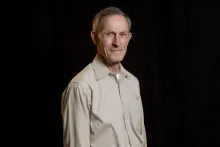
David Mills was born near Wallace, North Carolina, in 1939, where he grew up on a family farm. After high school he attended Ambassador College in Pasadena, California, and he graduated in 1962.
Since that time he has served as a minister of the Church in Washington, Florida, North Carolina, South Carolina, Oregon, West Virginia, and Virginia. He and his wife, Sandy, have been married since 1965 and they now live in Georgia.
David retired from the full-time ministry in 2015.
