
Roy Holladay
This transcript was generated by AI and may contain errors. It is provided to assist those who may not be able to listen to the message.
Well, you ladies know what this means. We're going to be expecting to hear from you more often. That was beautiful. Thank you. And I thought also very apropos for the sermon today. So it had a double meaning.
Overlooked one announcement in the rush to get through them. We are having an in-home Bible study this week on Wednesday at Bill and Deborah Doss's home. This is for the Chattanooga-Hixon area and anybody else who wants to come. It's 7 p.m. Please see Deborah. She's here. If you need directions, we will continue in the Book of Revelation. We're up to chapter 6, and we will continue on from there. So just as a reminder.
Brethren, why don't we see more healings taking place today?
Has God forsaken us? Are we out here by ourselves?
The reason why I mention that, I've heard members express those very thoughts, wondering, well, why don't we have more miracles, more healings, more interventions?
You and I live at the end of the time a man's allotted 6,000-year period of working out his own works, and we see the pitiful results of man going his own way for 6,000 years.
We see it at every level. We certainly see it when it comes to health.
In the Old Testament, God promised that obedience by the whole nation to his way of life would eliminate disease. And yet, when we look around at our nation today, one of the things that we have to ask ourselves is, are we obeying God as a nation?
Because it's obvious with the amount of disease, the amount of sickness, the tremendous amount of billions of dollars that are spent on the pharmaceutical industry, that we are not being blessed by God in that direction. What should we do when we get sick? Is there anything that we should do? It's not wrong to seek medical aid and help. We know that. But is that the first thing that we should do? Is that the first thing we should be thinking about? What does God want us to do when we're sick? Or we have health problems? Let's take a look in the scriptures, as we heard in the Beyond Today program today, based upon what the Bible says about what God says about healing. What does He promise us? What does He say that He will do?
And what are we asked to do? Because there is something that God wants us to do.
Let's turn back to Psalm 103 and verse 1.
Psalm 103 Notice what David wrote here, Bless the Lord, O my soul, and all that is within me. Bless his holy name.
Bless the Lord, O my soul, and forget not all his benefits.
So we find that there are benefits from obeying God from doing what He says. Who forgives all your iniquities? Now, we have no problem with that because we have absolute faith that if we pray to God and we are sincere, we truly repent, then God will forgive our sins. But notice it also says, Who heals all your diseases? So we find that this is a promise from God. Healing is a promise.
But God does not say when He will heal. I mean, this is a promise, just like God doesn't say when He will forgive.
We know in the Bible that before a person can forgive, they have to repent. And repent means that not only are you just sorry, but you begin to change. That you change your life and you begin to go a different way. You and I have learned, I think, and the Bible clearly teaches, that the timing for healing is up to God.
He is the one who determines when He will heal us. We believe and we know that God always does what is best for us, that He will do what is good for us, what is right for us, that He is never going to do anything that goes contrary to our best interests. His will is more important than our will.
Sometimes, you know, we wish that God would do certain things. We wish that He would immediately intervene. We wish He would take certain trials away. We wish if we're poor that we'd be rich.
We wish if we were ugly we'd be handsome. You know, there can be all kinds of things we may wish for that don't happen overnight. That one doesn't happen overnight. But God says and God promises that He will heal. In Exodus 15, 26, I referred to this in my introduction. Notice what Exodus 15, verse 26 says. And He said, if you will diligently heed the voice of the Lord your God to do what is right in His sight, give ear to His commandments, and keep all His statutes, I will put none of these diseases on you which I have brought on the Egyptians, for I am the Lord who heals you. Now, the Hebrew word there is Yawe-Rofica, meaning God our healer. So one of the names, one of the titles of God is that He is the Eternal who heals. So God shows that if they as a nation, and it doesn't, you know, God doesn't show favorites, if we today as a nation, as a whole, obeyed God, put Him first, did what He told us, then we would not see the difficulties and the problems. People wonder, well, how do we correct, you know, how do we handle the problems that we have when it comes to having enough hospitals, enough doctors, having enough medication, you know, and the tremendous bills that people run up with this. And yet, as a nation, I'm talking about as a people, as a whole, if we obeyed God, as God promised to Israel, any nation who did that, then God would fulfill this promise. But we don't find any nation on the face of the earth who's obeying God. God calls individuals in different nations, and we are called to obey Him. In James chapter 5 and verse 14, in James the fifth chapter, let's notice verse 14, we find that there certainly are conditions if a person is going to be healed.
Is anyone sick? We find here. Among you, let Him call for the elders of the church, let them pray over Him and anointing Him with oil in the name of the Lord, and the prayer of faith will save the sick. So it requires faith on the behalf of the minister, and faith really on the behalf of the person being anointed. And the Lord will raise Him up, and if He is committed sins, they will be forgiven Him.
Why did Jesus Christ go through the beating and the suffering that He did when He was crucified?
I think we all know the answer, but let's go back and review in Matthew chapter 8.
Matthew the eighth chapter in verse 16. What Christ said here, or what the scriptures write.
This is Matthew chapter 8 and verse 16. When evening had come, they brought to Him many who were demon-possessed, and He cast out the spirits with the word, and healed all who were sick. That it might be fulfilled, so I want you to notice, this is a fulfillment of a prophecy. That it might be fulfilled which was spoken by Isaiah the prophet saying, He Himself took our infirmities and bore our sicknesses. So we find that Jesus Christ was willing to do this. So there is a direct connection made between Christ's beaten body and healing. Let's go back to Isaiah where we read this. Isaiah chapter 53. We read this around the Passover time and leading up to the Passover and at the Passover service itself. It's something that we're very much acquainted with. But let's read it here in the context of what we're discussing. In verse 3, after it describes here the Messiah and how He would be as He grew up, and developed into a man, we find in verse 3 He is despised and rejected by men.
A man of sorrows and acquainted with grief. And we hid, as it were, our faces from Him. Now when it says He's a man of sorrow, it means He was a man acquainted with pains, and acquainted with grief or with sickness. And He was despised and we did not esteem Him.
Surely He has borne our griefs or our sicknesses and He has carried our pains.
And we esteemed Him stricken, smitten by God, and afflicted. He was wounded for our transgressions. The word means pierced through. And we know that Jesus Christ had a spear crammed into His side and His blood came out and He died so that our transgressions, our sins could be forgiven.
But notice He was bruised also for our iniquities. Not only the moon, but the bruised.
And the chastisement of our peace was upon Him and by His stripes we are healed. And so by Jesus Christ's stripes, we're healed. Now this is quoted in the Bible.
You find, brethren, that you and I need to be healed in every sense.
When we first come to God, to His Church, we find that many times that there are a number of things that we need to be healed of. They could be emotional problems. There could be spiritual difficulties. There could be mental problems. There could be physical problems. In all of these areas you find there are times that we need healing. And you find that, I think, we tend to focus more on the physical because we look at our human bodies and the problems, the difficulties we have.
And yet we find in all of these ways we need to be healed. We need to be made whole. And that's something that we strive for, to be whole, to be sound in mind, sound and outlook in every way. Now you find that the Bible indicates there are two types of healings mentioned in the Bible.
For one of a better term, I don't know what to call them. I had written down two different styles, two different approaches, two different types, and I had different words and I kept going back and eliminating various words. So I finally just came up with two different types. Now what do I mean by that? Well, in 1 Corinthians 12 verse 7 we'll find out. 1 Corinthians chapter 12, and we begin to read here in verse 7, The manifestation of the Spirit is given to everyone for the prophet of all. Now what you find is that God gives His Spirit, and then there are gifts that God gives through His Spirit. Not everybody has the same gift. And you find that these gifts are given for the prophet of everybody, so that everybody can profit, not for the individual, for their not for the individual, for their grandizement, or their glory, or, you know, I'm some great person, but for the benefit of the church and the body. And we find in verse 8, one of those gifts is wisdom, another is knowledge. And verse 9 to another faith. Now we find that one of the fruits of God's Spirit is faith. So God gives all of us faith. So this has to be perhaps a gift that goes beyond even that. There's a gift of faith by the same Spirit, and to another notice, gifts of healings by the same Spirit. Now I want you to notice how that's worded. It says gifts, that's plural, of healings, that's plural. So there are gifts of healings. I would summarize them, and you may have a better way of summarizing them. Number one would be what I would call public miracles, public signs, public wonders, public healings that are done in the public, so for various reasons. The other would be what I would call private healings, or a quiet type of healing. Now, all healing is a miracle. You don't have a healing without a miracle. It's a supernatural intervention by God to do something, either to heal us physically, mentally, emotionally, in whatever way we need to be healed, or just some miracle that might be performed. Now, I think if you stop, and I want to cover a few of these, if you quickly think of the public type of healings and miracles in the Bible, you could think of an awful lot of them. There are all kinds of miracles and things that were done in a public display for various reasons.
Look at the Old Testament for a brief moment. How did God deal with Israel when he brought them out of Egypt? Well, there were 10 plagues on the Egyptian nation, and you find that God destroyed Egypt from being a superpower, finally the firstborn being killed. Now, God did all of those things. Now, guess what that did, number one, for the Israelites? Well, it increased their trust in God. I mean, it made them realize that they were worshiping a God who wasn't just some fictitious imagination, but that he was the real God, that he did intervene on the behalf of his people. What about the parting of the Red Sea? What about things like giving them manna for 40 years, giving them quail and food to eat in the wilderness, water coming out of rocks, walking around for 40 years, and your shoes never wear out. How would you like that? That's the closest thing to eternal souls, or immortal souls that you'll ever get. What about the fact that they wore their clothes for 40 years and they never wore out either? The parting of the Jordan River, the falling down of the walls of Jericho. I mean, you could go on and on and on, where God intervened in a miraculous way, in a public way. Now, what did this do to the nations around Israel?
Let's go back and just read one scripture. There are a number you could read, but Joshua, the second chapter, in verses 8 through 11. Joshua chapter 2, and we'll begin here in verse 8.
So, before they laid down, she came to them on the roof. Now, this is Rahab, the harlot. The spies have entered in, and she's helping them here. Notice what she says. She said to the men, I know that the Lord has given you the land. And how did she know that? I know that God's going to give you the land of Canaan, the land of Palestine, and that the terror of you has fallen on us. See, they became terrified of Israel because they heard of everything that God had done for them, how He'd given them victories over the other kings on the other side of Jordan. And that all of the inhabitants of the land are faint-hearted because of you.
See, God had already won the battle for them. Everybody was faint-hearted.
For we have heard how the Lord dried up the water of the Red Sea for you when you came out of Egypt. And what you did to the two kings of the Amorites who were on the other side of Jordan, Sihan, and Og, whom you utterly destroyed. And as soon as we heard these sayings, our heart melted. Neither did there remain any more courage in anyone because of you. For the Lord your God, He is God. See, they had their gods. But your God is God. See, that's quite an admission.
He is the God in heaven above and on the earth beneath. So she asked them to protect her.
Oh God, okay, God had to prove to Israel, number one, that He truly was God, that He was on their side, that He was going to do everything that He said He was going to do. He backed up His servant Moses and He proved through whom He was working. Now, their terror then extended to the nations around them so that when they came into the land, if they had truly trusted God completely, God would have driven the nations out. God said, I'll send wild animals. I'll send bees. I'll send hornets. Now, I'll drive them out of the land. You won't have to worry about it, but no, Israel wanted to go fight. So God used them and they wouldn't have had to have done that, but still, they did it and God backed them. Now, they would know that God was with them.
So this is one reason why God did these public miracles in the Old Testament.
What about Jesus Christ? Jesus Christ, throughout His whole ministry, performed miracles.
He raised the dead. He cast out demons. He healed people who were sick of every affliction that you can think of. Now, why did He do that? Well, Matthew 11 gives you one reason. There are a number of reasons, but Matthew 11 and verse 2. Again, we're discussing public miracles and why God does sometimes things publicly so that people can see. In Matthew 11 verse 2, when John had heard in prison about the works of Christ, he sent two of his disciples.
And he said to him, Are you the coming one? Or do we look for another? And Jesus answered and said to them, Go and tell John the things that you hear and see. The blind receive their sight, the lame walk, the leopards are cleansed, the deaf hear, the dead are raised, and the poor have the gospel preached to them. Blessed is he who is not offended because of me. So, the tremendous amount of miracles that Christ did were a proof that He was the Messiah. On another occasion, you know, Christ said, There's never been anyone who's done miracles like me.
And yet, they still rejected Him. They looked on Him as a rival, the religious leaders of His day.
But Jesus Christ did public miracles so that there would not be any doubt that He truly was the Messiah. And so that they would know that He was God in the flesh. In the Old Testament, Rahab acknowledged that your God, the God of Israel, is God above and on this earth. And here, Christ performed miracles and healing so that people would know that He truly was the Messiah and who the true God was. He came to reveal the Father to them.
Now, what about the history of the New Testament church?
Well, you find the New Testament church started off with a bang.
And one of the reasons why it started off with a bang was to prove who God was working through.
The Old Testament church started with power, the power of God as He displayed it in Egypt, as He displayed it in bringing Israel into the Promised Land. The New Testament church, likewise, started much the same way with miracles of hearing and speaking on the day of Pentecost. And guess what? Three thousand people were converted in that one day as a result of the signs and the wonders and the preaching. You'll find in the New Testament, when the church first started, how were they going to attract a crowd? How were you going to get people around to listen to you? You can stand up on the corner. Nobody's going to listen to you. But if you start speaking in tongues and everybody who speaks every language under the heavens can hear you, every one of them hear you speak in their tongue, they know that something's going on. This is not normal. And consequently, they began to listen and they drew huge crowds. When the gospel especially went to the Gentile world and God used Paul, Barnabas, and others, the Gentiles especially had to learn who the true God was. They worshipped all of these idols. They had all of these false gods that they worship. So along comes Paul, and he deals with their sorcerers. He deals with their magicians, and sometimes he makes them where they can't speak. Others are blinded, and all kinds of things take place. And God works miracles through Paul, and consequently you find that he drew crowds, and he was able to preach the gospel. In Acts chapter 3, we find an interesting fact.
There are all kinds of examples we could read just go through the book of Acts.
It might be an interesting thing. You could probably think of a number of situations. But here in Acts chapter 3, beginning in verse 1, we have a lame man. He was sitting in the temple.
Now, let's notice the story. Now Peter and John went up together to the temple at the hour of prayer, the ninth hour. And a certain lame man from his mother's womb was carried, whom they laid daily at the gate of the temple, which is called beautiful. And he asked alms from those who entered into the temple. Who seen Peter and John about to go into the temple? Ask for alms.
And fixing his eyes on him with John, Peter said, Look at us! And he gave them his attention, expecting to receive something. Hey, they got money! Give me! Well, Peter said, Silver and gold I do not have. About that time he's probably saying, Oh.
But what I do have, I give to you in the name of Jesus Christ of Nazareth, rise up and walk.
And he took him by the right hand, lifted him up, and immediately his feet and ankles and bones received strength. And you find that he began to walk. And the people saw him walking, and praising God. And then they knew that it was he who said at the beautiful, or begging alms at the beautiful gate of the temple. And they were filled with wonder and amazement at what had happened to him. Now, as a lame man who was healed, held on to Peter and John, all the people ran together to the lamb in the porch, which is called Solomon's, greatly amazed. You know, how this happened? How was he healed?
And so, verse 12, when Peter saw it, he responded to the people, men of Israel, why do you marvel at this? Or why look so intently at us as lo by our own power, our godliness? We have made this man walk. And then he goes on to preach to them about Jesus Christ and the gospel. Now, the point I wanted to bring out from this is many times public miracles have nothing to do with the faith of the individuals involved. The lame man didn't even know he was going to be healed. He was expecting money. And Peter said, you know, in the name of Christ, be healed. And you find throughout the New Testament that you have these examples. And especially as the New Testament started, it started with a bang. It started with great power. There was a basis of individuals that God called to form the foundation of the early New Testament church from which a work could be done and could be raised up. One other quick examples back here in Acts 28. Remember the Apostle Paul beginning here in verse 3, He was shipwrecked. He's on Malta. And, you know, they come ashore. They build a fire.
Snake crawls out of the wood pile, bites him. It's a viper. He should have died. He didn't die. They thought he must have been some great sinner. Look, he was saved from the shipwreck. He's been by a snake. He doesn't die. Then they think he's a god. And he shook off the creatures. Verse 5 said, into the fire, suffering no harm. And verse 6, they said he's a god. And so, you know, now he has an opportunity to tell them, no, I'm not a god. And explain to them how he was saved.
Now, verse 8, it happened that the father of Publius lay sick of a fever and dysentery. And Paul went into him, prayed, laid his hands on him, and healed him. And so, when this was done, the rest of those on the island who had diseases also came and were healed.
Now, it's interesting that these, in context, are called barbarians. I mean, these were not converted people. These not people knew anything about the truth. They're barbarians. Paul performs miracles. And then he's able to speak to them. Now, as the time of the New Testament goes on, you'll find that there were fewer and fewer public type of miracles taking place.
So, we find in the Old Testament this was done, in the New Testament it was done. It was done by Jesus Christ. And again, what did they do when they preached? They explained to people who Christ was, who the true God was, and they used it as that opportunity. What about the future?
There's coming a time, brethren, right in front of us, when God is going to have two witnesses.
And those two witnesses, as described back here in Revelation 11, are going to perform outstanding miracles. Chapter 11 and verse 5. Well, verse 3 talks about, I will give power to my two witnesses. They're going to prophesy for three and a half years.
And verse 5, if anyone wants to harm them, fire proceeds out of their mouth and devours their enemies. And if anyone wants to harm them, they must be killed in this manner. These have power to shut the heavens so that rainfalls, or no rainfalls in the days of their prophecy. And they have power over waters to turn them to blood and to strike the earth with all plagues, as often as they desire. So you find that these miracles are not going to be done in a corner.
The false prophet is going to be going around performing signs and wonders. And God is going to raise up two witnesses. And these two witnesses are going to top the false prophet. They're going to do signs and wonders. And again, they're going to have an opportunity to publicly preach to the world the truth of God and what's about to take place. Now God will intervene and punish the nations. And they will then come to know that He is God. Now today there are all kinds of gods, all kinds of religions out there, all kinds of ideas, hundreds and thousands of them.
But when Jesus Christ comes back on all power, all glory, with all authority and sets up His government, there's going to be one Lord, one King, one ruler. Ezekiel 38 describes that God is going to get the attention of all nations. He will get the attention of some to begin with. Others will take a little longer. And Ezekiel 38 and 39 describe a period of time after Christ His return. He's brought Israel back out of captivity. He's begun to rule over them in Palestine. And you'll find that there are going to be the nations who are going to come down and try to take them over. In verse 22, chapter 38, Why will God fight against those nations? I will bring Him to judgment with pestilence and bloodshed. I will rain down on Him and on His troops and on the many people who are with Him, flooding rain, great hell stones, fire, and brimstone. Why?
Well, thus I will magnify myself and sanctify myself, and I will be known in the eyes of many nations. Then they shall know that I am the Lord. Same thing that happened when God brought Israel out of Egypt. Same thing will happen with the second Exodus as the Bible describes it. When God brings Israel back out of captivity and God sets His government up on this earth, finally all nations are going to have to come to realize that God is God. And who the God, true God, is. God, in the millennium, when the millennium starts, God will heal all manner of diseases.
Now back in Isaiah and different scriptures it talks about people who are sick, people who are lame, people who are blind, people who are deaf, and those people are healed. What kind of an impact do you think that'll make on people around them? Somebody who's lame, boom, they're healed, somebody's blind and he's healed, and people see these miracles taking place. Do you not think that it will not reach out and grab their attention and they'll realize that they're dealing with the true God, the real God? And so God will heal all manner of diseases. He will destroy the armies of powerful nations. He'll change the nature of man. He'll change the nature of animals.
And the world, God's government, will be set up on the earth. There'll be a thousand years of peace.
And so God will do things publicly. But again, there are the private healings and sometimes private miracles that take place. Let's go back again to James chapter 5. Because even in the New Testament, you'll find that not everybody was healed immediately, not every situation was corrected immediately. Now let's notice a point here concerning James 5.15, that healing is not always the forgiveness of sin either. A point we need to understand.
In James 5.15, it says, the prayer of faith will save the sick and the Lord will raise him up.
And if he has committed sins, implying that maybe he has it, but if he has committed sins, he will be forgiven. In cases where it does involve sin, a person is sin, brought something on himself, repentance is necessary.
We know that if we repent, God will forgive us.
That's an absolute promise. But that does not mean that God will heal us immediately, does it?
Even though he does forgive our sins. If that were true, everyone who's baptized would be forgiven or their baptism would be invalid. But that's not true. In other words, God can forgive your sins at baptism and you can still have physical ailments, can't you? That you need to be healed of.
So we find that the Bible clearly shows that if a person has committed sin, a person may not have always committed sin to bring some sickness on them. In John 9, we have a clear example of what Christ did, and he explained this principle to his disciples. This is the example of a man who had been born blind. Notice what Christ says here.
There are many examples in the scripture of people who were sick, and from everything we know, they did not lack faith. There are no personal sins brought out that they had committed.
We might know that they brought up on their problem. What about the apostle Paul?
The apostle Paul had a thorn in the flesh. He said three times he besought God to remove the thorn, and God said no. Then God revealed to him that he was going to allow the trial to continue. Why? To humble Paul, or to keep him humble, lest he be lifted up over all of the visions and the revelations that he had seen. It can be very easy for Paul to get puffed up and to think, well look at me, look at all the visions I've seen, how God's dealing with me. And so God kept him humble. What sin did Elisha commit when he died?
You know, he had an illness. What about Hezekiah? What sin did Hezekiah commit?
We all know people who sin horribly in our society, and they don't get sick. I mean, sinning and getting sick are not necessarily directly correlated.
God is not working with the average person in society. This is not His world, but God is working with His children. And you and I are His children. We are His church.
We are His called out ones. And there are occasions when God will have to correct us in dealing with us. Again, let's notice James 5. James 5. And we'll begin in verse 14. And we'll begin in verse 14.
Now, brethren, I want you to notice what is our part in the process.
God is always faithful. God has not gone off somewhere. You know, I asked the question, is God forsaken us? And the answer is no. God has said, I will never leave you nor forsake you. That's a promise. God has always said that He would be with us. We are His children. He's our Father. Christ is our elder brother. So God is with us. What we have to realize is that there are also certain conditions, our part that we have in this process when it comes to asking that God heal us.
Number one is faith. We have to have faith.
I'm not saying that if every one of us had complete faith, what if you had complete faith? I mean, every one of us in here totally had faith, no doubts, nothing whatsoever.
Would we always be healed immediately? And the answer is no.
But I think we would have more healings.
I do believe that there would be more interventions by God. A lack of faith is a problem, God said, would exist at the end time.
On this earth, and I think also it's a problem that we struggle with in the Church.
In Luke 18.8, Luke chapter 18 verse 8, you'll notice Well, let's go back because this whole section actually ties in what we're talking about.
He spoke comparable to them that men always ought to pray and not to lose heart, not to give up, not to quit, not to thank God has left you.
Saying there was in a certain city a judge, and this is the widow and the unjust judge, and you know verse 7, that the judge finally gave her request.
And shall God not avenge his own elect to cry out to him day and night, though he bear long with them?
I tell you that he will avenge them speedily.
Nevertheless, when the Son of Man comes, will he really find faith on the earth?
Will he find faith? This is a problem that you find, extent in the world and society around us. And, brethren, it can be a problem that we have if we're not careful.
I would say that one of the things that we need to do and we need to concentrate on is having more faith, more trust in God. What can we do? Is there anything that you and I can do to have more faith? Well, there are a number of scriptures that I think we all know. Romans 10, 17, being one of them. Romans chapter 10 and verse 17.
Notice, faith comes by hearing, and hearing by the Word of God.
So, brethren, faith comes through hearing. And how do we hear? How do we hear what God has done, what he promises, what he will do, what he has done for people? What's in the Word of God?
So, that means, number one, you study. So, one of the things that we do is to make sure that we, on a regular basis, are studying the Word of God. And we're filling our minds with the examples.
That we root out doubt. That we fill our mind, and we think, and we meditate, and we talk about with one another what God does and how he intervenes on our behalf. Satan will do anything to undermine our faith. And he's very active at it. And one of the things that he does is to put doubts in our mind. So, one of the things that we must do is what James 4.7 says. Let's notice James 4.7.
We're told, submit to God. Resist the devil, and he will flee from you.
Number one, you submit to God. Then you resist the devil. Draw near to God, and he will draw near to you. Clinge your hand, you sinners, and purify your hearts, you double-minded. Remember back in chapter 1, verse 4, double-minded man is unstable in all of his ways. God says for us not to be double-minded, but to be single-minded in our approach. So, one of the things that we can do to have more faith is, again, to study, read the Word of God, fill our minds, remind ourselves constantly of the examples of faith, talk about it, think about it, meditate on it, resist the devil, make sure that we're drawing close to God. We need, in other words, to have a close personal relationship with God. That means that daily study, daily prayer.
And this is an area that sometimes we tend to compromise with, and we don't pray the way that we should or as much as we should. We need to meditate on God's way, talk about what is right and what is wholesome. We need to realize that our faith will be tried and tested. The Bible says that.
In 1 Corinthians, chapter 11, we find other things that come along that we need to look at, because every year we do keep the Passover. In 1 Corinthians, chapter 11, verse 22, you find there was a problem in the church in Corinth, if I could just summarize it for you. The problem was they were not keeping the Passover properly. They were coming, they were eating the meals, some didn't have, others lacked, and some had more, some were getting drunk, and they had all kinds of problems. He reminds them of what Christ said about the service and how that the bread was broken and the wine, they drank the wine. Notice verse 26, he says, For as often as you eat this bread, drink this cup, you proclaim the Lord's death till he comes.
Therefore, whoever eats this bread and drinks this cup of the Lord in an unworthy manner.
Now, I want you to notice some of them were keeping the Passover in an improper manner, in a wrong way. They also, some of them, had an improper understanding of what the symbols meant.
That's why Paul went ahead and explained to them again the meaning of these symbols.
In an unworthy manner will be guilty of the body and the blood of the Lord. But let a man examine himself, and so let him eat of that bread and drink of that cup.
For he who eats and drinks in an unworthy manner, eats and drinks judgment to himself, not discerning the Lord's body.
You see, when we come to take those symbols, we need to understand what the sacrifice of Christ is all about.
Now, what did Paul say in summary for this reason? Many are weak and sickly among you. Now, this is New Testament time. It's not our day. But many are sick and weakly among you, and many sleep.
And if we would judge ourselves, he says, discern ourselves, correct ourselves, we would not be judged.
And so you'll find, this may be a small side point, but some are not healed because they're not discerning the Lord's body. And so that's something that we want to make sure that we do, that we fully understand and comprehend. And when we do come to take the Passover, we're taking it properly. Now, James 5, if you'll notice again in verse 14, James 5, 14. Notice a part of our responsibility. A part of our responsibility.
Is anyone sick among you? Let him call for the elders of the church.
Okay, it is our responsibility to call, to contact an elder in the church, to be anointed.
What I've noticed over the recent years, and this isn't just since I've been here, but over a number of years, I've found that many members do not ask to be anointed. Perhaps in the early days of the church, people were anointed for every little thing. And that's an extreme going that direction. Today, you have to be half-dead sometimes before a person decides to be anointed.
Now, you ask, well, when should I be anointed? Well, if you're anointed and you're sick, and it prevents you from doing your normal routine activity, especially if you're down in bed, you need to be anointed. So, it says here, our responsibility is to call. Many times, we have members who will request other members to pray for them, and yet they've never been anointed.
See, the first thing we should do when we get sick is to call. The first thing we should do when we get sick is what? Ask to be anointed. That's the first thing that we should do. Now, what's the minister's responsibility? Well, verse 14. Come and pray over the person and anoint him with oil.
That's why we as ministers carry a little bottle of oil with us. I'm going to fill my tea chain to make sure I always have it. And to come to anoint a person. Why anoint? Well, because oil is a symbol of God's Holy Spirit.
And by doing something physical, one, having hands laid on you, you're being set aside, set apart for that specific purpose. And you have oil put on you, your little dab on your forehead, a symbol of God's Spirit, whereby we're being healed. It's not the minister. It's not because, as some people today think, people are healed because they have hands laid on them, because there's some energy being generated by a person's hands. Well, that's not how God heals. God heals supernaturally. He intervenes to heal people. Our responsibility is to come and pray over you. Now, I want you to notice, going on in verse 15, all of us have a responsibility.
What is that responsibility? Well, the prayer of faith will save the sick, and the Lord will raise him up, and if he's committed sins, that'll be forgiven him. Confess your trespasses one to another. So, if you've done something wrong, and you know that it contributed to and brought it on, you can tell people, look, I ate a whole pie last night, and I ate a cake the day before, and I put a pound of sugar in my tea, and I think that's what made me sick, and you'll pray for me.
Now, that might be an exaggeration, but you confess your trespasses to one another, and you pray for one another. So, notice where the rest of us come in. We pray for one another, so then it's not wrong to let others know. First, you call to be anointed. Then, you let others know. And then, if you need to seek other things, that's between you and God, and you carry through with that.
But notice what it goes on to say in verse 16. Pray for one another that you may be healed, that the effectual fervent prayer of a righteous man avails much. If I were to put that in the vernacular today, I would say, carries a lot of clout. You have a lot of clout with God. And so, those who are righteous, those who are fervent in their prayers, those who are just beseeching God, God hears, and God will answer. So, we find that we all have a responsibility. Now, as 1 John 3, verse 22, also shows, 1 John 3, 22, that whatever we ask, we receive from Him.
Why? Because we keep His commandments and do those things that are pleasing in His sight. So, you find another condition is obedience. That when God is dealing with us as His children, that God is dealing with us personally. And if we're obeying God, seeking Him, striving with our whole heart, then this is another thing. Now, illness, even though all illness or diseases or sicknesses may not be a result of personal sin, illness in all cases, I think, is a trial. It's a test. It is a knot of our faith. Back up here to James 1.
In James 1, verse 2, James 1, verse 2 says, My brethren, count it all joy when you fall into various trials, knowing that the testing of your faith produces patience. Okay, when our faith is put to the test, guess what? We grow in patience. But let patience have its perfect work. Well, we become impatient with our patience. We want whatever the problem is to be over quickly. That you may be perfect and complete, lacking nothing. So you find that you and I don't lack anything. We want to be totally complete.
And spiritually, how does God get us from point A being incomplete, immature, to a mature, complete Christian? By testing us, by trying us, by allowing us to go through trials through the fire, so to speak, and to see if we will trust Him. God's people can expect trials and persecution, but these are not necessarily related to disobedience or dissent. Now, 1 Peter 1 shows 1 Peter 1, verse 6, that the end result of our faith being tested, being put to the test, is salvation.
Verse 6, 1 Peter 1, In this you greatly rejoice, though now for a little while, if need be, you have been grieved by various trials. That the genuineness of your faith being much more precious than gold that perishes, though it is tested by fire may be found to praise, honor, and glory at the revelation of Jesus Christ. Now, verse 9, Receiving the end of your faith, so what is the end result, the outcome of our faith? The salvation of your soul. So, ultimately, salvation is the end result.
God wants to know if we'll trust Him in everything. Well, we put ourselves completely in His hands. And, you know, who was it, Job? Yet, even though He slay me, yet will I trust Him? Will we trust God? Will we rely upon Him? God knows what we need for our character development. And we always come back to godly character, that we need to have that godly character, that godly faith.
God says in Isaiah 55, verse 8, you might remember that His thoughts are not our thoughts. His ways are not our ways. We think that we know what's best for us. And we don't always know what's best. But God does.
You see, the timing of healing is always left up to God. He knows when it's best to do it, when it's best to perform a miracle, what about Abraham and Sarah? God said, I'm going to give you a son. Sarah was barren. One year went by, five years went by, ten years, fifteen, twenty, twenty-five. And finally, Sarah got pregnant. Well, you find God intervened and worked things out exactly on the timetable and the schedule that He wanted. What about Israel coming out of Egypt? Do you know that they were in Egypt in slavery for 230 years? They were afflicted for over 400 years before God delivered them. And yet God had promised that He was going to deliver them. And He did it when He said it was going to happen.
Paul, again, besought God three times for the thorn in the flesh. And he was not healed immediately. What about Epheropatitis? Who was a minister? Who was nigh into death? Who was sick? And Paul, you know, I'm sure had prayed for him or had others pray for him. You know, brethren, when I get sick, I can't anoint myself because the Bible says, call. I've got to call Mr. Cowan or somebody else to anoint me. And the same thing is true of all of us, you know. We all have to follow what God says. So we have to be diligent in our obedience to God, diligent in our relationship with God, because Satan is wanting us to doubt God, to not believe God, to not believe His promises. And it's easy for us. We're human. It's easy for all of us to become discouraged when a trial continues on, and it's not lifted, and we continue to go through it.
But remember this. God has said, I will never leave you nor forsake you. That God is molding our character. He's shaping us in His image. We need to pray so that we can have more faith, and that's something you need to ask every day. Give me more faith. We need to study so that we can have these examples fresh on our minds. I find when I go for a period and I don't study what happens, even though you know things, they're not fresh on your mind. As you review the scriptures and you go over examples, then these things pop into your mind because you're able to remember them.
We need to walk with God on a daily basis and realize that we can't just go days without prayer and study. We need to trust that God's will be done in our lives. We believe the divine healing is a promise from God, and we claim that promise always through faith.
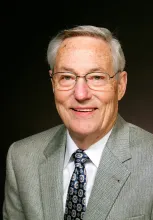
At the time of his retirement in 2016, Roy Holladay was serving the Operation Manager for Ministerial and Member Services of the United Church of God. Mr. and Mrs. Holladay have served in Pittsburgh, Akron, Toledo, Wheeling, Charleston, Uniontown, San Antonio, Austin, Corpus Christi, Uvalde, the Rio Grand Valley, Richmond, Norfolk, Arlington, Hinsdale, Chicago North, St. Petersburg, New Port Richey, Fort Myers, Miami, West Palm Beach, Big Sandy, Texarkana, Chattanooga and Rome congregations.
Roy Holladay was instrumental in the founding of the United Church of God, serving on the transitional board and later on the Council of Elders for nine years (acting as chairman for four-plus years). Mr. Holladay was the United Church of God president for three years (May 2002-July 2005). Over the years he was an instructor at Ambassador Bible College and was a festival coordinator for nine years.
