

Mario Seiglie
This transcript was generated by AI and may contain errors. It is provided to assist those who may not be able to listen to the message.
Brethren, as ministers, we should never take for granted this one hour every week, which we have a responsibility to fill it to the fullest. And that's something that every minister should be aware. The fall feasts will be soon upon us, and they should remind us of the living hope. That's what Peter called it, the living hope. Let's see why. Let's turn to 1 Peter 1. I came across this expression. Titus calls it the blessed hope. Peter called it the living hope. Notice 1 Peter 1, verse 3. He says, Blessed be the God and Father of our Lord Jesus Christ, who according to His abundant mercy has begotten us again to a living hope through the resurrection of Jesus Christ from the dead. So we have a living hope of this coming kingdom of God, of that future resurrection. It's not a dead hope. It is not just wishful thinking. It is something to be kept alive year after year. Is it a living hope with all of us, or has that hope been fading?
This brings to mind a very important attribute of God. God has so much faith in us as long as He is living in us. I was reflecting on that this week when we pray, Hallowed be your name.
This scripture came to my mind that God operates as if those things that He has prepared already exist. For example, He considers we have been given crowns before we have even received them.
That's why in Revelation 3.11 Christ says, Behold, I am coming quickly. Hold fast what you have that no one may take your crown. It is like God already has given us those crowns, but we can lose them.
We can disqualify ourselves. He hasn't physically given them to us, but in His mind, He has already offered them to us. They are already ours if someone else doesn't come in and has to replace us. Those crowns are there. One crown with your name on it is there.
And so this scripture comes to mind Romans chapter 4 verse 17. It is written, Romans chapter 4 verse 17.
Perhaps we have heard the scripture, but do we really understand what it means?
Romans chapter 4 verse 17 says, As it is written, I have made you a father of many nations, talking about Abraham. In the presence of him whom he believed God, who gives life to the dead and calls those things which do not exist as though they did.
As if they did exist.
Now in the amplified Bible version, it says, And speaks of non-existent things that he had foretold and promised, as if they already existed.
Another version, the easy reading or easy easy read version, it says He speaks of things that do not yet exist as if they are real.
See, for us, time limits us. We can't really see beyond the present. God doesn't exist here in this physical universe with time. He exists outside. And for him, he can speak of things as if they're going to happen and he can rely on them.
Notice in Isaiah 44 verse 6 and 7. This is where Romans 4, 17 has its basis besides talking to Abraham about it, as we will see. But Isaiah 44 brings up the same principle. Verse 6.
Isaiah 44 verse 6 It says Thus says the Lord, the king of Israel, and his Redeemer, the Lord of hosts, I am the first and I am the last. Besides me, there is no God. And who can proclaim as I do? Then let him declare it and set it in order for me, since I appointed the ancient people and the things that are coming and shall come. Let them show these to them.
So God says he appoints things. He knows what things are going to be fulfilled.
The prophecies and the promises that he has made, they're all going to be carried out to the last letter. Two chapters forward. Isaiah 46, one of my favorite scriptures. Isaiah 46 verse 9.
It says So God speaks of things that he declares, and he knows they're going to be carried out.
Part of faith is believing in God and his promises. As he believes in us and has a place appointed in his kingdom if we remain faithful.
It takes faith, walking by faith in order to do this. Notice in 1 Corinthians chapter 4 verse 16.
1 Corinthians chapter 4 verse 16. It says It says Yes, our physical bodies are deteriorating, but our spirit, that spiritual life in us, that has to continue to be invigorated and renewed day by day. We have to get down on our knees. We have to come and get closer to God. He goes on to say producing spiritual character in us, the different trials and difficulties that we go through. They burn off a lot of the dross the same way that fire in a furnace. When gold is poured, it purifies it. It burns the dross. It burns everything of the impurities. So it is with us. It says in verse 18, While we do not look at the things which are seen, just physical things, we have houses, we have cars, we have certain material things, but those aren't going to last.
Remember how the pharaohs, they thought they could take it with them, right? They built these huge pyramids. They buried servants alive in their tomb so they could be served in the afterlife. And they filled their whole vaults of where the crypts were. They were filled with all kinds of luxuries because they thought all of this they would continue to enjoy in an afterlife. And they even have ships next to the pyramids of Gissa, which Qadi and I, after a feast, we were able to go to Egypt. And there, between two of those pyramids, they dug up two Egyptian pharaonic ships. They're as big as this hall. And what did they do? They buried them because they thought maybe the pharaoh wants to go out on the lake. And all of that was in vain.
Pharaoh's dead. All his servants are dead. All those goods have been robbed a long time ago. And so it was in vain. So we can't just look at the physical things we have now. We also have to look at what is coming in the future. It says here, while we do not look at the things which are seen, talking about not only looking at that, but at the things which are not seen, the promises that God has said are real. They are going to be coming about. They're going to be carried out.
For the things which are seen are temporary, passing, but the things which are not seen are eternal. Spirit does not deteriorate, as matter does. Matter is just based on spinning atoms. And boy, God really gave them a good spin, because these atoms are spinning at a tremendous velocity, just like tops are. But eventually they will run out of energy. And all the atoms and the electrons, they'll just all be dispersed. There won't be any energy left. Those are physical things. But Spirit is eternal. It is self-generating. There's nothing that can make it wind down.
But for that, we need faith. Notice the following chapter, 2 Corinthians 5, verse 7. Paul says, for we walk by faith, not by sight, not only by physical things that we see. And God's feasts represent that coming kingdom, that we're looking forward to being there one day. We really believe it. And that's why we commit to doing this, and leaving jobs, and leaving school, and having a lot of difficulties, because we want to be part of that kingdom when Christ comes back. Let's go back to Romans chapter 4, because this is a very important passage here that we need to understand and to be able to explain it to others. If somebody came up to you and said, well, what does this mean that God calls things that are not as if they were? Can we really explain what the principle behind this is?
Well, hopefully today we'll have a better understanding. Let's go back to Romans chapter 4, verse 11. See what it's talking about. Talking about Abraham and his faith.
And he received the sign of circumcision, a seal of the righteousness of the faith which he had while still uncircumcised. He was obedient. He was submissive to God. And so the seal was circumcision. But that was something that was a result of what he had done previously, that he might be the father of all those who believe, not only Jews, but everybody that steps out and begins to follow God and to put him first in his way of righteousness like Abraham did. Though they are uncircumcised, maybe they're Gentiles, that righteousness might be imputed to them also. And because they submitted, they repented, they followed God's ways, they're going to receive forgiveness for their sins as well. Verse 12, and the father of circumcision to those who not only are of the circumcision, but who also walk in the steps of the faith which our father Abraham had while still uncircumcised. So now, whether you're Jew or Gentile, you have access to that same righteousness by faith, by walking in faith. Verse 13, for the promise that he would be the heir of the world was not to Abraham or to his seed or descendants through the law, but through the righteousness of faith. It wasn't going to be done because they merited it. It wasn't going to be done because they were circumcised. It was because they were walking by faith, obeying and following God. For if those who are of the law are heirs, if you're only limited to a certain race of people and physical descendants of Abraham, faith is made void and the promise made of no effect. Because the law brings about wrath, because of course it condemns a person. For where there is no law, there is no transgression. So you only come to awareness of what sin is when you understand what is God's law. Verse 16, therefore it is of faith that it might be according to grace, so that the promise might be sure to all the seed, to all human beings, not only to those who are of the law, the Jewish people with the circumcision and submitted, but also to those who are of the faith of Abraham, the Gentiles who accepted the faith of Abraham, who is the Father of us all. As it is written, I have made you a father of many nations, not just the Jewish or the Hebrew nation, in the presence of him whom he believed, God, who gives life to the dead and calls those things which do not exist as though they did, who, contrary to hope, talk about Abraham, in hope believed so that he became the father of many nations according to what was spoken, so shall your descendants be. And not being weak in faith, he did not consider his own body already dead since he was about 100 years old and the deadness of Sarah's womb. She was about 90 at the time. He did not waver at the promise of God through unbelief, but was strengthened in faith, giving glory to God, and being fully convinced that what he had promised he was also able to perform, and therefore it was accounted to him for righteousness. So we understand here that when God commands something, it's as good as done. That's what it means. He changed Abraham's name to Abraham, which means father of a multitude, while Sarah was still without a child. Sarah did not have a child, didn't have Isaac, and he said, Abraham, you're going to be a father of a multitude of descendants. Abraham was about 100 years old.
He spoke of Abraham's descendants when there were no descendants yet.
God truly has the ability to speak of impossible things, and in speaking makes them possible. And Abraham heard God's promise of the future kingdom and of his descendants, and believed it. He embraced it. He accepted it as something that was going to be real.
That faith was credited to Abraham as righteousness, which means the right standing before God, and provides the example for all who would later exercise the faith as Abraham had in God. Again, looking into the future, God can speak of things that do not exist yet.
And he has a power over death and the ability to create life. Abraham believed this, and so do we, if we are his spiritual descendants.
Let's see a couple more examples in the Bible of how God calls things as if they already are true, as if they are already real. Because in his mind, he's already determined from his side that this is so. It has to be from our side if we fail, but not from his side. He says, your crown, don't let somebody take it. If you didn't have it, somebody couldn't take it away from you. But he says that's something that already have there for you, just a matter of time before it becomes reality. Notice in Luke chapter 12, Luke chapter 12 and verse 32, these are examples in the Bible of when God calls things which are yet not seen as something that is real. Luke chapter 12 and verse 32, Christ says, do not fear little flock, for it is your father's good pleasure to give you the kingdom. He says that's what God wants, and it's going to happen. So don't be afraid. Don't lose faith.
In the complete Jewish Bible, the verse says, have no fear, little flock, for your father has resolved to give you the kingdom. He's already resolved. He's already decided to do this.
Now it hasn't come yet, but that's already been determined.
Another scripture in Ephesians chapter 1, talking about living faith and the living hope that we need. Ephesians chapter 1 verse 15, Paul says, therefore I also, after I heard of your faith in the Lord Jesus and your love for all the saints, do not cease to give thanks for you, making mention of you in my prayers, that the God of our Lord Jesus Christ, the Father of glory, may give you the spirit of wisdom and revelation in the knowledge of him, the eyes of your understanding being enlightened, that you may know what is the hope of his calling, what are the riches of the glory and of his inheritance in the saints, and what is the exceeding greatness of his power toward us, who believe according to the working of his power.
Continuing verse, yeah, so in verse 18, there's a point here he makes, and the importance of having spiritual eyes. People are born with physical eyes. They can see physical things.
Many people do not have spiritual eyes. That comes from God's Spirit, his Holy Spirit. And when you have spiritual eyes, your life is not just based on physical things.
It also has to do with spiritual things. So now this is a special time for us.
Why? Because the fall feasts are coming, the feasts of trumpets. Why are we going to be there? Because we know what is going to happen one day. The trumpets will sound around this earth, and Christ will descend. Now most people scoff at that. They don't believe it, but they don't have physical, they don't have spiritual eyes. They only have physical eyes. And so that's a blessing when you can see beyond just the physical. For us, it's not just a meeting that we have on Monday. To us, it's a reminder of what God has promised, something that is not yet realized, but in God's eyes it is something that is going to happen. And he calls the defeats the trumpets because those trumpets are going to sound. Christ is going to descend, but it takes faith to believe it, to embrace it, and to put it into practice.
Notice in Ephesians chapter 2, in verse 4, boy this takes a lot of faith to believe in. Ephesians chapter 2 verse 4, Paul says, "...but God, who is rich in mercy because of his great love with which he loved us, even when we were dead in trespasses, even if we were condemned, if we were guilty before God, we really didn't deserve anything." He says, "...made us alive together with Christ.
By grace you have been saved, and by God's mercy and love we have been saved from that second death, because we could very easily not have eternal life. Perish." He says, verse 6, once you're baptized and receive God's Spirit, he says, "...and raised us up together, raising us from baptismal waters, and made us sit together in the heavenly places in Christ Jesus, that in the ages to come he might show the exceeding riches of his grace in his kindness toward us in Christ Jesus." He says, we as members, we are symbolically like if we already were in God's kingdom. We're sitting there with God. Again, something that's going to happen in the future. But he says he already has that special category. We can go to him as his children, like if we were sitting there with Christ because we're part of his kingdom. Our citizenship is in heaven, as it brings up there later on in Philippians. And so we need to have those spiritual eyes to see beyond the physical and the material. Here's another example in Romans chapter 8 verse 29, where God calls things as if they already were when they haven't happened yet. Romans chapter 8 and verse 29, talking about the church members, it says, for whom he foreknew he also predestined to be conformed to the image of his son. He was going to call. He was going to choose certain people that he might be the firstborn among many brethren. Moreover, whom he predestined these he also called. Whom he called these he also justified, or made just or pure. And whom he justified these he also glorified. Now glorified means when you're resurrected with a spirit body. But for him, that whole process, it's just a matter of time. He's already decided. That's going to happen if again we don't become disqualified, because all of these promises are conditional. A person can turn away from God, even having God's Spirit, even doing the right things. If he turns away, Ezekiel 18 tells us that if the righteous forsakes the way of the righteous and turns into evil and goes in the way of evil and goes back to the evil ways, the question there is answered. He says, well that person, because of what he did previously, will that count? He says no. He has become an evil and wicked person, and he will have to pay the consequences. The New Testament tells us too. Notice in 2 Peter, 2 Peter chapter 2.
Just a reminder that God's promises and what he expects of us and what he wants to happen, it's all still conditional. It still depends on a person not forsaking his way. It says in verse 20 of 2 Peter 2, it says, for if, talking about members that fell away, after they have escaped the pollutions of the world, all the contaminations and sins, if they've gotten rid of that through the knowledge of the Lord and Savior Jesus Christ, they accepted them as the Savior, they are again entangled in them, the worldly ways and are overcome. They quit coming. They don't want to know anything else about the Church and God's ways. It says, the latter end is worse for them than the beginning, for it would have been better for them not to have known the way of righteousness than having known it to turn from the Holy Commandment delivered to them. But it has happened to them, according to the true proverb, a dog returned to his own vomit and a sow having washed to her own wallowing in the mire. So you can go back to that dirty way of life, but if those other consequences don't expect to be in the kingdom, here's another example of how God looks at things and says, this is what's going to happen in the future. In Revelation chapter 14, John is given certain visions of the future. In Revelation 14 verse 1, he actually saw what is going to happen in the future, but he was looking at it at that time. Verse 1, Then I looked, and behold, the Lamb standing on Mount Zion. Of course, Christ is also mentioned as the Lamb. And with Him, 144,000, having His Father's name written on their foreheads.
And I heard a voice from heaven, like the voice of many waters, and like the voice of loud thunder. And I heard the sounds of harpists playing their harps. And so here there's this great rejoicing, because finally we've gotten to the point where Jesus Christ has come back and His saints are there. Now it's just talking about the 144,000 because it's specifically focusing on them, but they're not the only ones that are redeemed. We see that in Revelation 7 and later on, but it's talking about those 144,000 that were still alive on the earth, that had remained faithful. That had been protected. And now they are part of the resurrected and they're there rejoicing with Jesus Christ. But it talks like that is already a reality, because God calls things. This is part of His will that will be accomplished. Notice in Psalms 132, we have a couple of prophecies that are fulfilled in Revelation 14.
Psalm 132. Starting in verse 13, it says, For the Lord has chosen Zion. Of course, we know that's Jerusalem. That's the Mount. Mount Zion is the Mount in Jerusalem. David expanded that, put the temple there.
He says, He has desired it for His dwelling place. This is My resting place forever. Here I will dwell, for I have desired it. That's what God has chosen. So we know those brethren are going to be there one day. We can be part of that group if we remain faithful. The importance of going to the feasts to keep those spiritual eyes open, to keep that faith alive. Don't let the world distract you. Don't let it pull you back in its tentacles. Stay firm and faithful.
Notice in Micah, going forward a bit, one of the latter prophets, Micah chapter 4, starting in verse 2, also talks about the saints reigning in Mount Zion. Micah 4, verse 2, says, Many nations shall come and say, Once Christ has returned, come, and let us go up to the mountain of the Lord, to the house of the God of Jacob. He will teach us His ways, and we shall walk in His paths. For out of Zion, the law shall go forth, and the word of the Lord from Jerusalem.
He shall judge between many peoples, and rebuke strong nations afar off. They shall beat their swords into plowshares, and their spears into pruning hooks. Nations shall not lift up sword against nation, neither shall they learn war anymore. But everyone shall sit under his vine and under his fig tree, and no one shall make them afraid. And the Jewish term for peace is shalom. And it's not some theoretical or philosophical word. Peace in the Old Testament means being free, where somebody is not conquering you and oppressing you, that you can go about freely with your family and living a normal life.
So here it says everybody's going to be able to live their normal life. As I mentioned to my wife yesterday, we take it for granted about this peace. We don't have to worry about being overrun by some other nation right now, but that's a very unusual time, as it was mentioned in the sermonette.
What has happened if you were a citizen in Europe, or if you're a citizen of Syria, or Iraq, or Afghanistan, or many of the African nations, you don't know exactly what is going to happen the next day, because there's still war, there's still invasions. People want to take over your houses, take over your riches, and so in the Bible it talks about shalom, a moment, a time when you can sit under your vine tree, enjoy things, and not having to have a gun close by because you're going to be invaded, as the Middle East was invaded century after century.
Continuing on, it says in verse 5, it says, For all people walk each in the name of his God, but we will walk in the name of our Lord, our God, forever and ever. People will have to change their religions to God's way. Verse 6, In that day, says the Lord, I will assemble the lame, I will gather the outcasts, and those whom I have afflicted, I will make the lame a remnant and the outcast a strong nation.
So the Lord will reign over them in Mount Zion from now on, even forever. So we see that God says, this is going to happen. It's already been determined. The only thing that hasn't been determined is our fate, our destiny. Are we going to be faithful? Will we be on Mount Zion when Christ comes back?
Will we be keeping the Feast of Tabernacles, as it mentions in Zechariah 14, another scripture that has to do with Christ coming, Zechariah chapter 14. Zechariah 14 says in verse 16, And it shall come to pass that everyone who is left of all the nations which came up against Jerusalem shall go up from year to year to worship the King, the Lord of Hosts, and to keep the Feast of Tabernacles. So that's something Christ is going to establish right away.
There's not going to be any rivaling feasts. It's going to be God's feasts. And guess what? We're all going to be one people. We're going to all celebrate the seven feasts of God. It says, verse 17, And it shall be that whichever of the families of the earth do not come up to Jerusalem to worship the King, the Lord of Hosts. On them there will be no rain. Let's see how long it lasts. If you have a complete dry spell, no rain, all your crops perish. Soon starvation happens. I wonder how many people are going to be stubborn, starving to death, saying, well, you know what?
I think I'm going to give up my feasts and my old gods. Yeah, I think I'll go to Jerusalem because I need to have something in my stomach. So there's not going to be much resistance. And so we see that God's people now walk by faith.
That feast represents the coming kingdom of God. And one way or the other, except for health problems or difficulties, we understand not everybody can go according to health problems and situations, but as far as they can, go able-bodied and able to make it during the whole year we've been planning to go to these marvelous feasts. That's walking by faith.
In Hebrews 11.24, we see the same faith. People that know God has already determined it. That's why every Sabbath day we come here to celebrate God's kingdom, too. The seventh Sabbath of man's history, the seventh thousand years, and the Sabbath reminds us of that coming kingdom and why we are faithful. As we keep the Sabbath, it shows the indication to be in that kingdom, to put it first in our lives, not let anything else disturb us from keeping, having those spiritual eyes of faith. Hebrews 11.24, it says, by faith Moses, when he became of age, of course he was taught by his mother, and refused to be called the son of Pharaoh's daughter, choosing rather to suffer affliction with the people of God. He learned about Abraham's promises. He was a descendant of Abraham, and he said, I have faith that this is the kingdom that is coming. This is what I want to be part of. And he says, choosing rather to suffer affliction with the people of God than to enjoy the passing pleasures of sin. Oh, he had it all in that Egyptian society. He could have been a big playboy. He was the prince there with the Pharaoh's daughter. And remember, Egyptian history shows us that the Pharaoh actually, after the Pharaoh died, it actually was the Pharaoh's daughter that had the influence of putting up the new prince. And so Moses might have been a pharaoh if he wanted to. But it says here that he deprived himself of those passing pleasures of sin because they never last. They never produce good fruit.
Esteeming the reproach of Christ. Notice here in the Old Testament, still talking about who that rock of Israel was and that he was willing to suffer for the faith, that he knew that Messiah was going to come one day. And he had his hopes and his faith put on that.
Esteeming the reproach of Christ's greater riches than the treasures in Egypt. For he looked to the reward being in God's kingdom, being part of that first resurrection. By faith he forsook Egypt, not fearing the wrath of the king, for he endured as seeing him who is invisible. Why? Because Moses had spiritual eyes. He could see beyond the present and the circumstances to that kingdom that was coming that he wanted to place first in his life. And then in chapter 12, we have the example of Christ himself. Notice it says in verse 1 of Hebrews 12, it says, Therefore we also, since we are surrounded by so great a cloud of witnesses, all of those in chapter 11 that were mentioned, let us lay aside every weight and the sin which so easily ensnares us. There are always some sins that we are subject to. And let us run with endurance the race that is set before us, looking unto Jesus, the author and finisher of our faith. He's not only led by example, he's our coach in heaven. Who for the joy that was set before him endured the cross, despising the shame, and has sat down at the right hand of the throne of God.
Yes, Jesus Christ has never had never lost the focus of his life, wanting to bring so many of his children to glory, to be part of that kingdom. And he's the same yesterday, today, and forever. He's there for us. He already paid the most precious prize. So did God the Father, who allowed the word to be beaten and crucified. And so they've paid the price. That's why this kingdom is coming. It's getting closer and closer all the time.
So Christ never lost the focus on what he should do to the very end. He knew by faith all was going to work out. God was going to resurrect him from the dead in three days. So before God, we already have a crown.
God is the one who names things before they even exist. And don't let brethren, anyone, take that crown from you. Because if we don't qualify, if we don't cross the finish line, if we give up, that crown will be given to someone else. How tragic. After all that effort that we don't cross the finish line. And so in Hebrews 12 to end in verse 28, finishing chapter 11 with Moses and others of the faith with the example of Christ, then Paul ends this section in verse 28, concluding, therefore, since we are receiving a kingdom which cannot be shaken, it is not something perishable. It is immovable, firm. Let us have grace by which we may serve God acceptably with reverence and godly fear. Yes, we need to receive God's grace, be thankful, and do the work that he expects of us. Yes, we have to keep that vision ever before us as we celebrate God's fall feasts, the first one two days from now. This is truly walking by faith and not by sight. It is our chance to show him in practice, putting into practice, what truly is our faith and that God calls things as if they already existed because through his will everything will be carried out to the last letter.
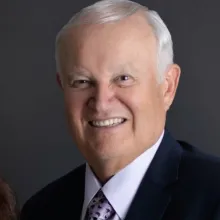
Mr. Seiglie was born in Havana, Cuba, and came to the United States when he was a child. He found out about the Church when he was 17 from a Church member in high school. He went to Ambassador College in Big Sandy, Texas, and in Pasadena, California, graduating with degrees in theology and Spanish. He serves as the pastor of the Garden Grove, CA UCG congregation and serves in the Spanish speaking areas of South America. He also writes for the Beyond Today magazine and currently serves on the UCG Council of Elders. He and his wife, Caty, have four grown daughters, and grandchildren.
