
Roy Holladay
This transcript was generated by AI and may contain errors. It is provided to assist those who may not be able to listen to the message.
Well, good afternoon to everyone. It's good to be back here in Dallas again. I bring special greetings from Bill and Betty Cowan. As you know, Bill is my wife Norma's brother. And even though we're not in Chattanooga, we talk to Bill all the time, almost daily. He's pastoring Chattanooga and Rome, Georgia now, so they're very happy. Actually, we had a setup we thought was perfect. About six months before we moved to Cincinnati, they bought a house about a half mile from us. And the first time in our life, we were close to each other.
And then we moved. So, you know, those things happened, but they're doing well. I was struck by what Mark said that he and Barbara always thought about that if God gave them the call that they would respond positive to that. Because this past week I was talking to another couple in a very similar situation. They're not in the ministry, for they're in the ministry, but they're not pastoring. And I asked them, would you be willing to serve in the ministry full-time and go to and put a name there? And they got back after two or three days of discussing it and said, yes, we will.
We always thought, you know, if we had this opportunity, that we would do it. And so I'm very pleased to see that we still have many out there in God's church. You know, younger men who are willing to step up and be able to do that. I was just struck by what Mark said about his life, because sort of listening to him, it almost was an overlay of my life.
I grew up on the farm, went to Ambassador College. I was one of those who graduated one day, you know, got married, wasn't the next, because at that time Pentecost was on Monday. Had to wait until after Pentecost. And then the next day, we had our car and we were off to Pittsburgh. So we also went to Pittsburgh. There were a number of other things that he mentioned that I just had to sit back and think about.
I'd like to echo what he said, though he was talking about Ray Wright and Linda and their service here in this area. And truly, they are deeply appreciated for their years that they were willing to step in here and serve and stand in the gap, hold the church together, help to solidify everyone, strengthen it.
So we are very appreciative of that. One of the main things I've been working on is operational manager for ministerial services is helping to develop the next generation of leaders in the church. I was just looking at a map of all of the church circuits we have in the U.S. And right now we have about 20 church circuits in the next five years where we are going to have to replace the church pastor.
So the question is, where do they come from? They're going to come from out of the midst of the congregations. We have, in looking around, one of the things we've done in the last three weeks is to send a letter out to all the church pastors asking them to give us names of individuals they would consider leaders, potential leaders, those who might be worked with, mentored, taught, educated, brought along. We don't have an ambassador college anymore, so we're going to have to have our church pastors begin to mentor men.
And as somebody is thinking about retiring, then maybe the last year or two that they're pastoring, that they begin to work with somebody younger, mentor them, and help them to come along. We have something like 25 ministers who are 70 and over, and then we have another 20-something who are 62-plus. Everybody in the ministry, 62 and over, has received a letter in this last couple of weeks saying we need to talk about retirement.
Now, not that we're going to retire them at 62, but according to our retirement policy, we should begin to start the process so that they can begin to think about retirement. What would I do? Can I afford it? And who might be in my area? Who could replace me? If that's not true, then what do we do?
So, this is something that we're really working on. I've already told Victor Kubik, the president, that he asked me to come in and serve. Norma and I were just about getting ready to retire, and he asked us to come in, and just like Mark said, what do you say? Okay, we'll come in, but I explained that at the end of his first term, and we're really hoping we get a president who will have two terms. That when his second term begins, that I would like to step aside and that we need to have somebody waiting in the wings.
So that's what we're working on presently. So, he knows that. By the way, I'd like to bring to you greetings from Victor and Beverly Kubik. They're as busy as you can be, and he's really striving to get the church going. In fact, this might mention this past May, which we're coming to an end here, that we've had something the last I heard now.
These can change in two or three days, but we were up like something 18% over May a year ago. So, God seems to truly be blessing us when it comes to income in that way. We're delighted, Norm and I, we look out here, see a dear friend of ours, Nancy Payton. We've known Nancy since 1969, and when we were down in San Antonio at that time. And so, we've known her and her family. I performed George's funeral, and we've been very close to them. And the Hoosers, who would have ever thought I'd married Randy and Tina that had a girl.
A girl grew up and married my son. And so, eventually, we're all related one way or the other in the church, it seems. So, you just have to figure out how. I'd like to thank our young lady who performs special music. It's nice to be able to have a large church like this, where you can have special music. Some of the smaller churches' special music truly is special. And when you have somebody who can stand up and sing and perform, it is greatly appreciated.
We're here to celebrate with our son, Mark, who finished up in Gody's teaching degree, that we're here to celebrate that. I think there's going to be a celebration tomorrow somewhere out here on a lake. And so, a number of people will be there, and we wanted to come and to enjoy that opportunity with him, Laurie, and the family.
Plus, it gives us an opportunity to see our grandchildren. So, that's another opportunity. Well, I better get on here, because, like Mark said, they'll shut you down here if you don't finish up on time. You know, when God inspires a writer of the Bible to devote a number of chapters to that person, I believe there's a lesson that God wants us to learn from their lives and what they've done.
Abraham is such a person. Beginning with the end of chapter 11 in the book of Genesis, through Genesis 25.11, we find the story of Abraham. We also find a number of chapters, scriptures devoted to Abraham in the New Testament. The word Abraham is mentioned 251 times in the Bible. Abraham is mentioned 61 times. That's a total of 312 times. So, Abraham, obviously, was a major figure in the Bible and in scriptures. There's a great teaching, great lessons that we can learn from his life and that God wants us to learn.
There are always a number of things that we should learn. When you start thinking about men in the Bible, and I would encourage you if you've never done this, think about men that God himself has said, this is a man after my own heart. Who would you think of? You think of David. What about the meekest man alive? Who would you think of? Well, Moses. What about someone who is greatly loved and esteemed? That's Daniel. You go through the Bible, you'll find that there are men who are picked out and God already tells us what he thinks of them.
How would you like to know that God would look down and look at you and say, here is a woman, here is a man that I dearly love? Would we not want God to be able to say that about us? What does God say about Abraham in the Bible? What is he called? He's called the father of the faithful.
So, Abraham is an example of faith. Let's go over to the book of Romans, chapter 4. A lot about Abraham written in the book of Romans. Romans, the fourth chapter. And let's take a look, beginning here in verse 1, Romans, chapter 4, about what Paul wrote about Abraham. What then shall we say that Abraham, our father, is found according to the flesh? For if Abraham was justified by works. Now, what does the word justify mean? It means to be made right with God, to have your sins forgiven.
You're justified. You're made right. When you justify a line on a piece of property or something, you make sure you get the exact line. Well, Abraham was justified. It says if he was justified by works, he's something to boast about, but not before God. For what does the Scripture say? Abraham believed God, and it was accounted to him for righteousness.
Now, to him who works, the wages are not counted as grace, but as debt. The word justification, again, means to be made right in God's sight. That whatever stood between us and God has been removed, and we now have a right relationship with God. That implies that our sins are forgiven, and we are now in harmony with God. We've repented of our sins. We've been forgiven. Are we forgiven because of good works? Is that what forgives us? If God calls you, how old were you when God called you? I was 17, when God opened my mind. Many of you were younger, some of you were older. Now, if you began to keep the law perfectly from that moment forward, does that forgive all of your sins in the past?
And the answer is no. Your good works in the future cannot forgive your sins of the past.
Wages are what you earn. I go out and work 40 hours a week. If I get paid $10, $15, $20, that's what I earn. And so wages are things that you earn. We're forgiven by God's grace, not by our own works. God's grace. The wages of sin is death, the Bible says. So what you earn by sin is death. What you earn by good works has to do with your reward, your position, your responsibility in God's kingdom. Grace flows out of the very nature of God. It's part of His nature. It is part of a demonstration of love. Grace is God's graciousness, His mercy that's extended to us, and His action, His forgiveness. Now let's notice in verse 7, He goes on to explain what He's talking about here. Blessed are those whose lawless deeds are forgiven, and blessed is a man to whom the Lord shall not impute sin. So what He's talking about with justification is that our past sins are forgiven. We're made right with God. Righteousness, you're made right in God's sight. You're brought into a right relationship with God. So will God forgive our past sins if we don't repent? You've got to repent.
David, when the prophet came to him, Nathan came and said, look, you're the man. You killed Uriah. You've stolen his wife. David repented. He had to stop. He knew he had to repent of what his sins were. He had to be sorry for everything that he had done. Let's go back to the book of James. You might hold your place here because we'll be right back. But in the book of James chapter 2, we find a principle that the Bible is very clear about. James chapter 2 verse 14, What is a prophet, my brethren, if someone says he has faith and does not have works? Can faith save him? Now, people get confused about this topic. Martin Luther called the book of James an epistle of straw because James talked about having good works. If a brother or sister is naked and destitute of daily food, and one of you says to them, depart in peace, be warmed and filled, but you do not give them the things which are needed for the body, what is a prophet?
Thus also faith by itself, if it does not have works, is dead. Faith by itself is dead. Have you ever looked into a casket and seen a dead body?
There's no life there. I mean, you look in that casket, a person's not breathing, blood is not circulating through their body. They're dead. There's no life.
So it is with faith. If a person says he has faith and he doesn't have works, in other words, if his faith does not move him to obey, that's why do we have faith? Faith is the motivation. Faith is what stirs us up. Faith is what drives us to obey God, to serve him. If we have faith, we say we believe God, then we're going to do what God tells us to do. And so faith, if it doesn't have works, the Bible says is dead. There's no life to it. It's a dead faith. Verse 18, someone will say, well, you have faith, I've got works. Show me your faith without your works, and I will show you my faith by my works. You believe there's one God? You do well. Even the demons believe in tremble. But do you not know, O foolish man, that faith without works is dead?
Did Abraham, even though he believed God, did he obey God? And the answer is yes.
Abraham did obey God. Notice in verse 21 of this chapter, was not Abraham, our father, justified by works when he offered Isaac his son on the altar. And do you not say that faith without works, that faith was working together with his works, and by works, faith was made perfect?
And the Scripture was fulfilled, which says, Abraham believed God and was accounted to him for righteousness. But his belief led him to do something. God told Abraham, go sacrifice your son.
Now, did Abraham argue with God? God, you wouldn't want me to kill my own son. I don't believe you want me to do that. No! I'm not going to do it. And so he would not do what God said. No, that's not what the Bible says. Abraham immediately obeyed God and did what he said. And then it goes on to say, you see that a man is justified by works, not by faith alone. Likewise was not Rahab the harlot, also justified by works, when she received the messenger and sent them away. But as a body without the Spirit is dead, so faith without works is dead. Faith will lead a person to obey, and it is a living faith. Obedience is a sign of our faith. Obedience is faith in action. Now let's go back to chapter 4 of the book of Romans again. Romans 4 verse 9.
Romans chapter 4 here, verse 9. And I want you to notice, this is, does this blessedness then come upon the circumcision only, or upon the uncircumcision also? For we say that faith was accounted to Abraham for righteousness. How then was it accounted while he was circumcised or uncircumcised? See, he was uncircumcised, as it goes on to say, and he received the sign of circumcision, a seal of righteousness of the faith, which he had while still being uncircumcised. Why? That he might be the father of those who believe, though they are uncircumcised. In other words, of the Gentiles, that righteousness might be imputed to them also, and also the father of the circumcised, to those who not only are of circumcision, but also who walk in the steps of faith, which are Father Abraham while still being uncircumcised.
I want you to notice here that Abraham walked in faith. And why does it tell us to do? That we are to walk in the steps of faith. You and I, we have an example set for us of one of the early fathers, as they're called, the patriarchs, Abraham, and how he walked in faith, and that we are to walk in the same steps that Abraham did.
Verse 14 goes on to say, For if those who are of the law are heirs, faith is made void, and the promise made of no effect.
So we find you're not an heir to the promises of God because of race or nationality, because you are an Israelite or a Jew. You are an heir because God calls you, and God forgives you, and God gives us His Spirit. Let's go on over to Galatians, a third chapter.
Galatians chapter 3. And I want you to notice here in verse 5, where it again mentions about Abraham being an example of faith. Galatians chapter 3 and verse 5, Therefore, he who supplies the Spirit to you and works miracles among you, does he do it by the works of the law or by the hearing of faith?
Just as Abraham believed God and was accounted to him for righteousness.
Therefore, know that only those who are of faith are the sons of Abraham. You and I today, I don't care what your nationality. You could be German. You could be Russian. You can be Chinese. You can be Latin. You can be any nationality you want to think of.
That doesn't matter. It's if you and I are of faith. If we have faith in God, not only do we believe that He is, but we believe that He's a rewarder of those who deal with us.
We are the sons and daughters of Abraham.
And verse 8, In the Scriptures foreseen that God would justify the Gentiles by faith, preached the gospel to Abraham beforehand, saying, In you all nations will be blessed. Not just the Jews, not just Israel, but all nations, including the Gentiles.
That they likewise would be blessed.
Now, let's notice in verse 15 of this chapter, Galatians 3 and verse 15.
Brother and I speak in the manner of men, though it is only a man's covenant, yet if it is confirmed, no one annuls or adds to it.
Now to Abraham and his seed were the promises made. He does not say, and to seeds, plural, as of many, but as of one, to your seed, who is Christ?
So the promise to Abraham, we know, was a promise of race and grace.
And through Christ, your seed, all nations would be blessed. Now in verse 26 of this same chapter, For you are all the sons of God, through faith in Christ Jesus.
For as many of you as were baptized into Christ had put on Christ. So who are the children of God? Who are those? Well, those who have been baptized, who have received the Spirit of God.
There is neither Jew nor Greek, there is neither slave nor free, there is neither male nor female, for you are all one in Christ. And if you are Christ, then you are Abraham's seed, and heirs according to the promise.
So you and I have become heirs to the promise. Those that God has called.
Now let's take a look at Abraham's life. This is a background, especially as outlined in the Old Testament. Let's see what lessons does God really want us to learn from Abraham?
Let's notice here, let's back up to Genesis chapter 12. Genesis the 12th chapter.
And we'll begin to read here in verse 1.
Genesis chapter 12.
And you'll notice here in verse 1.
Now the Lord had said to Abraham, Get you out of your country, from your family, from your father's house to a land that I will show you.
I'll make you a great nation, and I will bless you, and I will make your name great, and you shall be a blessing. I will bless those who bless you, curse those who curse you.
And in you, all the families of the earth shall be blessed.
Both Jew and Gentile.
So what did Abraham do?
Abraham departed as the Lord had spoken to him, and you find that he was 75 years of age.
He obeyed God, and he left his own country.
How many of you here have been asked to leave your own country in order to obey God? You see, there are not too many of you. You stop and think about it. You leave all of your own people, your father, your mother, your sisters, your brothers, all of your relatives, everything that you were used to.
According to the Austrian chronicles, Abraham was a great mathematician.
He was an astronomer, and he was a wealthy man. He turned his back and went where God sent him, and when God told him this, all the Bible says is so Abraham departed as the Lord had spoken.
And as we heard in the other split sermon, if God says it, we do it.
If it's the truth, it's the right way. That's what we should do. He obeyed God, he left his country, he believed God.
See, again, faith without action, faith without obedience is dead.
So from the very beginning, when God called him, he showed by his actions that he had faith. He was willing to obey God. He was willing to do what God told him to do. In verses 11 through 14, you find that he came on into the Promised Land. There was a famine. He went down to Egypt, and if you'll remember the story, Abraham lied.
He got down there and he said to Sarai, you're so beautiful. Pharaoh will want you.
Say you're my sister, otherwise they'll kill me, and they'll take you anyway.
So, you know, they see Sarai.
They, sure enough, they take her. They're going to put her in Pharaoh's harem, and he lied.
We see that Abraham was not perfect, was he?
He had faith to leave his family and come to the land of Canaan, and yet he still lied. He feared for his life.
He had some major lessons that he had to learn.
And I want you to notice something that is very important.
He came in contact with Egypt, the Egyptians in Pharaoh. So, they knew who he was, because if you'll remember the story, that God intervened on Abraham's behalf, delivered it, and God told Pharaoh, look, this is my servant. If you don't let him go, I'm going to do this to you.
And so, he let him go.
So, Pharaoh knew who he was.
Now, just keep that fact in mind as we go through the life of Abraham.
In chapter 13, you'll find that Abraham and Lot, both of them were wealthy, both of them prospered. They're herdsmen, they had so many cattle and camels and goats and sheep or whatever it was that they had that they had to separate.
And Abraham allowed Lot to choose where he wanted to go. Lot went down to the plains and Abraham said, you're right where he was. And Lot and Abraham separated.
God, again, you'll notice in verse 14, God appeared to him.
And God said that he, this is in chapter 13, that he would give him the land.
And God made, again, that promise to him.
God constantly reminded Abraham of what he was going to do for him.
Now, God didn't give it to him immediately, did he? The book of Hebrews, chapter 11, says what? About the men of old. They saw the promises afar off, and they were persuaded of them.
And so therefore, they strove for God's kingdom. They look forward to a city. Now, where in the Old Testament do you find, in the book of Genesis, that God explained to Abraham about the New Jerusalem?
And yet, they knew about the New Jerusalem. He looked forward to that city in the future.
Now, God has constantly reminded us through the Scriptures the same thing.
What our reward is. Do you get up every morning, and one of the first things you do is to remind yourself, I'm a child of the kingdom.
I've been called by God. God, you are my Father.
I've been called to be in your kingdom.
What do I need to do today to stay close to you?
You know, God reminds us. He gives us His Sabbath. He gives us the Holy Days. He's given us the Scriptures. He tells us to study His Word, to pray, to attend on the Sabbath, to go to the Holy Days. Why? Yearly, weekly, daily. We are reminded of God's calling.
And so, Abraham didn't have God just sitting there talking to him every day.
But every time God got together, He said, if you obey, this is what's going to happen.
And Abraham did obey.
So God constantly reminded him, and we need to constantly be reminded by looking at God's promise that He gives to us in His Word. Now, that brings us to chapter 14, and this is where Egypt is important.
Chapter 14, you'll find there's a war that takes place.
King to pass in verse 1, in the days of Amraphael, King of Shinar, Aroch, King of Elazar, and the Eugon and Reade, they made war against the kings of Sodom and Gomorrah and the surrounding cities.
And they took, they conquered Sodom and Gomorrah.
They raided those cities. They took their women, took captive, all of them, hauled them off as slaves, took their goods, made one fatal mistake. They took a lot.
Now, when Abraham found out about it, he collected his men, somewhere around 300. They tore off after these individuals. Who were these people?
Who had invaded this area of Palestine and Canaan?
Well, according to, again, the, you know, some of the historical sources, and again, I'm referring to the Austrian chronicles, they were Assyrian kings or generals over city-states who decided to invade.
They came in and they conquered Sodom and Gomorrah, hauled all of these people off, and Abraham came down and defeated them.
We'll notice in verse 18, chapter 14, verse 18, you'll find that after they were defeated, that Melchizedek, the king of Salem, brought out bread and wine. He was a priest of the Most High God, and he blessed him and said, blessed be Abram of God Most High, possessor of heaven and earth.
And blessed be God Most High, who was delivered your enemies into your hands. And he, Abram, gave him a tithe of all.
Who was this Melchizedek? He's the one who became Jesus Christ. He was the one who was the God of the Old Testament, who dealt with the patriarchs.
Now, he assisted, I'm sure, and helped Abraham to defeat these kings.
What you discover is that there wasn't a Syrian alliance of rulers, and God used Abram to bring down the decline of these Assyrian powers at that time by destroying their armies and their four leading kings.
And what this did, it allowed Egypt, remember Egypt, to prosper, to prosper, and for Abraham's descendants to grow and to multiply where they were, so that they could multiply according to God's promise.
And so, as a sign of faith, Abraham paid tithes to this Melchizedek.
It's interesting, just another interesting fact, by rescuing Lot, saving Sodom and Gomorrah, Abraham helped Sodom and Gomorrah to continue.
And we know what Sodom and Gomorrah's problems were, and yet he defeats the Assyrian kings and generals. Sodom and Gomorrah continue on, and then later on God has to destroy Sodom and Gomorrah.
But God intervened on his behalf. In chapter 15, again, the Word of the Lord came to Abraham in a vision, and he said, Do not be afraid, Abraham. I am your shield, your exceeding great reward. In verse 1 and 4, Behold, the Word of the Lord came to him, saying, This one shall not be your heir, but one who will come from your own body shall be your heir. Now, Abraham was talking with God, or Abram as he's called here, and he said, Let Elazar, you my steward, let him inherit. Let him be the one who you will fulfill all these promises through. But I want you to notice, specifically, God says, No, it's going to be somebody who will come from your loins.
So, remember that as we read on. In verse 6, He believed the Lord, and it was accounted to him for righteousness. Now, we read that in James 2. We read that also in Romans chapter 4. It was accounted to him for righteousness. Now, let's notice in verse 17 here, the same chapter. Verse 17 says, It came to pass that when the sun went down, it was dark. Behold, there appeared, what we find here, a smoking oven and a burning torch that passed between the pieces. You find that God had asked him to offer up a sacrifice here. And on verse 18, on that same day, the Lord God made a covenant with Abraham. And so, you find that this is where God made the covenant, and He promised to give to him that area. As He goes on to say here, on the same day the Lord made a covenant with Abram. And verse 18, saying to your descendants, I've given this land from the river of Egypt to the great river, the river Euphrates. So, He made this promise. Now, in chapter 16, you find Abraham doing something that all of us have done at one time or another. Abram and Sarai, his wife, tried to work things out on their own. And you know what God had said that God had promised? Let's notice the story here in verse 1. Now, Sarai, Abram's wife, had become or bore him no children, and she had an Egyptian maidservant whose name was Hagar.
And you know what the story is here. He went into Hagar, had a son named Ishmael.
Now, God said of someone of your own loins. Ishmael was of his loins. The problem was, he was not of Sarah. And so, he had a son, and he asked God to let all of these promises be fulfilled through Ishmael. And God said, no, he is not going to be the heir.
Now, Abraham was 75 years old when God gave him the promise. He came into the land of Palestine.
He was 86 around that age when Ishmael was born. God allowed him to wait until he was 99 to 100.
Now, you think, 25 years, why did God wait so long to give him a son? God said, I'm going to, but why did he wait? Why didn't he do it quickly?
Well, we find that there's a very valid reason, and one of the major reasons that we want to look at.
So, in chapter 17, God again appears to him, makes the promise again to him.
And we find in verse 17, Abraham fell on his face, and he laughed.
And he said in his heart, shall a child be born to a man who's 100 years old?
Now, we remember the story where Sarah laughed, and God got on her, chastised her.
But we find also here that with Abraham, that he laughed. And yet he did believe God.
Abraham still wanted to work things out in his own way.
Now, in chapter 18, God appears to them again, and he tells them, okay, a year from now, you're going to have a baby. This is when Sarah laughs. So, you know, they both laugh, but, you know, the Bible says they still believe God. Let's notice verse 14.
Why did God... I asked the question, why did God wait so long to give them a child? Well, there's a great lesson that Abraham and Sarah had to learn. And what was that lesson?
Verse 14. Is anything too hard for the Lord?
At the appointed time, I will return to you according to the time of life, and Sarah shall have a son.
Now, the question is, brethren, that you and I need to answer, is anything too hard for God when it comes to us? Are you the exception to the rule?
Are you the one that, because of whatever test you're going through, whatever problem you may be faced with, whatever difficulty you might be confronted with, it could be health, it could be financial, it could be any type of test that you might be confronted with.
Is anything too hard for God? You see, if Abraham and Sarah had had a baby when he was 75, she was what, 65 or whatever it was, they would have said, okay, you know, we did it.
God waited until they were both too old, and he said, now you're going to have a baby. And she said, I can't have a baby. I'm dead. My womb is dead. Abraham said, you know, I can't have a, you know, have a child. And God said, is anything too hard? What was the great lesson he wanted them to learn? He wanted them to learn to trust him, that this child was going to be born not because of anything they did, but because of his, what he did, his blessing, his intervention. He intervened on their behalf. He brought it about. And brethren, there are times that God will allow us to go up against the wall.
We come against our Red Sea. We don't know where to go. And God parts the waters, and he leads us through. He delivers us. He, you know, he intervenes on our behalf. This is why God selected the timing for Isaac to be born. He wanted them to learn to depend upon him, to trust in him. God had to intervene.
Isaac was to be born through faith, trusting and believing in God's promise, and not them trying to work it out on their own. Ishmael was a type of their own works. Isaac was one who was born of faith.
Now, in verse 17 here, let's notice.
Chapter 18, verse 17, the Lord said, Shall I hide from Abraham, or Abraham, what I am doing? Since Abraham shall surely become a great and mighty nation, and all the nations of the earth shall be blessed in him.
For I have known him in order that he may command his children and his household after him, that they keep the way of the Lord and do righteousness and justice.
Did Abraham teach Isaac? Yes, he did.
Did he have influence over his children and his grandchildren?
God knew Abraham. Why? In order that he might command his children and his household after him. It's interesting, the word know here in Hebrew means to learn to know.
You don't necessarily know to begin with, but over a period of time, you learn, you see, and you know. How do you grow to love a person and to get to know them? Takes time, doesn't it? It takes time, and you see them, and you see their character, you see how they react over a period of time, and you get to know them. And over Abraham's life, after God called him, God knew him. And so Abraham and Sarah come on over here to chapter 19 and 20, still had the same problem. They lied to Abimelech about Sarah. Now, you stop and think about it. She's in her 90s. How many of you women would like to be considered so beautiful that somebody would lock you up in their harem at age 90? Plus, well, this was Sarah. So she was still a beautiful woman at this time. Abraham and Sarah, or especially Abraham, had a weakness.
He was afraid he was going to get killed, and he was afraid here because of his wife. You realize you can be strong in one area and weaken another. Your strength can be my weakness, and my weakness can be your strength. You see, we're all strong in certain areas. We're all weak in certain areas.
And Abraham had a weakness, and yet he did have faith in God. He believed God. God intervened on his behalf. But let's notice in chapter 22 here, chapter 22 of the book of Genesis, that God eventually put Abraham to the supreme test. Now it came to pass after these things that God tested Abraham and said to Abraham, he said, Here I am, he said, Take now your son, your only son Isaac, whom you love, and go into the land of Moriah and offer him as a burnt offering on one of the mountains on which I shall tell you. Now did Abraham say, Lord, you can't do this?
Did he fast, cry, stop his feet? No. Notice verse 3. So Abraham rose early in the morning, saddled his donkey, took two of the young men with him, and Isaac his son, he split the wood for the burnt offering, arose and went to the place which God had told him. On the third day Abraham lifted up his eyes, saw the place afar off, and Abraham said to the young men, say here with the donkey, the lad, and I will go yonder and worship. Now I want you to notice this next sentence. I don't know if you've ever noticed it. And we will come back to you. Not I, but we will come back to you. Now God says, kill your son. Now we don't know until we get to the book of Hebrews that the Bible indicates in Hebrews 11 that Abraham was willing to kill his son in his heart, in his mind. The knife was raised. He was beginning the action. He was going to plunge that knife. And God said, no, stop. You don't have to. God put him to the supreme test. But in the in the book of Hebrews, it says that he knew that God could resurrect him. That the promise, now get this, the promise was through Isaac. And for 25 years, God drummed that in his head.
It's not something you do. It's not going to be Ishmael. It's going to be this son, Isaac. And so if God told him to kill him, Abraham knew that God would resurrect him, and that he would fulfill the promise through Isaac of having seed like the sars of heaven.
That was his faith. That was his confidence. So he said, we will come back to you.
Now notice verse 12, one of the most important verses in all the Bible. Verse 12.
He said, do not lay your hands on the lad, or do anything to him. For now I know that you fear God, since you have not withheld your son, your only son, from me.
God tested Abraham. He put him to the test. He proved him. And when he was willing to kill his son, God said, now I know that there's nothing on this earth that's more important to you than I am.
That you are willing to put me first. Now again, the word know here means to find out and to discern.
God didn't necessarily know. You know, he had a pretty good idea, but he didn't necessarily know until he put him to the ultimate test, and Abraham was willing to take his sons, alive.
He had to know that Abraham feared him and would obey him. He had to know that he would put him first. Now, stop and think. Abraham and Sarah were human. I mean, if we had more time, we could go through and expound some of their weaknesses and focus on them. Yet, they endured patiently. They had faith. They believed the promise of God, and we know that God has said they're going to be in his kingdom. You will remember that every one of us here, when we were baptized, had Luke 14, 26, through the end of the chapter, read to us, if anyone wants to be my disciple, he must hate.
The word their hate means to love less. Love less his father and mother, his wife and children, his sisters and brothers, and his own life also, or he cannot be my disciple.
Now, when you were baptized, every one of us, when we were baptized, we've already told God that he is number one. He comes first in our lives, nobody else. Now, the rest of our lives, until we die, God puts us to the test. He proves us. He sees if we're really honest, if we're sincere, did we really mean it? And there comes a time when God will have to say this about us. Now I know. How will God know? How will you know this about us? Put your name in there. Now I know that Tom, Dick, Harry, Susie, whoever you might be, that you fear God and are willing to give up the most important thing, even your own life.
From God's perspective, he must know this about every one of us before we make it into the kingdom of God. He's not going to have another Lucifer on his hands. He's not going to have another rebel running amok in his kingdom to disrupt everything. He must know that we will always obey. We will always follow him. We will always do what he says. So from God's perspective, God must know and must be able to say this about you and me. Now I know that I am the most important being in your life. Now I know that you will always put me first. Now I know that you will follow me for all eternity. Now I know.
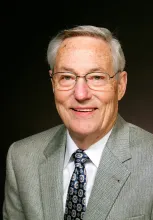
At the time of his retirement in 2016, Roy Holladay was serving the Operation Manager for Ministerial and Member Services of the United Church of God. Mr. and Mrs. Holladay have served in Pittsburgh, Akron, Toledo, Wheeling, Charleston, Uniontown, San Antonio, Austin, Corpus Christi, Uvalde, the Rio Grand Valley, Richmond, Norfolk, Arlington, Hinsdale, Chicago North, St. Petersburg, New Port Richey, Fort Myers, Miami, West Palm Beach, Big Sandy, Texarkana, Chattanooga and Rome congregations.
Roy Holladay was instrumental in the founding of the United Church of God, serving on the transitional board and later on the Council of Elders for nine years (acting as chairman for four-plus years). Mr. Holladay was the United Church of God president for three years (May 2002-July 2005). Over the years he was an instructor at Ambassador Bible College and was a festival coordinator for nine years.
