
Don Ward
This transcript was generated by AI and may contain errors. It is provided to assist those who may not be able to listen to the message.
The title today is, God Cares for You. God Cares for You. If you would turn to 1 Peter, Chapter 5, Verse 5. In 1 Peter, Chapter 5, likewise ye younger submit yourselves unto the elder. This is verse 5. 1 Peter, Chapter 5, Verse 5. Likewise ye younger submit yourselves unto the elder. Yes, all of you be subject one to another and be clothed with humility, for God resists the proud and gives grace to the humble.
2 Humble yourselves therefore unto the mighty hand of God, that he may exalt you in due time, casting all your care on him, for he cares for you. Hence the title, God Cares for You. Straight out of the Bible, cast all your care on him, for he cares for you. Be sober, be vigilant, because you adversary the devil, as a roaring lion walks about, seeking whom he may devour, whom resist steadfast in the faith, knowing that the same afflictions are accomplished in your brethren that are in the world.
There are so many promises in the Bible about God's care, love, and concern for us. If we would now go to Matthew, Chapter 11. And I think too many times we try to bear our burdens by ourselves. Of course, you're most fortunate in today's world if you have at least one friend. You're rich indeed if you have two.
Generally, in today's world, the way that things are set up, that the children leave home, and basically you have mom and daddy. Sometimes they are, oftentimes now, mainly the grandkids who come back to be raised by the grandparents.
But if you have one friend, two friends, or more, then you are quite rich in so many ways, and you can help take care of one another. But there is a one who is always there, regardless of even if you are alone, who will care for you.
And he tells us to cast our cares on him. Here in Matthew, Chapter 11, Verse 28. Matthew 11, Verse 28. Come unto me, all you that labor and are heavy laden, and I will give you rest.
To a large degree, there is obviously a mental component to this. It is a faith component in which you have to have the faith that, in spite of whatever you are dealing with, that God will see you through, and that you can depend on him, and you can cast your care on him. Take my yoke upon you and learn of me, for I am meek and lowly in heart, and you shall find rest under your souls, your being, your life potential.
That which is life, for my yoke is easy, and my burden is light. Of course, if we try to bear it ourselves, it will not be easy, and it will not be light. It will be heavier and heavier.
God cares for us more and looks out for us more than we do ourselves. And so often, we're not even aware of it.
His providence also is supreme. He's looking out for our best interest years in advance. We'll turn to Genesis 45 now, and the story of Joseph being cast into the pit by his brothers, finally being sold into the hands of the Ishmaelites and winding up. And you know the story quite well. Winding up, second in command, in the land of Egypt, the dream of Pharaoh, the seven fat, the seven lean cows, symbolizing seven years of famine, seven years of plenty, the plenty coming first, advising Pharaoh to store the grain. And so here's Joseph's brothers being sent by the father Jacob down in Egypt to buy grain.
And they come to the man that they cast in prison. And they thought, of course, that he would seek great revenge upon them. And we're breaking in on the story, obviously, but you know the story pretty well. One of chapter 45.
And the Egyptians in the house of Pharaoh heard it.
See, this is the providence of God. The providence of God means God is looking out in common language. God is looking out for your best interests years in advance. So he was looking out for the best interest of his people that he had chosen, through whom the promises would be fulfilled, who should serve as a model nation to bring all nations into relationship with him. So God is the one that sent him there. For God did send me here to preserve life. Now, verse 8, so now it was not you, it wasn't you, it wasn't you that sent me here, but God. And he hath made me a father to Pharaoh, and lord of all his house, and a ruler throughout all the land of Egypt. Haste you, go up to my father, and say unto him, Best saith your son Joseph, God, have made me, lord of all Egypt, come down unto me, and carry not. And so eventually he did, and they did.
Of course, this story shows the providence of God. Now look at Romans 8. Once again, a scripture that we probably can quote in Romans chapter 8. We're talking about God caring for you, casting all your cares on him, for he cares for you. Come and learn of me, because I'm meek and lowly in heart. My yoke is easy, my burden is light.
In Romans 8, verse 27, And he that searches the heart knows what is the mind of the Spirit, because he makes intercession for the saints according to the will of God. So there's intercession also being made on your behalf.
And there needs to be awareness of that.
And we know that all things work together for good to them that love God. Of course, there's a big condition there, that love God. And the love of God, we can all quote 1 John 5.3, For this is the love of God, that we should keep his commandments and his commandments, and not grieve us. We know that all things work together to them that love God, to those who are called, According to his purpose, for whom he did foreknow, he also did predestinate to be conformed to the image of his Son, that he might be the firstborn among many brethren. So the goal, of course, is to be conformed to the image of his Son, and eventually in the family of God and the kingdom. In Hebrews 11, verse 6, a verse that I have emphasized over and over again, you might read over this part, because it also deals with the providence of God, and he's looking out for our best interest years in advance. And maybe if you look back at your life and you recount some of your experiences along the way, maybe as a child and coming on to the present time, how that your life and the direction you would go hinged on various events that might come in your life. And if you made that decision, where would you be now? Or if you'd made this decision, where would you be now? And how did you come to be where you are? In Hebrews 11, verse 6, But without faith it is impossible to please him, where he that comes to God must believe that he is, that's the very first article of faith to believe that God exists, and that he is a rewarder of them that diligently seeks him. And he will keep his promises, and he looks out for our best interest years in advance. And when we enter into the covenant of sacrifice, we're placing our lives in God's hands. God does not view death as we do. He does not view life in the same way that we do. We're familiar with Isaiah 57, precious in the sight of the Lord is the death of his saints. At baptism, we sold ourselves into slavery, and we said that anything we get above death is a gift. And we may not have consciously said that, but that's what this verse is saying in Romans 8, verse 36. If you turn there, Romans 8, verse 36. In Romans 8, verse 36, And to come to this state of mind, O that this state of mind could continually be upon me, upon all of us, as it is written for your sakes, We are killed all the day long. We are counted as sheep for the slaughtered. Thus, anything we get above death, the wages of sin is death, is a gift, and, of course, there are conditions to the gift. We said, when we made that commitment, God knows best for me, we'll trust him as a little child, trust his father, and the child is at the mercy of his father and mother. If they do not nourish him, take care of him, and do the things that they should do, of course, there would be little hope for the child. But for some reason, we come to one and expect far more than eternal life. We become victims of the four principal enemies of faith, the four main enemies of faith, anxious cares in Matthew 6, fear that is in Matthew 14, and doubt and human reasoning in Matthew 16. We want to take things into our own hands, yet we are supposed to let patience have its perfect work.
God knows what he is doing with each one of us. Do we trust him to do that which will result in what he wants from each one of us, for us to be conformed to the image of his dear son? So look at Philippians 1, verse 6. Philippians 1, verse 6, Being confident of this very thing, confident, having faith, trust, belief, all of the things that are conveyed by those words, trust, believe, faith, there's no doubt, there's no fear, there's no anxious care, there's no human reasoning.
You know it, you know that you know. Being confident of this very thing, that he which has begun a good work in you will perform it until the day of Jesus Christ. Do we ever just sit and think about, or lie in our beds and think about, it is God who's working in me to will and to do his good pleasure? Look at chapter 2, verse 13.
Philippians 2, verse 13, For it is God which works in you, it is God who works in you. You're not doing it alone, and the situations and circumstances of life are the things that he uses in bringing you to the point where you are cast in the image of his dear son. It is God who works in you both to will and to do his good pleasure.
So even that awareness of that. Let's go to Lamentations, chapter 3 now. Lamentations was written in the wake of Jeremiah's prophecies and the temple being destroyed and Judah taking into captivity. There's a great lament, of course, because of that. But a lot of the material in Lamentations can also be applied personally and individually, each one of our lives, and it's one of the most comforting places to me in all of the Scriptures. In Lamentations 3 and verse 16, we're breaking in a little bit on the thought, 3.16. He had also broken my teeth with gravel stones.
Just to think about chewing on gravel gives me sort of the shivers. Recently, my tooth broke out, and first thing I knew, I was chewing on my tooth. And it feels like you've got gravel in your mouth. He has covered me with ashes, and you remove my soul far off from peace. I forget prosperity. And I said my strength and my hope is perished from the Lord. He's in great distress, great disappointment, wondering what's going to happen. Of course, anxious care, fear, doubt, human reasoning, and cries out, remembering mine affliction and my misery, the wormwood and the gall, my soul has them still and remembrance, and is humbled in me.
Then, in the midst of this, I call to my mind, therefore, have a hope. Now, what is this hope in? What is it about? It is of the Lord's mercies that we are not consumed. You see, if any of us got justice, we would all be consumed, because the wages of sin is death, and we have all sinned and come short of the glory of God.
Therefore, if we got justice, we would be consumed. It is of the Lord's mercies that we are not consumed, because His compassion fails not. They are new every morning. Great is your faithfulness. And, of course, you know the hymn quite well. Great is your faithfulness. And you go to bed at some nights in which you think, I don't know if I can make it through this night, and if I do, how am I going to face tomorrow?
And, of course, you might have heard the hymn, Because He Lives, I Can Face Tomorrow. And, of course, He does live. They are new every morning. Great is your faithfulness. That is His compassion. The eternal is my portion, with my soul therefore will I hope in Him. The Lord is good unto them that wait for Him, to the soul that seeks Him.
It is good that a man should both hope and quietly wait for the salvation or deliverance of the Lord. The Book of Lamentations, especially this chapter 3, is wonderful. Giving thanks to God is a big part of being able to understand what it means to cast our cares on Him. Let's look at Philippians again, at this time chapter 4. In Philippians chapter 4. These things, these promises that are in the Bible that are so clear when you focus on them. Sometimes we just get distracted from it, and there's not an awareness of it.
And the cares of this world seem to crowd out everything else. And we forget these promises, and the strength that can be drawn from it. In Philippians chapter 4 and verse 4, Rejoice in the Lord always, and again I say rejoice. A few weeks ago I gave that sermon on joy, a sermon on joy. Let your moderation be known unto all men, the Lord is at hand. Be careful for nothing. In other words, don't be filled with anxious care because you have the sure promises.
But in everything, by prayer and supplication, with thanksgiving, let your request be made known unto God. And the peace of God, which passes all understanding, will keep your hearts and minds through Christ Jesus. So that thing, by being able to thank God in the midst of the trials, the difficulties, the troubles that might come your way.
So let's notice some of the promises. Or I could call them the fear-nots, the doubt-nots, the anxious care-nots. Just a few examples in the Bible about how God takes care of you sometimes when we are not even aware.
In this case, look at 2 Kings 6. 2 Kings 6, and starting in verse 16, Elisha now has taken the seed of the prophet Elijah. You should know Elijah performed many more miracles than Elijah. Of course, it was through God's help and intervention that he did. In this case, Israel was being greatly threatened. It looked as if there was no hope, no way out for Israel during this period of time.
And we look at verse 16. And he answered, Fear not, for they that be with us are more than they that be with them. For they were surrounded by armies in the tens of thousands. You look at verse 11, therefore the heart of the king of Syria was sore trouble for this thing, and he called his servants and said unto them, Will you not show me which of us is for the king of Israel? And Elijah prayed and said, Lord, I pray you, open his eyes that he may see. And the eternal opened the eyes of the young men, and he saw, and behold, the mountain was full of horses and chariots of fire round about Elijah. So God sends his angels, his ministering spirits, of which he sends to us the ministering spirits sent to the heirs of salvation. And when they came down to him, Elijah prayed unto the Lord and said, Smite these people, I pray you with blindness. And he smote them with blindness according to the word of Elijah. And Elijah said unto them, This is not the way, neither is this the city. Follow me, and I will bring you to the man whom you seek. But he led them to Samaria. And it came to pass when they were come into Samaria that Elisha said, Lord, open the eyes of these men that they may see. The Lord opened their eyes, and they saw, and behold, they were in the midst of Samaria. And the king of Israel said unto Elisha, When he saw them, my father shall I smite them?
And he entered, You shall not smite them. Would you smite them whom you have taken captive with your sword and with your bow? Set bread and water before them, and they may eat and drink and go to their master. So here's an example of they weren't aware of who was there. The angels that were there, God's army that was there, and then God opened their eyes that they might see.
And of course, there was this great intervention. So oftentimes we cannot see. But there is this admonition. This admonition is repeated four times in the Bible. It first appears in Habakkuk. But I'm going to the last time it appears in Hebrews 10 and verse 38.
Of course, one of the Bible definition we often quote for faith is Hebrews 11.1, which says, faith is the substance that things hope for, the evidence of things not seen. Of course, there are so many different things in life that you hope for. Of course, the greatest hope is that we would be in the kingdom of God. But there are many other things that come our way, in which we hope for this, that, or the other, deliverance, or whatever it might be. There's this part that says then that's the substance of what we're hoping for. We're hoping for eternal life. But then the evidence of things not seen. To a large degree, Christianity is centered on faith. Things that are not seen, but yet at the same time, it's based on the concrete foundations of God, Christ, and the prophets and the apostles, like it says the church is built on in Ephesians 2, 20, and 21.
So here in Hebrews 10, it's the last time this particular phrase appears, but we are not of them that draw back unto perdition, but of them that believe to the saving of the soul. And the verse, the key verse above is 38. Now the just shall live by faith, but if any man draw back, my soul shall have no pleasure in him. And we're not of those who draw back. We're those who are going forward. Another thing that God does, and he often does for me, and it's been miraculous many, many times, which, like I talk about, you think you cannot face the next day, or how are you going to do this or that the next day? And then there is this strength that comes from an unexpected source. Look at Isaiah 41.
That God provides strength, healing, courage, when you think maybe all is lost.
All is lost, and there is no hope.
I've been doing a study of Isaiah, and Isaiah is sort of divided, divided to some degree in various parts with these first several chapters in 40, 41, 42, along all the way through the 40s, basically really focus on many attributes of God. But here we want to read from Isaiah 41, beginning in verse 10. Now, what did I say about this? It provides strength, healing, courage, and other things when you might think all is lost. In Isaiah 41, verse 10, I think I want 40, and I don't want 10. I want 40.
That is quite the... I don't want that. In Isaiah 40, beginning in verse 25. Isaiah 40, verse 25. To whom then will you liken me, or shall I be equal, says the Holy One. That's interesting. Just look, there are various names given to God and Christ in Isaiah 40, in the 40s and in the whole book. Here we call the Holy One. And in some places, Christ is referred to as my Holy One by the Father. Lift up your eyes on high, and behold, who has created these things, that brings out their host by number.
He calls them all by names, by the greatness of his might, for that he is strong in power, not one fails. Why say you, O Jacob, and speak, O Israel, my way is hid from the Lord, and my judgment is passed over from my God? Have you not known? Have you not heard? That the everlasting God, the Lord, the Creator, of the ends of the earth, faints not, neither is weary. There is no searching of his understanding. God does not tire out. He does not sleep.
He does not slumber. He does not faint. He is always bare. Cast all your care on him, for he cares for you. He gives power to the faint, and to them that have no might, he increases strength. Even the ewes shall faint and be weary, and the young man shall utterly fail. But they that wait upon the Lord shall renew their strength. They shall mount up with wings as eagles, and they shall run and not be weary, and they shall walk and not faint. God also provides us with companionship. We're familiar with the Scripture.
He'll never leave us nor forsake us. Let's look again here in Isaiah 43 and verse 1. Isaiah 43 and verse 1. But now thus says the Lord that created you, O Jacob, and he that formed you, O Israel, fear not. I have redeemed you, I have called you by name, your mind. When you pass through the waters, I will be with you. And through the rivers they shall not overflow you. When you walk through the fire, you shall not be burned. Neither shall the flame kindle upon you. For I am the eternal your God, the Holy One of Israel.
There is that name again, your Savior, another name. I gave Egypt for your ransom, Ethiopia and Ceba, for you. Since you were precious in my sight, you have been honorable, and I have loved you. Therefore will I give men for you and people for your life, fear not, for I am with you. I will bring your seed from the east and gather you from the west. Then it begins to go into the Millennial, blending into the Millennium. But of course, those promises are for us right now, the Hebrews 13.5, I will never leave you nor forsake you.
Now let's go to Psalms. So here we're looking at some of the promises, the fear nots, the anxious care nots. The Bible is filled with these. We're hitting some of the highlights here of these. In Psalm 139, Psalm 139, there is great strength. If you're just feeling down and feeling like, boy, how can I go on, or whatever the feeling might be that is of a negative nature, you can go to these verses and it's like axiomatically draw strength from them.
The words I speak, Christ, says they are spirit in their life. In Psalm 139, verse 1, O Lord, you have searched me and known me. You have known my down-sitting, mine uprising. You understand my thoughts afar off. You compost my paths and my lying down, and are acquainted with all my ways. So we have God's thoughts and God's eyes are upon us. That's what we'll see in these verses. His thoughts, His eyes, are upon us.
Verse 4, for there is not a word in my tongue, but O Lord, you know it altogether. You have beset me behind and before, and laid your hand upon me. Such knowledge is too wonderful for me. It is high. I cannot attain unto it. Where shall I go from your spirit, or where shall I flee from your presence? And He goes through certain situations. If you go into the sea, if you go high, if you go low, wherever you go, God is there.
And we pick it up again in verse 16. Your eyes did see my substance yet being unperfect. And in your book all my members were numbered or written, which in continuance were fashioned, when as yet there was none of them. How precious are your thoughts unto me, O God! How great is the sum of them! If I should count them, they are more in number than the sand.
When I awake, I am still with you. Is there an awareness of these promises in our lives? There are so many examples of God delivering those who look to Him for deliverance in the Bible. Noah, eight men, well, four men and four women, were saved from the flood. Noah, Abraham, Lot, Isaac, Jacob, Moses put in the basket, Chad, Rach, Meshach, Abednego, Cass and the fire furnished.
Daniel, in the lion's den, the nation of Israel delivered from slavery out of Egypt. And the list goes on. And I'm sure it continues until this day. If one of your children called you asking for help this minute, how would you respond? In view of these scriptures that we have read, how much does your heavenly Father really care for you, for you and for me? How much? What I'm about to ask now may be the most important question that I pose in this sermon.
Do you have? Each one of you have an awareness of God in your life on a continual basis. In other words, an awareness of the presence of God in your life, like the psalmist writes about. He says that God is continually aware. All of these verses we just read in Psalm 139. Now, on the other hand, am I aware that He is there of His presence, the presence of the unseen armies? Do I really believe that He is taking care of me? Do I really believe that He is rewarder of those who diligently seek Him? Notice how God reassures us. Let's look at Psalm 27. Psalm 27. Of course, Psalm 27 has been set to music, often sung for special music.
The composition title, The Lord is the Light of My Life. In Psalm 27, The Lord is my light and my salvation, whom shall I fear? See, time after time in these promises, in these fear-nots and anxious-care-nots, anxious-care, fear, doubt, are combated. They're saying, the Scriptures, God's Word is crying out, you don't have to be filled with that. The Lord is the light of my life, whom shall I fear? The Lord is the strength of my life, of whom shall I be afraid?
When the wicked, even mine enemies and my foes, came upon me to eat up my flesh, they stumbled and fell. Though in whole should encamp against me, my heart shall not fear. Though war should rise against me, in this will I be confident. One thing have I desired of the Lord, that will I seek after, that I may dwell in the house of the Lord all the days of my life.
Of course, now we are the temple of God, and God is dwelling in us to behold the beauty of the Lord and to inquire in his temple. For in the time of trouble he shall hide me in his pavilion, in the secret of his tabernacle shall he hide me, he shall set me upon a rock. And now mine head shall be lifted up above mine enemies round about me. Therefore will I offer in his tabernacle sacrifices of joy. Sacrifices of joy. I will sing, yes I will sing praises unto you. Here, O Lord, when I cry with my voice, have mercy also upon me and answer me.
And of course, you can read the rest of this. It goes on to say, When my father and my mother forsake me, in other words, if the whole world forsakes me, then you are there.
Let's continue reading that. Verse 9, When hide not your face far from me, put not your servant away in anger, you have been my help. Believe me not, neither forsake me, O God, of my salvation. When my father and my mother forsake me, then the Lord will take me up. Teach me your way, O Lord, and lead me in a plain path because of mine enemies.
If it needs be that we must suffer, and there will be suffering, there has been suffering, there will be suffering, when we're in the plan and purpose of God, it is for a purpose.
We've already read those verses from Philippians. It is God who works in you to will and to do his good pleasure.
And let's read this scripture in 1 Peter 1.6.
Keep this in mind that God is not one who is capricious in the way that he deals with us.
It is for a purpose. In 1 Peter 1, we'll begin in verse 3.
Blessed be the God and Father of our Lord Jesus Christ, which according to his abundant mercy has begotten us again unto a living hope, by the resurrection of Jesus from the dead.
Because he lives, God and Christ live, I can face tomorrow, to an inheritance incorruptible and undefiled that fades not away, reserved in heaven for you. You know that that's there, a crown of life. That's what it's all about.
That's why you can keep going in the face of tremendous suffering, pain, whatever it might be, who are kept by the power of God through faith, under salvation, ready to be revealed in the last time.
Worry in, you greatly rejoice, though now for a season, if need be, you are in heaven through manifold trials.
That the trying of your faith, being much more precious than of gold that perishes, though it be tried with fire, might be found unto praise and honor and glory at the appearing of Jesus Christ. See, there is a purpose that God is working in your life. We read Philippians 2.13, For it is God who works in you to will and to do his good pleasure.
Do I really believe that he is the bishop and shepherd of my life, essence, my being?
Can I say the Lord is my shepherd that I shall not want?
Can I say the Lord is with me regardless of what might be going on?
We have to look to God for power, for strength. Every good and perfect gift comes from above, from the Father of lights, with whom there is no veribiliness, neither shadow of turning. That's James 1.17 and 18.
What I want to share with you now is what is called the BASC, B-A-S-Q-U-E, the BASC region in the Iberian Peninsula. They are the Spain, the northern part, and the mountains. The BASC have been herding sheep for hundreds of years.
One of these BASC shepherds made his way to the U.S.
and has been herding sheep in Nevada for many, many years.
He shared with some what is called the BASC sheep herder in the shepherd's psalm. If you would turn to Psalm 23, much of this illustrates many of the things that we have been talking about here this afternoon.
The shepherd's name is Fernando de la Fonso.
Fernando de la Fonso.
In verse 1 of Psalm 23, the Lord is my shepherd I shall not want.
Here's what Fernando writes about that. Actually, this is something he passed on. It's like a story that is often told and been told for many, many years in the BASC area of those shepherds.
Sheep instinctively know that they have been folded for the night. The shepherd has mapped out their grazing for the morrow. It may be that he will take them back over the same range. It may be that he will go to a new grazing ground. They do not worry. His guidance has been good in the past, and they have faith in the future because they know he has their well-being in view, which we've talked about, the providence of God.
He always has our best interests at heart, and he's looking out for us years in advance. Then, the next one, he makes me to lie down in green pastures. Sheep graze from around sunrise until late morning. Then they lie down for three or four hours and rest. When they are contentedly chewing their cuts, the shepherd knows they are putting on fat. Consequently, the good shepherd starts his flock out in the early hours on the rougher herbage, moving on through the morning to the richer, sweeter grasses, and is finally coming with the herd to a shady place for his forenoon rest and fine green pasture.
For the best grazing of the day, sheep while resting in such happy surroundings feel contentment. So he makes me to lie down in green pastures. He leaves me beside the still waters. The shepherd knows, said the Basque, that sheep do not like to drink gurgling water. There are many small springs high in the Holy Land whose waters run down the valleys only to evaporate in the desert sun.
Although the sheep need the water, they prefer not to drink from these fast-flowing streams. The shepherd must find a place where rocks or erosions have made a little pool, or else he fashions with his hands a pocket sufficient to hold at least a bucketful. The next verse, he restores my soul. He leads me in the paths of righteousness for his namesake. Holy Land sheep exceed in hurting instinct. Each takes its place in the grazing line in the morning and keeps that same position throughout the day.
During the day, however, a sheep may leave its place and go to the shepherd. Whereupon the shepherd stretches out his hand as the sheep approaches with expectant eyes and mild little boughs. The shepherd rubs its nose and ears, scratches its chin, whispers affectionately in its ears. The sheep meanwhile rubs against his leg, or if the shepherd is sitting down, nibbles at his ear and rubs its cheek against his face. After a few minutes of this communion with the master, the sheep returns to its place in the feeding line. The next verse, yea, though I walk through the valley of the shadow of death, I will fear no evil.
Your rod and your staff, they comfort me. There is a valley of the shadow of death in the Holy Land. It is south of Jericho, leading from Jerusalem to the Dead Sea, and is narrow through the mountain range. Climatic and grazing conditions make it necessary for the sheep to be moved through this valley for seasonal feeding, so it is necessary to walk through the valley of the shadow of death.
The valley is four and a half miles long. Its sidewalls are over 1,500 feet high. In places, it is only 10 or 12 feet wide at the bottom. Travel through the valley is dangerous because its floor, badly, has been eroded by cloud bursts, has deep gullies. Actually, it is very dangerous, and the footing on the rock is precarious.
It is narrow in places, so that a sheep cannot turn around, and it is an unwritten law of shepherds that flocks must go up the valley in the morning hours and down toward the evening tide. Less flocks meet in the defile. Mules have not been able to make the trip for centuries, but sheep and goat herders from earliest Old Testament days have maintained a passage for their stock.
About halfway through the valley, the walk crosses from one side to the other at a place where the path is cut in to by an 80-foot gully. One section of the path is about 18 inches higher than the other. The sheep must jump across it. The shepherd stands at this break and coaxes or forces the sheep to make the leap. If one sheep slips and lands in the gully, the shepherd's staff is brought into play. The old-style crook is encircled around a large sheep's neck or small sheep's chest and is lifted to safety.
If a more modern narrow crook is used, the sheep is caught about the hoofs and lifted up to the walk. Many wild dogs lurk in the shadows of the valley looking for prey. After a band of sheep has entered the defile, the passageway, the leader may come upon such a dog. Unable to retreat, the leader buys a warning. The shepherd, skilled in throwing his rod, hurls it at the dog and knocks it into the washed-out gully, where it is easily killed.
Thus the sheep have learned to fear no evil, even in the valley of the shadow of death, where their master is there to aid them and protect them from harm. He prepares the table before me in the presence of mine enemies. David's meaning is a simple one, said, in the El Fonso, When conditions on the holy land sheep ranges are known, poisonous plants abound that are fatal to grazing animals. Each spring the shepherd must be constantly alert.
When he finds the plants, he takes his matlock and goes on ahead of the flock, grubbing out every stalk and root he can see, sort of like a hole. As he digs out the stalks, he lays them upon little stones, some of which were built by shepherds in Old Testament days, and by the morrow they are dry enough to burn. In the meantime, the sheep are led into the newly prepared pasture, which is now free from poisonous plants, and in the presence of their deadly plant enemies, they eat in peace.
You anoint my head with oil, my cut runneth over. At every sheepfold there is a big earthen bowl of olive oil and a large stone jar of water. As the sheep come in for the night, they are led to a gate. The shepherd laces rot across the top of the gateway, just higher than the back of the sheep. As each sheep passes in single file, he quickly examines it for briars in their eyes, snags in the cheek or scratches. When such conditions are found, he drops the rod across the sheep's back and it steps out of line. Each sheep's wounds are carefully cleaned.
Then the shepherd dips his hand into the olive oil and anoints the injury. A large cup is dipped into the jar of water, kept cool by evaporation in the unglazed pottery and is brought out never half full but always overflowing. The shepherd will sink the nose of the sheep into the water, clear to its eyes, if fevered and drank until it's refreshed.
When all the sheep are at rest, the shepherd lays his staff on the ground within reach in case it's needed for protection in the flock during the night, wraps himself in the heavy woolen robe, lies down across the gateway, facing the sheep for his night's sleep. So, concluded Delphonso, after all the care and protection the shepherd has given it a sheep may well rest in the twilight. Surely goodness and mercy shall follow me all the days of my life, and I will dwell in the house of the Lord forever.
When the shepherd lies down across the gateway into the sheepfold, he faces the sheep, and of course, as we read, his rock, his rod is with him. When you are in the fiery furnace of life, and that's what we're in at the present time, God has given us the assurance that is in His Word. He has told us to cast all our care on Him, for He cares for us.
We have reassurances like the Psalm 23, and all of the imagery and metaphoric figures of speech that can represent what the Father does for us. When you are in the fiery furnace of life, that is the time to fight the good fight, and gain the victory over self completely, to accept the buffeting and slanders and misrepresentations of good intentions and good deeds with meekness and patience.
That is time when the Spirit of God's love dwelling in us richly will manifest itself in the control not only of our words and actions, but our innermost thoughts. And of course, it is there to a large degree where the battle is won or lost in our innermost thoughts. If even so much as a bitter feeling against our accusers and malina arises, it is to be fought and so complete a victory gain over it that every five of our being will be in sweet accord with our Savior's instructions.
Love your enemies, pray for them which despitefully use you and persecute you. Bless and injure not. Are you tempted to repine, to feel sorry for yourself? I know I had a few doses of that this past week, and I would think that from time to time, we all do. To feel disappointed at your lot in life or your experiences, by the way, that is the time to remember that all repining, discontent, disappointments indicate that self-will in you is not so dead as you had hoped. For he who has buried his own will completely in the will of God can know no disappointments, but in every affair of his life he sees by faith divine appointment, as Joseph did in Egypt.
Or supervision, and here's the word of God, in all of his life affairs assuring him, there is awareness that God is with me, he will never leave me nor forsake me. He's aware of Romans 8, 28, all things work together for good to those who love God and are called according to his purpose.
So it is one of the evidence of reaching maturity of our elder brother Jesus Christ, when we're able to take the oppositions of the great adversary and of the world and of our own flesh patiently, uncomplainingly, unmermeringly, joyfully, as a part of the disciplinary action given to us, or allowed to come to us by our all wise and loving Father.
Such is the good fight, from the first battle to the last. We must gain the victory, and with each victory the new will, the Father's will in us, grows stronger in hope, the helmet of salvation, sight of the things the Father has reserved for the faithful, grows keener and more urgent, and faith, strength, and endurance greater. And with every first victory comes blessings, which are added to after every victory, blessings of rest, peace, joy, and the Holy Spirit, and full assurance of faith, as our Father promised. Blessed are you when all men shall revile you, persecute you, and say all manner of evil against you.
It is from this standpoint it is possible to accept with fortitude and resignation whatever tests of patience, perseverance, faith, hope, and love that your Father may see to permit to come upon you. It is from this standpoint of victory over self-will, under sanctification of the Spirit through obedience to the truth, that all the blessings and promises of our Father are ours in the fullest sense. All things are yours, whether things present or things to come, for you are Christ, and Christ is the Father's. This is the degree in Christ that we seek to be approved. So we must pray that God will unite our hearts in prayers, and above all our new minds with His will that we may be wholly, completely sanctified. And the very God of peace shall bruise Satan under your feet shortly. Yes, cast all your care on Him, for He cares for you.
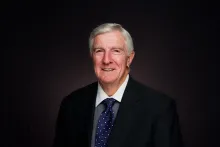
Before his retirement in 2021, Dr. Donald Ward pastored churches in Texas and Louisiana, and taught at Ambassador Bible College in Cincinnati, Ohio. He has also served as chairman of the Council of Elders of the United Church of God. He holds a BS degree; a BA in theology; a MS degree; a doctor’s degree in education from East Texas State University; and has completed 18 hours of graduate theology from SMU.
