
Greg Thomas
This transcript was generated by AI and may contain errors. It is provided to assist those who may not be able to listen to the message.
The title of the sermon today, The Good, Great, and Chief Shepherd. The Good, Great, and Chief Shepherd. The Word of God reveals and portrays Christ and the Father in three roles. Christ in two of the roles, and the Father in one of the roles. Portrays them with some characteristics and qualities that, when properly understood, will provide us with hope, comfort, and encouragement. Hope, comfort, and encouragement as we look to the Good, the Great, and the Chief Shepherd. These roles, and the title of the sermon are taken from verses in the New Testament, then much of the information will also come from the Psalms. If you would now, let's turn to John 10, verse 11, where Jesus Christ calls Himself, the Good Shepherd. Remember the title, The Good, The Great, and The Chief Shepherd. So we're going to examine the roles of the Good, Great, and Chief Shepherd here today. And as I said, when properly understood, I believe it will provide us with considerable hope, comfort, and encouragement. John 10, verse 11, I am the Good Shepherd. The Good Shepherd gives his life for the sheep.
And as we shall see from Psalm 22, that's what Jesus Christ did, that he gave his life for us. The Good Shepherd continues to lay down his life for the sheep. But he that is in hireling, and not the shepherd whose own the sheep are not, sees the wolf coming and leaves the sheep and flees, and the wolf catches them and scatters the sheep.
The hireling flees because he's a hireling and cares not for the sheep. I am the Good Shepherd, and know my sheep, and am known of mine. So the Good Shepherd here, Jesus Christ calls Himself the Good Shepherd. Now we look to Hebrews 13, verse 20. In Hebrews 13, verse 20, we want to read there. Now the God of peace that brought again from the dead our Lord Jesus that great shepherd of the sheep through the blood of the everlasting covenant.
So Jesus Christ, of course, is the Good Shepherd who gives his life for the sheep. And then the Great Shepherd, both the Father and the Son, play a role in being the Great Shepherd. And then, as we shall see, the Father is the Chief Shepherd. But here we see, once again, let's read this verse. Now the God of peace that brought again from the dead our Lord Jesus, and the Father was the one who resurrected Jesus Christ from the dead. And as it says in Romans chapter 8 and verse 11, by the same Spirit that he raised Jesus from the dead, He will also quicken or make aline our mortal bodies that brought again from the dead our Lord Jesus, that great shepherd of the sheep through the blood of the everlasting covenant, make you perfect in every good work to do his will, working in you that which is well pleasing in his sight, through Jesus Christ, whom he glory forever and ever.
So we have seen so far the good shepherd, the great shepherd. Now we go to 1 Peter chapter 5, 1 Peter chapter 5, and we shall see here the Chief Shepherd. In 1 Peter chapter 5 verse 4, And when the Chief Shepherd shall appear, you shall receive a crown of glory that fades not away. So we're going to look at these three roles. First of all, now let's go to Psalm 22. Psalm 22. Psalm 22 pictures the good shepherd giving his life for the sheep.
Psalm 22 provides a moving description of Christ's passion and suffering on the stake. Some of the very thoughts that Jesus Christ had while he was in his passion, while he was suffering on the stake, are given here. And we're going to make a connection between Psalm 22 and the New Testament to show the messianic fulfillment thereof of some of the things contained in this psalm.
In Psalm 22 verse 1, My God, my God, why have you forsaken me? Remember that Jesus Christ on the stake cried out in Matthew 27 and verse 47, My God, my God, why have you forsaken me? So immediately we get a connection between this psalm, Psalm 22, and the passion of Christ.
Why are you so far from helping me and from the words of my roaring? Oh, my God, I cry in the daytime with you here not, and in the night seasons and am not silent. So we see here a connection between the New Testament and the words of Jesus on the stake in this psalm and also in Matthew 27 and verse 47. Note further in Psalm 22 verse 18, Psalm 22 verse 18, They part my garments among them and cast lots upon my vesture.
So let's turn now to John 19 and verse 24. What we're doing here to begin with is to show from the New Testament the fulfillment of this by Jesus Christ so that we know that this psalm is speaking of Jesus Christ, of His passion and His suffering on the stake in John 19 and verse 24. They said therefore among themselves, Let us not rend it, but cast lots for it, Whose it shall be, that the Scriptures might be fulfilled, which says, and we just read that from Psalm 22, They parted my raiment among them, and for my vesture they did cast lots.
These things therefore the soldiers did. Also now back in Psalm 22 and verse 22, we'll show one more link between the psalm and a direct quote, as it were, from the New Testament in Psalm 22 and verse 22. Psalm 22 and verse 22. One more connection between this and the New Testament. Psalm 22 and verse 22, I will declare your name unto my brethren, in the midst of the congregation will I praise you.
And so Jesus Christ came to the earth and He did just that. Notice now Hebrews 2 and verse 12. Hebrews 2 and verse 12. Hebrews 2 and verse 12, saying I will declare your name unto my brethren, in the midst of the church will I sing praise unto you, and then I will put my trust in Him, and again behold, I in the children which God hath given me. So there is no doubt that there is this connection between Jesus Christ and Psalm 22. Now we go back to Psalm 22. We have clearly linked Psalm 22 with the Messiah and the fulfillment of His passion and His stake.
Let's read some of His thoughts and what He was going through during that time on the stake. We're going to begin in verse 11. Psalm 22 and verse 11. Be not far from me, for trouble is near, for there is none to help.
When Jesus Christ was on that stake, you remember basically everyone had forsaken Him, but some did gather out there at the stake, and we read about John and Mary and different ones being there.
Be not far from me, for trouble is near, for there is none to help. Many bulls have compassed me about. Strong bulls of Vashan have beset me around. They gaped upon me with their mouths as ravening and a roaring lion. I poured out like water. When you're poured out like water, just all your strength is gone. Of course, He shed much blood. He was probably completely dehydrated.
It was just like a cloth you might wash the dishes with, and you squeeze it out, and you just pitch it there on the counter. It's just poured out as water, and all my joints are out of all of my bones are out of joint. I've had a lot of injuries in my life, but the most debilitating ones that I've ever had has to do with dislocation and bones out of joint. One time I was helping my son-in-law and daughter clear a lot, and we had cut and brushed.
It was a long stick about this big around, and I reached over, sort of looking up, and I grabbed this with both hands, and I just picked this up, and my left kneecap was so relaxed. I brought this up against my kneecap and dislocated, and I hit the ground. Wallowing, writhing in pain, there was no one around. Finally, I got on my side, and I worked that thing back down and into place. One time we were on the basketball floor there at Big Sandy.
This was back before they put the new floor, when we had this elevated floor. This was in the late 60s, early 70s. Jim Cassie went flying across the floor, and then he tried to stop, but he skidded. Then, the first thing, when he came off that floor and hit the concrete, he tried to catch with his hand, and he drove his elbow back about four inches. So, being the orthopedic on hand, I took that thing and I jerked it back in.
He felt better after that. It really hurts to have a bone out of joint. All my bones are out of joint. My heart is like wax, just melted. It is melted in the midst of my bowels. My strength is dried up like a pot shirt, and my tongue cleaves to my jaws. You brought me to the dust of death. The dust of death is figurative of to the grave. Of course, we know that Jesus Christ was not left in Hades or in Sheol, but that after three days and three nights, he was resurrected.
For dogs have compassed me about, and dogs were the lowest kind of metaphor for that which is evil and evil men in the ancient world. The assembly of the wicked have enclosed me. They pierced my hands and my feet. Once again, no doubt, referring to Jesus Christ because we read of His hands and feet being pierced in the New Testament. I may tell all my bones. They look and stare upon me.
And then we read, verse 18, They part my garments among them and cast lots upon my vesture. But be not you far from me, O eternal, O my strength. Haste you to help me. Deliver my life essence, my nayfesh, soul from the sword. My darling from the power of the evil ones, the dogs, the lowest sort, Save me from the lion's mouth, for you have heard me from the horns of the unicorns. And it goes on describing Jesus Christ and His passion. And it closes here. Let's read a bit of the closing in verse 28. For the kingdom is the Lord's, and He is the governor among the nations. All they that be fat upon earth shall eat and worship. And they that go down to the dust shall bow before Him, And none can keep alive his own soul, showing that God and Christ have power over life and death. A seed shall serve him, and shall be accounted to the Lord for a generation.
They shall come and declare his righteousness unto people that shall be born. Notice that, a people that shall be born. And no doubt this is talking about born in the spiritual sense to a new life. They shall come and declare his righteousness unto people that shall be born, that he hath done this.
So Psalm 22 graphically portrays Jesus Christ and his suffering on the stake as the Good Shepherd. The Good Shepherd gives his life for the sheep. Then we come to Psalm 23. Psalm 23 describes the noble qualities and characteristics and attributes of the Great Shepherd.
The Great Shepherd, Jesus Christ, he makes intercession for us. He feeds and leads the sheep. Psalm 23. The Lord is my Shepherd. As one little girl said, after reading that phrase, the Lord is my Shepherd. That's all I need. If that's really understood, that's all you need. The Lord is my Shepherd. I shall not want. God will provide. I shall not want. See, one of the very names of God is Jehovah-Jareh, which means that God will provide. We're going to look at these various qualities and characteristics from the Scriptures. Let's notice now in Genesis 22 and verse 7, Genesis 22 is the account of Abraham being asked to go sacrifice Isaac. Isaac being the discerning young man, he was, says, Father, where is the sacrifice? We've got all this other stuff. In Genesis 22 and verse 5, Abraham said, "...unto his young men abide you here with the ass, and I and the lad will go yonder and worship." As we talked about last week, an aspect of worship has to do with sacrifice. "...and come again to you." But Abraham took the wood of the burnt offering and laid it upon Isaac, his son. He took the fire in his hand and a knife, and they went both of them together. Isaac spoke unto Abraham, his father, and said, My father, and he said, Hear my, my son, and he said, Behold, the fire in the wood. But where is the lamb for a burnt offering? So Isaac was getting a bit concerned, and Abraham said, My son, God will provide. And one of the names of God, as I said, is Yaveh Jareh, J-I-R-E-H, basically in English, which means God will provide himself a lamb for a burnt offering, so they went both of them together. And you know the rest of the story, that as Abraham came down with a knife to slay Isaac, God called him out. And then he turned and saw this lamb caught in a thicket. So God will provide.
Notice further in Philippians 4 and verse 19. The Lord is my shepherd, I shall not want. God will provide. In Philippians 4 and verse 19. I'll start in Philippians 4 and verse 19.
Today we offer up spiritual sacrifices, which include skiving offerings. But my God shall supply all your need according to his riches and glory by Christ Jesus. So the Lord is my shepherd, I shall not want. God has promised that he will provide for us. If he so clothes the lilies of the field, how much more will he care for us?
If the hairs on our head are numbered, and not even a sparrow falls to the ground unless he is aware of it, how much more will he care for us? Then continuing in Psalm 23, Psalm 23 continuing. Verse 2, He makes me to lie down in green pastures. He makes me to lie down in green pastures. It's the choice of pastures.
If you have cattle, they are going to migrate to the greenest pastures, and God leads us into the greenest pastures. The main pasture that God leads us to is His Word. God allows us to feed on His Word. The greenest of all pastures that we can feed on has to do with feeding on the Word of God. All of us in here, I believe everyone in here, can quote Matthew 4-4. If you can't quote Matthew 44, then get down behind the seat. Matthew 44, little humor here and there.
You folks are really with it today, aren't you? Man shall not live by bread alone, but by every word that proceeds out of the mouth of God. Then to John 6, verse 60, and John 6, verse 60, the bread of life, the Scriptures, the bread of life chapters, we call it.
John 6, verse 60, Many therefore of His disciples, when they had heard this, about eating and drinking of His flesh, and eating His flesh and drinking His blood, said, This is a hard saying, who can hear it? When Jesus knew in Himself that His disciples murmured at it, He said unto them, Does this offend you? What an if you shall see the Son of Man ascend up where He was before. It is the Spirit that quickens and makes alive. The flesh profits nothing. The words that I speak unto you, they are spirit.
And they are life. And so the ministry of God is commanded in 2 Timothy 4, verses 1-4, to preach the Word of God. Then, continuing in Psalm 22, I'm sorry, 23, He restoreth My... I'm getting ahead of myself every time. He leads Me beside the still waters. He leads Me beside the still waters. Still waters pictures rest, picturing great peace. Through the Good Shepherd, we have peace with God, and we can also have the peace of God.
After the resurrection, Jesus Christ commissioned the disciples to feed the flock, going back to... Let's go to John 21. I need to read these couple of Scriptures here as well, lying down in the greenest pastures and leading us and feeding on His Word. In John 21, verse 15, So that when they had dined, this is where Jesus appeared to the disciples the third time after His resurrection, after they had followed Peter, who said, I go with fishing, and they had dined on the fish after they had dined. Jesus said to Simon Peter, Simon, son of Jonah, Love you more than these.
He said unto him, Yes, Lord, you know that I love you. And he said unto him, Feed my lambs. Then He said to him again the second time, Simon, son of Jonah, do you love me? He said unto him, Yes, Lord, you know I love you. He said unto me, Feed my sheep. And then verse 17, He said unto him the third time, Simon, son of Jonah, Do you love me?
Peter was grieved because he said it to him the third time. Do you love me? And he said unto him, Lord, you know all things. You know I love you. And Jesus said unto him, Feed my sheep. So once again, the ministry has the responsibility of leading people into green pastures and beside the still waters. So that they may find nourishment, spiritual nourishment. So they may find rest to their souls and peace of mind. In 1 Peter chapter 5, 1 Peter chapter 5, remember He said this, asked Peter three times, Do you love me?
And each time He said, Feed my sheep. So in 1 Peter chapter 5, did Peter get the message? Yes, Peter got the message. 1 Peter 5 verse 1, The elders which are among you I exhort. Him also an elder and a witness of the sufferings of Christ, and also a partaker of the glory that shall be revealed. That partaker of the glory that shall be revealed, that hearkens back to the transfiguration where it says, a partaker of the glory that shall be revealed.
You can write in your margin, transfiguration where Christ took Peter, James, and John on the mount, and they saw in vision Christ returning. So that's what that means, partaker of the glory that shall be revealed. Feed the flock of God which is among you, taking the oversight thereof, not by constraint but willingly, not for money, but of a ready mind.
Neither is being lords over God's heritage but being examples to the flock. And so the ministry is supposed to lead the people to the green pastures and to preach the Word of God and to help people have peace of mind. Now we notice in Romans 5 where Jesus Christ, of course, he is the Prince of Peace, and he made it possible for us to have peace with the Father. In Romans 5 and 6, Romans 5 and 6, for when we were yet without strength in due time, Christ died for the ungodly.
And we're talking about leading us beside the still waters. In the still waters, there's nothing like going out to a lake or a body of waters where you just have sort of a calm glass kind of surface over the water. Very peaceful, very calming, as opposed to troubled waters. For when we were yet without strength in due time, Christ died for the ungodly. But scarcely for a righteous man shall one die, yet perventure for a good man. Some would even dare to die.
But God commended his love toward us, and while we were yet sinners, Christ died for us. Much more than being now justified by his blood, we shall be saved from wrath through him. And when we were enemies, we were reconciled to God by the death of his Son. He came, see, and made peace. Blessed are the peacemakers, for theirs is the kingdom of heaven. Much more being reconciled, we shall be saved by his life. So that's peace with God. We make peace with God when we repent of our sins, and then cry out to God for his mercy, faith in his sacrifice, sacrifice of Christ, and are baptized.
We have made peace with God and received God's Spirit. Then there's another step that comes in addition to that. Let's go to Philippians once again. Philippians 4. Philippians 4. And we can have the peace of God. Peace with God, initial conversion, acceptance of Jesus Christ, receiving the Holy Spirit, understanding who God is, what God is, what is his purpose, who is man, what is man, what is his purpose. And then to go on to have the peace of God. Notice now in Philippians 4, beginning in verse 5, Let your moderation be known unto all men, the Lord is at hand.
Be careful for nothing. That word means anxious. Don't be anxious. Don't be uptight. Don't be so overly concerned. Be careful. Be anxious for nothing, but in everything by prayer and supplication with thanksgiving, let your request be made known unto God, and the peace of God, which passes all understanding. So you'll be led by the still waters. The still waters where there's calm, where there's peace. And the peace of God, which passes all understanding, shall keep your hearts and minds through Christ Jesus.
And surely we all need the peace of God in this day and age. And this gives you a short little formula right there in verse 7 as to how to attain unto the peace of God. Supplication and prayer and thanksgiving. See, thanksgiving within itself shows God demonstrates to Him that you are trusting Him to provide for your needs. Then verse 3 in Psalm 23, He restores my soul. He restores my soul. And restoring our soul and attaining to the peace of God, we can come to the point to where we can cast all our cares on God, for He cares for us, and He restores our life.
In other words, He brings us back from the brink of death as the Good Shepherd. And then time after time, after we're baptized, we go to God, and sometimes we're so weary and weighted down, we hardly know what to ask for. And we pour out our hearts to Him, and there is some kind of restoration, restoring of the soul. Let's notice, first of all, in conjunction with this, restoring the soul.
One of the things you need to do when you're at the point that you're so weighted down, Christ gives us the answer here in Matthew 11. Let's go to Matthew 11, verse 28. Matthew 11, verse 28. Of course, in all of these things, you could practically preach a sermon about each one.
But if we really come to understand all the things that Psalm 23 is picturing, I think it will make a lot of difference, a lot of comfort, a lot of encouragement contained there, and hope. In Matthew 11, verse 28. Come unto Me, all you that labor and are heavy laden, and I will give you rest.
He restores my soul. Take my yoke upon you and learneth me, for I am meek and lowly in heart, and you shall find rest unto your souls, for my yoke is easy and my burden is light. So He restores life. He brings life back to us. He gives us new spiritual life and new hope. Let's notice one other passage in conjunction with this, Ephesians 2. Of course, this goes back to the point in which initial conversion takes place, and we receive that life from above, that new life.
In Ephesians 2, verse 1, And you hath He quickens, made alive, He restores my soul, gives me new life. The wages of sin is death, the gift of God is eternal life. You hath He made alive, who were dead in trespasses and sins. Where in times past you walked according to the course of this world, according to the prince and the power of the air, the spirit that now works in the children of disobedience, among whom also we all had our conduct in times past, in the lust of our flesh, fulfilling the desires of the flesh and of the mind, and were by nature the children of wrath, even as others.
But God, who is rich in mercy, for His great love were with, He loved us, even when we were dead in sins, hath quickened, made us alive together with Christ, by grace are you saved. He's restored our life. We have hope, not only in this life, but we have hope of eternal life.
You know, Paul writes, if we have hope only in this life, we are of all men most miserable, and hath raised us up together and made us to sit in heavenly places in Christ Jesus. Indeed, He does restore our soul. Then, continuing in Psalm 23, He leads me in the paths of righteousness for His name's sake.
He leads me in the paths of righteousness. Now, let's go to Psalm 119. Psalm 119, and I must confess, I have not done this every day, but I would say, or every week, it should be a goal. If we, all of us, would read Psalm 119 at least once a week, the longest chapter in the Bible, the longest Psalm, and it is so rich in so many different ways. If we would all read Psalm 119 just every week, make it a goal to read Psalm 119, I think we will find ourselves much more spiritually attuned and mature.
Psalm 119, verse 97. So, He leads me in the paths of righteousness from Psalm 23.
In Psalm 119, verse 97, O how love I thy law, it is my meditation all the day. Can we really say that? You through your commandments have made me wiser than my enemies, for they are ever with me. That is your commandments. I have more understanding than all my teachers, for your testimonies are my meditation. I understand more than the ancients because I keep your precepts. I have refrained my feet from every evil way that I might keep your word.
I have not departed from your judgments, for you have taught me. How sweet are your words unto my taste, yet sweeter than honey to my mouth. Through your precepts I get understanding, therefore I hate every false way. Your word is a lamp unto my feet and a light unto my path. So, the Bible, of course, leads us in the paths of righteousness. And if we will take heed to the great shepherd, we can be led in those paths. Next in Psalm 23, after it says, He leads me in the paths of righteousness, it says, For His Names' sake.
Have you ever thought about that phrase, For His Names' sake? So much of what God does is for His Names' sake. In other words, for the power of His word, for His character, for His being, for Him being who He says He is to be upheld.
He does things for us, and He does things for His Names' sake. His name, His reputation is on the line. Of course, with us, just about everything we do, especially in today's world, our name, our reputation is on the line because it can be aired around the world almost with the speed of light.
But look at Isaiah 48 and verse 9. I think you might find this interesting, the Scriptures in conjunction with For His Names' sake. In Isaiah 48 and verse 9, For My Names' sake will I defer Mine anger, and for My praise I will refrain for you, that I cut you not off. Of course, God is long-suffering, merciful, not willing that any should perish. If we all receive just pure judgment, we would get the death penalty because all have sinned and come short of the glory of God.
But because He is long-suffering, merciful, not willing that any should perish, He has provided a sacrifice, and so much more, for His Names' sake we're not cut off. Behold, I have refined you, but not with silver. I have chosen you in the furnish of affliction. Of course, it says in the New Testament, many are the afflictions of the righteous. For My own sake, for Mine own sake, even for My own sake, will I do it. For how should My name be polluted, and I will not give My glory to another? Harken unto Me, O Jacob, and Israel, My call, I am the first and I am the last. Now, God does many things for us for His Names' sake.
Let His word not be broken, the prophecy be fulfilled, that He provides a Redeemer, that He cares for us in all the various aspects that are contained in the Psalm. Then, in turn, God expects us to be willing to give our lives for His Names' sake. There is like a reciprocal for this in Matthew 24 and verse 9. Matthew 24 verse 9, you know the Alabet prophecy in Conferences Matthew 24 and 25, talking about the end of the age.
Some of the signs of the end of this age and the coming of Christ in Matthew 24 verse 9. Then shall they deliver you up to be afflicted, and shall kill you, and you shall be hated of all nations. Why? For My Names' sake. Because you have not denied the name of Jesus Christ when they bring you before governors and kings and whomever, and you go through the Inquisition, as it were. If that should happen to you, you do not deny His name. And of course, it speaks of this in Revelation chapter 3 to the church at Philadelphia in Revelation chapter 3.
In Revelation chapter 3 verse 7, perhaps I would want to read Revelation 2.3 first, because this is an interesting verse as well. In Revelation 2 verse 3, talking about one of the aspects of the church at Ephesus, Revelation 2.3, And have borne and have patience, and for My Names' sake have labored, and have not fainted. Why? For My Names' sake. Because you believe God, and you want to uphold His name.
And then notice the message to Philadelphia, beginning in verse 7, chapter 3. Revelation 3 verse 7. And to the angel of the church of Philadelphia write, These things says, He that is holy, He that hath the key of David. Remember I talked about the key of David here on the day of trumpets?
The key of David opens up the door to the kingdom of God. Jesus Christ has a key, and He has given it to the church, and we are to preach the gospel to the world. He that hath the key of David, He that opens, and no man shuts, and shuts, and no man opens.
For I know your works, the old I have set before you an open door, and no man can shut it, for you have a little strength. And that too, that English phrase there, little strength in the Greek is dunamis. Same word you get dynamite from, it means supernatural power. You have a little strength, and have kept my word, and have not denied my name. So you put Matthew 24 and 9 together, Revelation 2 and 3 in this verse. So we see that God does many things for us for His name's sake, but in turn, He expects us to be willing to give our lives for His name's sake.
Let's read that verse 8 again. I know your works, behold, I have set before you an open door, no man can shut it, you have a little supernatural strength. Have kept my word, and have not denied my name. Behold, I will make them of the synagogue of Satan, which say they are Jews and are not, but do lie.
Behold, I will make them to come and worship before your feet, and to know that I have loved you.
We'll move forward just a little bit in Revelation 12, after Satan is cast down to the earth, realizing that he has but a short time. Revelation 12, verse 10, And I heard a loud voice, saying, In heaven now has come salvation and strength in the kingdom of our God. The power of His Christ, for the accuser of our brethren, is cast down, who accuses them before our God day and night. And the three keys are given here for overcoming Him, and they overcame Him by the blood of the Lamb.
We go to Jesus Christ and confess our sins. He is faithful and just. Forgive us of all unrighteousness. Probably read that later in 1 John chapter 1. And by the word of their testimony, in other words, when they are brought before the council, or whomever, kings, governors, and so on, and by the word of their testimony, they do not deny the name of God. And they love not their lives unto the death. Now continuing in Psalm 23. So we see, for my name's sake, has a lot to it.
Verse 4, For yea, though I walk through the valley of the shadow of death, I will fear no evil, for you art with me. God has not called us to fear. Let's notice 2 Timothy chapter 1. 2 Timothy chapter 1, we'll see what Paul wrote to Timothy. And also, when Paul himself walked through the valley of the shadow of death, we'll see how he faced that.
2 Timothy 1 verse 6, Wherefore I put you in remembrance, that you stir up the gift of God, which is in you, by the putting on of my hands. For God had not given us the spirit of fear, but of power and of love have a sound mind. Now I don't know if you've ever been in a situation in which your life sort of hung in the balance.
I've been in that situation.
I remember one time, well this actually happened twice, where it was almost like, maybe it was, that some way God sent angels protected, that I pulled out. I guess you'd say I pedaled out, I was on a bicycle in front of fast-moving traffic, and how they, I don't know, it was like I didn't see them. And somehow they missed me. And I've been in other situations as well, and perhaps you too have been in the valley of the shadow of death.
And God tells us not to fear. Notice now in 2 Timothy chapter 4, we're in 1 Timothy now, God has not given us the spirit of fear, but of power and of love and of a sound mind. It's also recorded here in this epistle to Timothy, a pastoral epistle. At this time, Paul was in prison. It's also called prison epistle. In verse 6, 2 Timothy 4 and verse 6, see Paul is now, at this point in his life, he's walking through the valley of the shadow of death.
For I am now ready to be offered, and the time of my departure is at hand. Paul knew that he was facing martyrdom at the hands of the Romans. There are various legends as to how he met his death. Some say that he was put into the den of lions for the sport, for the emperor. There are various other legends. I have fought a good fight. I have finished my course. I have kept the faith. Henceforth, there is laid up for me a crown of righteousness, which the Lord, the righteous judge, shall give me at that day, and not to me only, but unto all them also that love is appearing.
So God does not want us to be fearful. In fact, now we're going to turn to Revelation 21 and verse 4. We will see that the fearful will not be in the New Jerusalem. In this great verse here, Revelation 21 and verse 4, we often read at funerals. But we should, from time to time, read that which comes after. In Revelation 21 and verse 4, God shall wipe away all tears from their eyes. There shall be no more death, neither sorrow nor crying, neither shall there be any more pain, for the former things are passed away.
And he that sat upon the throne said, Behold, I will make all things new. And he said unto me, Right, for these words are true and faithful. And he said unto me, It is done. I am Alpha and Omega, the beginning and the end. I will give unto him that is the thirst of the fountain of the waters of life freely.
Interesting verse. He that overcomes shall inherit all things, and I will be his God, and he shall be my son. But the fearful and unbelieving and the abominable, and murderers and whoremongers and sorcerers and idolaters and all liars, shall have their part in the lake which burns with fire and brimstone, which is the second death. But the great shepherd is with us, and yea, though I walk through the valley of the shadow of death, I will fear no evil.
And then it says, Your rod and Your staff comfort me. Your rod and Your staff comfort me. God is promised that he would be with us all the time. Your rod and Your staff comfort me.
Notice now in Psalm 139, verse 7, God says that he will always be with us. He is the God of all comfort and the Father of all mercies. All of this is contained in this one little psalm when you squeeze it out and really see all the richness that is contained therein. In Psalm 139, verse 7, Where shall I go from Your Spirit?
Or where shall I flee from Your presence? If I sin up into heaven, You are there. If I make my bed in the grave, behold, You are there. If I take the wings of the morning and dwell in the uttermost parts of the sea, even there shall Your hand lead me, and Your right hand shall hold me.
If I say, Surely the darkness shall cover me, even the night shall be light about me. Yes, the darkness hides not from You, but the night shines as the day. The darkness and the light are both alike to You. For You have possessed my range. You have covered me in my mother's womb. I will praise You, for I am fearfully and wonderfully made. Marvelous are Your works. And that my soul, my life essence, knows right well. My substance was not hid from You when I was made in secret, and curiously wrought in the lowest parts of the earth.
Your eyes did see my substance yet being unperfect, and in Your book all my members were written, which in continuance were fashioned, when as yet there was none of them. How precious are Your thoughts unto me, O God! How great is it some thereof! God will comfort us. He has promised to never leave us and to never forsake us. Your rod and Your staff, they comfort me. Back in Psalm 27, we see that God is our defense. And so many times, and I surely have been guilty myself, we're so quick to defend ourselves, and yet God says that He is our defense.
Psalm 27, verse 1, The Lord is my light and my salvation, whom shall I fear? The Lord is the strength of my life, of whom shall I be afraid? When the wicked, even mine enemies and my foes, came upon me to eat up my flesh, they stumbled and fell, though in whole should it encamp against me, my heart shall not fear. Though war should be against me, in this will I be confident. Be confident. Be confident. Know that God is our defense.
And there are so many other scriptures along those lines. Comfort me to gently lead. God is our gentle shepherd as well, because He leads us in the right way. Now, we see an interesting phrase here in Psalm 23. Perhaps you have never really explored verse 5.
You preparest a table before me in the presence of mine enemies. A table is prepared in the presence of mine enemies. Jesus Christ is our table. Let me say that again. It's a figure of speech. Jesus Christ is our table. Jesus Christ is the bread of life. Bread is on the table. But we take this metaphor a little further, a figure of speech.
So let's notice now Psalm 69. Then we'll bring it to the New Testament in Psalm 69 and verse 22. Psalm 69 verse 22. Psalm 69 verse 22. Let their table become a snare before them. And Jesus Christ became a snare and a stone of offense and a stumbling block, because Israel rejected Him. Let their table, let's see their table, their bread of life, could have been their Savior. Let their table become a snare before them, and that which should have been for their welfare, let it become a trap. Now we go to Romans chapter 11 and verse 7.
Romans 11 and verse 7. In Romans 11, Paul uses the analogy of the olive tree, the natural tree in the wild tree, and the grafting end of the Gentiles into the natural tree. Perhaps we should read up to verse 7. I say then, if God cast away His people, remember—well, you may not remember, but anyhow, Romans 9 and 10 deal with that we are called by grace, and that Paul says in chapter 9, they are not all of Israel, which are of Israel.
In other words, the seed of Abraham in the spiritual sense consists of all races, kindreds, and tongues. I say then, if God cast away His people, God forbid, for I also am an Israelite, the seed of Abraham, of the tribe of Benjamin. God has not cast away His people, which He foreknew. In Israel, He foreknew. Don't you know what the Scripture says of Elijah, how he makes intercession to God against Israel's saying, Lord, they have killed the prophets, dig down Your altars, and I am left alone, and they seek My life.
But what says the answer of God unto Him? I have reserved Myself to Myself, seven thousand who have not bowed the knee to Baal. Even so, at this present time also, there is a remnant according to the election of grace.
So, the early church was, you remember that day of Pentecost, three thousand souls were added. It consisted of Jews, or Israelites, and proselytes. It was not until Acts 10 when Peter was asked to go to the house of Cornelius, and God showed him that he should go, and it was for spiritual purposes that God also was giving the Holy Spirit to the nations.
Verse 6, and if by grace it is no more of works, otherwise grace is no more grace. But if it be of works, then it is no more grace, otherwise work is no more work. What then? Israel hath not obtained that which he seeks for, but the election hath obtained it, and the rest were blinded. According as it is written, God had given them the spirit of slumber, eyes that they should not see, and ears that they should not hear unto this day. And David said, okay, now here's a quote from this psalm, Let their table be made a snare, and a trap, and a stumbling block, and a recompense unto them.
There was this trap, this snare, this stumbling block. It was Jesus Christ. He came to his own, and his own received him not, but unto them who received him, he gave them power to become the sons of God. That's John 1.12. So, Jesus Christ, who was sent to be their Savior, He became a stumbling block, and a table was set before them, and they tripped, as it were, on the table.
David said, Let their table be made a snare, and a trap, and a stumbling block, and a recompense unto them. Let their eyes be darkened, that they may not see, and bow down their back always. Now, of course, now it closes, Chapter 11 closes on a positive note, that God is once again going to turn to Israel after the fullness of the Gentiles have come in, and the great salvation day for so many Israelites from the past will be the Second Resurrection, and also the Millennium.
So, you prepared a table before me. Jesus Christ is our table. We're to eat and drink of Him, as we've already read from John 6, verse 63. The words I speak, their spirit and life, Matthew 4, 4. Man shall not live by bread alone, but by every word that proceeds out of the mouth of God. So, if we accept the table that is set before us, that is Jesus Christ, then, after repentance and faith in Christ and baptism, our heads can be anointed with oil. We go back now to Psalm 23. In Psalm 23, verse 5, you prepared a table before me, and the presence of mine enemies. You anointed my head with oil, my cup runneth over. Oil symbolizes the Holy Spirit in Scripture.
Now, we go to Acts 10, verse 38. On the day of Pentecost, the New Covenant Church was anointed, as it were. They received the Holy Spirit. And you, when you are baptized, you receive that anointing from God.
You receive the Holy Spirit. In Acts 10, and verse 38, After Peter had spoken, they were pricked into their hearts, and they said, And brethren, what shall we do? And Peter said, Repent and be baptized, everyone, in the name of Jesus Christ, and you shall receive the gift of the Holy Spirit.
You will receive this anointing, this rubbing in, as it were, of oil, the Holy Spirit into your very being. Now, notice 2 Corinthians chapter 1 in conjunction with this. Quickly, before it slips your mind, let's go to 2 Corinthians 1. 2 Corinthians 1 and verse 21. Now he which establishes you with Christ and hath anointed us is God.
What did he anoid us with? The Holy Spirit. The Holy Spirit of promise. Moreover, I call God for a record upon my soul that to spare you I came and has not yet come. He has anointed us and given us the earnest of the Spirit in our hearts.
So God has anointed us. He set a table before us. Jesus Christ, we've accepted it. And he anoids our head with oil. And now this wonderful part, And I will dwell, first of all, in goodness and mercy, Shall follow me all the days of my life, And I will dwell in the house of the Lord forever. See, goodness and mercy follows us. If we sin, let's go to 1 John chapter 1, verse 8. 1 John chapter 1, verse 8. Goodness and mercy shall follow me all the days of my life, And I will dwell in the house of the Lord forever.
1 John 1, 8. If we say that we have no sin, not sin, we deceived ourselves, The truth is not in us. If we confess our sins, He is faithful and just to forgive us our sins And to cleanse us from all unrighteousness. Goodness and mercy can follow us all the days of our lives.
It's not just some poetic words in a psalm. It is a reality in our lives. And dwelling in the house of the Lord forever. The first scripture that I ever quoted, if you would, turn to Psalm 122, verse 1. Of course, I grew up in the Baptist Church, and we had Sunday school. And I, in the primary class, I remember the first scripture I ever quoted in public. On some Sundays, I don't know if this is once a month or whatever, That we'd come back in the auditorium where everybody was.
And then the Sunday school teacher would ask someone to quote the memory verse for that day. And I was about six years old or so, I guess. And this was the memory verse. In Psalm 122, verse 1. I was glad when they said unto me, Let us go into the house of the Lord. See, the psalmist says, And I will dwell in the house of the Lord forever. Now, back in Psalm 84, we sing this hymn from time to time, How Lovely are Thy Dwellings.
In Psalm 84, How amiable are lovely are your dwellings or tabernacles, O Lord of hosts. My soul longs, yes, even faints, For the courts of the Lord. My heart and my flesh cries out for the living God. Yea, the sparrow found in house, And the swallows and asks for herself, Where she may lay her young, Even your altars, O Lord of hosts, my king and my God. Blessed are they that dwell in your house, They will still be praising you. Yea, you shall dwell in the house of the Lord forever.
See, we are now the temple of God, and we have the prospects of being in that temple, never going out as it talks about in Revelation 3, and then in the New Jerusalem as it talks about and describes in Revelation 21 and 22. Now, Psalm 24. Psalm 24. Psalm 24 pictures the chief shepherd, rewarding us with a crown of glory and giving us the kingdom. Psalm 24. The earth is the Lord's, and the fullness thereof. The world and they that dwell therein, For he hath founded upon the seas, And established it upon the floods. Who shall ascend into the hill of the Lord? Or who shall stand in his holy place? He that hath clean hands and pure heart, Who hath not lifted up his soul unto vanity, Nor sworn deceitfully.
He shall receive the blessing from the Lord. He will be rewarded from the Yahweh, the Eternal, And righteousness from the God of his salvation. This is the generation of them that seek him, that seek your face. Lift up your heads, O you gates, And be you lifted up, you everlasting doors. And the clean of glory shall come in. Who is this king of glory? The Lord strong and mighty, the Lord mighty in battle, Lift up your heads, O you gates, Even lift him up, you everlasting doors, And the king of glory shall come in.
Who is this king of glory? The Lord of hosts. He is the king of glory. Then quickly to 1 Peter 5, verse 4. 1 Peter 5, verse 4. Two more verses here. 1 Peter 5, verse 4. Two more passages. 1 Peter 5, verse 4. And when the chief shepherd shall appear, You shall receive a crown of glory. Who is this king of glory? We just read in Psalm 24. We shall receive a crown of glory that fades not away. And one more thing. Luke 12, verse 32. Luke 12, verse 32. Fear not, little flock, For it is your Father's good pleasure to give you the kingdom.
Thy kingdom come, thy will be done, On earth as it is in heaven. May God hasten that day. May we all come to fully understand What is contained in Psalm 23. I read it many a times out at the grave site, and it is very comforting. But I think we oftentimes don't really grasp all that is contained therein. So I urge you to really study it and to come to terms with it so that it is ingrained on your very hearts and minds.
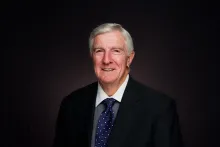
Before his retirement in 2021, Dr. Donald Ward pastored churches in Texas and Louisiana, and taught at Ambassador Bible College in Cincinnati, Ohio. He has also served as chairman of the Council of Elders of the United Church of God. He holds a BS degree; a BA in theology; a MS degree; a doctor’s degree in education from East Texas State University; and has completed 18 hours of graduate theology from SMU.
