

Mario Seiglie
This transcript was generated by AI and may contain errors. It is provided to assist those who may not be able to listen to the message.
So, brethren, if you look around us, we're surrounded by beauty and design. We get a chance to be outdoors and keep the Sabbath and still have a holy assembly, admire God's creation. And one of the writers of the Bible who certainly was a very keen observer of nature was King David. And he wrote in Psalms 139 verses 13 through 18. I'd like to read it in God's Word version, which is the theme of today. David says, Being skillfully woven in an underground workshop, which is a woman's womb.
And so, David was filled with wonder as he looked around himself and his own body, those of his children. So, I would like to share with you some recent, amazing discoveries about the genome of the human body. The genome is actually like a cassette tape that contains the great amount of information inside a cell, inside the nucleus. It is just kind of a tape that's with all the information inside of it. And they've made some amazing discoveries how this human genome works. And the scientists who have been years examining this, they just marvel at the design, but they will not admit that there is a designer. And so, I'd like to share with you some of these recent discoveries. This is my little magic box. Bring some little illustrations about it, because it is, to me, it was mind-boggling. And this is the article in the latest Scientific American, and it talks about the untangling of the genome. And when I read it, it just blew my mind in that sense. It was just mind-boggling.
And so, I would like to tell you about this discovery by using a story. So, we're going to take a little journey into this future world, which I'll be using as an illustration.
Now, the tiny cell is, it can vary according to whether it's a muscle cell or a blood cell. But let's say, the average of one of these cells is about a tenth as wide as a human hair. So, look at a human hair, and you think, well, there's about 10 cells that you could fit inside the width of a human hair. And that within that cell, you have this little nucleus inside of it, this ball, and it's approximately about half of the width of the cell.
But it's only like 10% of the area. So, it's a little round ball. It's about 10%, but it's quite broad. And inside that little nucleus, that little ball, is this wound-up double strand. What I'm going to call like a fishing line, a double-stranded fishing line. And that's the human genome. Now, it's wound up, and it's got 46 chromosomes, which are the parts of the genome. So, the genome is divided into 46 of these chromosomes. But if you were to lay out these 46 sections, and now if you laid them out, this fishing line would stretch from this area in Anaheim, halfway in the United States to Oklahoma City.
So, it's over a thousand miles long. If you took the genome and just stretched it out, laid it end to end. Now, the latest estimates about the human body has about 37 trillion cells. If you took the genome of every one of those cells, you stretched them out, you would go from one edge of the solar system to the other edge of the solar system and back.
That's one human body. So, you can imagine the complexity and the marvel of what God has created, just to make us be able to speak like I am today, not worry about all of these autonomous little machines that are my body that allow me to do this. But now we're going to take this journey as this article brought out.
And if we multiply this genome by a million times, and I'm going to pass this out so you can see that article. This is what the author of this article and the biologist Eris Aiden said there are no knots in this genome. It's totally unentangled. It's like an incredibly dense noodle ball. But you can pull out some of the noodles and put them back in without disturbing the structure at all. So they go in, they're able to take out a piece, put it back in, and yet the whole structure still is able to function. He says peering into the nucleus, you would see the DNA doing a lot of wiggling.
I was stirring some Raymond noodles in my dinner and wondering how the genome, unlike my noodles, avoided tangling into a mess that would prevent its crucial genetic message to be sent. In 2014, we contributed one piece of the answer to this question, adding to the growing realization that the structure of the genome is far from random. That is what they say. Far from random. What does that mean? It means the opposite of random is it's designed, but they can't see that word. Or they get fired. Or they get off. So they say it's far from random. Random is by luck and chance.
This is not chance or luck, but that's only that's as far as they can go. They can't say, oh it's designed and it's all elegantly established and it's programmed. Oh no, because then you become a theist. You start getting God into the picture. You start asking, well if there's a design, then there has to be a designer. So they say, oh no, this is far from random. But you know, this is how far they can go.
They got these thought police that you can't say design. And so they have learned that just like the the ramen noodles, if you were to look in the nucleus and we have here Mark Sasha and he's a bio geneticist. So you know what I'm talking about, right? Well here's here the ramen noodles, right? Okay, but if you looked inside the nucleus, they'd be wiggling.
They'd be wiggling. They'd be wiggling. And yet he says you can take one of these noodles out and it's not tangled and you can put it back in and it doesn't affect the whole structure. How do they, how does it do that? Well, they discovered. They solved this in the past three years or so after working so hard.
So first of all, you have these ramen noodles and they're wiggling all the time.
But this is a purpose that they're doing this for. It's not haphazard. They've got proteins and proteins are the little molecular machinery and they've got these these superman proteins and they come and they're they know where to go in this fishing line and they go and they say we're going to bend this and they can bend it up to 140 degrees without breaking it. And so there's where you get all of these noodles that are bent because these molecular proteins are able to bend it. Now there are a couple of pictures I want you to see.
One of the pictures is, imagine a railroad track. Now you've you set up this railroad track and you're building it. You're going to put a train on top of it. But before that, you've got to set up the whole track where it's going to stop. You're going to have these railroad switches. Remember the ones you moved to change on this and you've and you've going to have little towns and there are some trains that are going to go through the town because they're not going to stop every place. And so this is what to me was so incredible. Dr. Eris said we found that the genome fold up into loops. 10,000 loops in each one of these genomes. So if it's over a thousand miles long, if you put them end to end, that approximately every 20 miles or so you would have these loops that are created. He says loops now appear to be a conductor of the genetic orchestra. Does this sound like something that just kind of evolved? You have this conductor and you have this orchestra and they're setting it up. You play here. This is what I want you to hear. I want you to play here and we're going to all combine it and it's going to be harmonious. Notice what he says here. They are loops appear to be a conductor of the genetic orchestra influencing when particular genes become active enough to affect cell function. We have figured out how these loops form. Dancing an elegant tango that keeps the genome tango-free. And it does it by a process called extrusion, which is that these loops, they're pulled and they're made this way. So all of these are also dealing with these proteins that pull them to their length. And he says we worried when we were examining this because I thought we were going crazy. There's nothing like this. How could the genome know where to form the loops? And so they're entering this secret world of design to the nth degree. And they said it can't be so well programmed. And then they found out yes it is. They discovered cohesin rings. So I brought some cohesin rings with me. These are the little cohesin rings. These are little black rings. And these are made out of proteins. Little proteins. Amino acids, you can imagine them as Lego blocks of all kinds with connectors. And then amino acids build the proteins, which are these little molecular machines. They're able to act. They're not there for decoration. They all have a purpose. And so here you got this long fishing line, two stranded. And along the fishing line you have these cohesin rings which go back and forth. But as you can see here, that it's got two green areas on this track. And here are the switches which can either tell the cohesin ring, stop, don't go any further, or you have a green light. Go through the rail. And so they can go. Here's the ones that the cohesin ring can go through without any problem. But if those areas, which by the way you have this language on the genome, all these letters, genetic letters, when they have like eight of these genetic letters lined up, they call it motif, which in music is a little harmony inside a big piece. And so here the cohesin ring is going through and then it meets, uh-oh, it meets this stop here. Can't go any further.
And then there's another cohesin ring that stops on the other side. It's got the blocker. And so these two blockers will come together and then you have the cohesin rings which they join together. And so what happens is that those two cohesin rings eventually meet at that special spot and then they extrude the loops until the mechanism says stop because you have just joined the two parts, which one is the enhancer and the other one is a promoter. And these are the two that turn on and activate this part of the gene, which can be copied by RNA. And it's like a big library with all these books. And now you say go to this section and you stop. Here's the book you pull out. We need to create this protein. So here's the information. And these loops are throughout the genome, precisely established places where this track that goes, they have everything with foresight, pre-programmed. In other words, before you get the rings, you have to have this whole thing figured out. Where are you going to stop? And all the information. So all of this is done automatically. Nobody is from the outside telling them when to stop. For a big railroad company, you've got to have communications. You've got to be telling the guy, well, this train's going to come. Is it going to stop or not? Let them go. Go through. This is all automated. This whole section with 10,000 of these loops that avoid ending up like these noodles that we've seen. See, you don't have this mess. You have it all with these loops inside it. And so then to further organize the genome, you have what are called histone spools. And so along these tracks, too, you have these spools that will wind and keep everything neat and coiled up. So these are the spools that also act on it so you don't have this spaghetti going everywhere. Well, here you have a word that you can describe all of this. It's called prescience. Prescience, which means that you're looking ahead and you know what's coming. And so you prepare and set up something. You can also use the term foresight. Somebody was setting things up before you put the train on the track. You had the whole track established. And also avoiding the entanglement for things not to get tangled up. So to me, that's one of the most incredible miracles and discovery that man has ever done. And so this is what the author ended up talking about.
He says, we thought we were crazy when all of these precise elements came together.
Before the emergence of the cell nucleus, the process of DNA extrusion arose. You know, just like the process of making these loops before the nucleus was established. Sometime in the past that this program had to already set up because you can't establish the nucleus and then try to get the loops in. You know, when I go fishing, I don't know about you, but you know, with an 80-foot line and I'm out there. And what happens? But half of the time, I'm trying to untie all the knots in the thing, right? And so what do you get? What do you do for that? Well, you have a spool that you're able to wind things up. So you don't have such a long length to do it. And even in fishing, they also use loops where they'll put the fish hook. So it's easier to bring it in without entangling it. So all of these things humans have discovered and then we find it all inside of the cell. And so at the end, he says, before the emergence of the cell nucleus, the process of DNA extrusion rose. Why? Once more, into the loop. You know, you can't say anything because it's design, my friend. He can't say that. He says, well, here we are again. The wondering about all of these things. They do admit, they say the origin of the loops is an unknown factor. They don't know how it arose. But again, you can't let the cat out of the bag. And so it just shows us for anyone who wants to see the design from the minute and tiny microscopic all the way to the macroscopic world. The world, everything is orderly. We don't see planets crashing into another planet. And we see everything. The sun is just the right intensity and just the right distance from us to be able to enjoy living on this earth. So what lesson can we draw from this? I titled my message, God Counts Even the Hairs on Our Head. In Matthew 10 30 through 31, Jesus said, but the very hairs on your head are all numbered. Do not fear, therefore, you are more value than many sparrows. God has carefully designed every part with all the complexity. Why does he do it? Because he cares for us.
Nobody would have taken all the time and trouble to have created us to become failures. No, he created us because he's got such a tremendous future.
All of these little machines that he designed, you know, from scratch, program, all of this. And remember, this little railroad track, it has two tracks to it. And then you come up and you separate the two tracks and then you build and you make two cells out of it, right? So everything is programmed to just continue multiplying in harmony. Although we live in a fallen world now, so we know this isn't the world when God originally designed it. Everything was in harmony and peace and the animals were all tame. There weren't any mosquitoes. There weren't poisonous plants. A lot of the viruses today that caused disease didn't exist. You know, it wasn't like Adam and Eve were there and all of a sudden, a week later, he starts getting the sniffles. Oh, I got a cold now. No, God didn't create that now. But he wants us to know we live in a fallen world. This isn't his world. Christ is going to restore the Edenic conditions of what was before. But this is the present world. Doggy, dog, the strong survive. And so he's teaching us a lesson of why we need to change our mentality to that coming kingdom. He designed our bodies to give us life, intelligence, and free will. We get to choose the path of life. We get to choose. Are we for God? Are we against him? Are we just basically dismissive? We don't care. We all decide that. In 1 Peter 5 verses 6 through 7, he says, therefore humble yourselves under the mighty hand of God, that he may exalt you in due time, casting all your care upon him, for he cares for you. He knows what's going on. If he's watching these little loops, and he's watching these rings, and he just knows everything is working just like he designed it, and everything is programmed, how much more is he worried about the actual person and their lives and their troubles and trials. But he says he cares for us. He also mentions about the lilies of the field, and we're able to see so many other lilies now. And he designed every one of them, and he decorated them with different colors. And if he did this with so much care, again, don't doubt God. In John 10, verse 13 through 15, Jesus said, the hireling flees because he is a hireling and does not care about the sheep. I am the good shepherd, and I know my sheep, and am known by my own, as the father knows me, even so I know the father, and I lay down my life for the sheep. So again, he cares enough to die for us in our sins. And so do you think he's one of these absentee landlords up in heaven? He doesn't care. Here he says, I'm giving, I'm shedding my own blood. I came here to do this. Of course I care. Of course I love you. But will you love me back? Or will you spurn me? You have the right to choose. In Matthew 23, verse 37, again showing how much God cares for us, Jesus said, O Jerusalem, Jerusalem, the one who kills the prophets and stones those who are sent to her. How often I have wanted to gather your children together, as a hen gathers her chicks under her wings, but you were not willing. So again, he wants to be like the mother hen. And of course when the chicks see danger, where do they go? They go under the mother hen. They hide among her feathers. They feel protected. And Christ said, that's what I want you to do. I care for you as a mother hen for the chicks, but you weren't willing. In Romans 8, 31 and 32, it says, what then shall we say to these things? If God is for us, who can be against us? Who's stronger than God? Nobody. No force in the universe or outside of the universe.
He who did not spare his own son, but delivered him up for us all, how shall he not with him also freely give us all things? He says he's going to share all of what he is, and he was willing to pay the price. So you see, this is like an experiment. We're living our lives now, where you get to choose what life you want to live. And if you have faith, if you believe that God fulfills his promises and keeps his promises, you will walk that way, not by sight, but by faith. In 1 Corinthians 13, 12, in the Message Bible, it says, we don't yet see things clearly. We're squinting in a fog, peering through a mist, but it won't be long before the weather clears and the sun shines bright. We'll see it all then, see it all as clearly as God sees us, knowing him directly, just as he knows us. See, wow, we're going to be given the gift of understanding and be at that level. Well, we understand how God is because we're going to share with that glory.
In 1 John 3 verses 1 through 4, here comes a connection with what we're talking about, and also the coming Passover. In the New Living Translation, it says, John 3, 1 through 4, see how very much our Father loves us, for he calls us his children, and that is what we are. But the people who belong to this world don't recognize that we are God's children because they don't know him. They think they know him, but they've been deceived. They don't have that continent clear. They've been deceived with all of these false peninsulas and false teachings.
Dear friends, we are already God's children, but he has not yet shown us what we will be like when Christ appears. But we do know that we will be like him, for we will see him as he really is. So we're going to be like Christ. That's good enough for me. That's good enough for me to commit to my life, because that's the greatest reward anybody can have to be elevated to that plane that we as human beings can one day be part of. He goes on to say, But we and all who have this eager expectation about Christ's coming will keep themselves pure, just as he is pure. Everyone who sins is breaking God's law, for all sin is contrary to the law of God. So that's why some people puzzle when they come here and it's a Christian church and they think, oh, we're just going to talk about grace and we're going to talk about freedom. No, we're going to talk about God's law, too, because people that want to be good citizens are law-abiding citizens. And I appreciate it very much when I get stopped by a policeman and he says, well, this is going to be a warning. Wow. But you know what? I'm not going to say, great! Now I can live by grace and I can run all the red lights because the policeman is going to forgive me. And the judge is just going to say, oh, I love you so much. Go ahead, walk out. Sorry, wrong country, wrong world. You don't abuse God's law that way. You appreciate it, but, boy, do I appreciate God's grace. But that doesn't allow me to use it as license to break His holy law. And so, the last scripture, and so we're going to be finishing up and we've got delicious meal coming up. Revelation 21, 1 through 4. This to me sums up God's plan. No matter what happens, this is the ultimate reality. The designer of everything who made that little genome so perfect and knows when to stop. And by the way, like these little stops, these little motifs that is stops, they're able, because there's a little, that little green band that I had, it's actually this little attachment that if it's looking toward the inside, it stops. But if it's looking outwardly, the ring continues on. And so just imagine all the design that God had to create for our welfare. And so Revelation 21, 1 through 4, the New Living Translation, again, it says, Then I saw a new heaven and a new earth, for the old heaven and the old earth had disappeared. And the sea was also gone. It's still the earth, but now it's been purified. All of man's sins and murders and bloodshed, all of that. We're not going to have cemeteries anymore. We're not going to have war fields where all the crosses and people think about death. No, all has been purified. The surface of the earth has been purified. And so then that new Jerusalem is coming. God the Father, the great crescendo of this biblical symphony is about to finish. And so He comes down, and what does He do? And I saw the holy city, the new Jerusalem, coming down from God, out of heaven, like a bride, beautifully dressed for her husband. Everybody will gasp for the beauty of that new Jerusalem coming down. And I heard a loud voice from the throne saying, look, God's home is now among His people. He will live with them, and they will be His people. God Himself will be with them. So it's not just Christ. It's not just having a personal relationship with Christ. We need to have a personal relationship with God the Father as well, because He's the one that's coming finally. Christ is preparing the way for everything until He turns over the kingdom to God the Father. And this is when it's going to happen.
He will wipe every tear from their eyes. People will come and say, oh, look at what happened to me. Look what suffering I had in this life. And He'll say, yes, my son, or yes, my daughter. I knew this. But just like with Job, Job could have made it into the kingdom of God without that trial. But you know what? Then in the kingdom, Job would have had to be purified of that. He would have to have this problem that he had taken care of afterwards. So God says, I'm going to take care of this problem of self-righteousness before he dies. He's going to go through a lot. But you know what? I'm purifying him. I'm purging him. I'm making him better fit for my coming kingdom. And so, God will have an explanation for every pain and suffering that we've gone through. He will wipe every tear from their eyes, and there will be no more death, nor sorrow, or crying, or pain. All these things are gone forever. So it's just a stage. I'm looking forward to the next life. I enjoy this one, but I know God is going to give me that other life. I have no doubt about that. So I don't make an idol out of this life. I'm looking for the next life. And so, I walk with God. I know he's preparing all of this. So look at all the time and effort in this little tiny genome. All that God has taken, all his time programming to have it right. All of that just to make us. That's his level of care for all of us. So let's never doubt that he loves us and has our best interests in mind. Sometimes that includes loving discipline. Because as a father, he doesn't want us to stray. He wants to bring us with him to this wonderful kingdom that he's preparing. And guess what? One day, all of this, we're going to learn how to use these Lego blocks. One day, we get under the supervision of God to also create these wonderful, beautiful things that he has made on this earth.
So remember the little Rayman. Anytime you eat Raymans, little Geno reminds you of who the author all this is.
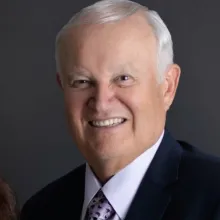
Mr. Seiglie was born in Havana, Cuba, and came to the United States when he was a child. He found out about the Church when he was 17 from a Church member in high school. He went to Ambassador College in Big Sandy, Texas, and in Pasadena, California, graduating with degrees in theology and Spanish. He serves as the pastor of the Garden Grove, CA UCG congregation and serves in the Spanish speaking areas of South America. He also writes for the Beyond Today magazine and currently serves on the UCG Council of Elders. He and his wife, Caty, have four grown daughters, and grandchildren.
