
Don Ward
This transcript was generated by AI and may contain errors. It is provided to assist those who may not be able to listen to the message.
Dig a little deeper, as they say. This sermon is not for the lazy-minded. And if you hoped to get the full benefit, you would need to copy down the Scriptures and review them during the week. I don't think you would absorb everything just by sitting and listening. Some people maybe can. The title today of the sermon is, God Equals Law Equals Love Equals Life. We're going to see how all four of these are inextricably linked together. God, Law, Love, and Life. And we're going to see also that we can become the very essence of God when we really understand about God, Law, Love, and Life. We'll start with an age-old question, which came first, the chicken or the egg? A question that has been debated through the centuries, which came first, the chicken or the egg? That's a question that the evolutionists cannot really answer. The question is, of course, the chicken came first. God created all life forms, and apart from Him, there is no spiritual or material life. Go, please, to Colossians chapter 1, verse 15. Colossians chapter 1, verse 15. And we'll see that through Jesus Christ, all things that exist were created by God through Christ. Colossians 1, 15, who is the image of the invisible God, speaking of Christ, the prototarchos, the firstborn of every creation. That is, Jesus Christ was the first one resurrected from the dead, and He set in motion this plan of salvation whereby one could live in the flesh, and then, after living in the flesh, become a spirit being in the family of God as a Son of God, eternal Son of God. For by Him and where all things created that are in heaven, that are in earth, visible, invisible, whether they be thrones or dominions or principalities or powers, all three things were created by Him, and for Him, and He is before all things, and by Him all things consist. So all things are upheld by the word of His power, as it says in another place in the Bible. The two greatest laws of biology testify to this conclusion. The law of biogenesis states that life comes from life. And even if you don't believe in God, you'd find it impossible to explain how suddenly there was an egg that somehow hatched and out popped a chicken. I grew up on the farm, and we used to have what we call setting hens, and you would put the, and it's just instinctively, a hen will go on the nest and they'll start, quote, setting on those eggs. So you maybe put a dozen eggs under those hens or under that hen, and in about 21 days, that little chick begins to peck through the shell of that egg, and out comes this little chick. And in a few days, they're walking around the yard, as happy as they can be, scratching and clicking and all that. It's equally difficult to explain that how some creature would slowly evolve and suddenly appear as a chicken. The second law of biology states that kind begets kind. So in Texas, we might ask the question, why did the chicken cross the road? And the answer is to show the armadillo that it could be done.
Now we come to a series of questions that are far more important, but just to sort of set the stage of what comes first. So that's going to play into the spiritual part. The chicken or the egg. We conclude that since God is the great Creator, and that life comes from life and kind begets kind, as it says in Genesis chapter 1, that He created all these things after they were kind, and He saw it and it was good. So we move deeper into the spiritual domain. We come to a series of vital questions of life and death regarding God and eternal life. And this will require a study in theology. Now the word theology, the common definition of theology, it's a compound word from theos, T-H-E-O-S, and ology, o-l-o-g-y. Theos is a great word for God, and ology means study of. So we say it's the study of God. But more technically, theology, theos, has to do with God, and ology can also come from logia. And remember logos is the word, is the great word for the word. The logos, or logos, was made flesh and dwelt among us. So technically, it's God speak. Theology has to do with understanding the word of God and God speak. Now most of our study in preaching is in the area of biblical studies, where we chain through the Bible and we chain one scripture after another. We don't delve that much into the nature of God. Now the nature of God, in the technical sense, and most people just commonly, if you say, well, what is the nature of God? And you might say, well, God is love, which is true. But when theologians talk about the nature of God, they are talking more about the origin of God and the Godhead and relationships within the Godhead. So did God and Christ or the word have a beginning? And what is the relationship between God, Christ, and the Holy Spirit? And of course, the tranitarians try to make the Holy Spirit into a person, which we'll see here today, that it is not. Another, of course, we need to understand these relationships. But one of the things that the churches and the United Church of God will be accused of, will be watering down doctrine. And time to time, a lot of people, and you have today on the internet all the social networks and the various ones who set themselves up as theologians out there, and they don't even really know what the meaning of the word is or what it's all about. And they begin to talk about so-called deep things of God and don't really understand what they're trying to do. The deep things of God. And one of the great things, of course, with battles of the ages has been law and grace, whether or not which one predominates law or grace. And what are you trying to do? Are you trying to do away with the law? Are you giving people license to sin? And today we hear a lot of talk about love. So these things are a vital understanding. And these things require mental energy and it requires a study.
So what about God? What is His essence? And let's talk about the word essence for just a minute. Your essence is what you are. You and I, we're composed of flesh. We are made from the dust of the ground, sixteen chemical elements God somehow brought together and breathed into man, according to Genesis 2.7, the breath of life. And we talk about man having a physio-chemical existence. And we understand that man is not immortal. That man is subject to sin and death, whereas God is spirit. There's been a great philosophical debate through the ages over the question of universal essences.
In other words, is there a goal or universal essence that we should strive to achieve? Now, one of the philosophies of the day that have been popularized in the past half century is called existentialism. Don't let the word throw you. It's all that highfalutin philosophical term. We can understand it quite easily. What it has to do with it, it dates back to the Garden of Eden, where Satan told Adam and Eve, while Eve was the one that he was confronting in chapter 3.
He began to ask her questions and he started off, well, as God said, such and such, you shall not eat of every tree in the Garden. And Eve said, well, we can eat of every tree except one. And then she said, if we eat of that, we'll die. Satan says, you shall not surely die, but your eyes will be open, knowing good and evil. In other words, you can decide for yourself what is good and what is evil, and you can take on the prerogative of God, and you can become your own essence designer.
You can become whatever you want to become. And Eve fell for the lie, and basically every religion on the face of the earth, basically today, is inextricably linked to this lie of immortality of the soul. The existential estate to exist is to be, I am whatever I become, no more, no less. So they say, I am my own essence designer. I can become what I want to be, apart from God.
The best this philosophy can bring is death, and in fact, some of the existentialists have written long treatises in praise of death. And there are a lot of works written, articles and so on today, about neolism, nothingness. That is like embrace nothingness.
How exciting is that? But these people, inspired by Satan the Devil, can get young people caught up in this, and they think that they're being intellectual. And one of my wife's all-time greatest sayings, and I think this is sort of original, they are lost in their own intelligence, and there are a lot of people lost in their own intelligence in this world today. They say, in other words, there is no universal essence that we should strive to become, and man is free to decide for himself what he should become.
Just exactly what Satan told Eve in the garden. Let's go to Deuteronomy 30, verse 15. Deuteronomy 30, verse 15. As you see, I turn to these scriptures with you, Deuteronomy 30, verse 15. I have no index, no marker, no whatever. This table is a little too high for my chair, but we're going to get there one way or the other. Deuteronomy 30, verse 15. See, I have set before you this day life, and good, and death, and evil.
In that I command you this day to love the Lord your God, to walk in His ways, and to keep His commandments and His statues and His judgments. Verse 19, I call heaven and earth to record this day against you. I have set before you life and death, blessing and cursing. Therefore, choose life that you and your seed may live. Notice this next verse. I'm going to highlight one particular phrase in particular here. That you may love the Lord your God. Remember, we're talking about God, law, love, life.
To me, the four, perhaps the four greatest words in all the vocabulary of whatever language you want to use. God is a three-letter word in the English language. Law is a three-letter word in the English language. It can't get much simpler than death. And then the other, love is a four-letter word.
Life is a four-letter word. So these four little words, God, law, love, life. We've been told here already to love God. Now, verse 20, that you may love the Lord your God, that you may obey His voice, that you may cleave unto Him, for He is your life. He is your life. And the length of days that you may dwell in the land which the Lord swear unto the fathers, to Abraham, to Isaac, and Jacob, to give them.
So we ask a philosophical question, but it's also irrelevant with regard to what we're talking about today. Does existence precede essence? In other words, that you exist and then become. Well, with humankind, we exist. God gives us existence. And then we become whatever we become. And the choice is up to us. We can choose life or we can choose death. If you go the existential route, if you go Satan's route, you're going to choose to be your own essence designer, and you do not choose then life. You deny that God is a source of life, whereas this says He is your life.
But with God, existence and essence are one and the same. You got me? Existence and essence are one and the same because God has always existed, and He has always been His Spirit. So His existence and His essence, and in conjunction with the essence, the essential qualities of His essence that allows Him to continue to be who He is, to a large degree, resides in the immutable spiritual law, His love, and His life. And we can become, in the family of God, His sons. We can embrace His law. We can love as He loves, and we can have eternal life.
So Satan has deceived men into believing there are no universal essences that we should become, whereas the Bible says that we should strive to be perfect, even as your Father in heaven is perfect, that we should strive to be in the Kingdom of God. So this deceitful, sly, crafty idea is espoused by some who think that they are doing the will of God and are not. Oh, there are some quote great, so-called great theologians who have embraced existentialism.
Some young people say, I didn't choose the church my parents made me attend. Or some might say, well, if I didn't choose it, then how do I know that it's for me? And some say, I didn't choose to obey God and try to become what God is, which is the same thing as saying there are no universals. Some say, well, I just went along with my parents. I'm here because my parents made me come. And more and more in the Church of God and all of the Churches of God, we see young people, once they graduate from high school, we have a mass exodus. We lose about 75 percent. That's basically the figure. We do not do as well as Protestants or Catholics in retaining our youth. Now, there are many reasons that you could go for that. One of the reasons, I believe, has to do with teaching accountability at a young age. And, of course, another reason is that you can be in those religions and basically do whatever you want to do. So you don't have to, quote, give up many of the things of the world and yet be in those religions. But you know, everybody, basically, who has attended the Church of God for any length of time, they have had these two alternatives between life and death explained to them many times. And it's always up to the person to decide for himself or herself what you want to become. When all is said and done with regard to eternity, there are only two ways. There's the way of life, everlasting life in the Kingdom of God, or there is eternal death.
And you exist no more. The people who decide they want to determine their own essences apart from God are saying, I don't want to live forever. They're choosing a universal, and that universal is death. God is the author of universal essences. God is the authority of life. God knows what it takes to live forever. Humankind does not. Now, science is feverishly trying to discover ways to combat some of the deadly diseases that stalk the earth like a serial killer, heart disease and cancer, and many other things, AIDS, and so on we go. And life expectancy has been expanded in the Western world because of some of these so-called scientific breakthroughs. But in some ways, we are living longer and enjoying it less. Once you get to a certain age, you might begin to understand what that means. But I like the alternative of living. I like the alternative of life. You know, I saw my mother. She went through cancer at an early age, numerous hernia operations, numerous female operations, various heart attacks, three hip replacements, and on and on and on. She had this indomitable spirit to live. The way she died, she was 87. She had had a hip replacement and wasn't quite totally healed. And it was a third time on this leg, so she got up one time in the night, around midnight, to go to the bathroom, and by herself, which she wasn't supposed to do, somehow when she stood up on her leg, that femur just above the knee just snapped like a stick. And here she pitched forward on her face. So now she goes to the hospital. She's there for a week. I'm called. I was there within 24 hours. My brother was already there. And I'm telling you, they couldn't fix it. But she was going to live. But she contacted pneumonia so often the case, and within a few days, she went away. This desire to live.
In order for us to live forever, we have to become what God is. And here we want to differentiate between essence and qualities and characteristics. The essence of God, in the strictest sense, is what He consists of. Let's go now to John 4, verse 24. John 4, verse 24. John 4, verse 24. This should be a memory scripture for everybody in John 4, verse 24. God is Spirit. There's no indefinite article in Greek that A shouldn't be the God. His Spirit, they that worship Him, must worship Him in spirit and in truth. And as we have already noted, by contrast, the essence of human beings is flesh. We are of the dust of the ground. We are flesh. Let's go back to John 3. John 3, where this man of the Pharisees, Nicodemus, comes to Christ at night. John 3, 1, there was a man of the Pharisees, Nicodemus, a ruler of the Jews, came to Jesus by night, saying, Rabbi, we know that you are a teacher, come from God, for no man can do the miracles that you do except God sends Him. Jesus answered and said unto Him, Verily I say unto you, Accept a man be born again. And the word for born here is ganau, and we are first of all begotten. The word again is anophan in the Greek, A-N-O-T-H-E-N, and it means from above. So unless you are begotten from above, and of course you are born at the resurrection in the family of God, He cannot see the kingdom of God. Nicodemus said unto Him, How can a man be born when he is old? Can he enter into his mother's womb a second time and be born? Jesus answered, Verily I say unto you, Accept a man be born of water and of the Spirit. He cannot enter into the kingdom of God. That which is born of a flesh is flesh. So it's very clear that our essence is flesh, and that which is born of the Spirit is spirit. So why do you marvel? I say you have to be born again, begotten from above, and born at the resurrection to be in the kingdom of God.
God and the Word, the one who became Jesus, are eternal, and thus God's Spirit, God's essence, is eternal. So let's go back to John 1 now. John 1, verse 1. Let's say that again. God and the Word. We can say it this way. God the Father and the Word, the one who became Jesus Christ, they are eternal. They are of the same Spirit. God's essence is eternal. Now we're going to prove that from Scripture. John 1, verse 1. In the beginning was the Word, and the Word herefore was, in the Greek, in the English, it's E-N with some kind of a mark. It means to exist. In the beginning, the Word existed, and the Word was God. I'm sorry, the Word was with God, showing relationship. He was with God, theos, and the Word was God, showing identity, that He is God and on that plane. God's essence is eternal. Now, again, God and the Word, the one who became Christ, they are co-eternal. That means they've always existed without beginning and without end. And they are co-essential. That means they are the same essence. They are of Spirit.
Now, we go to Hebrews 7, verse 3. Hebrews 7, verse 3. We'll see without father, without mother, without beginning or end of days. We'll read verse 2. In Hebrews 7, too, to whom also Abraham gave attempt, part of all talking about Melchizedek, first being by interpretation king of righteousness. There's no human being who is king of righteousness. Only God and Christ could be kings of righteousness. And after that, also king of Salem, and Salem means peace, which is king of peace. Without father, without mother, without descent, without having neither beginning of days nor end of life. Neither beginning of days nor end of life. Once again, co-eternal, co-essential of the same essence. God is Spirit.
Neither beginning of days nor end of life, but made like unto the Son of God, abides a priest continually. Also, we want to note, in 1 Corinthians 12, as I said, we're going to prove each one of these points from the Scripture that is co-eternal. Here we see they are eternal, beginning without end of days. Of course, there are several places in the Old Testament that says that I am the eternal, I change not, and so on. Several places. In 1 Corinthians 12, we're talking about the essential part now, the Spirit part, that we can also become joined to, for as the body as one has many members, and all members of that one body being many are one body. In 1 Corinthians 12, 12. 1 Corinthians 12, 12. For as the body is one and has many members, and all the members of that one body being many are one body, so also is Christ. For by one Spirit, we're all baptized into one body, whether we be Jews or Gentiles. God the Father is the one who is the source of the Holy Spirit. Now, Christ has the same spiritual essence in Him, but if God the Father is our Father, and He is the one who calls us, John 6.44, and He is the one who sends the Spirit, and it is shed abroad in us through Christ. Exactly how that takes place, I don't think anybody totally understands completely, but that's the chain of how it goes. I don't want to get too sidetracked, but maybe just for a moment here, let me show you this. Go to John 15.26. John 15.26. This shows you that God the Father is the source of the Holy Spirit. In John 15, verse 26, but when the Comforter has come, you heard about the Comforter, now John 14.26 identifies the Comforter as the Holy Spirit. So when the Phatoclek does the one alongside the Comforter, the Holy Spirit has come, whom I will send you from Thy Father, even the Spirit of truth which proceeds from Thy Father. But He shall testify of me, its Comforter's masculine, so that doesn't make it a person. But use the analogy of a great power station, and in this great power station, there goes out all of these lines that we've got lights in this auditorium and how many lights are on all over the world today that are artificial lights in the sense that it's man-created in a way. Of course, man gets in harmony with the laws of physics and whatever, so that we have these lights. But God is the source of this great energy, this great light that lights the life and hearts of men and women throughout the world, and we're called the lights of the world. And that Holy Spirit proceeds from the Father, and it's shed abroad on us through Christ. We'll look at one more scripture, and then we'll come back here to 1 Corinthians 12. Look at Titus 3, verses 5 and 6.
So, we've sort of gone from high school a little bit into graduate school today, so here we go. In Titus 3, verses 5 and 6.
Now we go back to 1 Corinthians 12. In 1 Corinthians 12, verse 13. For by one Spirit we're all baptized into one body, and so God is the one who begets. He is our Father. Now with God, in the human realm, here's the difference in this beguetal birth scenario and the parallel between the physical and spiritual. In the human realm, the Father begets, and the Mother brings to birth. In the spiritual realm, God the Father is in both roads. God the Father begets. Christ plays a role, and God the Father brings us to birth. God the Father resurrected. We'll see this later. God the Father resurrected Jesus from the dead. So with one Spirit, we're all baptized into one body, whether we be Jews or Gentiles, whether we be bond or free. I've been all made to drink into one Spirit. Now quickly, in Ephesians 4, Ephesians chapter 4, once again we see this, that there is one Spirit. In Ephesians chapter 4, verse 3, "...endeavoring to keep the unity of the Spirit and the bond of peace." I gave a sermon titled that, Unleavened Bread to Combine Houston North and South Congregations, and it fell on deaf ears.
And we're here where we are today. "...endeavoring to keep the unity of the Spirit and the bond of peace, there is one body and one Spirit, even as you are called in one hope of your calling." So if God is eternal, then His essence and thus His Spirit is eternal.
And don't let those kind of words slip over your head.
If God is eternal and His essence is Spirit, then His Spirit is eternal. And see, when we become partakers of that eternal Spirit, we are literally sons of God. In the beginning, human beings are created beings. But when they are begotten of this eternal Spirit, and are then resurrected as a Spirit being, then they are of that same essence of the eternal Spirit. Now we go to, I'll show you this, Hebrews 914. Hebrews 914, I believe, is the only place in the Bible where these two words are put together, eternal Spirit. In Hebrews 914, "...how much more shall the blood of Christ, who through the eternal Spirit..." So we see the phrase here, the eternal Spirit.
And it's like sometimes in the past, it's almost like we say, well, the Holy Spirit is not a person. It's almost like we try to separate the Holy Spirit from the essence of God. God is Spirit. And when it says in Genesis, and the Spirit of God moved on the waters, well, that is God moving on the waters, His Spirit. And we oftentimes say, the Holy Spirit is the power of God. Well, in a technical sense, the Holy Spirit can do works of power. But the Holy Spirit is the essence of God through which He does works of power. The essence of human being is flesh. How can I do any work of power in my flesh? Through my flesh. Can my flesh go out here and do something apart from me? No. God sends forth His Spirit, His essence. And it does works of power. And that Spirit can be in us.
Now, the Son, Jesus Christ, is the stamp image of the Father. Let's go back to Hebrews 1. Hebrews 1 and verse 1.
We read this verse 1 the other day when we had a sermon titled, God speaks to us by His great power we're led. In Hebrews 1.1, God who at different times and in different manners spoke in times past of the fathers by the prophets had these last days spoken to us by His Son, whom He has appointed heir of all things, by whom also He made the worlds. We read that from Colossians 1.15-17. Who being the brightness of His glory and the express or stamped image of His person, and upholding all things by the word of His power, when He had by Himself purged our sins, sat down on the right hand of the majesty on high.
So, Jesus Christ is the captain of our salvation. He is our forerunner. He's gone before. Now we come to qualities and characteristics of God. We have hopefully established His essence of spirit that He is eternal. The Son is eternal, existing as a word in eternity, and then being begotten as the Son of God and born now into the family of God. And He is God before, and we can become, and we'll read that Scripture later, a joint error with Jesus Christ. How can we be a joint error with Jesus Christ? Because we too are sons of God.
So, qualities and characteristics of God. A quality can be defined as something that God is, and without that something, He would not be God. A quality that God is, and without that, without that quality, He would not be God.
So, what is the most essential quality of God? It's very simple. Let's go back to John 1. John chapter 1. John 1. I'm there, are you? In John chapter 1, we've already read verse 1. Verse 2, the same was in the beginning with God. Once again, showing relationship. They were together. All things were made by Him, and without Him was not anything made that was made. In Him was life, and the life was the light of men. So, obviously, if you don't have life, you don't have anything. So, that most essential quality is life. And we read from Deuteronomy 30 and verse 20, He is your life, and without Him, you don't have anything when it comes to eternity. So, we see that an essential quality of God is life. In Him was life, and this life was the light of men. And the light shines in darkness, and the darkness comprehended it not.
And then, as we've already mentioned, that He has made it possible for us to be partakers of His life and light, and become the lights of the world.
Now, another essential quality is love. Let's go to John 1 John 4, verse 8. 1 John 4 and verse 8. 1 John 4 and verse 8.
He that loves, he that loves not, knows not God, for God is love. God is love. That is one of His essential qualities. Love is the most powerful, motivating force in the universe. Because God is love, and love defined as outgoing concern. See, if love is not shared, then it's self-love, and it's really of no value to anybody else. But God is love, and it's because of God's outgoing love that He created us in the first place, because He wanted to share who He is and what He is with us.
Also, in John 4, 16, God's love is repeated. We have known and believed the love that God hath to us. God is love, and He that dwells in love dwells in God, and God in Him.
Of course, love is the fruit of the Spirit, and you cannot produce a fruit of the Spirit without the Spirit. So, that's linked together. Herein is our love made perfect that we may have boldness in the day of judgment, because as He is, so are we in this world. There is no fear in love, but perfect love casts out fear, because fear hath torment. He that fears is not made perfect in love. So, love is the most powerful, motivating force in the universe. God created human beings because He wanted to share His being with them. And God so loved the world, the so-called golden text of the Bible. God so loved the world that He gave His only begotten Son, whosoever would believe in Him to not perish, but have everlasting life. That's how much His love goes out. He created us out of the dust of the ground, subject to sin and death. And the wisdom of God and Christ is working out this great plan of salvation, whereby humankind could be partakers of the divine nature and born into this family. That wisdom is in churchable. And I think it's past finding out some of the mystery of God. And one of the things that looks so forward to understanding when we are in the kingdom of God is to understand a lot of this. We can see through a glass dimly darkly now, as Paul talks about, and grasp quite a bit of it.
Now, we come to another question, sort of like the chicken and the egg thing. Now, which came first? God's love or God's law? Well, when it comes to the expression of love toward human beings, God's love came first.
In that he so loved us, and he had so much love, he wanted to share it, that he created us in the first place. But hold on, we're not through yet. And so, in addition to that, he knew that humankind, he and the Word knew that humankind would sin, and they're provided a Redeemer. And through faith in this Redeemer, you could have all your sins wiped out. You could be viewed as sinless. That would enable you to be partakers of his divine essence.
Of course, we play a role a part in that, as we shall see.
So, we're hearing a lot today about loving one another, forgiving one another. And I've quoted John 13.35 very often in sermons in recent times. And you can probably quote it too. It says, by this shall all men know that you are my disciples. We even sing it. You shall know that you are my disciples, and that you have love one for another. But what that means is that you have to love your neighbor as God gave commandment and go through God's steps for reconciliation. Some people quote 1 Peter 4-8. 1 Peter 4-8 says that love will cover a multitude of sins. But how does love cover a multitude of sins? You can't just say, oh, I love you, and it covers your sins.
If I love you enough, and I see you go astray, and I help you come to understanding and repentance, that's true love. See, sin that is not repented of cannot be forgiven. I could say all day long, I love you, I really love you. But at the same time, I know that you're doing something that is sinful, and I just, well, that's his problem. And there are a lot of other dimensions to this. So, love covering a multitude of sins has a lot more to it than just saying, well, love covers a multitude of sins. I love you, and okay, it's okay. That's not the way it works. And brethren, in a lot of ways, we have not really dug down deep into what the Bible is really trying to teach us about what our responsibilities are toward God and our neighbor. So, what is the definition of love? Well, generally, we define it as love is outgoing concern. Love has many dimensions. The three different Greek words are translated love. Eros is the love between man and woman. Some call it sexual love. Eroticism, they call it, to be aroused. And they even, I don't know if the hippies in San Francisco or whomever it was who invented this term, make love not war, back in the 60s when you had all the youth rebellion. And today, they talk about sexual relations being making love. So, eros is a word that is translated love. Another word that is translated love is phileo. Phileo is brotherly love. And then the other word is agape, which is spiritual love. And nearly every place in the New Testament. It's not every place, but most places in the New Testament where you see the word love, it is spiritual love. Now, there is a law of sexual attraction or eros. I mean, male and female, if they are natural, normal, can be attracted to each other and have feelings for one another and naturally attracted. There is the natural instinctive love between mother and child. Unless something is gone awry, there will be a bond between mother and child, and feelings are involved. So there is an emotional dimension to love. But spiritual love is defined basically by, or summed up at least by, the Ten Commandments. So we have these three different kinds of love, as it were. The love between man and woman, brotherly love, spiritual love. Now, let's go to Romans chapter 7. Romans chapter 7 and verse 7.
Romans chapter 7 and verse 7.
What shall we say then? Is the law sin? God forbid! No, I had not known sin, but by the law. For I had not known lust, except the law that said, You shall not covet. But sin, taking occasion, sin taking occasion, by the commandment, wrought in me all manner of concupiscence. In other words, the law revealed these various urges, lusts, and desires. For without the law, sin was dead. For I was alive without the law once, but when the commandment came, sin revived, and I died. And we'll see why that is the case. It wasn't the law itself that killed him. It wasn't sin, as we shall see. And the commandment, which was ordained to life, commandment was ordained to life, I found to be unto death. For sin, taking occasion, by the commandment, deceived me, and by it slew me. So it was the sin that brought on the death. Wherefore, the law is holy, the commandment holy, and just and good. Was then that which is good made death unto me? God forbid. But sin, sin is what brought on the death, that it might appear sin, working death in me, by that which is good, that sin by the commandment might become exceeding sinful.
For we know that the law is spiritual, but I am carnal, sold under sin. There's a symbiotic relationship between spiritual love and spiritual law. On the one hand, spiritual law defines sin. That is, if you break the law, that's sin. But on the other hand, the spiritual law, if you obey it, defies love.
And you cannot love God, and you cannot have spiritual love if you don't obey.
So with love, you have love and law working hand in hand. John 6, 63 says, The flesh profits nothing. It is the spirit that quickens or makes a lie. The words I speak, they are spirit and they are truth. So we see that the Word of God and the Spirit of God are inextricably linked together. God is true to His Word. Law defines the action to be taken in obedience to the law results in love. So with God, He loved us first while we were yet sinners.
Now with us, He gives us existence. He loved us so much, He wants us in His family. And then He tells us, He instructs us how to love Him, how to love our neighbor, through His written Word, through His instruction. So, law defines the action to be taken in obedience to the law results in love. And love is the outcome, but just as you don't know what sin is, apart from the law, just as we've read here, you don't know what love is or how to love apart from the law that is God's immutable spiritual law, which defines how you love God and your neighbor. You see the reciprocal. On the one hand, law defines sin. On the other hand, it defines love. We could say all day long, I love God, but how would we know whether or not we love God? Now we go to 1 John. If you've never done this in 1 John, you might want to do... You put in your search engine in your... What do they call it? Online Bible. You just put in whereby. In 1 John, you'll see this expression whereby used quite a few times, whereby or hereby you will know. So we go here. How do we know if we love God? Are there markers? So in 1 John 2 and verse 3, and hereby we know. How do we know? And hereby we do know that we know Him if we keep His commandments. He that says, I know Him and keeps not His commandments is a liar, and the truth is not in Him, but who so keeps His word in Him verily is the love of God perfected.
So you see, love and love work hand in glove, as it were. They're like handmaidens.
And God instructed us as to how we could love Him and love our neighbor. Whosoever keeps His word in Him verily is the love of God perfected. Hereby we know that we are in Him. If we're doing this, we know that we're in Him. Now to 1 John 3 verse 18. 1 John 3, 18, My little children, let us not love and word, neither in tongue, don't just say, I love you. It requires action, and the law defines what that action is to be.
Now, once again, there are various dimensions of love, and you can have strong feelings for a person.
And mother has strong feelings for a child. Father does, too. Parents for children. Children for parents. There's a natural bond. That's not necessarily spiritual love. But even in spiritual love, there are feelings involved. It talks about in Genesis 3. I mean, Genesis 6, when God saw all the evil that was extent on the world before the Flood, it says He was greed in His heart, even that He had created human beings. But then, of course, He provided the Redeemer, and He brought Noah's wife and three sons and their wives through it. 1 John 3.18, My little children, let us not love and word, neither in tongue, but in deed and in truth. And hereby we know, hereby we know that we are of the truth, and shall assure our hearts before Him. For if our heart condemn us, God is greater than our heart. And knows all things. So this is what psychologists and others may talk about with regard to guilt, that the Word of God convicts you of sin. The Word of God has so many dimensions and so many things that it does. The Word of God and the Spirit of God convict you of sin. And it lays this knowing within yourself, hey, there's something wrong here. And your heart is condemned. And if you want relief from that, you repent of it and ask God for forgiveness. For if our heart condemn us, God is greater than our heart. Knows all things. God knows us there to begin with. Beloved, if our heart condemn us not, then have we confidence toward God. And whatsoever we ask, we receive of Him, because we keep His commandments and do those things that are pleasing in His sight.
The first fruit of the Holy Spirit is love. Also, just a little farther here in 1 John 5, once again, the definition of love in the spiritual sense. 1 John 5, 1. Whosoever believes that Jesus is the Christ is begotten of God, and everyone that loves Him, that begat loves Him also, that is begotten of Him. That's another way of saying that you can't love God without loving your neighbor. By this we know that we love the children of God when we love God and keep His commandments. See, this 1 John is full of, Hereby we know and how do we know that we love God? For this is the love of God, that we keep His commandments, and His commandments are not grievous. So you see this inextricable link. God, law, love, life. I believe the four most powerful words in any language.
Love is the outcome. Love is the outcome of obeying God, and it also produces, let's go to Galatians 5 now. Galatians 5 verse 22. And we'll see here that the fruit of the Holy Spirit, the first one listed, is love. In Galatians chapter 5 verse 22.
The fruit of the Spirit is love. You can't really produce the fruit of the Spirit without the Spirit. And we already know that the Spirit of God is the essence of God, and we can be partakers of His divine essence. The fruit of the Spirit is love, joy, peace, long-suffering, gentleness, goodness, faith, meekness, temperance. Against such, there is no law. Because if you are doing those things, these things are present in your life, then you're walking in the Spirit, and there is no condemnation. So God bears all of these fruits perfectly. God is perfect. And now, oh boy, here we come. And we are commanded to become perfect even as our Father in heaven is perfect. And one of the first things that most Christians like to say—well, I don't know if they like to say it—but people say, well, I'm not, you know, I'm not no holier than thou. And I'm not holy. And I'm not perfect. It's almost like they don't want to be. Notice Matthew 5, verse 48. Now, this word is translated perfect here in Matthew 5. Tilios means to be complete, mature, perfect. In Matthew 5, verse 48. Be you therefore, or become perfect. Become the very essence of God. Remember the title of the sermon, God, law, love, life. You can become the essence of God. Become you therefore, perfect, mature, complete, even as your Father in heaven is mature, complete, perfect. How would you define perfection? And how do you go on to perfection? Notice in Psalm 19, verse 7. Psalm 19, verse 7. Mr. Corley read Psalm 19, verse 13. Here is Psalm 19, verse 7. In Psalm 19, verse 7. The law of God is perfect. The law of God is perfect. It's complete. Notice what? Converting the soul, the very life essence. The testimony of the Lord is sure, making wise the simple. And in Psalm 119, verse 172, we see that 119, verse 72.
And 119, verse 72. I mean 172, not 72. 119, 172. 119, 172. My tongue shall speak of your word, for all your commandments are righteousness. So the law of God is perfect. All your commandments are righteousness. Become you therefore perfect, even as your Father in heaven is perfect. Therefore, we know that the spiritual law, perfection, and righteousness are handmaidens. They go hand in hand. But the law cannot give life. The law cannot give life. As we read from Romans 7, 10, the law was ordained for life, but the law cannot give life. It was ordained for life to help sustain life. And the reason it helped sustain life, because if you break it, the wages of sin is death. So life ends. But through the Redeemer, we can live. Now go to Galatians 3, 21. Galatians 3, 21. We'll just flat out say what I've just said.
Galatians 3, verse 21.
Is the law then against the promises of God? God forbid. For if there had been a law given which could have given life, righteousness would have been by the law. Now people get the idea that Christ did it all and believe that the righteousness of Christ and His righteousness would be imputed to us if we just believe. So we come to one of the most critical of all understandings about soteriology. Soteriology means the doctrine of salvation. How are you saved?
This is a juncture where nearly everyone in the Christian world goes on. So we continue reading here. It says if the law could have given life, righteousness would have been by the law. The law defines sin, and if you break it, the wages of sin is death. The law defines how to love God as we have seen. But the law cannot give life, and the law cannot forgive sin. In order to have life, you have to have your sins forgiven. And that is through faith in Christ. So now we have this dimension about life. But the Scripture has concluded all under sin, wages of sin is death, Romans 6.23, that the promise by faith of Jesus Christ might be given to them that believe. But before faith came, we were shut up under the law, shut up under the faith which should afterwards be revealed. The way that they dealt with sin, under the terms of the Old Covenant, was to bring offerings, the blood of bulls and goats, which could only cover sin. They could not purge the conscience, and they could not permanently remove your sins as far as the east is from the west. And the Holy Spirit had not been made available at that time to the people as a whole. Wherefore, the law was our schoolmaster to bring us unto Christ, and we might be justified by faith. How does the law bring us to Christ? It is through the law and the Spirit of God that we're convicted, that we're a sinner, and we come to understand that the wages of sin is death, and we are under the death penalty. And if we don't have repent and have faith in Christ, we're going to die. But after the faith has come, we're no longer under a schoolmaster. In other words, the law, then, is not over our heads in the sense of being unto death. It is now unto life, because we are to walk in the perfect law of liberty. And that does not mean, of course, that you break the law, as we shall see. For you are all the children of God by faith in Christ Jesus. And these three verses here are three of the greatest verses in the whole Bible, because it shows that God is not a respecter of persons. That God is not just the God of the Israelites, or the Chinese, or any other ethnic or national group you want to name, or any other racial group, that He is the God of all. That God is not prejudiced toward men or women.
For as many as you have been baptized into Christ, have put on Christ. There's neither Jew nor Greek. There's neither bond nor free. There's neither male nor female. For you are all one in Christ Jesus. And if you be in Christ, then are your Abraham seed, and heirs according to the promise. So we see here that Paul is clearly talking about how can you have your sins forgiven and be viewed by God as righteous. It was necessary for God, who has loved to send His only begotten Son into the world to pay the penalty for sin. Let's notice now in Romans chapter 3. Yeah, we're out of time, but a couple more things here. Romans 3 and verse 23. Remember the book of Romans? The first chapter takes the Gentiles to task, the second chapter, the Jews to task, the third chapter takes everybody to task, and we conclude with 3.23, all have sinned and come short of the glory of God. All have sinned, being justified freely. So then God sends Jesus Christ to pay for our sins, to remove our sins as far as the east is from the west, so that we can receive His Spirit.
When the Holy Spirit was sent on the day of Pentecost, it was recorded in Acts chapter 2. Peter got up and preached that inspired sermon. After he preached it, Acts 2.37, 2.36-37 says they were cut to the quick or convicted in their hearts, and they said, men and brethren, what shall we do? Verse 38, Peter says, repent, be baptized, everyone, in the name of Jesus, and you shall receive the gift of the Holy Spirit. So through the process of being called, repenting of our sins, faith in the sacrifice of Christ, baptism, laying out of hands, we can become partakers of the very life essence of Almighty God. Now, it's Romans 8. Romans 8, and we can conclude here with a little summary after I read this in Romans 8 and verse 11. This will summarize many things said here today. Romans 8 and 11, but if the spirit of him that raised up Jesus from the dead dwell in you, he that raised up Christ from the dead shall also quicken or make alive, resurrect your immortal bodies, by his spirit that dwells in you. The spirit of God. There is one spirit. The same spirit that is in God, is in Christ, is in us. The same spirit that he raised, Christ from the dead, he'll raise us from the dead. Therefore, brethren, we are debtors not to the flesh to live after the flesh. For if we live after the flesh, we shall die. But if you through the spirit do mortify, put to death the deeds of the body, you shall live. For as many as are led by the Spirit of God, they are the sons of God. For you've not received the spirit of bondage again to fear, but you've received the spirit of sonship, not adoption. We, Othea, literally mean sonship, the same essence as God. Whereby we cry, Abba, Father. The spirit itself bears witness with our spirit that we are the children of God. And if children then heirs of God, that same essence that he has, heirs of God. Joy heirs with Christ. If so be that we suffer with him, that we may also be glorified together. Yes, brethren, we can become the very essence of God. So today we have defined and identified the two most exciting and meaningful three-letter words in the English language, God and law. We have identified and discussed two most exciting and meaningful four-letter words in the English language, love and life. We have come to understand that through these four words, we can become the very essence of God and partakers of the divine nature and live forever. So, brethren, let's rejoice in the perfect law of liberty.
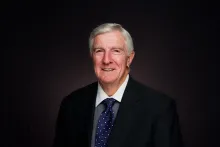
Before his retirement in 2021, Dr. Donald Ward pastored churches in Texas and Louisiana, and taught at Ambassador Bible College in Cincinnati, Ohio. He has also served as chairman of the Council of Elders of the United Church of God. He holds a BS degree; a BA in theology; a MS degree; a doctor’s degree in education from East Texas State University; and has completed 18 hours of graduate theology from SMU.
