
Steve Shafer
This transcript was generated by AI and may contain errors. It is provided to assist those who may not be able to listen to the message.
Well, as we all know, God began delivering Israel out of Egypt during the days of Unleavened Bread, beginning with the night of the first day of Unleavened Bread. And at the time of their deliverance, they had been slaves in Egypt for at least an entire generation. From the time a new king arose over Egypt who did not know Joseph, Exodus 1, chapter 8.
But before that deliverance, they had been strangers. They became strangers in a strange land. And it's very noteworthy, I believe, that God reminded them of that right after they had been delivered. In fact, God only reminded them that there had been strangers in a strange land, but there had been strangers in the land of Egypt. He also gave them a lesson that He never wanted them to forget. Let's turn to Exodus, chapter 22, which is right after God had given them the Ten Commandments, and after they had been delivered out of Egypt.
This is now just past the time of Mount Sinai, where they received the Ten Commandments. Exodus 22, verse 21. God tells them this through Moses. He says, "...you shall neither mistreat a stranger, nor oppress him. For you were strangers in the land of Egypt." That's repeated in chapter 23, verse 9. "...Also you shall not oppress a stranger, for you know the heart of a stranger, because you were strangers in the land of Egypt." God then reiterated that to them again before they entered the promised land, 40 years later, as recorded in Deuteronomy, chapter 10.
So turn to Deuteronomy 10, and we'll look at verses 17, 18, and 19. Deuteronomy 10, beginning in verse 17, again, God reiterated the same principle we just read here to them, just as they're about to end the promised land. He said, "...for the Lord your God is God of gods and Lord of lords. The great God, mighty and awesome, who shows no partiality, nor takes a bribe." We can't bribe God to try to get our way. He administers justice for the fatherless and the widow, and he loves the stranger, giving him food and clothing. Therefore, verse 19, love the stranger, for you are strangers in the land of Egypt.
So God here tells us that he loves the stranger, and I guess we could then say that he even loves those who don't know him yet. Because God is a stranger to most people in the world, but God says he loves a stranger. He loves those who don't even know him yet. And of course, we were all strangers before God opened our minds, before we came to know and to understand the true God. But God loved all of us, for we were still strangers, strangers in a spiritual sense, and strangers in the spiritual land of Egypt, if you will, in the world.
Thus, God here is also telling us to love the stranger, because before God called us and opened our minds, we were all strangers in the land of Egypt, in a sense. So today, then, as we look forward to the days of Unleavened Bread, to the first day of Unleavened Bread, coming up this coming Tuesday, I want to focus on some lessons we can learn from Deuteronomy 10, verses 17 through 19 here, and from God's command to love the stranger.
And that's the title of my sermon here this afternoon. My title is, God Loves the Stranger. Especially in the time we're living in right now, I think there's some very important lessons we can learn from that. I want to begin by looking at Israel's departure out of Egypt. Of course, it took place during the days of Unleavened Bread. And we know that that happened very suddenly, didn't it? They couldn't even wait for their bread dough to ferment and rise. They were literally driven out of Egypt, very quickly, as you read in Exodus 12, verses 33 and 34.
Now, I think it's hard for us to imagine what that'd be like. If you had, like, just a very short time, and all of a sudden you realize, you're gonna have to leave your home. You're gonna maybe grab what you can in a knapsack or something, and you're gonna have to leave, and you're never coming back. That's it. You're gone. You're gonna have to leave. Very, very quickly. They had that night where the death angel passed over, but the next morning they had to leave. And they had to leave very quickly, and they were literally driven out of Egypt.
It's hard to imagine what that would be like if we had to actually experience something like that. We might think that that couldn't happen today, but if we thought that, we'd be wrong. We'd be dead wrong. Because it has happened today to millions of people.
The past 20th century, we've now concluded, this past 20th century was a very unique century in the history of mankind. Probably the most advanced and most prosperous century in the history of mankind. But at the same time, it was the most devastating century the world had ever known for millions of people. Millions. During the 20th century, millions were suddenly driven from their homes and separated from their loved ones. Their homes, their property, all their possessions. Oftentimes, all their financial means, their bank accounts, their livelihood was suddenly and very dramatically taken away from them. And not just because of World War I and World War II. It happened that time, too, but especially World War II. But it was more than that. It wasn't just because of Nazi Germany.
See, Jews were not the only ones who were driven from their homes and stripped of all their possessions in the 20th century.
That also happened to millions of Christians. Or people who were claiming to be Christians and sincerely were striving to be Christians in their own way. By the late 1940s, communism engulfed the Soviet Union, all of China, and all of Eastern Europe.
As we know, the President of the United States, when Franklin Delano Roosevelt died at the very beginning of his fourth term, then-Vice President Harry S. Truman became the President in 1945, and he served for about seven years until 1952, when communism was on the rise and engulfing Eastern Europe and Russia and the Soviet Union, etc., in China. And here's what Harry Truman said of communism. He said communism subjects the individual to arrest without lawful cause, punishment without trial, and forced labor as the right of the state. It decrees what information he will receive, what art he shall produce, what leaders he shall follow, and what thoughts he shall think. At least they try to control thoughts. They really can't do that, but they try. From the late 1940s to the 1950s and on into the 1960s, millions were arrested without cause, imprisoned without trial, separated from their families, and sent into forced labor camps, having had all their possessions and income confiscated by the state. Suddenly, those millions of people became strangers in the midst of other strangers.
You know, some historians actually estimate that during that period of time and during the 20th century, upwards of 100 million people actually died as a result of communism. Many of them were Christians, not Jews. Many were Jews, but many were also Christians. Now, millions is too large a number to even wrap our minds around, so to give you some meaning to that number, I want to relate a true story of just one of those many victims of communism. Just one. Her name was Sabina Wurmbrand, S-A-B-I-N-A. Her last name was Wurmbrand, spelled W-U-R-M-B-R-A-N-D, otherwise simply known as the pastor's wife. I want to give you the story of the pastor's wife, that she wrote in her own book by the same title, the pastor's wife. She was born in 1913 in Bucharest, Romania, to a Jewish family. Prior to the outbreak of World War II, she married her husband, Richard, who was also born of a Jewish family. They had one son, Mia, M-I-H-A-I.
Not long after they married, they both converted to Christianity. Not long after they married, they both converted to Christianity. And Richard eventually became a pastor in Romania.
Somehow, they both survived the German occupation of Romania in World War II, even as Christian Jews.
Sabina said this in her memoirs, in her book, The Pastor's Wife. She said, Bucharest was lucky. She said, terrible pogroms occurred in the provinces. She said, in one day in this town of Iasa, I-A-S-I, in that one town, in one day, said 11,000 Jews were slaughtered in one day.
She went on to write, There was no one to rescue the tens of thousands of Jews deported from provincial towns. Including my own family.
Many captives died in the snow. Others died of starvation. Soldiers massacred the rest. My parents, my brother, and three sisters, many friends and relatives never came back. She lost her entire family to Communists.
And to the Germans.
Sabina the pastor's wife lost her entire family, basically to the Germans at that time.
Then in 1944, one million Russian troops entered Romania and overthrew the Germans. And then Romania came under Communist rule in 1944, right at the end of World War II.
And German soldiers were now on the run. And it was now the German soldiers who had suddenly become strangers in Romania. And harboring a German soldier meant instant death if you were caught.
So let me ask you a question.
Are there any of God's commandments we might want to overlook under certain circumstances? Like Deuteronomy 10, verses 18 and 19, it was just read, like, Love the stranger giving him food and clothing and shelter. For God loves the stranger, and you were once strangers in the land of Egypt.
Notice what Sabina and her husband Richard did and what she wrote in her memoirs. I want to read this because this is amazing. I don't think most of us would do this. Remember now, the Germans had wiped out her entire family. Now they're under Communist occupation.
Here's what she wrote on pages 13 and 14 of her book, The Pastor's Wife. The Bible tells us what it really means to be a Jew. The biblical word for Hebrew means to stand on the other side, to be different, to not be like the rest of the world, to be different. To stand on the other side. When all men worshipped idols, Abraham worshipped the living God. When others are bent on revenge, God gives to some the ability to return good for evil. Once three German officers hidden a tiny outhouse in our yard, it was a dark little garage, half buried in the snow. We fed them, emptied their buckets at night. We hated their former atrocities. We ourselves have been the victims, but now we talk to them, trying to make them feel as less caged beasts. One evening, their captain said, well, I must tell you something that's on my mind. You know that it is death to shelter a German soldier, and yet you do it, and you are Jews. I must tell you that when the German army recaptures Bucharest, I'll never do for you what you have done for us. He looked at me strangely. I thought I should try to explain. So I said, I'm your host. My family were killed by the Nazis, but even so, as long as you are under my roof, are you not only protection, but the respect due to a guest? He says, you will suffer, because the Bible says, whoever sheds man's blood by man, shall his blood be shed. And I said, I'm your host. By man shall his blood be shed. I will protect you as much as I can from the police, but I cannot protect you from the wrath of God.
Humbug, he said.
I just wondered why a Jewish should risk her life for a German soldier. I do not like Jews. I do not fear God. I said, remember a word of God in the Old Testament. She said, we remember a word of God in the Old Testament. Give love to strangers, for you too have been strangers in the land of Egypt. You know, in 1019, that's what she told him. He seemed puzzled. He said, that was thousands of years ago. What is it to you if your forefather suffered in Egypt?
I said, to God a thousand years is as one day. In our unconscious minds are written the events of the past. And God says, with good reason, love strangers, for in the last resort, we are all strangers to each other, even to ourselves, to some degree.
If I had to ask myself, could I have done that under those circumstances? I don't know. We have shown love to three strangers of the German army who were our enemy, and who to some degree had been responsible for wiping out our entire family, because God said to do it. Wouldn't we make an exception to that, in that case? I think most of us would.
Would we do that simply because God commanded love the stranger, for you were strangers in the land of Egypt?
Seeing the direct aftermath of World War II, guess what the Germans left behind.
They left behind tens of thousands of orphans.
Tens of thousands of Jewish children, whose parents had been killed or sent to concentration camps. So, in following God's directive in Germany 1019, Sabine and her husband took in six of those orphaned children, and they tried to love them as their own. Over that aspect, the story has a very, very sad ending. They knew they needed to get them out of there, so they got them on a ship for Israel, put them on a ship to go to the land of Israel. This is late 40s now, 1948.
The ship got in a violent storm and sank, and everyone on that ship drowned. Very sad ending to that part of the story. Then, one Sunday morning, February 29, 1948, Sabine's husband, Richard, walked alone to the church that he pastored there in Romania. He left early because he wanted to get there ahead of time because he had a married schedule for 3 o'clock that afternoon. He never showed up at the church, never made it. He vanished. She didn't know what happened to him for many years later, didn't know whether he was dead or alive. The Communists had arrested him simply because he was a Christian pastor teaching Christianity. See, regardless of whether they know the truth or not, it doesn't matter to the Communists. Everybody's in the same boat. We're in the same boat with everybody else. If you're a Christian, you're a Christian. It doesn't matter to them. They can't separate the truth from maybe those who don't fully understand the truth. So simply because he was a Christian pastor teaching Christianity, he was arrested without cause and sent to a prison. She didn't know what happened to him. He didn't know he was dead or alive.
It'd be years before she would know what had happened to him and whether he was dead or alive or not. Actually, it turned out he was in prison for 16 years.
And he also later wrote a book about his ordeals titled, Tortured for Christ. But right after he disappeared, the communists then came and confiscated her home and all her property. So she moved into one small room flat with her son, with two other friends who were also now homeless strangers.
They had all suddenly become strangers in their own land, the land they were born and raised in. Now there were strangers in that land.
Here's what happened to Sabina in the middle of the night. This is from page 38 and 39, in chapter entitled, My Arrest. One evening in August, I came home late. Mia, her son, was staying with friends in the country, so I was free to go by rounds. We women did pastoral work for the church in secret, under the guise of nurses. The hours were long. It was almost 11 p.m. when I finished cleaning the house and caring for six children of a man whose wife was in the hospital. He had land and money, but both had been confiscated by the communists. I came home through the streets that were being decorated with red flags for the annual celebration of the Red Army's arrival. I was too tired to eat and I planned to go straight to bed. But I found my cousin, who was staying with us, very alarmed. A suspicious visitor had called.
I knew then what to expect, a police raid.
I wasn't surprised, just too exhausted and almost to care. Mia was in God's good hands. That's what mattered. So I went to sleep, committing my husband, who now disappeared, and my son and all my loved ones to God's care. At 5 a.m., they hammered on the door. My cousin opened. I heard shouting and boots clattering on the stairs. They pushed my cousin aside and shoved their way into the bedroom that I was sharing with a woman guest, a dear sister in the faith. We sat up in bed clutching the clothes around us. Sabina Wombrown shouted the bull-necked man in charge, who never stopped shouting, We know you're hiding arms here. Show us where they are now.
Before I could argue, they were pulling out trunks, opening cupboards, emptying drawers on the floor. A shuffle of books crashed down. And then he said, Get your clothes on. We had to dress in front of six men. They trampled over our things. So you won't tell us where the arms are hidden. We'll tear this place apart. We're going to find them. We know they're here.
I said, Sabina said to them, The only weapon we have in this house is here. And I picked up the Bible from under their feet.
Or you're coming with us. I laid the Bible on the table and said, Please allow us a few moments to pray. Then we'll go with you. They stood gaping while my friend and I prayed together. I embraced my cousin and his mother. Their eyes were full of tears. As he led me out, the last thing I did was to snatch up a little parcel from the sideboard. It contained a pair of stockings and underwear. A day or two before, a girl from our church had made me the gift. I put it aside, unopened, never guessing it would be the most important thing I took with me to prison. She spent the next six years in various prisons in the communist attempts to re-educate her. Her only crime was, she believed in God and she believed in the Word of God. That was her only crime.
Her only crime was that she was a pastor's wife. As she wrote in her book, communism was dedicated to the destruction of religion.
This is between 1948 and 1954, when she was in prison for six years. Here's what happened next. This is from page 41 of the pastor's wife. Before pushing me into a small cell, a woman guard asked, those already inside, any of you know this woman?
Nobody did. Nobody knew her. So I was allowed to join them. The policy was never to put friends together. You were permitted no comfort. You were to be alone. That is, you could only be with strangers. You could not be in the same cell as somebody you knew.
That was one way they tried to break you down. Days later, I was moved into solitary confinement. My cell contained only an iron cot. No bucket.
The first thing a prisoner looks for. How I mourned the missing bucket had meant more than food or warmth or light. Stomach upsets caused by the food, interrogation fried on here in your name, called meant nothing to the guards. You were let out to go to the bathroom three times. At 5 a.m., at 3 p.m., and at 10 p.m. That was it.
The cell was damp and chill, even in August. How glad I was of my light summer coat and those woolen stockings.
They were only fed once a day, for six years. Once a day. A meager bowl of soup and a piece of moldy bread. That was her diet for six years.
She then writes this from the pastor's wife, pages 48 and 49. Days later, I moved back to a communal cell. It was like an ice box. When it was approaching now, my summer coat and wool stockings were the envy of the cell. I was rich because of what she had. Now, if you'd been rich because you had a summer coat and wool stockings, would you have wanted to share your riches with someone else? Maybe less fortunate than you? Who was the stranger?
The four other women in this cell, to my astonishment...
Oh, excuse me. First, I tried to share my riches. The coat served others as a blanket. I offered the stockings to a girl wearing only a thin cotton dress. Tears ran unchecked down her white face. That she was just one of those women to share that with her. The four other women in this cell, to my astonishment, were wearing full evening dress. Why would they be wearing full evening dress?
Only it's not very full. Low-cut, sleeveless gowns of white satin. Not ideal prison dress. We've been to see a film at the American Embassy, one of them told me. On the way home in a taxi, we were stopped and pulled out into the street. They took us to the secret police headquarters. We know everything. You're American spies, they said. And they were arrested right then and there on the spot.
They were interrogated for days, on end, starved and kept without sleep. They denied the charges. Now they're awaiting trial. The elegant dresses were reduced to rags. Strips had been torn from them for handkerchiefs and towels and other needs. Which you can probably imagine what those other needs were.
Some of these internment camps or re-education camps were very, very large. Some housed upwards of 200,000 men and women. Can you imagine that?
And they would often interrogate Sabina for hours on end, trying to get her to renounce her beliefs. To renounce her faith. To renounce her religion. Promising her freedom in return. Now what would you say? And what would you... How would you respond to that situation? If you were promised freedom, if you just renounced what you believe.
Especially if they threatened to take your life. Whether this would not take your life. If you would only just renounce what you believe. Let's pause here and let's turn to Luke 12. Luke 12. Let's begin in verse 4 of Luke 12, where Christ says this. And I say to you, my friends, do not be afraid of those who kill the body. And after that, have no more that they can do.
Don't worry about somebody who can take your physical life. But I will show you of whom you should fear. Fear him who, after he is killed, has power to cast you into Gahannam. Fear him. Fear God. Fear that. Fear God who can take away your spiritual life. Your eternal life. Don't fear those who can only take your physical life. That's nothing.
And then he goes on, verse 6, There are not five sparrows sold for two copper coins, and not one of them is forgotten, before God. But the very hairs of your head are all numbered. Do not fear, therefore, you are far more valuable than sparrows. Also, I say to you, whoever confesses me before men, him, the Son of Man, will confess before the angels of God. But he who denies me before men will be denied before the angels of God. So whatever we do, we don't ever want to renounce our beliefs, no matter what, even if someone can take our physical life.
Should we worry about how to respond in that kind of a situation? Do we have an assurance from God's Word, how we could answer in the next situation like that? Let's go to Matthew chapter 10.
Matthew chapter 10, let's begin in verse 17 in Matthew 10, where Christ here speaking to his disciples said, But beware of men, for they will deliver you up to consuls, and scourge you in their synagogues, or wherever they happen to maybe have you. And you will be brought before governors and kings, for my sake, as a testimony to them and to all other non-believers.
But when they deliver you up, do not worry about how or what you should speak, for I will be given to you in that hour what you should speak. For it is not you who speak, but the spirit of your Father who will speak in you.
Now, in trying to get Sabina to turn in the names of other Christians that she knew in prison, a guard told her this. This was in 1949, after being in prison for a little under a year. The guard told her, this is Mrs. Wunrand, you're only 36 years old. The best years of your life are still ahead of you. Why are you so obstinate? Why do you refuse to cooperate? You could go free tomorrow if you would only give us the names of these Christian traders. Give us their names. Turn them in. And you can go free.
Let's talk since, he said. Every man, every woman has their prize. What do you suppose her response was? How would you respond?
This was her response. She said, thanks, but I've sold myself already.
The Son of God was tortured and gave his life for me. Can you offer a higher price than that?
Pretty good answer. So then he told her, he said, outside everyone is now communist. Only you persist in this religious folly. We mean to educate you out of it.
The party is now in power and knows best. You are not in prison. You are in an institution for re-education.
You are in prison. You are in an institution for re-education. Then to try to re-educate her, they put her in what is called the Carcer. C-A-R-C-E-R. They put her in the Carcer for 24 hours. The Carcer was a very narrow cupboard built into the wall. It was only two feet wide and two feet deep and about six feet high. So you could just barely get in there and all you could do is stand. They had a few holes in the door so you could breathe.
But Sabina never did break down. She never did renounce her beliefs or give the names of other Christians.
And then she was finally released after six years. And her husband was not released until after 16 years.
They then moved to California. But during her six years in prison Sabina spent a lot of time with strangers.
With other women of different Christian and or Jewish beliefs. They had all been thrown into the same predicament. All had only one thing on their mind. That was survival.
And I got to thinking as I read this a while back, I thought, you know, what's it going to take for all the churches of God to finally come together? We've all asked that question, haven't we? What would that take?
Today the Church of God had become alienated from one another, haven't they?
They have in essence become strangers to one another. And they have turned against one another to a large degree in some cases. What would it take for the Church of God to once again love one another?
So they're no longer strangers to one another.
Sabina, after spending six years of imprisonment with women of many varying faiths and religious convictions, she learned this. This is what she learned in her book. She said, under persecution, religious barriers fell more and more. We all came down to the pure elements of our faith and beliefs.
I think that would probably true among the churches of God as well, for all thrown into that situation. You know, for seven days, the only bread we eat is unleavened bread. In Deuteronomy 16.3, unleavened bread is called the bread of affliction.
It says, for you came out of the line of Egypt and haste. See, when everyone is suddenly cast into the same bed of affliction, with our very survival at stake, and with our own personal religious convictions on the line, small differences that the churches of God have today will no longer become issues, will they? See, under conditions of extreme affliction and great tribulation, what will the only real issues be?
See, what must abide when everything else is gone? Let's turn to 1 Corinthians 13.
I can just look at one verse. You can read the whole chapter. We know the chapter. But 1 Corinthians 13, verse 13, answers that question. When everything else is gone, what still abides? 1 Corinthians 13, 13, Paul wrote, And now abide faith, hope, and love, these three. But the greatest of these is love. See, when everything else is taken away, the only real issues that will remain will be our personal faith, our hope that we have in the future kingdom of God, and the love that we have for one another. That's what's going to be left. As Paul says here, the greatest of these is love. And the greatest test of love is, will we love the stranger?
No matter who that stranger may be, or what he may have done to us.
Will we show love even to a stranger who's our enemy? See, God loves the stranger, and Christ said, love your enemies. Even love your enemies.
Where are we today? Right now. Has the people of the world and the people of the United States of America, where are we today?
Has the true God become a stranger to the world? And has the true God become a stranger to the people of the United States of America?
And are we who worship the true God now becoming more and more strange from the world, more and more separated from the world?
Are we not becoming strangers in our own land?
Even as the Israelites became strangers in the land of Egypt many centuries ago? And even more than that, are even those who hold to Judeo-Christian values, regardless of what their beliefs are.
Are even those who hold to Judeo-Christian values becoming strangers in our own land right here in the United States of America today.
I want to quote a portion of a very startling editorial. It was written by Dennis Prager. Dennis Prager is a Jew. But he wrote this editorial seven years ago, back in 2004. But it's even more true today than it was then. This editorial appeared in newspapers across the United States on March 31st of 2004. And it also was posted on Townhall.com. The title of this editorial is, What Does Judeo-Christian Mean? The United States of America is the only country in history to have defined itself as Judeo-Christian.
But what does Judeo-Christian mean? We need to know. Judeo-Christian values are what distinguish America from all other countries. That is why American coins feature these two messages in God we trust and liberty.
The term is not widely understood, the term Judeo-Christian. It urgently needs to be, because it's under ferocious assault. And if we do not understand it, we will be unable to defend it. And if we cannot defend it, America will become as immoral as Germany and Russia. It was under communism.
First, Judeo-Christian America has differed from Christian countries in Europe in at least two important ways. One is that Christians who founded America saw themselves as heirs of the Old Testament. The Hebrew Bible, as much as to the New. And even more importantly, they strongly identified with the Jews. Here today, what's happening today? Israel is becoming more and more isolated. We were the number one ally of Israel for our entire history, since the history of Israel, maybe 1948. Now even the United States policy is tending to distill itself from Israel.
He says, more importantly, as a nation, we've always identified with the Jews. For example, did you know this? For example, Thomas Jefferson wanted to design, excuse me, Thomas Jefferson wanted the design of the seal of the United States to depict the Jews leaving Egypt. Wow! How far have we gone since then?
Just as the Hebrews left Egypt and its values, America's left Europe and its values. Founders and other early Americans studied Hebrew, the language of the Old Testament, at least as much as the Greek, the language of the New. Listen to this. Yale, founded in 1701, adopted a Hebrew insignia, and Hebrew was compulsory at Harvard until 1787. The words on the Liberty... What about Yale today?
It's anti-God, isn't it? You can't even teach the Bible or anything. It's anything about God in Yale University today. The words on the Liberty Bell proclaim liberty throughout all the land, are from the Torah. Vast numbers of Americans took Hebrew names or Israelite names. That's, of course, because we're descendants from history, aren't we?
The consequences include a strong Old Testament view and a belief in the chooseness of the Jews, which America identified with. The significance of this belief in America chooseness cannot be overestimated or overstated that the belief that we were chosen peoples... Our founding fathers believed we were chosen people by God. I don't believe that anymore, do we? It accounts for the mission that Americans have uniquely felt called to spread liberty in the world. The second meaning of Judeo-Christian is the belief in the biblical God of Israel and His Ten Commandments and His biblical moral laws. It's a belief in universal morality. It's a belief that America must answer morally to this God, not to the mortal governments of the world.
And that is why those who want Judeo-Christian values to disappear from American public life affirm multiculturalism and seek to remove mission of God from all public life and remove God's Ten Commandments from public display. And that's happening, isn't it? The battle over whether America remains Judeo-Christian or becomes secular like Europe is what this the Second American Civil War, he calls it, is all about.
See, right now at this time in our history, Judeo-Christian values and the belief in the God of the Bible are losing out. And multiculturalism is winning the Civil War. And it's a Civil War. See, those are Judeo-Christian values are rapidly becoming strangers in their own land. Think about it. How much longer will it be before that estrangement turns to hatred as it did in Egypt and more recently in Romania?
What did Christ tell us in that regard? Let's turn to John 15. John 15, verse 17, Christ said, These things I command you that you love one another.
Now, why will that become so vitally important in the years ahead of us?
Because the world is going to come to hate us. Because more and more, we become strangers in our own land. And going on in John 15, verse 18, If the world hates you, you know that it hated me before it hated you. If you were of the world, the world would love its own. Yet because you are not of the world, but I chose you out of the world, therefore the world hates you. But remember the word that I have said to you, A servant is not greater than his master. If they persecuted me, they will persecute you also. John 16, 3, And these things they will do to you, because they have not known the Father nor me. The world does not know God the Father nor Jesus Christ. They are both strangers to the people of the world. And the world is totally estranged from God. But God loves the stranger. And God the Father gave his only begotten Son for the stranger. And Christ died for the stranger. And God tells us through Moses, You were once strangers in the land of Egypt, therefore loved the stranger.
But again, where are we headed today? Right here in America.
See, all who believe in God and in God's Word, and in Judeo-Christian values, are becoming strangers in their own land. That's happening. The same forces that were working in Romania in the 1940s, 50s, and 60s are working in America today, right now.
See, every bit as great as the threat of terrorism is the threat of the Cultural Revolution that's taking place in America.
We are now, as Dennard Prager put it in his editorial, in the midst of a second American Civil War. Well, this time it's not being fought with rivals and bayonets on physical battlefields. It's being waged in our courtrooms, in our classrooms, in movie theaters, on TV, newspapers and magazines, on the Internet, and in various institutions across America. Today, on the 150th anniversary of the beginning of the Civil War, we are now in the midst of an even far greater Civil War, a cultural Civil War.
And a war is basically to control the minds of our children and the minds of future generations.
And the stakes have never been higher because it's a war that is seeking to destroy the Christian religion and Judeo-Christian values in America.
Again, let's take a look at ancient Israel before I close and reflect back for a moment on what happened to ancient Israel and Egypt. You know, think back. It started out well enough, didn't it? Joseph was made second in command under Pharaoh himself, Genesis 41, verses 40 to 43. The Pharaoh then gave Joseph to send us a portion of the best land in Egypt, Genesis 47, verse 6. But then Joseph died. And for the Israelites who remained then in Egypt, the world became very sad and disturbing place. Let's go back to Exodus chapter 1. Exodus chapter 1, verse 8. Now there was a new king over Egypt who did not know Joseph, and who did not know the God of Joseph.
Verse 11. Therefore they set task-maskers over them to afflict them with their burdens. And their bread of affliction got progressively worse as the government of Egypt turned against them. As it turned against the people of Israel, it turned against the people of God. Then went from bad to worse, verse 12. But the more they afflicted them, the more they multiplied and grew. And so they were in dread of the children of this amazing statement. Egypt says they were in dread of the children of Israel. Children of Israel were slaves. So they were in dread of the children of Israel. You know, as unbelievable as this sounds today, there are people in America today in positions of influence who fear Christianity, and who believe Christianity is a threat to the stability of our nation. Can you believe that?
Who are in dread of Christians and in dread of Judeo-Christian values. Who have completely expelled. You've heard Bernstein's documentary, Expelled? There are people who have truly expelled God out of our schools and colleges and universities, as Bernstein entitled his documentary. We experienced that just now. We have a man down in Bellevue, Rod Hall. He's putting together a documentary. He wants to interview Dr. Steve Myers of the Discovery Institute in Seattle, who is one of the world's authorities on intelligent design. He had it all set up to interview him at a perfect place on the University of Washington campus. He got it approved. He went out to reaffirm it. He got it set up for May 4th. This interview he's going to do. He went out there and they said, well now who are you going to interview? Oh, we're going to interview Dr. Steve Myers. Dr. Steve Myers of the Discovery Institute? His D-Dart guy that freaked to teach us about intelligent design? I said, well yeah. No, you can't do that on our campus. We can't have anybody on our campus teaching about God and intelligent design, and they cancel it. Can't do it. He was expelled. They now have to find another place to do the interview.
See, going back to ancient Israel, back then the government of Egypt turned against the people of Israel in a way that just seems unthinkable. But notice what it says here in chapter 1, verse 22. So Pharaoh commanded all his people, saying, Every son who was born you shall cast him into the river, and every daughter you shall save alive. Israel began to lose her children.
As we know, Egypt is symbolic of the world, and Pharaoh is symbolic of Satan, the God of this world. Has the world turned against her children today? What about Roe vs. Wade?
Did that decision result in any loss of children?
Today there are tens of thousands of children who are orphans with no fathers and no mothers in the world, I'm saying. Many of those children don't live past the age of five. There are millions of mothers who have no fathers. Even here in the United States of America, there are millions of children who have no fathers.
And of course, millions of more are sold into slavery. You can't only walk into a post office without seeing a poster of a missing child. They're everywhere.
See, millions of children are strangers in a world that has turned against them with no one to love them. But God loves the stranger, and He commands us to love the stranger, doesn't He?
Now, in conclusion, why am I relating all this to you at this particular time? You know, for seven days we're going to be eating unleavened bread, the bread of affliction, or the bread of adversity, or the bread of scarcity, as it could be called. Since World War II, we have been tremendously blessed with the bread of abundance and the bread of prosperity. But now, all of our blessings are being removed, because we as a nation have turned away from God, and we no longer acknowledge God as the source of our blessings. We are now experiencing the downside of the warnings of Leviticus 26 and Deuteronomy 28, the blessing and christening chapters.
And more and more we as a people will be eating the bread of affliction and scarcity in the years ahead. Like the people of ancient Israel, and like the Christians in Romania, more and more we will feel like foreigners in our own land. That's the trend that's taking place. And that will not just affect us as members of God's church, it will affect millions of others also. As this begins to unfold more and more, what should our attitude be towards the people of the world? Because the whole world is going to be affected. Should it be that of Sabina Wunbrand? As all this unfolds, God will also cause something else to unfold within His true followers. He will separate the sheep from the goats. One last scripture. Let's go to Matthew 25. Matthew 25 beginning in verse 31, where Christ tells His disciples and all of us, He says, When the Son of Man comes in His glory, and all the holy angels with Him, then He will sit on the throne of His glory. All the nations will be gathered before Him, and He will separate them one from another, as a shepherd divides his sheep from the goats. And He will set the sheep on His right hand, but the goats on the left. And then the King, Jesus Christ, will say to those on His right hand, Come, you blessed of my Father, inherit the kingdom prepared for you from the foundation of the world. For I was hungry, and you gave me food. I was thirsty, and you gave me drink. I was a stranger, and you took me in. I was naked, and you clothed me. I was sick, and you visited me. I was in prison, and you came to me. But then the righteous will answer and say, Well, Lord, when do we see you hungry and feed you? Or when do we see you thirsty and give you drink? When do we see you as a stranger and take you in, or naked and clothed you? Or when do we see you sick or in prison and come to you? Verse 40, And the King will answer and say to them, Assuredly I say to you, inasmuch as you did it to one of these, the very least of my brethren, you did it to me. So as we observe the seven days of Unleavened Bread, let's all remember what God told Israel as they were preparing to enter the Promised Land. The Lord your God is God of Gods, the great God, mighty and awesome, who shows no partiality. He administers justice for the fatherless and the widow, and He loves the stranger, giving Him food and clothing. Therefore, love the stranger, for you were once strangers in the land of Egypt. And also love the stranger because we must become like God, and God loves the stranger.
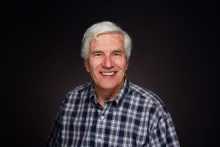
Steve Shafer was born and raised in Seattle. He graduated from Queen Anne High School in 1959 and later graduated from Ambassador College, Big Sandy, Texas in 1967, receiving a degree in Theology. He has been an ordained Elder of the Church of God for 34 years and has pastored congregations in Michigan and Washington State. He and his wife Evelyn have been married for over 48 years and have three children and ten grandchildren.
