
David Mills
This transcript was generated by AI and may contain errors. It is provided to assist those who may not be able to listen to the message.
Well, we've had a wonderful spring Holy Day season this year, and we kind of hate to see it winding to an end today. But these eight days have been very meaningful and very special, I'm sure, for all of us. How many have been keeping the Holy Days of God for less than 10 years? Let me see your hands. We do have quite a number, less than 10 years. And of course, all the rest of us, which would be the majority of the hands, would be more than 10 years. How many have been keeping these Holy Days of God for 20 years or more? Let's get up to that level. And we have a lot of people that go back a long time. And what about 30 years? How many? We have a few old-timers and 40 years or more. All right, a few hands still up, and we're probably going beyond that. We have some that have been here for for been a long, long time. We call them old-timers, I guess, in the faith. Well, we've been keeping an annual appointment with God this Passover and Feast of Unleavened Bread season. Of course, we keep an appointment with God every Sabbath, every weekly Sabbath day as well. But the annual Holy Days are appointments with our Creator and with our Heavenly Father. We learn more about His great plan and His great purpose. When we come here on the Sabbath and when we come at the Holy Day services, then we come before God. There are scriptures that point that out. We come before God. Does that mean God is here? Well, He's not here in body presence. He's up in the third heaven. Jesus Christ is at His right hand waiting to come back to the earth and rule His King. Our Father in Christ did not hear in body presence. Again, they're in the third heaven, but they're here in spirit presence. The spirit that emanates out from God is at this service. It's also at our services and other parts of the world right now as well. God's Spirit that emanates out from Him, His power, His Spirit of love and joy, flows out from Him to all the members of the Church and certainly to all the services that are being held on this day. So our Father and Jesus Christ both are here in spirit presence because God has God's Spirit has that omnipresent quality to it.
Well, this seventh day of the Feast of Unleavened Bread seems to be a special day, as some have observed the Feast of Unleavened Bread is the only of the seven festivals that has two high days. The Feast of Tabernacles only has one high day, but the Feast of Unleavened Bread, the only holy day that has two annual high days. And this last day of Unleavened Bread seems to be a special day of victory and triumph. We are not going to go back to the verses in Exodus, but the Israelites began their journey out of Egypt. They prepared on the Passover day. They left on the night of the fifteenth day, the first day of the Feast of Unleavened Bread. That's when they began their journey out of Egypt. And we believe that they may very possibly we can't say this dogmatically because the Scriptures don't say it, don't state it, but we believe it's very possible that they would have come to the miracle at the Red Sea around this time. Maybe possibly even on this day. It could have been on this day. Did they, did the miracle at the Red Sea happen then on the last day of Unleavened Bread? It is possible. But it certainly would seem to be at this time that they would have arrived at the Red Sea. Maybe it's a day earlier or a day later or so, but it was around this general time. Also, we will not go there either, but in the book of Joshua, Chapter 5, you'll find that when the Israelites came to enter into the land of Canaan, that they were there camping on the east side of the Jordan River, ready to cross on over the Jordan River and come on to conquer the land. You'll find them then there at the Passover time of the year in Chapter 5. And they were instructed to march around Jericho one time around the city each day for six days. And then on the seventh day, they would march around the city seven times. And then the walls of the city fell, and they were able to go in and to conquer Jericho. And that was symbolic of the conquest of the entire land. And the inhabitants of the land heard about Jericho. It was a walled city. And when Jericho fell, they realized that they were in trouble. But it was at the Passover time of the year, and so did the walls of Jericho fall either on this day or very close to this day? Maybe it was a day or two before, a day or two after, but it was at this very time of the year that the walls of Jericho fell, and the symbolic conquest of the land of Canaan took place. And another example of something very significant that took place on this day is found in the New Testament in Acts chapter 12. And that's where James, the brother of John, was killed. And Peter was put in prison, and Herod was going to bring him out after the Passover season, the days of unleavened bread.
Well, as it came on apparently toward the end of the feast, then an angel tapped Peter on the shoulder one night and said, get dressed, let's get out of here. So this angel led Peter out. He was kind of in a daze, kind of like a trance. He thought it was maybe a dream or a vision or something until he got out, and the angel left him, and he found himself on the street, and he said, well, I guess it's not a dream. And he went to the gate of some people that had been church members who had been praying for his release, and they thought it was his angel. You know, that shows sometimes that even we pray, not really anticipating an answer as much as we should. They were praying that Peter would be released, and yet when he knocked on the gate, they couldn't really believe it. But it was at this very time of the year that Peter would have been released, maybe on this day, or maybe a day each one way or the other. So this last of the feast of unleavened bread does seem to have some significance to it as far as a day of victory and triumph and deliverance, of ultimate deliverance. It's possible that all three of these events then happened either on or near this seventh day of the Feast of Unleavened Bread. You know, this is a day, then, of victory and triumph, anyway you look at it. And for us, it would certainly picture God's Spirit at work in us, miraculously leading us toward our own personal and collective victory over our sins. I'd like to ask a question and spend some time discussing it because I think it's very important this morning. Will the time come when all the nations on the earth will keep the Passover and the Feast of Unleavened Bread just as we have done this year? And the answer, I believe, we can show from the Bible is yes. We know that in Zechariah chapter 14 and verse 16 through 19 it says that all nations are going to keep the Feast of Tabernacles.
And if they don't keep the Feast, they'll have no rain. Will they not also keep the other holy days? We have felt that they most definitely would keep the other holy days. And Jesus himself indicated the keeping of the Passover at his return. Let's turn to Matthew 26 and read about that. Jesus indicated that he would even participate in the Passover service when he returns to set up God's kingdom on the earth. In Matthew 26 and verse 26, we read this on the Passover night at the Passover service. As they were eating, Jesus took bread, blessed it, and broke it, and gave it to the disciples and said, Take, eat. This is my body. Then he took the cup and gave thanks and gave it to them, saying, Drink from it, all of you. For this is my blood of the new covenant, which is shed for many for the remission of sins. He instituted the new symbols of the Passover for the church. But notice verse 29. He went on to say, But I say to you, I will not drink of this fruit of the vine from now on until that day when I drink it new with you in my father's kingdom.
He's not been drinking the wine up at the right hand of God all these many years. But when he returns to set up God's kingdom on the earth, there's indication here then that he will drink it. He will drink the wine that represents his own blood. You know, I wondered myself if Jesus would even officiate and conduct the Passover in Jerusalem every year. The one that is a memorial of his own death and drink the wine and take the broken bread. We can only ponder if he might not even conduct that service. It certainly indicates he will drink of the fruit of the vine when he does return to set up God's kingdom on this earth. We have indications in the Old Testament that nations will come to the Passover and to the Feast of Unleavened Bread. It doesn't name of these festivals, and yet it shows them coming to what these festivals represent and picture. Let's go to Zechariah chapter 12 for our first example. Zechariah and in chapter 12 beginning in verse 9. Zechariah chapter 12 and verse 9. It shall be in that day that I will seek to destroy all the nations that come against Jerusalem. This will be the day when Jesus Christ returns to set up God's kingdom on this earth. Verse 10, notice in that time then when Christ has returned, verse 10. And I will pour on the house of David and on the inhabitants of Jerusalem the spirit of grace and supplication. Then they will look on me. This is talking then about especially the tribe of Judah. They will look on me whom they have pierced. They will mourn for him as one mourns for his only son and grieve for him as one grieves for a firstborn. In that day there shall be a great mourning at Jerusalem and the land shall mourn every family by itself in verse 12. And in chapter 13 and verse 1, in that day a fountain shall be opened for the house of David and for the inhabitants of Jerusalem for sin and for uncleanness. Would that fountain not be the sacrifice of Jesus Christ? What other fountain is there for sin and uncleanness? It's up the Passover and the feast of unleavened bread. It will be in that day, says the Lord of Hosts, that I will cut off the names of the idols from the land and they shall no longer be remembered. I will also cause the prophets and the unclean spirit to depart from the land. In other words, the feast of unleavened bread. Well, this feast pictures is going to be brought to pass in Jerusalem. And of course, we know it's going to spread out to other nations as well, to all of Israel and to all the gentile nations also.
But isn't this coming to the Passover? Isn't these verses about the spirit of supplication, the mourning? And you know, the Jewish people, when they really get the message of Jesus Christ, they rejected Him at His first coming. Basically, they did. And when they get the message, they are going to mourn. After all, they are able to feel deep remorse and mourning. And when they really see Jesus Christ for who He was and is, then they will just break out into weeping and mourning. These verses indicate that is what will happen. Let's go to Isaiah 1, and we see that God admonishes all of Israel to turn to the Passover and to the Feast of Unleavened Bread.
And these verses and others would indicate that that time is coming. And in fact, it is in the near future when all nations are going to turn to keeping the Passover and the Feast of Unleavened Bread, just as we have kept these days this year. Isaiah 1, verse 4, a last sinful nation, a people laden with iniquity, a brood of evildoers, children who are corruptors, they have forsaken the Lord, they have provoked to anger the Holy One of Israel, they have turned away backward. And we see that all around us today. It is not just for ancient Israel. It is even maybe more for us. Why should you be stricken again? You will revolt more and more. The whole head is sick, and the whole heart faints. From the sole of the foot even to the head, there is no soundness in it, but wounds and bruises and putrefying sores. They have not been closed or bound up or soothed with ointment. We have a lot of those conditions around us today. Our problems are not really being dealt with, and we're not seeing solutions coming forth.
But skipping on down to verse 16, what should our nation do? And I think we can read here in this chapter and other following chapters in Isaiah that this is going to happen in Israel. In verse 16, they should come, our nation, our people should come to the Passover. They should come to the feast of unleavened bread. In verse 16, wash yourselves, make yourselves clean, put away the evil of your doings from before my eyes, cease to do evil, learn to do good. Well, that's what we're striving to do, this feast of unleavened bread. We're striving to be first of all washed, forgiven of our sins, and then cease to do evil, learning to do good, seek justice, reprove the oppressor, defend the fatherless, plead for the widow. So we're striving to do that as God has instructed us. And in verse 18, come now, let us reason together, says the Lord, though your sins are like scarlet, they shall be as white as snow. That is what happens when we come to the Passover. Our sins are forgiven, though they are red like crimson, they shall be as wool, if you be willing and obedient. And the world is going to be brought to the point they will be willing and obedient. Brethren, you know, when you think about it, the Passover and the feast of unleavened bread are the perfect solutions to our own sins and what we need to do about our sins and our state, our condition. But it's all the Passover and the feast of unleavened bread are the perfect solution for all of mankind. The sermon titled today is, Mankind's Need for Passover and the Feast of Unleavened Bread. That's what we're talking about. Mankind's need, yours and mine and all nations. All nations are going to be brought to the Passover and to the Feast of Unleavened Bread when Jesus Christ returns. All nations will seek to be forgiven and have their sins washed away and they will seek to cease to do evil and instead do good.
More about Israel's repentance is described in Jeremiah 31 and verse 8.
Just imagine Americans and British and Israelites and Northwestern Europe, Jews and the nation of Israel and other parts of the world. All the Israelites are described here as being gathered and when they are gathered from their impending captivity in the years ahead, then they will come with an attitude of repentance and they'll come seeking forgiveness and seeking to change their ways.
Jeremiah 31 and verse 8, Behold, I will bring them from the north country and gather them from the ends of the earth, among them the blind and the lame, the woman with child and the one who labors with child together. A great throng shall return there. No doubt, millions and millions will be brought out of captivity and returned to the land that God gave to Abraham.
In verse 9, they will come with weeping, oh, an attitude of repentance, and with supplications will I lead them and cause them to walk by the rivers of waters in a straight way in which they have not, in which they shall not stumble. Today we don't have a straight way. We have all kinds of crooked ways that are not working and bringing many, many problems and much suffering and grief. At that time, they'll be shown God's laws in God's way. You know, God's way is a straight way. It's a way that we don't stumble. It's a way that works if we follow it with many blessings that follow behind. A new covenant will be made with the house of Israel, but also with all of mankind.
Notice in verse 31 of this chapter, Jeremiah 31, in verse 31, the days are coming, says the Lord, when I will make a new covenant with the house of Israel and the house of Judah. Not according to the covenant I made with their fathers, and the day I took them to bring them out of the land of Egypt, my covenant which they broke, though I was a husband to them, says the Lord. But this is the covenant I will make with the house of Israel after those days, says the Lord.
And that's the covenant those who have repented and are baptized have entered into, the same type covenant that we have entered into today. I will put my law in their minds and write it on their hearts, and I will be their God, and they shall be my people. You know, that's really what this feast is all about. Having the laws of God which reflect the nature and the character of God written in our minds and on our hearts. In verse 34, no more shall every man teach his neighbor and every man his brother saying, know the Lord. For they shall all know me, or all shall know me from the least of them to the greatest of them, says the Lord.
God's truth is going to permeate the earth and go to every human being. And it goes on to say that man will still have sins that have to be reckoned with. They'll still have sins that need to be forgiven. You know, the millennium will see mankind needing forgiveness, needing the Passover, but it goes on to say it will be dealt with in the same way it is for us by the sacrifice of Christ. Last part of verse 34, for I will forgive their iniquity and their sin, I will remember no more.
And that's actually what God is doing for us under the New Covenant circumstances or conditions today. Well, can you imagine all the world keeping the Passover and the Feast of Unleavened Bread, just as we have done? Getting down and washing feet and taking bread and wine, and then the next day putting out all the rest of their leaven, getting ready for the seven days of unleavened bread, having a joyous night to be much observed, and going on to have services on the high day, and then on this day, the last day.
Well, you know, that's coming. China, all over China, the most populous nation on the earth, now anyway. India, Russia, Egypt, Germany, and the other nations in Europe, Iraq, and other nations in the Middle East, Cuba, Vietnam, everywhere, all over the earth, all nations and all races, keeping the Passover and this Feast. That's coming. Washing feet, taking bread and wine, putting out the leaven, learning to keep God's laws.
Let's go back to Isaiah chapter 2, this time, Isaiah chapter 2. You know, when we read verses like this, we think about the Feast of Tabernacles and the Millennium, and so we should. Let's also think about the Passover and the Feast of Unleavened Bread. These nations are coming to repent. They're coming to look to the sacrifice of Christ for forgiveness of their sins. They're coming to learn what God wants to do, to keep his laws, and put out sin and keep the holy and righteous laws of God as pictured by the Feast of Unleavened. So we can certainly see the Passover and the Feast of Unleavened Bread here as well.
In Isaiah chapter 2 and verse 2, Now it shall come to pass in the latter days, that the mountain of the Lord's house shall be established on the top of the mountains, and shall be exalted above the hills. And all nations will flow to it. Many people shall come and come and let us go up to the mountain of the Lord, to the house of the God of Jacob. He will judge us his ways, and we will walk in his paths. For out of Zion shall go forth the law, and the word of the Lord from Jerusalem he will judge among between the nations, and they will rebuke many people, and they will beat their swords into plowshares, their spears into pruning hooks, and the nation will not lift up sword against nation or learn war anymore. So it's going to be a wonderful, wonderful time. It is the time of refreshing, but insert the Passover and the Feast of Unleavened Bread. That is the solution that helps to bring about a wonderful time of peace and prosperity and salvation all during the millennium. It will be a time of refreshing and a time of restoration. Let's go to Acts chapter 3 and read those verses. When everybody turns to the Passover all over the earth, it'll be a time of refreshing. It'll be a time of restoration. And as sad as conditions are on the earth today, they're even going to be much sadder before the second coming of Jesus Christ. And this world will need refreshing and restoration even more than it needs it right now. In Acts chapter 3 and in verse 19, We read some of those prophecies this morning in Isaiah and in Jeremiah and in Zechariah. So God is foretold a time of refreshing that is coming, a time of restoration. And that refreshing and that restoration, the foundation of it, is turning to the Passover and keeping the Feast of Unleavened Bread. No more wars because the way of the Feast of Unleavened Bread outlaws war. No more adultery. No more broken homes. No more pirates off the coast of Somalia.
We won't have that sort of thing anymore. No more racial hatred or religious bigotry and hatred.
No more economic meltdowns causing all kinds of loss and suffering and grief like we have seen produced by greed and corruption. No more drug cartels and drug addicts. You know, there wasn't a market for drugs in the United States. There wouldn't be any drug trafficking, would there? It's our own fault that we have such a problem, really, when you get right down to it. We're the cause of it. Nobody were buying drugs. There wouldn't be any drug trafficking and there would not be any drug cartels. And drug cartels have come into many areas of the country now. And it's dangerous in many areas of the country because of it. I heard somewhere recently that half of the adults in the United States admit to using drugs at some time, at least once. Half of the adults in our country have used drugs at one time or another. Some, of course, use them regularly.
But a time of refreshing is coming. We won't have that sort of thing going on.
No more mass murders. How many mass murders have there been, even in the last four to six weeks in our country? We've spent at least five or six, where anywhere from maybe six, eight, ten or more people have been just mowed down. There's this big debate now of whether assault weapons ought to be allowed or not. And I think that answer should be very obvious, as far as our citizenship is concerned. But no more mass murders like we've had in the last month or so.
No more prisons needed like we have today. You know, the United States, with five percent of the world's population, has 25 percent of the world's known prisoners. That's sad, isn't it?
There are 2.4 million people in our country, and there are five million people on parole.
There will be, when this time of refreshing comes, there will be no more cheating and lying and stealing. In a recent survey, 74 percent of high school students admitted to cheating on an exam. That's three out of four. Forty-46 percent of these students admitted, or young people, admitted stealing from a store at some time. That's almost half. And 93 percent confessed a lying to their parents. That's almost everyone. You know, I would appeal to our young people, let's come out of this world and instead choose the Passover and the Feast of Unleavened Bread. It will not lead you the way of cheating and lying and stealing. It will lead you the way that works, a smooth and straight way, not a crooked way. I'd appeal to you to choose the Passover and the Feast of Unleavened Bread instead of the leaven of this world. You know, when we think about it then, the Passover and the Feast of Unleavened Bread are the perfect solution to the human state that we find ourselves in. Lawrence Welk, the very famed musician, said, it's a crooked world when we try to live without God. And I'm convinced the one thing that can save us is a return to God's laws. He bemoaned what he saw happen in his own lifetime. Ben Dedmer, a good number of years. But during the latter part of his life, he saw things going down, the moral direction, the moral decline of our country. He was very concerned about it and he wrote a book about it. And this quote here, that he was convinced that one thing that can save us is a return to God's laws, was in that book. You know, I have a cartoon here that someone sent to me, which I wish you could see. Here's a husband and a wife sitting in their lazy boy chairs, and they are reading the morning news. Can you at least see that much of it? They're reading the newspaper and Mom over here is reading a page that says, study. More Americans say they have no religion. That's the one on the left-hand side. More Americans say they have no religion. Well, Dad over on the right-hand side is reading another section of the paper and it says, country going to... what is that H word? You know what I mean. In a handbasket, economy, war, greed, terror, North Korea, Iran. We could add the pirates around Somalia and other areas as well. So here they are reading, and one says more Americans say they have no religion. The other says the country is falling apart, all kinds of problems. And the husband speaks up and says, don't jump to conclusions. But you know, I jump to conclusions, don't you? I draw a connection between Americans are turning away from their moral foundation and all that is happening to us as a country. I draw a connection. I jump to conclusions on that. I think we all do.
There's a reason for our problems and our way of life is doing us in.
People want to go their own way. They want others to live the right way. I didn't know if I was going to want to read this or not, but I guess I will. You ever read the cartoons? Anybody ever deal with it like I am? Reading the cartoons? Well, this is Calvin and Hobbes. I don't even regularly read it, but Calvin and Hobbes are walking around through the woods here, and Calvin says, I can't believe. Now, Calvin is the boy, right? I don't even know enough about this. Hobbes is the tiger. Is that right? Okay, I think I'm saying it right. I don't read this enough to even know, but I like to this one that I saved some time back. He says, I don't believe in ethics anymore. And he continues walking on. He says, as far as I'm concerned, the ends justify the means. And he's now getting even more worked up. Get what you can while the gating's good. That's what I say. Might makes right. The winners write the history books. And he keeps on waxing. He says, it's a dog-eat-dog world, so I'll do whatever I have to and let others argue about whether it's right or not. Well, about that time, near about to the third from the end frame, here's the tiger, Hobbes, I guess, pushes him into a mud puddle. And here he is, mud all over him, next to the last frame. Why did you do that? And so Hobbes says, you were in my way. Now you're not. The ends justifies the means.
And here he is picking himself up out of the mud, the last frame. He says, I didn't mean for everyone you don't. Just me. You know, people want to do what they want to do. They want to be treated right, but they don't seem to be all that concerned about anybody else. It's kind of sad.
Yet we bring our problems upon ourselves. And this world desperately needs the Passover and the Feast of Unleavened Bread that set it all straight. And it's coming soon at the Second Coming of Christ. Well, you know, we in the Church of God need these days too. We needed these eight days this year. Do you see it? Do you see your need for the Passover and the Feast of Unleavened Bread? This year. These eight days, we sometimes say these days are a reminder. Well, I guess they are a reminder, but they are much more than just a reminder. These eight days are a very real spiritual exercise unto justification for sin and going on searching for God's righteousness. And we are to be different than other people. We're not to be the same old people because the Passover, really keeping the Passover and the Feast of Unleavened Bread means that we are striving to no longer be the old man, the old person that we were. We are striving to be a new person. We're striving to be different. And I wonder if that's translating into our lives. Is it translating into every aspect of our lives? Is it translating into our marriages? Is it translating into the way we behave on the jobs, the kind of neighbor that we are?
Every aspect of our lives. You know, I want to read something to you that's got a little putt of moral behind it. A car was being tailgated by a stressed out woman on a busy boulevard. So, picture yourself being in this car, you're tailgated by a woman, a stressed out woman on a busy boulevard. Suddenly, the light turned to yellow just in front of this man, this car driven by the man, in front of this woman that was stressed out. He did the thing and stopped at the crosswalk, even though he could have beaten the red light by accelerating through the intersection. Well, the tailgating woman was furious and honked her horn, screaming in frustration as she missed her chance to get through the intersection, dropping her cell phone and make-up. As she was still in a mid-rant, she heard a tap on her window and looked up into the face of a very serious police officer. The officer ordered her to exit her car with her hands up. He took her to the police station where she was searched, fingerprinted, photographed, and placed in a holding cell. Well, after a couple of hours, the policeman approached the cell and opened the door, and she was escorted back to the booking desk where the arresting officer was waiting with her personal effects. And he said, I'm very sorry for this mistake. You see, I pulled up behind your car while you were blowing your horn, flipping off the guy in front of you and cussing a blue streak at him, and I noticed the bumper sticker, What Would Jesus Do?, and the Choose Life license plate and holder, and the Follow Me to Sunday School bumper sticker, and naturally, I assumed you had stolen the car. So, you know, this lady's life practices didn't translate into the bumper stickers that she was carrying around. Something there that we should all think about. How about us? You know, we ever do something like that? And maybe that bumper sticker's back there on our car, but we're not living up to it. I want to read something on that our, this feast ought to remind us deeply that we need to be translating what we hear into the way of life that we live. There was a study done on measuring our lifestyle. Do Christians have a different lifestyle from non-Christians? Most of us would say yes, some of us would guess no. None of us would have much more than intuition or opinion as a basis for our response. Albion Research Bureau, a Christian research and media services company in Wheaton, Illinois, has produced scientifically-drone research on this issue, and the findings aren't encouraging. This company, George Barna, Barna's company found surprisingly little evidence of distinction between the non-Christians and the Christians he surveyed. His conclusion is disturbing. There is a clear distinction between Christianity as a system of beliefs and values and the manner in which people who profess to be Christians exercise those beliefs and values in their daily lives. The survey results suggest that scriptural exhortations to lead a Christ-like Bible-based lifestyle are consistently ignored. American Christians have been captivated by secular opportunities and possessions. There is little evidence to suggest that Christians have substantially or meaningfully translated their ideals into action. What would your survey reveal if you ask questions like these about a typical week in your life? How do my daily activities compare and contrast with those of my non-Christian friends, neighbors, and co-workers? What is different about my use of time, my habits, and the way I spend my money? What is special about my attitudes toward my work, my commitment to my family, my concern for my neighbors? You know, how would our answers then shape up as far as reflecting real Christianity? In the world that we live in, they don't translate. The bread in our lifestyle in God's church should be measurably different.
It should be obvious. If we really keep the Passover and the Feast of Unleavened Bread, we really keep these days, and it's going to translate into action, into a lifestyle. We cannot remain the same old person that we were before, instead a new creation. Let's go to Romans 6. That old man, that old way of life, was buried at baptism, and a new person rose out of that water to be a new creation and to be different than the old person that was buried there. In Romans 6 and verse 4, Therefore we are buried with him through baptism into death, that just as Christ was raised from the dead by the glory of the Father, even so we also should walk in uniscythe. For if we have been united together in the likeness of his death, certainly we also shall be in the likeness of his resurrection, knowing thus that our old man was crucified with him, that the botan might be done away with, that we should no longer be slaves of sin.
Our sins, then, were symbolically put to death and buried. It really pictures what we are to do the rest of our lives. And all things became new at the time of baptism. A new creation started. Let's go to 2 Corinthians chapter 5 and verse 17. It was a new creation, very different than a creation very different than the way that we have been the rest of our lives.
And we should begin to see this new creation emerging as the years go by. 2 Corinthians chapter 5 and verse 17. Therefore, if anyone is in Christ, he is a new creation.
Old things have passed away. Behold, all things have become new.
I'll tell you what, our lifestyle should be measurably different. Somebody looked over our shoulder, our husband-wife relations, our parent-child relations, our neighbor relationships, our fellow worker relationships on the job. These eight days that we are concluding today should fortify our ongoing year-round struggle to become a new creation through Christ in us. Let's go back to Romans 7 where we read earlier. Romans chapter 7.
And pick it up in verse 18. Romans chapter 7 and verse 18. Yet we've got a struggle, we've got a battle on our hands, and it's not going to be easy. In Romans chapter 7 and verse 18, I know that in me, that is, in my flesh, nothing good dwells. We do come to see that. That humbles us because at one time we may have thought we did have something good. We may have thought we were pretty good, and we didn't really see ourselves the way that we really were. But Paul came to see himself that in his flesh, in himself his flesh, nothing good dwells. To will, as president he said, but how to perform what is good I do not find. For the good that I will to do, I do not do. For the evil I will not to do, that I practice. And we find that too. We don't really want to fall into that wrong attitude that we sometimes fall into. We don't want to have said some of those things we sometimes say, and we feel bad about it later. Well, it shows that we do recognize there's a problem there, but we're not yet perfected. And we find ourselves sometimes doing that which we would not want to do. He says in verse 20, now if I do what I will not to do, it is no longer I that do it, but send the dwells in me. You've got that nature there, that battle, that struggle. I find then a law that evil is present with me, the one who wills to do good. Oh, he says, I delight in the law of God according to the inborn man. I think isn't this describing all of us? I think we all identify with the struggle that Paul was going through. And we delight in God's law. We'd like to be perfect in it. But in verse 23, we're not. We see a struggle, a battle. I see another law in my members warring against the law of my mind and bringing me into captivity to the law of sin that is in my members. And he went on to say, oh wretched man that I am.
He didn't say, oh wretched man that my mate is, or my neighbor, or somebody on the job, somebody else, oh wretched man that I am. He saw himself. He saw his struggle, his battle.
And he felt bad about himself. Oh wretched man that I am. Who will deliver me from this body of death? And it is through God's spirit and power. I thank God through Jesus Christ our Lord. So then with the mind I myself serve the law of God. But with the flesh the law of sin is still there. And we'll have that law of sin in our flesh then as long as we are flesh. We'll have that struggle, that battle. You know, God has said it this way. And by exercising against the law of sin in our members, spiritual strength and moral fiber and godly character and nature are being developed in the same way that a weight lifter develops muscle by resisting weight, the pounds of weight. He develops muscle. We're doing the same thing in a character way. Let's go to 2 Corinthians chapter 10. Yes, there's a spiritual battle that is going on. It's constant and ongoing, ongoing, 24 hours a day, seven days a week. This battle is unrelenting. It never lets up.
And we have to be on guard constantly. 2 Corinthians chapter 10 and verse 3.
Though we walk in the flesh, we do not war according to the flesh.
That's a spiritual warfare. For the weapons of our warfare are not carnal, but mighty in God for pulling down strongholds. And we have many strongholds to pull down, many weaknesses of the flesh. What things have you seen this feast that maybe is still a stronghold for you to work on, to pull down. There's still battle to be done. There's still overcoming. There's still a warfare and battles to be won. Well, the pulling down of strongholds, casting down arguments, and every high thing that exalts itself against the knowledge of God, bringing every thought into captivity to the obedience of Christ. So yes, the warfare is going on, and the battleground is our minds. It's our thoughts. It's our attitudes. It's our actions.
I'd like to briefly address the question, how should we feel that we are doing? Should we feel well? I think I'm doing pretty good. I think I'm really making great progress. I don't know that we should feel that way about ourselves. Many scriptures would indicate that we instead should not feel satisfied about ourselves or feel that we're doing all that great. Paul said he was in this struggle in Romans chapter 7, and he said, O wretched man that I am. He said he was fighting against his own body, lest he become a castaway. He didn't feel like he had it made. He had to keep up that battle daily and constantly. In the parable Jesus of the Pharisee and the publican, the publican is commended because he said, God be merciful to me, the sinner. He saw his sins. He didn't feel all that great about himself, and he went away justified. Jesus said, when we've done all that is commanded of us, to feel that we are unprofitable servants, that we're not really yet measuring up to where we should measure up. Jeremiah said the way of man is not in him to direct his step. So I don't know that we should be feeling like we're, you know, doing great. We should instead maybe feel more like the unprofitable servant and ask God to be merciful to us and ask him to continue doing his creation, beautiful creation in us.
And he will. He is the master potter, after all. Let's go to Isaiah chapter 64.
And with that attitude, God's Spirit can work. It's the spirit of a lowly heart and mind, not one of pride, not one of self-satisfaction, but one that is looking and trusting to God as the master potter. In Isaiah chapter 64 and verse 6, we are all like an unclean thing.
And all our righteousness are like filthy rags. That's the best side of us, like filthy rags to God. We all fade as a leaf and our iniquities wind us away. And there's no one who calls on your name, who stirs himself up to take hold of you. For you have hidden your face from us and have consumed us because of our iniquities. And this is especially referring to Israel not seeking God's ways and God hiding his face, but there's application for us here.
And verse 8, But now, O LORD, you are our Father, we are the clay, and you are potter, we all are the work of your hand. So, you know, if we can just strive to be a good piece of clay in God's hands, I think that would be a pretty good state of mind or attitude to have. A good piece of clay that our Father can use His Holy Spirit to shape and form and mold His beautiful character, His goodness, His nature in us.
I'd like to ask some questions as we come to the final of the sermon this morning. Have we grown from keeping the Passover and the Feast of Unleavened Bread? I hope that we have, and I believe that we have. If we've strived to do it in the right attitude and worship of God, then yes, you know, we have grown some. God has etched a little bit deeper about the Passover and the Feast of Unleavened Bread. You know, over the years, that etches deeper and deeper until it becomes a part of our very nature and character.
God has etched more of that into our character. Did it make any difference in the way that we live our lives? You know, I hope that it already has, and I hope it will make further difference in the future, measurable difference in the way we live our lives. This Feast ought to make a difference. Will we as men be better men, a better husband, a better father, a better neighbor, worker on the job because of keeping this feast? We should. Will the ladies be better women, better wives, better mothers, better workers at home or on the job because of keeping this feast? Better because of keeping this feast. Will we grow in the days ahead because we've kept these eight days? Or will it be the same as in the past? Basically, the same old problems, the same old attitudes, the same old problems. You know, really, that should not be the case. The world needs Passover and the Feast of Unleavened Bread, and so do we. We need it every year, not as a reminder, but as a very strong spiritual exercise that we go through. If we'd been sincere in our worship at the Passover when we washed feet, when we took bread and wine, when we put away the leaven and ate the unleavened bread, then we do come out of these different.
More of God's nature and character have been etched upon our hearts and minds.
We exit these eight days of spiritual exercise as to be renewed and strengthened. For the final scriptures, I'd like for us to read from Galatians 5 beginning in verse 16. Galatians 5, beginning in verse 16. Just like to let us be reminded as we begin to exit the eight days of Passover and Feast of Unleavened Bread that we continue to be engaged in our battle, our spiritual warfare, that we recognize it, that we keep working on everything that is contrary to these days. And we could have quite a list of things that we could come up with. Things like lust, be on guard, greed, coveting, temper, anger, foul language, impatience, sarcasm of the wrong type, cynicism, ill-tempered, prejudice, hatred, vanity, pride, intellectual vanity, self-righteousness, a hostile attitude or rebellion, disrespect for authority, attitude of disagreement, murmuring, and underlying resistance. Maybe outright lust of the flesh like smoking or drinking excessively or gluttony or eating excessively or reveling or gambling, betting on the horses or whatever. TV addiction, rock music, sports addiction, pleasure seeking instead of seeking God, filthiness, uncleanness, laziness, immorality, perversions, envying jealousy, strife, debate, lying, cheating, extortion, hypocrisy, deceit, dishonest practices and business, and so forth. There could be many, many other things that we could add to that.
Let's keep these things in mind as we read here in chapter 5 beginning in verse 16.
I say then, walk in the Spirit and you will not fulfill the lust of the flesh, for the flesh lusts against the Spirit and the Spirit against the flesh, and these are contrary to one another, so that you do not do the things that you wish. So there's a battle that is going on between the flesh and the Spirit. We have engaged in that battle. But if you are led by the Spirit, you're not under the law. Does that mean we don't keep God's law? No, we're not under the penalty of breaking the laws of God. Instead, we're within God's laws or strive to be. Now, the works of the flesh are evident, which are adultery. It's one of those extensions, maybe, of some of the things we just listed. Adultery, fornication, uncleanness, licentiousness, idolatry, sorcery, hatred, contentions, jealouses, outbursts of wrath, selfish ambitions, dissensions, heresies, envy, murders, drunkenness, revelries, and the like. Of the which I tell you beforehand, just as I've told you in time past, that those who practice such things will not inherit the kingdom of God. No, that's all the leaven of this world. That's what we're striving to put out. But the unleavened bread is portrayed by the fruits of God's spirit. The fruit of the spirit is love, joy, peace, long-suffering, kindness, goodness, faithfulness, gentleness, self-control. Against such, there's no law. Those who are Christ have crucified the flesh with its passions and desires. If we live in the spirit, let us also walk in the spirit. Do not become conceited, provoking one another, envying one another. You know, these are good verses to keep in mind as we exit these eight days. It is the flesh against the spirit. And God's spirit is up to the task. It can conquer whatever problem it might be. God's spirit is stronger. It will help us to win the battle. Whatever problems we face, whatever attitudes that we see crop up with God's spirit, we can win the battle. We can overcome. So yes, I believe we are the stronger and the better because we've gone through this these eight days. The lessons and meanings of the Passover and the Feast of Unleavened Bread are more deeply etched upon our hearts and minds. We're stronger because we did look to the sacrifice of the Lamb of God for forgiveness and justification for sin.
We're stronger because we do want to continue engaging in battle against pride and malice, wrong thoughts and attitudes, any spiritual leaven.
Just like Israel at the Red Sea and Jericho, and like Peter in prison, we're stronger for looking totally to God for the ultimate final and miraculous victory in our battle.
So, yesterday night we go on back to the leaven, but let us be more committed than ever to things pictured by the Passover and the Feast of Unleavened Bread.
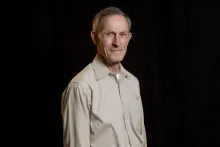
David Mills was born near Wallace, North Carolina, in 1939, where he grew up on a family farm. After high school he attended Ambassador College in Pasadena, California, and he graduated in 1962.
Since that time he has served as a minister of the Church in Washington, Florida, North Carolina, South Carolina, Oregon, West Virginia, and Virginia. He and his wife, Sandy, have been married since 1965 and they now live in Georgia.
David retired from the full-time ministry in 2015.
