
Don Ward
This transcript was generated by AI and may contain errors. It is provided to assist those who may not be able to listen to the message.
We sang the hymn, God Speaks to Us. That's the title of the sermon. It wasn't planned, but that's just the way it happened. Why are we assembled here today in Holy Convocation? There are many reasons that we could offer, many reasons from the Word of God. We know that as a command in a holy assembly, we're not forsake the assembling of ourselves to gather in so much more as we see the day approaching. But do we really understand and believe the Word of God with regard to all the things that we might cite as to why we are here? Lip service to the Word of God is one thing. But coming to understand that the Word of God is the Word of God is something else. It's not the Word of man. It's not my opinion. It is not based on human reasoning. It is the Word of God. There is no higher authority. There is no higher power than God. Of course, the world, many people in the world, have rejected God, and God does not exist. And they believe that the only way that you can solve humans' problems is through human beings. And their principal methodology is the scientific method. And if you can't discern it through the five senses, if you cannot replicate it in the physical world, then they question whether or not it exists. But we know that God exists through the many manifestations of His power in the universe by the very fact of the design of creation in so many more things. We want God to look upon us favorably, especially in the trying times in which we live. The trying times in which we live, not just times in the church, but times in the world. Everywhere we look in the world, we see that we are in trying times. These are very difficult times in which we live. But we can be more than conquerors through Jesus Christ, who loved us and gave Himself for us. In these times, we obviously want His blessing. We want His divine favor. The word carous in the Greek is translated grace in the New Testament. And it means divine favor for God to favor us, for God to look favorably upon us. So in the Scriptures, whom does God say that He will look to? Let's notice this in Isaiah 66, and all the while be playing in your mind what the title of the sermon is. God speaks to us. And of course, He speaks to us through His Word. In Isaiah 66, to whom is God going to look? Who is He going to have a favor upon? In Isaiah 66, 1, Thus saith the Lord, The heaven is my throne, the earth is my footstool. Where is the house that ye will build unto me, and where is the place of my rest? For all these things hath my hand made. God, through Jesus Christ, has created everything, as it says in Colossians, principalities, powers, thrones, dominions, whatever it is, nothing exists apart from God and Christ. And all these things have been with the eternal. And He has all of this. But who is He really concerned with? Upon whom does He really shower His favor? And who does He really look to? But to this man will I look. To this man that He's about to describe. To this man will I look even to him that is poor and of a contrite spirit and trembles at my word.
Brethren, we can all ask ourselves, are we that man? Are we that man that God is going to look to who trembles at His word? We sing to Him. We sang it today. God speaks to us by His great power where led. And how does God speak to us? If God exists and if He is who He says He is, our loving Father and Creator, He must have a way of speaking to us. And let's see the Bible testimony of what He says about speaking to us. In Hebrews 1, and this sermon to some degree is inductive, that is, one thing builds upon another, upon another, upon another. So we'll really need to keep up as we go along here. In Hebrews 1 and verse 1, with regard to God speaking to us, God who at sundry times in a different manner spoke in times past under the fathers by the prophets. And the fathers had, even Abraham, had the one who became Christ to appear to him. We know about that. We can read about it in Genesis, that the Yahweh appeared unto Abraham, the one who became Christ.
In some cases, angels appeared. Sometimes it was in dreams and visions. So it says, in different ways he spoke in times past under the fathers, hath in these last days spoken unto us by his Son. Jesus Christ is the living Word of God, whom he hath appointed heir of all things, by whom also he made the worlds. And now also in 2 Peter, chapter 1, of course, Peter was directly taught by Jesus Christ. He was the one that God and Christ chose to stand up on the day of Pentecost and explain to the brethren what was going on there that day as they witnessed the cloven tongues of fire upon their heads. And they witnessed, they didn't witness the wind, but they heard the mighty rushing sound of the wind. And people were hearing them in their own language and able to understand. In 2 Peter, chapter 1, verse 16, Now what that's referring to is when Peter, James, and John were taken up onto the Mount, what's called the Mount of Transfiguration, and they saw in vision Jesus Christ coming in His glory. That's what this refers to when it says we were eyewitnesses of His majesty. For He received from God the Father honor and glory, when there came such a voice to Him from the excellent glory, this is My beloved Son, in whom I am well pleased. And the voice which came from heaven we heard when we were with Him in the holy Mount. So that voice spoke when they saw that vision concerning Jesus Christ to hear Him, to hear His word. And obviously implied is to obey His word. In our key verse here, verse 19, we have also a more sure word of prophecy. Sometimes the entire Bible can be referred to as prophecy. We have also a more sure word of prophecy wherein we do well, that we take heed, as unto a light that shines in a dark place. And of course, we are those lights sprinkled throughout the world. You are the light of the world, as it says in Matthew, Let your lights therefore so shine before men that they may see your good works and glorify your Father who is in heaven. So there is light scattered around the world, and it is through those who have received the Spirit of God and begotten by the word of truth that can let their light so shine. So we also have a more sure word of prophecy wherein we do well, that we take heed, as unto a light that shines in a dark place, until the day dawn and the day star rise in your hearts. Jesus Christ is referred to as the day star in Revelation.
Knowing this first, that no prophecy of the Scripture is of any private interpretation.
The Scripture was not given through the will or consent of man. That's more maybe an accurate translation there, as witnessed by the next verse. For the prophecy came not in old time by the will of men, but holy men of God spoke as they were moved by the Holy Spirit. So we have in our possession the Word of God, and God speaks to us. The question is whether or not we will believe it, whether or not we will obey it. We are commanded to worship God in spirit and in truth.
So let's go there to John 4 and verse 23. John 4 deals with the encounter that Jesus Christ had with the Samaritan woman at the well, and the conversation that went back and to between them. She was a Samaritan. The Samaritans had built a temple on Mount Gerizim in Samaria that rivaled the temple in Jerusalem. That's part of the background of the discourse and dialogue that takes place here between Jesus Christ and the Samaritan woman. We'll note here in John 4, 23.
But the hour comes, and now is, when the true worshippers shall worship the Father in spirit and in truth, for the Father seeks such to worship Him, to worship the Father in spirit and in truth. Verse 24, God is spirit. He is the Spirit. There's no indefinite article in Greek. And they that worship Him must worship Him in spirit and in truth. What is the Bible definition of truth? John 17, 17. Sanctify them through Your Word. Your Word is truth. So it is through the Spirit and Word of God that we are set apart. And as we've already noted, Jesus Christ is the living Word of God. Now, listen. Note that in John 1. John 1. As you're turning to John 1, I want to really focus as you're turning there to this statement in John 4, 24 that I've just read. God is spirit. That is His essence. God is spirit. We are flesh. That is our composition. Because we can feel it, we can touch it, and so on, be discerned by the five senses. God is spirit. So you may not say composition, but you say essence. That's what He is. He is spirit. We've had people in the church for years struggle with, saying, what is the Holy Spirit? Well, the Psalmist said, well, it is the power of God. That is true. It is. God, through His Spirit, performs works of power. But God is spirit. The Holy Spirit is the essence of God. We have within us, in earthen vessels, as Paul calls it, we have in us, in these earthen vessels, that very essence of God, the Holy Spirit. Now, in John 1, verse 1, we said that Jesus Christ is the living Word. In the beginning was the Word, and the Word was with God. I'm sorry, and the Word was with God, and the Word was God. So we have here three distinct things. In the beginning was the Word, existence. The Word exists. And we know from Hebrew 7 that without Father, without Mother, without beginning of days, that the Word has always existed, and the Father and the Son are said to be co-eternal. And so they are. And they are co-essential. That is, they are of the same essence.
In the beginning was the Word, and the Word was with God, showing relationship with God, and the Word was God. Now you'll notice in verse 14, And the Word was made flesh, and dwelt among us, and we beheld His glory, the glory, as of the only begotten of the Father, full of grace and truth. Now remember what we read from Hebrews 1, 1, and 2. That in times past, God spoke to the fathers in different ways through the prophets, but has in these last days spoken unto us by Son. And that Son is Jesus Christ. Now we go to John 6, 63. John 6 is called the Bread of Life chapter, because Jesus Christ talks about Him being the bread of life that came down from heaven.
The living manna, that if you eat of this, you shall eat and live forever. And He talks about eating of His flesh and drinking of His blood, which of course symbolizes eating and drinking of the Word of God. And also, what we do on Passover, we take the bread, symbolic of His flesh, and we drink the wine, symbolic of His blood. And the way that we actually do that in life, man shall not live by bread alone, but by every word that proceeds out of the mouth of God. So once again, God speaks to us. Now this John 6, 63, I have quoted here probably, I'm guessing, 30 to 50 times in sermons over the past two years and four months. Let's note it in John 6 and verse 63.
It is the Spirit that quickens. It's the Spirit that makes alive, that gives spiritual life. Remember we read John 4, 24? That God is Spirit.
So the Word of God is equated with the Spirit of God.
The words I speak unto you, they are Spirit and they are life. Hence we call the Bibles referred to as the Book of Life.
So are we going to heed the Book of Life? See, the Word of God is the ultimate authority on spiritual matters. It's not what I think. It's not what somebody else thinks.
It is the Word of God. Now look at, please, Isaiah 8, verse 20. 8, verse 20. Virtually every Scripture that I am giving here today, we all should have in our memory bank and be able to bring forth. And if we don't, we can through meditation and study.
In Isaiah 8, verse 20. To the law and to the testimony. If they speak not according to this Word, it is because there is no light in them.
You see, the Bible has to do with the Word of God. It is a light unto our feet, a lamp unto our path.
Now notice 1 Corinthians chapter 2. Of course, it is through Revelation where God has peeled back the layers, the blinders. He's raised the shades, as it were, on our eyes and allowed us to see and to comprehend, to know, to understand the precious words of life.
In 1 Corinthians 2.7, we speak the wisdom of God in a mystery, even the hidden wisdom which God ordained before the world unto our glory, which none of the princes of this world knew, for if they had known it, they would have not crucified the Lord of glory. For it is written, I have not seen nor hear her, neither has entered into the hearts of man the things that God has prepared for those who love Him. But God hath revealed them unto us by His Spirit, for the Spirit searches the deep things of God. For what man knows the things of a man, say the Spirit of man which is in him, even so the things of God knows no man, but by the Spirit of God. So these things are revealed unto us. Now let's notice what Timothy says about the Word of God. Actually, it's Paul writing to Timothy, 2 Timothy 3, verse 16. Now I'm following it and coming to a conclusion based on this Scripture here, because it's almost today as if there is no authority in the Church. Almost like no authority. You know, with the advent today of... I note now East Texas, where we spent off and on several years, either Pasadena or in the Big Sandy area. You know, beginning with 1995 and up to the present, so many different living room groups, people who went all the way back into Orthodox Judaism, where the Yarmulke and the Holy Underwear, to those who began to embrace Messianic Judaism, maybe the next step up from Orthodox Judaism, to various church organizations and splits and so on. And if you don't like this one, then go to this one. If any authority is exercised here, then go there. And it's just...and it's created so much chaos and confusion. So brethren, that's one of the reasons why I'm giving this sermon, is who are we going to believe? If the Bible is not our final authority, the reveal word of God, then we have to base it on what human beings are saying. And I'd rather trust what God says than to trust... I surely don't trust what I, in and of myself, would come up with. But to the best of our ability to rightly divide the word of truth and see what the Bible says. And we're going to read here a scripture that is very important in the overall mix of things, because when Paul wrote this, basically the only scriptures that existed that they had access to in the synagogues and the various places where they would assemble was basically the Old Testament. Now notice this, it's 2 Timothy 3, 16. All scripture is given by inspiration of God. Now this ties in with what we read in 2 Peter 1, verse 21, where it says that holy men of old, they wrote as they were inspired by the Holy Spirit. All scripture is given of inspiration of God and is profitable for doctrine, the teaching, for reproof, for corruption, for instruction in righteousness, that the man of God may be perfect, thoroughly furnished unto all good works. So the whole way of life, obviously, is contained within the scripture.
I charge you therefore, before God and the Lord Jesus Christ, who shall judge the quick and the dead at His appearing in His kingdom, preach the Word. Preach the Word, because it is the Word of God. God speaks to us. He hath in these last days spoken unto us by a Son. Jesus Christ, preach the Word, be instant in season, out of season, reprove, rebuke, exhort, with all long suffering and doctrine, teaching. For the time will come when they will not endure sound doctrine. Have we reached that point of time? Is that why we see so many various scattered organizations and scattered brethren? They say scattered brethren around the world. The time will come when they will not endure sound doctrine, but after their own lush shall they heap to themselves teachers having itching ears. It's not that teachers per se, it's the people who heap to themselves. If they don't like this teacher, then let's use that teacher. Paul says, preach the Word.
And they shall turn away their ears from the truth. What is the Bible? We've already read it, quoted it. John 17, 17. Sanctify them through your Word. Your Word is truth. And they shall turn away their ears from the truth and shall be turned undefabled. Now is the time to preach the Word of God as never before, no more soft pedaling the Word of God. And brethren, we must be courageous and tell it like it is. We're not just playing church. This is a battle for our very eternal lives. In Isaiah 30, we're admonished along these lines with regard to the ministry, and it also obviously applies to the brethren as well who might be there to listen. In Isaiah 30 and verse 8, now go write it before them in a table. Note it in a book that it may be for the time to come forever and ever, that this is a rebellious people, lying children, children that will not hear the law of the Lord, which say to the seers, see not, to the prophets prophesied unto us, write things, speak unto us, smooth things prophesied, deceit, or preach and teach, deceit. We're not here to preach about anything other than the Word of God. Now, obviously, at times you must use examples and things that are happening in this world to try to illustrate the point in Jesus Christ basically taught through parables and allegories and different figures of speech, but preach the Word. In verse 11, well, I don't know if I read all of 10. Let's read 10. Which say to the seers, see not, and to the prophets, prophesied not unto us, write things, but speak unto us, smooth things prophesied, deceit, get you out of the way, turn aside out of the path, cause the Holy One of Israel to cease from before us. And when you begin to make God over in your own image, when you begin to deny God in the Word of God, then what are you doing? You're removing God from before you. And actually, you're setting up an idol in your mind, your own stumbling block. Wherefore, thus says the Holy One of Israel, because you despise this Word, and trust in oppression and perverseness, and stay thereupon, therefore this iniquity shall be to you as a breach, ready to fall, swelling out in a high wall, whose breaking comes suddenly at an instant.
Brother, we must never come to think that God is just like us, or that He views things in the same way that we do. Notice now in Isaiah, forward please to Isaiah 55 and verse 6, Isaiah 55 and verse 6.
Isaiah 55 verse 6, Seek you the Lord while He may be found, and call upon Him while He is near. And today, if you would hear His voice, as it says in Hebrews 3, today if you would hear His voice, harden out your heart. Let your heart be soft, let it be teachable, let it be malleable.
We are the clay, He's the potter, let Him mold His shape, make us after His way.
Seek you the Lord while He may be found, and call upon Him while He is near. Let the wicked forsake His way, and the unrighteous man His thoughts, and let Him return unto the Lord, and He will have mercy upon Him and to our God. For He will abundantly pardon, for my thoughts are not your thoughts, neither are your ways, my ways, as the Eternal. For as the heavens are higher than the earth, so are my ways, higher than your ways, and my thoughts than your thoughts.
For as the rain comes down, and the snow from heaven, and returns not there, but waters the earth, and makes it bring forth and bud, that it may give seed to the sower, and bread to the eater.
Here are the analogies used between the rain supplying physical food, that the Word of God, the Spirit of God, provides spiritual food, as in the next verse, So shall my word be that goes forth out of my mouth. It shall not return unto me void, but it shall accomplish that which I please, and it shall prosper in the thing whereto I sent it.
So God is sending out His Word. Of His own will, He has begotten us with the Word of Truth. We can, of course, quench the Spirit and not take heed according to His Word. The examples in the Old Testament concerning respect for authority are summarily dismissed by many today as if they don't apply. But we have just read from 2 Timothy 3, verse 16, it says, So let's notice that in 1 Corinthians 10, 1 Corinthians 10, verse 6. The first part of the chapter talks about the one who really led them through the Red Sea and their baptism in the sea and all that was Jesus Christ. Verse 5 talks about some of them being overthrown in the wilderness. And you know they wandered in the wilderness for 40 years because of unbelief. They had such an example going before them. These things were our examples. To the intent we should not lust after evil things as they also lusted. Neither be you idolaters, as were some of them as it is written. The people sat down to eat and drink and rose up to play, Aaron's golden calf. Neither let us commit fornication as some of them committed and fell in one day 23,000. Neither let us tempt Christ as some of them also tempted and were destroyed of serpents. Neither murmur you as some of them also murmured and were destroyed of the destroyer. Now all these things happen unto them, for examples, and they are written for our admonition upon whom the ends of the world are come. So are we just going to summarily dismiss the examples? Say, oh, that was the Old Testament. Like, there is no anointed today. We don't have an anointed in the sense of a king, but if there is no authority in the church, and if there is no authority within the body of Christ, and if the ministry has no authority, and if the Word of God is just discarded, then we are in the period of the time of the Judges, where it's repeated, I don't know how many times, four or five times in the book of Judges, and in those days there was no king in Israel, and every man did that which was right in his own eyes.
So, brethren, don't we understand what we are professing? We're saying that we believe God, trust God, and want to be led by Him. But we have come to that point in time in which a lot of people have become their own ministers. You know, there are four great enemies of faith.
Anchors care in Matthew 6, fear, Matthew 8, doubt, Matthew 14, but let's go to the fourth one, which I think is the greatest one, is Matthew 16, Matthew 16, verse 5.
Anchors care, fear, doubt. Now, this one feeds on anchors care, fear, and doubt.
You begin to become so concerned about a certain thing, wondering whether or not you're going to be able to do this or that or the other, and then you become fearful. Then you begin to doubt. And what feeds this? Well, here it is. What I believe is the greatest enemy of faith is recorded right here.
It goes hand in glove with, I would say, there are two great enemies of faith, unbelief and this. Of course, if you don't believe God exists, you might as well pack it up and go home anyhow. But in Matthew 16, verse 5, And when his disciples were come to the other side, they had forgotten to take bread. Then Jesus said unto them, Take heed and beware of the leaven of the Pharisees and of the Sadducees. And they reasoned among themselves human reasoning. And they reasoned among themselves, saying, It is because we have taken no bread. See, the human tendency is to always reason through human reasoning as opposed to reasoning from a spiritual point of view and from the Word of God. And the Word of God and the spiritual point of view are one and the same. Which when Jesus perceived, he heard him talking, he said unto them, O you of little faith, Why reason you among yourselves because you have brought no bread? Don't you understand? Neither remember the five loaves of the five thousand hammy-dabaskets were taken up? Neither the seven loaves of the four thousand hammy-dabaskets taken up? How is it that you do not understand that I spoke to you not concerning the bread that you should beware of, the leaven of the Pharisees and the Sadducees? He said, I'm not talking about the physical bread, I'm talking about the leaven which he identifies in verse 12. Then understood they how that he made them not beware of the leaven of bread, but of the doctrine, the teaching of the Pharisees and of the Sadducees. See, human reasoning. We've come to that point in time in which some have exalted human reasoning over the Word of God. It's the yeah-but. A yeah-but. And we can always have a yeah-but. We have come to that point in time in which people apparently think that the ends justify the means. We have come to that point in time in which many people show by their actions that they do not believe there is any authority in the church. And really, if you were saying that, in the Word of God, in the Bible. Because the Word of God and the Bible instructs us on those matters.
Note what God says we should always do. Proverbs 3.
If we follow this simple admonition that's here in Proverbs, beginning in Proverbs 3, Proverbs 3, verse 1.
The days and long life and peace shall they add to you. Let not mercy and truth forsake you. Bind them about your neck. Wrythe them upon the table of your heart. See, you can only do that through the Spirit of God in your effort and prayer, study, meditation. So shall you find favor and good understanding in the sight of God and man. Trust in the Lord with all your heart. Lean not to your own understanding. In all your ways acknowledge Him, and He shall direct your paths. You know, people talk about the unpardonable sin.
And we usually define the unpardonable sin as the sin you won't repent of. But how do you get to that point? How does a person come to the point of committing the unpardonable sin? Is it related to not listening to the Word of God and not obeying the Word of God? Do you think that this example that we're going to turn to, if you would turn to Matthew 12, in verse 22, is some kind of something set aside that cannot be explained in a more universal kind of application than this that some have narrowly focused on? So we shall expand this.
Once again, as I said, we're in a battle for our eternal lives. And to understand what it's all about. In Matthew 12, in verse 22, Then was wrought unto him one possessed with the devil, blind and dumb, and he healed him. Inasmuch as the blind and dumb both spoke and saw. And all the people were amazed and said, is this not the sight of David? I mean, this is just physical guy here. Don't we know him? But when the Pharisees heard it, they said, This fellow does not cast out devils, but by Beelzebub, the prince of the devils.
I may have given you the wrong impression by the son of David. When they said, is not this the son of David? They were referring to, is this not the Messiah? Because it was prophesied that Messiah would be the son of David. And Jesus knew their thoughts and said unto them, Every kingdom divided against itself is brought to desolation, and every city or house divided against itself shall not stand. But if Satan cast out Satan, he is divided against himself. How shall then his kingdom stand? So Christ then shows that, no, this wasn't done through Beelzebub, because if that were true, then the devil would be casting out the devil.
And he's not going to do that, because he knows that his kingdom would be diminished if he did that. He continues. Verse 27, And if I by Beelzebub cast out devils, by whom do your children cast them out? Therefore they shall be your judges. But if I cast out devils by the Spirit of God, then the kingdom of God is come unto you. It's amongst you. It's right here. Jesus Christ, the representative of the kingdom of God, came preaching. The kingdom of God is at hand. Repent and believe the gospel. Or else, how can one enter into a strong man's home and spoil his good, except he first bind the strong man, and then he will spoil his house.
See, God, through Christ, has given us the ability to bind the strong man, to cast the strong man out. Christ says, Be of good cheer. I have overcome the world. And we have that power and that strength through Christ. Verse 30, He that is not with me is against me, and he that gathers not with me scatters abroad. Wherefore I say unto you, All manner of sin and blasphemy shall be forgiven unto men, but the blasphemy against the Holy Spirit shall not be forgiven unto men. And whoso speaks a word against the Son of Man, it shall be forgiven him, but whosoever speaks against the Holy Spirit, it shall not be forgiven him, neither in this world or in the world to come.
So when you attribute the work of God to the work of the devil, then that is blasphemy. But can you commit blasphemy in other words, in other ways? Remember John 6.63, The words I speak unto you, they are spirit and they are life. Spirit and life. Spirit and life. So if you blaspheme the Word of God, are you not blaspheming the Holy Spirit? How do you blaspheme the Word of God? Obviously by not taking heed to the Word of God and disobeying it.
In John 14, verse 15. John 14, verse 15. Now remember, we're doing inductive in coming to a conclusion on some of these things. In John 14, verse 15. If you love me, keep my commandments. If you love me, keep my commandments.
Verse 21. He that hath my commandments and keeps them, it is he that loves me, and he that loves me shall be loved of my Father, and I will love him and will manifest myself to him. So we see here that this command to keep the commandments, and if we don't obey the Word of God, and especially while claiming to be Christians, we're guilty of blasphemy which will lead to the unpartable sin.
In Isaiah 52, verse 5. Isaiah, we're going to change Scripture, change C-H-A-I-N. In Isaiah 52, verse 5. How serious it is, and I think at times we don't realize the gravity of what we are professing. In Isaiah 52, verse 5. Now therefore, what have I here? saith the Lord, that my people is taken away for nothing. They that rule over them make them to howl, says the Lord, and my name continually every day is blasphemed. How is it blasphemed? Through their actions, through their behavior.
Note further in Isaiah 65, verse 7. Isaiah 65, verse 7. The ways that you can blaspheme, but it's not necessarily the same. Oh well, you did that through the work of the devil. It wasn't the Holy Spirit. See, the way that we can blaspheme is through our actions and not taking heed according to the Word of God. The words I speak unto you, they are spirit in their life.
Brethren, we are talking about deep spiritual things. Do we understand? Do we grasp? In Isaiah 65, verse 7. Your iniquities and the iniquities of your fathers together, says Yahweh, which have burned incense upon the mountains and blasphemed me upon the hills. Therefore, will I measure their former works into their bosom? So through their actions, and there are many such scriptures in the Old Testament, now we go to the New Testament, and I think it's a little more clearer and direct here in Romans, chapter 2, verse 17. Remember about two years ago, and I assure you to remember our series on Romans, I gave you a handout on mastering the book of Romans.
Chapter 1 of Romans, Paul takes the Gentiles to task. Chapter 2, Paul takes the Jews to task. Chapter 3, he concludes in Romans 3, verse 23, all of sin comes short of the glory of God. So Jew and Gentile are responsible. But here we focus on the Jews, beginning in verse 17 in Romans 2. Behold, you are called a Jew, and retest in the law. Oh, you make your boast to God about the law. And you know that Paul even states that in the first verse of chapter 3, the advantage that the Jew had over the Gentiles under them were committed, the oracles of God.
Verse 18, and know his will, you've known his will and approved the things which are more excellent being instructed out of the law. You are confident that you yourself are to guide of the blind, alight of them which are in darkness, and in structure of the foolish, a teacher of babes which have the form of knowledge and the truth in the law. You therefore, which teach another, teach you not yourself.
You that preach that a man should not steal, do you steal? You that say a man should not commit adultery, do you commit adultery? You that abhor idols, do you commit sacrilege? You that make your boast of the law, do you break through breaking of the law, dishonors you God? For the name of God is blasphemed among the nations through you as it is written. See, blasphemy comes from not taking heed according to your word and living by it. And the Jews, Paul says, you had all this knowledge and everything, you even boasted about it, but you didn't do it, and therefore my name was blasphemed among the nations.
Now notice Titus 2 and verse 5. In Titus 2 and verse 5. Timothy, Titus. Titus 2 and verse 5. To be discreet, chaste, keepers at home, good, excellent to their own husband, that the word of God be not blasphemed. In other words, all the instructions of God, if they are not kept, then you are blaspheming God.
In other words, I speak unto you, they are spirit and they are life. Now what does it lead to when a person, generally it starts with slowly drifting away from the truth, and they begin to reason around this and begin to reason around that, and they begin to drift away.
And what happens? See, I've got people that are near and dear to me that I fear have come to this point. Oh, in some ways they're fine people. Some ways you could say they are model people, but the Sabbath no longer means anything to them, really. They can do whatever they want to do, their own pleasure on the Sabbath, and apparently it doesn't bother them.
If you would turn to 1 Timothy 4, see, this is what eventually happens when you begin to blaspheme the name and the word of God. Because if you are blaspheming the word of God, you're blaspheming the Spirit of God, because the words I speak unto you, they are spirit and they are life.
And we call it the book of life. And so if we're not going to live by the book of life, what are we going to live by? Live by the book of death? In 1 Timothy 4, 1. Now, the Spirit speaks expressly that in the last times, the latter days, some shall depart from the faith, giving heed to seducing spirits and doctrines of devils, speaking lies and hypocrisy, having their conscience, see, the knowing within yourself, seared with a hot iron. At one time, you may have it in your mind so firmly fixed.
The Ten Commandments, and you should obey those Ten Commandments. You should remember the Sabbath day to keep it holy. And then you begin to drift away from that. And one thing leads to the other. And finally, over a period of time, you're like totally gone out here. Now, to Hebrews 6.
I forgot to bring my rubber band with me to illustrate this. I used to use it in class all the time with regard to when you start down this road of not taking heed according to your word. Remember once again what we read from Peter 2 Peter 1.19. We have a more sure word of prophecy wherein to you do well to take heed.
In Hebrews 6, the first two verses here outline the basic doctrines along with verse 3 to go on to perfection.
Verse 4, You can look that word up, fall away. Essentially, it means that get off course, fall off the path. Remember straight as away and narrow as the gate. You're aware it is a light under my path and lamp under my feet. If they shall fall away to renew them again unto repentance, seeing they crucify to themselves the Son of God afresh, and put him to an open shame. You can use the analogy of a rubber band. Let's say that the rubber band is our placenta, our lifeline, the Holy Spirit. We are connected to God through this lifeline. He has his essence in us. If we began to go away and we stretched that lifeline, and eventually you snapped that lifeline and it's broken. He says that if that happens, it is impossible to renew them again. Now let's go back to one of the most basic passages, set of scriptures in the whole Bible, I believe, 1 John 2. 1 John 2. In 1 John 2, you can settle most any argument here with regard to law and grace. In 1 John 2, verse 1. My little children, these things write I unto you that you sin not. And if any man sin, we have an advocate, a paracletos, paracletos, however you want to pronounce it. It is translated comforter in other places. We have an advocate with the Father Jesus Christ the righteous. So He is our intercessor. He ever lives to make intercession for us. He is a propitiation for our sins. He went in our stead, not for ours only, but also for the sins of the whole world. And hereby we know that we know Him if we keep His commandments. He that says I know Him and keeps not His commandments is a liar, and the truth is not any. When I was a little boy, my daddy's youngest sister married a guy who was a Pentecostal, who was sort of a nerdy well, who we thought he claimed to be disabled. He was in a wheelchair, and every time you would go to their house, at one time or another he would quote this 1 John 2.4. It sort of sunk into my head as a child. We were going to the Baptist Church, and the commandments were not emphasized. It was totally give your heart to the Lord and trust Him. He kept the law for you and all of that. You'll be saved. But that did sink into my head, even at a young age. It created sort of this first thing of what some might call cognitive dissonance with regard to what I was being taught here as opposed to what the Bible clearly says here. He that says I know Him and keeps not His commandments is a liar, and the truth is not in Him. But whoso keeps His Word in Him verily is the love of God perfected. If you want to be perfected in the love of God, you have to keep the Word. Hereby know that we are in Him. He that says He abides in Him ought Himself also to walk even as He walked. Now down in verse 18. For little children, it is the last time. And as you have heard that Antichrist shall come now, even now are there many Antichrists. Hereby we know that it is the last time. Now you see, there are two different ways here when looking at Antichrists. Mainly, the religious world looks at Antichrist and says, okay, it's this end-time figure who sets Himself up in the temple of God, saying that He is God, blasphemes God, sets Himself above all gods. And that's Antichrist, the end-time grand fulfillment. But notice what John writes here. Let's read it again.
Even now are there many Antichrists, whereby we know that it is the last time. You can be Antichrist by not obeying Christ. It's as simple as that. They went out from us, but they were not of us. Or if they had been of us, they would have no doubt continued with us. But they went out that they might be made manifest that they were not all of us. But we have an unction. And this word, unction, is like the word you would use for rubbing in a salve or an ointment.
We have an unction. We have a rubbing in from the Holy One, and you know all things. I've not written unto you because you know not the truth, but because you know it, and that no lie is of the truth. Who is a liar but he that denies that Jesus is the Christ? He is Antichrist that denies the Father and the Son. Who so denies the Son? The same hath not the Father, but he that acknowledges the Son also has the Father. Let that therefore abide in you, which you have heard from the beginning. If that which you have heard from the beginning shall remain in you, you shall continue in the Son and in the Father. And this is a promise that he had promised to us, even eternal life. These things have written unto you concerning them that seduce you. But the anointing, the rubbing in, which you have received of him abides in you, and you need not that any man teach you. But as the same anointing teach you of all things and his truth, and his no lie, even as it has taught you, you shall abide in him.
See, we have the anointing of the Holy Spirit, and if we are willing to obey the Word of God, which once again is equated with the Spirit of God, then we're not going to be deceived. Now, further in this, you notice 1 John 4.
Beloved, believe not every spirit, but try the spirits, whether they are of God, because many false prophets are going out into the world. Hereby know with the Spirit of God, every spirit that confesses that Jesus Christ, and many translations might bring this out, it is supposedly progressive present tense, that Jesus Christ is coming in the flesh is of God. In other words, Jesus Christ is living in you, and you are abiding in him, he in you and you in him, and you are living according to his Word. Every spirit that confesses not that Jesus Christ is coming in the flesh is not of God, and this is that spirit of Antichrist, wherefore we have heard that it should come, and even now already it is in the world.
So you can tie this in with when anyone begins to go down this road of my opinion, human reasoning, this is the way it seems to me, and tries to build a case for anything that is not based on the Word of God. That is against Christ. That is not what he teaches. He teaches that our action should be based on what he says. In verse 4, You are of God, little children, and have overcome them, because greater is he that is in you than he that is in the world. They are of the world, therefore they speak of the world, and the world hears them.
You are of God, he that knows God hears us. Why would they hear them? Because they are preaching and teaching the Word of God. He that knows God hears us, the apostles, those who were teaching, those who brought to us the words of life that are recorded. He that is not of God hears not us, hereby know we the Spirit of truth and the Spirit of error.
The Spirit of Antichrist was in the world in the days of the Apostle John. So you can't just say, well, Antichrist is that which is going to come way out here at the end of age. Now, there is a person coming, called Antichrist, who will do the things that are prophesied. But you see that when you don't take heed according to the Word of God, then you are opposing what Christ says, and that is against Christ.
The Spirit of Antichrist may profess to know Christ, but then deny Him through their actions. There are over a billion people in the world today who profess to know Christ. But they merely profess His name, refuse to obey Him, and thus His name is blasphemed among the nations. Turn back to James 2. Even the devil, you see here, believes in Jesus Christ as far as existence, but ... It's a great buck, but the devil won't repent.
The devil won't do what Christ teaches. In James 2, verse 19, you believe there is one God, you do well. The devils also believe and tremble. But will you know, vain man, that faith without works is dead? Faith without obedience is dead. And he uses here the example of Abraham. Was not Abraham our father justified by works?
Of course, I wish James had used the word obedience here, but it is what it is. But it's the same because Abraham, when he was told to go sacrifice Isaac, he obeyed him and did what God said to do. And when he had offered Isaac his son upon the altar. So you have faith wrought with his works or obedience, and by works or obedience was faith made perfect. And the Scripture was fulfilled which said, Abraham believed God, and it was imputed unto him for righteousness, and he was called a friend of God.
Therefore, many times in classes and sermons, I've said, what is the simplest definition of faith? The simplest definition of faith is to believe God and do what he says. If you don't believe God and do what he says, then you're against God, you're against Christ. The Scripture says, you're either for me or against you. It says, you either gather with me or you scatter abroad. Brethren, the time has come in the house of God that we must realize that judgment is on the house of God, and that we're not just playing church. You see then how that by works a man is justified and not by faith only.
You've got to obey. Likewise also was Rahab, the harlot justified by works or obedience when she received the messengers and had sent them out another way. For as the body is without the Spirit, without the Spirit is dead, so faith without works is dead.
We are in a battle for our eternal lives. Satan has increased his attack. You know that he, that is Satan, is a master of subtlety and deceit. So we must awake out of slumber. We must put on the whole armor of God and stand against the wiles of the devil. We must not fall prey to the lust of the flesh or emotion and heed to ourselves, teachers, having itching ears. That is, we having itching ears, wanting to hear what we want to hear that reinforces our point of view.
The point of view we want reinforced is the Word of God. Not my point of view, not anybody else's. We cannot continue to halt between two opinions. That is, sort of one foot in the church and one foot in the world. Let's notice 1 Kings 18, this great showdown that Elijah had with the priests of Baal. These great words here that are applicable for all time are, remember, Timothy said, all scriptures given of inspiration of God is profitable for doctrine, for reproof, for exhortation, instruction in all righteousness. In 1 Kings 18, verse 20, so Ahab sent, sent unto all the children of Israel, gathered the prophets together unto Mount Carmel.
And Elijah came unto all the people and said, How long shall you halt between two opinions? If the Lord be God, follow Him. But if Baal, then follow Him. And the people answered Him, not a word. You know, Joshua, at the end of his life, he said the same thing before Israel.
In the last chapter of Joshua, he talked about, he says, you know, just make up your mind. You're going to worship the gods on the other side of the river. He's talking about going back to their nativity. Or you're going to worship the true God that brought you into the land of promise. And Joshua said, as for me and my house, we're going to serve the Lord.
So, brethren, as we sit here today and we hopefully we're under and we're sobered by the Word of God, we come to understand that He is speaking to us. God speaks to us by His great power. We're led.
We hold in our very lamps, hands, wherever it is, the words of life, the words that have been preserved for us, so precious through the ages. These words are to be a light under our feet and a lamp under our path.
And if we don't take heed according to the Word of God, then we're opposing God and we're opposing Christ. And there's no way that we can love God with all our heart, mind, and soul, love our neighbors as ourselves, if we don't obey and do those things. Remember that Matthew 22.40 says, on these two, those two great commandments, hang all the law and all the prophets.
So, Brother and I hope that we are all sobered by what we are facing in these times.
But at the same time, God has promised that if we do the right thing, if we serve as examples, then He can work a mighty work and will work a mighty work within us and through us.
And once again, I want to close with this Scripture. To whom is God going to look? For all these things of my handmaid and all these things have been, says the Lord, but to this man will I look, even to him that is poor and of a contrite spirit and trembles at my word.
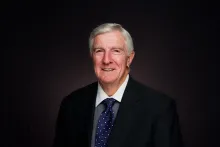
Before his retirement in 2021, Dr. Donald Ward pastored churches in Texas and Louisiana, and taught at Ambassador Bible College in Cincinnati, Ohio. He has also served as chairman of the Council of Elders of the United Church of God. He holds a BS degree; a BA in theology; a MS degree; a doctor’s degree in education from East Texas State University; and has completed 18 hours of graduate theology from SMU.
