

Don Ward
This transcript was generated by AI and may contain errors. It is provided to assist those who may not be able to listen to the message.
I might make a comment here a little about the names. Have you ever noticed in the New Testament that sometimes the name Jesus is used? Sometimes the name Christ is used, and then sometimes it is Christ Jesus.
Basically, Jesus is the one who humbled Himself and gave Himself for the sin of the world. And of course, Christ means the anointed one, the Messiah. And then Christ Jesus generally, and Paul uses that quite often, has to do with Him after He's resurrected, ascended back to the Father, who is now seated at the right hand of the Father, making intercession for us. So there is meaning to the way that the names are used. Unfortunately, in today's world, with Protestantism, they have... It's basically just Jesus not really understanding the various names. And of course, the same thing is true with regard to names and their meaning in a different way. The names and meanings of God in the Old Testament.
The title of our sermon today is Victory Through Faith.
Victory Through Faith. What should the Feast of Unleavened Bread prepare you and I to do?
Let's get a bit of a historical perspective.
Israel left Egypt on the first day of the Feast of Unleavened Bread.
Let's notice that in Numbers 33 and verse 3.
Israel left Egypt on the first day of the Feast of Unleavened Bread.
And of course, by this being in the Bible, there is a distinction made between the Feast of Unleavened Bread and the Passover.
They left Egypt on that day with a high hand, having spoiled the Egyptians, having seen all the great miracles that had been performed. The plagues that came upon Egypt and the fact that they were protected against that final plague in which the God passed through and everywhere the blood was not sprinkled on the doorpost, the firstborn was killed.
In Numbers 33 and verse 2, Moses wrote these goings out according to the journeys of the commandment of the Lord.
These are their journeys according to their goings out. And they departed from Ramesses in the first month on the fifteenth day of the first month. That's the first day of Unleavened Bread on the moral after the Passover.
So a distinction is made here between Passover and Unleavened Bread.
On the moral after the Passover, the children of Israel went out with a high hand in the sight of all the Egyptians. What were the Egyptians doing?
For the Egyptians buried all their firstborn, which the Lord had smitten among them upon the gods also the eternal executed judgments.
This shows that the blood had been sprinkled on the doorpost the night before, and they left after the Passover. Let's go to Leviticus chapter 24.
I'm sorry, Leviticus 23, what I would call the Holy Day chapter of the Bible, where all of the Holy Days are covered. The Holy Days are the Holy Days of the Eternal.
And to this day after the heresy that came about in the worldwide Church of God, and the fact that they tried to dig up and did dig up various Protestant writings, one by former Seventh-day Adventists, to try to destroy the commandments to keep God's Sabbath, His Holy Sabbath, which is a feast day, and the annual feast, and trying to make them into only those things that pertain to the Jews. Of course, at this time when they were given, not only the Jews, it was all twelve tribes, and the feasts are the feasts of the Eternal. You'll find a few places, maybe in the New Testament, where it says a feast of the Jews was at hand, but the feasts, the Holy Days, are the festivals of the Eternal.
Now, Leviticus 23, verse 4, These are the feasts of the Eternal, even holy convocations, which you shall proclaim in their seasons. In the fourteenth day of the first month, at even, and that's between the two evenings, is the Lord's Passover. It's on the fourteenth. We've already seen how that Israel left Egypt on the fifteenth. And on the fifteenth day of the same month is the feast of unleavened bread, unto the Lord, seven days you must eat unleavened bread. In the first day, you shall have a holy convocation, and you shall do no servile work therein. Notice there are the feasts of the Eternal. It's very clear from the New Testament that the New Covenant Church continue to keep God's feast days. Paul talks about in Acts, by all means I must get to Jerusalem by Pentecost, in 1 Corinthians, which has already been cited here today, chapter 5, verses 7 and 8, talks about, therefore let us keep the feasts, not with the leaven of malice and wickedness, but with the unleavened bread of sincerity and truth.
The sad part about Israel leaving Egypt is that Israel left Egypt physically, but they did not leave Egypt spiritually. A change in environment, a change in location, a change in governance, or we could bring it down to today's world, a change in corporate structure, things that you want to name, and a host of other things that maybe could be mentioned, will not in and of themselves change your heart to serve the living God.
You can change all these various things, but when all is said and done, it comes back to what is our relationship? What is our relationship with God and with Christ?
Israel would not give up. They would not give up the lust of the flesh, the lust of the eyes, and the pride of life. That's where a lot of our people are today, people who grace the isles and also sit in the seats in the Church of God, having a form of righteousness or godliness, but denying the power thereof instead of being conformed to the image of His dear Son, Jesus Christ. Notice in 2 Timothy 3 and verse 1, the Apostle Paul describes this as a prophecy of what things would be like today. We must never get the idea that the Bible is written first and foremost to the world. The Bible is not written first and foremost to the world.
The Bible is written first and foremost to us, those who have been called into His marvelous light.
Those whom God has set apart right now, who through His grace He's called us into His marvelous light, revealed Himself to us. Judgment is now on the house of God.
Judgment is not on the people driving the freeways out there this afternoon. Not yet.
They haven't been called into God's marvelous light. Of course, it goes on to talk about, in 1 Peter, in that verse, it says that judgment is now on the house of God.
That is the case where shall the ungodly appear? And if the righteous scarcely be saved, where shall the ungodly appear? Well, they'll appear at their time when they are called.
In 2 Timothy 3.1, this also know that in the last days perilous time shall come.
For men shall be lovers of their own selves, covetous, boasters, proud, blasphemers, disobedient to parents, unthankful, unholy, without natural affection, truce breakers, false accusers, incontinent, fierce, despisers of those that are good. Oh yeah, if you take a stand for that which is right, you become a mark today for the critics in today's world. Who are you? Try to impose your values on us.
Who are you to say what is right and what is wrong? That kind of attitude goes all the way back, of course, to the very beginning, even with Moses. Remember when he saw the Egyptian smiting an Israelite that he took action, wound up killing the Egyptian and burying him in the sand. The next day he saw two Israelites arguing, and he went out to intervene between them.
And what was their comeback?
What are you going to do? Are you going to kill us the way you did that Egyptian yesterday?
Who made you a ruler over us? And of course, that's why Moses fled into the wilderness and was there 40 years because he knew that if he were found out by the Egyptian authorities, he may be put to death.
Despisers of those who are good, traitors, heady, high-minded, lovers of pleasure, more than lovers of God, having a form of godliness.
The people driving the freeways today in other places in this world, that's not a form of godliness.
People who have a form of godliness are those who attend church and profess to be Christians.
Having a form of godliness but denying the power thereof from such, turn away.
For of this sort are they which creep into houses, lead captive silly women laden with sins, led away with different lust, ever learning and never able to come to the knowledge of the truth.
Denying the power thereof. What is the power thereof? The power of God has to do with the fact that through His Spirit that we can become new creations, that we can overcome the flesh, that we can rule over the lust of the flesh, the lust of the eyes and the pride of life.
Through the Spirit of God, the immutable spiritual law of God can be written on our inward parts.
Even after witnessing all the miracles that led to their freedom, the Israelites were not able or they did not choose to live by faith.
Let us notice now forward here in Hebrews chapter 3.
Hebrews compares and contrasts elements of the Old Covenant with the New Covenant, showing how much superior the New Covenant is to the Old Covenant in Hebrews chapter 3 and verse 7. Hebrews chapter 3 and verse 7.
Wherefore, as the Holy Spirit said, today if you will hear His voice, is God speaking to us today? After Passover, we sang to Him.
God speaks to us. By His great power, we are led.
If you will hear His voice, harden not your hearts, as in the provocation of the day of temptation in the wilderness. When your Father tempted me, prove me, and saw my works, forty years.
Forty, a time of testing, a number of testing, a period of testing.
Wherefore, I was grieved with that generation and said, they do always err in their heart.
Oh, you can leave Egypt physically. You can change congregations. You can change organizations.
You can change the environment. You can change the governing structure. You can do all kinds of things physically.
But only God, through His Spirit, your relationship with Him and Jesus Christ and through the Holy Spirit, can actually change your heart to serve the living God.
So I swear in my wrath they shall not enter into my wraths. Take heed, brethren, lest there be any of you with an evil heart of unbelief and departing from the living God. But exhort one another daily while it is called a day, lest any of you be hardened through the deceitfulness of sin. And sin is deceitful. We'd say of all the characteristics of sin, sin is deceitful.
The leading characteristic of the author of sin and death, Satan the devil, is deceitful. Now in verse 18, "...and to whom swear that they should not enter into his wraths, but to them that believe not, so we see that they could not enter in because of unbelief." Now remember, the title of the sermon is, Victory Through Faith. Total victory through faith.
Ancient Israel went through the form. They left Egypt on the first day of the Feast of Unleavened Bread, as we have read.
But their heart remained in Egypt.
"...Let us therefore fear, lest a promise being left to us of entering into his rest, any of you should seem to come short of it.
For unto us was the gospel preached as well as unto them, but the gospel preached did not profit them, not being mixed with faith in them that hurt it." Israel crossed the Red Sea, was baptized on the last day of the Feast of Unleavened Bread. We turn to Exodus chapter 15.
See, after they left Egypt on that first day of the Feast of Unleavened Bread, they journeyed for seven days. Now, the route that God directed them to take was into the wilderness. It wasn't the shortest route to the Promised Land, and it seemed a route that would be foolish to take that route because the wilderness was harsh.
Desert, not much rain. Many things out there in the desert to contend with.
Just the physical part of it, much less the spiritual aspects. Their first test, of course, was when they were hemmed up. The Red Sea in front of them, the mountains surrounding them, and the host of Pharaoh behind them, and seemingly no way out.
And so they cried out and they murmured in Exodus 14 against God, said, oh, why did you bring us out here to die? And by the time that they sent the ten spies out, spied out the Promised Land in late summer, they had tempted God, tried him ten times, and were, of course, then sentenced to 40 years of wandering in the wilderness.
But on that day, the last day of the Feast of Unleavened Bread, that first Feast of Unleavened Bread, there was a great victory, and God gave them a great victory.
Moses held up his hand as God commanded, and so on, and the sea was departed, and they crossed over on dry land, and then the sea closed, swallowed up the host of Pharaoh and his armies. We come to Exodus 15.1, then sang Moses and the children of Israel this song of the Lord, and spoke, saying, I will sing unto the Lord, for he had triumphed gloriously, the horse and his rider hath the overthrown in the sea.
The eternal is my strength and song. He has become my salvation. He is my God.
I will prepare him inhabitation, my Father's God, and I will exalt him.
Of course, that's one of the things that we are. We are in habitation for the Holy Spirit. Now, eventually Moses and the children of Israel did prepare a physical habitation for God, the tabernacle that was raised up in the wilderness, but we know that we today are that temple of God.
Continuing here in verse 10, continuing in verse 18, continuing in verse 18, continuing in verse 18, continuing in verse 18, continuing in verse 18, continuing in verse 18, continuing in verse 18, So Moses brought Israel from the Red Sea and they went out into the wilderness of Cher, and they went three days in the wilderness and found no water. And when they came to Mara, they could not drink the waters of Mara, for they were bitter. Therefore, the name of it was called Mara. And the people murmured against Moses, saying, What shall we drink? So from that great victory, singing that great victory song, three days later, after praising God and seeing all the wonders and things that He had done, they were murmuring. Forty years later, after Israel kept the Feast of Unleavened Bread, the walls of Jericho came tumbling down.
Jericho was that great opposing city that stood between the Israelites and the Promised Land. Let's notice now Joshua 6. Joshua 6. Joshua 6, verse 1. Deuteronomy, Joshua. Now Jericho was straightly shut up because of the children of Israel.
None went out, none came in. Of course, they'd heard about the great miracles that had been done, and so they were somewhat prepared for the arrival of the Israelites. And the eternal center of Joshua, "'See you, I have given your hand Jericho, and the King thereof, and the mighty men of Valor. And you shall compass the city, all you men of war, and go round about the city, once you shall do that for six days.' So during the Feast of Unleavened Bread, they marched around the city of Jericho.
And on that seventh day, verse 15, it came to pass on the seventh day, that they rose early about the dawning of the day in compass of city after the same manner seven times. Only in that day they compass the city seven times. And it came to pass at the seventh time when the priests blew with the trumpets, Joshua said, and the people shout, for the Lord had given you the city. And of course, you know the song, and the walls of Jericho came tumbling down. So God blessed Israel mightily in spite of themselves. During the days of Hezekiah, they discovered the book of the law. And after keeping the Passover, they even kept it seven more days.
They kept it Feast of Unleavened Bread, Passover and Unleavened Bread again for another cycle. And after that, they went out and they destroyed the various images and the idols that they had set up. Let us notice that in 2 Chronicles, 2 Chronicles 31 and verse 1. 2 Chronicles 31, just to pass and comment here that might help you in your studies, that is what 1 and 2 Kings and 1 and 2 Chronicles closely parallel each other.
1 and 2 Kings basically deal with the political governing side of things, whereas 1 and 2 Chronicles focus on the priestly things and the spiritual things more than 1 and 2 Kings. In 2 Chronicles 31, verse 1, now when all this was finished, that is, of keeping the Passover, all Israel that were present went out to the cities of Judah and broke the images and pieces, cut down the groves, threw down the high places of the altar out of Judah and Benjamin and Ephraim, also in Manasseh, until they had utterly destroyed them, then all the children of Israel returned every man to his possession into their own cities.
And then Hezekiah structured, set out true worship once again in Judah. So, brethren, we can see that the Feast of Unleavened Bread should prepare us for total victory. God leading Israel out of Egypt on the first day of Unleavened Bread, as we have noted, and leading them out, they went into the wilderness, as we've also noticed and noted, and their destination was the Promised Land. And we have also been called to come out of spiritual Egypt to overcome self, to overcome Satan, and to overcome this world or society. You could say the three S's, self, Satan, and society. The spirit of the times. We could add another S here.
And faith is a key element in all things spiritual. Now, the next 30 minutes or so, if I had only one sermon maybe to give you, for you to try to really understand the origin, development, and outcome of faith, it would be this, what we're about to present. You see, with that background of Israel had all of that witness before them, but for some reason they just didn't get it. Faith will enable us to gain the total victory. We have to live by faith if we're going to gain the victory over sin and self and Satan and society. Notice 1 John 5, verse 4.
1 John 5, verse 4. Now, we do a lot of talking about faith, but do we really understand it? And that's what I hope to do in the next several minutes here is for us to really come to understand what faith is all about and what it means. The just shall live by faith. In 1 John 3, verse 4, Who so commits sin transgresses also the law, for sin is a transgression of the law. And you know that he was manifested to take away our sins, and in him is no sin.
Now, how are we going to overcome that sin? We go a few pages forward to 1 John 5, and we have a definition of the love of God in verse 3. This is the love of God, that we should keep His commandments, and His commandments are not grievous. So the great antidote of sin is to keep the commandments of God. We parrot all the time that the Feast of Unleavened Bread represents putting sin out.
But no matter how hard and how long we preach about, when you come to the Passover, you have repented of your sins, and you have been reconciled to God and each member of the body of Christ, and you take that Passover. Then you're to keep the Feast of Unleavened Bread with the bread of sincerity and truth, which is more focusing on, or should be focusing on, keeping sin out, living by faith. See, Israel left Egypt.
God was with them, and they were to live by faith. When you're living by faith, you don't know for sure what's ahead. But if you understand faith in the sense of trusting God totally and completely, you know that whatever obstacle comes, He will deliver you. That doesn't mean necessarily that if your problem that you need to be delivered from is that you are sick, that you're going to be healed right now. It doesn't necessarily mean you're going to get a job right now. But it's an understanding that in the total mix of things, when all is said and done, God has our best interests at heart, and He will deliver you.
Verse 4, For whosoever is begotten of God overcomes the world, and this is a victory that overcomes the world, even our faith. And if you don't have this faith, you're not going to overcome the world. Now, Christ said on that Passover evening when He instituted the symbols of the New Covenant Passover, John 16, 33, Be of good cheer, for I have overcome the world. And Jesus Christ has overcome Satan, and everything that Satan stands for. And faith is a key element in all things spiritual. Please go back to Hebrews 11.6.
Hebrews 11.6.
I teach at ABC, a class called Fundamentals of Theology. And the first two questions, the first questions that I ask is, I hold up the Bible and say, what is the theme of this book? The theme of this book is the Kingdom of God, the family of God, and the way that you can become a member of the family of God. What is the first article of faith? It's to believe that God exists. And we go to Hebrews 11, verse 6. In Hebrews 11, verse 6, Beginning point, you have to believe that God exists, and that He is a rewarder of those who seek Him. That means, in everyday language, He always has our best interests at heart.
Now, how is faith developed? Let's briefly contrast physical faith and spiritual faith.
In physical faith, physical faith is based on knowledge that is obtained through the five senses, through experience and human reasoning. We know that if I knock this thing over, it's going to fall. We have faith. We know that. We call it the law of gravity. We know that if we put our hand on a hot stove, it's going to be burned. There is absolute faith in that. There are many things in the physical realm that we know it's going to happen. You might call that a type of physical faith that comes to us through the five senses, through human experience and human reasoning, and the teaching our parents do and all of that. Certain things are going to happen if we do certain things. Now, on the other hand, spiritual faith is based on revelation. It is based on the Spirit of God and the Word of God.
Now, one of the unique things about faith, if you would now, let's go to 1 Corinthians 12, verse 9. I don't know of anything else the Bible says this about, but faith is a gift of God and it is a fruit of the Spirit. So we need to explain how that takes place. It's like a reciprocity that one leads to the other. In 1 Corinthians 12, verse 9, verse 1 Corinthians 12, to another faith by the same Spirit. So one of the gifts of the Spirit is faith. Now we go to Galatians chapter 5. Galatians chapter 5. In Galatians chapter 5, we have listed the fruits of the Spirit. In verse 22 it starts, Galatians 5.22. But the fruit of the Spirit is love, joy, peace, long-suffering, gentleness, goodness, faith. So a fruit of the Spirit is faith. Faith is a gift of the Spirit. Faith is a fruit of the Spirit.
Now let's go to John 16. John 16. So how does spiritual faith, how does that develop? We briefly talked about physical faith based on knowledge that comes to us through the five senses, through experience, through various teachings, through human reasoning. We come to understand that certain things are going to happen and we have faith in it. In John 16 verse 7, Nevertheless, I tell you the truth, it is expedient for you that I go away, for if I go not away, the Comforter. And John 14.26 tells us that the Comforter is the Holy Spirit. John 15.26 tells us that the Holy Spirit proceeds from the Father and that it is sent to us by Christ. I will send the Comforter, it says, if I don't go away, it will not come to you, but if I depart, I will send Him to you. And when He has come, He will reprove the world of sin. And that word reprove in the Greek is ele-ncho. E-l-e-n-c-h-o, it means to convict. It will convict the world of sin, of righteousness, and of judgment. So the Holy Spirit is a convicting agent. To convict somebody has to do with placing a weight on their mind. This is right or this is wrong. We talk about He is a person of deep convictions. He really believes that this is true. With spiritual things, you can't have spiritual conviction in the sense that we're talking about here, apart from the Holy Spirit. Now the Holy Spirit then works in conjunction with the Word of God. You notice verse 13, How be it when it, the Spirit of truth, has come? It will guide you into all truth, for it shall not speak of itself. But whatsoever he shall hear, or it shall hear, that shall it speak, and it will show you things to come.
So what does the Spirit speak? It says it does not speak of itself. The Holy Spirit speaks the truth of God. The truth of God is revealed by the Bible. Your Word is truth. The words I speak, they are Spirit and truth, Christ says. Now go to Romans 10. The Spirit of God works in conjunction with the Word of God. And one of the main reasons why Christ raised up the church was to take the Word of God to the world. And the convicting agent, and it should be plural, the convicting agents are the Spirit of God and the Word of God.
In John 10, verse 14, How then shall they call on him, of whom they have not heard? So people in other lands, if we want to use whatever country we want to, that's remote, New Guinea, outer Mongolia, Tibet, whatever, they're not going to call upon God, and they're not going to be convicted by the Holy Spirit unless they hear the Word of God. And so the Holy Spirit and the Word of God work together to convict. How then shall they call on him, of whom they have not believed? And how shall they believe in him, of whom they have not heard? And how shall they hear without a preacher? And so we talk about sending people out to preach the gospel, preaching the gospel to the whole world, making disciples of the whole world. Part of the great commission of the Church is to preach the gospel to the world and to prepare a people for the Second Coming of Christ. How shall they preach, except they be sent, as it is written? How beautiful are the feet of them that preach the gospel of peace and bring glad tidings of good things. But they have not all obeyed the gospel, for Isaiah said, Lord, who hath believed our report? So then faith comes by hearing. What do you hear? You're hearing the Word of God. See, you're not going to have spiritual faith. And one of the reasons why faith throws dim and begins to flicker and the oil goes out in the lamp is because people come to the point where they are not praying, they're not studying, they're not obeying, and that Holy Spirit is quenched. And the lamp goes out and the fire dies down and you quench the Holy Spirit. Faith comes by hearing and hearing by the Word of God. So hopefully we can see now the origin of spiritual faith is the Spirit of God and the Word of God working in concert to convict. We could use the analogy of a tennis game. Say you're out on the court, you and another person, that other person would be in the role of God who pitches the ball up and serves it into your court. Oh, it's a soft, lob, perfect. All you've got to do is return it. When God opens your mind and heart, He convicts you through His Spirit and Word. There you are. See, that's a gift. It's divine favor. You can be called. Can you resist that call? Yeah, you can resist it. You can say, I don't like that serve. I don't want to be called now. I'll put it back off to some more convenient day. But then if you take that, you rack it and you return it. See, if you repent and you obey, then you begin to bear fruit. So faith is a gift of the Spirit, and it is a fruit of the Spirit. Now, I don't limit gift of the Spirit just to your calling. Because surely we want to pray, Father in Heaven, give me the faith that is necessary to do the things that you've called me to do. But we cannot forget that faith is inextricably linked to obedience. So it is up to us to return this conviction, this calling, this serve, if you want to use the tennis game, and respond to that conviction and repent and obey. And when we repent and obey, we're acting in faith and we begin to bear fruit. So we can see that one cannot have spiritual faith before the Spirit and Word of God convicts them.
Note how this worked on the Day of Pentecost when the Holy Spirit was sent to the New Covenant Church. Go to Acts 2, back a few pages here, Acts 2. The Day of Pentecost came, the Holy Spirit was sent. See, even at the time of the Old Testament, God's Spirit was among them. God even spoke to some of them and appeared to some of them. God appeared, Yahweh appeared to Abraham on the plains of Mamre, and there are various appearances of God recorded in the Old Testament. The Spirit of God and the Word of God placed convictions upon them. The Day of Pentecost when the Holy Spirit fully comes, the first part of the chapter, then Peter stands up and preaches his sermon, basically recounting the history of Israel and the prophecies that one day the Holy Spirit would be sent. So Acts 2.37, now when they heard this, see, the Holy Spirit was present, and they heard the Word of God. When they heard this, they were pricked in their heart. They were convicted. They were convicted. That word pricked means the actual Greek word is katapunko, or katapunko, k-a-t-a-p-o-n-c-o. It means to labor down, to be weighted. I'm really convicted about this. And they said, men and brethren, what shall we do? And in essence, Peter said, return to serve. You've been convicted. What do you do? Then Peter said, repent and be baptized every one of you in the name of Jesus Christ for their mission of sins, and you shall receive the gift of the Holy Spirit. I believe in the Greek, it means to adhere to, to trust, to rely on, to obey. It has a connotation of doing, of obeying. You cannot truly believe me in what I say unless you're willing to act on it. You know, having been in education all my life, I would say, you really need to get an education. You really need to pay the price to get an education. You say, oh, I understand that. I mean, the stats are out there. But do you really believe it unless you're willing to go pay the price to do it? So a lot of people have what is called intellectual assent to the truth. There are no telling to how many people. We have had thousands that have walked through the doors of the Church of God, thousands that have gone to Ambassador College, and there are thousands who are no longer attending the Church of God, have gone their own way. But of those thousands, many of them would give intellectual assent to the truth through this day, and they would say, oh, I know that's not right, whatever it is. But they continue going their merry way. So intellectual assent to the truth is one thing. But if you really believe, you'll do something about it.
So we notice in James, James, the famous epistle that Martin Luther, leader of the Protestant Reformation, denied, saying it was an epistle of straw because the Protestants wanted to boil everything down to by faith alone. And that would be alright if you really understood faith, and that faith is inextricably linked to obedience.
In James 2, verse 14, What does it profit you, my brethren? Though a man may say he has faith, and have not works, can works save him? I'm sorry, and have not works, can faith save him? If a brother or sister be naked in destitute of daily food, and one of you say unto him, Part and peace be warmed and filled, notwithstanding you give them, not those things which are needful to the body, what does it profit?
Even so faith, if it hath not works, or obedience is dead, being alone. You can't just have intellectual assent to the truth. Yes, a man may say, you have faith, and I have works. You can't just be your faith without your works, and I will show you my faith with my works. You believe that there is one God, you do well. The devils also believe and tremble. When you have intellectual assent to the truth, you've come to the place that the devil has.
He knows that God exists. Jesus Christ encountered the demon several times in His ministry, but they would not repent. And now their character is fixed, and they are adversarial and against God. Verse 21, Was not Abraham our father justified by works, when he had offered Isaac his son upon the altar? Seeing you how faith wrought with his works, and by his works, faith was made perfect. And the Scripture was fulfilled which said, Abraham believed God, and it was imputed, it was reckoned to his account for righteousness, and he was called a friend of God.
Verse once again, verse 22, Seeing you how faith wrought with his works, or you could say obedience, and by works or obedience was faith made perfect. In Matthew 23 and verse 23, we see that faith is a weightier matter of the law. Matthew 23 and verse 23, Therefore, faith stems from the law. What law?
The holy, immutable, spiritual law of God. In Matthew 23 and 23, Woe unto you scribes, Pharisees, hypocrites, you pay tithe, men, and anise, and coming, and have omitted the weightier matters of the law, judgment, mercy, and faith. These ought you to have done, and not to leave the other undone. Notice what it says. You have omitted the weightier matters of the law. So judgment springs from the law. You would not have known sin unless the law says, that's Romans 7.
Paul also says in Romans 7.14 that the law is spiritual. And you notice that it says that judgment, mercy, and faith, that after we have judged ourselves and cried out to God for forgiveness, He's faithful and just to forgive us of all unrighteousness. And we came to that point at Passover, and now He's saying, Leave spiritual Egypt. Leave it behind. Go live by faith. Don't harden your heart. Don't have just a form of godliness.
Don't just have intellectual assent to the truth, as the devils have. Go all the way. Faith is a total package, a way of life. Those of us who have entered into a covenant of sacrifice with God and Christ, you know, we are going to face a lot of trials in our lives. They come to the point in which we think, might tend to think, well, it's hopeless.
But we don't have to lose faith. We don't have to take that route of woe is me. We don't have to take the route of, this has never happened to anybody else. Why is it happening to me? You know, in all of the things, if we really believe Romans 8.28, all things work together for good to those who are called according to His purpose. Romans 8.31, if God be for us, who can be against us?
So when we enter into that covenant of sacrifice, we're saying, you are the master potter. I am the clay, refine me, make me, shake me after your way, because I have faith in you. The great men and women of Hebrews 11 that are chronicle there, we can read about those. In some cases, they were not delivered, but they died in faith, knowing that there was a better resurrection waiting for them.
When we lose courage and have greater affection for anything, greater affection for anything than we do God and Christ in the truth, then we're beginning to lose faith and beginning to quench the Spirit. The 11 man of faith is that man that is described in 1 Corinthians 13, verses 4, on into the end of the chapter. That man of true spiritual love, totally unleavened, as you heard in the sermon, is not puffed up.
So brethren, at this season, let's remember our commitment at baptism. When we said we're leaving spiritual Egypt, when we came to understand anything that I get above death is a gift. So let's give thanks to God. Satan the devil hates thanksgiving. Because when you're thanking God, you're saying, get behind me, Satan, because I'm trusting in God and I'm thanking Him for everything that I have. Let's follow Paul's admonition. Let's look at Philippians 4, verses 6 and 7. Philippians 4, verses 6. Be careful for nothing. In other words, don't have anxious care for anything. The four great enemies of faith are anxious care, fear, doubt, and human reasoning. So be anxious for nothing. But in everything by prayer and supplication, with thanksgiving, let your request be made known unto God.
If you want to put the devil to flight, give thanks to God. He hates that. And the peace of God which passes all understanding shall keep your hearts and minds through Christ Jesus. So brethren, let's fight the good fight of faith. Let's remember this admonition. Never forget God is faithful who is promised. God who cannot lie. So let us fight. Let us struggle. Let us earnestly contend for the faith that was once delivered. Just as a good soldier continues to fight regardless of how the battle seems to be going, he fights in faith to the death. If we die, we die in faith to await the resurrection.
In the resurrection, we gain the total victory. There sin, death, and the grave are forever defeated. And we rule and reign with God and Jesus Christ. So the Feast of Unleavened Bread should prepare us to gain the total victory through faith.
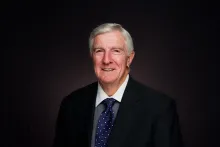
Before his retirement in 2021, Dr. Donald Ward pastored churches in Texas and Louisiana, and taught at Ambassador Bible College in Cincinnati, Ohio. He has also served as chairman of the Council of Elders of the United Church of God. He holds a BS degree; a BA in theology; a MS degree; a doctor’s degree in education from East Texas State University; and has completed 18 hours of graduate theology from SMU.
