
Roy Holladay
This transcript was generated by AI and may contain errors. It is provided to assist those who may not be able to listen to the message.
You know, the day of Pentecost is coming up, and I think we're all aware of that. The holy days of God picture the plan of salvation. Picture what God is doing, how God is bringing human beings into his very family. And as we approach the third step in the plan of salvation, the day of Pentecost, I think it's important for us to begin to focus our minds, to begin to focus our attitude toward that time. We've come through the Passover season, which pictures Jesus Christ's sacrifice, pictures our sins being forgiven, and our need for a Savior.
Then we observe the days of unleavened bread, which picture putting sin out of our lives, but also putting righteousness into our lives, living a right life before God. Now, we all understand that in order to do that, we don't have the strength ourselves to do it. There's not one of us here, there's not another human being on earth who has the power to overcome human nature, the power to resist the devil, and to change on his own. We need additional power. We need additional help. And that's why we are observing the day of Pentecost. This day, as we know, pictures the firstfruits.
It illustrates the step-by-step process and approach that God is using to eventually extend salvation to the whole world. He's not calling the majority of people today. In fact, he's calling a very small group. Look at the city of Cincinnati. And what do we have here? Thirty? What do we have in the East Church? A couple hundred? Two fifty? Look at the tens of thousands, the hundreds of thousands, who are out there, who God has not yet opened their minds. He will give them an opportunity, as we know eventually everyone will have a chance, an opportunity for salvation. And God will extend that in the millennium and the Great White Throne Judgment, when the vast majority of people who have ever lived will be resurrected and given their opportunity for salvation. The Bible is written with the purpose of revealing the plan of salvation to mankind. We would not know anything about that plan unless God wrote it down, and it's in this book. Now, people can read the Bible and not understand it at all, so it has to be revealed to us. God is content with nothing less than all of us having salvation. That's His desire. That's His heart's desire. That's what this whole physical creation is all about. That God made it to give us the opportunity to have salvation. Can you save yourself? How does God extend salvation to us? How does He do it to us individually? Today we want to take a look at this topic from the perspective of an individual, of you as an individual person. God wants to bring many sons to glory, as the book of Hebrews tells us. He will ultimately offer the opportunity to salvation to everyone, but it will be accomplished for us one at a time, individually, day in, day out, as we go through this life. Now, Jesus was asked back in Matthew 19, in verse 16, a very pointed question. It is one that humanity has puzzled over through the centuries. Matthew 19, beginning in verse 16. Notice, Now, is that all that you have to do? Did the Pharisees keep the commandments? What about Paul? Paul said he was without in the past, without reproach. He was a Hebrew of the Hebrew. He was a Benjaminite. He kept God's law flawlessly, as far as the physical aspects of it. And yet, what did Christ say about the Pharisees, the Sadducees, the religious leaders of his day? He called them white-washing sepulchers. He called them cups that were dirty on the inside, clean on the outside. He referred to them as vipers or snakes. And certainly, they were not going to be in his kingdom. They kept the Sabbath. They kept the Holy Days. They did a lot of these things. Keeping the spiritual law of God is commanded, but that does not save a person.
Your keeping the commandments doesn't save you, but God will not give you eternal life unless you do strive to keep those commandments. Because we will see there's a reason for that. The Scriptures indicate that we are saved. How? We're saved by grace through faith. And that is not of ourselves. It's a gift from God. What was the problem with the young rich man? Same problem you and I have had. Same problem that most humanity has. Let's notice verse 23. Well, let's read first of all before we get there. Let's back up to verse 17. Again, he said, if you want to enter into life, keep the commandments. And he said to him, which one? Verse 18. And Jesus said, You shall not murder. You shall not commit adultery. You shall not steal. You shall not bear false witness. Honor your father and mother. And you shall love your neighbor yourself. The last six that show us how to love our neighbor. And the young man said to him, all these things I've kept for my youth. What do I lack or still lack? And Jesus said, if you want to be perfect, go sell what you have, give it to the poor, and you will have treasures in heaven, and come and follow me.
He had the opportunity to get in on the ground floor of salvation from the very beginning, to be one of the disciples of Christ, to be taught by Him, to follow Him. But notice when the young man heard this saying, he went away sorrowful, for he had great possessions. He was a rich man. And Jesus said to His disciples, verse 23, Assuredly I say to you that it is hard for a rich man to enter into the kingdom of heaven. And again I say it is easier for a camel to go through the eye of a needle, than for a rich man to enter into the kingdom of heaven. What was his problem? He trusted in his riches. He relied upon his riches. They were more important to him than following God. Is there anything more important in your life than God? That's a question that every one of us has to ask before we get into the kingdom of God. The first step to salvation is that God must always come first in our lives. Not second, not third. There can't be anything like money, job, position, opinions of other people, whatever it might be, that is more important than God.
Now what does that mean? Well that means that if God says it, we do it. Or we attempt to do it. And with God's help, we will strive. Until we settle that question, and until God in his mind believes that we have settled that question, we will not be given eternal life. God is not going to give eternal life to anyone who does not put him, his way, his plan first. Now this question should have been settled for us at baptism. When you were baptized, Luke 14, 26, well let's just read Luke 14, 26.
This is a scripture that I'm sure that every one of you had read to you, or you studied yourself before you were baptized. If anyone comes to me and does not hate, the word hate there means love less than God. It doesn't mean you hate or despise, it means you to love them less.
Love less his father and mother, wife and children, brothers and sisters, yet his own life also he cannot be my disciples. So you cannot be a disciple unless you're willing to put God first. So that was something that we should have done at baptism.
Now the rest of our life, God tests us on that point, does he not? Will we put him first? We lose our job, will we still tithe? If we are sick, do we call to be anointed?
There are so many things in the Bible, so many promises that God gives us, so many things he asks us to do. Are we willing to do it?
So that should have been solved at baptism. However, there are a lot of influences, or they're not, in society today that exert pressure on us constantly to weaken our resolve, to weaken our commitment to God. Family, sometimes. Family influences, job, pressure to compromise with God's law, to give in, to cave in. Well, it won't be wrong to do it once, whatever it might be.
Notice the Apostle's reaction to what Christ said here in verse 25.
Well, let's back up again here to Matthew 19.
Matthew 19, verse 25. After Christ said it's harder for a camel to pass through the eye of a needle than it is for a rich man to enter the kingdom of God, when the disciples heard it, verse 25, they were greatly astonished, saying, Who then can be saved? This is Matthew 19, 25.
Man, it's impossible, but with God, all things are possible. All things are possible with God. We cannot save ourselves. We do not have the strength or the power to do so. What do you inherently possess that you can possibly give eternal life or salvation to yourself or to another person?
But with God, it is possible. So we must look to God for the strength, the power that we need. And that's where the Day of Pentecost comes in, as we will see.
Now, salvation. When I use the term salvation, that's a religious-sounding word.
Most people don't go around talking to each other. How's your salvation going? How's your salvation process working out for you? They don't understand what the word salvation means. Webster defines it as this. It is a deliverance from the power and the effect of sin.
Now, his definition is only partly correct. He's really actually equating salvation with redemption, the act of our being bought back by Christ, so that we can have a right relationship with God. We were bought with a price, the shed blood of Jesus Christ. But that's not our ultimate salvation. You see, salvation is described in the Bible by...and it has two different meanings, two different terms. One Bible definition of salvation is to rescue, or to deliver, or to escape. You're out here swimming in the lake. You're about to drown. Somebody comes along in a rowboat. They put the ore out, you grab it. They save you. Your life was saved. You were about to die. You were saved from what? From drowning. It means to save, or to deliver, or to rescue. Now, the Bible refers, in that sense, that we have salvation right now. We've been saved, but that refers to being rescued or delivered. So, sometimes you read in the Bible, and it talks about salvation, and you say, well, that's talking about now. I don't have eternal life yet. Well, it's talking about being saved from sin. Our sins have been forgiven. So, we don't have to die eternal death. We've been saved from Satan's clutches. You see, we've become the sons of God now. We've been delivered from Satan's influence. Not that he, I mean, he still influences us. Don't get me wrong on that. But what I'm saying is that we can overcome him. We can overcome the world. We've been saved from the wrath of God, which is against the unrighteous. God gives us the power to overcome sin, to resist the devil. What does the Bible say? Resist the devil, and he will flee from you. Draw nigh to God, and he will draw nigh to you. I mean, that's what I'm talking about. God gives us the power to resist, to say no to temptation, to obey God, to follow him. So, that's what it's referring to when it talks about salvation now. But there is what the Bible talks about. It doesn't use this exact language, but it's ultimate salvation. Ultimate salvation should be defined as nothing short than birth into the family of God. The resurrection, change to immortality, given eternal life, and to live forever in the family of God. In other words, to gain salvation means to be made an immortal spirit being after the God-kind. So, God is ultimately going to give us salvation. We're rescued now from the way that we were living. God gives us his spirit, but ultimately God will give us a spirit body in his family. To be content with anything short of being a radiant spirit being which shines like the sun, a literal member of the family of God, is to fail. That's why we are alive. Remember the old booklet? Why were you born? It was a short booklet. You could read it in 10 minutes or 15 minutes.
But it explained why we were born to become literally a part of the family of God, God's family, his kingdom. So, we must not be content with coming short of that salvation, to become a son of God. That's the reason why we were born, a son or daughter of God.
Now, the Day of Pentecost is one of the vital steps in that plan of salvation, because it talks about and explains in pictures the missing dimension in our life.
If we cannot give ourselves eternal life, or earn eternal life, or discover some scientific way of perpetuating our physical lives, where does the power come from to give us eternal life? How are we going to have eternal life? Remember, as I read to you earlier, with God all things are possible?
Well, that eternal life is going to come from God. Let's notice Hebrews 2 and verse 10. Hebrews 2.10.
Read the second chapter here.
Almost gave a sermon today by reading chapter 1-4 of the book of Hebrews, because there is so much in these chapters dealing with the topic we're talking about. But let's notice here, beginning in verse 10.
It says, So God wants to bring us to glory, to be glorified spirit beings. Notice, to make the captain of their salvation perfect through suffering. Jesus Christ is the captain of our salvation, and He reached maturity or perfection through suffering, through the trials, the tests that He went through. The word captain here means the chief leader.
We would call Him the general today, the head apostle. He was the chief leader, one that takes the lead in anything, a pioneer, the author. Jesus Christ was the first one. He was a divine being, spirit being. He was willing to come to this earth as a human being.
And then He was resurrected, and He is the firstborn, the Bible describes Him, from the dead. The firstborn, the first one to go through this process, to show that it is possible. He was the leader, the captain, the chief leader, the prince, to lead us in the right way, to show that we can be in the family of God.
He is the first one to be transformed from human back to divine, in His case. Where did Jesus Christ get the help He needed to do this, to be born into the family of God? Well, let's go back to Luke 2 and read verses 39 and 40. Luke 2, beginning here in verse 39, says, So when He had performed all these things, according to the law, verse 39 here of Luke 2, Of the Lord they returned to Galilee, to their own city, Nazareth.
And the child grew, and became what? Strong in spirit, filled with wisdom, and the grace of God was upon Him. Now, I want you to notice something, that Jesus Christ, as a child, had the Spirit of God. You and I, as children, when we were children, now if you can remember back that far, when you were a child, we did not have God's Spirit, but Christ had the Spirit of God from birth.
And as it says here, He grew strong in that spirit. In other words, the power of the Spirit of God. Let's notice in John 3.34, John 3.34 adds another dimension to this. It says, For he whom God has sent speaks the words of God, for God does not give the Spirit by measure. Now, what that implies is that Jesus Christ was not given the Spirit of God by measure. He had fully the Spirit of God.
Notice the CEV translation of verse 34 here. The Son was sent to speak God's message, and He has been given the full power of God's Spirit. So even from a child, he had God's Spirit and the full power of God's Spirit. The Good News translation says, The one whom God has sent speaks God's words, because God has given him the fullness of his Spirit. So he had the Spirit without measure.
You and I don't have the Spirit of God to that degree that Christ did. You know how much of God's Spirit we have? We have enough to help us get into the Kingdom of God. We have enough to do the work that God wants us to do in this age. God gives us his Spirit, and that Spirit should grow within us. It grows, it develops, we become stronger with the power of God.
The power that Jesus had, not to sin, to resist temptation, to grow in grace and in knowledge, came through the Spirit from his Father, came from the power of God, which is from the Spirit of God. Let's focus on John 6. Turn over here just about three chapters. Verse 63. John 6, 63. Let's notice what we read here. It is the Spirit who gives life.
So where do we get eternal life? Where do we get the life of God implanted within us? It comes through the Spirit of God. When you had hands laid on you, when you were baptized, and the minister laid hands on you and prayed over you, you were given the Holy Spirit. The Holy Spirit is the life of God implanted within you. And notice going on.
It is the Spirit that gives life. The flesh, not the flesh, but the flesh, prophets nothing. The words that I speak to you are spirit, and they are life. So do you realize that I'm reading out of a book. These words, not just printed on the page, but the words.
Your words have meaning. You can say words. You can read words. You can hear words. The principles, the words, the message, the message about salvation, the message that Christ came to preach, the gospel, the kingdom of God. The words that I speak, Christ said, they are spirit. So these are spiritual principles we're talking about. Spiritual thoughts and ideas and concepts. And they are life. They are life. There's life.
There's vitality contained in these words of God. Christ's words are spirit and life. It is through the Spirit of God that we can have eternal life. So God implants within us His power. You'll be very essence of God is spirit. God is composed of Holy Spirit. He is a spirit being. And that spirit radiates out from Him, just like electricity from a power source or from a station. It radiates out from that, but the power of God radiates out. And God is able to give us of His Spirit.
We don't have the Spirit of God fully. We're not in His kingdom as yet. But it's through that Spirit that you and I can have eternal life. Let's go back to Romans 1 and verse 16. Let's notice something interesting here. Romans 1 and verse 16. Paul, writing to the church in Rome, said, I'm not ashamed of the gospel of Christ. Now, he says, for it, the gospel, is the power of God to salvation. The gospel message is the power of God to salvation for everyone who believes for the Jew first and also for the Gentile.
Now, the definite article is missing in the Greek before the word power. When it says, I am not ashamed of the gospel of Christ, for it is not the power of God, it is a power of God to salvation. Do you look upon the message contained in the Scriptures as a power from God? It is the power of God to salvation. How would you know anything about salvation? What God requires of you? What you should do?
How you should think? How you should treat one another? How do you know any of those unless it's revealed to you? You see, today we look in society and people have all kinds of ideas as to how they should live, how they should act, how they should treat one another. What is marriage? The laws of marriage, all of these things.
They have their own ideas. But God shows us His truth, and that gives us power. It is a understanding. It is a wisdom. It is something that's been hidden from this world, the hidden truths of God, and have been revealed to us. And it is a power. It is a roadmap. It is a way. It is a revelation that leads to salvation. And God reveals that to us. The Gospel is not merely a powerful means or message in God's hands, but in itself there is divine energy and power. I can guarantee you, you can study the Bible, and you can sit there and study and reflect on the Scriptures and pray over them.
And you can get up and go out, and there is a certain dynamic, a certain power, a certain...you're able to control your mind better. You're able to direct yourself better. You're able to do what is right. There's an energy. There's a power. It is the good news of salvation that's energized by the Holy Spirit of God. And as we study, as we pray, it gives us more power and more strength. There's a power in preaching the true Gospel.
The words are truth and life. Now, divine power to salvation. Let's notice how here in verse 17. Because it goes on to say in verse 17, For it is for in it, in other words, in this message, in it, the righteousness of God is revealed. What is righteousness? But what God says, what God shows is the right way. Righteousness is doing right. And God defines what is right, not us. He's the one who says, this is bad, this is good, this is right, this is wrong. He's the one who reveals righteousness.
And it goes from faith to faith, ever increasing faith and development, as it is written, the just shall live by faith, the faith to live by the Word of God. It does take faith. So that which is righteous in the Bible sense is not determined by man or by external conditions, but by God. He's the one who shows us, this is the way, walk you in it. Now today, many people don't believe God's standard of righteousness. Everyone does what seems right in his own eyes, as the Bible tells us in the book of Proverbs.
Have you ever heard people talking on television, the news? My rights have been violated. There are dog rights, there are cats rights, there are human rights, children's rights, women's rights. Everybody talks about their rights. Man establishes his own standard of what he thinks is fairness and tolerance, and then he judges everybody else by, quote-unquote, his standard. Everyone becomes a law to himself, and they don't use the standard that God gives us. It's in commandments, his law, his way of life. You know, there are two great trends in Christianity today, and if we're not careful, we can fall victim to these philosophies and these approaches.
One of the trends is the promotion of spirituality without morality. You say, now, how can that happen? You know, there are a lot of people today who claim to be spiritual in society who have no morals whatsoever, but they, quote-unquote, call themselves spiritual in their approach. The idea is that you can be spiritual, but you don't have to live by any biblical standards. The Ten Commandments from this perspective are not relevant to spirituality. Many people today feel spiritually or spiritual and connected to God, but have no idea of what God teaches or what God requires.
Let me quote from a Barnas study that has come out in the last few years, concerning this, where he showed the major trends. When I said there are two major trends, these come from the Barnas study. Quoting from Barnas says, ultimately, in a culture where people are busy, distracted, confused, and try to keep it all together, there is less loyalty to a faith brand than to the self.
There is a loyalty to the self, not to a church, not to a group, not to an organization. How often have I heard people within the Church of God community talk about, well, I will never be a part of an organized, quote-unquote, religion again. They don't become involved in doing any work or any preaching of the Gospel. They are going to be out here on their own.
It says, the purpose of faith for most Americans is not so much to discover truth or to relate to a loving, praiseworthy deity as it is to become happy. You don't want to be happy. What is it that you want for your children? I want my kids to be happy. You find that is the big goal many people have in child rearing today. To become happy, successful, comfort, and secure for a growing percentage of citizens, their sense of spirituality more than Christianity facilitates those outcomes.
The word spirituality, what he is saying, leads people to be happy, happy, happy. I am happy. I am a happy person. I am successful. I have got it made. I have achieved the American dream. I am living comfortably, and I feel successful.
This is what he is talking about. Most self-identified Christians are comfortable with the idea that the Bible and the sacred books from other non-Christian religions, those that are not Christian, all teach the same basic principles.
They all teach the same basic things. Now that we are comfortable with the idea, in other words, not about the true church, but about Christianity as a whole, now that they are comfortable with the idea of being spiritual as opposed to being devoutly Christian. You don't have to attend a church to be spiritual. You can be spiritual and not go to church. Barna pointed out, Americans typically draw from a broad treasury of moral, spiritual, and ethical sources of thought to concoct a uniquely personal brand of faith. Take a little from this, a little from that. Islam has these good ideas.
Hinduism, like that. Eastern religions, that sounds great. So they concoct their own religion and it becomes something that each individual does. So they become comfortable with that. So it's a personal brand of faith, feeling freed from the boundaries established by the Christian faith. They are immersed in a postmodern society which rebels in participation, personal expression, satisfying relationships, and authentic experience. We become our own unchallenged spiritual authorities, defying truth in reality as we see fit. In other words, everybody becomes, as I said earlier, a law to himself.
Everyone establishes his own right and wrong, so it can vary. Consequently, more and more people are engaged in hybrid faiths, mixing elements from different historical eras and divergent theological perspectives. Barnas stated, in some ways we are creating the ultimate ecumenical movement where nothing is deemed right or wrong. All ideas and beliefs and practices are assigned equal validity. The only wrong today in society is what?
If you are intolerant. If you are not tolerant of others, of their beliefs, if you say, quote-unquote, that this practice, this way of life, it could be something sexual, it could be couples living together, not married, whatever it might be. If you come out and say, that's wrong, that's not biblical, that's not righteous, you are judging, and you are not being tolerant. Therefore, you are wrong. So where does that put true Christians? Well, it's going to put us, one day, having to stand up and defend our faith.
When you do, and you come out and say, well, I believe that I should keep the Sabbath. Are you telling me that if I worship on Sunday, that I'm wrong? No, I'm just saying, I think I should keep the Sabbath. Well, that means you are condemning me. You're intolerant. Therefore, you are a bigot. And then, you know, they go off, you know, that's a hate crime. And then, you know, they go off down the road.
I mean, that's where it leads to. Everyone is invited to join the dialogue, enjoy the ride, Barna says, and feel connected to a far-reaching community of believers. Screening or critiquing what that community believes is rude and inappropriate.
Is rude and inappropriate. Pragmatism and relativism, rather than any sort of absolutes, has gained momentum. Then Barna goes on to talk about relating to Bible knowledge and application has little to do today in society. It's, you know, your people today, you take surveys about people, not the unchurched.
I'm talking about the church, people who claim to be Christians. You take surveys of them, of what they know, what they understand. How many of the Ten Commandments can you name? Can you name one of the disciples of Christ? What are the four Gospels? What's the first book of the Bible? What's the last book of the Bible? Can't name them! Have no idea! Because they're not studying the Bible to determine what the Bible says. So therefore, as he says, they become biblically illiterate, but they consider themselves spiritual. And there's a big difference.
Bible reading, for them, has become the religious equivalent of sound-bite journalism. When people read from the Bible, they typically open it. It doesn't matter. Just open it somewhere. Start reading. They read a brief passage without much regard for the context, or considering the primary thought or feeling that the passage provided.
If they're comfortable with it, they accept it, otherwise they deem it as interesting but irrelevant to their life, and then they move on. There's shocking little growth and understanding in people's minds of the fundamental themes of the Bible.
If you were to ask them, what does sanctification mean? What does righteousness mean? What does it mean to be holy or sacred? Some of the terms, some of the themes, what does justification mean? They would have absolutely no idea. Barna noted that some of the critical assumptions of many preachers and Bible teachers is inaccurate. The problem facing the Christian church is not that people lack a complete set of beliefs. The problem is that they have a full slate of beliefs in mind, and they think that these beliefs are consistent with biblical teaching.
And they're not. They're their own ideas. They are driven by culture, by philosophy, by a hodgepodge of religious beliefs that they gather from all over.
So that's the way the world is today. Now, brethren, that cannot be the way we look at our lives. Our lives have to be based on this book.
In this book, in these principles, in these words, in the Gospel, there is power, there is strength, there is motivation. We receive all of that. Let's notice in John 16 and verse 13.
Notice what Christ said about when you and I receive the Spirit from God. However, when He or when it, the Spirit of truth, has come. Now, notice it's called the Spirit of truth.
What is truth? John 17 and 17 says, thy word is truth. So when the Spirit of truth has come, He will guide you into all truth. Okay, how does the Spirit of God guide us into all truth?
Well, as we study the Word of God, which is truth, God's Spirit opens our mind, does it not? God's Spirit gives us understanding, helps us to put Scriptures together, helps us to have the correct perspective, gives us a deeper comprehension of what we're studying.
If you've been in the church for 10 years, 20 years, 30 years, 40 years, you go back and read a Scripture. You should have a greater understanding of that Scripture today. You should build over the decades that as one decade goes by and another one comes along, you have a deeper awareness.
It's like filling a glass up with water. You keep adding perspective, understanding, comprehension, depth to that. So that's what He's saying here. The Spirit of God, if you have the Spirit of God in your mind, you pray, you study the Bible. That Spirit begins to guide your mind, guide you into all truth, to understand the truth.
The truth is written here, and yet the majority of people are what? They're blinded to it. They're deceived. They don't understand. But God's Spirit reveals to us. For He will not speak of His own authority, but whatever He hears, He will speak. And He will tell you of things to come, reveal the future to us.
Brethren, we need to be careful that we just don't have our own ideas about doctrines and teachings. We find today that too many people come up with their own doctrines, their own ideas, when to keep the Holy Days, how to keep them, how to keep the Passover, come up with their own calendar.
You can name it. You have people out there who have their own ways that they want to do.
And yet Christ made the statement, don't call me Lord, Lord, and not do the things that I command you to do.
So one of the big trends we see in society today is people who claim to be spiritual and do not obey, do not have the morality behind it. The second trend that goes along with this is performing good works to feel religious by remaining unchanged in character. They go out and do good works, good deeds.
Now, let me just mention something. Galatians chapter 5 mentions the fruit of the Spirit, does it not? It mentions love, joy, peace, patience, and so on.
There are a lot of people who do good works, and they substitute good works for the fruit of God's Spirit.
Where does the fruit of the Spirit come from? Where do you get godly love? Where do you get godly joy? It's always good, and you might just turn back here to Galatians 5. Whenever you read through this section, verse 22, We need to think and put the word, the fruit of the Spirit is godly love, godly joy, godly peace. It's peace that comes from God. Christ said, my peace, I live you, not as the world gives. And long suffering, being able to suffer long like Jesus Christ did, and the kindness. Kindness is an aspect of the love of God. And so, you find that you and I are not wrong to have good deeds. We should all have good deeds. But good deeds do not substitute for godly character. We need to do both. We need to have good deeds. We need to serve one another. But we also need to be growing in grace and in knowledge, understanding, and in character. People will do good deeds, but their life is filled with immorality. There will be people who will volunteer to work in a soup kitchen, pick up litter on the highway, and yet they commit adultery, lie, cheat, go about just living any old way. But they have good deeds. We can practice good deeds to feel good about ourselves.
But we are to be developing godly character. What is righteous character? Godly character. Well, there are three things. One, you know what is right. Number two, you choose to do what is right. In other words, you know what is right. You choose. That's the way I'm going to go. And thirdly, you do it. You do what is right. And so you have to know. A lot of times we can equate knowledge with doing. Now, you've got to know. We can know about the Sabbath, but unless when Friday's sunset comes, you rest. You start resting, stop working, and begin to keep the Sabbath day. Just knowing about it is not the same as doing it. Let's notice in 2 Timothy. 2 Timothy 3 and verse 5. 2 Timothy 3 and 5. This is talking about know that in the last days, verse 1, that perilous times will come, for men will be lovers themselves. It gives a whole litany of the way society will be in the end time. But one of the things that's mentioned is having a form of godliness, but denying its power. Have a form, but they don't have the substance. Notice the contemporary English version of the Bible, the CEV, how it translates this. Even though they will make a show of being religious, their religion won't be real. Don't have anything to do with such people. And then the good news, again, translation. They will hold to the outward form of religion. Because they do the outward thing. That's what the Pharisees did, didn't they? They prayed, but they prayed in public. They drew attention to themselves. They would give to the poor, but they'd sound the trumpets, so everybody would know what they were doing. That's why Christ said, don't let your right hand know what your left hand's doing. You're not doing your good works to impress people, or to try to attract people to yourselves. There's a form of godliness, but they deny the power of it. The power of the Holy Spirit will do something in our lives. It will change us. It will change us from the inside out. It will transform us. It will transform our thinking, our minds, our approach. It will motivate us. It will give us the drive to serve, to obey God.
Now, we have to realize that if we have God's Spirit dwelling within us, that God will inspire us to do what is right. God will inspire us through His Spirit to submit to Him, to let Him tell us how to live and not just decide on our own. God's called repentance. When we repent, we say, our way was wrong, God's way was right. There are two parts to repentance. We feel bad about what we've done. We've been guilty of sin or faults. We feel bad enough that we are willing to change. Ultimately, repentance leads to change. We accept Jesus Christ as our Savior. Do you talk to people and they say, well, yes, I'm a Christian. I believe in Christ. He's my Savior. But how many of them accept Him as their Lord and their Master and their soon-coming King? When you were baptized, those were the words that were said over you, that you accept Jesus Christ. Not only as your Savior, but your Lord and your Master and your soon-coming King. So, conversion is more than just a philosophy or a feeling. It's how we live our lives, how we relate to other people. It is a way of life. Let's go back to Acts 2, Acts 2, beginning in verse 14 on the day of Pentecost. We know that God poured out His Spirit on the disciples on the 120 on that day. And this section through here from verse 17 on is quoted from Joel, the second chapter, beginning in verse 28, where it talks about, you know, there's going to come a time, God says, I'll pour out my Spirit on all flesh. And we know that there was a dual application of that. It applied to Acts 2, to the day of Pentecost. But it's going to apply at the end time when the Holy Spirit is made available to all mankind. But in verse 14 here, Acts 2, Peter standing up with the 11 raised his voice and said to them, Men of Judea and all who dwell in Jerusalem, let this be known to you and heed my words. For these are not drunk, as you suppose, since it's only the third hour of the day. But this is what was spoken by the prophet Joel. It shall come to pass in the last day, says God, that I will pour out, notice, of my Spirit on all flesh. In the book of Joel, it says, I will pour out my Spirit on all flesh. Here it says, I will pour out of my Spirit on all flesh, and your sons and your daughters will prophesy. Well, the Greek translation of the Hebrew text in the Old Testament changed it slightly from pour out to pour out of. And in Luke, or how it's quoted here, Luke inspired the Greek translation to be quoted from, and not just the Hebrew Bible. Does this variant translation, adding the word of, does that add any meaning to our understanding of what this verse talks about? I think it does. We do not receive, when we receive the Spirit of God, the Spirit of God in full measure. God pours out of His Spirit. It comes from His Spirit. He pours out of that Spirit, and He gives us His Spirit. And that in Spirit, then, imparts to us gifts, imparts to us the fruit of the Spirit, imparts to us the ability to begin to obey, to give us strength and power.
And it could refer to God gives us some of His Spirit, but obviously we don't have it in full measure. I think it's a dual Scripture. God wants to share with us. Have you ever stopped to think about how God is a giving being, how He shares? That's what His grace is all about. Have you ever known somebody who you would say they're willing to give you the shirt off their back? They're willing to give you anything, that they just have a giving nature? Most of us have children, or have had children. Why are they our children? Well, because we gave them life. My wife and I have five sons. They're our sons because my wife bore them, and they come from both of us.
Now, God's very essence is Spirit. God is composed of the Holy Spirit. Why is it holy? Because God's holy.
He is holy, and God wants to share His very life with us.
So, in the flesh, God is willing to give us of His Spirit to beget us, to give us gifts, to give us the fruit of that Spirit, to give us the power of that Spirit. He imparts His essence to us. And we find, back here in John 1, John 1, verse 4, talking about Jesus Christ, and Him was life, and the life was the light of men. So, in Christ was life. And in John 5, verse 26, John 5, verse 26, For as the Father has life in Himself, God has self-inherent life. He doesn't have to eat food like you and I do in order to perpetuate our life. He doesn't have to go out and drink water in order to live. He has self-existing life in Himself. And He is granted to the Son to have life in Himself. Now, in the resurrection, you and I will have life within ourselves to perpetually live forever. We will be given immortality. We will be given eternal life. Now, we have that life within us today.
Notice verse 29 here in John chapter 5. And, as we were talking about the resurrection, if you remember, verse 28, Do not marvel at this, for the hours coming in which all who are in the graves will hear His voice, and come forth, those that have done good, to the resurrection of life.
For there is a resurrection to eternal life that God will give to us. God is willing today to share with us His power. In Acts chapter 1, Acts chapter 1 and verse 5, remember Christ told His disciples here in verse 5, John truly baptized with water, but you shall be baptized with the Holy Spirit not many days from now. In verse 8, And you shall receive power when the Holy Spirit has come upon you. So we have received power from that Spirit, and you shall be witnesses to Me in Jerusalem, and all Judea, and Samaria, to the ends of the earth.
God gives us power to overcome, to grow in grace and in knowledge, and He gives us power to do the work, and to finish the work. On the day of Pentecost, they were given that power when the Holy Spirit came on them. God also shares His very nature with us. God is a God of love, mercy, a God of grace, and as 2 Peter chapter 1 tells us, 2 Peter chapter 1, and notice here in verse 2, 2 Peter chapter 1, I know it's somewhere back here toward the end, 2 Peter chapter 1 verse 2, It says, 1 Grace and peace be multiplied to you in the knowledge of God and of Jesus our Lord, 2 as His divine power has given to us all things, all things that we need, that pertain to life.
What is it that you need in order to have eternal life? You need the strength of God to resist the devil. You need understanding. You need wisdom. You need power to overcome. You need God in you. The divine power is given to us all things that pertain to life and godliness through the knowledge of Him who have called us by glory and virtue, by which have been given us exceeding great and precious promises. verse 4, That through these you may be partakers of the divine nature, having escaped the corruption that is in the world through lust. So, brethren, we have been given that divine power, that divine nature.
God imparts to us His Spirit, His gifts, and the ability to do His work. If God gives you something to do, He will give you the ability to do it if you submit to Him.
So, we need to realize then that the Day of Pentecost pictures the calling of the firstfruits, those that God is calling now during the first six thousand years. The vast majority don't understand His way of life, have not been called yet. They will in the millennium and the white throne judgment. For you and I have been called now, and God imparts to us what we need. As verses 3 and 4, to me these are some of the most encouraging verses in the Bible.
That the divine power has given us all things that pertain to life. In other words, we can make it! We can be there. God has given us what we need. And the Day of Pentecost pictures the beginning of the church, the firstfruits, the called out ones of God. God is sending His Spirit to place in His church that we are the body of Christ, He is the head. We are His temple on earth today. And God works in and through us. So, brethren, I know the Day of Pentecost is not here yet, June 8th.
It will be coming. But we need to think about the meaning of that day, reflect on it. And as we come and we meet together with God's people to understand the great calling and blessing, to be called by God now, to be given His power, His strength, and to know that God is in us, with us, and that He will give us life eternal.
Thank you, Mr. Holiday.
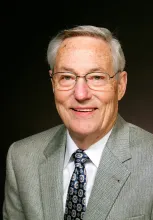
At the time of his retirement in 2016, Roy Holladay was serving the Operation Manager for Ministerial and Member Services of the United Church of God. Mr. and Mrs. Holladay have served in Pittsburgh, Akron, Toledo, Wheeling, Charleston, Uniontown, San Antonio, Austin, Corpus Christi, Uvalde, the Rio Grand Valley, Richmond, Norfolk, Arlington, Hinsdale, Chicago North, St. Petersburg, New Port Richey, Fort Myers, Miami, West Palm Beach, Big Sandy, Texarkana, Chattanooga and Rome congregations.
Roy Holladay was instrumental in the founding of the United Church of God, serving on the transitional board and later on the Council of Elders for nine years (acting as chairman for four-plus years). Mr. Holladay was the United Church of God president for three years (May 2002-July 2005). Over the years he was an instructor at Ambassador Bible College and was a festival coordinator for nine years.
