
John Elliott
This transcript was generated by AI and may contain errors. It is provided to assist those who may not be able to listen to the message.
We have recently completed another year of God's annual festivals. If you think back through the year to the Passover, how meaningful that was, and coming out of that, the desire that that gift put in us to repent and to qualify for the redemption, for the unification of ourselves with God through the putting out of sin, that Feast of Unleavened Bread encourages us and inspires us to do in this special calling that you and I have to be firstfruits represented by the festival of harvest of the firstfruits that we refer to as Pentecost. Those are very meaningful times, and they energize us to be ready to have fruit when Jesus Christ returns, which is pictured by the Day of Trumpets, to come back and solve this world's problems and to assist Him in solving those problems. We can't do anything about them now. But then, imbued with power from on high, reigning with Christ, assisting Him, He knows what to do, we will be able to bring God's Kingdom to this earth. And one event is the removal of the God of this world and the bringing to oneness of mankind with God finally. We celebrate that Day of Atonement with extreme excitement, even though it's humbling. And we recognize that it's the debasing of all things that are against God that brings that oneness. So the Feast of Tabernacles speaks of a time when finally God will be known on the earth by everyone. And ultimately, we will work with humanity, and we will help teach, and we will help encourage people to embrace God in godliness.
Not only those people, but through the resurrection pictured by the eighth day, last great day, that all humanity ultimately will have the opportunity to taste of that heavenly gift of God's Spirit, of His mindset. What a joy that is! Now that we've completed that season, we find ourselves in a six-month void, as it were, of the annual festivals, but we have the weekly festival of the Sabbath. And this Sabbath, once again, pictures, all of those things wrapped into one, as it were. The time for mankind to ultimately prepare for the kingdom of God, the day of God, and that time we look forward to. But here we have a period of time to recall those festivals, to think about implementing them, to reflect on them, to ponder them, to put into practice the things that we've learned. Let me ask you a couple of questions. Why do you live your life the way you do? And why are you here today? Why do you live the life that you live? Why do you, in a sense, sacrifice and push yourself to overcome and to change and to grow? And why do you keep God's Sabbath in his festivals? I think one scripture can answer both of those questions for all of us, and that's James chapter 2 and verse 5. James chapter 2 and verse 5 says, Listen, my beloved brethren, has God not chosen the poor of this world to be rich in faith and heirs of the kingdom, which he promised to those who love him? That's why we do this.
I was thinking as you came in today, I was gradually watching a few people come and thinking where you're coming from and how big the city of Tulsa is and Broken Arrow and even places further afield and how few of us there are. And we're meeting in a location on a day when everyone else is doing something else. Why do we do this? We do it because we are chosen the poor and outcast of this world to be rich in faith and heirs of the kingdom, which was promised to us.
We have a special calling. The calling of those who will become the first fruits with Christ have a very special calling. And we live in pursuit of the faith, the belief, the trust, not just of getting something, but of being something, of being like God. And the Sabbath reminds us of God's salvation. We're here today picturing again the kingdom of God, His salvation. Now, each of us also has another question we ask from time to time. I've asked it of myself today. I don't know how many times, but I find myself asking this question. I imagine you have as well.
Will I be successful in this endeavor? Will I be in God's kingdom? Will I make it into the kingdom of God? Will I be successful in that which God has chosen me to be? That's a good question.
And the answer really can be collapsed into another question. And that question is, am I living a godly life? That's really what it comes down to, isn't it? We can answer that question ourselves. The apostle Paul answered that question and said, I know there was a crown laid up for me. And to all those who love God and love is coming. So the question is not something that we have to wonder about, but really to know whether or not we are truly faithful by living a godly life. Today I'd like to examine just what a godly life involves.
I like to simplify things. You take the Bible. It's a big book, and you can read, read, read, read, read. You can take any book, and there's so much different things happening within it.
How do you boil it all down to that thing or those things that we are to focus on?
How do we live the godly life that God wants us to? Now that we have this time, we have the space, we have the focus, there are no harvests going on at this time of the year, it's sort of the drier, darker time of the year. We have some time to think, what is a godly life?
Today I would like to encourage each of us here to live a godly, balanced life, a life full of the balance that God wants in our life, one that pleases Him.
We have not always done that. I have not always done that. But today is a new day.
Every day is a new day. So let's wipe the slate clean, hit the reset button, forget about yesterday, and take a look at this message. Here we go. The title of the sermon today is a godly, balanced life.
A godly, balanced life.
Now, as soon as you say the word balance, many connotations can come up because it might have several definitions. Things that are balanced can be various things like weight and the balance. You put something over here and you put something different on the other side until it's balanced. Is that what God wants? Two different things? Two extremes? So that you have a balanced needle, a truck scale with steel weights over here, and a truck full of garbage over here? Is that what God wants in our life? I've heard it said and lived by most people I have known in the church in my life that balanced is half right and half wrong. That's a balanced life. Don't get too picky. You want to be balanced about things. Don't go overboard. Don't go ditch jumping. Don't be too holy. Don't be pharisaical. Be balanced.
Do the spirit of the law, not the letter of the law, not understanding what that statement is in Scripture. Some view a life of careful obedience to God through a different lens.
Most of the people I've known in the church in my lifetime have viewed it through this lens. It's a life of, I can't do. I can't do this and I can't do that and I can't do this. So I'm sacrificing. That which I want to do, I can't do. And look at the Ten Commandments. You know, wow, you can't take God's name in vain. You can't break the Sabbath. You can't commit adultery. You can't steal, lie, cheat, all this stuff I can't do. So if I want to be saved, which I want, I have to sacrifice everything I want to do. And being in God's church can seem to people like a church of can't do, a religion of self-sacrifice. Many who left the faith said, I feel free. Back about 20 some years ago. Oh, I'm finally free. I was trying to earn my own salvation. Really? You know, to earn means generally doing something unpleasant in order to get what you want, which is money. False religion is very attractive. It comes along and says, no, you'll get paid if you don't go to work. Oh, sign me up. I'll get paid for doing what I want. And really, that's what false religion teaches. Do what you want and you'll get that what you want.
But if we go to dictionary.com, we find that balance has another definition. To be balanced is in proper arrangement or proper adjustment. The title of the sermon isn't a balanced life.
It's not a balanced, godly life. It's a godly, balanced life. If we're going to have our life in a proper arrangement in the eyes of God, it needs to be a godly, balanced life. We need to see what he wants us to do, how he wants us to organize his life. And if we live a godly, balanced life, then we will be in the kingdom of God. It will be directed by God. It will be pleasing to God.
And we will be children of the great God. So how can my life be lived in a godly arrangement each day? Each day as we wake up, how can I arrange that life the way God wants it? I'd like to give a few points today. I've numbered them. Point number one, live right daily. Live right daily.
The concept comes from Matthew 6. If we go to Matthew 6, Jesus Christ talks about a daily life. You know, you can't relive yesterday and you can't live tomorrow.
So what it comes down to is us having a godly, balanced life now. This is the only time that you and I can affect or impact our life is now. And Jesus points this out in the sixth chapter of Matthew. If we start in, say, verse 25, therefore, he said, I say to you, do not worry about your life.
You can't worry about your whole life. You can't worry about the things about life.
What you'll eat or what you'll drink or your body, what it'll put on, is not life more than food and the body more than clothing?
7. If God closed the grass of the field, which today is, and tomorrow is thrown in the oven, will he not much more clothe you? Oh, you a little fave?
What he's saying here is if you will patten your life the way God wants, these physical things that you and I normally would be driven to provide for ourselves, we'll be taken care of. Therefore, he says, don't worry, verse 31, what shall we eat or what shall we drink or what shall we wear? For after these things, the Gentiles seek those who are not the Israel of God. For your heavenly Father knows that you need all these things, but you seek first the kingdom of God and His righteousness, and all these things will be added to you. Therefore, do not worry about tomorrow, for tomorrow will worry about its own things. Sufficient for the day is its own trouble. So here we learn, hey, I need to patter my life. God's way. If I seek first the kingdom, verse 33, and His righteousness, these other things are going to fall into place. I will be a responsible, loving individual. God will be providing these things. They will find their own place. So what about today? Today, we need to, verse 33, seek His righteousness. When it says first, it means in primary place. It is the number one focus. To seek the kingdom of God means to seek that kingdom, not in the future, we're talking about today, seek it today. Am I under the reign of God's kingdom now? Am I under His laws now? Am I under the Lord, the Master? Am I submitting to Him? Am I obeying God the Father? Am I doing the will of the kingdom today? Is that kingdom shed abroad in my heart now? Am I a child of the kingdom? Is God my Father, in other words? Is Jesus Christ my elder brother? Do I, as it says in Hebrews 11, seek a heavenly country? Feel like I'm a citizen of another country where my heart and my mind and my actions truly are? Have I really come out of this world, in this society? Once we begin to do that, we begin to live right daily. The term right is the root of the word righteous. Righteous sounds very religious, but it only means right in God's eyes. Am I living right in God's eyes every day? Am I deeds? Am I thoughts? Am I focused on that? Am I trying to put righteousness, His righteousness, and His kingdom in my life?
Too many will focus on the future or the past and ignore today.
The model prayer outline earlier in the chapter in verse 11, it says, give us this day our daily bread. That's the focus of the prayer. This day. Let's go to 2 Corinthians chapter 4 in verse 16.
You know our life's trials, our life's issues, these are not necessarily punishment from God. Some of it has to do with aging. Some of it has to do with living in Satan's world. Some of it has to do with bad choices that you and I make and things come back on us. But in 2 Corinthians, we'll look in chapter 4, beginning in verse 16, therefore we do not lose heart, even though the outward man is perishing, yet the inward man is being renewed day by day, one day at a time. It's like the bricks in a building. It's one brick at a time. It forms a building, one day at a time, forms a life. It forms our character, the decisions we make, the actions we make, over time, form who we are and shape us. And so our inward man is being renewed day by day. We need to build that with right bricks, bricks of gold, pure, things that are right in the eyes of God.
Our light affliction, which is but for a moment, is working for us a far more exceeding and eternal weight of glory. You and I can appreciate very much that we are being tempered and our character is being built if we are striving to live right each day. In verse 18, while we do not look at the things which are seen, but at the things which are not seen, for the things which are seen are temporary, but the things which are not seen, those are eternal. And if our focus is on God's kingdom and His righteousness, we have our fruit unto holiness and the end everlasting life. Verse 1 of chapter 5, for we know that if our earthly house, this tent, is destroyed, we have a building from God, a house not made with hands, eternal in the heavens.
So let's live right each day. That's our goal. That's where we're to be going to. In verse 2, for in this we groan earnestly, desiring to be clothed with our habitation, which is from heaven.
Yes, we do have the desire of God's kingdom, and we want to be in spirit one day, not in flesh that grows older and weaker and has issues. But we want to be clothed with our dwelling, which is currently in heaven. In verse 4, for we who are in this tent groan being burdened.
Verse 5, He has prepared for us this very thing as God, who has given us the Spirit as a guarantee. So we are always confident, knowing that while we are at home in the physical body, we are absent from the Lord. Yes, we are absent from God, but we desire to be with God. We desire for Him to come. In verse 8, we are confident, yes, well pleased rather to be absent from the body and present with the Lord. We don't want this physical body to last forever. Verse 9, Therefore, because of this, we make it our aim, whether present or absent, to be well pleasing to Him. We want to live each day right. Live each day right. The second point in having a godly, balanced life is to put God's will first. Put God's will first. We humans tend to be about my will.
That often begins with my day, my hot choice beverage in the morning, what I want to see, read, think about here, what I have as goals for this day, my little kingdom, its borders, its, you know, the family of the kingdom, the house, my projects, my work, my career, my ball teams, my country, whatever it is, my kingdom. And we want to get on our knees at some point and say, God bless my kingdom. God bless my kingdom. Help me today. Help this. Help me with that. Help me with this. Bless all of me and my and help it all to go well.
We don't put God's will first, which we just read was to seek His kingdom and His righteousness and let the rest be given to us by Him. So putting God's will first, as we just read in Matthew 6 33, lets Him be in the driver's seat. And we ask Him to be in the driver's seat of our thoughts and our actions. When are we going to let Him take the wheel? You know, it is, well, you can't have it now. I got to get up and get going. I got to have my coffee. I got to do a little this and that, whatever. But you're good at soon. Pretty soon I'm going to move over and let you drive. But not right now. I'm in a hurry. I've got important things to say and important things to do. Well, not yet, because even more important things came up and some tragedies came up. You need to help me drive here, by the way, because I can't do this by myself. Maybe at night or like, oh, I'm so tired.
Okay. Okay. Now you can take a turn. I got to sleep. Okay. I'll say a prayer or something to you and you can run my life while I sleep. But please bless tomorrow and help me get ready for it with a lot of good sleep. Do we ever really do God's will? Do we ever put God first in our plans? We need to give God the first fruits of our day, the very first fruits of our day.
The model prayer outline begins with putting God first. Let's go read it. Let's just go over there.
Matthew 6. Matthew 6 and verse 9. In this manner, therefore, pray.
Now, before we go to the prayer, let's talk about timing.
You look at the life of Jesus Christ. You carefully read the Gospels. You'll find that at the very early part of the day, in the early morning, he was in the temple.
He gave God the first fruits of his day. He was in the temple. He was in the temple. He was in the temple worshiping God. He was in the temple teaching others.
When you look at the lives of others, Abraham, Moses, David, Job, Daniel, you'll find that they prayed in the morning, early in the morning.
To put God in another part of the day is not to put him first. It's not to give him the first fruits. It's to give him some seconds, some remnants, something after the mind is already filled and already off and already encumbered. We can hardly think.
But by praying, as we're instructed to pray, as Jesus here is teaching us, we should put this first. Our Father in heaven, holy is your name. When we think about God and what's important, it's about him. We have to stop and sacrifice our time and our thoughts and humble ourselves to start thinking about God the Father and Jesus Christ and all they've done for us and why we're here and how we even know about them. And your kingdom come. Oh, wait a minute. My whole career just was shelved there for a moment, wasn't it? My projects for the day, my breakfast, what I wanted to see and do and who I wanted to talk. Oh, it's your kingdom come.
Not necessarily when your son returns, your kingdom come now, right this minute into my life. You go ahead and rule me. You direct me. You guide me. You help me be your child. Change my mind to being a son. Oh, and bring it later as well. But your kingdom come and your will be done here on earth as it is in heaven. The throne of God right now, God is directing things. I want you to direct my life here as you're directing it in heaven.
See, this starts a day very differently, doesn't it? A whole bunch of things start getting put aside and the focus now is on give us this day our daily bread. Bread of life, Jesus Christ. I better take some time here to read to eat of the bread. I need to take in something else here beside work and some kind of, I don't know, online chit chat. I need to put the bread of life into my mind. Some verses to think of that. And then forgive us our sins as we forgive those who sin against us, as it says in Luke. Don't let us be led into temptation, but deliver us from the evil one. Oh, I forgot he's got a grip on me. Oh, we don't like to think about that. Why would Jesus ask us to be delivered from the evil one if he's not a problem? If I don't owe my selfish thinking, my selfish focus, he's already got a grip on me. I'm already being negative. I'm already being critical of other people. I'm already thinking how good this day is going to be and how good I'm going to do and how important I'll be and how liked I'll be and loved I'll be and how pretty I'll be or whatever it is. But oh, that's right. I already got a hold on me. Deliver us from that thinking today. Help me and my brothers and sisters to put that aside. See, that's what a new day starts out with. A new day that's godly balanced. It's tough. It's, in a sense, the opposite of what we want carnally, but it's the absolute first thing we really want. We want to be godly. We want to be like God.
In 1 Timothy 2 and verse 1, the apostle Paul here speaks of something above all things.
1 Timothy 2 and verse 1, Therefore I exhort first of all, first of all, the Greek firstly means in time, in place, or in order of importance at the beginning of something. I exhort that in the primary place of importance, that supplications, prayers, intercessions, and giving of thanks be made for all men.
That's important. That's vital. Looking down in verse 8, I desire therefore that men pray everywhere, pray everywhere, lifting up holy hands in that sense of when you saw that you had a sin, you had to confess your sin, and you took your little lamb, a little baby sheep, or your little kids, the little baby goats, and you took them in your arms, and you said to God that you had sinned, and then you took this precious little animal and you handed it to the priest, and that animal died. So lifting holy hands mentally would equate to realizing, look, I am nobody. I make mistakes. I need help. I sin. But I look to God. I look for salvation. I look for help. I look for all the gifts that God gives, the calling that we have, the faith that God gives us, the repentance which is His gift, the forgiveness through the blood of Jesus Christ, which is His gift, through baptism, and then the receiving of God's Holy Spirit, which is His gift. All those gifts work in us every day.
They're rolled into one term that's used in the Bible called grace, but it's actually all of those favors of God that work as a package together. You and I can busily go about a day living it in a godly way, in a godly balanced way. We also need to give God the first fruits of our income, first fruits of those physical things that when Israel came into the land, the first fruits of their trees and the first fruits of their of their harvest were to be given to God. We need to put God first, putting God first in our life. In Malachi chapter 3 verses 8 through 12, God loves to show us that when we are obedient, He is in support of that.
Malachi chapter 3 beginning in verse 8, will a man rob God, but you have robbed me. And tithes and offerings. You are cursed with a curse, for you have robbed me. So on the one sense, disobedience, not putting God first, not giving Him the tithe first, you get no support. That's what he says. I give you no support. You're going to have, in fact, the opposite, a little correction there. See, humans are always about me first. I'll take my money here, my income, and I'll pay the rent, and I'll pay the groceries, and I'll pay the bills.
Let's see, anything left over from God here? Shake the purse. Sorry, not this time.
See, that's what we do with our day often. We'll put God maybe somewhere. Anything left in the day for God? I shake it. Sorry. Didn't work out today. Had some emergencies. Oftentimes, people aren't right now saving their tithe for the feast, the festival tithe.
Well, I had some emergencies. I'm a little short here, a little short there. Will a man rob God? Well, he says right here, verse 9, bring the tithes into the storehouse that there may be food in my house and try me now in this, says the Lord. Try me or test me in doing right in my eyes, putting me first. If I will not open for you the windows of heaven and pour out for you such a blessing that there will not be room enough to receive. It's another principle that first is very, very important. We also need to give our covenant relationships priority. Put them first as well. We're to love God with our heart, soul, and might. That's the first and great commandment. The second is like unto it, Jesus said, love your neighbor as yourself. Well, we have covenant responsibilities that supersede other responsibilities. Our covenant responsibility with God we've just talked about. We need to prioritize that and make that first.
But we also have a covenant with our mates, with our spouse. In Malachi 2, verse 14, the Lord has been witness between you and the wife of your youth, with whom you have dealt treacherously. She is your companion and your wife by covenant.
Subsequently, the husband is her companion by covenant, and the children that come from that relationship come by covenant. Let's go to Ephesians chapter 5 and verse 22. Actually, I'm going to go to verse 33. Ephesians 5, 33. We'll just shorten this up a bit. I'm sure you know this passage. Nevertheless, let each one of you in particular so love his own wife as himself and let the wife see that she respects her husband. We have that obligation through a covenant relationship. And then if you go into verse 1 of chapter 6, children obey your parents and the Lord, for this is right. You children have that covenant relationship. We all have that as a primary role of our day each day. Now, if you take that and say, oh, sorry, honey, sorry, kids, I'm in a hurry today. I've just got to get up and I've got to get my coffee and get myself going and do my social media and do my, my, my, my, my, my, and sorry, God, you're in the same lump. And we'll do something today. I promise you, we'll do something. We'll have some fun tonight. Oh, but work day went a little long and more things came up and I got to bring home work tonight. Not tonight, everybody. Not tonight. Well, we'll do that again. We'll do something tomorrow. You trust me. We'll do something special tomorrow. And you too, God. No, what are we doing here? We are not living a godly, balanced life. We have not prioritized our primary commitments. And yet, you know, there are more.
We also have commitments that we have made to animals or other responsibilities that also should be part of our life. God and man, other responsibilities. It was Solomon in Proverbs who said, take heed to the state of your flocks. You know, you, you may have animals that depend upon you. Now, he said that in relationship to wealth or taking care of perpetuating riches. In other words, be wise and take care of your herds and your animals. Well, that's fine, but a man and a woman also have to take care of their animals, not only for their health, but also for their wealth. They have responsibility to their family. We have personal responsibilities, in other words.
You'll find that in the story of Esau and Jacob. Jacob and Esau met and oh, they were great friends, good brothers again, right? And Esau said, oh, just bring your whole family and let's go do something. And Jacob could have said, yes, come on, everybody. We're going to go back home.
But Jacob stopped and said, no, wait, wait, wait a minute here. You go on a return home first. I'll come when I can because we have little children with us and newborn lambs and kids.
And if we march them heavy, it could kill them. So I need to be responsible for these. And we will come along in time. And he came along in time. And once he built the barns for those little animals and provided shelter for the family, then he saw Esau. We have these responsibilities and we need to prioritize them. The third point is, perform the work that God called you to perform.
We have the importance of living right daily, putting God's will first and those other responsibilities. But then we have to perform the work that God called us to do. You and I have a work to do. And it's not about the church. It's about a work that he called you and I to be doing. And we had better be busy doing that work individually. Do you know what that work is?
Collectively, we should be doing it as well. But that work that God gave us is in Matthew 22, verse 37. Let's go back there. Matthew 22, verse 37. Sometimes we can get distracted, even by church work, from the main work that you and I are given to do as individuals.
Matthew 22, verse 37. Jesus said to him, You shall love the Lord your God with all your heart, with all your soul, and with all your mind.
You know, if we don't put God at the forefront and love Him, obey Him, and do what He tells us to do, and do that work, we're not fulfilling His commandment. And the second is likened to it, love your neighbor as yourself. On these two commandments, hang all the law and the prophets. If we are distracted and we're like those who come to Jesus at His return and will bang on the door, oh Lord, let us in! And he said, I don't know you.
Wait a minute, Aaron. We did the other work. We preached the gospel. We cast out demons.
We did all these things in your name. We did your business. We might call it the work of the corporation. And he said, nah, I don't know you. I don't know where you're from. You didn't develop the godly mindset of agape love. You were doing something else. You didn't develop the God said, the Godhead mindset. You and I have to be about that work. That's what we're supposed to be about.
And the other, yes, is we have time and opportunity. We will share that message with others. As we have time and opportunity, we will help everyone, especially those in the household of faith.
But our primary work is to love with the mindset of God that has given us through the Holy Spirit.
The fruit or the byproduct of that spirit living in you every day is agape love, joy, and peace. Greek word, irane, for peace, joining together. Oneness. Agape love, joy, and oneness. Those should be the primary fruits of your life and mine. And if they're not, we're not doing the work we're called to do. We're not developing that fruit for the kingdom.
When we do that, it makes us a light to the world, as Jesus said in Matthew 5.14.
When we do that, it shows that we are a disciple of Jesus Christ, as it says in John 15 and verse 12.
When we do that, it makes us the salt of the earth, as Jesus said in Matthew 5.13.
When we don't do that, it makes us irrelevant. It makes us, as Paul said there in 1 Corinthians 13, just a banging gong or some noisy cymbal. No matter what we do, if it's not with the mindset of God, through His Spirit, it doesn't do anything. So we need to perform the work God called us to perform.
We need to be busy about that, diligent in that. In 1 Peter 4, verses 7-10, 1 Peter 4, verse 7, 2 Peter 3, 1 Peter 4, verse 7, But the end of all things is near. What about me? What's going to happen to me?
You know, the mind just races ahead. Well, the end of all things is here. Therefore, be serious and be watchful in your prayers. And above all things, have fervent love for one another. You know, sometimes, above all things, people think, well, I must do something dramatic. I must be seen or heard or appear or, I don't know, I must do something to impress God or people or whatever. But he says, above all things, have fervent love for one another, for love will cover a multitude of sins, be hospitable to one another.
You know, as I mentioned over in Galatians 6 and verse 10, we're to, as we have opportunity to help one another, especially those in the faith. In other words, as Jesus walked down the street, he saw someone sick, what did he do? I don't care about you. No! Hey, how can I help? I could heal you, even if they weren't thankful. What can I do to help? Oh, I could cast out some demons.
Jesus loved people. He loved Jerusalem. He cried. Jesus wept out of compassion for people. Here in 1 Peter 4, it's dropping down now, verse 10, As each one has received a gift of the favor of God, a gift of God's Spirit, minister or serve it to one another. For as good stewards of the manifold favors of God, we need to be stewards of that calling, of that faith, of the repentance, the forgiveness, the baptism, the receiving of God's Spirit, the temple of God's Holy Spirit.
We are receptacle of that, and we need to be good stewards of it, using it. It's a wonderful thing that you and I have the opportunity and the ability to serve and help others. It's a great thing. We can do it at work, at school, we can do it at home, we can do it anywhere. Neighbors. Hebrews 13, verse 1. Hebrews 13, verses 1-6. Let brotherly love continue. Here's the ending of this epistle to the Hebrews, to the people of God, to the baptized members of the New Covenant.
Here he's writing, let brotherly love continue. Don't forget to entertain strangers. Verse 3, Remember the prisoners have chained with them. This is thinking about others. This is thinking about people who are out of sight, people who are home, people who aren't within your visible range, thinking about what it must be like for them, those who are mistreated. Verse 4, Marriage is honorable above all.
Verse 5, Let your conduct be without covetousness. For he himself has said, I will never leave you or forsake you. So we may boldly say, The Lord is my helper. I will not fear. What can man do to me? Now, if we pause right there, where are we at in these three points?
We're actually living a godly, balanced life. What we've just covered is a summation of a godly, balanced life. Let's go back and review it, just real briefly. First, we are living each day right. We are putting God's will first, and we are performing the work for which we are called. That is a balanced day. And within that day can flow all of the other needs, and the work, and the challenges sufficient into the day are the challenges thereof, you might say.
When that day concludes, we can give God thanks for it, thanks for His directing it, encouraging us, inspiring us. We can go to sleep knowing that I have lived a godly, balanced day to the best of my ability with God's help today, but tomorrow I think I could do it better. I'd like another crack at it. And that's one block in the wall. You and I lay down our lives one day at a time. And God is very, very pleased when we are doing those things, when we are doing right in His eyes, and we are putting Him first.
And we are fulfilling that for which He created us and called us at this time, doing that work that He has given us to do. That's the work He needs done. He would be very, very pleased to hand us off to His Son as a bride. We look in Deuteronomy chapter 10 and verse 12.
We see in a previous covenant that what we've just read and what we've just been talking about fulfills the will that God has for us in our daily life. Deuteronomy chapter 10 and verse 12. And now, O Israel, whether it's physical Israel or the Israel of God, what does the Lord your God require of you? But to fear the Lord your God, to walk in all His ways, to love Him, to serve the Lord your God with all your heart, with all your soul, and to keep the commandments of the Lord and His statutes.
That's what God wants of us. You know, it's not a huge mystery as to how we should live each day. It's not a huge mystery as to will you or will I be in the kingdom of God when Christ returns? Will He say, well done, good and faithful servant? What we just covered covers the answer to that question. You and I have choices to make each day. It's a matter of bringing every thought into subjection and every deed into subjection and doing it God's way. As God is His child, His son, His daughter, thinking like the family, really becoming one with the family, united with that kingdom.
I'd like to give you two additional points about being physically and mentally balanced as well. Those are the spiritual sites, the spiritual things that put our lives in a Godly balance. What about a physical balance and a mental balance? I'll give you two brief points. One is, point four, maintain the temple of God's Holy Spirit. It's really sad when humans do not maintain their physical bodies and they just let them fall apart, essentially putting anything they want in their mouth and doing as little as possible by using the convenience of mechanized machines.
That's just in a way sad. But maintain the temple of God's Holy Spirit. We are created in His image, in His likeness. Do you appreciate that? As a man, woman, boy and girl, do you appreciate that God made you in His image and likeness? Think about exercising and keeping this in shape. Think about a proper diet or food the way God made it, as opposed to the way man remakes it.
Think about stress and the relief that exercise naturally brings. Think about what you allow yourself to be stressed by, entertained by, the mental thoughts that come in that are brought into this temple of God's Spirit, because it's really the mind where God lives. And you and I are to have a proper fitting place for God. Point five. Enjoy who you are and the blessings you have.
Enjoy who you are and the blessings you have. This is more of a mental thing. Sometimes we don't enjoy who we are, and we're very critical of ourselves. And maybe rightfully so. And yet at the same time, we have been created in God's image, and we've been given His Holy Spirit. There's some great possibilities there. And if we think on the positive side, this is a very good life. And we should really appreciate the blessings that come from this way of life. One of you was telling me before how odd we are to the world, but how respected we are. People will be doing and saying their own crass stuff, and we come along and say, Oh, Joe's here.
Shirley's here. And out of respect and out of actual appreciation for something that is honorable, people will dislike you. It brings things to our life that we otherwise would not have. And we need to be thankful to God for them. Let's look in 1 Timothy 6, verses 6 through 10. 1 Timothy 6, beginning in verse 6. Now, godliness with contentment is great gain. Contentment by itself is not great gain. But godliness with contentment, living a godly, balanced life and being contented with that life, oh, it's great gain.
For we brought nothing into this world. It's certain we will carry nothing out. Having food and clothing with these, we shall be content. But those who desire to be rich for me, wealth just for me, rich for me, fall into temptation and a snare and into many foolish and harmful lusts, which drown men in destruction and perdition. Be thankful that you are not fallen into foolish and harmful lusts, and yet watch the world just go after it with a vengeance. They just are after more and more for me.
They want to be rich in this and rich in that and rich in every conceivable thing to the mind. And yet they fall into all kinds of foolish and harmful lusts, which drown men in destruction. Now, I'll tell you, I would be among those if I had not been called and given God's faith, given repentance and baptism and forgiveness and the Holy Spirit, and I'm living a different life that is godliness with contentment and amazing gain.
Same with you. We need to be appreciative of that and enjoy those blessings. Look at the positives in your life, relationships, family, your abilities, your talents, the awesome future in God's kingdom, a future like no one else will ever have throughout time. This is called the better resurrection. These will become the bride of Christ who will sit with him on his throne. And when the bridegroom comes, that door will close. It will be shut.
And then the bride and the husband will go about bringing others into the family and the kingdom of God. When we stop and are thankful to God and appreciate, it motivates us to be more like him. It motivates us to rejoice, to be full of that inner joy that comes from loving God and loving others.
It makes us want to be one and at one with God. It makes us want him to return so we can be with Jesus Christ and God the Father and be in a very, very close relationship, which Christ gave his life for. Go read John 17. The last long prayer he got to pray to God the Father. He wants us to be one with them as they are one. More and more, that is the beauty and the joy that we can appreciate. In conclusion, live a godly balanced life each day. It's God's life.
Find out from the Scriptures what a godly balanced life is. Live right. And remember, every day is a do-over. Don't drag along and try to haul along your boatload of problems from the past. Have the faith that Jesus Christ forgave you of everything as of this moment, if you've repented of it. Great. Live right. Point two, make God's will primary in your day. Put all people and other responsibilities next. Put your covenant responsibilities and your other responsibilities. Be a responsible individual.
We need to love and develop that loving mindset of God and do that work of developing the mind of Christ. For that is the fruit that's harvested. God is raising children. God is going to bring up His kind. He doesn't want a bunch of aliens. He wants His kind. Take care of your body and mentally appreciate the blessings that God gives you.
Let's conclude by rereading a little part of 1 Timothy 6, verse 11. But you, O man of God, you, O woman of God, you, O child of God, son and daughter of God, you, flee these other things and pursue right in God's eyes. It's called righteousness. Pursue right in God's eyes. Pursue godliness, faith, love. The word patience should read perseverance. It means enduring steadfastly. Gentleness. Fight the good fight of faith. Lay hold on eternal life to which you are also called and have confessed the good confession and the presence of many witnesses. Verse 18. Let them do good. When it says do good, that is a term that refers to actions resulting from God's Holy Spirit in you.
We are created to do good works. Doing good and good works in this New Testament refers to those who are the covenant of God the Father through His son, Jesus Christ, who have that spirit. And what they do then is good in the eyes of God. Let them be rich in good works. Verse 18. Ready to give. Willing to share. Storing themselves up for themselves. A good foundation for the time to come that they may lay hold on eternal life. You know, this is really a good way of life.
The festivals that we observed and enjoyed so much have taught us what God's will is for us and what His plan of salvation in this phase is about us.
All we need to do is to live a godly, balanced life.
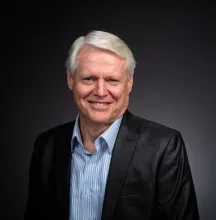
John Elliott serves in the role of President of the United Church of God, an International Association.
