
David Mills
This transcript was generated by AI and may contain errors. It is provided to assist those who may not be able to listen to the message.
Today I want to conclude my series of sermons I've been giving on godly governance. In the first sermon I talked about how godly righteousness is the key to godly governance, not the former structure of the governance. In my second sermon I showed that the government of God, strictly speaking, is when God himself is governing. It's when Christ is going to come down and he'll set up the government of God. Some people confuse the government of God as being a certain form or structure that should be used.
But really the government of God is when God himself will be governing and ruling as Christ will set that government up when he returns. And then last time in part three I showed all God that governed his people by and through a variety of human governmental structures throughout the time of the Old Testament and up to the time of Christ.
Today as we conclude we'll look at what the New Testament teaches in regards to godly governance. So in doing that today and looking at the New Testament I want to look at three overall things. Number one, I want to look at New Testament principles that apply to those who are governing, those doing the governing. And we also want to look at New Testament principles for those who are being governed as well. As I say, godly righteousness has to extend all the way from the top to the bottom to all of us.
And then number three we'll look at the overall means by which godly governance was carried out in the New Testament church. Some examples of that that we have recorded in the book of Acts. Look at how did God govern in the early New Testament church. Did he govern primarily through one individual, through one man? Like for example the apostle Peter or the apostle James or did he govern through all twelve apostles or through additional apostles like the apostle Paul? By what means was the government of God carried out in the New Testament church or the governance of God, I should say.
That's what I want to look at today as we conclude this particular series. The title for my series here then this afternoon is Godly Governance Part 4. And the subtitle, if you will, is Unity Through Consensus. The Governance of God Part 4, Unity Through Consensus.
First I'm going to look at some New Testament principles relating to Godly governance in the New Testament. And first let's look at some principles in the New Testament for those who are governing, those doing the governing. And a lot of places we could turn, but just some of the main points here. Let's go to Matthew 20, which I think is probably the underlying principle that's brought out for those who are going to be governing as leaders in the New Testament church that Christ taught his disciples and he teaches all of us.
Matthew 20, very familiar scriptures here. Matthew 20, being in verse 20, this is 20-20 vision, if you will. Matthew 20, verse 20, where it says, The mother of Zebedee's sons, that was James and John, as you read in another account, they came to him with her sons, James and John, kneeling down and asking something from him. And he said there, verse 21, well, what do you wish? And she said, well, grant these two sons of mine that they may sit, you know, one on your right hand and the other on the left in your kingdom.
Now we think of that, we're probably thinking differently than they were. We think of the kingdom of God that's coming and ahead of us, but that's not the way they were thinking. They were not thinking in terms of God's spiritual kingdom in the far distant future when they posed this question. They were thinking that Christ was going to establish God's kingdom right then and there by replacing the Roman Empire with the kingdom of God.
That's what they were thinking. That was the thinking that was in their mind at that time. So they were thinking in terms of their physical lifetime, not way off in the future as we would. Moving on down here in Matthew 20, verse 24, when the other ten disciples heard this, they were greatly displeased with the two brothers, probably a little jealous. But Jesus called them all to Himself and He gives them this principle that applies to all leaders in the New Testament church and in God's church.
You know that the rulers of the Gentiles lorded over those that they were over. And those who were great, they exercised all kinds of authority over those that they rule over. He said, it shall not be so among you, as leaders of the church that they were called to be. Whoever desires to become great among you, let him be your servant.
And whoever desires to be first among you, let him be your slave. Just as the Son of Man did not come to be served, but He came to serve and to give His life a ransom for many. So basically Christ was here telling His disciples that they must never seek a position of power just for the sake of power, because that's what most people do.
They want to get into a position of power for the sake of power to have control and authority and so on. He said that you should never have that attitude or that approach. And they also basically say here that they must never misuse any power or authority that's granted to them or take advantage of their position to promote their own interests. See, first and foremost, you tell them they should be servants. If they wanted to really be great leaders, then become a slave.
How do you think about that? Well, I'd like to become a slave. See, rather than gaining more rights and privileges, they would have to be willing to give up rights and privileges to be a leader in God's Church. Rather than receiving benefits and advantages, they would have to be willing to give up benefits and advantages. He doesn't have very many benefits and advantages. So in other words, they were going to have to literally lay down their lives for the Church as Christ laid down his life for the Church.
That was the principle to all who would want to be leaders in God's Church that Christ gave here. Like it says in Matthew 28, just as the Son of Man did not come to be served, but to serve and to give his life in ransom for many. And of course, Peter added something to that. Let's go to 1 Peter. Let's read at a distance 1 Peter 5, again, very familiar scriptures that we've heard many times. 1 Peter 5, beginning in verse 1, where Peter said, To the elders who are among you I exhort, I, who am a fellow elder, and a witness of the sufferings of Christ, and also a partaker of the glory that will be revealed.
Shepherd the flock of God which is among you, serving as a servant, as overseers, not by compulsion, but willingly, because you really care for the people. Not for dishonest gain, not for money, not to get yourself at advantage somehow, but eagerly just to serve the people and to help them fulfill God's purpose. And not as being lords over those entrusted to you, just using authority to govern, but being examples for the flock, to be an example for others to see and follow.
And when the chief shepherd appears, you will receive the crown of glory that does not fade away. So he's basically saying here, those who are governing in God's Church must not be lords, using authority as a club to bring others into line with their way of thinking, as many do in the world today. Those governing must be overseers who have genuine love and concern and care for those entrusted to them, and they should lead by their example. Then Peter went on even further and he applied these principles basically here.
Then he goes on to apply these to everyone. This should really apply not just to leaders, but should apply to everyone who is called to be a part of the spiritual body of Christ, as he says going on in verse 5 of 1 Peter 5. Likewise, you younger people, submit yourselves to your elders. And yes, all of you should be submissive to one another, and all of you should be clothed with humility. For God resists the problem and gives grace to the humble.
Therefore, humble yourselves unto the mighty end of God, that he may exalt you in due time. Those governing must not be lords, using authority as a club. And verse 7 goes on to say, casting all your care upon him, for he cares for you. So he's saying here, not only leaders should be clothed with humility, but everyone should be clothed with humility. No matter who we are or what our position might be in God's Church.
See we must never have a wrong spirit of competition, which is the spirit and attitude of Satan, which is why Peter then gives this warning in verse 8. Be sober. Be vigilant. Because we have an adversary, and he's watching us, and he's looking for us to just give him a little door of opportunity to get in there and get us to go off in the wrong direction and affect our thinking in some way that's going to get us going in the wrong direction. Because you're adversary, the devil walks about like a roaring lion, seeking whom he may devour, looking for an opening in our attitudes, our thinking, and our approach.
A little bit of vanity there that he can kind of get into and then kind of get us off thinking maybe we're something we aren't. That's why it's so important to be clothed with humility. So it's interesting that Peter gives this warning in the context of addressing principles that are to be incorporated by elders and overseers and those in leadership positions and as well as everybody else as well.
And one of those principles is that a person in a leadership position must never seek glory and dominion for himself over others. Glory and dominion are reserved for Christ, as Peter tells us here in verse 11. To him, to Jesus Christ, be glory and dominion forever and ever. So glory and dominion reserved for Jesus Christ and only to those to whom Christ bestows that on in his kingdom. Or as Peter put it back in verse 6, to those whom God may exalt in due time.
So I have to ask then, who will those individuals be that God will exalt in due time? Well those who become servants, who serve others, who fulfill this principle here, becoming servants and even laying down their lives as slaves to serve others at times. And they'll be those who set the proper example for others to follow. They will be those who have a submissive attitude, who are not in competition but who want to submit to one another and who are clothed with humility.
Because those are our new testament principles that must be exemplified by all who govern and by everyone else as well. Now what additional then new testament principles here that we can add besides humility and submitting to one another, that applies to everybody here. So on what additional new testament principles are given to those who are being governed? To everyone who is maybe under authority, one kind or another. Well the overall principle, the overriding principle is given to us by the Apostle Paul in Romans 13.
And I'll explain this in a moment. Let's go to Romans 13, and again a very familiar scripture, Romans 13, the first two verses, where Christ says, or I should say the Apostle Paul here says, Let every soul be subject to the governing authorities, for there really is no authority except from God, what God allows. And if somebody misuses authority, God can remove that person from that position, whether it's secular in the world or whether it's ecclesiastical in the church. For there is no authority except from God, and the authorities that exist are appointed by God, that they exist because God allows them to be there.
Therefore whoever resists the authority resists the ordinance of God, and those who resist will bring judgment on themselves. Now as the rest of this chapter here indicates, in the context here, Paul is primarily talking about secular authority here in this context when you read the rest of the chapter. But the principle applies to all authority, secular, or ecclesiastical as well. The same principle applies to everyone. And we can actually see that brought out in Hebrews 13.
Let's go to Hebrews 13. Just look at two verses there to see that this applies to the church as well as to secular positions of authority. Hebrews 13, verse 7 says, Remember those who rule over you, who have spoken the word of God to you, whose faith follow. Follow their example. If faith then follow that example, whose faith follow, considering the outcome of their conduct. And in verse 17, again, Obey those who rule over you, and be submissive, for they watch out for your souls as those who must give account.
Let them do so with joy and not with grief, for that would be unprofitable for you. So authority, even the church, is not a bad thing. It could be a good thing, or should be a good thing, if used properly. That's the thing, that's the key. And if it isn't used properly, and you're under something that's wrong, you can put it in God's hands and God will take care of it in His own time and His own way. But it should be used properly as an aid in helping others, in serving others, so we can all fulfill the fantastic calling that God has given to all of us.
Let's go to Ephesians 4, beginning in verse 11, where it says, Christ Himself gave some to be apostles, some prophets, some evangelists, and some pastors and teachers. And again, as we've come to understand, and as United understands anyway, these are roles and responsibilities, not ranks of authority. They're roles and responsibilities. But every role and every responsibility has to have some authority, because it has to be in people in most kinds of positions of leadership.
They'll have to make decisions from time to time. In order to be able to make decisions, there has to be some authority in order to make those decisions. But in this case, how should that authority be used?
Verse 12, it says, For the equipping of the saints, to help equip all the saints, to help them to fulfill the purpose for what they are called, for the work of ministry, for the work of serving one another, and helping one another, and encouraging one another, for the edifying of the body of Christ, to build it up, to strengthen it, until we all come to the unity of the faith and the knowledge of the Son of God, to a perfect man, or it should be to a very fiercely mature individual, until we can measure up to the stature and the fullness of the maturity of Jesus Christ.
So that's the way authority should be used, rightly, to help us all grow spiritually.
To help us all come to spiritual maturity. To help us all become more like Jesus Christ.
And also, that we should no longer be children.
Verse 14, tossed to and fro, and carried to about by every wind of doctrine, by the trickery of men, in the cutting-craftiness of deceitful plotting.
But speaking the truth in love, that we may all grow up in all things unto him who is ahead unto Jesus Christ, from whom the whole body, joined and knit together by what every joint supplies, according to the effective working by which every part does its share, causes growth of the body for the edifying of itself in love.
So authority in the Church must always be used to help all of us to fulfill the calling for which we have all been called, and become why Jesus Christ, and to grow in spiritual maturity, and in grace and knowledge, and so we can be stable as far as doctrine goes, and so on, and help us to all come to the maturity of Jesus Christ.
And those of us under that loving authority, then we need all of us, you need to see the value of that.
You know, I thought about this because I know, you know, Satan's got everybody in the world just about now hating authority in some way. Sometimes he's got the whole world turned that direction.
But you know, I stop and think about this. I am very, very glad I am under authority.
I wouldn't have it any other way in God's Church.
I would never want to be in a position where I was only under my own authority.
Some have done that. Some have taken themselves and they become an authority to themselves.
And every case where I've ever seen that happen, it's not long before they're way out in right field or way out left field, they get off on a wrong track somewhere.
Very dangerous position to put yourself in.
As someone who wants to be governed myself, I strongly believe in the principle that Paul gives us in Romans 13.1.
Let every soul be subject to governing authorities, for there is no authority except from God. That's all the way I've always looked at it. I'm glad. I think that's a good attitude, good outlook to have for anyone in the church, regardless of what position we might be in.
Because those who do obey authority, guys can remove them and he can take care of that, and he will, in his own time.
Let's move on to the next point.
This overall point, and that is this. By what means was governance carried out in the New Testament church?
Was it carried out by one man, like Peter or James, as being seemed like the overall pastor in Jerusalem?
Or by all original, the original 12 apostles?
Or was it carried out by, I should say, did the lay members and elders have a role to play in the governance of the New Testament church?
Were they also involved in the decision-making process of the church?
And how was unity achieved and maintained? Was it maintained through authority or by means of consensus?
Was it maintained by compulsion or by compliance with one another?
By means of one individual or by means of many individuals all coming to work together?
Is that how unity was achieved in the New Testament church?
I want to begin by asking this.
What two analogies are given in the New Testament to help us understand proper church governance?
There are two basic analogies that can help us understand church governance from the perspective of the New Testament that Christ gives us, that God gives us.
Number one, the first analogy is this.
The New Testament church is likened to our human body.
It's like a functioning in the same way our human body functions.
Let's turn there and see that where Paul gives that analogy, makes that in 1st Corinthians chapter 12.
1st Corinthians 12, beginning in verse 12 of 1st Corinthians 12, Paul writes this, As the body is one and has many members, but all the members of that one body, be many, are one body, so also is Christ.
He was talking about a human body here, but he says, hey, Christ functions the same way. Christ has a spiritual body and he is the head of that spiritual body and that church, the church with Christ as the head, functions the same way our physical body functions.
Going on to verse 13, For by one Spirit we were all baptized into one body. So now we talk about the church, the spiritual body of Christ, whether Jews or Greeks, whether slaves are free, and all have been made to drink into one Spirit.
And in verse 27, he says, Now you are the body of Christ, but you are members individually.
So the church made up of all of us as individual members, then is the spiritual body of Christ.
So the church then, as the spiritual body of Christ, should function in a manner very similar to the way our human body functions, with all members working together in harmony with one another.
That's where our body works.
That's the way it should work anyway.
Now, what directs, what coordinates the functions of our human body?
Well, the head does.
That is our thoughts, our mind, our thoughts direct our human body, control our body. Who is the head of the church?
Who is the head of the spiritual body of Christ? Well, Christ is.
As plainly stated by the apostle Paul in Colossians 1.18, we're referring to Christ. Paul said, he is the head of the body, the church.
Christ is the head of the church. He is the head of the spiritual body.
And as the head, how does Christ direct the functioning of his spiritual body?
How does he govern that?
How does it govern?
The same way our head directs our physical body.
Christ directs his spiritual body by his thoughts.
This is our, our thoughts direct our physical body.
The spiritual body of Christ must be directed by and governed by the mind of Jesus Christ.
And of course, that mind should be in all of us because we all have God's Holy Spirit. We should all have the mind of Christ in us, governing ourselves, governing one another.
Which is why Paul said in Philippians 2.5, let this mind be in you, which was in Christ Jesus. That's all important because that's the only way the church can function properly and be governed properly is it has to be governed by the mind of Christ in each and every one of us.
The church must be governed by the mind of Christ.
And all of us, both leaders and members alike.
And that, of course, is accomplished in by and through God's Holy Spirit in us.
So we all have to then be in tune with the mind of Christ and with his thoughts.
We have to be in tune with his will, with his attitude, with his love, with his feelings, with Christ as a head, guiding and directing our thoughts and our attitudes and responses, every individual, directing and the response of every individual of the body of Christ.
So you stop and think about that if even one member of the spiritual body of Christ is kind of attuned with the mind of Christ and is being directed by his own carnal mind, by the mind of Christ, well, then you're going to have a problem within the body of Christ.
And of course, the more members you have that are attuned with the mind of Christ, the more the bigger the problem is going to be. So every member of the spiritual body of Christ is so vitally important, even as every member of our physical body is very important. Before you lose one member of your physical body, no matter how small it is, you know you've really lost something.
I mean, you all know I had this little action a while back, it was two months ago now, where I actually cut off part of my finger.
It was just part of the flesh, but I actually cut off that part of the finger.
And it's healing, but it hasn't totally healed yet. I don't know if it ever will.
But you know that boy, I knew I missed something. I thought, boy, I'd hate to lose all lost the whole finger.
If somebody will lose a hand or they lose a foot.
You know, and I just use one little tiny, what seems like an insignificant part of the body, boy, it's a big loss.
It's the same way in the church. You lose one member, it's a loss.
It's a big loss.
And every member is important because the church could not function 100% complete and be whole unless every member is functioning properly, being guided, directed by the mind of Christ, which is really the point Paul is making here. In 1 Corinthians 12, verse 20, he said, but now indeed there are many members, but one body.
That's the way it is with our physical bodies. And that's the way it is with the church and everyone, every member of our physical body is very, very important.
The eye cannot say to the hand, I don't need you.
In fact, the hand can't even say to its own hand, well, hey, I don't need five fingers. I don't really need that thumb. Oh yeah, lose the thumb, lose the finger, find out how much you need it.
And the head can't say to the feet, I have no need of you, etc., etc. And then it even goes, seems that even those members that we don't pay much attention to and that we don't have the right to do, they don't have the right to do. And that we don't see and don't function seemingly as important as other members. They say, everyone is important. You lose anything. It's not functioning right in your body. All of a sudden, the whole body suffers. So that's the way it should be in the church. If any member suffers, the whole church will suffer with that member. And if every member rejoices, God blesses that person, we should all rejoice with that person as well. That's what he's bringing out here. Going on down to verse 25, there should be no schism in the body, but that the members should all have the same care for one another, just like we should have every member of our body. We care about every part of our body. We should care about every member in the church. And God has appointed these in the church first, apostles, second prophets, third teachers, after the miracles, gets the healing and so on.
Oh, wait a minute. Oh, I was going to say here, verse 26, I wanted it. And if one member suffers, all the members suffer with it. If one member is honored, all the members rejoice with it, which I already covered. So every individual member of the spiritual body of Christ plays a very vitally important role, just like every member of our physical body plays a very vitally important role for the functioning of our physical body. So governance in the New Testament church, then, is thus likened to the functioning of our human body.
Now, there's a second analogy that's made here in the New Testament. The New Testament church is also likened to a human family, with Christ being the head of the family. And Paul brings that analogy out in Ephesians 5.
Ephesians 5, beginning in verse 22, It says, And then verse 32, this seems like a mystery, what I'm trying to say here, he says, So Christ is not only likened to being the head of his spiritual body, he is also likened to being the head of his spiritual family here by the Apostle Paul. Being the head of the church as a husband is the head of the family. Let's go back to Ephesians 2, verse 19, where Paul wrote, Now therefore, because of that, because it's likened to a family with Christ as the head of the family, you are no longer strangers and foreigners, but you are fellow citizens with the saints, and you are now members of the household of God.
The church is the household of God. It's the family of God. It should function as a family, as a household should function, with Christ being the head of the household of God. Ephesians 3, verses 14 and 15, For this reason I bow my knees to the Father of our Lord Jesus Christ, because he is the head of the family, from whom the whole family in heaven and earth is named.
So we are members of the household of God. We are members of the family of God, with God as our Father, with Christ as our husband, so to speak. So the New Testament church is also likened to a human family, and should function as a human family was, and I'll have to say, as a human family was designed to function by God originally.
Unfortunately, that's not the way most families function today. Most families today are very dysfunctional, and do not function the way God designed them to function. There are many unhealthy families today, unfortunately, and a lot of us grew up maybe in families like that. But a healthy family that functions properly is one where all the members of the family have mutual love and respect for one another, and they mutually support one another, where they all work together in harmony with one another, and where they all protect one another, and they all stand up for one another, and where they are individual members with unique personalities, unique talents, and unique abilities, but where they are also of one mind in their love and respect and admiration for one another.
That's the way a healthy family should function. Everyone respecting, everyone has different gifts and abilities, and helping them to grow on those abilities. But that is also the way the Church should function as the household and family of God. So the two analogies I'm giving in the New Testament to help us understand proper Church governance are, number one, the New Testament Church is likened to our human body, and number two, the New Testament Church is likened to a human family that should function the way God designed it to function.
So then let's go on here and ask this question. What is the New Testament model for Church governance? First question. Was Peter the human head of the New Testament Church, as maintained by the Catholic Church to this very day? Well, let's look at that. Let's go to Matthew 16, where that's brought out by the Catholic Church and by others. But Matthew 16, beginning in verse 18, and I'll just cut into the story here in verse 18 of Matthew 16, where Christ is talking to Peter, and he says, I say to you that you are Peter, and on this rock I will build my Church.
And of course, the Catholic Church is all... Peter was the first pope, and the Church is built on Peter. So Peter and all of his successors are the foundation of the New Testament Church, and they are the representative of Jesus Christ himself, as Peter was. Is that what this says? And I also say to you that you are Peter, and on this rock I will build my Church, and the gates of Hades shall not prevail against it.
And I will give you the keys of the kingdom of heaven, and whatever you bind on earth will be bound in heaven, and whatever you loose on earth will be loosed in heaven. Now, here in the Greek... we're not remembering in English, but if you read this in Greek, there is a play on words here. The name Peter is from the Greek word petros, which means a piece of rock. If you look up in Strong's, that's Strong's number 4074. It finds it as a piece of rock. The rock on which Christ said he would build his Church is the Greek word petra, which means a mass of rock.
And that's Strong's 4073. Very similar, but a different word. Peter was a piece of the mass of rock, but he was not the mass of rock. We're all a piece of that, but we're not the mass. Christ is the mass. Christ is the mass of rock on which the New Testament Church is built. In fact, I won't turn now, I'll just give you a couple of scriptures. Ephesians 2, verses 19-20 tell us that the Church, that there is a household of God, is built on Christ himself as being the chief cornerstone of the main building block, the main rock.
And of course, as we're very familiar with 1 Corinthians 10-4, Christ is called that spiritual rock. And this is in that rock was Christ. With the Greek word for rock and 1 Corinthians 10-4 being the Greek word petra, or massive rock, massive rock. So there is no doubt that the rock on which the New Testament Church is built is not the Apostle Peter. Peter is only referred to as being a piece of the rock, by virtue of his name, basically, because that's what his name meant.
It is noteworthy that the latter portion of verse 19, here in Matthew 16, is repeated in Matthew 18-18, where it is not referring to Peter. Just point that out. Let's go to Matthew 18-18, where Christ said, Assuredly I say to you, Whatever you bind on earth will be bound in heaven. This just reads exactly the same as Matthew 16-19, part of it.
Whatever you bind on earth will be bound in heaven, and whatever you loose on earth will be loosed in heaven. Now here, here in Matthew 18, this is stated in the context of reconciling a brother, as we go back to verse 15 and read. We'll see that. Matthew 18 verse 15, But if he will not hear, his brother will not hear, Take with you one or two more, or excuse me, go back to verse 15. I want to start in verse 15. More of your brother's sins against you, Go on and tell him his fault between you and him alone.
If he hears you, you have gained your brother. But if he will not hear, take with you one or two more, that by the mouth of two or three witnesses, every word may be established. And if he refuses to hear them, tell it to the church. But if he refuses even to hear the church, let him be to you, like a heathen and a tax collector. So here, the responsibility for reconciling a brother is first given to the two individuals who have the problem. They need to be reconciled. The responsibility says on them, Take it to your brother.
Work it out. There's a problem there. We need to be reconciled. Try to work it out between the two of you.
Then, if that doesn't work, then one or two members of the church can be brought in to try to help with the reconciliation. And if that doesn't work, the responsibility then is vested to the members of the church as a whole, in the hands of the faithful congregation of believers to try to bring about reconciliation. But notice, it's not given to the Apostle Peter or to any other one leading individual. So the truth is, the New Testament church, nowhere, endorses one man as being the human head of the church.
The only man that the New Testament endorses as being the head of the church is the man, Jesus Christ. See, Christ and Christ alone is the head of the church. Now, let's go on here. We can spend more time on this. But what model or example is given in the New Testament in regards to church governance? It's interesting to look at that. There's not a lot, but there are some examples. The book of Acts is a history of the early New Testament church. So there should be something there that can kind of give us some indications as to how church governance works in the early New Testament church.
It's interesting, one of the very first things and this has come up even lightly, still comes up a tiny time, so it's interesting to look at it. One of the first things they had to do was to choose a replacement for Judas. And of course, this was before the Holy Spirit was given on the day of Pentecost, that's covered in Acts 1. Let's turn to Acts 1. Acts 1, beginning in verse 15. Again, this is before Pentecost, which happened in Acts 2, of course.
Acts 1, verse 15, In those days Peter stood up in the midst of his disciples, and altogether the number of names was about 120, about 120 disciples total. And Peter said, verse 16, And brethren, this scripture had to be fulfilled, which the Holy Spirit spoke before the mouth of David concerning Judas, who became a guide to those who arrested Jesus. Dropping down to verse 20.
For it is written in the book of Psalms, Let his dwelling place be desolate, and let no one live in it, and let another take his office. Two different Psalms referred to there. Then Peter goes on and says, Therefore of these men who have accompanied us all the time that the Lord Jesus went in and out among us, I'm looking at what he says. He's laying out some qualifications here, some guidelines. Therefore of these men, these 120 men who were there, who have accompanied us all the time that the Lord Jesus went in and out among us, beginning from the baptism of John, I'm maybe not 120 of them have fulfilled this, but some of them did anyway, beginning from the baptism of John to that day when he was taken up from one of us, or from us, I should say, one of these must become a witness with us of his resurrection.
And they proposed to Joseph called Barsabbas, who was surnamed Justice and Matthias. Now it's interesting because first they, that is the 120, decided what qualifications, they decided, along with Peter here, Peter's laying out the qualifications, they all decided on what the qualifications were going to have to be for this individual to take the place of Judas. Then using those qualifications as their guide, they, the 120, not Peter, they then proposed two individuals from among themselves, Justice and Matthias, who both appeared to be equally qualified to fill these qualifications that they laid out here.
Going on then in verse 24, then they prayed and said, You, O Lord, You know the hearts of all, show us which of these two You have chosen, because they both meet these qualifications, and You know their hearts, and we don't really know which one should it be. Show us which of these two You have chosen to take part in this ministry, an apostleship from which Judas, by transgression, fell, that he might go to his own place.
In verse 26, and they cast lots, they cast their lots, and the lot fell on Matthias, and he was numbered with the 11 apostles. Now, one thing that's interesting is this was not just a blind casting of lots.
They didn't have all 120 of their names in there. Let's pick out two names and pray about it. It wasn't a blind casting of lots. They first came to a consensus of what qualifications needed to be met, and then they went through and analyzed that, and they picked two who met all those qualifications, who they were. And they did that using their minds and reasoning, deciding what qualifications needed to be met and who would meet those qualifications. And they got down to two individuals, and they couldn't tell which of them. They both seemed to meet those 100%, so then they put it into God's hands by casting lots.
But again, this is before the Holy Spirit was given on the Day of Pentecost, and there is no example in the New Testament that casting of lots was used again for making a decision. Now, it might have been, but there's no example of that. As far as we know, this may have been the only time lots were cast in making a decision. No way of knowing that one way or the other. But even here, the decision to cast lots was reached by means of a consensus among these 120 people there.
And qualifications were laid out, and a consensus was made. To do that, that's the way it would have to be implemented again if it was ever used again. It would have to sit down, not all lay out the qualifications for it and so on, and have a consensus that that's the way it should be done in a case where you just can't tell.
It gets down to two people, and there's no way of knowing. And it's a very critical situation and position that need to be fulfilled. But first, a consensus would have to be used. A consensus to use that method would have to be made, I mean. And then the choices would have to be narrowed down by certain qualifying information, as they did here.
So it wasn't just a blind casting of lots. But of course, right after this is in Acts 2, they all received God's Holy Spirit. And from this time forward, it appears, at least, that they looked to the guidance and inspiration of God's Holy Spirit in order to make decisions rather than casting lots.
Again, that's all we can kind of guess at this point because we don't know. But that seems to be the case. Since God's Holy Spirit was given to both leaders and members alike, as we know, who participated in the decision-making process of the Old Testament Church? Because it wasn't just given to leaders, because those people were given to everybody.
Let's go to Acts 6. Just interested in looking at a couple of things we have here in the book of Acts. Acts 6, beginning in verse 1, In those days, when the number of the disciples was multiplied, there arose a complaint against the Hebrews by the homeless, because their widows were neglected in the daily distribution. So then the twelve summoned the multitude of the disciples, and said, it is not desirable that we should leave the Word of God and serve tables.
We need to set aside certain individuals for that job, for that responsibility. Therefore, brethren, intercesses, therefore brethren, they tell the brethren, the members of the church, therefore brethren, seek out from among yourselves seven men of good reputation, laying out some guidelines here that these men should fulfill. As you know these people, seek them out yourself, seven men of good reputation, full of the Holy Spirit and wisdom, whom we may appoint over this business.
We may ordain, and basically understand as being deacons here, to serve physical responsibility in office. So the apostles gave the members of the congregation specific guidelines, and then let the members pick individuals from among themselves, who would then fit those qualifications. So the brethren then are enlisted here by the apostles to be a part of the decision-making process, which is interesting. That's the way the governance was carried out, at least at this point, in the New Testament church.
Then the brethren came together, and by some means of consensus, they chose seven individuals and presented to the apostles to ordain for that particular purpose. We see here in Acts 6, verses 5 and 6. And the same pleased the whole multitude, the whole entire congregation that was there. And they chose Stephen, a man full of faith in the Holy Spirit, and they chose Philip and Prochorus and Nicomacheanor and Timon and Parmenas and Nicholas, whom they sent before the apostles, and when they had prayed, they laid hands on them.
So the apostles gave the qualifications and guidelines that need to be met, in order for the members to pick individuals from among themselves. And the members then selected seven individuals who met those qualifications, and then the apostles then ordained them through prayer and the laying on of hands.
Now, the apostles made the final decision, as indicated in verse 3, where they said, whom we may appoint. But in this case, it appears the apostles appointed all seven of those that they chose, among themselves.
You know, it's interesting, though. I just want to point something else out here. This is something very interesting. This is actually similar to what Moses did with Israel, just before they were to enter the land of Canaan. And I'm not going to turn there, but it's recorded in Deuteronomy 1, verse 13, where Moses said, Deuteronomy 1, 13, he told the congregation of Israel, he said, Choose wise, understanding, and knowledgeable men from among yourselves, he said, and I will make them heads over you. Very similar to what we read here in Acts 6. Very similar. So Moses employed that same thing, brought in all the congregation to select. He gave the guidelines to select men among yourselves, and I'll choose them as I'll point them to be your leaders.
So even Moses used a collaborative process in which others played a role in choosing people for certain leadership positions. It's interesting.
Here in Acts 6, the apostles expressed confidence toward the brethren, in this case. And the brethren, in turn, expressed confidence toward the apostles as well, which in turn expressed faith that God's Holy Spirit was really working in all of them. It's really faith in God's Spirit. The God's Spirit was there, and the God would be guiding this whole process.
But this decision here in Acts 6 was made with the involvement of everybody, which is interesting.
And it was made by consensus, and by and through God's Holy Spirit working in everyone. Now let's go to Acts 15 for a final example here.
Acts 15, verse 1, Certain men came down from Judea and taught the brethren, unless you were circumcised according to the custom of Moses, you could not be saved.
Therefore, when Paul and Barnabas had no small dissension and dispute with them, they determined that Paul and Barnabas and certain others of them should go to Jerusalem to the apostles and elders about this particular question. So here then, at the beginning of a potential crisis in the New Testament church, a major question had to be resolved, and a major decision would have to be made.
Did men have to be circumcised in order to be saved?
Now, was that question resolved by authority or by consensus? What process was used? Acts 15, verse 4, And when they had come to Jerusalem, they were received by the church, and the apostles and the elders, and they reported all these things that God had done with them.
But some of the sect of the Pharisees who believed rose up, saying it is necessary to circumcise them and to command them to keep the law of Moses, that is regarding circumcision.
Verse 6, Now the apostles and the elders came together to consider this matter. And when there had been much dispute, so they disputed this for some time, and then Peter finally rose up, and he said to them, And brethren, you know that a good while ago God chose among us, that by my mouth the Gentiles should hear the word of the gospel and believe.
So God knows the heart, so God who knows the heart, acknowledged them by giving them the Holy Spirit. Does he did that? So he says, I've seen where men who weren't circumcised, hey, they received God's Holy Spirit.
And may no distinction between us and them, purifying their hearts by faith. Now therefore why do you test God by putting a yoke on the neck of the disciples, which neither our fathers nor we were able to bear? Compelling circumcision, in other words. But we believe that through the grace of our Lord Jesus Christ, we should be saved in the same manner as they.
That people can be saved without having to be circumcised first.
So first Peter stood up and gave his input.
Next Paul and Barnabas gave their input, as we read here in verse 12. Then all the multitude kept silent, and they listened to Barnabas and Paul, declaring how many miracles and wonders God had worked through them among the Gentiles, among those who weren't circumcised, and all the miracles they'd seen, how God was working on these people's lives, even regardless of whether they were circumcised or not.
In the Apostle James gave his input, beginning in verse 13.
And after they had become silent, James answered, saying, Man and brethren, listen to me.
Peter had declared how God had first visited the Gentiles to take out of them a people for his name.
And with this the words of the prophets agree, just as it's written, After this I will return, verse 16, quoting from Scripture, After this I will return and I will build the tabernacle of David, which has fallen down, I will rebuild its ruins, and I will set it up, so that the rest of mankind may seek the eternal, even all the Gentiles who are called by my name. Say the Lord, who does all these things.
So James then quotes Old Testament Scripture to back up the point that he is making.
A prophecy showing that time would come when God will call Gentiles and non-Israelites who are not circumcised.
Then James adds this in verse 18, Known to God from return to you are all his works.
Then based on all this input, James gives a judgment to Jesus. Here's what I think after hearing all this. This is my judgment.
Verse 19, Therefore I judge that we should not trouble those from among the Gentiles who are turning to God. That is, trouble them to have to be circumcised.
But that we write to them to abstain from things polluted by idols, from sexual immorality, from things strangled, and from blood.
But in any way, they should not be compelled to be circumcised. That's what he's saying here.
Now how was this issue finally decided, and who made the decision?
See, first, who was there? What groups participated in all this? That's the interesting thing here to look at.
Was it behind closed doors, or was it done in an open forum?
Well, verse 6 says that the apostles and elders came together to consider this matter, but also notice who else Peter included in his opening remark in Acts 15, verse 7.
And when there had been, must just be, Peter rose up and said to them, Men and brethren, men and brethren.
So some brethren, or members of the church of Jerusalem, were also there.
So it appears that this was an open forum that the members of the church were also free to attend.
It was a very important decision.
Verse 12 also gives that indication, where verse 12 says, All the multitudes kept silent and listened to Barnabas and Paul.
So all the multitude would indicate that a lot of church members were also present there when this took place.
Did everyone present, apostles, elders, church members alike, then support the final decision?
Did they all come to a consensus to support the final decision?
And was that final decision made by the use of authority?
Or was it made by and through? All of them agreed and coming together by consensus.
Agreeing with the decision. And did the decision please everyone?
Acts 15, verse 22, Then it pleased the apostles and the elders with the whole church.
With the whole church. All the church members. Jerusalem.
Did it please the apostles and elders with the whole church to send chosen men of their own to Antioch with Paul and Barnabas, and namely Judas, who was also named Bar-Sabbas and Silas, leading men among the brethren.
They should then all go there to present the final decision.
So a good portion, apparently, of the whole church was there as well.
Please the whole church to send these certain men. And they wrote this letter, verse 23, by them.
The apostles, the elders, and the brethren.
So this letter is being addressed as being from, not just the apostles and elders, it's from James, is the leading apostle or something.
But it says, the apostles and the elders and the brethren, they all came to agree that this is the right decision to make.
They came to a consensus.
And they, the apostles, the elders, and brethren, then wrote to the brethren who are of the Gentiles of Assyria and Cilicia, where this controversy arose.
And they said, greetings and so on.
Now notice Acts 16, verse 4.
As they went through the cities, Paul and Silas and others who went there to make known the decision, they delivered to them the decrees to keep, which were determined by the apostles and elders at Jerusalem. So it appears that the apostles and elders made the final decision with the support and consensus of all the church as well, with all the members. Verse 5. So the churches then, because of that, they all came together in unity by consensus. They were unified in this.
Because of that, the churches were strengthened in the faith and they increased in number daily. So one thing is very apparent here. The decision was not made by one man. It was not made by Peter or by James or by Paul. They, along with others, gave input, but the final decision was obtained by and through consensus of all of them agreeing together. All of them working together and being guided by God's Holy Spirit, and by Old Testament Scriptures, and by what they saw and experienced, and how God was working with those who had not yet been, who weren't circumcised, but how God was working with them and how He had given them in His Spirit, by what they actually saw demonstrated by God Himself.
So the decision was made by consensus, not by the use of authority in the hands of a minority or by just one or two individuals. And the inclusion of the brethren here indicates a high level of mutual respect between the leadership and the members of the church as well. And it also indicates a high level of faith that God's Holy Spirit was working in all of them. Not just working in certain people, but it worked in all of them.
A high level of faith in God's Holy Spirit being in every single person that was there. As I didn't begin there in verse 5, because of that, then the church grew in strength and faith and increased in numbers. Now, just before I close here quickly, I just want to mention here, you know, it's interesting because you take a look at the United Church of God. It's noteworthy that the United Church of God funds the foundation of governance of the United Church of God.
Basically, that came together back in 1995, was based on Proverbs 11-14 and Proverbs 24-6, both of which state, in the multitude of consulars there is safety. And we saw that when you put all power into one individual, you don't necessarily have safety because of what happened worldwide because of that. We wanted to make sure that would not happen. So the governing authority of the United Church of God is a 12-man consular of elders chosen by their peers. And also, in a sense, governed by their peers because to change any basic doctrine of the United Church of God takes a consensus of at least 75% of all elders, those employed by the Church and those not employed by the Church.
You have to have a 75% consensus of all elders to have any doctrinal change. That's following the principle in the multitude of consulars there is safety, to basically safeguard the doctrines of the Church. And of course, in the United Church of God as well, especially more that way all the time, all the members also are free to give input and are encouraged even to participate in various functions of the Church and spreading the Gospel and participating and talking to people and so on.
So I think United, more than any other Church of God group has a more decentralized form of governance where it's not all kinds of power in the hands of just one or a few individuals. We basically see God works in all people. He's working all the members. We have respect for that and we have faith in God's Holy Spirit working in all the membership as well.
And therefore, they're given a lot of opportunities to give input and be a part of the decision-making process. So the United's form of governance then strives to achieve unity through consensus and is similar at least to that displayed in Acts 15. So that then will conclude this series on Godly governance. Again, the Bible does not give us one strict form of governance that should be applied and used at all times. God has governed his people down through the ages in different ways and by different means.
And again, the key to Godly governance is not the structure or form of governance. It is Godly righteousness within every member of the spiritual body of Christ. And I just quote one scripture to conclude here, Psalm 133.1, which states, Behold how good and how pleasant it is for a brethren to dwell together in unity. And it is indeed a beautiful thing to behold when unity can be achieved through consensus, as it was in the very early New Testament church.
Because when that kind of unity is achieved, the churches then can be strengthened in faith and they can grow in numbers as well. And how beautiful and how pleasant it is when all of us come to achieve Godly righteousness. That's really a beautiful thing. When all of us obtain the righteousness of Christ and we can all have the mind and the attitude, the humility and the love of Jesus Christ and the mind of Christ in us displaying those qualities.
Because that is the key to Godly governance. The key to Godly governance is obtaining the mind of Jesus Christ.
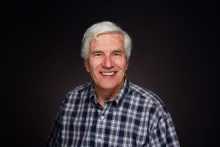
Steve Shafer was born and raised in Seattle. He graduated from Queen Anne High School in 1959 and later graduated from Ambassador College, Big Sandy, Texas in 1967, receiving a degree in Theology. He has been an ordained Elder of the Church of God for 34 years and has pastored congregations in Michigan and Washington State. He and his wife Evelyn have been married for over 48 years and have three children and ten grandchildren.
