
Roy Holladay
This transcript was generated by AI and may contain errors. It is provided to assist those who may not be able to listen to the message.
I don't know about you, but I've always been fascinated with the way the human body functions.
Being from a medical family, we always knew a lot about the human body. My dad had to...he was a general practitioner in a small town of Murphy, North Carolina. We always knew there were emergencies. He would be on call about three times a week, and the hospital was closed by. I worked at that hospital as an orderly for some time, and I was headed toward Chapel Hill for medical school when God called me and changed my career plans, which I'm very thankful about as well. Now, three of my four daughters are involved in the health services. One's a doctor, a chiropractor. The other one's about ready to start her medical school, and the other one is a therapist with breathing and working, a sleep apnea therapist. So, I'm fascinated with how God uses the human body to show us how the church should be organized as well. Let's go to Romans chapter 12.
I'm gonna have to go a little quicker than normal because of the limitation of time. Romans chapter 12 verses 1 through 8. It tells us here the analogy of the human body and how God has designed it with a purpose to also explain how the church functions. He says here, verse 1, I beseech you, brethren, by the mercies of God, that you present your bodies a living sacrifice, holy, acceptable to God, which is your reasonable service, which means that is your duty. That's what being a member is. He says, verse 2, And do not be conformed to this world, but be transformed by the renewing of your mind, that you may prove what is the good and acceptable and perfect will of God. That is a purpose in our life, to learn what is the good and acceptable and perfect will of God. And then he goes on and he uses the analogy of the human body, comparing it to the church. He says, For I say to you, through the grace given to me, to everyone who is among you, not to think of himself more highly than he ought to think, but to think soberly as God has dealt to each one of us a measure of faith. So he tells us as members in the family to always be thinking about the other person and to esteem the other person more than oneself and to be concerned about their needs. And so he goes on and says, verse 4, For as we have many members in one body, but all the members do not have the same function. So we being many are one body in Christ and individually members of one another.
So we are many, but we should work together. We are organized as a church. There are different functions. And of course, many times these functions are fluid. It doesn't mean they're just going to be they're all the same. They're going to change as circumstances, time also determine things. Continuing on, he says, verse 6, Having then gifts differing according to the grace that is given to us, let us use them. So God gives us some spiritual gifts to be able to use them in different ways. And we see people growing spiritually. We see people that get into functions that they operate, whether it's to encourage, to help, to support, to teach. We have many teachers that are now in the classroom teaching young kids. We have deacons, we have ushers, we have ladies helping out there, the food services. That's very important. We have people cleaning up and opening, you know, it doesn't matter what you do. It's doing it to the best of your ability. I'll never forget the first responsibility I received in the church after I graduated from Ambassador College, I was serving the Spanish church in Pasadena. And my function was this, to bring the minister water, make sure he had water every day, every Sabbath. That was my function. That was my only function. I didn't even have a car. I had to drive a bicycle to church. I lived on the other side of the ditch there in Pasadena, and I'd have to drive a bicycle to work. I worked in the Spanish department, didn't have enough money for a car. But you know, I took care of that little function, and I made sure I was there early, opening the place up, and doing what it did. And you start out, whatever you do, you do it with all your heart, and you don't seek something else. You just let God position you as he pleases. The problem is, a lot of people that want to position themselves, and they don't know how to wash others' feet. And it's easy to let things get to your head. And you know, nobody is exempt from it. But I'm just using it as an example. I still remember that little glass of water that I made sure it was clean, it was fresh, it was there for the person. That was my function. So, as he says here, that we all have different responsibilities. He says, whether they are prophesy, which is an equivalent term to preaching, inspired teaching is what it means. Let us prophesy in proportion to our faith, or ministry. Let us use it in our ministering. The term is service. He who teaches in teaching, he who exhorts in exhortation, he who gives with liberality. Sometimes God just blesses a member financially, and they can really be a big help. I guess he doesn't do that very often, because we don't see too many rich people around here, do we? It seems like riches just also goes to your head, and it's hard. But there are people you don't need to have that much to be able to share with others as well. But this is a gift. He says here, he who gives with liberality, he who leads with diligence, he who shows mercy with cheerfulness, even forgiving and showing mercy with cheerfulness, not with this sour puss of a face that you're just forgiving a person, but you're all bitter about it. No, he says with cheerfulness. So it's fascinating to realize how we can observe from nature and discern spiritual principles, as Paul did. Paul would observe something physical, and he'd always find some spiritual application. We can do that as well.
I'd like to read from the Godly Governance paper, which was approved in 2001 about how the church is organized and structured as a body of which all of us have a part. We're all examples. We're all called to serve God in different functions. Now, sometimes it's a very small function, but to God it doesn't matter. Just like my fingernail is very small. But boy, I'm glad I have that little fingernail. It comes in very handy. You know, when I drop something very small, I have to use it. And that fingernail probably thinks, well, I'm not very important in the body. You are. You also protect the finger. When you get it crushed, the fingernail acts like a little shield. The fingernail is very helpful to be able to grasp things. And so, see, whatever we do, we should do it with all our might and be concerned. Imagine if the fingernail wanted to be a hand. So you got this little hand coming out of your fingernail. It wouldn't do very good, would it? A fingernail just should follow the function that was designed to do, just like all of us have a function. And we have to find that function, too. God doesn't necessarily let us know. It's just by serving and experimenting, we find what we're good at, our little niche. We have a ladies' weekend. They get organized. You know, they're very good at what they do there. And many others have different functions. They have people that help drawing beautiful things, cards. And they're very artistic. And they know how to organize flowers. Now, I couldn't do that. Somebody asked me to do it. Somebody knows how to do it better in the congregation. And so, from the Godly governance paper, it says, Many well-meaning Christians believe that defining a one-mold fits all circumstances form of church government would end confusion and launch the work of God into a powerful and effective effort. In other words, there is THE way to govern the church. Well, guess what? Well, guess what? We have found out that God has used many different forms of government throughout the entire Bible. He used prophets. He used judges. He used apostles. And there are just different ways that He has carried out His will. He says the Bible nowhere outlines, quote, God's government on earth as one monolithic, just one-size-fits-all, immutable, unchangeable structure in place from the beginning to the present and into the future.
We're going to have a binary form of government before Christ comes back. We're going to have two people in charge. It says the two witnesses. Now, when they appear, they're going to be filled with power. They're going to have miraculous powers. They're going to be keeping the commandments of God. They're going to be teaching about respecting the Sabbath. The whole world is going to be in an uproar for these two people. And guess what? We are going to submissively and humbly say, we're with you. We're going to hold your arms up. Okay, we're in the Bible. Do you have where two people are in charge of something like that? Well, it's going to be that way in the end time. And they're both going to be doing their duties. So you see, there are different numbers that are used in the Bible to govern. And so it says here, on the contrary, his word shows that over time he has employed a number of systems which have altered somewhat as the needs and realities of his people changed. It is simply inaccurate to state. God's government is... This is the perfect model. And then outline a favored structure. What is certain, however, is that God guarantees that Christ remains as the head of his church and that he never changes, even if earthly circumstances shift and alter. As Paul noted, there are differences of ministries but the same Lord. And there are diversities of activities, but it is the same God who works all in all. 1 Corinthians 12, 5-6. From the beginning, God has never deviated from his objective of, quote, bringing many sons to glory. Hebrews 2.10. Creating a family of his own children, but his methods of working with humans has varied considerably. When working with groups of people, he has used several governmental structures as organizational tools, but none of them have proven to be the spiritual cure for human problems. Repeating once more, the critical factor is a conversion and submission to God of both the leaders governing and the people governed. Without that, no structure will work well. Therefore, asking what is the right way, meaning the only way, to accomplish the work of God as a church is asking an unanswerable question because there is no single pet answer. God's Word offers only a smattering of organizational advice. We find little about what structure looks like, but we find much of what godly leadership looks like. The Bible is rich with instruction that defines leadership responsibilities and how they should be discharged. We find that God focuses on what is constant for human through all times and circumstances, attitude and character. The Bible reveals a character of God and shows how humans can attain his character through a submissive attitude that first allows God to govern them. Therefore, the critical question to ask concerning church governance centers on character issues.
How well are the servants of Christ working together? How yielded are we to his explicit directives to love, respect, serve and submit to one another? God identifies these as crucial because he seeks to instill his attitude and create holy, righteous character in those who will share his rule over the world in the future. Any behavior hindering that is the real underlying cause of dissension not only in the world but also in the church. Paul chastised the Corinthians writing where there are envy, strife and divisions among you. Are you not carnal and behaving like mere men? 1 Corinthians 3.3. These were and are common character problems. They cannot be controlled or overcome by any structure of government but only by the power of God's Spirit ruling our hearts and minds. So this is what the Godly governance paper mentions and it just sets the table for what I want to go into the scriptures because I've got some important announcements to give you. In Titus chapter 1, Titus chapter 1, verse 5, it mentions, For this reason, says Paul, talking to Titus, I left you in Crete, that you should set in order the things that are lacking, and appoint elders in every city as I commanded you. And then he goes into the qualifications. If a man is blameless, the husband of one wife, having faithful children, not accused of dissipation or insubordination, so the children should reflect a certain amount of the father's influence on them, and that he can govern a house properly, that he doesn't have all bunch of rebellious kids who do everything that they please. Because then it says, how can that be projected? If one is not faithful in little things, how can he be faithful in greater things? For a bishop, which means you're a pastor, must be blameless as a steward of God, not self-willed, not a person that's just wanting to get his way and pushing his own agenda, not quick-tempered, so he can't be a person, quick on the trigger. You cannot be easily provoked into anger. Sometimes you're going to be attacked, or you're going to be insulted, or something. Well, you just can't have this trigger temper as such. Of course, God gives his gifts to be able to have those fruits.
Continuing on, it says, not given to wine. So he's not a person that just becomes an alcoholic, that lets wine govern him. Notice it doesn't say you cannot drink wine, but just he's not given to wine. This isn't a habitual problem that he has, that he has to be having drinks all the time in order to just act normally. Continuing on, it says, and not violent. Again, it's a person that cannot have this fiery temper and just berate people, not greedy for money.
Can't be out there putting the church on the back burner, and he's all here with all his management of finances, and getting money on the side, and doing all of this other stuff. He's got to put the church first. He's got to put the church's needs first.
It has to be a full-time job. But he has to be hospitable, so he has his house open to the brethren, a lover of what is good, sober-minded, just, holy, self-control. Again, a person that doesn't let his emotions control him, holding fast a faithful word as he has been taught.
So this is an attempt to start innovating on doctrine. You're faithful, just like a good chef. What you do is you get God's ingredients, which are in the Bible, and if you are a diligent chef, you can always present the same ingredients in the Bible, but in a new and interesting way. I compare when we have these speech clubs. You can be a short-order cook, and you can prepare eggs in three or four different ways. You have a sunny side up, a scrambled, but that's it.
You go to France to one of these great restaurants. They can prepare a hundred different ways, the same eggs that you use for a short-order cook, but they just have more knowledge. They present the same ingredients, but in a novel, in an interesting, flavorful way. So again, we know that the church should be ruled by the eldership. He didn't tell the brethren they are in Crete. Well, you go ahead and choose your own ministers. No, he sent Titus, who was a pastor.
He says, you go there, you appoint elders. So we know that the eldership should choose the elders. Let's go to Acts chapter 15. Acts chapter 15 verse 6. It says here, this is the famous council in Jerusalem. Now, this helps us understand a little bit about governmental structure at that time. This was a worldwide meeting. The ministry came from different parts because they had to deal with the problem of circumcision. Did you have to be circumcised in order to be a member of the church? Before that time, you had to be.
If you were a Jew, you automatically had to be circumcised on the 8th day. If you were a Gentile that came into the church, you had to be circumcised. As a proselyte, you became a Jew by circumcision and a couple other rituals as well. So this was the big issue. It says in verse 6, now the apostles and elders came together to consider this matter.
So again, who were the ones that had to see things and had to make the decisions? The apostles. There were 12 of them that were in charge of the church. It wasn't Peter. It wasn't John. It wasn't James. They were all together. They all had the same position as apostles. It was a consensus. It was a team of men. Peter many times was the first one who would speak out and he would be a kind of a spokesman.
But God never put Peter over the 11. They all had and shared the same authority. And you know what? They got along. They were able to keep the church together because they could make decisions collectively without fighting among themselves and pushing for the power. They worked together also with the rest of the elders. So this is kind of like the same thing. I'm going to Cincinnati in two weeks and we're going to have the general conference of elders. We're going to gather all the elders from around the world because we have decisions that have to be made. And when there had been much dispute, so it doesn't say here that this was a rubber stamp, you know.
Pope Peter saying, okay guys, this is what I think and everybody, yes sir. No, it wasn't. There was discussion. There were differences of opinions.
And then Peter rose up and said to them, men and brethren, you know that a good while ago God chose among us that by my mouth the Gentiles should hear the word of the gospel and believe. That was his experience with Cornelius the centurion. So God who knows the heart acknowledged them by giving them the Holy Spirit just as he did to us and made no distinction between us and them purifying their hearts by faith. So here again, just like this was kind of an inductive sermon type thing where Peter is just bringing out the evidence. He's not ruling on it. He says, this is what I experienced. Then he says verse 10, now therefore why do you test God by putting a yoke on the neck of the disciples which neither our fathers nor we were able to bear? It was very heavy to be able to go through the circumcision, the ceremonial law, all the rituals that were involved. I've got a book at the house which is what a practicing Jew should do. And it starts out saying the Jewish religion is one of the few religions that tries to be able to control a person's life from the early in the morning till at night because you got prayers, you got chants, you got this, you got that, that an Orthodox Jew would do. Believe me, after a week of that, you would be tired too. So this is what Paul is saying, what Peter is saying.
And he was very open. He says, but we believe that through the grace of the Lord Jesus Christ, we shall be saved in the same manner as they, not through all of that ceremonial and rituals, but through Christ. Then all the multitude kept silent and listened to Barnabas and Paul, declaring how many miracles and wonders God had worked through them among the Gentiles. So they gave their witness. They were just presenting the evidence.
And after they had become silent, James answered, saying, men and brethren, listen to me. James was the brother of Jesus Christ. He had been converted. He had seen Christ. He became the reigning in charge, the pastor there in Jerusalem. He says, Simon has declared how God at the first visited the Gentiles to take out of them a people for his name. And with this, the words of the prophets agree. So he reads his quote. I'm just gonna go down. He says verse 19, the main point, therefore I judge. So there was some sort of authority that James had at that time. He was also an apostle. And he was in charge of the Jerusalem church. But he says, I judge that we should not trouble those from among the Gentiles who are turning to God, but that we write to them to abstain from things polluted by idols, from sexual immorality, from things strangled, and from blood. So what he did here was he separated the ceremonial law from the regular law based on the principles that do not have to do with ceremonies. So he says here that you are to abstain from things polluted by idols. That certainly has to do with the Second Commandment about not having idols before you. From sexual immorality, because the Gentiles had a big problem with that. They even married among their cousins and sisters. So that had to be also prohibited from things strangled. So here we see the food laws are still binding, because one of the food laws is that you shall not eat blood, and you shall not eat meat that still has the blood in it. So here he's saying the Gentile believers still are under the food laws, and this was the smallest of the food laws. This didn't have to do with pork and shrimp. This just had to do with the right type of meat, but that it could not have blood. It had to be drained. It says here, from things strangled and from blood. So you not only abstain from meat that had blood in it, but you could not drink blood itself. So with this he separates the moral law and the ceremonial law. And God's laws are still based on these principles that derive their authority from the Ten Commandments. And so he continues there in verse 22. It says there, then it pleased the apostles and elders with the whole church to send chosen men of their own company to Antioch with Paul and Barnabas with a letter. And so it just shows there is a certain amount of structure, but it's a very collegial spirit. People are involved at the top.
You know, 15 years ago in 1995, those that were here learned a very important lesson. That no one at the top is immune from deviating from the faith. In Jude chapter 3 and 4, it tells us that some, you know, crept unawares. At that time, we learned the dangers of putting all our eggs in one basket, of having just one person be able to determine what we believe, when we believe it, what we should do or not. There was no way to remove the persons from that top position, although that person and his successor violated the founding doctrines and the principles of the church. This successor named his son, who went right along, and no one could do anything. If there had been a council of elders, as we have today, it could have been prevented.
And the people that did not teach the principles of upholding God's laws would have been removed, and the church would have been protected and prevented from a wholesale disintegration. So, we were forced to reorganize the church upon biblical principles, but at the same time, providing that safety and providing the eldership in charge. I'm going to hand out now a paper here on some of the bylaws that we have in the church. I thought I would have to do this very quickly.
We're going to have the ushers hand this out.
Jerry, I'm going to take one more question. I'm going to take one as well.
This is the Constitution of the United Church of God, an international association. Notice how we set this up to protect the church. We would have the general council of the general conference of elders. There's approximately 440 of those elders from around the world, and they constitute under Jesus Christ and God the Father.
You know, the physical part, they are there to make sure that we protect the church with its doctrines. We laid out 20 main doctrines that could not be changed by any man, and any alteration to any of them would require at least three-fourths of the ministry.
So it's a way to protect the teachings and the church. And then we would, the general conference of elders delegates its authority to a council of elders who appoints the different administration officers, administrative officers. Notice the statute, the first one, from the Constitution. It says, the council of elders is established to provide oversight and guidance within the church for the service and care of local congregations, the preaching of the gospel, and the administration of God's tithes and offerings.
It says, the church is a duly appointed corporate board for the church and is equivalent to a board of directors. Statute 3.2.2.5, the home office and management team, the home office and management team are established by the council of elders to serve the church by administering the policies adopted and approved by the general conference of elders and the council. The management team and home office staff are selected, approved, and directed by the council. Statute 4.2, management within the church, delegation authority. It says here about the council of elders. It says, the general conference of elders entrusts them with the responsibility and authority to establish policy, to enable management, to implement that policy, and to provide direction and oversight to ensure the proper management of the day-to-day affairs of the corporation.
Now, from the bylaws, responsibilities of council members, the first statute, 8.6.1, it says that subject to provisions and limitations of the articles of incorporation, the constitution, and bylaws relating to action, requiring approval by general conference business and other affairs of the corporation shall be conducted under the direction of the council. And then, specific responsibilities. Go down here to number one, to select and remove all officers, agents, and employees to prescribe duties for them, to approve their compensation, and to require from them their faithful service, number two, to direct and control by policy the affairs and activities of the corporation and make rules and regulations for this purpose. 9.3, removal of officers. Without prejudice to any rights of an officer under any contract of employment, any officer may be removed with or without cause by the council upon two-thirds vote of the council. There are 12 council members. You need nine to be able to carry this out. And I received this yesterday from Roy Holliday, the chairman of the Council of Elders. It's being read in different churches throughout the world. It says, dear fellow elders, this letter is to inform you of a decision reached today between the Council of Elders and President Clyde Kylo. The council held an executive session teleconference on April 8, 2010, where it was decided that a change in the office of President of the United Church of God was needed. Since Mr. Kylo had previously indicated that if the council desired a change in the office of president, he would likely be willing to resign, the council decided to ask him for his resignation as president. On Friday morning, April 9, that was yesterday, Council Chairman Roy Holliday and two council members met with Mr. Kylo at the home office in Milford, Ohio. Following the discussion, Mr. Kylo tendered his resignation as president of the church, and it was accepted. He will be resigned to the field ministry and will continue to contribute to the work of the church. Pursuant of By-law Article 9.5, Chairman Roy Holliday will take over the duties of the office of president until such a time as the council shall appoint a new president, and meeting was held with the home office staff to inform them of this decision.
So it says over the years the council has made several administrative changes in the office of president. We very much appreciate the work of Mr. Kylo as well as that of presidents Les McCullough and Roy Holliday before him in laying foundations upon which we continue to build. We are also grateful that we have a system of governance and leadership supportive of that system and unity that allows for such transitions or changes in administration in a peaceful and brotherly manner.
Decisions of this nature are difficult but sometimes deemed necessary. The council asks for everyone for patience and appropriate consideration in discussing this change. Moving forward together in our mission is vital. The unity, peace, and healing of the ministry and the church is uppermost in everyone's mind. I'm also planning, said Mr. Holliday, to send out a letter to the membership this coming week regarding this change in the office of president. And a little after that, after the office meeting, Mr. Holliday also says, Dear fellow Elder, today I accept the resignations of Jim Franks as Ministerial Service says Operation Manager and Larry Salyer as Media Operation Manager. Both were very gracious in their approach and they desire only the best for the United Church of God. They have expressed a willingness to work toward a harmonious transition of their responsibilities. With the change of responsibilities, both Jim and Larry have expressed a desire to continue to serve the church by pastoring congregations of the United Church of God. Jim and Larry have proven to be able pastors of churches that they have pastored. I will be recommending to the council next week a temporary team of men to work with Ministerial Services until a new president is chosen. I mentioned the possibility of two men to the home office staff, but the council will have to approve the team. A new president will have the responsibility of choosing his own operation managers once he takes office. Shortly the council will announce a process for choosing a new president. Your prayers and involvement will be deeply appreciated. So, after going over this paper, I thought it's important. Let's go over to 2 Timothy chapter 2. 2 Timothy chapter 2 verse 3. It says, and here Paul is talking to Timothy, he says, you therefore must endure hardship as a good soldier of Jesus Christ. We in the ministry are soldiers of Jesus Christ. We are subject to authority, just like the centurion told Christ, you know, I have a boss above me and he has a boss above him and the ultimate boss is Jesus Christ and God the Father above him as well.
It says, no one engaged in warfare entangles himself with the affairs of this life, that he may please him who enlisted him as a soldier. And also, if anyone competes in athletics, he is not crowned unless he competes according to the rules. So these are the rules that we have set up in the United Church of God and we have a council that supervises the administration. The administration can last many years. Sometimes it's shorter, but that is part of their purview in their positions. And so that is something normal that is going to happen. We do not have a person here in a lifetime position. We are going to have differences in the administrative personnel.
I'd like to read 1 Peter chapter 5 real quickly. Got two more scriptures to go. 1 Peter chapter 5 verse 1. Notice how Peter changed. He used to be so brusque. He was always the one, just like I mentioned, he saw Christ out there and he jumped off the ship. Didn't even wait for them to row ashore. He was very impulsive. He was very enthusiastic, but many times he got himself into a lot of trouble, as he did with Paul. That had to be corrected. But here, notice at the end of his life, verse 1, how he changed. He says, The elders who are among you I exhort, I who am a fellow elder, and a witness of the sufferings of Christ, and also a partaker of the glory that will be revealed, shepherd the flock of God which is among you, serving as overseers, not by compulsion, but willing, not for dishonest gain, but eagerly, not as being lords over those entrusted to you, but being examples to the flock. And when the chief shepherd appears, you will receive the crown of glory that does not fade away. Notice the humility that Peter showed here. He was trying to lord it over the congregation, and none of us have that desire. We're here to serve. We're here, and when we have to be changed, I'm subject to being changed at any time. I can be called at 12 o'clock at night and tell it said, we need for you to be pastoring a church there in Wichita, Kansas or something. Well, guess what? I'm going to be packing because I am under authority. And so it's not about me. It's about serving others as I can. Let's go to another scripture in Philippians chapter 2. By the way, I hope I can stay here as long. I'd like to retire here, but I don't know what God has plans for us.
In Philippians chapter 2, and I need to finish up, Philippians chapter 2, it says here in verse 5, it says, Let this mind be in you, which was also in Christ Jesus, who being in the form of God did not consider it robbery to be equal with God, but made himself of no reputation, taking the form of a bondservant, and coming in the likeness of men. So he existed before. You can't come if you don't exist. Coming in the likeness of men and being found in appearance as a man, he humbled himself and became obedient to the point of death, even the death of the cross. And so he gave us an example of not grasping for titles, not just insisting on all that he had. He was able to let go and step away from all those tremendous responsibilities that he had. And so we are all replaceable. Let's read the last scripture, Matthew chapter 20 verse 24. Matthew 20 verse 24. I think this is just very apt for all of us to remind ourselves how Christ wants us to conduct our lives. Matthew 20 verse 24. As a body of Christ working together, it says here in verse 24. And when the ten heard it, they were greatly displeased with the two brothers because they had sought the two top positions. But Jesus called them to himself and said, You know that the rulers of the Gentiles lorded over them, and those who are great exercise authority over them. Yet it shall not be so among you, but whoever desires to become great among you, let him be your servant. And whoever desires to be first among you, let him be your slave. Just as the Son of man did not come to be served, but to serve and to give his life a ransom for many. So he didn't come to be served, but to serve. And he gave us a wonderful example. And we as ministers are all here to serve and not to be served, not to be aggrandized, you know, to be elevated, and to just people think that we are great. When that happens, we'll be unto us. We're just Christ's fellow servants under him. So with that, hopefully you'll be able to get a good understanding and have a wonderful evening.
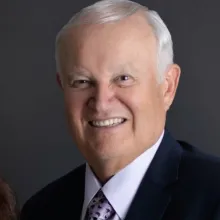
Mr. Seiglie was born in Havana, Cuba, and came to the United States when he was a child. He found out about the Church when he was 17 from a Church member in high school. He went to Ambassador College in Big Sandy, Texas, and in Pasadena, California, graduating with degrees in theology and Spanish. He serves as the pastor of the Garden Grove, CA UCG congregation and serves in the Spanish speaking areas of South America. He also writes for the Beyond Today magazine and currently serves on the UCG Council of Elders. He and his wife, Caty, have four grown daughters, and grandchildren.
