
Scott Ashley
In order to fully appreciate the meaning of God's feast days by keeping them in spirit and in truth, they should never be taken for granted or observed as just something routine. Key scriptures are given to enlighten and encourage the observance of God's annual feasts.
As it was mentioned in the announcements, the Feast of Trumpets is coming up in just four weeks from now. So we're about ready to begin these fall Holy Days. Trumpets, September 23rd. And as Matthew 24, 45 tells us, like to read from the Good News Bible, it says, Who then is a faithful and wise servant? It is the one that his master has placed in charge of the other servants to give them their food at the proper time. Of course, God's not talking here about physical food. He's using it as an example here. The servants that he has, they should feed God's people with the food at the proper time. And so as the feasts come, these fall feasts, they only come once a year, and we should never observe them as something to be taken for granted, as just a routine. All of these times coming, that's nice. Let's have plans to go. But we should really appreciate the privilege of being able to keep them, as Christ said, in spirit and in truth. So no matter where we are, this is something that the Jewish people don't do because they didn't accept the Messiah, Jesus Christ, and so they still keep their feasts more physically. You don't know the plan of salvation that's involved in spirit and in truth? Notice what Christ said in John 4, verse 23. John 4, verse 23.
So now is the time to go a bit deeper into their meaning and see what they entail for us. And I hope what I share with you is pretty new information, which actually we have an article coming out later about it. But it's important that we always are growing in grace and knowledge.
And so here's something that I didn't understand fully about Colossians, chapter 2, verses 8 and 16 through 23, which talk about the feasts of God as being shadows of things to come. And what they do is they foreshadow by the correct keeping of the feasts, the real events coming in the future. And some have already been fulfilled partially, like in the spring feasts. So this is God's timeline for mankind. And that's so unfortunate that people don't know about this timeline. The great events that God planned ahead of time to be steps in that plan of salvation. And so I'd like to share with you about Colossians chapter 8, because some people might say, well, where does God's plan of salvation and the feasts of God come together? And one of the places, and we're going to just go over several of them, but in Colossians, we have gotten more understanding about this than we did years ago. So let's go to Colossians chapter 2. And in verse 8, Paul is warning the brethren of some who have entered the congregation with type of aesthetic, kind of Gnostic, what would become Gnostic teachings in the future. Notice how Paul identifies them. He says verse 8, Beware lest anyone cheat you through philosophy and empty deceit. According to the tradition of men, in other words, these aren't Bible, Biblical teachings. They're philosophy of men. According to the basic principles of the world, which has to do with that Greek philosophy, the elements, fire, earth, water.
And there are four of them that they used to feel everything was based on that and heir, and not according to Christ. So they were coming in, and today we all have all kinds of philosophy that are always trying to enter the church. It can be a type of modern Gnosticism. We have Hebraic roots type of things where they bring in more of a Jewish philosophical thought.
And so it's talking here about Christ to focus on what he reveals in the Bible. It says, verse 9, For in him dwells all the fullness of the Godhead bodily, and you are complete in him, who is the head of all principality and power. On occasions we have to do that. We have to say there are some type of ideas that come in, and some even are to degrade Christ, and not focus so much on him. But here the Colossian brethren had been infiltrated, and some were being persuaded by it. And Epaphras, which Paul mentions in chapter 4, he came to visit Paul and said, Here we have this problem. And so Paul writes this epistle to them. Let's continue on. It says, we're going to go jump a little bit because he gets focusing on circumcision and demeaning and baptism. But then, verse 15, it says, having, talking about Christ, disarmed principalities and powers, he made a public spectacle of them, triumphing over them in it. So, he's saying to the brethren, let no one judge you in food or in drink, or regarding a festival, which is a feast day, or a new moon or a Sabbath. So there are five things that these people had infiltrated and were criticizing them for the way they were keeping these different feasts and Sabbaths of God. And actually, it should say, so let no one judge you in your food and in drink, or regarding a festival. In other words, because it's talking about what they are doing, which are a shadow of things to come. But the substance, in other words, who should be judging you is of Christ. Did Christ keep the feasts? Yes, he did. Was the Apostle Paul keeping the feasts? Go through the whole book of Acts, and you'll see throughout there, they're keeping the different Passover, Days of Unleavened Bread. Paul actually mentions even atonement as the fast that's coming. Paul was going to Jerusalem to keep Pentecost. So there's no doubt that he was keeping that. And when he finally ended up in Rome, imprisoned for two years, which is what it mentions in Acts 28. During that time in prison is when he wrote what is called the prison epistles, which are four of Paul's epistles, of which Colossians is one of them. And nowhere does Luke ever say, oh, we got new feasts now. We got to follow this other, or they've been done away. Because it coincides with the book of Acts.
And so when we come to this point, notice in verse 18, it says, let no one cheat you of your reward, of keeping these things. And then it says, they, talking about the opponents, taking delight in false humility and worship of angels. So you see here, this isn't something biblical. This is a Greek philosophy. And there were numerous that did worship angels intruding into those things, which he has not seen vainly puffed up by their fleshly mind. Now, what I think is very interesting is that we have two church historians who mentioned that these feasts were being kept by God's people. And it was the opposition that Paul was talking against. He wasn't talking about the Colossians doing anything wrong. Just don't let these people persuade you.
So let's, one of the church historians, Samuel Bakiochi, who is an Adventist historian who came to believe in keeping God's feast days, he points out about Colossians 2.16. He says, the statement, therefore let no one pass judgment on you, has been connected as a Pauline condemnation of the observance of Old Testament Holy Days. In spite of its antiquity and popularity, this interpretation is totally wrong. Because in this passage, Paul is not warning the Colossians against the observance of the five mentioned practices, eating, drinking, feasts, new moons, and Sabbaths, but against, quote, anyone who passes judgment on how to observe them. Notes should be taken of the fact that the judge who passes judgment is not Paul, but the Colossian false teachers who imposed, quote, regulations, Colossians 2.20, on how to observe these practices in order to achieve, quote, rigor of devotion and self-abasement and severity of the body. Colossians 2.23. So he explains this philosophy, which is, was quite popular. You had, like I said, an ascetic type of groups there that they wanted harsh treatment of the body, a lot of things to be able to fight against the flesh. He goes on to say, in light of these observations, we conclude that in Colossians 2.16, Paul expresses not a condemnation, but an implicit approbation. In other words, approval of the observance of Holy Days. That's a tremendous admission. And that is the right interpretation. So independently, he comes to this understanding, and it's not, it's not only him. So I'd like to interject here that it was the false and ascetic teachers in the epistle of Colossians who were criticizing the brethren for keeping God's Holy Days in a festive spirit while eating and drinking on those days. This manner of rejoicing at God's feasts is a commanded duty in the Old Testament. As we read in Deuteronomy 14.26 about these feasts. Deuteronomy 14.26, it says, And you shall spend that money for whatever your heart desires, for oxen and sheep, for wine or similar drink, for whatever your heart desires. You shall eat there before the Lord your God, and you shall rejoice you and your household. So you can imagine one of the churches keeping one of these festive feast days, and just like we do, we're going to have a wonderful, God willing feast of trumpets, and we'll be sharing and enjoying what is the money that we have saved for these feasts to do. And of course, these others came in, and we've had these types that it's all about this harsh treatment of the body, and how you have to kind of beat yourself up and try to get closer to God through mysticism, this worship of angels, because they think, well, first you have to go to these mediators. You can't go directly to God. You have to go through angelic beings and things like that, which, of course, are not taught in the Bible to do. Notice just one scripture, and then we'll go back, and Revelation chapter 19. What happened when the Apostle John tried to worship one of the angels?
Revelation chapter 19, it says in verse 10, And I fell at his feet to worship him. But he said to me, See that you do not do that. I am your fellow servant and of your brethren who have the testimony of Jesus. Worship God for the testimony of Jesus is the spirit of prophecy. And we already had a message on that, that Jesus is the one who witnesses, and he is the one that has the spirit of prophecy, not human beings, not go to private interpretations of it. And so in Colossians chapter 2, you get this picture of the feasts as being shadows of things to come. Not things in the past, but things that are ahead. And so what you have is this analogy of light and shadow, and how a shadow casts its shadow before the real thing. In other words, if you look at a shadow of a human being, you know there's a person right there. And who was the one that came up with this about the shadows and the body, the reality? It was Jesus Christ. Notice in Matthew chapter 5, in verse 17, Jesus told his disciples and others what he came to do. Matthew chapter 5 verse 17. It says, do not think that I came to destroy the law or the prophets. I did not come to destroy, but to fulfill. That term means fill to the fullest. In the Passion Translation, it says, if you think I've come to set aside the law of Moses or the writings of the prophets, you're mistaken. I have come to fulfill and to bring to perfection all that has been written. So yes, Christ is the one that is carrying out God's will and seeing God's plan of salvation be carried out. That's what he came to do and what he's doing up in heaven right now. In Matthew 26 and verse 27, we see he applies the same principle to one of the feasts. Matthew 26 verse 27 through 29. This is when he's keeping the Passover with his disciples. And he said, then he took the cup and gave thanks and gave it to them, saying, drink from it, all of you. For this is my blood of the new covenant, which is shed for many for the remission of sins. But I say to you, I will not drink of this fruit of the vine, which is the wine that they were taking, from now on until that day when I drink it new with you and my Father's kingdom. So what they were doing was just rehearsing. They were enacting what is going to be fulfilled in God's kingdom. That's when the reality is, when he's going to be keeping the Passover in his kingdom with everyone that is converted at that time.
And so you have this shadow that you keep now, which foreshadows, which projects forward in time until the reality, which is the kingdom of God.
Another church scholar, his name is Troy Martin. He's a New Testament expert. He adds about collagions. By the way, Bakiyoki's book is God's Festivals in Scripture and History, Volume 1, page 90. If you want to look up that quote, here's another one. This is a book which I have in my house, which my wife says if I have one more book, the house is going to collapse. But it is what it is. I've got to study for all of you to be able to share because I know most people don't have the time to be able to discover and to share a lot of this information. So, Troy Martin, he says, the available evidence demonstrates that the Pauline communities and other early Christians adopt a Jewish timekeeping scheme. And actually, it should be called a biblical because these feasts existed before the Jews ever became a nation. But it's still something that most people understand. This is a biblical timekeeping scheme to avoid the idolatrous systems of the pagans around them. Thus, instead of disproving the Christian practice of the calendar in Colossians 2.16, a correct understanding of Paul's conception of Christian freedom substantiates, which means backs up, supports the Christian adoption of the Jewish religious calendar. The book is by Philosophy and Empty Deceit, page 129.
So, one of the great discoveries in Scripture regarding God's feasts is that they reveal God's plan of salvation and that Jesus Christ is at the center of all of God's feasts. And He is carrying them out. This, of course, includes God the Father, who is instructing Him to do this. So they're working to fulfill. And each one of these feasts is something that projects forward in time. I know it seems so far away, just as Dave and his message, there's going to be tragedies in life. There are going to be so many different trials and health trials and everything else. But God's plan of salvation is going to be carried out. And those people, and even here, the gentleman that wrote this and had the faith in the future, but he doesn't understand about the second resurrection and that these children are not lost forever, but they're going to have a chance. And so we have this wonderful plan that God is carrying out.
So, let's just briefly go through the feasts, starting with the spring feasts. But I want to especially concentrate on the false feasts. But it starts with the Passover. And in one scripture, in one of Paul's epistles, you actually get two for the price of one. So here, you can actually see the shadow and the projection in just these two verses. Notice in 1 Corinthians 5, it says in verse 6 through 8, it's three verses.
Notice how it covers the spiritual meaning of the Passover and of the Days of Unleavened Bread. It says, verse 6, He's not talking about here the physical leaven. He's saying, Remove that spiritual leaven that you may be a new lump since you truly are unleavened. And so here we have the Days of Unleavened Bread. And then it focuses on the Passover, for indeed Christ, our Passover, was sacrificed for us. So here's a clear expression that the Passover, which we find in the Old Testament in Exodus 12, here's the shadow in Exodus 12 with the killing of the Lamb on the 14th of the first biblical month. And now you see, oh, the reality, Jesus Christ, the Lamb, coming to sacrifice for the sins of mankind.
And so the Passover, now we know, is Christ-centered. And He was sacrificed for us. He was the representation of that Lamb, that for over a thousand years, because it started around 1400 B.C. all the way to the time of Christ, virtually 1500 years. And every one of those years, the Jews had to, and talking about the house of Israel, remember, that the Jews did not become a nation until they're in Second Kings when they're fighting the house of Israel and all of this. But this is talking about the people of Israel sacrificing.
And did they understand what that Lamb meant? No. They just were keeping it. And as the prophets brought out more and more about the Messiah that was going to be coming, but here the Messiah came. He was the Lamb.
And they didn't accept Him. Notice in John chapter 1 what happened. And virtually hasn't changed that much today. In John chapter 1, it says in verse 10, He was in the world, and the world was made through Him, and the world did not know Him. He was in the world, and the world was made through Him. It says, He came to His own, and His own, talking about the Jewish people, did not receive Him. But as many as received Him, to them He gave the right to become children of God, to those who believe in His name, who were born not of blood, nor of the will of the flesh, nor of the will of man, but of God.
In other words, that's that spiritual birth that we begin at baptism. And the word became flesh and dwelt among us, and we beheld His glory, the glory as of the only begotten of the Father, full of grace and truth. John bore witness of Him, and cried out, saying, This was He of whom I said, He who comes after me is preferred before me, for He was before me.
And then later on, it says in verse 29, the next day John saw Jesus coming toward Him and said, Behold, the Lamb of God, who takes away the sin of the world. So again, the Bible is consistent, that here you have this shadow from the time of Exodus 12 with the first Passover, all the way to the time of Jesus Christ taking the Passover for the last time. And He died on that day of the Passover, just as the Lamb later was being sacrificed, He was also being sacrificed as well.
And we go back to the Days of Unleavened Bread. Let's go to 1 Corinthians chapter 5 again. 1 Corinthians chapter 5 and continue after it says about our Passover was sacrificed for us because, of course, the Passover and the seven days of Unleavened Bread, they're all together. And so you don't keep the Passover and leave out the days of Unleavened Bread, or you don't just keep the days of Unleavened Bread and not the Passover.
The Passover is the first day, and then you have seven days of Unleavened Bread. So in verse 8, it says, therefore let us keep the feast, not with old leaven, nor with the leaven of malice and wickedness, but with the Unleavened Bread of sincerity and truth. So here we have two of the feast days that have the shadow.
And of course, the brethren in Colossae, they were celebrating these feasts, and some people came and started questioning them. Well, you should be much more serious about your religion. Why are you feasting in this way? Eating and drinking. And there are people that don't drink wine in different religions. They came over and watched us during the feast. Oh, they wouldn't be happy with the way we do it, with moderation.
The Christ drank wine. Disciples did too. And so Christ is the Passover, and he also is the one who purges, who cleans us. That's what the Days of Unleavened Bread project. Christ is the one who purifies us. He's the one through his sacrifice. And so he's at the center of this feast. Also, going to the Feast of Pentecost. Let's go to the Feast of Pentecost right away. Luke 24, verse 49.
Luke 24, 49. What did Christ tell his disciples? That was going to be fulfilled in a few days. Luke 24, verse 49. He said, Behold, I send I. Send the promise of my Father upon you. But tarry, or dwell, in the city of Jerusalem, until you are imbued with the power from on high. So Pentecost, Christ is at the center of it, too. The Father is the one that uses Jesus Christ to send that Holy Spirit, which we see there in Acts chapter 2, verses 1 through 4, which says they received the Spirit. Well, it was God's Spirit and orders, but it was done through Christ because he's the center. So again, Pentecost was kept also by the Israelites. That's just a little bit further on. Exodus 12 is a passover. And then a couple of chapters more, and they get to Mount Sinai, and then they have the first Pentecost, the Feast of Weeks, where they received the law of God. And in the New Testament, they received God's Spirit. So again, we feast. We just finished that day of Pentecost some months back, rejoicing, enjoying, because it is God's feast. And he tells us to rejoice, to enjoy things. He's not one of these abstemious, Spartan-like figures that you have to do all this harsh treatment of the body. At all.
And that takes us to the fall feasts.
Trumpets, the coming of Jesus Christ to the earth. Matthew 24, in verse 29. Again, the Israelites began blowing the trumpets from the time they had left Egypt. They were headed toward the Promised Land. Matthew 24, verse 29. Notice how trumpets are related to the coming of Christ. In verse 29, it says, It says, Then, the sign of the Son of Man will appear in heaven. You'll see it as a bright light coming down to the earth. And then all the tribes of the earth will mourn, and they will see the Son of Man coming on the clouds of heaven with power and great glory. And he will send the angels with a great sound of a trumpet, and they will gather together his elect from the four winds from one end of heaven to the other. In other words, all the way across the sky, that's what's called the first resurrection. And all those who have faithfully been called by God, received his Spirit, either in the Old Testament or the New, because we have David and Abraham and Moses and all of the prophets, they're going to be part of that first resurrection as well. So, again, today, if you go to Israel during the Feast of Trumpets, it's all about just blowing the trumpets. They don't realize the symbol that it's a shadow of when those trumpets will sound, and the reality will be fulfilled when Christ brings his kingdom. That's why none of these things are to be taken for granted. Each one is a symbol that we have to remember every time, because that Feast of Trumpets is coming. And one of these days, it's going to be fulfilled. That hasn't been fulfilled yet. Who knows? The events in the world are accelerating so rapidly. This has been also the year of AI, artificial intelligence, and what it has happened. It was a little over a month ago that Elon Musk, with his artificial intelligence, called Grok, G-R-O-K. I only knew about that because my daughter uses Grok for a lot of her work. They inaugurated Grok 4, version 4. He said that artificial intelligence has the equivalent of all the PhDs on Earth combined. In other words, if you have a PhD on engineering, marine engineering, you ask Grok, it has the same level as if you were asking a marine engineer about it, or aeronautical engineer. So, this is happening before our eyes. And yet, can man control all of this with a machine that can outwit you? So, these things are happening. Knowledge has increased, like it says there in Daniel 12.4. And the population explosion, it says people will go to and forth, and knowledge will be increased. And boy, has it ever.
Then we have the next feast is Atonement. Let's go to Revelation 19. We keep Atonement every year. But again, the reality has not happened yet, because this crisis at the center of this day of Atonement. Notice in Revelation 19 verse 11.
It says, Now I saw heaven open, and behold a white horse. And he who sat on him was called faithful and true. And in righteousness he judges and makes war. His eyes were like a flame of fire, and on his head were many crowns. He had a name written that no one knew except himself. He was clothed with a robe dipped in blood, and his name is called the Word of God. You look at John chapter 1 verses 1 through 3. And the beginning was the Word, and the Word was with God, and the Word was God. And the armies in heaven clothed in fine linen white and clean, followed him on white horses. So, Jesus Christ is giving instructions how to carry this out. And he gives instruction to an angel in chapter 20 verse 1, which has to do with the symbol of this day. Are the two goats, one representing God in his way, and the other one, Satan, in his way, in his disguises. And they were to lay hands on that goat, representing a zaizel, which means the expelled one. And this is dealing with Satan. And this is when Satan is bound. It says in verse 1, Then I saw an angel coming down from heaven, having the key to the bottomless pit, and a great chain in his hand. He laid hold of the dragon, that serpent of old, who is the devil, and Satan, and bound him for a thousand years. And he cast him into the bottomless pit, and shut him up, and set a seal on him, so that he should deceive the nations no more. So he's been deceiving the nations. He's doing it now. But when Christ comes back, he's going to be bound, he's going to be imprisoned for a thousand years. And so now we still have to contend with Satan, but there will be one day when the reality, the shadow of what is being projected forward, God's people will triumph through Jesus Christ. Then we have the Feast of Tabernacles. That's immediately the next verse in Revelation 20, verse 4.
And I saw thrones. Okay, so Satan and his government has been totally removed. Now Christ's government can begin to reign. And I saw thrones. This is the reward of the saints. And they sat on them, and judgment was committed to them. These are now spirit beings. They have perfect righteousness. They don't have human nature anymore. They don't have to worry about temptation. Then I saw the souls, which means those who have died, of those who had been beheaded for their witness to Jesus. So they are believers in Jesus. Many have given their lives and for the Word of God. So maybe not all died, but they all were persecuted for the Word of God, who had not worshiped the beast, nor his image, and had not received his mark on their foreheads, on their hands. They refused to quit keeping these feast days. And believe me, there's going to be a lot of pressure as we come more and more into the end times. And they lived and reigned with Christ for a thousand years. So that has to do with the Feast of Tabernacles. And then, continuing on, let's go to verse 11, which is the last great day, or the eighth day. This is the last feast. Then I saw a great white throne, and him who sat on it, from whose face the earth and the heaven fled away, and there was found no place for them. In John 5, 22 through 25, it says that the Father does not judge. He has given all judgment to his Son. And so this is Jesus Christ. And I saw the dead, small and great. It has to do with the most insignificant person to the greatest person. Standing before God, and books were open. This is the Bible. That's the teaching tool. They will have to learn.
And another book was open, which is the Book of Life. So they will have a chance to follow the instructions of these books, just like we have. And the dead were judged according to their works by the things which were written in the books. So these people are going to be evaluated. We think it's probably a hundred years, period of time, during that second resurrection. And they'll have an opportunity to receive the Holy Spirit and follow God's way. Don't you look forward to your parents one day, knowing about God's truths or grandparents? Boy, I do. I look forward to seeing my dad. He's been dead now for over 30 years. But I still miss him. But I sure would like to have him there when he knows his life was not in vain. It was not lived in vain. And so you have the shadow during this time of the Great White Throne Judgment, this eighth day, which, God willing, we're going to keep just like the Feast of Tabernacles. But remember, this is just a rehearsal for the real thing that is coming. But we have to be faithful. Just like a person that's going to be finally in that presentation, that great opening night. Well, we've had to work on rehearsal, right? We know the script. We have our roles to carry out.
So we see Christ is at the center of God's feasts, carrying out God the Father's will. We should fully appreciate how long it has taken them of God's love toward us, with each of us in these coming feasts. So let's finish in Ephesians chapter 3. Ephesians chapter 3. There's so much more to share with you, but I hope this is a good outline for your Bible study. Ephesians 3 verse 14 through 19 tells us what Christ did for us to be at the center of each one of these feasts. Now, he invites us. He's paid with his blood for each one of these feasts to be carried out. Ephesians 3.14, it says, To be strengthened with might through his spirit in the inner man, that Christ may dwell in your hearts through faith, that you, being rooted and grounded in love, may be able to comprehend with all the saints what is the width and length and depth and height. To know the love of Christ which passes knowledge, that you may be filled with all the fullness of God.
Yes, we'll never be able to fully appreciate, but each one of these feasts is a wonderful opportunity to see how he is at the center. He's carrying each one of these out. He's fulfilling God's will, and so we should never lose hope. We should never give in or give up in this wonderful way of life. So, I hope this was meat in due season. So, let's spiritually prepare for the coming fall feasts by studying more about them and rejoicing in what God is carrying out in his plan of salvation.
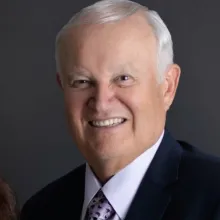
Mr. Seiglie was born in Havana, Cuba, and came to the United States when he was a child. He found out about the Church when he was 17 from a Church member in high school. He went to Ambassador College in Big Sandy, Texas, and in Pasadena, California, graduating with degrees in theology and Spanish. He serves as the pastor of the Garden Grove, CA UCG congregation and serves in the Spanish speaking areas of South America. He also writes for the Beyond Today magazine and currently serves on the UCG Council of Elders. He and his wife, Caty, have four grown daughters, and grandchildren.

