


Mario Seiglie
This transcript was generated by AI and may contain errors. It is provided to assist those who may not be able to listen to the message.
Alright, so we're ready for the second message of this morning. And with this hymn that I just heard reminded me, it says about when Christ shall come again. And one of the greatest truths we have in the church is to understand these seven feast days that God put in His word, first of all, physically, for Israel to keep. And then He gave it the spiritual meaning in the New Testament, and how Christ has already come once upon this earth. As we know, that's the first coming. And in a sense, well, that's also representative of the Passover. He had to fulfill that first feast as the Passover for mankind, the Lamb who is going to die for mankind's sins.
So that's been fulfilled that first feast day. And then the second feast day has to do with the days of 11 bread. That means that through Christ's coming and His Passover, now people have access to forgiveness of sins, and they can apply Christ's unleavened body and His sacrifice to cleanse us so we can also become unleavened. So that also is part of the plan of God that's already in action. Many here are being cleansed through that feast of 11 bread.
And then comes Pentecost, and at that time, Christ and God the Father entered into the people that had been cleansed through the days of 11 bread. So here's sort of another coming, but it's more of a spiritual coming in that they are going to dwell in us. And that's what happened in Acts 2. They felt the power of God in them, and the church started at that time. And then the next feast is this Feast of Trumpets, which symbolizes the second return of Jesus Christ, because He has already been here once, and now He's going to return.
And so as we see world events that are becoming much more troublesome, one of the things, of course, I have the privilege of studying for your sakes, because everybody works hard. I get to work on preparing to give you the food that you need spiritually that takes a lot of work and study and always trying to keep up with things. One of the books that I'm going to be mentioning in some of those future sermons has to do with what this world is armed like.
Now, most people don't know it, but the U.S. has 24 nuclear submarines. They're called the Ohio class, and they're almost two football fields long. They're about 565 feet long. So you can imagine a football field, and then you put another one, and that's basically the size of these submarines. And of course, they've got nuclear weapons on them with multiple warheads.
They can hit about 50 targets. That's just one of them. And so how in the world do we come to a world like this that is spending, as Homer mentioned, billions and trillions of dollars in arming themselves? And so as we come to this Feast of Trumpets, it's again a yearly rehearsal about this plan of salvation that has to do on this day. What is coming, and it is written and signed by the hand of God in Scripture.
This Feast of Trumpets casts a long shadow into the future. Let's go to Colossians 2. Unfortunately, this is one of the worst translated verses in the Bible. Of course, they don't want you to understand what it actually means. Thankfully, there have been scholars who have realized the mistake and have written about it. In Colossians 2, 16 and 17, it says, Let no one judge you in food and in drink.
This had to do with what we do in the Sabbath days and feast days. Because some who were these ascetic members that really were heretics in the church were criticizing them for eating food and drink and regarding a festival, talking about the feast days, or a new moon, or the Sabbaths, which are a shadow of things to come.
Not shadows of the past, but of the future. He says, but the substances of Christ. The church is the one that should judge these things. Christ is the head of it. Notice they are not shadows of things that are in the past, but about things that are about to come in the future. You can't abolish something that represents an event to come, because it's casting the shadow forward. Here Paul was telling the Colossians to ignore the heretics' judgments and criticisms about their enjoyment of eating and drinking regarding God's feasts. Certainly, we rejoice.
God says, go to the feast and bring food and your tithes that are for the feast, and you shall rejoice before God. Well, some of these heretics didn't want that. So, instead of showing disregard for the days God established as holy, Paul confirms that the Colossians, who were Christians, and also were primarily Gentiles. Notice in Colossians 2.13, it says, So, they were still uncircumcised in the flesh. These were Gentile Christians.
And so, of course, they were pretty new at observing the feast days. Jewish Christians wouldn't have had a problem, because they've been keeping this feast now. It's with a new spirit, but it's still celebratory. It's still rejoicing. But the Gentiles, there were all these ascetic type of groups that got influenced, and some were criticizing the church for how they did it. They were observing the weekly Sabbath and holy days of God.
And this had been done since the time of the day of Pentecost, with Christ's resurrection a couple of weeks before. If they had not been observing these feasts, the heretics would not have any basis for objections to them eating and drinking of it, which is the festival portion of the Sabbath and the holy days. So, Larry Walker, a retired pastor of the United Church of God, who is a Greek expert, this is the way he paraphrased using the Greek. He says, about Colossians 2, 16 and 17, he says, Don't let any man condemn you for eating or drinking while you observe a festival, a new moon or a Sabbath. So, there are people that ate a meal for the new moon to keep the calendar. Today is the new moon. It's very important, the seventh month of the first day. This is the day when the calendar is established for the rest of the year. And so, of course, it's a special time. He goes on to say, Which are all shadows of future events in God's master plan, with Jesus Christ as the central figure, but let the body of Christ, in other words, the church, and not these heretics, be your judge in these matters. So, a pastor would have said that because these are pretty relatively new churches. And so, the pastor, being Paul, he said, Brethren, there are some people criticizing you that they don't have the right traditions. They came out of paganism, some of them very ascetic, very puritanical. Don't let them bother you about this. Keep God's feasts, as the Bible says, with rejoicing, with eat, eating, and drinking. So, what is the shadow of things to come for the Feast of Trumpets? Let's go to 1 Corinthians chapter 15, verse 22, when somebody says, What is the shadow that this Feast of Trumpets project forward? 1 Corinthians 15, verse 22.
It says, For as in Adam all die, the human beings that are flesh and blood, they all die, Even so in Christ all shall be made alive. They will all be resurrected. But each one in his own order. So, here's the order of resurrections. Christ had his own personal resurrection, being God in the flesh. He died, was buried three days later. He was resurrected from the dead as the first fruits of mankind. So, that's been fulfilled. And then it goes on to say, Afterward, those who are Christ's at his coming. Notice there's nobody else resurrected. Nobody's going to heaven or hell or being judged that way. Because it says, first, the only one who's been resurrected and been raised up and is at the right hand of God is Jesus Christ. And then it says, Those who are Christ's, in other words, the saints, at his coming. So, again, there's a very special moment. That's what the Feast of Trumpets projects forward that very day. When Christ comes and you're resurrected as spirit beings. Notice as it goes on to say in verse 51, Does behold, I tell you a mystery. Remember, when he says that, I'm going to tell you a secret now. It's a revelation. We shall not all sleep, in other words, we shall not die, but we shall all be changed in a moment and a twinkling of an eye, in an instant, at the last trumpet. So, you see, there are a series of trumpets that God has planned. And we see that there are seven trumpets that are going to be blown. And with the seventh trumpet, the last one, is when Christ is resurrected or comes back. It goes on to say here, For the trumpet will sound, see, that is a commandment of God. It is already established in his plan. And God, looking forward in time, cast that shadow, prophesied that Christ was going to come when the trumpets sounded. For this, it said that Trump will sound, and the dead will be raised incorruptible, and we shall be changed. Paul was including himself because he's one of the converted saints.
So, the feast of trumpets has to do with the return of Christ and the resurrection of the saints. That is the main purpose. Do you know how many times in the New Testament the coming of Christ is connected to the blowing of trumpets? Five times in the New Testament. Notice in Matthew 24, 29, Matthew 24, 29, through 31. Let's just read them, and you can put a little mark on each one if you want. 24, 29. It says, Immediately after the tribulation of those days, the sun will be darkened, and the moon will not give its light, the stars will fall from heaven, and the powers of the heavens will be shaken. Then the sign of the Son of Man will appear in heaven. That is, the brightness talks about here in verse 27, For as the lightning comes from east and flashes to the west, so also will be the coming of the Son of Man be. So he's not coming hidden away. I mean, it's going to be a flash of light as he comes down with his glory.
And then all the tribes of the earth will mourn. It doesn't say they rejoice. That shows how many people are deceived in this world. And they will see the Son of Man coming on the clouds of heaven with power and great glory, shining forth.
And he will send his angels with a great sound of a trumpet, and they will gather together his elect from the four winds from one end of heaven to the other. So there's the trumpets related to the coming of Christ. The second one, 1 Corinthians 15, 51-53, I just read that one, where it talks about the last trump. The trumpet will sound, and then everything else. Let's go to the third one, 1 Thessalonians 4, 16. 1 Thessalonians 4, 16. This is the third time. It says, For the Lord himself will descend from heaven with a shout, with the voice of an archangel, and with the trumpet of God. That's why, again, the feast has to do with great announcements. And so it's announcing his coming.
And the dead in Christ will rise first. Then we who are alive and remain alive, shall be caught up together with them in the clouds, with those dead in Christ, to meet the Lord in the air, as he is coming down, and thus we shall always be with the Lord. So the wedding feast will take place later, and we'll sign that new covenant with Jesus Christ. And guess what? It was all worth it. All the struggles, all the pain, all the difficulty, just to be at that wedding feast. But what a wonderful time! None of us are worthy of it. And that's why Paul could say there in Romans 8-18 that all the suffering, all that you go through, is not worthy to be compared to the glory that is coming. So the trumpet announced the coming of Jesus Christ, but beforehand there will be tremendous earth-shaking events.
The first reason, and I'm going to give you three reasons why Christ must come back. The first reason is to rescue His Church, His bride, that He loves so much. Notice in Matthew 24, verse 21, God could just let the earth destroy itself, like what happened in the Flood, but He's not going to, because of that bride of Christ who's preparing herself. It says in Matthew 24, verse 21, it says, For then there will be great tribulations, such as has not been since the beginning of the world, until this time, no, nor ever shall be. And unless those days were shortened, no flesh would be saved. But for the elect's sake, those days will be shortened. So God's going to intervene, because He's going to rescue the Church that He paid His life with, that He has purified, that has gone through this plan of salvation, keeps a Passover every year. That's the first step. We accept His sacrifice. We accept that on leavened bread, as a symbol of the cleansing that He's able to carry out in us, and Pentecost, we accept that Holy Spirit that was opened up to people, of which we of the 21st century still has that access to receiving that Holy Spirit. And then the trumpets to be resurrected and rule under Christ. And then, of course, the rest of God's plan, that will be for the future of the rest of the feast days. Notice in Revelation chapter 3 verse 10, again, Christ must come back to rescue His Church. And this is already all written down ahead of time for us. Revelation 3 verse 10 and 11, it says, Because you have kept my command to persevere, talking about the Church here in Philadelphia, I also will keep you from the hour of trial, which shall come upon the whole world to test those who dwell on the earth. Behold, I am coming quickly. Hold fast what you have that no one can take your crown, the crown of rulership that God is offering to each one of us, if we put Him first, if we truly do obey Him now.
The second reason why Christ has to come back is to remove Satan and his demons. They have to be put away. This is not going to be a world of peace, as long as Satan and his demons are actively causing such hostility in the world. He is the king of this world. He is the power of this world. He influences. You see so much hate. And as, again, that book about nuclear war and what it can mean, it just takes one crazy ruler to get it started. And this is part of history. We've had a lot of crazy rulers. The book I'm reading about, The Causes of War, mentions three in particular that were really crazy. One of them was Alexander the Great. He could care less what everybody else thought. He wanted to rule the world, and he was going to slaughter whoever wasn't going to obey him. And they went all the way to the borders of India. He'd already conquered more than they could rule. But he had this thirst of conquest and of ruling over everybody. And when his men said, no more, we're exhausted, we're not going on, according to some of the Greek historians, he sat down and started crying. Because they didn't want to follow him anymore. The second one was Napoleon Bonaparte, which of course he's popular in different places. But he was another one that went into Russia. When he had already conquered most of Europe, he had more. But he just wanted that thirst of conquering people. And basically, as that book on nuclear war says, that these madmen, they say, look, I'm going to rule and I'm going to conquer. And just like King Louis XV of France said, and after me, let the flood come. I'm going to have my way. I don't care anything else. And sure enough, the flood did come, as far as the French Revolution and everything else. And then the third one was Adolf Hitler, who basically said, look, as long as I can conquer, I don't have to explain anything to anyone. And drove this world into such destruction. So anyways, Satan and his demons have to be put away because they influence these type of people. Revelation 12, verse 9, it says, so the great dragon was cast out. He tried again to rebel one last time. He hasn't done it yet that we know of. But once he comes, is thrown back to the earth, that serpent of all called the devil and Satan, who deceives the whole world, he was cast to the earth and his angels were cast out with him. And then it says, verse 13, now when the dragon saw that he had been cast to the earth, he persecuted the woman who gave birth to the male child. Talking about the church now, God's people. And that's why Christ is going to have to intervene, as it goes on to mention here, that the church is going to be protected. And I'll tell you, it's going to be protected from a period of time that God will be merciful, but it's going to be horrible. And we're going to talk a little bit about that this afternoon. And of course, there's hope, but we have to also be realistic and realize what is coming in the future. And we have to be prepared as a people.
Revelation 20, verse 1, it says, after Christ comes back, then I saw an angel coming down from heaven, having the key to the bottomless pit, and a great chain in his hand. He laid hold of the dragon, that serpent of old, who is the devil, and Satan, and bound him for a thousand years.
And he cast him into the bottomless pit, and shut him up, and set a seal on him, so that he should deceive the nations no more till the thousand years were finished. But after these things, he must be released for a little time. So there's going to be a thousand years where Satan's not going to be active. And of course, Satan uses the media, the people around the world, you know, the lust of the eyes, the lust of the flesh, and the pride of life.
Those are the three main tools that he uses. The lust of the flesh has to do with all the fleshly passions that people get kicks out of this. They get addicted to these things. And then you're not thinking straight. You're addicted to different things that take and captivate your mind, and we have to resist. We have to block those things from us. The lust of the flesh, the lust of the eyes has to do with the vanity, the impression of trying to impress others, and everything has to do with the looks, and trying to fit in this way, that you have this pressure, peer pressure, to conform.
And then the pride of life, where that's just your own selfish, egoistical pride. I'm going to do it my way, not God's way. And those three things Satan uses all the time. And now as we start winding down, the third reason Christ has to come is, so human nature will be changed completely.
We see the politics going on now, the Middle East, Russia versus Ukraine, what's going on in Israel, Gaza, Lebanon, Syria, Iran, before our very eyes. Now how much longer are we going to have such atrocities? Don't we just want Christ's return soon? Man's ways are not improving, morally or spiritually. Notice what it tells us in 1 John chapter 3. And these trumpets also sound for us. They are wake-up calls for us. We go to sleep in society. We think everything's going to just continue as it is.
We don't know how close we are to the precipice. Verse 1 of 1 John 3 says, So all of these things have to be changed for there to be true peace. It's coming, but man's going to have a big spanking before. And boy, this world needs a good spanking right now. The atrocities that we see, abominations that we see in modern Israel and the rest of the world, and we sigh and we cry. So the Feast of Trumpets is a shadow of that great event. The most important event in the history of mankind, which is Christ's return.
It will change all things. It is the greatest paradigm shift in history. In Acts 3 verse 19, Peter's talking to the crowd. He says, Repent therefore, and be converted, that your sins may be blotted out, so that the times of refreshing may come from the presence of the Lord, and that he may send Jesus Christ, who was preached to you before, whom heaven must receive until the times of restoration of all things, which God has spoken by the mouth of all his holy prophets since the world began. And so the times of restoration, the change, it begins with God's people in that first resurrection, the change from human nature to godly spiritual nature.
We look forward to that. We're not going to be always struggling against this flesh or Satan. So let's remember to pray your kingdom come, and keep these three main reasons in mind why Christ needs to return. The church must be rescued, Satan and the demons must be put away, human nature must be changed completely, transformed into God's spirit nature. So as Christ said about praying, the prayer that he gave in Matthew 6 starts after honoring God, addressing him, our Father who art in heaven, hallowed be your name. That's the address.
But then the first thing, thy kingdom come, that's what we have to focus on. And it ends with the same thing, for yours is the kingdom, the power and the glory forever and ever. So those are the two bookends as we pray to God. Have a wonderful Feast of Trumpets.
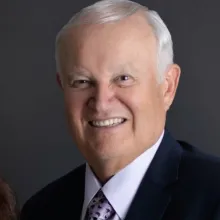
Mr. Seiglie was born in Havana, Cuba, and came to the United States when he was a child. He found out about the Church when he was 17 from a Church member in high school. He went to Ambassador College in Big Sandy, Texas, and in Pasadena, California, graduating with degrees in theology and Spanish. He serves as the pastor of the Garden Grove, CA UCG congregation and serves in the Spanish speaking areas of South America. He also writes for the Beyond Today magazine and currently serves on the UCG Council of Elders. He and his wife, Caty, have four grown daughters, and grandchildren.
