

Gary Petty
This transcript was generated by AI and may contain errors. It is provided to assist those who may not be able to listen to the message.
The Bible is full of all sorts of marvelous, wondrous examples, miraculous examples of God moving in powerful ways. But there are also examples in the Bible where they're interesting and you wonder, well, what are we to make of some of these smaller little sections of Scripture? I want to take you through a little bit of a discussion on a section of Scripture that's only four verses. It's found in 2 Kings. This section is very simple. It's very straightforward. You don't need to have a half a dozen concordances and lexicons and all sorts of word studies. I enjoy that sort of thing. Some of you do, some of you don't. But this is really very straightforward. Let's turn over to 2 Kings 2. You've got your Samuels, then you've got your Kings. 2 Kings 2.
We've got an example here of a story from Elisha's life, the prophet. 2 Kings 2, verse 19-22. Four verses. Then the men of the city said to Elisha, Please notice the situation of the city is pleasant as my Lord sees, but the water is bad and the ground barren. And he said, Bring me a new bowl, put salt into it, so they brought it to him. Then he went out to the source of the water, cast in the salt there, and said, Thus says the Lord, I have healed this water. From here there shall be no more death or barrenness. So the water remains healed to this day, according to the word of Elisha, which he spoke.
Interesting little section of Scripture, but what are we supposed to do with this little vignette here? We're supposed to kind of read this very quickly and say to ourselves, That was a neat little miracle. Glad to God did that. Glad to God showed his approval of Elisha, Elisha's ministry. But, brethren, is that all there is to this? Or is there a much bigger concept within these little four verses here? To me, as I was reading about that and thinking about what I needed to offer you today for a sermon, the story reminds me of a very basic truth of God that we don't ever want to forget. The truth all of us need to hear, be reminded of, be continually reminded of this, because it's easy to not remember this particular point. This story serves to illustrate the power of God to change what seems to be unchangeable.
The power of God to change what seems to be unchangeable. And not only that, but this story shows the power of God to change the seemingly unchangeable to the extent there is a permanent lasting result, a permanent lasting result from something that seems impossible to have changed. On Pentecost, as I read earlier during the sermon, God's Holy Spirit provides us the power to change what seems to be unchangeable. God's Holy Spirit provides us the power to change what seems to be unchangeable. Let's take a closer look at this section of Scripture. Verse 19. Elisha was still in Jericho. Apparently word had spread that he was now there, so all the citizens of the city knew of his power, knew that he was taking over Elijah's place. The leading men came to him. They came to him with a believing heart, but they came to him with a practical problem. The problem was their water supply. It was a city that was one of the oldest cities of the ancient world. Some people think Jericho was the largest and oldest city of the ancient world, one of the very first built. We can talk about that some other time, but that's what many scholars believe. But in addition to having many natural advantages, being located in a fertile area of the Jordan Valley, the water was a problem. The water had been a problem for some time. It says here in verse 19, the water is bad, the ground barren. If you were to take a look into other translations or commentaries, the idea here was the land was apt to miscarry. The translation for this. So what was taking place is that people, if they drank the water, the animals would miscarry, the people would miscarry. There would be a lot of very difficult with the water supply. It had been a problem for years and years and years. It seemed to be a situation that was unchangeable. Unchangeable. It was putting out bad water. The city fathers had gotten together on several occasions to try to figure out what to do with this water supply. It was unchangeable, they thought, from a human perspective. It was unchangeable in terms of human ability. It was unchangeable in terms of scientific knowledge that they had of the day. But brethren, it was not unchangeable regarding God's power. It wasn't unchangeable regarding God's power.
Verse 20. He said, bring me a new bowl. That new bowl typified Elisha. He was a brand new prophet of God following in the footsteps of Elijah, his mentor. He said, put salt into it. Salt was a preservative. It was something that was very good to have. But if you put salt in water, that's not a good thing normally, is it? You put salt in water, you don't want to drink it. So he did that. They brought it to him. They put a new bowl. They put salt into it. Then he went, verse 21, went out to the source of the water, cast an assault there, and said, Thus says the Lord. Not Elisha. Thus says the Lord. He was simply a tool in God's hands. I have healed this water. From here it shall be no more death or barrenness. So the water remain healed to this day. So here we've got an example of something that seemed to be unchangeable, that God changed. And that change was something that lasted. It wasn't just a change for a day or two, or a month or two, or a year or two. It was a change that lasted for a long time. Now today, brethren, on this day of Pentecost, I want you and I to think about our lives. I want us to think about, and think fairly deeply, about what changes do we need to make. Changes that we may feel are simply undoable. You may have had a habit of one type or another that you've tried to work on, and it just, you can't really seem to beat the problem. Or a way of thinking, or a way of talking, or a way of acting. You may have situations with relationships. You may have situations with your economic situation. There may be things that seem to be so, you know, you are in this rut, it's like a grave.
And you just simply can't break free. And the truth of the matter is, on our own, we can't break free. But the beautiful thing about the day is the fact that we aren't on our own. We are God's firstfruits. We are God's people. He has given us that tremendous spirit of power. The power of change. Now, I realize, brethren, that some of the changes you and I need to make, we'll be making those changes piecemeal all the days of our life. I understand that. Most of the changes, probably, we've got to make in our life are like that, or good in many of them. As I've made mention to you on numerous occasions, I had a very fierce problem with anger as a teenager. Very fierce. And I've worked on that, and worked on that, and worked on that. I don't believe Mary's ever seen the kind of anger that I used to have. But that's because, with God's help, Jack is in the box. He's still there. The anger is still there. There are times when I feel that Jack is about ready to pop out of that box. And if he pops out, it's going to be really ugly, and I'll be really embarrassed, and I'll have to beg God for forgiveness and so forth. But you know, you've got your issues, too. We've all got our issues. I've got more than one issue. You've probably got more than one issue. We've got a lot of things in that. Big box! You've got big boxes, right? You've got very big boxes. But with God's power, we keep those things under lock and key. With God's power. Now, some things can be changed. We're worshipping on certain days of the week prior to coming into God's church. Now we worship on other days of the week. We used to eat certain things. Now we don't eat certain things. We used to just use 100% of our money, and now we don't use 100% of our money. Now we realize God has laws of tithing that need to be obeyed. And so there are some things that we can change, and they're fairly easy to do. Other things are much more difficult. But I want you to notice something. We go back to verse 19. Then the men of the city came to Elisha, and they came to Him fully believing in God. Fully believing this was a man of God, and with God all things are possible. These men were coming to Elisha and a spirit of faith.
And if you and I are going to have God help us keep Jack in the box, then we need to come before God in faith. Let's turn over to Hebrews 11, the faith chapter.
Hebrews 11.
Hebrews 11, verse 1.
Now faith is the substance of things hoped for and the evidence of things not seen. It's an invisible force.
For by it the elders obtain a good testimony. By faith we understand that the worlds were framed by the Word of God, so that the things which are seen were not made of things which are visible.
Very clearly, brethren, we believe in a different dimension. We believe in a spiritual dimension. We're physical people, but we believe in a spiritual dimension. And it's through that spiritual dimension that powerful things can take place in our life. Powerful changes that we can affect by ourselves. And we're foolish to think, in any case, that we can. We have to be people of God and have faith in God. Verse 6.
Not seek Him once in a blue moon. Not seek Him when times are really tough and we are forced to our knees to seek Him. But we seek Him at all times. We're diligent in seeking Him at all times. So these men came to Elisha faithfully, expecting something to happen. Expecting the great God to do something.
Brethren, when you and I get on our knees, do we expect God to change us?
Do we expect God to change us?
You know, as I look at the audience here that is before me, most of us have known each other either from the Ann Arbor congregation or the Detroit congregation. Some of us go back a long way together. Those of you in the Ann Arbor congregation, some of you have been together for 20, 30, or more years.
I look at some of our people from the Detroit congregation. I remember going to the Spoltons Club years ago with some of our people. You know, Wayne Stewart and I used to get off of work. And we were, Al Patterson, who's here, we get off of work. We'd drive over to Spoltons Club. Shorty Fiesel would be there. Earl Williams would be there. You know, I was in my mid-20s at that time. You work a full day, and then you drive and spend all night with the guys at Spoltons Club. Who does that anymore in a church, right? But we expected change. You know, George Gerhart back there, he was a part of that club as well. We expected change. We expected God, you know, we had our thing to do. We had our part to play. We were in partnership with God. We expected that if we did our part and we came before God with faith, that we'd be able to affect changes with God's help.
And we did. We were able to grow. We were able to overcome. And we certainly, brethren, don't ever want to lose that spirit. The spirit which this day represents. The spirit of change. Of powerful change. Change where things that seem to be unchangeable can take place. Yesterday in the sermon, Brian McGuire was talking about, you know, caterpillars and so forth.
You know, a caterpillar doesn't get a vote in this situation. You know, he's just a little bug. He doesn't know what the future holds in store for him, but you and I know as we see him crawling around. And as you think about it, our life's journey is not that much different than a common little caterpillar. You take a look at those furry little guys, they're crawling around. Basically, they're glorified worms, right? What does God call us? David said in Psalm 22, I am a worm! And so in many ways, you and I are like those little caterpillars. We're worm-like. We're humble people. We're the weak of the world. But then, what does a caterpillar do? What is its main job? The main job for a caterpillar is to eat, and to eat, and to eat, and to eat, and to grow. Those of you who have gardens, you know what they do. They eat a lot of things you don't want them eating, but they eat. They just munch all the time. And that's what we should be doing. Eating the Word of God. Munching the Word of God. Getting fat! Rotund. You know, if there's one way we should be fat and rotund, it's in the Word of God. In the Word of God. You know, you wouldn't walk up to one of your...somebody here in the congregation and say, You're fat-y, you!
You know, by the way, politically now, politically correct language. The word fat is altogether out. Do you know what the word replaces the word fat now? If somebody comes up to you and says, you're looking rather ample. If you're looking ample. So, here I am, I'm being ample in front of the whole group here. Fat is out. Ample is in. At least for today.
But we wouldn't go up to somebody and say, Boy, you're looking ample today, aren't you?
But, you know, spiritually, that's exactly what we want. We want to go up to people and say, you know, I really appreciate the fact that when I talk with you before or after services, when you give me a phone call, when you write me a letter, that you always delve into the Word of God. You always give me something to think about. You know who's good with that in this area? Is Cap Hatmaker. You talk to Cap. He's always going to bring up something about the Spirit. Cap's in his 90s. Obviously, when you're in your 90s, you're going to be thinking a lot about that. But he was that way all of his life. I've known him. He's always been that way. And that's a really good example of being the right kind of caterpillar. Of eating all that good spiritual food. Then after a while, we find that the caterpillar goes into a cocoon. To the naked eye, it looks like it's dead. Now, the analogy here breaks down a little because there's a lot of things actually happening in that cocoon. But to the naked eye, it looks like the little critter's dead. Much like after a life of our eating, we rest in the grave. But there comes a point where that butterfly starts working its way out of that cocoon. As I've mentioned to you on several occasions, you don't want to arrest that process. One little boy did that one time. There was a butterfly trying to get out of its cocoon. It was struggling mightily. The little boy took some scissors. He snipped the cocoon. The bug came out much easier. Crawling around the windowsill. Nothing could crawl around the windowsill. It never could fly. It never did fly. Why? Because in the process of getting out of that cocoon, it's working those wings. That liquid that Brian talked about in the sermon yesterday. It's getting that liquid out of the wings. It's pumping it out. So those wings are much lighter, more bird-like, so they can actually take flight. Just like you and I struggle, people say, why do we struggle? Why do we go through so much? God is working with us because He wants us to be just like those beautiful butterflies, just like those beautiful monarchs. Some of those butterflies have a tremendous voyage in their life, traveling thousands of miles.
As I was thinking about it, brethren, there are so many examples in the Scriptures that I could turn to. I was thinking of turning to discuss this idea of God changing what seems to be unchangeable. I could have used the example of Saul. It would be a good example. Saul of Tarsus, a man who was very religious, very zealous, a man who used the natural abilities God gave him to be all things to all people. But he used those abilities to hunt Christians down. He hunted them down, he arrested them, he tortured them, he caused them to blaspheme, he threw someone to prison, some were martyred, some were killed.
And then, on the road to Damascus, as he was on his way to round up another bunch of disciples, God literally knocked him down and began to work with him. God used his power to change what seemed to be impossible.
When you think about your life, you and I, if we all stood up here and said something, we would probably all say, Well, God probably is not real happy with me. I've got this to change, and this to change, and this to change. And we would all say those sorts of things. But the truth of the matter is, brethren, all of us could also stand up here and say, With God's help, I have changed A, and B, and C, and D, and E, and I'm changing F, and G, and H, and I, and all these other things.
I'm in the process. God's been in your life. He's been working powerfully, just as God did with Saul, whose name was changed to Paul. You've got the widow there in 1 Kings 17. I won't turn there. The widow of Zarephath. Here's a situation to talk about, something that seemed seemingly unchangeable, a really dire situation. Here's a woman who's about ready to gather a few sticks, make one last meal, serve it to her and her son, and die of starvation.
There were no social networks in those days. If you were a woman on your own, the chances are her son was a young man. If you're a woman on your own with a young child, you were hurting. What does God do in the life of Elijah to show Elijah some lessons?
God says, I want you to go to this widow, and she's going to provide you food. Elijah goes there, and Elijah says, I want you to make me a meal. You wish you could be a fly on the wall and hear the conversation. Here's the woman gathering sticks for her last meal, because she knows she and her son are going to eat that last meal, and then that's it. They're going to die. Here's this guy coming. He says he's a man of God. He wants to eat. By the way, he wants to eat first. He probably was ample. She says, you don't know what you're talking about, but she says, I'll do it.
The miracle took place where she stored her flower. Every time she took a scoop out, that was replaced. That men of flower never saw the bottom. He was always pulling flower out of there. That cruise of oil, you could pour that all day long, the jar would never empty, because God was doing something that seemed to be impossible. And then when they were starting to get some food in their belly, after a while, her son did die. Now, when you talk about a seemingly impossible situation, an unchangeable situation, here you've got a young man who dies, and she says, well, look what we've done now.
My son's dead. Are you happy? So, Elijah prays, and he does it three times, he prays that God would resurrect that boy from the dead, and God did. God changed the unchangeable through his spirit of power. You take a look at the Red Sea. Here you've got two mountain ranges on two sides of Israel. You've got the Red Sea on the one side, and Pharaoh and his army, they're coming down in the only other direction. We know from Scripture that God opened up the Red Sea. God could have leveled the mountains if he wanted to. Nothing is impossible for him.
God chose to open up the Red Sea, to keep the Red Sea open, to dry up the bed of the sea so that two to three million people could pass through. And then at the right time, close that up on the Egyptians. All that seems to be impossible. But with God, nothing is impossible. We've got people in the room here who've got various healing issues, or need to be healed, or want God to heal them. Various things. We think about the death mute there in Mark 7. We think about the woman with the blood issue in Luke 8. We think of the leper in Mark 1.
We think about those individuals, and how their situation seems so desperate. It seems like no changes were coming. Yet by the very power of God, changes were made. To me, it's always been a fascinating study when I think about that leper there in Mark 1. When you think of what it was like, most of us, probably a number of us in this room, I shouldn't say most, there are probably somebody in this room who's really happy the way they look.
They are the right size, their clothing fits well, they look in a mirror, they don't want to tear up the mirror, or hide the mirror. They spend ample time in front of that mirror. But then there were the rest of us who wish we looked differently than we look. Can you imagine what it was like being a leper in the New Testament, where you had to wear certain clothing that made everyone know that you were a leper, whereby by law, by Jewish law, you couldn't get within 50 to 100 feet of a leper?
Talk about having a body image problem as you walked through crowds. You had to yell, leper, leper, leper. And then you looked into people's eyes as they saw you coming, and they saw a tremendous fear, and they ran away from you. That's what these people went through. A very hopeless situation. Yet Jesus Christ touched that leper, and other people, and they were healed. Changed the seemingly unchangeable. With that in mind, I want to look at one final example.
Let's send this a little more in depth. There is a blind man by the name of Bartimaeus. We've talked about him a little bit in times gone by, but I want to spend a little more time in depth with this gentleman. Let's take a look at Mark chapter 10. Mark chapter 10. Actually, just a few verses here as well. Let's read this section, and we'll go back and study it. Mark chapter 10 verse 46 through the end of the chapter. Now they came to Jericho, and as he went out of Jericho with his disciples, a great mullet of blind Bartimaeus, the son of Timaeus, sat by the road begging.
When he heard Jesus of Nazareth, he began to cry and say, Jesus, son of David, have mercy on me. Then many warned him to be quiet, but he cried out all the more, son of David, have mercy on me. So Jesus stood still and commanded him to be called. Then they called the blind man's saint and, be of good cheer, rise, he is calling you. And throwing his sight as garment he rose and came to Jesus.
So Jesus answered and said to him, what do you want me to do for you? The blind man said to him, Rabboni, that I might receive my sight. Then Jesus said to him, go your way, your faith has made you well. And immediately he received his sight and followed Jesus on the road. Now there's an awful lot happening in those few verses. But when I was reading this, I delineated seven different lessons.
I would like to cover with you. We won't spend a great deal of time with each point. But I want to just go through that because, you know, if we're talking about the power to change what seems to be unchangeable today, there are some things God wants us to do in the process.
We don't just always sit back and say, God, I want everything to be provided. Every step of my life is going to be miraculous. Brethren, if everything we ever did was one miracle after another, would we ever need faith? How would we ever develop faith or patience if every time every prayer was answered, specifically the way we wanted it?
Everything was always okay. No, God wants us to experience some hardship. God wants us to experience some heartache. Our job as firstfruits is to take care of the rest of the world that's going to be resurrected, where those people have had to suffer all sorts of privation. Men and women who were killed in various wars, people who were killed who didn't even know why they were killed, little children who starved to death, men and women who watched their little... We rejoice in our children and how happy they are. We take pictures, but around the world, over the years, mankind has been on this earth. We've had parents who have had to watch their little ones just pine away and die. So why does God let us suffer? Because we've got to relate to those people. We can't relate to them just in theory alone. God wants us to relate to them because we've suffered some ourselves. We know what suffering is about. Sometimes God doesn't heal us so we can appreciate and work with people who haven't been healed. Sometimes we go and get into accidents and things happen to us, so we can appreciate what other people have gone and had accidents happen to them. Sometimes there's premature deaths in our family, so we can appreciate where others had premature deaths in their family. There's all sorts of reasons why we go through heartache. But the biggest thing, brother, is that God is...we are in a teaching classroom. We are in a teaching classroom. Jesus Christ certainly wasn't exempt. He learned through the things He suffered. God wants us to learn. So let's take a look at this blind man here and see certain things we need to learn and we need to apply. Certainly God is able to make changes. But God wants us to be in partnership with Him in those changes. We're not robots. So lesson number one, I find here in verses 46 and 47. Now when it came to Jericho, He went out of Jericho with His disciples, a great multitude, blind Bartimaeus, the son of Timaeus, He sat by the road begging.
So understand something, wherever Jesus Christ was going, He drew a tremendous crowd. And when you've got a crowd of people, you've got all sorts of noise. On those dusty roads, you've got a cloud of dust. You've got people pushing one another, shoving one another, people are trying to get angles to see Jesus. What's a blind man going to do in a situation like that?
Verse 47, when He heard it, Jesus of Nazareth, He began to cry out, saying, Jesus, son of David, have mercy on me. So lesson number one, take responsibility for your own life. Take responsibility for your own life. Bartimaeus placed himself in a position to be helped.
He placed himself in a position to be helped, perhaps by the people. You know, in His mind, He's thinking, well, these are religious folks. They're going to see a rabbi, a teacher. And because they're religious folks, they should be more compassionate folks. And if they're compassionate folks, maybe they'll have some compassion on me. So that was one thing that was probably going through His mind. The second thing that was probably going through His mind is, you know, I've heard about this young rabbi. I've heard this young rabbi has got tremendous power. And so what you have here is Bartimaeus taking responsibility for his own situation.
He doesn't avoid the situation. He doesn't deny the situation exists. He's blind. He needs help. He understands that. But he also puts himself in a position to be helped.
Brethren, too many times in my ministry I've seen too many of my brothers and sisters in the faith not put themselves in a position to be helped. To be for any number of reasons, pride or vanity or not wanting to admit that we've got a problem or whatever the thing may be. But when we have an issue, we shouldn't avoid it. We shouldn't deny it. We should face it head on. Take responsibility for our life.
Don't point fingers. You know, it's easy. In our society today, everyone seems to want to point fingers to blame. They want to say, it's society's fault. It's my parents' fault. It's my kids' fault. It's my genetics. It's my ancestors. Any number of things people want to point to as opposed to saying, well, you know what? It is what it is. My makeup is what it is. My background is what it is. And now I've got to deal with what I've got. And probably the things I've got to deal with are my own making. So, number one, take responsibility for your own life.
Bartimaeus realized that he wanted to go to the person who could heal him, where help could be found. Lesson number one, take responsibility for your own life. Lesson number two, believe God can change the seemingly unchangeable. Have faith.
There are those in this room who I know have rock, solid faith. There are those in this room I have anointed on a number of occasions, and on a number of occasions that same person has been healed.
Some have it. Some mostly have it. Some are weak on that point. Believe God can change the seemingly unchangeable. Mark 10, verse 47. When he heard it, it was Jesus of Nazareth, he began to cry out and say, Jesus, Son of David, have mercy on me. Have mercy on me. He knew what he needed. He realized he needed the mercy of the great God. He had been blind for years, perhaps all of his life. There was no hope of him ever seeing. There was no operation. There was no doctor. There was no clinic he could go to. There was no one to care from along those lines. But for the first time in his life, he realized, you know, this young rabbi, I've heard about him. I've heard that he's really very special.
And he had faith that this very special rabbi could do something, and he'd be different. And he'd be different the rest of his life.
Verse 51. So Jesus answered and said to him, What do you want me to do for you? The blind man said to him, Rabbonneh, that I may receive my sight.
God has the power to change the unchangeable. That's what this day represents. The power to change the unchangeable.
Now, brethren, God does not always promise he's going to change your situation. We many times want that. And sometimes God does do that. God did it with Israel at the Red Sea. God changed the circumstances there in a number of ways. But sometimes God doesn't change the circumstances one iota. There are times God says, You know what? You want me to change this. You want me to give you this new job, or this, or that, or whatever. But you know what I'm going to do? God says, I'm going to change you. I'm going to change your heart. I'm going to change your mind. I'm going to change your perspective. And when I change you, then you're going to look at your set of circumstances in a whole different light. In a whole different light. You know, brethren, ultimately, isn't that what we really want? What are we in this world for? We're in this world for God to change us. Because we want to be just like Jesus Christ. We want to be just like our Father. And there's an awful lot of things we need to be. Chips off the old block have got to really come off. And it takes faith in that process. So, number two, believe God can change the seemingly unchangeable. Number three. Number three, lesson number three, you need to make clear what you really need. What you really need. We saw that already in verse 47. At the end of verse 47, it says, Jesus, Son of David, have mercy on me. Now, later on, he'd be more specific. But he realized what he needed was God's mercy. And you know what also is interesting in verse 47? He says, Jesus, Son of David.
Now, that's true. Jesus was of the lineage of David. But the issue that I want to bring before you is that here's a man who's crying out for God to help him, to change the seemingly unchangeable, and he's got a very limited understanding of who God is, who Jesus is. Does Jesus say, well, because you don't know all the whys and wherefores of who I am, I'm not going to work with you? Because your knowledge is limited, because you don't have perfect understanding, I'm not going to answer your prayer? He doesn't say that. No, because God, the Father, and Jesus Christ, they're very, very merciful. And when this man asks to have mercy, that certainly struck a chord with Jesus Christ. He was not crying out for a brand-new home. He wasn't crying out for more food or different clothing. He was crying out for mercy. And, brethren, I think that's a good place for us to cry out to God, that we need His mercy. We want a better walk with God? Cry out for His mercy. We want a better marriage? Cry out for mercy. We want a better relationship with our kids? Cry out for God's mercy. We want a better job? Or we just want a job? Cry out for God's mercy. Make it very clear what we need, and we can always start with that mercy from the great God. And all those things I listed, it is through the mercy of God that He makes those things possible. Lesson 4.
Don't worry about what other people say.
Don't worry about what other people say. Now, as Solomon would say, there's a time and a place for everything. There's a time and a place for wise counsel. But there's also a time and a place where you just don't worry, because if you try to worry about what everybody tells you, you'll be nothing but confused. Find out the people who are wise. Find out the people who know what they're talking about. Certainly listen to them. But don't try to listen to everybody, because that will only bring heartache. Verse 48. Mark 10, verse 48. Then many warned Him to be quiet. You know, here's a man who's about to be healed, and people are saying, you know what? Shut up! You're going to bug the guy. He's got better things to do than to deal with you. Many warned Him to be quiet, but He cried out all the more. I think many of us in this room can relate to that. People say, you can't have it? Oh, yeah? You want to bet? Then many warned Him to be quiet, but He cried out all the more, Son of David, have mercy on me. So basically the people were telling Him, nobody wants to hear what you've got to say. This isn't the right place. They were telling Him, this isn't the right time. They were telling Him, hey, you know what? No one's ever done this before. Who are you to do this right now? Don't you know who this rabbi is? You're wasting his valuable time. But Bartimaeus was desperate. He was determined. He was in dead earnest. He was not going to allow Himself to be shunted to the side and be discouraged, to be silenced. They're stopped. And brethren, we should appreciate that. We need to be dogged in our going to God with whatever it is that's on our mind. Be dogged. You know? Be like that... Well, let's turn there for a moment. Put a marker here. I'll do the same. Let's go over to Luke chapter 18. Let's get like this lady over here. Luke chapter 18 verse 1.
Luke 18 verse 1. Then He spoke a parable to them that men ought always to pray and not lose hearts. It's easy, brethren, for us to lose hearts. We've asked God to change the unchangeable. And it's not changing. It's easy to lose heart. Verse 2. Saying, there wasn't a certain city of judge who did not fear God nor regard man. Now there was a widow in that city, and she came to Him saying, Get justice for me from my adversary. And He would not for a while, but afterward He said within Himself, Who would not fear God nor regard man.
Yet because this widow troubles me, I will avenge her, Lest by her continual coming she weary me. Then the Lord said, Hear what the unjust judge says, And shall God not avenge His own elect, who cry out to Him day and night, Though He bears with long with them. I tell you that He will avenge them speedily. Nevertheless, when the Son of Man comes, will He really find faith on the earth?
And I always thought that was such an interesting end to that little story. That God wants us to be dogged, to be persistent, to be in their praying heart and core, day and night, night and day, over and over and over. But then Christ says, But when I come, will I really find people doing that? Will I really find people who are that dogged, that determined? You see, Barna Meias' faith stood against all the voices of discouragement. There's a lot of voices of discouragement out there. There's a lot of people who would discourage you.
There are people, brethren, you've known them, I've known them, that whenever they open their mouth, negativity comes out. Right? And I love them. But I find myself, I've got to be with them in small doses. I really do. And I hate to say that, but it's true. Because they can wear you down. They can wear me down. On the other hand, when I find somebody who, despite the hardships and whatever trials in their life, they're always into the Word, they're always talking about the power of God, they're always talking about all the marvelous things that have happened in their life.
We've got a fellow like that up in Traverse City. Always has got to carry his oxygen bottle around. You know, he takes a few steps and he's breathing really heavy, but he's always talking about the power of God. And he's not faking it. He looks on the bright side of his situation. I enjoy being around people like that, because that strengthens my soul. That's food for my soul. That's food for what I need.
So, Barna Mayas was not going to allow the voices of discouragement in the may-sayers to get him down. So don't worry about what other people say. Lesson number five. Lesson number five, stop waiting for the perfect conditions of life. Stop waiting for the perfect conditions of life. Go back there to Mark chapter 10. Verse 46, And when they came to Jericho, as he went out of Jericho, with the disciples a great multitude, blind Barna Mayas, a son of Tameus, sat by the road begging.
Well, certainly this wasn't the perfect situation. As I may have mentioned, you've got a large throng of people. People pushing, shoving. If you're blind, you're probably shoved out of the way. You might get knocked down. You might get trampled. Certainly it's not the perfect situation. But you know what's the only part? Tameus knew that. He wasn't going to wait for the perfect situation. Verse 49, So Jesus stood still and commanded him to be called, and they called the blind man, saying, to him, Be of good cheer, rise, he is calling for you.
If we're not always waiting for the perfect conditions, a condition will arise. A good situation will arise. Not a perfect one, but a good one. When those come, take it! Again, my ministry, I've known for some who have just waited for it. It's kind of like Aquarius. All the stars have got to be in alignment. All the daisies have got to be growing just the right way. The wind's got to be going just so. If everything is just right, then I'll act. Well, when has life ever really done that in your life? When have you ever had that in your life?
I've never had it in my life. But when I get conditions, it was like what took place on D-Day. Eisenhower was waiting for the right kind of weather to advance all those troops across the English Channel and to start the invasion of Europe.
He wanted the best weather possible, but there came a point where he said, well, you know, Eisenhower, June 6th, something was better than the day before, but it's a little iffy. He said, you know what? We can't wait here forever. It's a go. So he took the best shot he had with what he was looking at. He didn't keep on postponing, because that would have been a death knell to the whole invasion.
And, brethren, we need to do the same thing. Isaiah 55. Put a marker back here. Let's go to Isaiah 55. Here's a principle. Isaiah 55 and verse 6. Seek the Lord while he may be found. Call upon him while he is near. Take that opportunity. Don't let it get away from you. Not only in seeking God, but in seeking all the other things that God would have us to be doing. And we go back now to Mark chapter 10, and we notice when Bartimaeus took his best shot, what was the response of Jesus Christ?
The response of Jesus Christ was, He stood still! The throne wanted him to move. He was wanting to move. He was wanting to get down the road. But you know something? Jesus Christ said, There's a fellow over here. I know what everybody's thinking, but there's a fellow over here who needs my help. And I'm going to stop. I'm going to stop the crowds. I'm going to part the way. I'm going to have the people say, Okay, Bartimaeus, you come forward. You come over here. We're going to stop everything, and I'll give you my undivided attention.
And you know, brethren, God does that same thing for you. He does that same thing for me. He's no respecter of persons. He's no respecter of faces. God is going to be just that way with you. He's going to say, Wait a minute! You put your name in the blank? They're calling on me. In faith, they're calling on me. They're taking their very best shot. I'm going to stand here, and I'm going to be there with them.
Because they've got need. Because they're persistent, and they're crying out to me. Because they need the help. Lesson number six. Lesson number six of the seven. Cast aside all hindrances. Cast aside all hindrances. We see this in chapter 10, verse 50. Chapter 10, verse 50. And throwing aside his garment, he arose and came to Jesus.
Throwing aside his garment. Now, it doesn't say he's throwing away all of his garments. But he threw away something. Maybe, I don't know the exact reason for this. Maybe he thought that with his clothing, it gets snagged. How it is, you're moving through a densely packed crowd.
You can get your clothing snagged. Somebody's hands could inadvertently get in a loophole of something, or something get pulled, or what have you. But he was going to get rid of anything that hindered his advancing toward Jesus Christ. Whatever was an impediment in his mind, he cast that aside. I think that's a powerful issue for us. Hebrews 12, verse 1.
What is it, brethren, in your life that's hindering you? What is holding you back? Sometimes we're held back by a relationship. Sometimes when we simply have got lots of relationships, go. Now, again, we need to use the wisdom of Solomon in that. We're talking about that. We want to fight for the right relationships. We want to make sure that relationships that can be salvaged, we want to salvage those. But if there's somebody who is just not a salvageable situation, if somebody is tearing you down, you don't need that. You don't need that. Bartimaeus took off his coat. He came to Jesus Christ. How many times have maybe you said in your life, or I've said in my life, well, when I get to this stage in my life, I'm going to do this or that. Or when I get more time, or when I get the chance, or after this test, or after that meeting, or after this trouble has come and gone, or after I've met that challenge. It can be so easy for us to just simply putting things off, but those things are hindrances. They're roadblocks. Isn't there an advertisement that just says, just do it? Just do it? So lesson number six, you need to cast aside all hindrances. And lastly, lesson number seven. We find that here in verse 52. That is, Follow Jesus on the road. Be a true disciple. Walking in faith, realizing that through the power of God, things that seem to be unchangeable can be changed, and changed in a lasting way for good. Mark 10, verse 52. Then Jesus said to him, Go your way, your faith has made you well. And immediately he received his sight and followed Jesus on the road. Let's look at, we're done here with Mark 11. Let's look at Luke 9. Luke 9, verse 23.
Luke 9, 23. Then he said to them all, If anyone desires to come after me, let him deny himself. Take up his cross daily and follow me. Take up his cross, or her cross, daily. As I've said in the past, the cross was an instrument of death. People in those days, they understood what a cross was all about. It wasn't that somebody was blind, or somebody was deaf, or somebody had a bum leg, or something like that. That's not what it meant. It meant that you and I, as Christians, are to die to an old way of thinking. An old way of living. If you had watched the video that I sent up about the guy on the bicycle, the engineer. Engineer! Brilliant mind, right? But they rigged the bicycle so that when you turn the wheel to the right, the bike actually went to the left. When you turn the wheel to the left, the bike would go to the right. It took that man, a brilliant man, eight months to be able to ride that bicycle properly. But his little boy, as Brian said yesterday, who is about six years old, took him two weeks. Two weeks. Now, one of the things I get from that whole situation is that our brains are so programmed, it's hard for us to change. And the older we get, the harder it is because of the wiring in our brain. Riding a bike is simple, right? Not really. The other part of the story was, Brian was saying how this guy would stand, like from me to the grand piano, and he would say, somebody, $200, you ride that bike from here to here. People couldn't do it. And so after eight months, he learns how to ride that backwards bicycle. He goes to Amsterdam on some sort of a trip, and he says, well, you know, in Amsterdam, there are more bicycles than people. So he got on the Internet, and he said, somebody, please bring your bicycle over to me. I want to ride it. So somebody brought him a bicycle. And his mind is thinking, now, I've unlearned how to ride a real bike by riding this other thing. Can I ride now a natural bike? And he couldn't do it. His mind had been reprogrammed. Now, eventually, after he said 20 minutes, after 20 minutes, he was able to ride the bike properly. But, brethren, it shows us, you know, we need to take up our cross daily. It's hard to break out of these ruts in our mind. We need the power of God. You say, I can't change certain things. Brethren, if you and I say that, then we're not showing faith. Or we're not trying. Or we don't understand the power of God. We say we can't do it. Now, God said, now, it may take all of our life. In some cases, depending upon your physiology, it may take certain medications. It may take a host of things, various counseling and whatever. But we can make changes with God's help, with God's power. So, today, brethren, I simply wanted to cover this subject. I thought it was a very important subject for us to cover. Today, on Pentecost, God's Holy Spirit provides us the power to change what seems to be unchangeable.
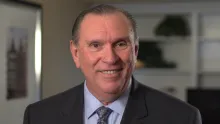
Randy D’Alessandro served as pastor for the United Church of God congregations in Chicago, Illinois, and Beloit, Wisconsin, from 2016-2021. Randy previously served in Raleigh, North Carolina (1984-1989); Cookeville, Tennessee (1989-1993); Parkersburg, West Virginia (1993-1997); Ann Arbor and Detroit, Michigan (1997-2016).
Randy first heard of the church when he was 15 years old and wanted to attend services immediately but was not allowed to by his parents. He quit the high school football and basketball teams in order to properly keep the Sabbath. From the time that Randy first learned of the Holy Days, he kept them at home until he was accepted to Ambassador College in Pasadena, California in 1970.
Randy and his wife, Mary, graduated from Ambassador College with BA degrees in Theology. Randy was ordained an elder in September 1979.
