
Rick Shabi
This transcript was generated by AI and may contain errors. It is provided to assist those who may not be able to listen to the message.
Brother Nair is in a story in 2 Kings 2. I want to relate to you today. Chances are, you've not studied that in a long, long time if ever. If you've read your Bible, I'm sure most of us have, from cover to cover, we've read the incident. But I'm not so sure that we've ever taken a lot of time to delve into it very carefully. It's a very simple, straightforward story. It only goes a few verses. You don't need to know Hebrew to understand the meaning. You don't need to consult a dozen biblical reference works to dig out the meaning that is there. It's a short, quick episode in the life of one of God's prophets. With having said that, let's turn over to 2 Kings 2. 2 Kings 2. Starting in verse 19. Earlier in the chapter, which I'm not going to get into, but earlier in the chapter you see the mantle being passed from Elijah to Elisha.
Elisha is in the environs of Jericho. And the people of Jericho were having some difficulties with their water supply. Let me read you this story. It goes from verse 19 to verse 22. Then I want to take some time and go through that. 2 Kings 2.
Then the men of the city said to Elisha, Please notice the situation of the city is pleasant, as my Lord sees. But the water is bad in the ground barren. And he said, Bring me a new bowl, put salt in it. So they brought it to him. Then he went out to the source of the water, cast an assault there, and said, Thus says the Lord, I have healed this water. From it there shall be no more death or barrenness. So the water remains healed to this day, according to the word of Elisha, which he spoke. Now what prompted me on the day of Pentecost here, these the Pentecost, to pick this example from the Scriptures. How does this example relate to you and I as New Covenant, New Christians today? What are we to do with this little story? Interesting little story that has a great deal to say about God working through his prophet Elisha, getting him off on good footing. He's a brand new prophet. He performs this miracle that, according to somebody who I was talking to yesterday in Beloit, that particular spring is still putting out tremendous amounts of water to this day. Good water for the city of Jericho.
I feel this story, brethren, is relevant for this reason, for us as New Covenant, New Testament Christians, for us as we celebrate the day of Pentecost. This story illustrates the power of God to change what seems to be unchangeable. The power of God to change what seems to be unchangeable. And not only that, to change what seems to be unchangeable, to the extent there is a permanent lasting change. A permanent lasting change. Now, on this day of Pentecost, we appreciate the fact that we've got God's church. We appreciate the fact that we've not only got God's law that was given at Sinai, but we've got the Holy Spirit that we see given in Acts 2. And we desperately, as Christians who love God and our elder brother, Jesus Christ, we want to make changes. And we want those changes not to be fleeting. We want those changes to be permanent in our lives.
I think all of us relate to the Apostle Paul when in Romans chapter 7 he talks about the things he wanted to do, he doesn't do. He wants to be the right kind of Christian in so many ways, but there are times where he just fell short. He fell short of God's glory. You and I don't want that. Of course, he was a tremendous man of God. He accomplished a great deal, and God's Spirit worked for him very powerfully. There was in his life, and we'll talk about that a little bit later, a change in ways that people thought were impossible, and that change lasted forever. So today, on Pentecost, we do want to talk about God's marvelous Holy Spirit, an encouraging spirit, an inspiring spirit that God has given to us that helps us change what seems to be unchangeable. To the extent there's a permanent lasting result. If you're taking notes and you want to put down my theme statement, I've really said it a number of times to this point, but my theme statement for the sermon is this. God's Holy Spirit provides us the power to change what seems to be unchangeable. God's Holy Spirit provides us the power to change what seems to be unchangeable. Now, let's take a couple of moments here and go through the little story here in 2 Kings. We go back to verse 19. Then a man of the city said to Elisha, Please notice the situation of the city is pleasant as my Lord sees. This part of the world was marvelous like a breadbasket. It was a very fertile region. Great deals of crops were being grown and harvested and people were enjoying that. But there was an issue. There was an issue with the water supply in Jericho. And it says, But the water is bad in the ground barren. Now, when you look in the original languages, it talks about how the ground was apt to miscarry. And it is thought that perhaps animals that were drinking out of that tainted water supply were miscarrying, maybe even people as they were drinking out of that supply. We had all sorts of health issues.
I'm sure the city fathers over the course of time looked into the technology of their day and what could be done to heal those waters. And they found no answer. To them, it was something that just simply couldn't be changed. Couldn't be changed. It was unchangeable in terms of their scientific knowledge. It was unchangeable in terms of their human ability. It was unchangeable from a human perspective. But today, we're talking about God's perspective. We're talking about God's ability to change the unchangeable. Verse 20. And He said, Bring me a new bowl.
Now, He was a brand new prophet. That new bowl represents Elisha. Bring me a new bowl and put salt in it. Now, He's about to put the salt in the supply of water at the source. Normally, if you're going to put salt in water, you make it worse, not better. But salt was used by the Israelites to preserve and to purify. To preserve and purify.
So He wanted to do that. Verse 21. Then He went out to the source of the water.
We want change in our life at the source, at the core, at the heart, in the mind, so that that source is what God would have us to be. So He went out to the source of the water, cast the salt there, and said, Thus says the Lord, I have healed this water. From it there shall be no more death or barrenness. So the water remains healed to this day. And again, as I made mention, I talked to somebody in Beloit yesterday who, as I gave the sermon yesterday over in Beloit, and that person had been over to the area in Jericho and says that water is still coming out to this day, fresh and clean and pure and ready for the people to drink. It was a change that they thought was unchangeable. God made the change. And it was a permanent change. A permanent change.
What about us, brethren? Do we have situations in our life that are seemingly unchangeable, at least from our perspective? Are there things in our character that we think we just don't know how that's ever going to change? Are there situations in our life, relationships, economic conditions? You name it. Are you standing at the base of your Mount Everest? Have you come to a wall and cry out to God asking for Him to change? Sometimes you wonder if it's hopeless or not. But you know, brethren, I think we all appreciate the fact that with God, there's always hope. With God, nothing is hopeless. This day above all days represents the fact that with God, all things are possible. All things. Let's take a look now. We're done with 2 Kings. Let's take a look over here at Hebrews 11, the faith chapter.
Hebrews 11, verse 1. Now faith is the substance of things hoped for, the evidence of things not seen.
Those city elders, those city leaders in a town in Jericho, they had expectations. They were going to the man of God. They realized God worked miracles. They had heard that God worked a miracle just a short time before, separating the waters. They were expecting a change. They were expecting a lasting change. They had faith. This is faith is the substance of things hoped for, the evidence of things not seen. It's a spiritual dimension, not a physical dimension, a spiritual one. And they were grasping that and holding on to that. Verse 3. By faith, we understand that the worlds which we can see were framed by the Word of God so that the things which are seen were not made of things which are visible. They didn't have to see the visible things in order to have faith in the great God and His power to change the unchangeable. Verse 6. But without faith, it is impossible to please Him. For He who comes to God must believe, must have faith, that He is and that He's a rewarder of those who diligently seek Him. Those leaders in Jericho were waiting for the change. They were waiting for something miraculous to happen. They believed God was going to reward their faith, and God did. God did. If you would, please turn now to Ephesians chapter 4.
Ephesians chapter 4.
I want to speak to us as individuals today. Whatever your situation happens to be, you know where you are in your life, you know where you are with your walk with God, how you're growing, maybe how you're not growing as much as you would like to grow, or what have you. Ephesians chapter 4 and verse 7. But to each one of us, each one of us as individuals, we're not just some corporate spiritual blob, some big machine. We are individuals, and God called us as individuals, and God loves us as individuals. But to each one of us, grace was given according to the measure of Christ's gift. Grace was given to each one of us. And brethren, I believe that Christ tailors this gift to fit who you are. Grace interacts with your unique personality.
God's grace interacts with your natural abilities, with the other spiritual gifts that God has given you. Last Sabbath, I believe it was, we, in the announcements, we went to Exodus chapter 31 to read about how God gave the use of His Spirit to artisans so they can be great artisans. They weren't given God's Holy Spirit to preach and proclaim the Word of God. They were given that Spirit to do their work. And that same Spirit is in you to help augment your mind and your talents and your abilities along the lines that are special to each and every one of you. Certainly, God's Spirit works with our heart and with our mind. But it takes on the whole individual and enhances the whole individual. God is not a one-size-fits-all God.
Today, whether we're talking about the brass ensemble or the choir, we heard some really good music, and I really enjoyed that. It makes the day so much more special. Now, if I was standing up there, no, you're not going to like that. The choir will probably all be off-key. And I'm not too good. Well, maybe I'm good at tooting my own horn. I don't know. But I couldn't do what those fellows did. All the folks that were up here gifted people. God's Holy Spirit working through them today with their gifts to enhance their gifts. And boy, you know what? It sounded like it, and it really did. I've used the example of caterpillars in times gone by in sermons.
You know, a caterpillar at one point in his life is this lowly little worm.
But God is built into its DNA that's not going to be a lowly little worm forever.
It's going to become a butterfly someday. That's going to be a change that, if you just look at it, you think, well, that's impossible for this to become something that's going to fly around and be beautiful. It's a grubby little worm. Well, God wants something better for that. What seems to be unchangeable is going to change. It's going to be a lasting change. And the same thing is true for us. God has put in our very essence with His Holy Spirit the fact that we are going to change. We're flesh now, but there's coming a time when we're going to be totally spirit. The world doesn't understand that. They think that can't happen. It's impossible. But with God, nothing is impossible. And it's going to be a permanent, lasting change.
Christians, just like a caterpillar, are a change from the inside out. There's a metamorphosis that takes place. We'll read a scripture about that a little bit later on in the sermon.
Before I get into the main thrust of what I want to cover with you today, I've given you the basic idea. But just a couple of examples from the scriptures. And the scriptures are replete with examples of people who were seemingly unable to change or situations that were seemingly unable to be changed. And yet God changed those and made permanent, lasting changes.
We know the example of Saul of Tarsus. We've gone through that. You've gone through that over the years. I mean, here's a man who is richly educated by Gamaliel. Gamaliel probably would have been something similar to a Supreme Court justice of our day. Gamaliel was a very intelligent man, well-read, and so forth. And Paul sat at his feet to learn. Paul was a man of letters.
In some of his writings, he was able to quote various poets because he was a man of letters. So he was educated. He was religious. He was zealous. And he began to persecute God's people. When I was at Ambassador College, I did a study paper on Saul of Tarsus before he was converted. It was, I forget the name of the book right now that I use as a great deal of the source material. It was one of those old, musty books you find in Ambassador College Library. It was probably over 100 years old. You almost didn't want to turn a page for fear that the page was going to crack or something. But in that book, it talked about, it gave the thought, I don't know the discussion, I don't know that this can be proven, but it gave the thought that perhaps the apostle Paul, where it says he could be all things to all people. That was a character trait he had before his conversion. And that was one of the reasons why he was such a successful persecutor of Christians. Because he could be all things to all people. He was able to infiltrate the various Christian groups, act like he was one of their own, take names, and then turn those names in for persecution. Here was a man who scattered the brethren, forcing them to leave their homes, their livelihoods, forcing them into financial ruin. Here's a person who dragged men and women off to prison. Now think about that for a second. Let's say we go back, you know, this is a church 2000 years ago, and my name is Paul. And as a result of what I did in my life prior, your husband or your wife is now in jail. Oh, I'm converted. I'm in the church. But your husband or your wife or your kids, as a result of what I did, are in jail. Or you were beaten, or a loved one was beaten. Brethren, it took a lot for New Testament Christians to be able to stand that.
And yet, on the road to Damascus, what happened to Saul of Tarsus?
The unimaginable took place in terms of what the Christians would have thought, and God changed him. Changed him with a change that lasted the rest of his life.
Other examples in the New Testament, you've got people who had leprosy. That seemed to be something that couldn't be changed. You had people who were deaf and mute. People who were blind. We'll talk more about that in a few moments. We had people who had demons. All of those seemed like things that simply couldn't be changed. But God changed the unchangeable. God changed the unchangeable. You've got the story of Lazarus and Dorcas. They died. You don't find something that's much more unchangeable than the fact that somebody is dead. And in Lazarus's case, they've been dead for a while. And yet Jesus Christ did the unimaginable to the people surrounding the gravesite there and resurrected him from the dead.
All that leads up to what I want to cover with you for the rest of the sermon. And that is an example in the Book of Mark. In the Book of Mark—and we're going through this in our in-home Bible studies—the Book of Mark is a book of action. It's not a book of doctrine. There's not a lot of doctrine in the book. It's a book of action. As a matter of fact, I took a look. The word immediately is used 36 times in the Book of Mark. 36 times. The central theme of the Book of Mark is discipleship—what it means to be a disciple of Jesus Christ. And what it means to be a disciple of Jesus Christ—and Mark goes through this. He's very frank in assessing what it means to be a disciple. He shows Jesus Christ, not as some unrealistic superstar whose feet never touch the ground. But he shows Jesus Christ as God in the flesh. But he's definitely in the flesh. Mark shows Jesus Christ at times when he was sorrowful and disappointed and displeased and angry and amazed and fatigued. Fatigued to the place where at times—one time he was there in the boat and they thought they might ship—or not shipwreck but because of the storm—maybe all drowned.
He was sleeping because he was fatigued, the human aspect of him.
So Mark goes through and shows—of course he shows he's also God in the flesh, shows the gospel, shows his message, the gospel of the kingdom of God, and shows all those marvelous teachings.
But we're going to take a look at one specific example in the Book of Mark that helps us to appreciate the fact that God's Holy Spirit, that encouraging and inspiring spirit that God has given to us, allows us to change with his help what seems to be unchangeable. Let's take a look at Mark 10. Mark chapter 10. We're going to take a look at the story of Bartimaeus. I want to take and read this story for you. I'm just going to take a moment and read right through it, and then we're going to take it apart bit by bit and see what lessons there are for us, and there are a number of lessons for us here to understand on this day of Pentecost.
Mark chapter 10, verse 46, going through the end of the chapter, verse 52. Verse 46, Now they came to Jericho, and as he went out of Jericho with his disciples and a great multitude, blind Bartimaeus, the son of Timaeus, sat by the road begging. And when he heard that it was Jesus of Nazareth, he began to cry and to say, Jesus, son of David, have mercy on me. Then many warned him to be quiet, but he cried out all the more, son of David, have mercy on me. So Jesus stood still and commanded him to be called.
Then they called the blind man, saying to him, be of good cheer, rise, he's calling you. And throwing aside his garment, he rose and came to Jesus. So Jesus answered and said to him, what do you want me to do for you? And a blind man said to him, Rabboni, that I might receive my sight. Then Jesus said to him, go your way. Your faith has made you well.
And immediately he received the sight and followed Jesus on the road. Brethren, we see here some steps this one man took that are educational, informative for us, instructional for us, as to how with God's help, with Christ's help, he was able to go from being a person who couldn't see. And if there was something that seemed unchangeable and permanent, it was that. And yet with Jesus Christ's miraculous power, the power of God's Holy Spirit, that would seem to be unchangeable, changed, permanently.
Let's take a look at the lessons that are in this story or for us. Lesson number one. Lesson number one, take responsibility for your life. Take, you know, you and I, all of us, take responsibility for your life.
We live in an age where people today want to play the blame game. My life would be so much better if it weren't for my kids. Or my life would be so much better if it weren't for my parents. Or work would be so much better if it wasn't for my boss. Or the boss thinks work could be so much better if it wasn't for the employees. Everybody's got somebody to blame, right? Bartimaeus didn't do that.
Let's take a look at Mark chapter 10 verses 46 and 47. Now, when they came to Jericho, let's pause there for a second. Is it just coincidence that we're also now, just like we were in 2 Kings chapter 2, that we're back here in Jericho. In 2 Kings chapter 2, we saw where there was a mighty miracle, something that people thought couldn't be changed, was changed. We're here now again in Jericho. A blind man, maybe blind from birth. People thought he couldn't be helped, couldn't be changed. And yet, here again, we have something that's going to be changed.
Is that just a coincidence? I'll leave it up to you to speculate on that. Now, they came to Jericho, and as he went out of Jericho with his disciples, a great multitude, blind Bartimaeus, the son of Timaeus, sat by the road begging. And when he heard that it was Jesus of Nazareth, now, it doesn't say explicitly in the Scriptures, but Jesus of Nazareth was very well known, very popular, known as a healer. Did Bartimaeus know that Jesus was where he was, and he was going to be coming through his part of the world? We don't know. But whether he knew that or not, right now, Jesus Christ is passing right by him. And when he heard that it was Jesus of Nazareth, he began to cry out and say, Jesus, son of David, have mercy on me! Have mercy on me!
Now, when I say he took responsibility for his life, what am I talking about?
Bartimaeus may have been blind, but he wasn't stupid. He realized it was Passover season.
He realized that religious people were going to be coming through Jericho on the way to Jerusalem.
He realized those religious people tended to be more sensitive than a lot of other folks.
And as a blind man begging, he was counting on that. He put himself in a position where he could be helped by others. He took responsibility for his situation.
He didn't just sit off in a corner someplace and say, well, people have got to do this and that. He did something about his situation. He did what he could do. He put himself in a situation where he could be helped. He owned up to his own situation. He owned his own situation.
And certainly, brethren, we need to take responsibility for our lives. We live in such a troubled world. Mary and I got back from Beloit last night about 830. Typically, we have services and then we go out for dinner with, it seems like, almost the whole church. And by the time we get home, it's a little bit late in the evening. I had been unplugged from my computer and my smartphone and all that, and I pulled out my smartphone when I got home and all these little updates from England.
I thought, what's happening in England? Well, you know what was happening in England. All sorts of things. In terms of terrorist attacks here and there and everywhere, it seemed. We live in a tragic, tragic world. We live in a cold world. It's getting colder by the moment. And we are so fortunate here in Chicago that we have been given an opportunity—and all of God's churches around the world—that we have been given an opportunity to be here, to enjoy one another's company, to listen to messages, to have uplifting conversations, to be helping one another as an iron-sharpening iron relationship, to grow and to develop, and to become more like God.
Because we have the opportunity to make the Kingdom of God come even more soon as we prepare for the Kingdom, as the bride gets herself ready. What we're seeing in the world, what we want to see come to an end, we have something to say about that. If we all, as individuals, get our act together, as the church gets its act together, and we do what we are called to do, Christ can come that much sooner. So let's take our responsibility, the responsibility of being good, solid members of the Chicago church, to take every opportunity we have to assemble together.
You know, we've got different work schedules, I understand that, but this is the Sabbath. You know, today's the Holy Day, the annual Holy Day, but we've got the weekly Sabbath. Take the opportunity to make sure we're there, to make sure we're talking to one another, we're encouraging one another, we're helping one another, we're there, we're supporting one another, we're praying for one another, we're fasting for one another.
We're taking the opportunity for our prayer time and our study time. We're taking responsibility for the calling that God has given us. And you know, brethren, I know as your pastor, I've only been your pastor for a year, but I know you take that seriously. I know you take that seriously. The growth of this church shows you've taken that seriously, and I commend you for that.
So point number one is take responsibility for our life. Point number two, or lesson number two, believe God can change the seemingly unchangeable. Have faith that God can change the seemingly unchangeable. Let's look again at verse 47, Mark 10, 47. And we had heard that it was Jesus of Nazareth who began to cry out, saying, Jesus, Son of David, have mercy on me.
Now again, here's a man who'd been blind maybe for his whole life. He had no hope of ever seeing again. Maybe he was a beggar who had no one to care for him.
He was all on his own for perhaps. You know, we don't know all the background on his life, but he heard about one called Jesus of Nazareth. And then Jesus is walking by where he was, and he believed that something was going to change. He believed, because Christ said that in verse 52, your faith has made you well. He believed there's going to be change.
He expected that change. He didn't have to work up a motion. Motion has nothing to do with it. It's a matter of knowing in our hearts and our minds who God is and what he says he's going to do, and then he's going to do it. He believed he would be different. He believed God would change him. Now, as a sidelight, brethren, there are times when we wish God would change all the people around us. Right? Change my employer, change my next-door neighbor, change this, change...
God never promises he's going to change the other guy. Now, he can, to be merciful to us, but he doesn't make that promise as a carte blanche, that he's going to change the other guy. He does say he will change us. He does say he will change us. Let's take a look at Romans chapter. Put a marker here. Let's go back to Romans chapter... or go over to Romans chapter 12. I alluded to this earlier in the message, and I was talking about butterflies. Romans chapter 12, verses 1 and 2.
I beseech you, therefore, brethren, by the mercies of God, having each one of us in this room experience the great mercies of God, the fact that we're here, that we're not out there somewhere, people in the world, they wish they knew the meaning of life. They're willing to go to Mars and other planets. Let's search the bottom of the ocean, find the meaning of life. Well, we know the meaning of life by the mercy of the great God. By the mercies of God that you present your bodies a living sacrifice. Notice, present your bodies.
We can't go to our next-door neighbor who has a pain in the neck.
And sacrifice... well, there are times he probably would like to sacrifice his body, but we can't do that. But we can allow our bodies to be a living sacrifice, wholly acceptable God, which is a reasonable service. And do not be conformed to the world, but be transformed.
Have a metamorphosis, this change from the inside out. But be transformed by the renewing of your mind. So our mind becomes like Jesus Christ's mind, God the Father's mind, that you may prove what is the good and acceptable and perfect will of God. So lesson number two is believe that God can change the seemingly unchangeable. Number three, we're going to still stay... go back there to Mark chapter 10. We're still going to stay in verse 47. Number three, lesson number three, make clear what you need. Now, we've all got desires. I like to watch all sorts of these television shows that show being living in Hawaii. I like to watch those, especially around here in January and February. At times like that, I really wish I was in Hawaii. That's not going to happen.
That's a desire, but that's not a need. They don't need to live in Hawaii.
We need to make sure that we make our needs known. Verse 47, when he heard it was Jesus of Nazareth, began to cry out and say, Jesus, Son of David. Notice what he said here.
Have mercy on me. He didn't say at this point... now he's going to say it a little bit later, but he doesn't say at this point, I want to be able to see. He doesn't say I want better clothing. He doesn't say I want a better house. He doesn't say I want to be married if he was single or what have you. He says, have mercy on me. He goes right to the core of the issue.
We need God's mercy. Have mercy. And notice, he didn't send somebody up to Jesus with a note.
The blind man sitting over here in the back, he wants to ask you something. No. He's crying out. He's letting it be known. He's not a shrinking violet in the background.
And also notice here in verse 47 what he says to Jesus. Jesus, Son of David.
True statement. Jesus is the Son of David. But is that all Jesus Christ was? No. He was much more than that. The point I'm making here is, Bartimaeus had an inadequate knowledge of Jesus.
You and I may have an inadequate knowledge of God the Father and Jesus Christ. We don't know everything about them. Our minds probably can't because we have limited minds. God and Jesus Christ are infinite. But God isn't concerned about whether you and I are Rhodes Scholars or not.
God is concerned about our heart. He's concerned about our heart. God looks at the heart. God responds with mercy as he looks to our heart. This man cried out for mercy. He cried out for the most basic need. It is always mercy. Let's go back over to the book of Romans. Let's put a marker here in Romans 15. Romans 15, verse 13.
Now may the God of hope, and the day of Pentecost, brethren, is a day of tremendous hope, the giving of God's powerful Holy Spirit. May the God of hope, where change is always possible, fill you with all joy and peace in believing. We can be filled with joy and peace as we demonstrate our faith. Joy and peace because we hope in God and His power, that you may abound in hope. And how do we abound in hope? By the power of the Holy Spirit.
We abound in hope because of that power.
Again, what is it in your life that needs changing? I'm talking about that you can deal with in terms of your own life not changing other people.
Again, I think all of us relate so much, as I said earlier, to the Apostle Paul in Romans, 7. We all wish we were further down the road than we are. We all wish we were much more mature spiritually than we are. And yet, that's available to us if we are yielded people.
One of the things we see in this section that I'm talking about here in lesson number 3, making clear what your real need is, specific prayers get specific answers. And let's make sure, brethren, that our prayers are very, very specific and detailed. In the Old Testament, they talked about taking incense, which represents prayer, and beating it fine.
Beating it fine. Be very, very detailed. God enjoys that.
As I was sitting over in the Detroit area with two beautiful little girls on my lap, two little grand babies, both of them weighing now 18 pounds. When they first were born about 11 months ago, they were both under two pounds. Now they're 18 pounds each. As I reached for them, they reached for Grandpa and sat him down. They wanted to play around with my big old nose and rearrange things in there. They found it easy to come to both Mary and I and melt your heart.
It melts your heart. I forgot now the point I was going to make.
I guess I'm too much of a grandpa here. I get into the grand babies and start forgetting stuff.
But we asked for specific things in our life. Of course, when they were first born, and my son having lost his first son, who only lived six hours, those were some really tough times 11 months ago. Seeing two little babies and incubators and all went with that.
So very, very specific prayers. God enjoys that. Oh, the point I was going to make is just as I enjoyed having those two little babies on my lap, or one at a time, and them gurgling and talking and reaching for Grandpa and trying to talk, and as they saw my mouth moving, their little mouths were trying to move too. Just as I would want to do what I could for them, God wants to do that for us. We're His kids. We are His kids. He loves us so much. So very much. So get very, very specific in our prayers. So that was lesson number three. Lesson number four. Don't worry about what other people say. You know, as you're going through life, I'm going through life. We can put a lot of stock on this one or that one or the other one. We've all got our individual walks with God. That's not to say we shouldn't get wise and abundant counsel. That's not saying that at all. But notice here, verse 48, Mark 10, 48. Then many warned Him to be quiet, but he cried out all the more, Son of David, have mercy on me. People told Him to be quiet.
Have people ever told you to be quiet? People told me to be quiet. They probably were saying to Bartimaeus, hey, listen, nobody wants to hear what you have to say. Be quiet. Some may have said, this isn't the right place. Look at the crowd here. You can't even be heard.
It's not the right time. Nobody's ever done what you're doing here. So give it a break.
But Bartimaeus was determined. His faith stood against all the voices of discouragement.
Brother, there are times in our life when we're going to have plenty of voices of discouragement. People saying all sorts of things that can get us down. But we're God's children, and we appreciate the fact that our God is a God who can make the unchangeable, the unimaginable happen. We're only a miracle away. So let's not us listen to the voices of discouragement and find ourselves down. Let's look at Luke chapter 18.
Luke chapter 18.
Verse 1, Then he spoke a parable to them that men ought always to pray and not lose heart.
Not lose heart.
Saying there was in a certain city a judge who did not fear God nor regard man. That was a widow in that city. And of course, widows back in those days, heaven, literally heaven, helped them because if they didn't have a man in their life, it would be very easy for those poor women to be kicked to the curb, so to speak. Now, there were laws that Israel had that should have taken care of them. But those people being what they were, they weren't always living up to those laws. And widows had a very hard way to go.
There was a widow in that city, and she came to him saying, Get justice for me from my adversary. And he would not for a while, but afterward he said within himself, Though I do not fear God nor regard man, yet because this widow trumbles me, I will avenge her lest by her continual coming she weary me. By her continual coming.
How often do you think Sarah, Abraham's wife, went before God many, many times? Now, that was certainly a situation that seemed unchangeable, right? How was a woman in her advanced year going to have children? Yet God did the unimaginable in terms of human perspective, but made that change for her.
Verse 6, Then the Lord said, Hear what the unjust judge says, Shall God not avenge his own elect, who cry out day and night to him, the way bears long with them, cry out day and night all the time.
So lesson number four, don't worry about what other people say.
Moving on to lesson six. Lesson five. Lesson five.
In this one, in some ways, brethren, I think as maybe one of the more...
I think we trip over this maybe more than maybe some of the others.
Number five, stop waiting for perfect conditions. Stop waiting for perfect conditions.
I'm not saying that timing isn't important. Timing is very important. But sometimes, brethren, we wait for some things to be just right, just perfect.
And we can wait and wait and wait and wait.
Mark 10.
Verse 46.
Now they came to Jericho, and as he went out of the Jericho with his disciples, and a great multitude, blind Bartimaeus, the son of Timaeus, sat by the road.
Now, it says here, a great multitude.
Do you think what we've got in this room today is a great multitude?
Probably not.
But can you imagine if a person was sitting at the side of the road, and you had hundreds and hundreds of people trying to follow Jesus Christ and Jesus Christ's entourage as he's moving from Jericho to Jerusalem?
What chance does a blind man have sitting on the side of the road? People are going to trip over him, they're going to stumble, they're going to kick him accidentally, they're going to shove him, he can get lost. The point I'm making is his conditions were not perfect.
He wasn't waiting for a perfect situation.
He was going to act now despite the circumstances.
He was going to act now despite the circumstance.
So, brethren, quit waiting if you are, if you're the kind that waits for the perfect time.
You may be missing a lot of good times to do something. It's a good time to do this, or a good time to do the other.
It's important that we understand the difference between a perfect time and the right time.
The right time may not be perfect.
The right time for Bartimaeus is when he did what he did.
But it wasn't, in one sense, perfect.
Take a look at Isaiah 55.
We can apply this verse to every level of our human experience. Isaiah 55 and verse 6.
Seek the Lord while he may be found.
Call upon him while he is near.
Now, quite literally, Jesus Christ was near Bartimaeus.
He was near.
And Bartimaeus was going to seek him while he could be found.
And he did just that. The conditions were not perfect by any stretch, but he acted.
We go back now to Mark 10.
Verse 49.
Notice in this episode, verse 49.
So Jesus stood still.
Jesus, the Son of God, God in the flesh, stood still.
All the other people, the majority of people, are saying to Bartimaeus, be quiet, shut up, be in the background, get out of here, you're bothering us. And yet Jesus Christ heard that voice, and Jesus Christ stopped.
Jesus Christ will hear your voice.
And Jesus Christ will stop for you.
We've got examples in the scriptures that we've gone through.
In a time I've been your pastor, I'm sure you've gone through these in other times as well. We've talked about how when Stephen, the deacon, was being martyred, that says he saw Jesus standing at the right hand of God.
We saw the example of Shadrach, Meshach, and Abednego. They're thrown into the fiery furnace. And Nebuchadnezzar says, I see a fourth one standing with them.
Jesus will always stand shoulder to shoulder with us as we cry out to him with the right heart, with the right spirit.
In this day of Pentecost, we've got that right spirit, and that right spirit can change our hearts.
So lesson number five, stop waiting for perfect conditions. Lesson number six, cast aside all your hindrances.
What's hobbling us from following the great God?
Mark 10, verse 50.
And throwing aside his garment, he rose and came to Jesus.
Throwing aside his garment, he rose. Now, in the original, what says he rose, the concept is he sprung to his feet.
Wasn't that he took his good, sweet time saying, well, oh, he's calling me. Well, somebody give me a hand.
And he, you know, God, no, he heard that Christ wanted him. He leaped to his feet. He was wanting to act and act as quickly as he possibly could. And certainly, brethren, that's something that we should keep in mind as well.
Cast aside all hindrances.
Whatever is in our path that is not allowing us to have those changes in our life that God can make for us. Let's go back to Hebrews chapter 12, or over to Hebrews chapter 12.
Hebrews chapter 12 and in verse 1.
Therefore, we also, talking about, since we are surrounded by so great a cloud of witnesses, that's talking about people in chapter 11, the faith chapter.
Let us lay aside every weight and the sin which so easily ensnares us.
Let's get rid of those hindrances and let us run with endurance the race that is set before us.
Run with endurance.
We're not going to be running a sprint. It's running for the long term, the long haul. It's going to take a lot of energy, but God supplies that energy through his Holy Spirit that this day represents, the giving of God's Holy Spirit.
Lastly, lesson number seven.
We go to verse 52, Mark 10, 52.
Mark 10, 52.
Then Jesus said to him, Go your way, your faith has made you well.
The seemingly unchangeable had changed. It was going to be a permanent, lasting change through the power of God's Holy Spirit.
And immediately he received his sight and followed Jesus on the road. We made mention earlier today that the book of Mark is a book about discipleship, what it means to be a disciple. Here we are on Pentecost.
More than 2,000 years ago, God began the New Testament church on the day of Pentecost, we believe it to be 31 A.D., gave his Holy Spirit to those people over there in Jerusalem who were already keeping Pentecost, people who had come from all over the region and from beyond the region.
What have we learned as we've looked at the life of Bartimaeus? If we want to be disciples, we've got to take responsibility for ourselves.
Make sure that we do that. Take spiritual responsibility.
We have to have faith.
When we were going through Luke 18 about the widow who was talking to the judge, I didn't read the very next verse, I should have read that, where Christ asked, when he comes, would he find faith on the earth? Or would he find the faith on the earth?
We want to make sure that as you and I are preparing for the return of Christ, as the bride of Christ, that we are believers.
We saw that we need to make clear what our needs are. We've seen that we can't worry about what others say. We've seen how don't worry about waiting for perfect conditions.
Act when God gives you the ability to act.
We've seen how we should cast aside every hindrance. And that's what it means to be a disciple of Jesus Christ.
So today, brethren, we've taken a look at the power of God to change what seems to be unchangeable to the extent there's a permanent lasting result. One final scripture. Let's turn over to Philippians 4.
Philippians 4, verse 13.
Philippians 4, verse 13. I can do all things through Christ who strengthens me.
I can do all things through Christ who strengthens me.
I can't think of a more encouraging, inspiring message in one verse than that we see right there. I can't think of a more encouraging message than that we see right here. That God's Holy Spirit provides us the power to change what seems to be unchangeable. So, brethren, we've got something to really celebrate today. The rest of the time that we have with one another, let's enjoy one another. Let's enjoy what God has done for us. And let's really do everything we can to learn the lessons that we saw in Bartimaeus' life.
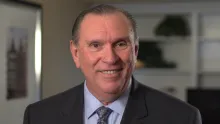
Randy D’Alessandro served as pastor for the United Church of God congregations in Chicago, Illinois, and Beloit, Wisconsin, from 2016-2021. Randy previously served in Raleigh, North Carolina (1984-1989); Cookeville, Tennessee (1989-1993); Parkersburg, West Virginia (1993-1997); Ann Arbor and Detroit, Michigan (1997-2016).
Randy first heard of the church when he was 15 years old and wanted to attend services immediately but was not allowed to by his parents. He quit the high school football and basketball teams in order to properly keep the Sabbath. From the time that Randy first learned of the Holy Days, he kept them at home until he was accepted to Ambassador College in Pasadena, California in 1970.
Randy and his wife, Mary, graduated from Ambassador College with BA degrees in Theology. Randy was ordained an elder in September 1979.
