

David Mills
This transcript was generated by AI and may contain errors. It is provided to assist those who may not be able to listen to the message.
Well, good to see you all this afternoon, and we hope that you're feeling good and having a wonderful Sabbath day. I want to ask you a few questions here at the very beginning of the sermon. Does God have a personal interest in you? Does He take note of you as an individual? Is He aware of your successes, your failures, your joys, your trials in life?
Does He even know that you exist? And the answer to all of these questions is yes. God is very interested in you as an individual. He takes note of you in everything that goes on in your life. He knows every success. He knows every hardship that you go through. Why, think about it. Doesn't every loving Father know what His children are experiencing? And our Heavenly Father is much better than any human Father. He knows everything that goes on in our lives. But are we aware of His personal love for us?
Do we feel it in our lives each day? Today, let's consider God's personal love for us. But before we get into that, I would like for us to first of all consider the awesomeness of God and how great He is. Recently, I read this in the announcements that in a newspaper article, it brought out that Voyager 1, which was launched in 1977, has flown past many of the planets in our solar system. It was launched in 1977, 35 years ago.
And it flew by Jupiter, it flew by Saturn, it flew by Uranus, it flew by Neptune and Pluto. It sent back many photographs. You probably could find them on the Internet, some of them. And yet, this spacecraft, which has been traveling at 35 to 38,000 miles per hour, every hour since in the last 35 years, has still not left our solar system. It's now reaching the outer limits of our solar system.
The electromagnetic field and the influence of the Sun is almost as far as the Sun's influence reaches. And then it goes into what is called interstellar space. And then it keeps on going. And ultimately, it will no longer send back messages to the Earth. Right now, it is still sending messages, it's sending signals back. And it is so far away that these signals coming back to the Earth at the speed of light, that's 186,000 miles per second, require 16 and 1 half hours to come from the spacecraft to the Earth.
That's just how far out it is. So this makes us to realize the awesomeness of God, just this one bit of information about Voyager 1, and just the size of our solar system. To know our solar system is, well, the Sun is 93 million miles away. The Earth is that far away from the Sun. The Sun itself is 866,000 miles in diameter. 866,000 miles. A little bit larger than our minds can even comprehend. But our Sun is still a relatively small Sun, even though it's that size. There's one star that is so large that if our solar system was put into the middle of this star, our Sun was put into the middle of this star, the Earth in its orbit around the Sun would not even be halfway to the outer edge of this star.
It's so huge. Can we imagine something so large? The closest star in our galaxy to us is Alpha Centauri, and it is 25 trillion miles away. And it takes light, light again traveling 186,000 miles a second. That's zipping along, isn't it? Traveling at that speed, it still takes light four and one-third years to reach the Earth. The light that we see left there four and one-third years ago. Our galaxy has a hundred billion stars, we are told, and beyond the Milky Way there are at least a billion more galaxies. Now, this book here that I'm getting this information from is Why We Believe in Creation, Not Evolution by Fred John Meldow.
I don't know if this has been updated to be even more galaxies than this. But, you know, it gets into a size as far as the universe that our minds cannot even begin to comprehend. In our Milky Way galaxy, for example, with a hundred billion stars in it, it would take light entering one edge of the solar system, one hundred thousand years to go all the way through.
One hundred thousand light years, light, again traveling at the speed of light, one eighty-six thousand miles a second. It would take that light, then one hundred thousand years to even go through our galaxy. And then think of this. Okay, here's our Milky Way galaxy. It's huge. It takes light a hundred thousand years to get through it. Our minds can't begin to comprehend the size of our own galaxy. And then there are other galaxies out here, a billion of them. And the average, according to this book, the average region of space between the galaxies is about three million light years.
It would take light, then, three million years to travel from one edge of the edge of one galaxy to the edge of another galaxy. On the average, the galaxies, then, are about three million light years apart. So, you know, again, that speaks to the greatness of God, the awesomeness of God. We get down to small matter. Let's get down to atoms. Things are made of atoms. And there's a lot of empty space in each atom. And atoms are built like our solar system. You know, the solar system is mostly space, right? We have a few planets. We have a few moons. We have, of course, the Sun.
But it's mostly, most of the solar system is just empty space. There's nothing. Well, we're told that atoms are the same way, like our solar system, that atoms are almost empty space. It seems incredible, but it's factual. Scientists say that if you eliminated all the empty space in every atom in the body of a 200-pound man, he would be no bigger than a particle of dust. There's a lot of empty space in us. Maybe that explains a lot, right? And a lot of experimentation has been done even recently trying to understand the smallest little particle.
They call it the Higgs particle or the God particle. It somehow picked up that name. But recently, over in Europe at the Large Hadron Collider, they were able to send a particle and discover in this experiment a lot of information that is yet being understood and digested. But the idea is that there is an invisible field that permeates all of space and suggests that the properties of matter and the forces that govern our existence derive from their interaction with what otherwise seems like empty space.
This Higgs field validates the notion that seemingly empty space may contain the seeds of our existence. Of course, they're trying to look at it from a standpoint of evolution. But it's interesting what they are discovering. The energy contained in otherwise empty space was converted into all the matter and radiation we see today. We don't have a real problem with that as far as the energy, but then where did the energy come from?
They don't even try to tackle that one. The Bible says that energy comes from the creative power of God. The faith chapter in verse 3, Hebrews 11 and verse 3, brings out that we understand that the worlds were framed out of things which are not seen, that God, by His creative power, brought into being the material universe. And so the explanation for that energy that creates mass, the physical substance we see and that we are even composed of, comes from the creative power of God's Spirit.
This article was from Newsweek magazine called The Godless Particle, bringing out some of those things in the July 16th issue. In the Time magazine issue of July 23rd, they entitled their article on the same subject as the Cathedral of Science. And they bring out that actually this is kind of brought into this experiment. The Higgs bosom has brought into...
it's a strange mixing of faith and physics in all of this. A contemplation of puzzles so hard to grasp and findings so consequential that they take on a sort of secular religiosity. It's like physics and faith are coming together, but you know true science and physics and faith do come together. And they work together. They realize these people working on this experiment were grappling with something bigger than mere physics. Something that defies the mathematical and brushes up at least fleetingly against the spiritual.
And the article ends by saying, faith and physics, which don't often shake hands, shared and embraced in this experiment. To me, the experiment, if you've been keeping up with it, just shows again the creative power of God through the power and the energy of His Holy Spirit. He brought into existence the material universe, the mass that we observe, out of things that do not appear. And yes, there's a lot of empty space with all these little electrons and protons circling around.
A lot of empty space in their finding. Very interesting and something that you could read into further if you would like to do so. But it all shows the greatness of the Creator. But man has not wanted to retain God in his knowledge. Let's turn to Romans 1 and verse 28. Instead, mankind has wanted to come up with another explanation, and that other explanation is evolution. In Romans 1 and 28, we read that even as they did not like to retain God in their knowledge, God gave them over to a debased mind to do those things which are not fitting.
The very reason man wants to deny the existence of God is so he can do what he wants to do. And he wants to do, by nature, he wants to do things that are not really fitting. And we see that, of course, all about us today. We see it also back as we study history. But it's easy to prove that God does exist. Those seven proofs I learned at Ambassador College still apply.
Number one, a creation demands a creator. These things didn't just happen. Even the recent experiment begins with energy. This energy was transferred into mass. But where did the energy come from? It's the energy and the power of God's Spirit. But man doesn't want to admit to that. But creation demands a creator. Life, number two, demands a life giver. We see life all about us. Who gave, who started that life? The life giver is God.
Number three, laws. We see laws of chemistry and physics and gravity and inertia and aerodynamics. Laws require a law giver. We also see that spiritual laws do work. Those spiritual laws of God, the Ten Commandments, work. And there's a law giver then, and it is Almighty God. Number four, design. What a beautiful design there is.
Wherever you look, the human body, the trees and the beautiful fruits and vegetables that God has created, wherever you look, there's a lot of design. Design requires a master architect. And number five, kind after kind. Genesis chapter one, God said, let kind reproduce after kind. And it works every time, whether in the plant kingdom or the animal kingdom. And number six, prophecy, fulfilled prophecies. So many prophecies of the Bible have been fulfilled as a proof of Almighty God.
And number seven is answered prayer. This one is for those who are willing to put God to the test. But God does answer prayers. There are so many things that have happened in the lives of those who have looked to God and asked Him to intervene for them. So these seven proofs of God still apply today. And no doubt we could find others. It's not difficult to prove that God does exist. And that's not my purpose this afternoon, but just to show that He does exist and that He is an awesome God. Hope that all of us are thoroughly satisfied on that one.
I'm sure I would think for sure that we are, that we are here. You know, when Mr. Herbert Armstrong was angered into Bible study over the Sabbath issue, his wife started keeping the Sabbath. Then he went about to prove her wrong. And the very first thing that he proved, though, was that God does exist.
And he studied evolution. And he could see holes in all of their arguments. And he proved that God does exist. So must we. And then second, he proved the Bible is the inspired Word of God. And that is the second big thing that we must prove after proving that God does exist. The Scriptures say that the fool says twice. The fool says in his heart, there is no God.
Yes, it takes someone very foolish to look at all the universe, the vastness of the universe that we just spoke about. To think about the human body, think about even a little sperm and ovum united together. And then all of the things that develop, all the organs of the body, a respiratory system, digestive system, the heart and lungs and a muscular skeletal system, the skin, sexual capacity or reproduction ability, sexual organs.
So all of this develops, male and female. It just happened. Even the marvelous human body is also proof that there is a Creator God who designed, very carefully designed the human body. So God does exist. It only certainly is a fool that would say otherwise. He does exist. But after proving that God does exist, and considering how awesome that he is, what next? The next step is to come to know this God and to know what his purpose is. What did he create the universe?
What's the reason for the existence of mankind? So that's the next step. And it takes time for us to get to know God. But once we prove that God does exist, and that the Bible is God's inspired word, then we have something on which we can build our lives and the way we conduct our lives and what we believe. We have a solid foundation. We find in the Scriptures that God reveals about himself. He doesn't hesitate right away to introduce himself.
Right in the very beginning. In the beginning, God. Right at the very start of the Bible, God introduces himself. God created the heavens and the earth. So he introduces himself as God and also as the Creator. As we study more about God in the Bible, we find that he is spirit. It says in John 4 and verse 24, God is spirit. What does that mean? It means that God lives in a realm that is spirit.
It is permanent. It is immortal. It is never-ending life. Now, God then is eternal. He is unchangeable. He doesn't age. He looks the same now as he did always.
He never had a beginning. He will never grow old. Yet, human beings, we are used to things growing old. We are immortal. That word, mortal, means subject to death. The word in the Greek for immortal means not subject to death. That's the meaning of the word, immortal. God lives in this realm that is unchangeable, permanent, and eternal.
Let's get a little glimpse into that realm in which God dwells in 1 Timothy 6. All of this is helping us to answer the questions we asked at the very beginning about the personal relationship with God. Because the relationship is going to involve the way we are, human beings, mortal, and the way God is, spirit, immortal.
In 1 Timothy 6, verses 15 and 16, Which He will manifest in His own time, He who is the blessed and only potentate, the King of kings and Lord of lords. This is here referring to Jesus Christ. Verse 16, Who alone has immortality? That doesn't mean the Father doesn't have immortality, but it means that Christ is the only one that's been human that has it. And of course, Jesus is the door by which all other humans can have immortality, become not subject to death.
Who alone has immortality? But not as dwelling in unapproachable light. We could not even approach and look upon Jesus Christ with His eyes like flames of fire, with His face shining like the sun, dwelling in unapproachable light, whom no man has seen or can see. This gives us a little glimpse into the spirit realm in which God dwells. He's permanent, He's eternally spirit, He's bright, light that is unapproachable by humans.
No one could have seen or could see the way God dwells in that spirit realm. So we come to see that is the way God dwells, and later, of course, we find out that God has invited mankind to dwell in that same realm. We begin to understand our purpose is to rise from this human and temporary realm to a permanent and interchangeable eternal realm that God dwells in.
We, in studying the Bible further, we learn that God is the family name, and that there is already more than one being, that God is one, but in the sense of family, just like a husband and wife are one, and have one family. So God is one family, but there are two beings, and then all of mankind is invited to join with those two beings. One is the Father, and the other is the Son, Jesus Christ. So these two beings, God and Jesus Christ, have always dwelt together in perfect harmony.
They've always existed. They have no beginning, and they'll have no end. So God is a family name, and we have the opportunity, mankind does, to one day have that name as well, of a Son of God, fully brought into the spirit realm of the Sons of God. We further learn in the study of the Bible about what kind of person God is.
What kind of... is He good? Is He bad? Well, there's nothing bad about God. He is holy. He is righteous. He is pure. He lives in the realm of perfection. Can you imagine that? No. We humans, we have faults. We say things. We think things. We do things that we know are wrong. We do sin. And so we do not live in a realm of perfection like God.
But God is perfect. He cannot lie. He cannot sin. He cannot do evil. Absolutely, completely perfect. And so the Bible reveals a lot about God and what He is like. And so as we read the inspired book, the Bible, we have improved that God does exist, and having proved that the Bible is His Word, and we come to see what He is like. But you know, at the very beginning, it's just the beginning. We... just like with our... any relationship, even with our own human father, it took a long time, and we even had to grow up to maturity to really appreciate our own father and what he was like.
So we come to understand God more fully, too, as we live His way of life and as we serve Him and obey Him and study and grow. In fact, coming to know God is a lifelong experience and endeavor. It begins with a special calling from God. Then it moves to baptism, repentance and baptism and conversion, and a life of being transformed and changing.
And the more we change to begin to think like God thinks, the more we begin to really see what God is like. The more of His character we have in us, the more we understand the type of God that He is. And over time, we do come to know God. The Scriptures even use that. As we obey God and do His will, we come to know God.
One verse even says in 1 John 2 that, Hereby we do know that we know Him by the keeping of His commandments. And those who don't keep His commandments, but claim to know God are liars and do not the truth. So we come to know God. We come to understand what He is like. We come to know what His great purpose in His plan is. But is God really personally aware of you and me?
Those are the questions we asked at the very beginning. Is He aware of what you go through? And if you go through a trial, a difficult time, does He understand? Does He delight when He sees you have success in your life? Well, you know, think about this. Any loving Father on the human level. I don't care if He has, you know, five children or ten children or fifty children. If He's any kind of Father at all, doesn't He have an interest in His own children? In the personal well-being of each one.
Each one being different, but any loving Father has an interest in the success of His child. And is overseeing the safety and protection and provision of His child, and helping His child to be a success in life. How much more does our Heavenly Father look upon each one of us?
And He watches over us and protects us and provides for us and is concerned about us. Many times we just don't realize how much God is aware of our lives and everything that we are going through. Let's turn to Matthew 10. The Scripture indicates that our Father is very much aware of what is going on in our lives.
Brethren, this is good to realize today. It's good to be encouraged to know that our Father is watching out for us. He's overseeing every aspect of our growth and development. He's providing all of our needs physically and spiritually. He wants us very much in His family. He is love, and He has demonstrated that love by giving His own Son so that we can be forgiven and have access to His eternal and immortal family. Let's read these verses here in Matthew 10, beginning in verse 29. Verse 29, The very hairs of your head are all numbered. That's been correctly said. That gets easier for God as we get older.
But just think about that. Now, I've still got quite a few hair. I've lost some. Most of you, I noticed, you still have quite a bit of hair. But God can just quickly look right down and say exactly how many hairs you have on your head right now. That's what it says here. The very hairs of your head are all numbered. Do not fear, therefore, you are of more value than many sparrows.
Brethren, God is aware of what is going on in our lives every single moment, every single day. So it's just like any loving parent who is aware of what his child is going through and is watching over him. God knows the very thoughts and the intents of our hearts. Let's read about that in Hebrews 4. So he looks right into our hearts and minds and even discerns what our needs are, our shortcomings, what they might be, our weaknesses that we might have.
Hebrews 4 and verse 11. Let us therefore be diligent to enter that rest, lest anyone fall after the same example of disobedience. For the Word of God is living and powerful. That Word of God, of course, would be God in his powerful spirit and the way he dwells with us.
Sharper than any two-edged sword, piercing even to the division of soul and spirit and of joints and marrow. And is a discerner of the thoughts and intents of the heart. God is able to discern even the very thoughts and the intents. What if we have a weakness? We have a problem. What if we plan to work on that weakness and that problem? Then God is able to discern that there is an intent, a desire to overcome that weakness, that problem we might have.
And verse 13 goes on to say, There is no creature hidden from his sight, but all things are naked and open to the eyes of him to whom we must give account. Yes, our God looks into our lives and he is very much aware of what is going on, even the deeper and innermost thoughts and attitudes and desires that we have. He searches the heart, too, to find out if he's not sure exactly where we might be. He can throw a test. He told Abraham, Go sacrifice your son.
And afterward, he said, Now I know that you fear God. I know that your heart is to do what I command you to do. Jeremiah 17, 9 and 10 brings out that the heart is deceitful above all things. Who can know it? It says, I the Lord search the hearts. So God searches to see exactly what the deepest intent and desire is. You know, so our Father is watching over us. He's very much aware of what is going on.
A very good example of God's personal interest. Let's say that you have a problem and you may not see it yourself, but God sees it. And he wants to bring that problem out into the open. Maybe it's a weakness, maybe it's pride, maybe it's self-righteousness and, you know, kind of vanity. Well, there was a man that had such a problem. His name was Job.
Job was a good man. He had children, had a wife, he had children, he had many cattle. He did many good things, many good things. You read the book of Job, you find out he helped wayfaring strangers passing through. The needy. So many good things that Job did. Job did so many good things, but Job had a problem.
He looked at himself and he thought he was okay. He thought he was good. He himself. And that's not healthy. It's not good for us to look at ourselves and think that we are good. To think more highly of ourselves than we should. Yes, Job had a problem. So God let all of his, let all these trials come upon him. He let his cattle be taken away. He then let his children, all of them were just wiped out. The only thing God left was, well, he then put sores upon, he let Satan play a role in all of this.
But he let sores be put upon Job. Job began to rub himself with ashes. And his wife, he left his wife, who wasn't a help to him, at least at first, she said, curse God and die. But Job did not consent to that. Then we had the three friends of Job to come on the scene. And there was this back and forth. They were saying, with Job, you've done something evil to bring this on. No, I haven't done anything. I've helped everybody. I've done good. Job was defending himself. And this goes back and forth. Finally, a young man comes in and makes a little bit of sense out of it all.
And then, in the very end of the book, God comes on the scene to set things straight. Let's read just a few verses about that. God then brought Job face to face with himself. Go to the book of Job, and let's go to chapter 38. Near the end of the book. Job, chapter 38, and verses 1-3. The Lord answered Job out of the whirlwind and said, You know, right away God hits hard at Job's vanity.
Job thought he was so smart. He was so good. He knew so much. Who is this who darkens counsel by words without knowledge? Who is this that's saying things who doesn't know what he's talking about? Now prepare yourself like a man. I will question you, and you shall answer me. And verse 4, Where were you when I laid the foundations of the earth? Tell me if you have understanding who measured its measurements. Surely you know. God is striking at Job's vanity. And Job's eyes are already rolling because he wasn't around when the foundations of the earth were laid. And he may have been a builder.
Some feel like he may have contributed to the building of the Great Pyramid even. But he didn't have any answers as far as the measurements for the laying of the foundation of the earth.
Well, God continued chapter by chapter for several chapters, humbling Job. And finally we come to God bringing Job where he wanted him to be. In Job 42, and let's read verses 1-6. After God was finished with Job 42 and verse 1, Then Job answered the Lord and said, I know that you can do everything. Job spoke with a humble contrite and broken heart and spirit. I know that you can do everything and that no purpose of yours can be withheld from you. You asked, Who is this who hides counsel without knowledge? It's me, he says. I uttered what I did not understand, things too wonderful for me, which I did not know. Listen, please, and let me speak. You said I will question you and you shall answer me. And here's my answer. Verse 5, I've heard of you by the hearing of the ear, but now my eye sees you. Therefore I abhor myself and repent in dust and ashes. Did you know that this is where God wanted Job to come to be? He wanted Job to have a humble and contrite heart and spirit. And so this is just an example of how God takes a personal interest in each one of us. And if we have some problem or some weakness, and God wants to work on that, then he has his way of dealing with it. It's just like any loving father is going to look at his children, and when there's a need, he's going to say, well, how do I go about solving this problem? And so God dealt with Job, and he had Job where he wanted him to be. By the time you get to verse 6, I abhor myself and repent in dust and ashes. You see, that's the attitude that God wants. He had Job where he wanted him to be. Yes, God is personally interested in each one of us. None of us is a yellow pencil. It's just like your children. Every child, we had four, but no matter how many children you have, every child is different. Identical twins are not really identical. They have differences in their personality and even in their appearance. So none of us is alike, and God deals with each of us in his own unique way. We are not a number in his computer. We're not a number in the church's computer either. God takes a personal interest in us. He brings us to repentance. He rejoices when we accept his calling. He gives his Holy Spirit to us.
At the time he gives his Holy Spirit to us, he pencils us into his book of life. Brethren, we've been penciled in. When something is penciled in, you pencil something on a calendar, you can erase that. You can get your eraser out and erase it. I want you to notice a verse. Our name has been penciled in Revelation 3 and verse 5. It can be erased. We don't want it to be. God doesn't want it to be. He'll do everything in his power to help us so it will not be. But our names are already penciled into the book of life if we have his Holy Spirit. He wants us to be one of his children, one of his sons and daughters. He wants us in his family. He wants to have a close relationship with each and every one of us. In Revelation 3 and verse 5, He who overcomes shall be clothed in white garments, and I will not blot out his name from the book of life. That verse then does show that our names could be blotted out from the book of life. So what happens apparently at baptism is that our names are penciled in to the book of life after God gives us his Spirit, after we repent and are baptized. Our names are penciled in, and they will not be blotted out if we go on to overcome. We go on through the process of conversion and transformation. Our names will be left in that book. They will not be blotted out. So God wants to do everything that he possibly can to keep our names in that book. He's going to help us each and every step along the way. He's for us. He's aware of every problem, every need. He's really aware of our weaknesses and our needs even more than we are. That's true of parents, too, isn't it? Good parents understand things about their children that the children may not yet understand and see. God knows our every need, and he's willing to help us. Let's go to Hebrews 4. He wants to help us then to overcome every weakness and every problem that we may have. Yes, he wants us very much in his family. He wants to have a close and warm relationship with each of his children, each and every one. Again, it's just like a loving parent, a loving parent. I don't care how many children he may have. He wants a close relationship with each one. And the relationship will be different with each one. In Hebrews 4 and verse 15, we do not have a high priest who cannot sympathize with our weaknesses. Jesus Christ, who is our elder brother, who is our high priest, who is the Son of God, the firstborn of many brethren, he's there to help us. He sympathizes with our weaknesses because in all points he was tempted, as we are, yet without sin. So Jesus knows what it's like. You know, we all have weaknesses. There's the lust of the flesh, the lust of the eyes, there's the pride of life. And we all have our human weaknesses, and Jesus Christ is there to help us. Verse 16, Let us therefore come boldly to the throne of grace, that we may obtain mercy and find grace to help in time of need. So Jesus Christ is there to help us and show how much God wants us to be in His family. One verse in 1 John chapter 3 brings out that now we are the children of God. And we don't know yet the fullness of membership in God's family, but already, even now, we are the children of God.
Let's read from Romans chapter 8. Please turn to Romans chapter 8. Those who have repented and those who have been baptized and received God's Spirit, notice what we are. And we come to realize this more deeply as we go along. In Romans chapter 8 and verse 14, As many as are led by the Spirit of God, these are the sons of God. We come to realize that. Sons of the awesome God that we spoke about at the beginning of the sermon. The God that made the vastness of the universe, made this solar system that within itself is so huge, made our galaxy which is huge and all the other galaxies.
The awesome God that is our Creator. He is the one that we are. His sons, as many as are led by the Spirit of God, these are the sons of God. For you did not receive the Spirit of bondage again to fear, but you received the Spirit of adoption by which we cry out, Abba, Father. The Spirit Himself bears witness with our spirit that we are the children of God.
That verse even bears some meditation. God's Spirit, once He has given it to us, witnesses with our human spirit, our human mind, that indeed we are the children of God. Children of the great Creator God. And if children then heirs, heirs of God, heirs of God family, and joint heirs with Christ, because He will be our elder brother. If indeed we suffer with Him, that we may also be glorified together. You know, all of this shows a very close and warm relationship that our Father has toward us. And again, it is for us individually. Verse 14 says, as many as are led by God's Spirit, each and every one. We believe today that there are thousands of people on the earth who are led by God's Spirit. Only God knows how many are truly converted. We believe there are many thousands of converted people around the world today. And every single one of them God is aware of, and He's their Father, and He deals with them individually. And as many as are led by His Spirit, they're His sons. But notice in verse 15 that it's the Spirit that cries out. God's Spirit in us cries out, Abba, Father. This expression, Abba, Father, shows a closeness in our relationship with God. The word Abba is Aramaic, and it simply means Father. So Abba, simply Abba, Father, simply means Father, Father. It's a close, intimate relationship that we have. Are we feeling it? You know, it's like your human Father. I felt very close to my human Father, and all of my life I felt close to my human Father. I'm very thankful that I had that. But my heavenly Father, you know, I feel closer and closer to Him all the time. How about you? Do you feel close, a close relationship with your heavenly Father? We should. This expression, Abba, Father, shows that He wants a close relationship with each of His sons. You know, this expression, Abba, Father, is found in three places in the Bible. This is one of them here in Romans 8. It's also found, let's read the other two. First of all, Galatians 4. Galatians 4.
And verses 6 and 7.
Galatians 4 and verses 6 and 7. And because you are sons, God has sent forth the Spirit of His Son into your hearts. That's what our Father has done. After we repented and were baptized, God sent forth His Spirit into our hearts, crying out, Abba, Father, Abba, Father, the cry of sonship. More than just sonship, the cry of a close, warm relationship between Father and Son.
Abba, Father, therefore you are no longer a slave but a son, and if a son, then an heir of God through Christ.
And the third place where Abba, Father, is found is in Mark 14. I find this very interesting, the one in Mark 14 where it is found.
This is when Jesus was praying on the night before He died the next afternoon.
In Mark 14 and verse 32.
It's after He had instituted the Passover bread and wine and washed feet, and He went out to pray in verse 32. They came to a place which was named Gethsemane, and He said to His disciples, Sit here while I pray. And He took Peter, James, and John with them, and began to be troubled and deeply distressed because He realized what was about to happen.
He said to them, My soul is exceedingly sorrowful, even to death. Stay here and watch. And He went a little farther, and He fell on the ground, and He prayed that if it were possible, the hour might pass from Him. You know, Jesus humanly did not want to have to go through the pain and the suffering. And He said, and we find the third time this expression is found, He said, Abba Father, all things are possible for You. Take this cup away from Me. But then He realized it had to be. And He said, Nevertheless, not what I will, but what You will. It's interesting that Matthew does not record the expression, Abba Father. Luke does not record Abba Father. They do record the prayer, but they don't record the Abba Father part. But Mark does. I'm glad that Mark was inspired to include this in His Gospel. Because at that moment, the greatest trial that Jesus, or any human being could ever face, when Jesus prayed, He said, Abba Father. That close and personal relationship. Father, Father. He was crying out for help and strength. And of course, God did send angels to strengthen Him as it's brought out in the Gospels. But you know, we have this intimate expression when Jesus was praying at this time of extreme trial. So when we're going through a severe trial, maybe it's a health problem, maybe it's a job or financial problem or family problems, or maybe just a bit discouraged somehow. Can we not get down on our knees and lift up our hands and say, Abba Father, Father, Father, help me at this time of need? I think we can. Jesus used this expression at this time in His life. In the end time that's up ahead, we have great tribulation. We don't know what kind of trials and difficulties lie ahead, what kind of economic problems, what kind of weather conditions. Right now, over half of our country is in drought. They keep cutting the amount of grain that is expected in the Midwest. Many of our states are in a drought condition with searing heat reaching up to 100 degrees or more. So how close are we getting to the time when the black horseman of Revelation 6 will ride its final ride? So what does lie ahead? As we go through difficult times, let's remember this expression, Abba Father. In fact, I think it's a good idea to remember it every day. Abba Father, I want to walk closer to You. I want to do Your will. I want to be a son that is pleasing in Your sight. I want that close, warm and personal relationship with You. That's what God, our Father, wants with us. He wants to see us reciprocate and want that same warm, close relationship with Him. So today we've shown that God does exist. We've shown the awesomeness of God. We've shown what He's like. He lives in the spirit realm. And He's invited us to one day share that spirit realm with Him as one of His own sons. You know, God doesn't want to hold any of His sons out at arm's length. He doesn't put His hand out. Maybe some human fathers might hold their sons at a distance. That's not the kind of relationship that our Father wants. It's not holding us out at a distance, but embracing us close in a close, personal relationship. Each and every one of us is very important to God. So we need, then, to be good servants of our God.
And we need to have that close and warm relationship with Him in prayer and study. We need to carefully keep the two great commandments to love the Lord our God with all of our heart and mind, to love our neighbor as ourselves. What a great God we serve, what a great plan and purpose He has, and He wants a personal, individual relationship with each of us.
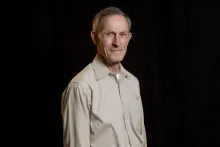
David Mills was born near Wallace, North Carolina, in 1939, where he grew up on a family farm. After high school he attended Ambassador College in Pasadena, California, and he graduated in 1962.
Since that time he has served as a minister of the Church in Washington, Florida, North Carolina, South Carolina, Oregon, West Virginia, and Virginia. He and his wife, Sandy, have been married since 1965 and they now live in Georgia.
David retired from the full-time ministry in 2015.
