

Mario Seiglie
While life is uncertain and filled with adversity, God’s plan is absolutely certain because it is centered in Jesus Christ. Through the Holy Days, we are reminded of the certainty of Christ’s return, the setting up of His Kingdom, and the culmination of God's Holy Day Plan for all mankind.
For all of us, I think it's exciting that the Holy Days are
upon us once again and will begin shortly.
And for all of us, they'll begin on Tuesday
with the Feast of Trumpets.
And it's a
wonderful time of the year, which we've enjoyed
throughout our time in the Church of God.
Life in 2025 is fragile and uncertain,
and with that reality in mind, we need to be
focused spiritually
in order to weather the storms that are prophesied to come.
How soon they will get here, we don't know, but
life is quite uncertain.
You know, this year we've lost members,
you know, to health problems, and many
members have faced health challenges.
And adversity is a reality that can come
our way, and we can only get through
the challenges that life
sends our way as we focus on God.
As a result of being Christians, we also have
certain things that we can be sure of,
a foundation of faith that we can rely upon,
and we know these things to be true.
consider, first of all, the Rock of our salvation.
Let's turn to Matthew chapter 7, verse 24.
Matthew chapter 7, verse 24.
This emphasizes the fact that
Christ is always reliable, He's always certain,
and we can build our lives on His foundation.
Matthew chapter 7, verse 24 says,
therefore, whoever hears these sayings of mine
and does them, I will liken
to a wise man who built his house on the rock.
And the rain descended, adversity.
The floods came, more adversity, and winds
blew and beat on that house, and it did not fall.
It did not fall
because it was founded on the rock.
And for us, as we build our lives on Jesus Christ
which we have been called to do, then we will stand.
No matter what kind of a beating we go through or
what kind of adversities we go through,
we can be sure that we can withstand it.
And as we get through it, we will still be standing.
We live in a world that seeks to sell us on
the idea that being a Christian is not enough.
Just being a Christian is not enough. You need more.
We need, for instance, in Paul's time, they
were told that they needed physical circumcision
and to follow the whole way that Moses had expounded,
but that pointed to something that was to come, and
with Christ coming, then they didn't need that any longer.
In fact, Christ goes on to tell the Colossian church
in Colossians chapter 2, verse 8,
something that is very applicable to all of us today.
Colossians chapter 2, verse 8,
And we'll read several verses here
that talk about something that is important to all of us,
and that is the fullness of Christ.
You might think about it in terms of
us being physical, that as we eat,
then the goal of eating is for us to become full,
you know, filled in a physical sense.
And Paul is telling the members of the church that you,
because of your being called
and you're coming into a relationship with
Jesus Christ, then you are full.
Everything that you need is found in Christ and in His Word.
And you don't need anything else.
Now physically you do,
but spiritually the whole package is there.
He says in chapter 2, verse 8 of Colossians,
see to it that no one takes you captive
through hollow and deceptive philosophy.
So people were trying to sell them on the
idea that they needed more.
He says, which depends on human tradition.
This isn't from God, this is human.
And the elemental spiritual forces of this world rather than Christ.
And the elemental spiritual forces in this world are demonic.
We don't need angels.
We don't need what the demons try to sell us.
We don't need any of that. We have our Savior, Jesus Christ.
Verse 9 says, for in Christ, all the fullness of the deity
lives in bodily form.
He's the whole package.
He's everything that you need.
And in Christ, you've been brought to fullness.
In Christ, you have been brought to fullness.
He is the head over every power and authority.
In Him, you were circumcised.
You were circumcised,
a circumcision not performed with human hands.
It's not a physical circumcision.
Some of us may have been
physically circumcised, but it doesn't matter. in God's scheme.
It did back in Abraham's time and for the people of Israel,
but with the coming of Christ, you don't need that anymore
because you've been circumcised in a different way.
Your sinful nature was put off.
You were circumcised by Christ, having been
buried with him in baptism,
in which you were raised with him
through your faith in the working of God,
who raised him from the dead.
When you were dead in your sins
and in the circumcision of your sinful nature,
God made you alive with Christ.
So God called us out of the world,
and through Christ we have been given life.
We have been circumcised.
He forgave us all our sins,
having canceled the charge of
our legal indebtedness,
which stood against us and condemned us.
He has taken it away, nailing it to the cross.
So what was nailed to the cross?
Our indebtedness because of our sin.
It's not a doing away with the law.
It's the price that needed to be paid because of
our sin, which was death, Christ paid for us.
And having disarmed the powers and
authorities, he made a public spectacle of them,
triumphing them over them by the cross.
You might think about, you know,
I'm sure that Satan and the demons were rejoicing,
excited when Christ died.
We got him. It's over.
But little did they know that three days and three nights later,
Christ would be resurrected.
And after spending some time with the disciples, he rose
to heaven where he sits at God's right hand.
So all of you, we could say it like little
kids on the playground, nah, nah, nah,
but that's not what he said.
He was resurrected
and all of your evil thoughts and
everything that you worked out to bring about my death,
it didn't accomplish anything
because I needed to die anyway to pay the
price for the sins of my creation.
So the people have
the opportunity to be a part of my family.
And as we think about that, there's nothing
beyond Jesus Christ that we need.
Now when you think about that
in terms of the upcoming Holy Days,
you might think about the
figure that is central to each of the Holy Days.
Who is it?
We don't just keep holy days with no purpose.
You have to realize that Christ is the central figure
in every one of those Holy Days.
Christ is the central figure.
He is the Passover Lamb, slain for the sins of the world.
Christ is the Bread of Life that we can eat of every day.
He's available in the word of God every day.
Christ lives in us through the Holy Spirit,
and through the Holy Spirit,
we can discern the truths of God's Word.
And Christ returns at the sounding of the 7th trump,
and the saints will rise to meet Him in the clouds.
And they'll be with Him forever.
And it's just going to lead to more people
being added as the millennial Kingdom unfolds.
In that millennial kingdom, we know that through Christ,
a new and living way has been opened
to the whole world so that they can
be at one with God forever.
That's the meaning of the Day of Atonement.
Christ will rule for 1,000 years in the
world and its people will blossom like never before.
And as the end of the story comes about in
Revelation chapter 20,
Christ will be the key figure
at the time of the second resurrection.
Who is it that is pictured there in Revelation 20?
It is Jesus Christ.
So at every step of the working out of
God's plan through the Holy Days, Jesus
Christ is the central figure.
You know, when it says that it talks about the fullness of God,
The fullness of God is available to us at every,
as we practice God's way of life and we seek
understanding, God gives it to us to see that big picture.
One certain blessing that God has given us
is a knowledge of God's plan and that is
done through the Holy Days.
I remember, you know, when I began to keep
the Holy Days, interestingly, I really didn't, I mean,
basically I was keeping days. I didn't know what they meant.
And not fully, I might have been able to
say that, well, I figured out that
the Feast of Trumpets is a Holy Day, and I'm here
on that Holy Day, but exactly what that meant, I didn't know.
But in time, as you practice them, you
begin to understand them,
and they begin to fit together. And
if your experience has been like mine, your
knowledge of those days and that truth
expands as you continue to practice them.
So as we once again consider the
significance of the Holy Days,
We're reminded
that God's plan is going to be worked out
regardless of any difficulties that
we face currently or that difficulties that
may lie ahead. And
whether we live or die,
whether we prosper or fail,
we can be sure that God's plan is certain.
We can be sure that God's plan is certain.
So let's think a little further about the certainties
that God gives to us through the Holy Days.
Let's go to the first point I'd like to make, which is
found in Leviticus 23, verses 1 and 2.
Leviticus chapter 23, verses 1 and 2.
You know, as you go back to Genesis chapter 1,
where does it begin? It begins with God, create,
bringing about the recreation.
It says, God created the heavens and the earth.
It is God who brought it all into being.
And it is God who gives us the Holy Days.
And he explains this to the people of Israel.
And he gave it to the people of Israel,
and he has given it to all of us.
Matthew chapter 23 verse 1,
it says, and the Lord spoke to Moses saying,
speak to the children of Israel and say to them,
the feasts of the Lord,
which you shall proclaim to be holy convocations,
these are My feasts.
These are My feasts.
They aren't Jewish feasts, they aren't
Israel's feasts, they're not our feasts as
Christians, they are God's feasts.
They are occasions that God has given to us
in order for us to be focused on
the different elements of God's plan.
And God has, and we have been blessed to be given those
basic things.
So,
God has given us the weekly Sabbath.
Every Sabbath as we're meeting here today is a reminder
that the millennial Kingdom will come, that
God's plan will
be worked out in its fullness,
and that as we keep the Holy Days, which we
begin doing on Tuesday,
then we can be focused on
various elements of that plan.
The second point I'd like to make is again
back to Colossians chapter 2.
Colossians chapter 2.
And as you look at the Colossians,
the Colossians were
unfortunately facing some philosophical challenges,
and they were being challenged on their beliefs.
Did these come from inside the church?
Very possibly people had bought into those
philosophical ideas
and they were telling the members of the church,
you guys need more than what you're getting from the Bible.
And Paul is telling them, no you don't.
And he's trying to explain, as I already
read in Colossians 2,
that Christ is everything you need.
So he tells them in verse 16, Colossians 2, verse 16,
here he says, so let no one judge you in food or drink,
or regarding a festival or a new moon,
or Sabbaths,
which are a shadow of things to come,
but the substance is of Christ.
Now, as you look at that,
it's a little confusing because what does it mean?
that what he's talking about there, those
festivals and new moons and Sabbaths
are a shadow of things to come.
What does that mean?
And more importantly, what does the substance
is of Christ mean?
So let's look at
what Paul is saying there.
Most of the time, no one mentions or
questions our keeping of God's Holy Days.
We keep them.
They figure, okay, he won't be here, or they
note that you're not there.
Excuse me.
Note that you're not there on your job,
and everybody goes on about their business.
But there are times when either people
question you about it,
they really legitimately want to know, or
they may be critical
of your keeping those days.
And sometimes we're even attacked because
we keep those days.
So the Christians in Colossians, as I said,
were being judged in regard to keeping the Holy Days.
And so it gave Paul the opportunity to explain
why they needed to continue to keep them.
And it offers us an explanation of the same thing.
Colossians chapter 2, verse 17 says,
the Sabbaths and the Holy Days are shadows of things to come.
And how can they be shadows if they no longer exist?
Or we don't need to be keeping them?
If they're shadows, they're still casting that shadow
because they still exist.
So they can only cast a shadow if they still exist.
In verse 17 in the New King James Version says,
the substance is of Christ.
The substance is of Christ.
What does that mean?
Most of the new translations
translate the verse that way.
And what does the substance of Christ actually mean?
Well, as you examine it,
the New King James Version says,
The body is of Christ.
The body is of Christ.
And the word substance there
is the Greek word soma.
the Greek word soma, which means body.
Soma means body, which could mean a human body.
It could mean, you know, it's
physical, could be used in that way,
or it can refer to the body of Christ,
which is a legitimate body.
It is the body of Christ.
So it means body,
And so
as you think about that, what are we talking about?
As you look at the word, one confusing word in the
King James Version and the New King James is
the word "is".
Well, as you look at that translation, "is"
isn't in the Bible.
It's not there. It's not found there.
It's been put there because the translators felt
it clarified what was being said, but to
me, all it does is confuse.
So it simply says, the body of Christ.
That's all it says there.
And so verses 16 and 17 go together and should be translated,
don't let anyone judge you,
but let the body of Christ judge you.
Well, who is the body of Christ?
Well, we know that as the Church.
The body of Christ
is the Church.
So it is the Church
that is the body of Christ that is
responsible for guiding and directing
as to how to observe these days.
And for most of us, how did we come to know
the church these days? We didn't know anything about them.
But as we came into contact with the church,
we found, wow,
there are these Holy Days
and Sabbaths that we're to keep that we
didn't know anything about.
and we came to understand them
and to begin to practice them. And as
we did so, we became more understanding
of what God's plan was and how they apply to all of us.
We could paraphrase Colossians chapter 2:16 through 17 as follows:
Don't let any man judge you for eating or drinking.
You know, so if you don't eat pork,
Okay, that's what the Bible says.
Now you may judge me for that, that's fine,
but it tells me not to, so I won't.
But you're welcome to judge, but I've got
to do what I understand God is telling me to do.
Or for any portion of your observance of a festival,
new moon or Sabbath,
which are shadows of future events in God's master plan,
of which Jesus Christ is the central figure.
Let the body of Christ be your judge in these matters.
That's a paraphrase, but it helps to clarify what
Paul is saying there.
So if the Sabbath and the Holy Days are
shadows of things to come,
as we keep them, they represent things that
we can look forward to, that eventually
are picturing things that will work out in reality.
We know that the Passover has already taken place.
And we all meet on that night.
We partake of the bread and the wine
and go through the foot washing.
That's already come and it's applied to all of us.
But for the vast majority of mankind, that's to come.
It's a shadow of something to come, even if
they don't understand it at this point.
So, we have to realize that that's something
that is eventually going to be worked out,
and we can know that
these things all picture things that are
important to us as Christians.
So as we keep the upcoming fall Holy Days,
we need to consider
what those days represent to us, because
they tell us important truths that are
crucial to our salvation.
So we've already kept the Passover and the
Days of Unleavened Bread
and the Feast of Pentecost, so here we are
at the Feast of Trumpets.
We've talked about all those in their season,
so let's think about the Feast of Trumpets.
The Feast of Trumpets tells us that Christ will return.
That is a certainty.
That is a certainty.
And the fact that Jesus Christ was
resurrected from the dead
and was raised to heaven and is at God's
right hand right now,
what happened? What changed
in the world as a result of that?
Now, from a Jewish perspective, they're
still looking for the Messiah to come.
They're still looking for that.
But for all of us as Christians, something
dramatic happened with Christ being
resurrected and raised to God's right hand.
For all of us,
the Kingdom of God began at that point.
And we are a part of what God is working out.
We basically are all colonies of the Kingdom of God.
Each congregation is a colony of the Kingdom of God.
And so we practice God's way of life.
We've recognized the King of Kings.
We've recognized His Law
and His way of life, and we're practicing it.
Why?
Because Christ, as promised, is going to come again.
And we will come into a Kingdom
that has been readied for us
and we've been preparing for.
And as that kingdom is established with the return of Jesus Christ,
we will all join together with Christ
to implement the Kingdom of God.
All of the things that we're practicing
in the here and now will continue to be practiced.
That's not going to change.
You think the Law is done away with, so
during this time we're keeping the Holy Days in the Law,
and in the world tomorrow we won't be doing that?
No, that's not true at all.
We will be living it, teaching it, sharing with it,
and Christ will be the one who will come
and lead us in that process.
So the Feast of Trumpets reminds us that Christ will return.
It's a certainty.
That's why God represented it with trumpets.
as you look at what it says in Leviticus,
it never mentions the trumpets.
It's talking about making a noise.
It's a teruah, which could be sounding of trumpets,
but it doesn't say trumpets specifically.
But we know that it ties in with that.
And a teruah could be the sounding of the
shofars as a warning to the people of Israel.
And it's a trumpets that are sounding to
help us to be reminded that the Christ is
coming back and it's going to be a triumphant occasion.
And the King is going to appear in the clouds, and all of us
have the opportunity, we'll have the opportunity at that time,
whether we're in the grave or whether we're
alive, to rise and meet Christ in the air.
Something absolutely unbelievable
that we all look forward to. I
mean, when it finally comes about, it will be
a most magnificent day,
and I think we all look forward to it.
1 Corinthians chapter 6 verse 14 says
there that and God both raised up the Lord
and will raise us up by his power.
That's a promise.
That's a certain promise.
So as we live this life
and we're faithful throughout the entire process,
we can be assured of the resurrection of the dead and
rising to meet Christ in the air.
The second important thing that God tells us is
in regard to the Day of Atonement.
We know that Revelation 20 tells us
that as Christ returns, which he talks about in Revelation 19,
that what takes place after he, the first,
what's the first thing he does as he comes back?
It tells us in Revelation 20.
In Revelation 20,
we find that Satan is bound. for 1,000 years.
So Satan and the demons will have
no impact upon the world
as Christ begins to reign.
No impact whatsoever
because Satan will not be around.
You know, you have the spirit of the world
which impacts the world and the whole world
has been deceived.
That's over.
That's over.
And the way is open, the new and living
way, which is going to allow all mankind
to become at one with God.
That's what atonement is all about.
That way is now open.
That way is now open.
And it's going to be an exciting time as
there is no more Satan.
There is nobody creating all of the
dissension and all of the opposition.
That's over.
That's over.
And the whole world, without that
person who stirs up all the problems,
no longer impacting the world,
the world will, what's the only influence that there will be?
It will be Christ.
It will be the saints.
And what is the only spirit that will be
affecting the world? The Spirit of God.
So it's going to have its challenges.
It's not going to be an easy
transformation because
it's going to take some effort and human beings,
just as human beings can be stubborn.
And human beings can
come to some wrong conclusions.
and human beings can
be a little tough to deal with. But
there isn't going to be this satanic input,
which is leading people in a wrong mindset.
Let's look at 2 Corinthians chapter 5.
2 Corinthians chapter 5, verses 17 through 21.
2 Corinthians 5.
Excuse me, I read that wrong.
Second Corinthians 5. Let's begin in verse 17.
Second Corinthians 5, verse 17.
And there we're told, therefore, if anyone is in Christ,
he is a new creation.
Old things have passed away.
Behold, all things have become new.
And for us, all things have become new.
Because we can see this panorama that we didn't
ever see before.
Now is the Kingdom here in its fullness?
Absolutely not.
But we have begun to have the vision of
something completely different.
It's new.
It's different.
Something that we've not experienced in the flesh before.
Behold, all things have become new.
Now all things are of God,
who has reconciled us to himself through Jesus Christ
and has given us the ministry of reconciliation.
So we've all been reconciled,
but as you look around the world, has it
been reconciled to God?
Most people have no clue.
Most people have no clue what that means.
And they've still not been reconciled to
God because they don't fully understand what that means.
But God has given us the ministry of reconciliation.
So as Christ returns and His Kingdom is being set up,
one of the primary tasks that we're going
to have is to carry forth the message of reconciliation.
You, folks, whatever your nationality or ethnicity,
have not known God, known what God is working out,
but you can be reconciled to God.
The way's open for you to enter into a
relationship with God.
So, and verse 19 says, that is,
that God was in Christ reconciling the world to Himself.
Now you have those who are Christians,
They understand that at least to a degree,
and the Jews understand that about reconciliation,
but they don't fully understand it.
But in God's Kingdom, they will.
Not imputing their trespasses to them,
and has committed to us the word of reconciliation.
So God has committed that to us,
and we can rejoice in it.
We know that we've been forgiven.
We know that we're part of what God is
working out here below.
But we know that it's not here in its fullness,
because as I've always concluded, if this is it,
man, we're in serious trouble.
You just look at the problems we have in the world.
It's a mess.
It's a mess.
And you can think,
when something good happens,
And you think, wow, that's pretty good.
But there's always
just a flood of other negative stuff
that follows on its heels.
It's not a trend that is consistent and ongoing.
But in God's Kingdom, with the return of Christ, it will be.
Verse 20 says, now then,
we are ambassadors for Christ.
I will be, you will be.
We will all be ambassadors for Christ,
as though God were pleading through us.
We implore you on Christ's behalf, be reconciled to God.
Be reconciled to God.
And as you also look at this picture and
understand it more fully, we know that the Day of Atonement
took place on, and on that day began the Jubilee.
And the Jubilee was carried out in Israel and had
a time when everything was forgiven,
debts were cancelled,
and people could get a fresh start.
Well, there's going to be no fresher start.
than what's going to happen when Christ returns?
It'll be a fresh start for the whole world.
And the debts will be canceled, and people will have
every opportunity to prosper.
And so it'll all begin as Christ returns, Satan is bound,
and God's way of life is established.
So then we come to the Feast of Tabernacles.
We all look forward to going there and
spending eight days at the Feast
wherever God has
placed his name and we have chosen to
go there and be with others of God's people
to enjoy what the Feast of Tabernacles represents.
We know it represents the thousand-year reign of Jesus Christ.
A thousand-year reign of Jesus Christ.
And it's going to be dramatically different
from the world in which we live today.
And I'm thankful for that.
We don't want
the world as it exists today to continue
into the world tomorrow.
And God said, nope, this is over.
We're not going to allow this any longer.
And it's going to be dramatically different.
And you're going to have
rule, a righteous rule under Jesus Christ.
There will be justice.
There will be peace.
There will be truth as the foundation
upon which everybody operates.
There will be honesty.
There will be fidelity and faithfulness.
All of those kind of things are going to be
applied and they're going to be successful.
there's going to be marriages that are long-lasting.
You're going to have families that don't break up.
You're not going to have all the drug
problems and all of the insanity
that we face in the world today.
And we're all, I'm not telling you anything
that you haven't heard before,
but it's something that we can rejoice in
Because it's not just something that we hear and we think,
well, I've heard this before.
No, we've heard it before, but man, it is so, so wonderful.
So there will be a thousand years and there will be peace.
You're not going to have crazy things like the war
between Russia and the people in the Ukraine.
What's the fruit of that? They're just
killing each other and accomplishing nothing.
And that kind of thing will cease.
And then we come to
a thousand years, and by the
thousand years, what's the world going to be like?
From one end of the earth to the other,
we're told that it's going to be like the Garden of Eden.
Now the Garden of Eden was a
very specific location on the face of the
earth at the time that Adam and Eve were created.
It was a wonderful place that God gave them to live.
But God said, as my way of life is practiced
and my truths are applied,
then this whole world is going to be
transformed, every part of it.
So you're going to have this world
at the end of the thousand years that is wonderful.
And as you look out at it, you can't help
but say, wow, what a magnificent world.
But interestingly, God puts in the Bible that
at the end of the thousand years, Satan is
going to be released.
And you think, well,
He's going to be released surely
in that thousand years he's been in the abyss.
He's going to get with it and eventually and repent and
say, you know what, I was totally wrong.
And I don't want to promote my
rotten thinking any longer.
But sorry,
when he's released, he and the demons have
not changed their minds at all.
They're still in total opposition to God,
and they've just been chomping at the bit
to be released and to impact the world.
And sadly, they will.
There will be people that have not been converted,
and they're going to influence those
people, hey, let's go up and overthrow God
so we can live exactly like we want to,
regardless of how
devastating that is for human beings.
And God's going to let them out,
and that's exactly what they're going to do,
and they're going to rise up and seek to
overthrow Christ and his government, and
the Father in heaven is going to say, okay, you're done.
And he's going to stop it.
But it's a final reminder that Satan and his way of
thinking is rotten to the core.
And you may think, well, Satan's not getting a fair deal.
Well, think of it.
He's had 1,000 years to consider
what his way of life has produced.
But he still is unwilling to recognize this doesn't work.
So God said, okay,
you're out and let's see what you do.
And when God puts an end to it,
then it'll be a reminder to those people who
are on the brink of being resurrected
that this was one evil being
who deserved to be removed.
So then you come to the final Holy Day, the 8th day.
So people are going to be
billions of people have lived,
never understood God, didn't understand his
way of life, they had no clue.
But what's going to happen is all those
people have been lying in the grave and
whether they know it or not, they've been
awaiting a resurrection and an opportunity.
And God in his mercy is going to give him that opportunity.
He's going to raise them to physical life.
Billions of them.
And who is the figure that's there at the time?
It's Jesus Christ.
You know, it's a Great White Throne.
Well, who's on that throne?
Christ is.
And so all these people are going to be raised from the grave,
and they're going to be given the
opportunity to, and you're going to have a
world, they're going to come up in this magnificent world.
this world that's like the Garden of Eden.
They're all going to come into it, they're
all going to be living,
and the way is going to be open to them to understand the truth.
And there will be billions of God's people
who will be there to teach them,
to show them the way.
And they're going to be given their
opportunity to understand the Bible,
to apply the Bible, and to live God's way.
What a magnificent promise that
God gives us through His Holy Days
and all of the good things that are going
to come to this earth as all that plays out.
So we keep the Holy Days in faith,
knowing that they will soon be a reality.
They will soon be a reality.
So let's go to Hebrews chapter 11 and we'll
finish in Hebrews 11.
Hebrews 11, talks about people that are our forebears
in the sense that they've gone before us.
They've been faithful in their time.
Hebrews chapter 11, verse 1.
And I'm going to read this in the Amplified,
from the Amplified Bible, this one verse in Hebrews 11,
beginning in chapter 1.
There it says, now faith is the assurance,
the confirmation, the title deed
of things we hope for.
So we have faith.
We have, and faith is the confirmation, the title
deed of things we hope for.
We've all got that title deed.
We own it. It's ours.
Saying, being the proof of things we do not see.
So how many of you have seen the Kingdom?
I haven't seen it.
I've looked forward to it in the sense that I can
understand what it's talking about and from
the scriptures I can picture it,
but I've not seen it yet, not in its fullness.
So we, being proof of things we do
not see and the conviction of the reality,
faith perceiving as real fact
what is not revealed to the senses.
We haven't seen it.
I haven't touched it, tasted it, or any of that,
not with my senses.
But someday I will.
And then verse 2.
For by faith,
trust, and holy fervor, born of faith, the men of old,
had divine testimony, born of them,
and obtained a good report.
They believed it.
They lived their lives believing it.
See, I believe this is going to be a reality.
And I want to live in harmony with that.
I want to apply the principles of the world to come.
They understood what we do.
And they began to live God's way of life in their time.
And that's what we're expected to do as well.
Let's go to chapter 11, verse 8, Hebrews 11, verse 8.
talk about a few people specifically
who bought in to what God was teaching them.
Hebrews 11, there are others that are
mentioned before this,
but in Hebrews 11, verse 8, we'll begin with Abraham.
By faith, Abraham obeyed when he was called
to go out to the place
which he would receive as an inheritance.
So he left Ur the Chaldees,
moved to the land of Canaan.
And he did so because God called him.
But he also came to realize that this isn't it.
I'm living in Canaan.
And Canaan had its problems.
He had Sodom and Gomorrah
just up the road from where he lived. He
had the Canaanites living
in lives that were not godly.
But he lived there.
It says, and
Abraham went out, not knowing where he was going.
By faith he dwelt in the land of promise as
in a foreign country, dwelling in tents
with Isaac and Jacob, the heirs with him
of the same promise.
These were Feast keepers.
They lived the Feast.
They were in tents every day.
We're not here yet.
They didn't, you know, their tents weren't temporary dwellings.
and that we go to the Feast.
We live in temporary dwellings, and
I think most of the dwellings we live in are
better than any tent we're going to live in.
I just never got camping in the Feast.
So anyway, maybe I should have, but the temporary dwelling.
And then it says, for he waited for the city,
which has foundations.
a foundation that will never be moved.
He waited for that city. He knew this isn't it.
There's something more to come.
Whose builder and maker is God.
And that's what we're looking forward to.
And that's why we go to the Feast, because
we want to see the same vision.
And the sermons at the Feast are given to
us to help us more
completely envision what God is going to work out
and to encourage us to continue on the path
so we can be a part of this eternal Kingdom.
Chapter 11, verse 13.
It says, these all died in faith,
not having received the promises.
but having seen them afar off, were assured of them,
embraced them and confessed that they were
strangers and pilgrims on the earth.
For those who say such things declare
plainly that they seek a homeland.
And truly, if they had called to mind that country
from which they had come out,
they would have had opportunity to return.
So basically he says that, you know, if
they had wanted to go back to where they
came from, they could. and we could too.
Do we want to go back there?
You've left it.
By coming into the church and embracing the
truths of God, you've left it behind.
Do you want to go back to it?
Whatever your life was before God called you.
Why? would we go back to it?
There's not much back there.
And he says in verse 16, We're told.
But now they desire a better, that is a heavenly country.
Therefore God is not ashamed to be called
their God, for he has prepared a city for them.
He's prepared a city for you and me.
A city that he's promised us.
It's certain.
In summary, God wants us to keep the Holy Days as a reminder
and a reassurance that God's plan
will one day come to pass
and we will be part of the glorious future
that those annual Holy Days represent.
So God is calling us because He wants us to
be there and to
recapture the vision, renew the vision,
reinforce the vision that He's given to all of us.
So we are blessed to be able to go up and
keep the Feast.
and to be reminded that what is pictured there is certain.
It's sure.
It's not some flimsy belief that we have that maybe it'll
happen. No, it's a sure thing.
It's a sure thing.
So brethren,
As we prepare for the Feast,
we can all look forward to the truths that
we'll learn there and pray that God would guide and direct
everything that is said and done there
in order that we would be blessed and
nourished spiritually so that we can
continue our journey to the time
when the Kingdom will be a reality.
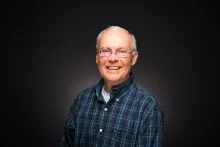
Gary Smith was born in Charlotte, North Carolina, but spent most of his youth in the Pasadena, California area. He graduated from Ambassador College in 1976 and he and his wife, Liz, moved to Peoria, Illinois. For the next six years he worked as a nursing home administrator in Illinois, Ohio, and Texas.
In 1982, he and Liz began to serve in the full-time ministry. Since that time, they have served in a number of congregations in the Midwest.
Gary and Liz now pastor in Houston, Texas near their two children and grandson.
Apart from pastoring, Gary enjoys hiking, playing and watching sports, reading and spending time with family.
